
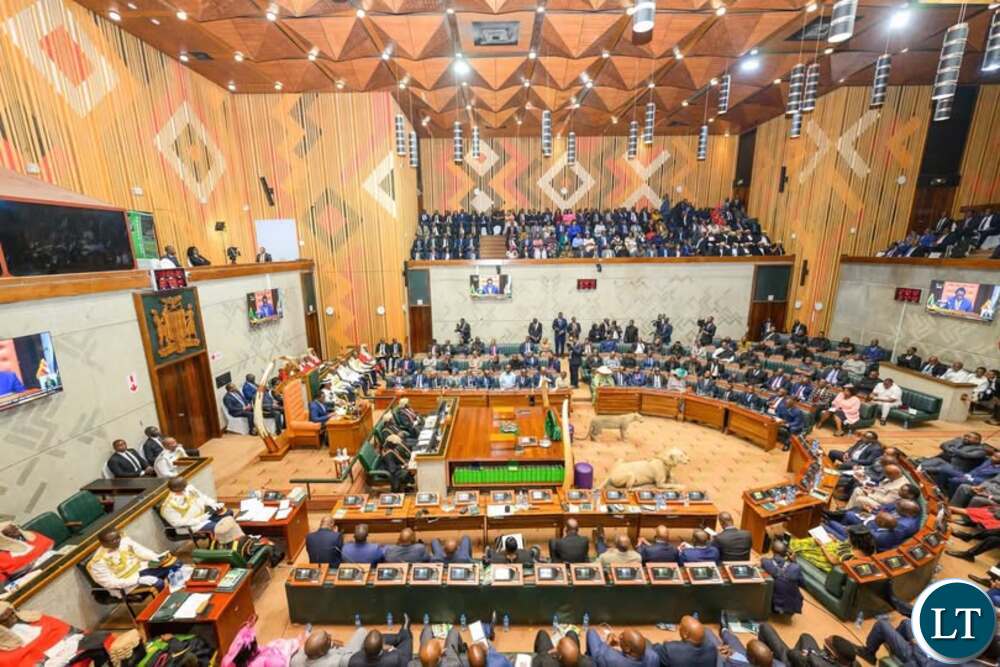
The National Assembly has voted to take the Constitution of Zambia Amendment Bill 7 of 2025 into Second Reading, marking the point at which Parliament begins formal consideration of the principle of the proposed constitutional changes.
The vote recorded 131 Members of Parliament in favour, two against, with no abstentions. The outcome means Bill 7 has successfully entered the Second Reading stage, where the House assesses whether it agrees with the overall purpose and direction of the Bill before proceeding to detailed examination.
Under Zambia’s constitutional framework, Second Reading is a decisive stage for any Bill, and it carries heightened importance for constitutional amendment legislation. Unlike ordinary Bills, which require only a simple majority of Members present and voting, a Bill seeking to amend the Constitution must obtain the support of not less than two thirds of all Members of Parliament at Second Reading for Bill 7.
The National Assembly currently has a total membership of 164 Members. On this basis, the minimum number of votes required for a constitutional amendment Bill to pass Second Reading is 110. The recorded vote of 131 therefore met and exceeded the constitutional threshold required for the Bill to proceed.
The numerical composition of Parliament at the time the Bill entered Second Reading consists of 97 Members from the United Party for National Development, 55 Members from the Patriotic Front, 10 Independent Members, and one Member each from the National Party for Unity and Progress and the National Congress Party. The recorded vote reflects that the two thirds requirement was achieved within this parliamentary configuration.
At Second Reading, Parliament does not debate the Bill clause by clause. Instead, Members consider whether the Bill should be accepted in principle. If a constitutional amendment Bill fails to secure the required two thirds support at this stage, it falls and does not advance further in the legislative process. Such failure may occur if the number of Members voting in favour is below the constitutional minimum, or if absences and abstentions reduce the affirmative vote below the required threshold. Because the calculation is based on the total membership of the House, abstentions have the same practical effect as votes against.
With Bill 7 now properly before the House at Second Reading, the next step in the process is progression to the Committee Stage, provided the Second Reading debate is concluded and the House carries the motion. At Committee Stage, Members will consider the Bill in detail, clause by clause, and may propose amendments to specific provisions.
Following Committee Stage, the Bill will be reported back to the House and, if carried forward, presented for Third Reading. At Third Reading, the Constitution again requires support from not less than two thirds of all Members of Parliament for the Bill to pass. Only after clearing Third Reading can the Bill be submitted to the President for assent.
The movement of Bill 7 into Second Reading therefore marks a critical procedural milestone. While the Bill has advanced within Parliament, it remains subject to further debate, voting thresholds, and constitutional steps before it can become law.





Uko, bali kuti ba opposition them who were making noise. Batisebanya zoona, only 2 vited NO, awe shuwa
Why increasing the MP’s that is misuse of funds cause all of them will need sitting aliawance, instead of amending the 25kg meals