
Government and political actors have presented sharply contrasting positions over Constitutional Amendment Bill Number 7, placing the issue at the centre of political messaging ahead of Zambia’s August 2026 general elections.
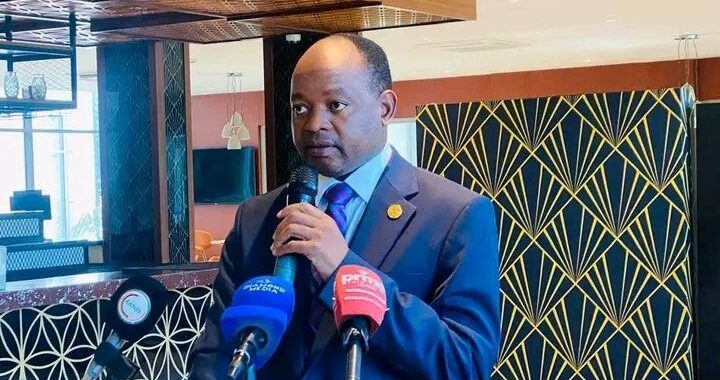
Chief Government Spokesperson Cornelius Mweetwa said interpretations of President Hakainde Hichilema’s remarks on the Bill were inaccurate, explaining that the President was reflecting on past political experiences rather than predicting future election outcomes. He described the interpretation of the remarks as misleading and urged that public communication around constitutional matters remain grounded in factual context.
Mweetwa stated that the President’s reference to constitutional amendments was tied to historical patterns in which sitting governments had introduced legal changes and later lost elections. He said the remarks were not intended to suggest any predetermined outcome for the upcoming polls but were instead contextual observations based on previous political developments.
The clarification comes at a time when Bill 7 has become a central point of political engagement, with competing narratives shaping how the proposal is understood. The Bill, which relates to constitutional reforms, carries implications for governance structures, electoral processes, and representation, making it a focal issue in the broader political landscape.
Parallel commentary has raised questions about political strategy within party structures, including claims around alternative approaches to conventions and internal processes. These assertions have added another layer to the discussion, linking constitutional reform to broader political positioning ahead of elections.
The divergence in narratives reflects how legislative proposals can take on political dimensions, particularly in an election period. While government communication has focused on clarifying intent and reinforcing the procedural basis of the Bill, responses from other actors show that interpretation remains contested.
Statements and counter-statements have shaped the public conversation, with each side framing the issue within its own perspective. This dynamic highlights the role of communication in influencing how policy proposals are perceived, especially when they intersect with electoral timelines.
Bill 7’s prominence in the current environment is tied to its position within the constitutional framework. Amendments to foundational laws often attract heightened attention, as they directly affect how governance systems operate. The timing of such proposals, particularly ahead of elections, adds to their political significance.
The situation underscores the need for clarity in public messaging. In politically sensitive contexts, statements can be interpreted in multiple ways, making precise communication critical in ensuring that the substance of policy proposals is accurately conveyed.
At the same time, the reactions surrounding Bill 7 demonstrate how constitutional issues can become part of broader political narratives. The overlap between legal reform and political positioning is evident in how the issue is being discussed across different platforms.
As the election period approaches, Bill 7 is expected to remain a central reference point in political engagement. The way it is communicated, interpreted, and debated will continue to influence public understanding and shape the wider political environment.



BaLusaka times, Bill 7 is now Act number 13 of 2025. It is law. Talk of bills is old news, it gives the impression that there is still the chance it won’t be made law. That chance has passed. Please update.
Me 2 is confused for long time now. From my Grade 5 Social Studies I thought a bill transformed with the end of debate on the floor. It then becomes an act. Didn’t these robots we have in the house vote?
Chemical Ali