
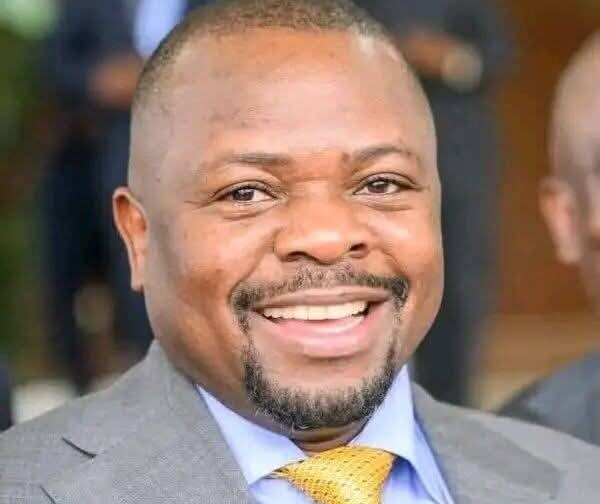
The Patriotic Front leadership dispute has hardened into a multi-front contest, with rival claims to authority persisting despite court rulings, internal warnings and growing pressure to stabilise ahead of the August general elections.
Faction Acting party president Robert Chabinga has issued a direct warning to Makebi Zulu to stop presenting himself as party president, escalating a confrontation that now defines the party’s internal landscape. The warning is not an isolated statement but part of a broader struggle in which competing figures continue to assert legitimacy across different structures of the organisation.
At the centre of the dispute is a breakdown in consensus over who holds authority within the party. Multiple factions have emerged, each relying on its own interpretation of legal decisions, party rules and internal processes. This has resulted in overlapping leadership claims, with no single position commanding universal acceptance.
The situation has been further complicated by the involvement of other senior figures linked to the party’s leadership dynamics. Statements from different camps indicate that the issue is no longer confined to a single disagreement but reflects deeper structural tensions over control, direction and recognition.
Court rulings, which might ordinarily resolve such disputes, have not delivered closure. Instead, they have been absorbed into the contest itself. Some factions argue that legal outcomes do not invalidate their planned conventions or leadership positions, while others insist that compliance with court decisions is essential to restoring order and legitimacy.
This divergence has created parallel authority centres within the party. Each faction continues to operate as if it holds valid leadership, reinforcing its position through public statements and organisational activity. The result is a fragmented structure in which coordination becomes increasingly difficult.
The dispute is unfolding at a critical moment. With the election period approaching, political parties are expected to consolidate leadership, refine strategy and mobilise support. Unresolved internal conflict undermines each of these processes, creating uncertainty around messaging, campaign planning and organisational coherence.
The impact is not limited to internal operations. Public perception is also being shaped by the visible divisions. Leadership disputes that play out in the open influence how voters assess readiness, stability and credibility. A party seen as divided may struggle to project a unified alternative, regardless of its support base.
Within the PF, calls for unity have been made, but there is little evidence that the competing sides are moving toward compromise. Statements from different actors continue to reinforce existing positions rather than open pathways to resolution. The absence of a shared framework for settling disputes has allowed the conflict to persist.
The leadership struggle also reflects a broader pattern in the political environment, where questions of legitimacy and authority are increasingly contested across party lines. Internal disagreements are no longer contained within organisational structures but are becoming part of the wider political narrative.
As the timeline toward nominations shortens, the cost of unresolved conflict rises. Campaign preparation depends on clarity of leadership and direction. Without it, efforts risk becoming fragmented, with different groups pursuing separate agendas under the same banner.
The immediate challenge for the PF is to establish a credible and accepted leadership structure that can guide the party into the election period. Without that clarity, internal divisions may continue to shape its political trajectory at a time when cohesion is critical.
What remains clear is that the leadership question has not been settled. Instead, it has evolved into a sustained contest, with each side holding its ground as the party moves closer to a defining electoral moment.



I am not PF but Chabinga needs to behave for once. People are feeling the effects of a non performing economy, where rulers are just praising themselves and the livelyhoods of Zambians are not improving at all and somebody says i am an alliance with them. Sit down and behave, you are over doing it now
The man is very pathetic and petty
We thought he had finally defected to the ruling party
Is he a relative to the famous Nkana Red Devil Manfred Chabinga? Is he just riding on the coattails of the Chabinga name?
But chabiinga has joined UPND. Is he still in PF? can you be in two parties? I head he also wants to join FDD
He knows he will lose whatever party he stands on