
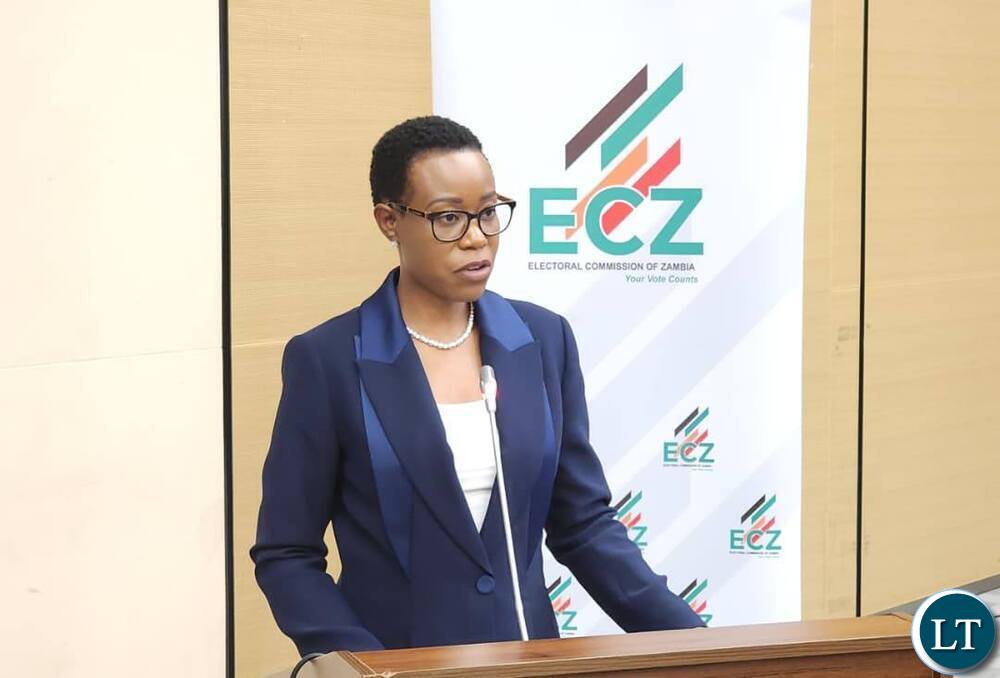
The Electoral Commission of Zambia (ECZ) says it is still assessing the progress of the ongoing mass voter registration exercise and will only decide whether to extend the registration period after reviewing detailed reports from the field. According to the Commission, various monitoring teams have been deployed across the country to track the performance of all registration centres and gather information on turnout, logistical efficiency, and operational challenges.
So far, the ECZ has recorded a total of 1,224,072 voter registrations from phases one to four of the exercise, which officially commenced on 13 October 2025. The cumulative figure includes 567,425 new voters who are registering for the first time and 656,647 individuals who have updated their details through transfers, replacements of lost or damaged cards, and corrections to existing records. The Commission says the numbers reflect steady participation from the public, although mobilisation from various stakeholders is still encouraged to meet national targets.
In its update, the ECZ highlighted a significant improvement in the reliability of the registration equipment compared to earlier phases. During phases three and four, less than one percent of registration centres reported technical difficulties, a development the Commission attributes to enhanced supervision and timely deployment of technical support teams. This stability has contributed to smoother operations in most districts.
Provincial turnout continues to vary, with Copperbelt Province recording the highest number of registrations at 179,956. This is followed closely by Eastern Province, which has recorded 157,780, and Southern Province, which stands at 157,317. Other provinces such as Lusaka, Central, and Luapula have also shown strong participation. On the lower end of the scale, Muchinga Province has so far registered 67,181, while North-Western Province has recorded 93,330, making them the two provinces with the least registrations to date.
The Commission has reaffirmed its objective of registering 3.5 million additional eligible voters by the end of the exercise. It has urged political parties, civil society organisations, traditional leaders, and community groups to intensify awareness campaigns and ensure that eligible citizens in both rural and urban areas are informed and encouraged to register.
The ECZ has also reminded members of the public that anyone who registered in 2020 or during the continuous voter registration period does not need to register again unless they have moved to a different location or lost or damaged their voter’s card.
Meanwhile, the inspection of the 2026 provisional register of voters is scheduled for February 2026, with final certification of the register expected on 30 April 2026.





Well done ECZ