
By Venus N Msyani
Zambians in the diaspora, especially those who openly criticize the government of President Hakainde Hichilema, now find themselves in a difficult position. Should they continue speaking out, or should they slow down as the president has advised?
The dilemma follows a recent warning from President Hichilema that his administration is considering the extradition of government critics living abroad.
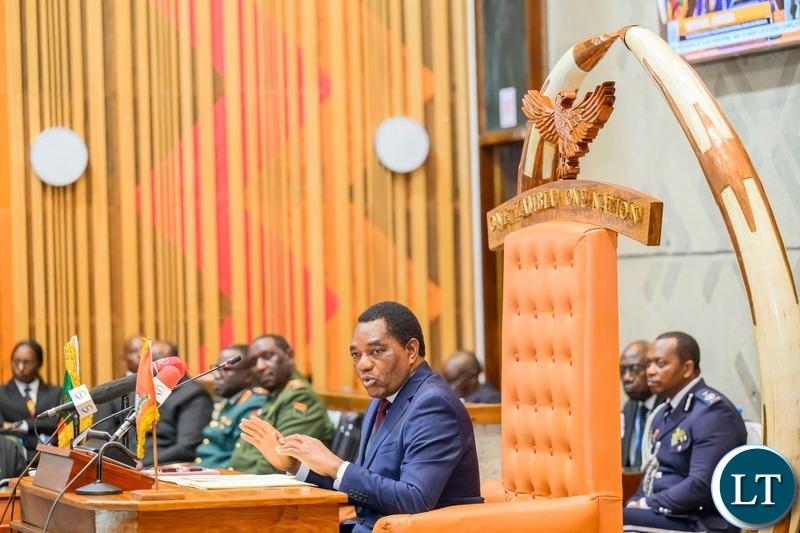
Addressing Parliament on February 20, 2026, during a presentation on the progress made in applying National Values and Principles, President Hichilema revealed that his government is exploring ways to bring back Zambians in the diaspora who, in his view, are spreading harmful content about the country.
Hichilema argued that some individuals are hiding in foreign nations while using social media to push what he described as hate speech, lies, and narratives that create an impression of instability in Zambia, an impression he believes undermines investor confidence.
“We are working on it, slowly, we are working on it. Slowly but sure. Slowly but sure. Slowly but surely, because our country’s interest comes first,” he said, emphasizing the point by repeating the phrase several times. His message was clear: the government is prepared to act.
“You cannot have personal interest perched somewhere outside of our jurisdiction, and you are sending falsehoods and allowing our children to consume hate messages. It is not right. We must all work together on this issue,” he added. Turning to Speaker Nelly Mutti, he clarified, “Madam Speaker, all I am saying is slow down.”
The intention behind this warning is not difficult to interpret. It appears aimed at instilling fear among critics abroad. Yet historically, such threats have rarely succeeded in silencing dissent in Zambia. If anything, they have often produced the opposite effect; motivating even more criticism.
A similar situation unfolded in 2017. At the height of criticism directed at the Patriotic Front (PF) government, largely triggered by the prolonged detention of then-opposition leader Hakainde Hichilema, the PF administration issued a comparable threat.
In July of that year, Vice President Inonge Mutukwa Wina announced in Parliament that the government had engaged Interpol and other international security agencies to explore the extradition of Zambians in the diaspora who were allegedly harming the country through social media.
The intention was unmistakable: to intimidate critics. But instead of reducing criticism, the announcement intensified it. The pressure grew so strong that the government eventually released Hichilema the following month. This historical precedent raises an important question: could President Hichilema’s own threat now trigger a similar backlash?
The likelihood is high. When a government begins recycling old tactics in an attempt to maintain control, criticism tends to increase rather than diminish. Moreover, Zambia is in an election year; a period when every administration traditionally attempts to improve conditions to win public favor.
Trying to use short-term improvements to overshadow the public’s experience over the past four years is unlikely to succeed, especially among Zambians in the diaspora who are generally well-informed and not easily swayed.
Indeed, several positive developments have emerged recently: prices have begun to fall, the kwacha is appreciating, and power supply has returned to near-normal levels after years of severe load shedding. But such improvements are not unusual during election seasons.
In 1991, for example, the ruling UNIP government went as far as distributing free mealie meal for several weeks in an attempt to regain public support.
Zambians abroad understand the difference between criticism and insult. They are exposed to diverse political environments and are not easily intimidated. Many are likely to view the president’s warning as an attempt to suppress legitimate concerns rather than a genuine effort to protect national interests.
If voters are allowed to judge the administration based on their full experience over the past four years, rather than on last-minute improvements, the president faces a difficult challenge. This may explain why he has resorted to issuing threats.
So, will the extradition warning stop criticism? Based on Zambia’s political history, the answer leans strongly toward no. Instead of silencing dissent, the threat may energize critics in the diaspora and amplify the very voices the government hopes to quiet.





Funny how someone supposedly championing political freedom morphs into a dictator some months after people in uniforms start saluting him!
Extradition people exercising free speech? Trump won’t help you. China also. Perhaps Zimbabwe? No you aren’t friends with them. South Africa? Yayi their constitution is too protected from Idi Amins like those in Community house
Just wait until lawbreakers are brought home to answer for their wrongs. The sad part is that these armchair critics abroad can start a fire back home that will not affect them or their children. If they’re patriotic enough, why don’t they come and help correct the wrongs back home? That is why Malema has no kind words for the freedom fighters who went into exile during apartheid.
Julius Malema is not that narrow-minded. He was an admirer of Oliver Tambo who was in exile in Lusaka. And Jacob Zuma and Sisulu. Stop lies and propaganda
Yes we need to extradite stupid vuvuzelas who are bent on destroying our image abroad because of their foolish hatred and extreme jealousy.
This is a breech of Article 19 of the UN Declaration of Human Rights- “Everyone has the right to freedom of opinion and expression; this right includes freedom to hold opinions without interference and to seek, receive and impart information and ideas through any media and regardless of frontiers.”
Go to the UN and raise this issue, remember national laws still apply. its the racial and tribal insults these diasporians spread that the state is looking at, dont cry freedom, the UN does not encourage you to break national laws.
No one stops anyone from critiquing the government, its the insults and tribal utterances that are not allowed, dont misled people.
Zambia is a Republic governed by the rule of law,If you insult and post feck pictures,you are on your own.If you start turning ethnic differences into sources of violence and political manipulation,you are on your own.If you start manufactured ethnic differences to gain power, creating divisions for electoral or control purposes,you are on your own.Any false information you are on your own and this is what HH is talking about.Stop misleading people pls, We need law and order
*If you start manufacturing
If you break the law and think you can hide behind the diaspora curtains your days are numbered.
Breaking what law?
Continue cheating yourself that you can extradite someone from the US Britain or France for a case of free speech. Try getting Mwamba on that extradition and you will be bumping your head against the wall. They will never release him.
@ Nhekairo
He can be brought back to Zambia through diplomatic channels.
Who are those holding him that can’t release him??
Kanjimano which diplomatic channels ignore a country’s rights? Not in the West. Just try. Why have you failed as you speak? Why did govt fail to get Pilato? Why is Kaizer unreturnable?
Nobody is stopping anyone to critic. Criticism has to be responsible. If you are in the diaspora or self exiled claiming political persecution then breaking the law of the country you from, then you liable to be prosecuted. Nothing to do with dictatorship.
The question is Will it silence criticism? Naturally, others will be silenced, while others will try to show bravery. There was one Ethiopian man who lived up to 105 years. When he was asked what the secret was, he said, in any confrontation, do not be in front or at the rear. So it’s up to them.
Surely, someone can only be extradited if they broke a law whilst in Zambia and then fled the country? Moreover, you need to have an extradition treaty with a particular country in order to ask that country to extradite someone back to Zambia.
He jumped bail => CRIME
Ejucate them. It’s actually breaking a law that doesn’t clash with the country of refuge’s laws or rights. South Africa one time refused to extradite an accused to Botswana because Pretoria has no death sentence. Botswana has.
HH i emphatically disagree with this one wrong move .