Wednesday, June 10, 2026
15.1 C
Lusaka
Home Blog Page 134

Zambia, Zimbabwe, Mozambique validate boundary coordinates

0

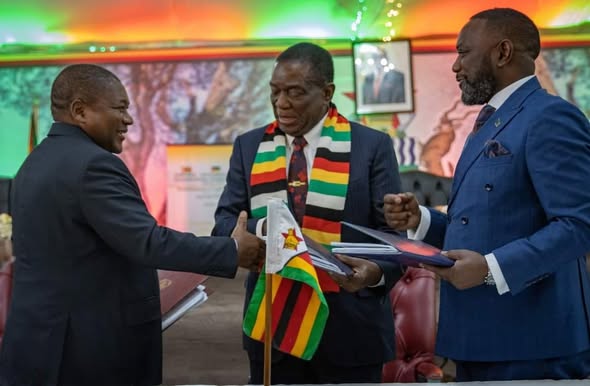
 The Zambia–Zimbabwe–Mozambique Tripartite Technical Committee is convening a six-day meeting from February 23–28 in Luangwa District to finalise and validate the computation of coordinates for the tri-junction river boundary point.

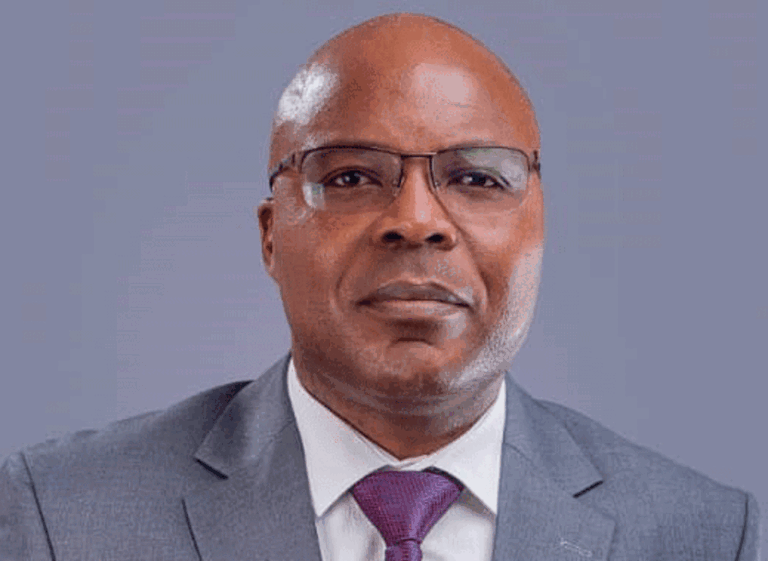
Committee Chairperson Kelvin Chibangula, who also serves as Assistant Surveyor General at the Ministry of Lands and Natural Resources, said the meeting seeks to address and resolve outstanding boundary matters to promote peaceful co-existence and strengthened cooperation among the three sister countries.

Mr Chibangula explained that there has been progress made in the reaffirmation of the boundary, starting from the confluence of the Luangwa and Zambezi Rivers since the reconnaissance survey that was conducted between Zambia and Zimbabwe in October, 2023 and Zambia – Mozambique International River boundary reaffirmation exercise on the Luangwa River, conducted in May and June, 2023.

“There is need for the reaffirmation of the tri-union point in order to finalise the river boundary between Zambia, Zimbabwe and Mozambique,” he said.

He urged delegates to incorporate the resolutions from the previous tripartite technical committee meetings deliberated on and recommendations made.

And Luangwa District Commissioner, Luke Chikani who officially opened the meeting said the coming together of the three countries, marked a significant milestone in the shared efforts to strengthen regional cooperation and manage the shared natural resources.

Mr Chikani explained that delegates will be discussing key documents, including the boundary treaty and exploring the methodology behind the computing the tri-union point.

“I am confident that the discussions will pave way for enhanced collaboration and mutual benefits,” he added.

Mr Chikani appreciated the three countries for the unwavering commitments toward the completion of the boundary reaffirmation activities on the common borders.

The delegation will undertake a site visit at the tri-union river boundary point at the end of the six-day technical committee meeting.
ECZ says districts seeking constituencies exceed available allocation

5

The Electoral Commission of Zambia (ECZ) has disclosed that districts across the country are requesting more constituencies than the 70 additional seats currently proposed under the ongoing delimitation exercise, highlighting the growing pressure on the electoral body as it works within constitutional guidelines.

According to the commission, submissions from stakeholders during consultation meetings have reflected strong demands for increased representation, with several districts arguing that population growth and geographical challenges justify the creation of additional constituencies beyond the proposed allocation. ECZ officials explained that while the requests demonstrate public interest in the process, the commission remains bound by legal provisions governing how new constituencies can be created.

The delimitation exercise forms part of broader electoral reforms aimed at adjusting constituency boundaries to reflect demographic changes and improve access to representation. Officials indicated that public hearings and consultations were conducted across multiple provinces to gather views from traditional leaders, civic organisations and community representatives.

ECZ representatives said many districts have presented cases based on distance to polling stations, population density and administrative challenges faced by residents seeking services from elected officials. Some stakeholders argued that existing constituencies have become too large to manage effectively, prompting calls for additional seats.

Despite these requests, the commission stated that its mandate requires balancing competing interests while adhering to constitutional requirements. Officials noted that the proposal for 70 new constituencies emerged after technical assessments conducted by the commission’s delimitation team, which examined population statistics and geographic considerations.

The commission emphasised that delimitation is a technical process rather than a political exercise, stressing that decisions will be guided by evidence gathered during consultations. ECZ officials said the commission has received submissions from various districts outlining reasons for seeking new constituencies, including challenges linked to infrastructure, transport and service delivery.

Public engagement sessions have drawn significant participation, with community members expressing views on how constituency boundaries affect access to development programmes. Some stakeholders have urged the commission to consider local realities, particularly in remote areas where long travel distances can limit engagement between constituents and elected representatives.

Officials indicated that the next phase of the delimitation process will involve reviewing submissions alongside demographic data before final recommendations are compiled. The commission said it remains committed to transparency throughout the exercise and will continue engaging stakeholders as the process advances.

The ECZ also reminded stakeholders that delimitation outcomes must align with constitutional provisions, including population thresholds and geographic considerations. While acknowledging the volume of requests received, officials reiterated that the commission must operate within the legal framework established for electoral reforms.

The delimitation exercise has sparked broader national discussion about representation and governance, with various groups advocating for adjustments that reflect Zambia’s evolving population landscape. ECZ officials said the process aims to ensure that constituency boundaries remain responsive to demographic realities while maintaining fairness and equity across the country.

The commission confirmed that consultations remain ongoing and that final decisions will follow technical evaluation of all submissions received from districts seeking additional constituencies.

We Spy on Critics – Hakainde Hichilema

7

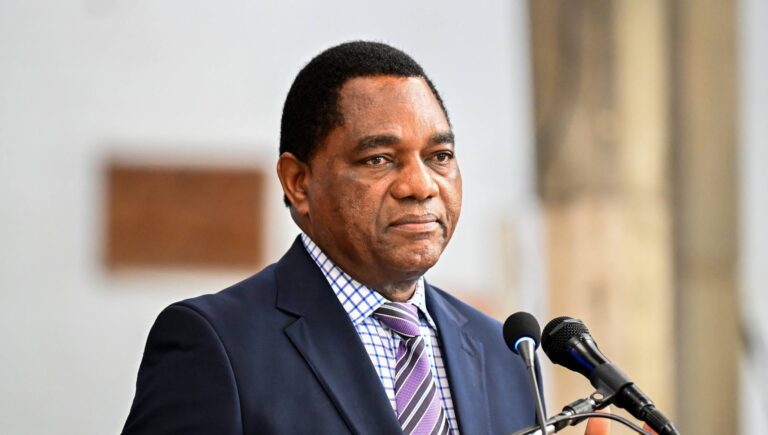
President Hakainde Hichilema has said that criticism directed at his administration remains part of democratic engagement, adding that some individuals who publicly challenge government programmes acknowledge progress during private conversations.

The Head of State made the remarks during a public engagement covered in the attached reports, where he addressed reactions to government policies and the broader political climate. President Hichilema said leadership involves navigating different viewpoints while maintaining focus on national development priorities.

According to the President, public debate around governance has intensified as citizens and political actors express differing opinions on policy decisions. He said criticism is expected in a democratic system and that government continues to listen to concerns raised through public platforms.

President Hichilema explained that interactions with critics often extend beyond public statements, describing conversations in which individuals recognise efforts being made by the administration even while maintaining a critical stance publicly. He said such engagement reflects the dynamic nature of political discourse.

During the engagement, the President referred to ongoing government programmes aimed at addressing economic challenges and strengthening public institutions. He emphasised that policy implementation remains guided by long-term objectives, with authorities continuing to monitor progress across sectors.

The remarks come amid heightened discussion around governance and public perception. Political debate has intensified in recent months, with various stakeholders commenting on the direction of national programmes. President Hichilema reiterated that dialogue between government and citizens remains central to democratic governance.

He said leaders must remain open to feedback while ensuring that national development goals are pursued consistently. The President highlighted the importance of engaging communities across the country, noting that public meetings provide opportunities to explain government initiatives directly to citizens.

The President also acknowledged that criticism can shape policy discussions, stating that differing viewpoints help identify areas where improvements may be required. He said government remains committed to engaging stakeholders constructively while advancing programmes designed to improve economic stability and service delivery.

His comments have added momentum to ongoing political discussion, with reactions emerging from different quarters of the political landscape. The administration continues to emphasise dialogue and participation as key elements of governance, encouraging citizens to remain involved in national conversations.

President Hichilema concluded by reiterating that leadership requires balancing competing perspectives while maintaining focus on development objectives. He said government will continue to engage with communities and institutions through public platforms as programmes move forward.

Syakalima rejects claims students were paid to welcome HH

5

Education Minister Douglas Syakalima has rejected allegations that students were paid to attend an event linked to President Hakainde Hichilema, stating that no allowances or financial inducements were authorised by government.

The clarification follows claims circulating in public discussions suggesting that learners at Northern Technical College (NORTEC) had received money to welcome the Head of State during a visit. Syakalima said the assertions were inaccurate and did not reflect government policy governing student participation in national activities.

According to the minister, institutions of learning operate under guidelines that prohibit the use of financial incentives to mobilise students for political or ceremonial purposes. He said participation at the NORTEC event was voluntary and organised through normal institutional arrangements rather than external inducements.

Syakalima indicated that government officials engaged with leadership at the institution to establish what transpired and to verify reports circulating on social platforms. The ministry, he added, sought to ensure that the welfare and integrity of students remained protected amid heightened public attention.

The controversy emerged after differing narratives surfaced regarding logistical support provided to students. Some commentators interpreted arrangements related to transport and coordination as evidence of financial inducement. The minister, however, said logistical support should not be confused with cash payments.

He maintained that education authorities remain focused on maintaining an environment that shields learners from political exploitation. Syakalima said the ministry continues to monitor engagements between national leaders and tertiary institutions to ensure that policies protecting students are respected.

Officials stressed that participation by learners in public events is not unusual, noting that students frequently engage in national programmes and civic activities as part of broader educational exposure. The ministry said such involvement does not automatically imply political mobilisation or monetary incentives.

The issue has drawn reactions from various stakeholders, including political figures and commentators who questioned whether institutions were being used to mobilise support. Government representatives responded by reiterating that no verified evidence had been presented showing that students received payments.

Syakalima also addressed suggestions that institutional authorities had facilitated inducements, stating that leadership at the college had denied any wrongdoing. He said the ministry would continue to engage with institutions to ensure transparency and adherence to established guidelines.

The minister emphasised that protecting the credibility of Zambia’s education system requires clarity around how students participate in national engagements. He urged members of the public to rely on verified information rather than speculation, adding that the ministry remains open to addressing concerns through official channels.

Meanwhile, discussions around the NORTEC event have expanded into broader debates about the role of students in political and civic life. Authorities say the ministry is committed to safeguarding academic environments while maintaining opportunities for learners to interact with national leadership in a structured manner.

Government officials reiterated that no student was paid to meet President Hakainde Hichilema and that any claims suggesting otherwise misrepresent the facts surrounding the event. The ministry said it would continue to provide updates if further clarification becomes necessary.

Court orders forfeiture of GBM property to the State

7

A Lusaka property linked to former Defence Minister Geoffrey Bwalya Mwamba has been forfeited to the State following a court ruling that concluded long-running legal proceedings connected to asset ownership.

Details emerging from the judgement indicate that the property, situated along Lunsemfwa Road, was the subject of investigations that culminated in a forfeiture order transferring ownership to government authorities. The ruling represents a significant development in ongoing asset recovery efforts pursued through legal channels.

According to court proceedings referenced in the report, authorities argued that the property fell within the scope of forfeiture laws after a review of its acquisition and associated financial circumstances. The decision allows the State to take control of the property, marking the conclusion of a legal process that has drawn public attention due to the high-profile nature of the individuals involved.

Officials stated that the forfeiture order followed a structured legal process, including submissions presented before the court and assessments conducted under existing legislation governing property ownership and asset recovery. The ruling reinforces government efforts to pursue cases linked to financial misconduct through judicial mechanisms rather than administrative action.

Observers following the case noted that the forfeiture decision adds to a growing list of legal outcomes involving properties investigated under asset recovery frameworks. Authorities have emphasised that such proceedings are intended to strengthen accountability while ensuring that due process is followed throughout investigations.

Legal representatives involved in the matter outlined that the judgement effectively transfers ownership rights to the State, allowing government institutions to determine the future use or management of the property. The ruling also signals a continuation of efforts to address allegations of illicit enrichment through court-driven processes.

The case has attracted significant attention due to Mwamba’s previous role in government and his long involvement in national politics. While reactions have varied across the political spectrum, officials have maintained that the decision reflects the outcome of judicial deliberations rather than political considerations.

Court documents referenced in the report describe the property as a residential structure located in Lusaka, with authorities confirming that the forfeiture order has taken effect. The judgement follows earlier stages of investigation that sought to establish whether the property met criteria outlined under asset forfeiture legislation.

Government representatives have indicated that the enforcement of forfeiture orders remains part of broader initiatives aimed at strengthening governance and public confidence in legal institutions. Authorities say the process underscores the role of the courts in determining disputes related to asset ownership.

Legal analysts note that forfeiture proceedings often involve complex evidentiary requirements, with courts required to examine documentation and financial records before issuing orders. In this case, the ruling concludes a phase of litigation that has been closely monitored by both political and legal observers.

With the judgement now delivered, officials are expected to move forward with administrative steps required to formalise the transfer of ownership. Authorities have not indicated immediate plans for the property but confirmed that the forfeiture order is now in force.

Mpezeni IV Calls for Unity as He Welcomes Cyclists from Across Zambia

1
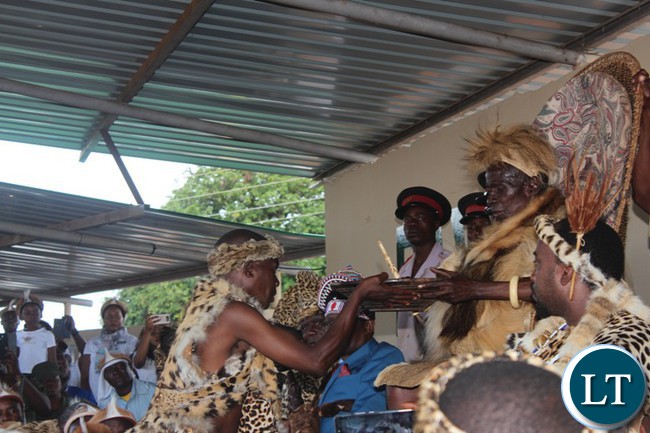
Paramount Chief Mpezeni IV of the Ngoni people has declared that no tribe is superior to another, urging Zambians to embrace unity regardless of their ethnic background.

The traditional leader made the remarks yesterday when seven young men — among them a Kaonde and a Lozi — paid a courtesy call on him at Ekuphendukeni Palace in Chipata. The group had cycled approximately 500 kilometres over six days from Lusaka to meet the Chief.

Mpezeni said cultural appreciation and interaction among Zambia’s diverse ethnic groups are essential in promoting national unity and social cohesion.

He commended James Falanga, a Kaonde man who led the team, for rising above tribal boundaries in his effort to honour and celebrate culture. The Chief described the gesture as a strong symbol of togetherness.

“Ungoni niwabwino (being Ngoni is nice). Everyone is welcome here. It does not matter where you come from and no one should feel inferior in another’s land,” he said.

In recognition of their determination and commitment to promoting culture, the Paramount Chief gifted the seven young men eight broiler chickens.

Falanga, popularly known as One Yeye International, described the reception as warm and fatherly.

“I consider you my father, and ever since I met you last year, everyone calls me ‘mwana wa Mpezeni,’” he said.

He expressed gratitude for the gift, saying it was a blessing to receive such recognition.

Falanga was

Hakainde Hichilema Hails Kazungula Bridge Authority as Milestone in Regional Integration and Trade

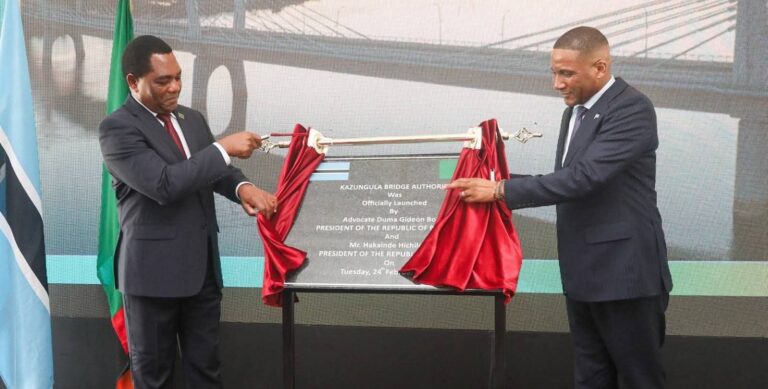
President Hakainde Hichilema and Botswana President Duma Boko have launched the Kazungula Bridge Authority, a joint structure intended to coordinate operations at the Kazungula crossing and strengthen cooperation between Zambia and Botswana around one of Southern Africa’s key transport corridors.

The bilateral engagement brought together officials from both countries to formalise the authority, which is expected to oversee governance matters linked to the bridge and surrounding border facilities. The Kazungula Bridge connects major transport routes used by cargo operators and travellers moving across the region, making coordination between neighbouring states central to its management.

Government representatives indicated that the authority will work to harmonise procedures affecting the movement of goods and passengers. Transporters using the corridor have often highlighted delays linked to fragmented systems, prompting calls for greater alignment between agencies responsible for customs, infrastructure and security. Officials said the new framework will provide a platform for joint planning and operational coordination.

During the engagement, President Hichilema and President Boko emphasised the importance of cooperation in managing shared infrastructure. The bridge has already influenced regional trade activity since its opening, with increased traffic recorded along the corridor. Authorities believe that coordinated governance will help ensure that operations remain efficient as volumes continue to grow.

The initiative reflects broader efforts by both countries to strengthen regional integration through infrastructure projects. Policymakers have described the Kazungula crossing as a strategic gateway connecting markets across Southern Africa, underscoring the need for predictable procedures at the border.

Officials also referenced ongoing discussions around easing entry procedures between Zambia and Botswana. Simplified travel arrangements, they said, could encourage tourism and enhance interaction between communities located along the frontier. Increased collaboration between border agencies is expected to support these efforts.

Observers present at the launch noted that the establishment of a joint authority represents a shift toward shared management models for cross-border infrastructure. Such structures are designed to align operational decisions across jurisdictions, reducing the risk of conflicting policies that can slow movement at busy crossings.

Local businesses operating near Kazungula have closely followed developments tied to the bridge, viewing improved coordination as a potential driver of economic activity. Authorities say the authority will help streamline communication between institutions on both sides of the border while supporting planning linked to maintenance and security.

Officials confirmed that representatives from Zambia and Botswana will begin implementing the agreed operational framework following the launch, with the authority expected to oversee coordination around cargo and passenger movement at the crossing.

 Mambwe Zimba Arrested Over Alleged Facebook Post Depicting Hakainde Hichilema in Casket

5
National Democratic Congress (NDC) secretary general Mambwe Zimba has been arrested following a Facebook post allegedly portraying President Hakainde Hichilema lying in a casket.

The Cyber Security Agency opened an inquiry on Sunday at 08:00 hours after receiving a report that a Facebook page identified as “Zambia for all 2026” had published a digitally manipulated image showing the Republican President in a coffin, while Vice President Mutale Nalumango appeared to be paying tribute.

Authorities said the alleged cyber offence occurred in Lusaka at an unknown time. Investigations led cyber officers to Libala South Water Works, where 44-year-old Zimba was apprehended.

Police seized a Samsung A24 mobile phone believed to have been used in connection with the post. Preliminary investigations indicated that Zimba was one of the administrators of the Facebook page in question.

According to authorities, the image did not only misrepresent facts but was allegedly designed to mislead members of the public and cause unnecessary alarm.

Following his arrest, Zimba was taken to Lusaka Central Police Station, where he remains in custody as investigations continue. Authorities stated that the inquiry is still active and that further arrests may be made as cyber experts analyse the page’s activity.

Printing of chitenge materials at Zambia-China Mulungushi Textiles starts

10

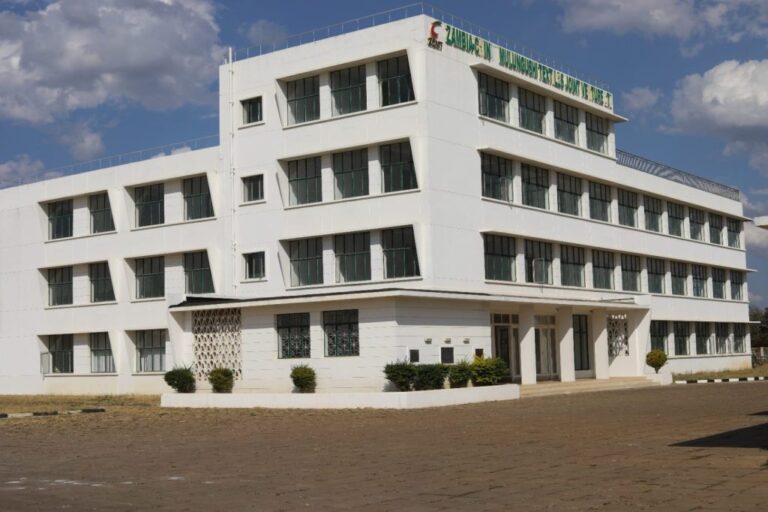
The long-awaited printing of chitenge materials at the Zambia-China Mulungushi Textiles in Kabwe District of Central Province has commenced, beginning with a test run that will last a few weeks in preparation for the official commissioning of the plant.

Central Province Permanent Secretary, Milner Mwanakampwe, says the printing at the factory which stopped operations 19 years ago, started yesterday.

Dr Mwanakampwe has told the Zambia News and Information Services (ZANIS) in Kabwe that the company is producing high-quality fabric capable of competing on the international market.

He adds that the textile firm will also be able to export its products to other countries in the Southern region.

Dr Mwanakampwe has further stated that the government will ensure the material is of good quality and supplied at the right price and at the right time.

Govt. remains committed to welfare of men and women in uniform

0

Government says it is aware that decent housing is a basic social need for military personnel.

Minister of Defense, Ambrose Lufuma, has told parliament that the government will continue implementing policies and programmes to ensure that men and women in uniform have decent accommodation.

 Mr Lufuma has disclosed that the treasury is working to ensure that his ministry builds decent houses for the defense forces.

He explains that the housing units are embodied in the ministry’s strategic plan.

“I would like to assure the defense forces, the men and women in uniform that the ministry’s strategic plan is underway, we are mobilising resources in order for us to reach the desired objective,” the Minister states.

Mr Lufuma adds that coupled with the available financing options, government is constructing housing units for the Zambia Army personnel in Lusaka’s Buffalo Park Barrack in order to cushion the housing deficit faced by service men and women.

The Minister was responding to a question raised by Patriotic Front (PF) Chinsali Constituency Member of Parliament, Kalalwe Mukosa, who wanted to find out whether the government has any plans to construct houses for the Zambia Army, Zambia Air Force and Zambia National Service officers, including how many military officers were in Chinsali District of Muchinga Province.

Chikankata MP urges parliamentarians to support President Hichilema’s call for unity

4

 Chikakanta Member of Parliament, Jacquline Sabao, has urged Members of Parliament to heed President Hakainde Hichilema’s call for members from both the ruling party and the opposition to work together in a spirit of patriotism, unity and mutual respect.

Ms Sabao says working together is the surest way to attaining national and sustainable development.

She notes that the opposition and the ruling party should advance their interests above partisan interests and collectively contribute to the development and prosperity of their beloved country, Zambia.

 Chikakanta law maker, in her submission on the Presidential address to parliament on the progress made with the application of values and principles last Friday, commended President Hichilema for his unrivaled commitment to building a nation that transcends tribal, ethnic, and regional divisions.

Ms Sabao said the UPND government has consistently promoted unity in diversity through the guiding principle of ‘One Zambia, One nation,’ a timeless motto of togetherness coined by the founding father of the nation, the late Dr Kenneth Kaunda.

She said the new dawn administration remains steadfast in its mission to create a more just society where every individual’s rights are respected and valued.

Ms Sabao cited the enhanced Constituency Development Fund that is shaping thousand lives regardless of political affiliation across the country.

She said the initiative has allowed people in communities to propose and implement projects tailored to their unique needs.

“From infrastructure improvements to educational programmes, the CDF seeks to empower citizens by giving them a voice in the decisions that affect their lives,” she said.

Beyond social infrastructure, Ms Sabao said the government has continued to empower citizens economically through other initiatives such as the Farmer Input Support Programme (FISP) currently standing at 1,024,454 beneficiaries.

She highlighted that these gains are contributing to improved livelihoods and ensuring food security at the constituency level in line with the national development agenda of fostering patriotism and national unity.

The Parliamentarian further stressed that to enhance social equity and uphold the dignity of all citizens, the government has announced a series of initiatives aimed at fostering inclusivity and addressing systemic inequalities.

“This administration is dedicated to bridging gaps and creating opportunities for all. In addition, government has rolled out various educational and health initiatives aimed at marginalised populations because of the visionary leadership of President Hichilema,” Ms Sabao said.

Heavy rains damage over 30 houses in Chinsali’s Nkula village

0

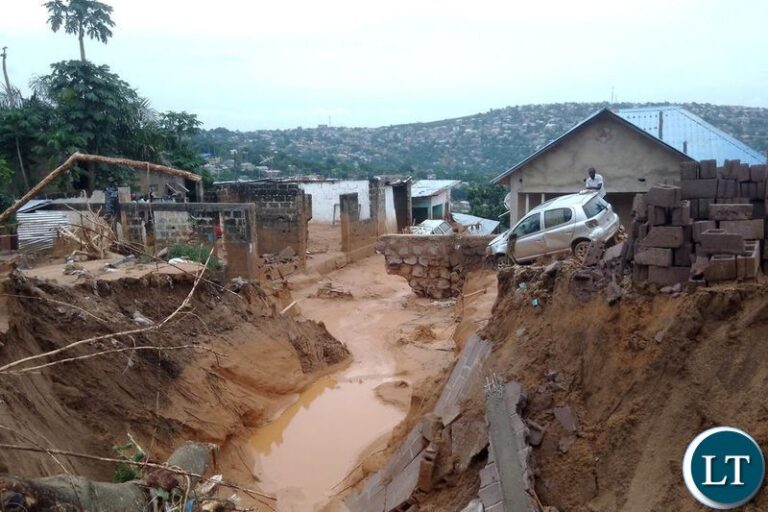
Over 30 houses in Chinsali’s Nkula village have been damaged following continuous hailstorms being experienced in the district.

Chinsali Acting District Commissioner, Brenda Silwembe, says most of the houses have partially collapsed while others are at the verge of completely collapsing.

Ms Silwembe told the media in an interview when she assessed the damage caused by heavy rains today, that the level of destruction witnessed poses great danger to human life, stating that the government will soon come to the aid of the victims.

She stated that the Disaster Management and Mitigation Unit (DMMU) has already been engaged to ensure that the identified affected households get the much needed help.

“We are glad that we have not received any reports of casualties due to these hailstorms for the past 74 hours,” she added.

Ms Silwembe further noted that most of the affected households are child headed as well as those with old aged residents, stressing that swift measures to assist the victims should be treated with utmost urgency.

The Acting District Commissioner also appealed to the people of Nkula village to ensure that they use strong building materials when constructing their houses in order to avoid such situations in future.

Meanwhile, Nkula Village Headman, Vincent Kangwa, thanked the government for quickly responding to the disaster of damaged households in the area.

Headman Kangwa charged that the quick response to address the challenges that the people of Nkula are facing, signifies the love that the government attaches towards people in village set ups.

“We are grateful to the government for considering helping those families that have been affected and we will be patiently waiting for that help before more heavy rains come upon us,” he added.

Chinsali District in Muchinga Province has in the recent past 5 days been experiencing heavy rains that have since damaged crops, roads and some houses.

Ministry of Sports plans to build a shopping mall at Heroes stadium

7

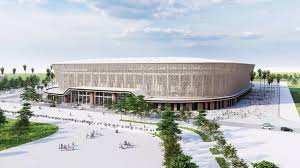
The Ministry of Youth, Sport and Arts says it is positioning the National Heroes Stadium to become a modern, multi-purpose economic and cultural hub for Lusaka.

Ministry’s National Heroes Stadium Director Raphael Mulenga said the ministry is exploring major investment opportunities on the vast land surrounding the facility.

Mr Mulenga said plans are underway to develop a shopping complex, bus station, fuel station and other commercial facilities to make services more accessible for the thousands of people who use the stadium.

He said the ministry will rely on the Public-Private Partnership (PPP) model, stressing that they do not intend to depend solely on government funding on the projects.

Mr Mulenga said the initiative mirrors international trends where stadiums operate as cities within cities, housing food courts, retail spaces, sports galleries and other attractions.

Mr Mulenga added that the ministry will also modernize and redesign the Gabon Disaster Memorial, into a museum-style national heritage and tourism facility.

Mr Mulenga noted that the ongoing works are extensive and will be implemented in phases due to limited resources.

The media reports that Mr Mulenga has since invited private-sector partners to submit proposals, stating that land is available and the ministry is eager to collaborate.

Govt, Healthy Learners sign MoU

1

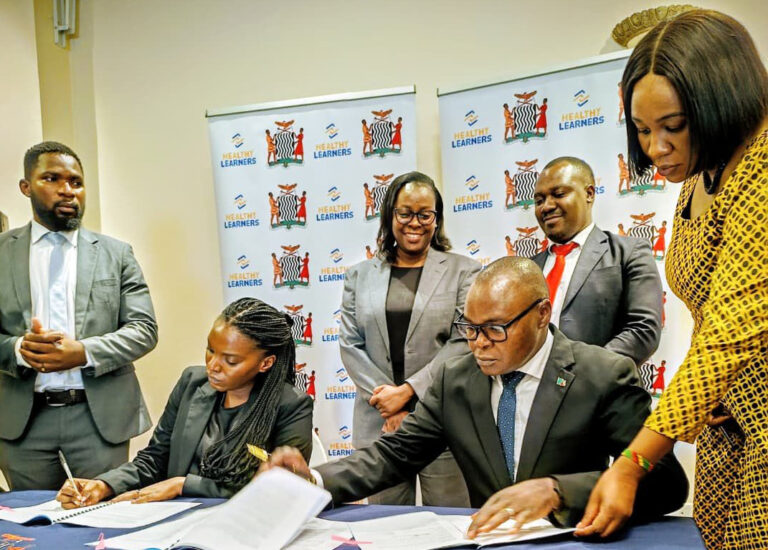
The Ministry of Local Government and Rural Development has signed a Memorandum of Understanding (MoU) with Healthy Learners to integrate standardized health rooms into school infrastructure under the School Health Programme.

Speaking during the signing ceremony at Sandy’s Creation Resort in Lusaka, Permanent Secretary Nicholas Phiri said the initiative reflects government’s deliberate policy to create a more conducive learning environment for pupils.

Mr Phiri emphasized that all education facilities funded under the Constituency Development Fund (CDF) will, as a matter of policy, incorporate health rooms in their designs.

“There cannot be education without a healthy body,” Mr. Phiri stated, adding that the move will improve access to basic health services for learners and reduce the distances pupils travel to seek care.

Mr Phiri stressed that partnerships remain key to delivering quality education in a healthy and supportive environment.

Parliamentary Caucus on School Health Chairperson and Itezhi-Tezhi MP, Twaambo Mutinta, said the agreement responds directly to President Hakainde Hichilema’s call for schools to provide comprehensive care that safeguards both the health and education needs of learners.

Mr Mutinta commended the ministry for translating stakeholder aspirations into concrete action.

And Healthy Learners Deputy CEO Angel Chelwa described the MoU as an important step toward improving coordination and sustainability of the School Health Programme.

Ms. Chelwa noted that since 2014, the programme has trained more than 7,000 school health teachers across all ten provinces, currently reaching nearly 1.2 million learners.

“The target is to reach three million learners by 2028, requiring about 2,000 health rooms and 15,000 trained teachers,” she said.

She emphasized that the ministry’s oversight of infrastructure, district planning and decentralized services makes the partnership both logical and necessary.

Fall rrmyworms ravage 4,500 Mambwe fields

0

Over 4,500 fields, covering about 2, 500 hectares are affected by fall army worms in Mambwe District, Eastern province.

Mambwe District Agricultural Coordinator (DACO) Henry Mukulumoya said fields belonging to 4,791 households have been infested with fall army worms.

Mr Mukulumoya said that the infestation rate currently stand at 19.8 percent.

He added that 2,564 hectares of land have been affected by the pest.

Mr Mukulumoya says the district had distributed 491 litres of chemical (Cypermethrin) at the germination stage to control the spread of the worms.

He however said the use of chemicals in controlling pests was not sustainable.

Mr Mukulumoya said farmers were encouraged to practice Integrated Pest Management (IPM) instead.

“We encourage our farmers to exhaust all sustainable methods which include biological, cultural and mechanical control before resorting to using chemical,” he said.

The DACO explained that the use of chemicals had the potential of destroying biodiversity.