Wednesday, June 10, 2026
15.1 C
Lusaka
Home Blog Page 178

Egypt vs Nigeria: fire up the AFCON 2025 bronze final with 1xBet!

0

The battle for the title of Africa’s strongest football nation is nearing its conclusion – it’s time to grab a front-row ticket to the exciting show. Follow the link to the best sports betting site and bet on the Egypt vs Nigeria match. 1xBet,the official sponsor of AFCON 2025, has many interesting markets and detailed statistics to help you make informed and responsible decisions. The big football tournament is in full swing: the teams will fight for a consolation prize in the form of bronze medals and a chance to end the competition on a high note.

Egypt’s broken dreams

The 7-time African champions were left without a trophy once again. In the AFCON 2021 final remake, Mohamed Salah and his teammates failed to tame the Senegal national team’s spirit and will to win. At the end of the match, Sadio Mané’s crazy long shot caught Mohamed El Shenawy off guard and sent the Lions of Teranga to the final.

Despite the efforts of star attacking duo Mohamed Salah and Omar Marmoush,Egypt struggled to create scoring opportunities throughout the tournament. This was also the case in the match against Senegal: the Pharaohs only managed to take one shot on target, with their xG amounting to just 0.12.To snatch the bronze medals from Victor Osimhen and Ademola Lookman,
Egypt need to improve their counterattacking play. The rapid runs of Salah and Marmoush could force Nigeria to capitulate.

Luck turned its back on Nigeria

The Super Eagles won fans’ hearts with their spectacular and entertaining play,becoming the highest-scoring team in the tournament with 14 goals in 6 games.However, in the semi-finals, Morocco managed to stifle their attacking momentum. The Atlas Lions simply didn’t let their opponents get going and took the match to a penalty shootout.

The fate of the ticket to the final was decided by Yassine Bounou, who showed miraculous reflexes. Nigeria once again stopped one step away from the trophy and will try to redeem themselves in the battle for third place.The Super Eagles had arrived in high spirits for their match against Morocco,throwing a carnival-like party in the players’ tunnel with singing and dancing.

In the game against Egypt, they’ll need more concentration and composure to convert their scoring opportunities and finish the tournament with medals for the second time in a row.

Who will win the bronze medals?

Considering the teams’ current form and rosters, Nigeria are considered the favorites. Their H2H history points to equal chances — in their last 5 encounters, the Super Eagles and the Pharaohs have each won twice, with another match ending in a draw.

Odds: W1 – 3.565, X – 3.155, W2 – 2.363

The best sports betting site 1xBet will bring more excitement to the game:
follow the link and pick your favorites for the AFCON 2025 third-place playoff.
Make your predictions based on facts and statistics. Remember: responsible gambling is your key to success!
Hichilema’s Chawama Defeat: An August Reckoning?

6

By Kapya Kaoma

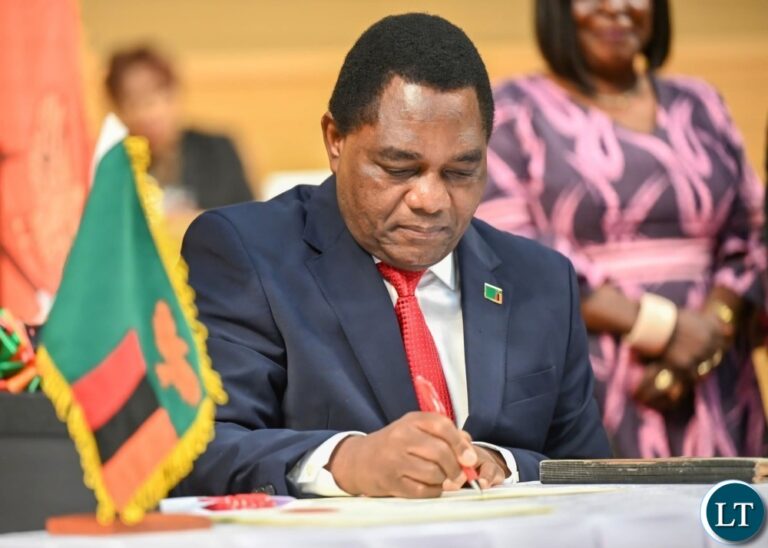
President Hakainde Hichilema self-inflicted embarrassment in Chawama confirms the Bemba saying, “umwana ekalisha elyo anya.”

One wonders why he forced a by-election in Chawama so close to the general election–it was just poor politics. Now everyone knows how weak he is–he has lost to the most disorganized opposition. Indeed, pride comes after the fall. Even attempts to rig didn’t work.

HH holds power, but today, he knows that the myth that Zambia has no opposition was shattered in Chawama. What the president faces is no longer a political party—it is the Zambian people themselves. It is time he confronted that reality. His much-celebrated Bill 7 may yet haunt him. Zambians are not stupid.

I am not among those who believe a Southern Province vote will save this presidency. It won’t. Hichilema’s political capital is exhausted. His presidency is already history.

I said the same about President Edgar Lungu, but the comparison matters. Lungu, for all his failures, governed with visible outcomes. Roads were built. New state of the art Airports expanded. Hospitals opened. Cities changed. I condemned him for unleashing cadres and tolerating abuse, but development happened under his watch. There was something tangible to point to. What, then, does President Hichilema point to? Nada!

He arrived branding himself “Mr. Clean.” Five years later, Zambia is drowning in corruption allegations, patronage politics, and selective justice. Opposition leaders have been absorbed, institutions compromised, and watchdogs neutralized.

The Anti-Corruption Commission and the Drug Enforcement Commission operate under his authority, yet scandals multiply while investigations target only those linked to the previous administration. The man who promised to declare his assets has ruled for five years without doing so.

Zambians still do not know what he owns, who his business partners are, or how many companies doing business with the state are linked to him. Transparency was promised; secrecy delivered. This is not reform. It is the new dawn of corruption. Even the law is applied selectively.

Hate speech is tolerated when it is spoken in Choma, but criminalized when uttered in the Northern Province. Tribalism, it seems, only exists outside Southern Province. Patriotic Zambians are told who to vote for—or face consequences. Had such language been directed at Bembas, arrests would have followed. We remember what happened to Kambwili.

These contradictions have destroyed the president’s credibility. Hichilema lied his way into office and forgot that lies have consequences. Instead of confronting the truth, he treated Zambians as though they had no memory.

But people remember. Promises were made and broken. Lives grew harder. Suffering deepened. While citizens endured economic pain, the president expanded his comforts, occupying multiple State Houses and insisting conditions were better than before.

Zambians know otherwise. They are living the reality. Chawama is not an accident. It is a warning. But it is only the beginning.

No amount of money will erase memory. On August 13, President Hichilema will learn what President Lungu learned before him: regional loyalty is not enough. Just as the Eastern vote could not save Lungu, the Southern vote will not save Hichilema.

Power fades. The people remain. UPND will be crying too! As with PF, Kapya Kaoma will be blamed for its demise.

ZAMBIA, DRC STRENGTHEN SECURITY MEASURES FOR TRUCKERS

0

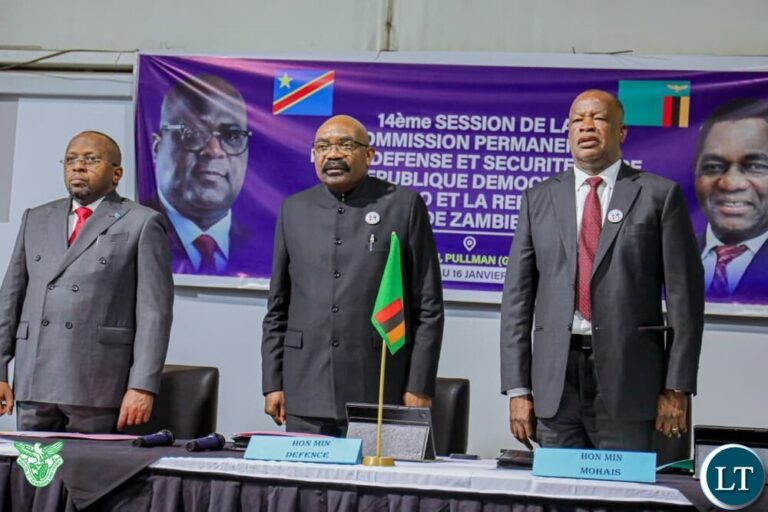
Zambia and the Democratic Republic of Congo have resolved to strengthen security measures along high-risk trucking roads in both countries to guarantee safety for cross-border truck drivers.

This was revealed in a Communique issued and signed by Minister of Defence Ambrose Lufuma, alongside his DRC counterpart, Deputy Prime Minister and Minister of Interior, Security, Decentralisation and Traditional Affairs, Jacquemain Shabani Lukoo at the just ended 14th JPC on Defence and Security in DRC.

The media reports that the move by the Commission aims to ensure the safety of cross-border truck drivers operating in the region, against attacks, and in line with the international norms and regional protocols.

Regarding the facilitation of commerce and trade, the Commission took note of security challenges that the truck drivers face as they transit through the DRC while transporting goods.

The 14th JPC on Defence and Security also noted with concern the continued insecurity in the eastern DRC, reaffirming its support for interventions aimed at resolving the insecurity.

Zambia and the DRC further underscored the need for international trade not to be affected by attacks on truck drivers.

Meanwhile, truck drivers have welcomed the resolution on the safety of truckers, citing the attacks faced when transporting goods in that country.

A Tanzanian truck driver Ali Yousuf expressed sadness at the way foreign truck drivers have been treated as they transit, stressing that it would be a positive move if the agreed enhancement of security is implemented.

While, Nkumbu Sikalangwe, a Zambian truck driver, welcomed the move, noting that it should be adhered to as resolved by the two nations.

Business Without a Business Plan: How Modern Zambian Entrepreneurs Start by Doing, Not Planning

1

By Dr Sidney Kawimbe

In Zambia’s dynamic economic landscape, a new breed of entrepreneurs is emerging, young innovators and small-scale business owners who are building ventures based on action, experimentation, and adapting to real-world demand rather than on elaborate business plans. For decades, the traditional narrative of entrepreneurship emphasised detailed business plans, lengthy documents with projections, market analysis, and financial forecasts. Today, many Zambian entrepreneurs are proving that you do not need a formal business plan to begin creating value and earning income; instead, they are learning in real time, refining their ideas through direct engagement with customers.

Real Markets, Real Learning

Across Lusaka, Kitwe, Ndola and beyond, numerous small enterprises, from mobile social-media services to agricultural trading, are taking off as founders “learn by doing,” a phrase that reminds the author of his time at Technical and Vocational Teachers’ College Centre (TVTC) during the Tech 61 teaching course, where practical, hands-on learning was strongly emphasized. Many entrepreneurs start with what they have: a skill, a tool, a phone and an Instagram or WhatsApp account. They try selling a service or product, gauge customer response, adjust pricing, and gradually build trust and revenue without a formal plan drafted on paper. This approach mirrors global shifts toward lean entrepreneurship, where the emphasis is on testing a concept, responding to feedback, and refining a product often in iterative, short cycles. Instead of forecasting five years ahead, founders ask: What can we learn this month? Such grounded action is especially relevant in Zambia, where mobile penetration and digital platforms have expanded opportunity for informal and online commerce. Mobile apps and social media, for example, are increasingly used to connect buyers and sellers, facilitate transactions, and promote services, reducing the need for traditional offline setups.

From Informal Hustles to Scalable Ventures

This “start first, plan later” mindset has particular resonance among Zambia’s youth, many of whom face structural barriers to formal business registration and financing. While the government and private sector have made progress in empowering small businesses with initiatives to formalise and support micro, small and medium enterprises (MSMEs) access to finance and market linkages remains a challenge for many without formal documentation. Nevertheless, entrepreneurship is increasingly seen as a viable pathway to employment and income generation. Government figures and experts alike have called on youths to engage in business and agriculture as means of self-employment and job creation, highlighting the potential of local enterprise to drive economic participation.

For many grassroots entrepreneurs, a detailed business plan may come later when they have initial traction, revenue, and a clearer picture of customer demand. Early efforts focus instead on building networks, finding customers, and demonstrating value. Practical experience, rather than hypothetical plans, becomes the foundation for future growth.

Benefits of Starting with Action

There are several advantages to beginning without a formal business plan:
• Lower costs and faster start-up: Without months spent on planning, founders can begin earning sooner.
• Adaptability: Real customer interactions provide immediate feedback that can shape products and services.
• Learning through doing: Entrepreneurs develop practical skills in marketing, pricing, negotiation and customer service simply by engaging in the market.

This model has broadened access to entrepreneurship for segments of the population who may not have formal training or business education but possess strong motivation and creativity.

Balancing Planning and Action

Experts, however, caution that while starting without a business plan can be effective, some level of planning and record-keeping becomes essential as enterprises grow. Managing finances, tracking expenses and planning for sustainability are key skills that can help ventures evolve from informal hustles into mature small businesses that contribute more fully to the economy.

Indeed, Zambia’s broader development agenda recognises the importance of supporting SMEs with training, financing and market access bridging the gap between early action and structured growth.

A Practical Path Forward

In Zambia’s entrepreneurial ecosystem, the story of business without a business plan is not about recklessness. It is about pragmatism: starting with what you have, learning directly from the market, and using real experiences to inform future decisions. By embracing this approach, many Zambians are discovering that entrepreneurship is not an abstract blueprint on paper, but a lived journey shaped by customers, opportunity, and resilience, proving that action can indeed be the first step toward sustainable business success.

The Author is a Senior Lecturer in Business at ZCAS University

NORTH-WESTERN FARMERS ASSURED

0

North-Western Province Permanent Secretary Colonel Grandson Katambi (Retired) has assured farmers in the Province that all funds owed to them will be disbursed, with Banks expected to receive the money.

Colonel Katambi said the Office of the District Commissioner will work closely with financial institutions to ensure that all affected farmers are paid promptly.

He made the remarks during the 2026 Tree Planting exercise Launch in Solwezi today.

“Be assured that those of you who sold maize to the Food Reserve Agency (FRA) will be paid, the President Hakainde Hichilema has sourced the funds and all farmers will receive their dues,” Colonel Katambi said.

The Permanent Secretary urged farmers not to worry, noting that the President places high priority on their welfare, in recognition of the critical role they play in ensuring National food security.

Meanwhile, North-Western Province Principal Forestry Officer Lasford Champo has called on residents to go beyond planting trees and ensure they nurture them to maturity.

He emphasised that tree planting should not be treated as a ceremonial activity, but as a practical step towards environmental restoration and strengthening community resilience.

“The success of today’s efforts will not be measured by the number of trees planted, but by the number of trees that survive,” Mr Champo said.

And Kansanshi Mine Agriculture and Wildlife Coordinator Jackson Katampi disclosed that the mining firm plans to plant more than 10,000 trees in 2026.

Dr Katampi further appealed to all stakeholders to work together in contributing positively to the fight against climate change.

1xBet Zambia gave away Samsung Galaxy A16 smartphone and other top prizes in New Year promo

0

On New Year’s Eve 2026,1xBet held a festive holiday promo for customers in Zambia. As part of it, everyone could get one of the guaranteed gifts and also win the main super prize – a Samsung Galaxy A16 smartphone.

Promo terms
1xBet New Year promo took place from December 26 to 28, 2025, at the Royal Park
bar. To join the draw and have a chance to win the main prize, guests just needed to
meet one of two conditions:

●​ Deposit 100 ZMW or more to the 1xBet account​ or
●​ Place a Live bet of 100 ZMW or more on any match

After meeting the condition, each participant spun the Wheel of Fortune and won one of the guaranteed prizes: branded T-shirts, caps, sunglasses, or a 100 ZMW cash prize.

Throughout all three days, promo guests enjoyed a friendly atmosphere, exciting vibes, and watched thrilling football matches on Royal Park’s big screens.

Super prize draw

On the last day of the promo, December 28, 2025, 1xBet gave away the main prize –a cool Samsung Galaxy A16 smartphone. The lucky winner was Yorum Mofya from Libala South, who immediately received the box with the new smartphone!

“This is my first time joining a 1xBet promo, and I was pleasantly shocked that my very first try was a win! I recommend everyone who hasn’t joined a 1xBet promo yet to do so. The prizes here are really cool, and there’s always a chance to win!” said Yorum Mofya.

1xBet regularly runs major promos with valuable prizes, bonuses, and free bets.Simple rules and real gifts make these promos a great chance to try your luck — you could be the next winner!

To be the first to hear about new 1xBet promos, make sure to follow the brand on social media and check the Promo section on the website!

Construction of Kasumbalesa Border post advances

0

Construction of the Kasumbalesa One-Stop Border Post in Chililabombwe District has made steady progress, reaching at about 30 percent completion.

Copperbelt Province Minister Elisha Matambo, who toured the site, said the project will significantly transform the Kasumbalesa border through modern infrastructure and a concrete parking facility for truck drivers.

Mr Matambo noted that the current environment at the border is not conducive, but the ongoing works will modernise the facility as promised by President Hakainde Hichilema.

The Minister expressed satisfaction with the pace and quality of works, adding that the contractor has adequate machinery to complete the project.

 He said once phase one is completed, the project will create employment opportunities for local people and deliver durable infrastructure that will last for many years.

 “I should mention that the President who is expected to visit the province will commission the border post once completed,” Mr Matambo said.

Meanwhile, Zmart Project Manager Mwenda Silumell said the terminal building design is complete, with much of last year’s work focused on addressing truck parking challenges caused by waterlogging.

Mr Silumell revealed that upon completion, the facility will accommodate about 2,000 trucks, with 10 ablution blocks and nine canteens for drivers.

He explained that the border post will introduce upgraded features, including triple transhipment, enabling about 30 trucks to be transhipped simultaneously.

“Officers are expected to move into the new building by the end of May,” he said.

And Zambia Revenue Authority Border Facility Manager Nasa Lungu added that the new border post will include a fire station to enhance disaster preparedness.

He indicated that ZRA looks forward to operating from the new facility which will have improved systems and controls

Over 2,000 desks procured in Lavushimanda

0

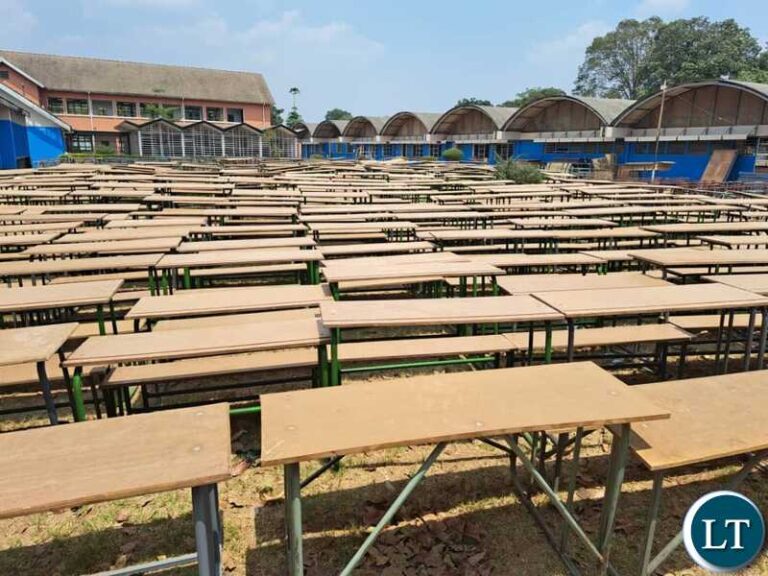
Government through the 2023 Constituency Development Fund (CDF) has procured 2,023 school desks at a cost of over K3.2 million in Lavushimanda District in Muchinga Province.

Speaking in an interview with the media, Lavushimanda District Public Relations Officer (PRO) Stella Simutowe said the desks were procured in order to ensure schools are equipped with sufficient desks.

Ms Simutowe explained that the desks were procured to enhance the pupils capability to learn in a conducive environment.

“Under 2023, we procured 1,606 desks going to primary and secondary schools at a total of K2,580,800 and we also procured 417 ECE desks which was going at a total cost of K625,000, with the total amounting to K3, 205, 800,” she said.

And Lavushimanda District Education Board Secretary (DEBS) Beatus Nshenda noted that the development has highly motivated pupils to go to school.

He added that the procurement of desks has increased the performance of learners in schools.

“Desks have made our pupils learn in a conducive environment, they are happy to go to school because they know that they are going to sit properly than the way it used to be in the past,” Mr Nshenda stated.

He said that the government should continue providing such services so that delivery of education is improved.

And a Headteacher of Mununga Primary School in Lavushimanda District, Richard Mwenya said through the procurement of desks, enrollment has increased at his school.

Mr Mwenya said that all the classes at the school have enough desks to accommodate all learners.

“At Mununga Primary School, we previously had less than 600 learners, but as of now the number has escalated to 900 learners,” he said.

UPND Runing out of Time – Changala

8

UPND Runing out of Time – Changala
Opposition political commentator and activist Brebner Changala has accused the ruling United Party for National Development of acting out of desperation as it seeks to retain power ahead of the August general elections.

Changala said recent political conduct by the ruling party reflects growing anxiety about its electoral prospects. He argued that instead of focusing on governance and service delivery, the UPND has increasingly resorted to aggressive political tactics aimed at suppressing dissent and weakening opposition forces.

According to Changala, the political environment has shifted significantly since the ruling party assumed office, with public patience wearing thin amid economic pressure and unmet expectations. He said the government’s response to criticism suggests an administration struggling to maintain legitimacy.

Changala pointed to what he described as selective application of the law, heightened intolerance toward opposing views, and increased political confrontations. He said these trends were inconsistent with democratic principles and raised concern about the direction of governance.

He argued that desperation often manifests when incumbents sense declining support. Changala said actions taken in recent months, including confrontations with opposition figures and heightened political rhetoric, indicated a ruling party preparing for a difficult electoral contest.

Changala also criticised what he described as the ruling party’s reliance on state visibility and institutional advantage. He said while incumbency provides access to resources and platforms, such advantages do not guarantee electoral success when public confidence erodes.

He said the upcoming elections would test whether voters prioritise accountability and performance over incumbency. Changala maintained that Zambians are increasingly conscious of the difference between political messaging and lived reality.

Changala further warned that desperation-driven politics carries risks for national stability. He said escalating tensions and confrontational tactics could undermine public trust in democratic institutions if not checked.

He urged the ruling party to respect political competition and uphold democratic norms as the election approaches. Changala said tolerance of opposing views and adherence to constitutional principles were essential to maintaining political stability.

Changala also addressed the opposition, saying unity and discipline would be critical in presenting a credible alternative. He said disorganisation within opposition ranks would only strengthen incumbency advantage.

He argued that the August election would be shaped by voter perception of fairness, leadership conduct, and economic conditions. Changala said desperation politics often backfires when voters perceive leaders as prioritising survival over service.

He maintained that political authority ultimately derives from the electorate and warned that attempts to cling to power through intimidation or manipulation risk long-term damage to democratic credibility.

Changala said the ruling party still had an opportunity to recalibrate its approach, but insisted that voters would render their judgment at the ballot.

Some Opposition Parties Are Secretly Backed by UPND – Fube

6

Chilubi Member of Parliament Mulenga Fube has alleged that some opposition political parties that participated in the Chawama parliamentary by-election were sponsored by the ruling United Party for National Development, accusing them of deliberately working to divide the opposition vote.

Fube said the decision by certain opposition parties to field their own candidates instead of supporting a single candidate under the Tonse Alliance amounted to acting as paid mercenaries on behalf of the ruling party. He said such conduct weakened collective opposition efforts and handed an advantage to the UPND.

He described the behaviour as shocking, stating that the refusal by some parties to cooperate contradicted the broader call for opposition unity ahead of the August general elections. Fube said opposition parties that genuinely sought political change should have prioritised collective action over individual ambitions.

Fube alleged that some opposition leaders spent more time attacking fellow opposition figures than challenging the ruling party, a pattern he said raised serious questions about their independence. He said the conduct suggested the presence of hidden sponsorship arrangements designed to fragment the opposition.

He said the Chawama by-election provided clear evidence that unity was possible and effective when opposition parties worked together. According to Fube, the outcome of the by-election demonstrated that a united front could defeat the ruling party.

Fube said the opposition’s failure to act collectively in certain cases benefited the UPND by splitting votes and confusing voters. He said such strategies undermined the democratic process and eroded public trust in opposition politics.

He also accused some members within opposition ranks of applying double standards, saying it was disturbing that even individuals within established parties appeared willing to work against collective interests. Fube said such behaviour weakened the credibility of the opposition as a whole.

Fube called on opposition parties to reassess their positions and recommit to unity if they were serious about removing the UPND from power. He said ego-driven politics and personal calculations had no place in a movement seeking national change.

He said opposition unity was not optional but necessary, warning that continued fragmentation would only prolong the ruling party’s hold on power. Fube said the lesson from Chawama should guide opposition strategy going forward.

Fube maintained that opposition politics must be grounded in discipline, cooperation, and shared purpose. He said the electorate had shown a clear preference for unity and expected leaders to rise above individual interests.

Lubinda Declares UPND Finished Ahead of August Polls

9

Lubinda Declares UPND Finished Ahead of August Polls

Patriotic Front acting president Given Lubinda has declared the ruling United Party for National Development politically finished, arguing that opposition unity has reshaped Zambia’s electoral terrain ahead of the August general elections.

Lubinda said recent electoral outcomes, including the Chawama parliamentary by-election, demonstrate a shift in voter behaviour that favours coordinated opposition efforts over fragmented competition. He stated that the ruling party is now facing the consequences of sustained public dissatisfaction and a loss of confidence among voters.

According to Lubinda, the Chawama result should be understood as more than a local contest. He described it as an indicator of national sentiment, particularly in urban constituencies where voters are increasingly motivated by economic pressure, governance concerns, and accountability rather than party loyalty.

Lubinda maintained that opposition cooperation has neutralised the advantage traditionally enjoyed by incumbents when opposition parties contest elections separately. He said vote splitting has historically distorted outcomes, allowing ruling parties to prevail without majority support, a pattern he claimed is now being reversed.

The PF acting leader said opposition leaders had learned from past electoral cycles in which personal ambition and rivalry weakened collective performance. He argued that recent coordination reflects a deliberate shift toward discipline and shared strategy rather than convenience.

Lubinda also dismissed suggestions that opposition unity was temporary or opportunistic. He said the current alignment is rooted in shared objectives and recognition that electoral success requires cooperation. He added that voters are increasingly attentive to whether political leaders place national interest above individual positioning.

He criticised the ruling party’s governance record, stating that economic hardship and rising living costs have eroded public trust. Lubinda said voters are responding to lived experience rather than political messaging, particularly in areas affected by high prices, job insecurity, and reduced purchasing power.

Lubinda further stated that the political environment heading toward August remains competitive, but insisted that momentum is no longer on the side of the ruling party. He said opposition leaders must now focus on maintaining cohesion, avoiding internal disputes, and presenting clear alternatives to the electorate.

He warned that any return to rivalry or disunity would undermine gains already made. Lubinda said the responsibility now lies with opposition leaders to demonstrate maturity and consistency in the months ahead.

Lubinda acknowledged that the ruling party would continue to campaign aggressively and utilise state visibility, but argued that electoral outcomes ultimately depend on voter choice. He said recent results suggest that incumbency alone no longer guarantees victory.

The PF acting president said the August election would be defined by whether voters seek continuity or change. He expressed confidence that the electorate is prepared to pursue change through coordinated opposition support.

Lubinda concluded that opposition unity has already altered the political balance and that sustaining this approach will be decisive in determining the outcome of the general election.

UPND Loses Chawama Seat but Gains Public Trust for Peace, Says Cheelo

2

Monze Central United Party for National Development (UPND) aspiring candidate Victor Cheelo has acknowledged the party’s loss in the Chawama Parliamentary by-election, saying the ruling party nevertheless gained public trust by ensuring peace and order during the electoral process.

Chawama Constituency went to the polls on Thursday to elect a new Member of Parliament following the declaration of the seat vacant after prolonged absence by former lawmaker Tasila Lungu. Ms Lungu lost the seat after Parliament ruled that her continued absence from the National Assembly, following the death of her father, former President Edgar Lungu, rendered the seat vacant.

According to the official results, Forum for Democracy and Development (FDD) candidate Bright Nundwe won the election with 8,085 votes out of a total of 18,096 ballots cast. He defeated United Party for National Development (UPND) candidate Morgan Muunda, who polled 6,542 votes.

Reacting to the outcome, Mr Cheelo said although the UPND lost the seat, the party earned the trust of Zambians by maintaining peace and order throughout the by-election period.

He compared the conduct of the Chawama by-election to previous elections held under the former Patriotic Front (PF) administration, stating that past by-elections were often characterised by violence and alleged abuse by party cadres and law enforcement officers.

Mr Cheelo said the party would reflect on the outcome and address internal challenges to avoid similar losses in future elections.

He also expressed gratitude to President Hakainde Hichilema for promoting a peaceful political environment during the by-election period, describing the election as orderly and calm.

PF Members Campaigning With Opposition to Face Expulsion, Police Action – Chabinga

2

PATRIOTIC Front (PF) faction leader Robert Chabinga has warned that any PF members found campaigning with opposition political parties will be expelled and reported to the police.

Mr Chabinga said he was angered by what he described as continued disregard of his directives by some PF members, whom he had instructed not to associate with the opposition but to align themselves with the ruling United Party for National Development (UPND).

Commenting on the outcome of the recently concluded Chawama Parliamentary by-election, Mr Chabinga said some party officials had openly defied his instructions and would face disciplinary action, including expulsion from the party and possible police action.

He stated that he is in possession of all official PF documentation, commonly referred to as “Lugwalo,” and maintained that he is the authorised leader of the party who issues binding instructions.

Mr Chabinga further warned Miles Sampa, Given Lubinda and Chishimba Kambwili against presenting themselves as PF members, insisting that they do not belong to his faction of the party.

He said he would report to the police anyone found wearing PF regalia, describing such actions as impersonation.

Meanwhile, Mr Chabinga said the Forum for Democracy and Development (FDD) won the Chawama by-election, attributing the outcome to what he termed sabotage by PF members who defied his directives. He added that police had been instructed to arrest anyone claiming PF membership after being expelled from the party.

Government Reviews Policy Direction After IMF Programme

Government Reviews Policy Direction After IMF Programme

The Government has begun outlining its next steps following the conclusion of Zambia’s IMF-supported programme, signalling a transition toward domestically anchored economic management while maintaining engagement with international financial institutions.

The IMF arrangement, which was implemented to stabilise the economy and support debt restructuring, played a central role in shaping fiscal policy, public financial management, and broader macroeconomic reforms. With the programme now concluded, authorities are assessing how to sustain the gains achieved under IMF supervision while charting an independent policy course.

Government officials have indicated that the end of the IMF-supported framework does not signal a withdrawal from cooperation with the Fund. Zambia is expected to continue engagement through surveillance processes, technical assistance, and policy consultations aimed at preserving fiscal discipline and macroeconomic stability.

The programme provided a structured framework for reforms, including measures to control public expenditure, enhance revenue mobilisation, and strengthen debt management systems. It also supported Zambia’s efforts to restructure external debt, a process that helped restore confidence among creditors and development partners.

As the country transitions beyond the programme, authorities face the challenge of maintaining reform momentum without the formal conditionality associated with IMF arrangements. Economic managers have acknowledged that policy consistency and institutional strength will be critical to preventing a return to fiscal imbalances.

Government has emphasised that post-IMF economic management will prioritise growth, job creation, and poverty reduction while safeguarding macroeconomic stability. Fiscal prudence remains a guiding principle, particularly in managing public debt and expenditure pressures.

Improved economic indicators, including currency performance and inflation trends, have been linked to reforms implemented during the IMF-supported period. Authorities are now focused on consolidating these gains by strengthening domestic institutions responsible for fiscal oversight and economic planning.

Continued engagement with the IMF is expected to provide technical support and policy guidance as Zambia refines its economic framework. This approach allows for alignment with international best practices while preserving national ownership of economic policy.

The transition period also presents opportunities for greater flexibility in policy design, enabling government to tailor interventions to local economic conditions. Officials have cautioned, however, that flexibility must be balanced with discipline to ensure long-term sustainability.

Economic planners have underscored the importance of protecting social spending during the post-IMF phase, ensuring that vulnerable populations benefit from economic recovery. Health, education, and social protection programmes remain central to government priorities.

Collaboration with other development partners is also expected to continue alongside IMF engagement. Multilateral and bilateral partners remain key sources of financing and technical expertise as Zambia pursues its development agenda.

Authorities have said transparency and accountability will remain essential to maintaining public and investor confidence. Clear communication of policy direction is viewed as critical to sustaining economic stability.

The Government maintains that the post-IMF period represents a new phase in Zambia’s economic management, one that builds on reforms already undertaken while reinforcing national ownership of policy decisions.

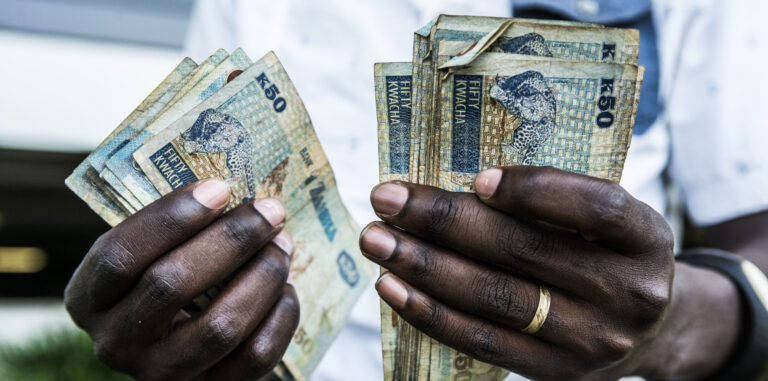
Kwacha Emerges as World’s Best-Performing Currency

2

The Zambian kwacha has emerged as the world’s best-performing currency, reflecting a combination of strengthened macroeconomic management, improved fiscal discipline, and renewed confidence in the country’s economic direction.

The currency’s performance has been driven by a series of policy adjustments that have stabilised key economic indicators. Improved coordination between fiscal and monetary authorities has helped rein in inflationary pressures, stabilise liquidity conditions, and restore predictability in the foreign exchange market.

One of the major contributors to the kwacha’s appreciation has been improved balance-of-payments dynamics. Increased foreign exchange inflows, supported by export earnings and development financing, have strengthened reserves and reduced volatility in the currency market. These inflows have helped meet demand for foreign currency while easing pressure on the exchange rate.

Debt restructuring progress has also played a role in restoring confidence. By addressing external debt obligations and clarifying repayment frameworks, Zambia has reduced uncertainty among creditors and investors. This has improved perceptions of creditworthiness and lowered risk premiums, supporting currency stability.

Monetary policy actions have further supported the kwacha. Tight liquidity management and interest-rate measures have helped contain inflation and discourage speculative activity in the foreign exchange market. These steps have reinforced confidence in the currency and signalled commitment to macroeconomic stability.

The strengthening of the kwacha has had direct economic effects. A firmer currency has reduced the cost of imported goods, easing imported inflation and helping stabilise consumer prices. This has provided relief to households and businesses that rely on imported inputs, fuel, and consumer goods.

At the same time, authorities have emphasised the need to manage currency appreciation carefully to avoid undermining export competitiveness. Economic planners continue to monitor exchange-rate movements to ensure that gains in stability do not negatively affect export-oriented sectors.

Institutional reforms have also contributed to the kwacha’s performance. Improvements in public financial management, revenue administration, and fiscal transparency have strengthened confidence in economic governance. These reforms have enhanced predictability in policy implementation, a key factor in sustaining currency strength.

Investor sentiment has responded positively to clearer policy direction and improved macroeconomic indicators. Reduced uncertainty has encouraged inflows into government securities and other financial instruments, supporting demand for the kwacha.

Despite its strong performance, authorities acknowledge that sustaining currency stability will require continued discipline. External risks, including shifts in global commodity prices and tightening international financial conditions, remain potential challenges. Maintaining buffers and policy credibility is viewed as essential to preserving gains.

Economic managers have stressed that the kwacha’s current position reflects progress rather than permanence. Continued reforms, careful fiscal management, and institutional strength will determine whether the currency maintains its standing in global markets.

The kwacha’s performance has positioned Zambia favourably within international financial circles, drawing attention to the country’s reform trajectory. Authorities view this as an opportunity to consolidate stability while advancing inclusive economic growth.