Tuesday, June 9, 2026
13 C
Lusaka
Home Blog Page 187

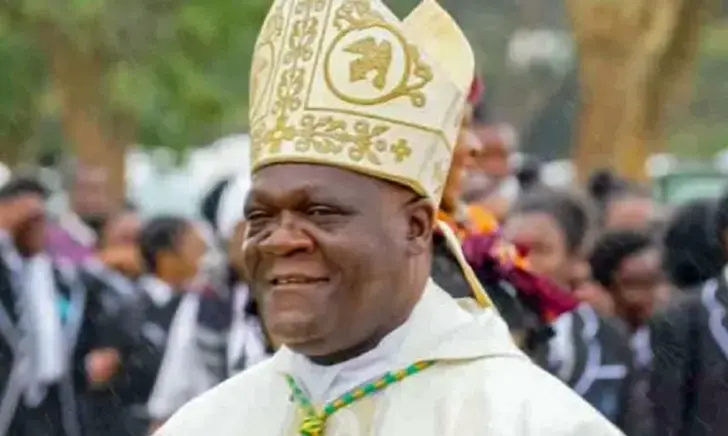
Archbishop Alick Banda has desecrated the Catholic Church; he must resign!

8

A Lusaka based Zambia Revenue Authority (ZRA) employee has finally let the cat of the bag! He has vehemently denied ever laying his hands on the controversial ‘ichipaso’ that somehow found itself into the possession of Lusaka Archbishop Alick Banda.

He narrates, in an exclusive interview with a named tabloid, how fraudulent receipts and other documents were generated in his name by his named supervisor, in a deal that was meant to facilitate the illegal disposal of government vehicles from ZRA.

“I don’t know Archbishop Alick Banda, I have never met or talked to him in my life, I’m sure even him doesn’t know me. So how did I gift him a vehicle?” wondered Mulopa Kaunda.

You don’t have to be a rocket scientist to establish a crime was committed here…… illegal conversion of state property into private, not even the Church! And by profiting from the same “dirty vehicle,” the Archbishop definitely stands accused of committing a felony as an accomplice.

Now, what does Archbishop Banda have to say about the same? Where does it indeed leave the much respected Catholic Church?

There’s no doubt about it…..Archbishop Banda has wilfully exposed the Catholic Church to unnecessary contempt and ridicule – he has desecrated it! The only wisest and honourable thing now left for him to do is tender in his resignation letter without any further ado to protect the image of the Church.

This is not the first time some of us are having our ears being perforated by disturbing stories about the said man of God. Whispers abound on the streets of Lusaka about how bag loads of cool cash were deposited into his hands for safe keeping, at the Cathedral, after the spectacular general elections that saw his ‘bestie’ meeting his Waterloo!

We even doubt whether the Archbishop still commands respect amongst his peers. During the state funeral for former President Ruphia Banda in 2022 for instance held at the Showgrounds in Lusaka, we happened to bump into a retired Lusaka Archbishop in a liquor store at Northmead. The septuagenarian definitely had no kind words for his successor. He complained of how the Archbishop went behind the backs of his fellow Bishops during a State House visit when PF was still in power to privately meet President Lungu for obvious reasons!

The Bishops couldn’t if course hide their displeasure as they drove back to their base at Kapingila House in Kabulonga in a shuttle bus. Can the Archbishop deny this?

The Catholic Church is bigger than any living being; it has been there for approximately 2,000 years, tracing its roots back to Jesus Christ and the apostles. It’s one of the oldest institutions in the world. It’s definitely going to outlive Archbishop Banda. It’s therefore absolutely preposterous for the name of the Church to be deliberately dragged into the gutter due to someone’s shortcomings.

In the West for instance, including the Vatican city the sit of the Catholic Church, Priests accused of embezzling funds or indeed molesting children aren’t spared. They’re stripped-off of their robes and thrown under the bus!

What’s so special about Archbishop Banda? Setting double standards aren’t we?

Prince Bill M. Kaping’a
Political/Social Analyst
Zambezi
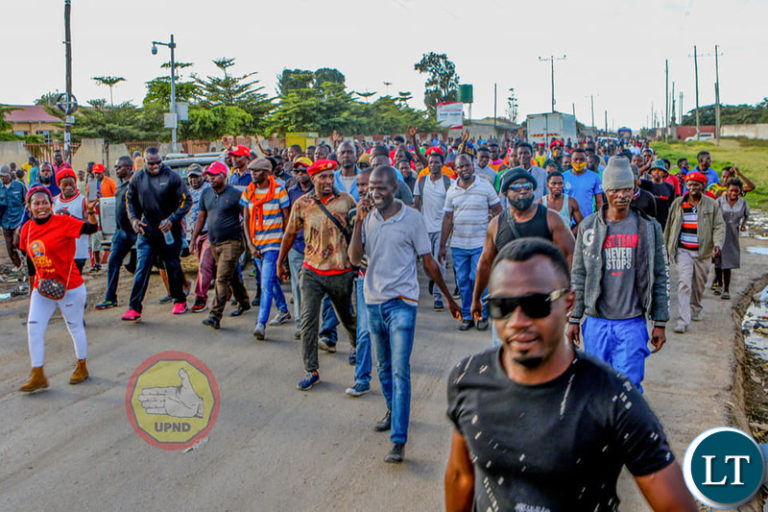
Cabinet Ministers….UPND MPs; emulate Levy Ngoma, boots on the ground!

UPND National Youth Chairperson Gilbert Liswaniso has observed and lamented that some cabinet ministers and MPs are not helping execute the ruling party’s campaign in Chawama. He has since warned that MPs and ministers not helping with the campaigns should do an introspection or risk being left out during the adoptions.

What do we make of this?

Bo Liswaniso has hit the bull’s eye! Failing to or neglecting to assist with the campaigns in Chiwama and Kasama or indeed elsewhere where by-elections may be taking place is actually dereliction of duty, let alone lack of commitment to the aspirations and revolutionary cause of UPND!

Do such individuals deserve a sit at the high table be it as Ministers or MPs? Definitely no! We’ve every reason to believe these are the same individuals who’ve actually been failing to deliver or indeed neglecting to visit their constituencies, regularly. Why should they fail to assist the party grow the numbers in Parliament or council chambers when they probably rode on the back of the President or the ruling party to get to their destination? Yes…..some of them have “arrived” and no longer seem to care!

It’s however gratifying Levy Ngoma, the political advisor to the President, has his eyes on the ball…… he’s ever doing politics par excellence!

As opposed to remaining holed up in Lusaka digging in kilos of ‘chisa nyama’ during the festive period for instance, he was ‘pa ground ‘ in Chawama……and he’s now in Kasama where mayoral by-elections are taking place effortlessly hobnobbing with the electorate…..some of them ordinary people in society.

UPND shouldn’t always be expecting the President to be doing all the donkey work like it has been over the years. We expect party members, particularly honourable ministers and MPs to emulate Levy Ngoma by discarding their business suits and putting their boots on the ground in Chawama or Kasama to ensure sweet victory.

Otherwise…… it’s HH Mpaka 2031!

Prince Bill M. Kaping’a
National Coordinator
HH Mpaka 2031!

Venezuela crisis to act as Bitcoin price catalyst?

0

The crisis in Venezuela is pushing Bitcoin higher and is likely to serve as a broader price catalyst, affirms the CEO of one of the world’s largest independent financial advisory organisations.

The comments from Nigel Green of deVere Group follow Washington’s actions that have sharply intensified political and financial pressure on Caracas, reigniting concerns over sanctions risk, capital controls, and regional and geopolitical instability.

In the aftermath of the strikes, Bitcoin has risen by around 6%, underlining how quickly geopolitical developments are now being priced into digital markets.

“Events in Venezuela have once again underscored a fundamental truth about today’s markets: political risk is now priced not just in equities and bonds, but in digital assets as well,” says Nigel Green, chief executive of deVere Group.

“When geopolitical tensions increase and questions arise about sanctions, capital controls, or currency stability, investors instinctively seek assets that are portable, liquid, and free of any single government’s control. Bitcoin is increasingly fulfilling that role.”

Bitcoin’s rally has taken the world’s largest cryptocurrency back into the $92,000–$94,000 range, levels last seen in mid-December, as investors reassess global risk exposure.

The move has outpaced many traditional safe-haven assets, highlighting how digital markets are becoming a primary venue for expressing views on geopolitical uncertainty.

“The speed and scale of the reaction in crypto markets — particularly Bitcoin — highlights how this asset class has matured,” he continues.

“Unlike stocks or bonds, which trade only during set hours, Bitcoin’s 24/7 market structure allows investors to respond in real time to geopolitical shocks. This makes Bitcoin not just a speculative instrument, but a dynamic tool in capital allocation when political uncertainty spikes.”

Venezuela remains one of the clearest real-world examples of how political and economic stress drives the adoption of alternative financial infrastructure.

Years of inflation, currency restrictions, and limited access to international banking have pushed millions of Venezuelans toward digital assets for everyday financial use.

Each new phase of political tension reinforces that behavior, not only domestically but across the region, as neighbouring economies monitor the spillover risks.

Recent data show that Venezuela continues to rank among the most crypto-active countries globally on a per-capita basis.

Peer-to-peer crypto volumes and stablecoin usage have surged in recent years as citizens seek alternatives to the bolívar and to restricted access to foreign currency.

Industry estimates suggest that cumulative crypto transaction volumes linked to Venezuela have reached into the tens of billions of dollars over the past few years, reflecting a deep and structural shift in financial behaviour.

“What began in Venezuela as a grassroots response to economic hardship is now being recognised by global investors for the same reasons,” says the deVere CEO.

“Independence from central banks, resistance to censorship, and global liquidity are no longer niche attributes. They’re increasingly viewed as essential features in a world where geopolitical risk is becoming more persistent.”

The Venezuela situation is also resonating with international markets because it highlights how quickly political developments can disrupt traditional financial channels.

The ongoing use of sanctions as a foreign-policy tool, combined with the risk of sudden regulatory or banking restrictions, is reshaping how companies and individuals think about capital mobility.

This is where Bitcoin’s always-open market structure is becoming increasingly relevant. Unlike equities, bonds, or commodities, Bitcoin trades continuously, allowing investors to reposition immediately when major news breaks.

As a result, digital asset markets are increasingly acting as a real-time barometer of geopolitical risk.

“Bitcoin has become one of the first places investors go to express a view on global uncertainty,” notes Nigel Green.

“That was visible again after the latest developments around Venezuela. While traditional markets were still digesting the implications, crypto markets were already repricing risk.”

Beyond the immediate price move, the situation highlights a deeper shift in how portfolios are being constructed. Bitcoin is no longer viewed solely through a speculative lens. Institutional investors, family offices, and wealth managers are increasingly assessing it as a strategic allocation that can perform when confidence in political stability and financial infrastructure weakens.

“Gold has long been the classic hedge against political risk.

“Bitcoin is increasingly being discussed in the same breath, especially by a new generation of investors who are comfortable with digital assets and somewhat more sceptical of centralized systems.”

Looking ahead, deVere expects geopolitical risk to remain a defining feature of markets through the year. With sanctions regimes expanding, trade relationships under strain, and political flashpoints multiplying, demand for assets that operate outside traditional financial structures is unlikely to fade.

“The implications of Venezuela go far beyond one country,” Nigel Green concludes.

“They speak to a world where political risk is becoming more persistent and more unpredictable.

“Bitcoin has already benefited from this shift, as the recent price action shows, and it is likely to remain a key beneficiary as investors continue to rethink how they protect and position their capital.”

M’membe welcomes rapid Kwacha appreciation but urges caution

2

People’s Pact presidential candidate Fred M’membe has welcomed the continued appreciation of the Kwacha, describing it as positive news for Zambia, while cautioning that extremes in either direction could be harmful.

Commenting on the performance of the local currency, Dr M’membe said the strengthening of the Kwacha must be carefully managed to avoid negative effects on key sectors of the economy, particularly exporters and local manufacturers.

He explained that Zambia’s economy comprises two main groups—exporters and importers—who are affected differently by movements in the exchange rate.

“Exporters lose in Kwacha terms when the Kwacha becomes too strong, while importers benefit from a stronger Kwacha. The reverse also applies,” he said.

Dr M’membe said the government needs to conduct a thorough analysis of the economy to ensure a balance that benefits both exporters and importers.

He stressed that such a balance is essential to keep both groups in equilibrium with regard to the exchange rate.

Addressing exporters whose revenues are earned in United States dollars while costs are incurred in Kwacha, Dr M’membe warned that rapid appreciation of the local currency could significantly reduce profit margins.

On imports, he noted that a stronger Kwacha helps lower the cost of imported goods but cautioned that it could negatively impact local industries.

“This same gain can undermine locally manufactured goods when it becomes cheaper to import than to produce locally,” he said.

Dr M’membe warned that poor management of the situation could lead to factory closures and increased reliance on imported products.

Meanwhile, the Zambian Kwacha recorded strong gains this week against the United States dollar. Interbank market rates show the Kwacha buying at K19.92 and selling at K20.00 per US dollar.

Central Province Minister directs Councils to work on feeder roads

0

Central Province Minister Mwabashike Nkulukusa has directed Councils in the province to start working on feeder roads following the procurement of earth moving equipment using the Constituency Development Fund (CDF).

Mr Nkulukusa is saddened that most of the Councils are not working on feeder roads despite being equipped with earth moving equipment and fuel for their operations.

He says the Provincial Administration will not entertain further excuses from the Local Authorities for failing to work on feeder roads in their respective districts.

The media reports that Mr Nkulukusa, who made a directive when he featured on KNC’s One-on-One Radio programme, says the government has spent a lot of money to procure the earth moving equipment for all the 11 Councils.

He says the government has gone further to provide money for fuel for the machines under the CDF component.

“The yellow machines should start working on the feeder roads in all the 11 districts. Government has done its part by providing the Councils with fuel,” Mr Nkulukusa said.

He emphasised that the government will this year work towards improving the road network to meet the aspirations of the people.

Meanwhile, Mr Nkulukusa has assured the people of Central Province that the government remains committed to upgrading some of township roads to bituminous standards.

He disclosed that the road upgrade project will start with Kabwe, Chibombo, Chisamba and Kapiri Mposhi Districts.

Mr Nkulukusa said 40 kilometers of roads in Kabwe will be upgraded to bituminous standard with Kapiri Mposhi allocated 20 kilometers while Chibombo and Chisamba have been allocated 15 kilometers and 10 kilometers respectively.

Great Lakes Regional Conference opens in Livingstone

0

Government has called for urgent and coordinated regional action to address the worsening security and humanitarian crisis in the eastern Democratic Republic of Congo (DRC), warning that continued instability poses a serious threat to civilians and the wider Great Lakes Region.

Zambia Army Commander Lieutenant General Geoffrey Zyeele says the situation in eastern DRC remains highly volatile, with women and children bearing the brunt of ongoing violence.

Lt Gen Zyeele stressed that conflict requires immediate and decisive attention from regional defence and security stakeholders.

The media  reports that he made the remarks while officially opening the Extraordinary Meeting of the Specialised Committee of Defence Experts of the International Conference on the Great Lakes Region (ICGLR), held in Livingstone.

Lt Gen Zyeele noted that insecurity in the DRC has far-reaching consequences beyond its borders, undermining peace, stability and development across the Great Lakes Region.

The Army Commander urged defence experts attending the meeting to demonstrate solidarity, compassion and resolve in responding to the crisis.

Lt Gen Zyeele further called for a review of existing peace and monitoring frameworks to ensure their effectiveness.

“One of the critical tasks before us is the reconsideration of the Expanded Joint Verification Mechanism and the terms of reference for the Ceasefire Oversight and Monitoring Mechanism signed in Doha, It is imperative that these mechanisms remain credible, impartial and effective,” Lieutenant General Zyeele said.

Meanwhile, ICGLR Deputy Executive Secretary Ambassador Yasir Ibrahim Ali Mohammed expressed concern over the continued activities of the AFC/M23 rebel group, which he said are destabilising eastern DRC.

Ambassador Mohammed cited the capture of Uvira, a strategic town near the DRC–Burundi border, as a major setback to peace efforts in the region.

He said the ongoing conflict has led to widespread human suffering, large-scale displacement of civilians and significant disruption to humanitarian operations.

The Deputy Executive Secretary further called on ICGLR Member States to take decisive and coordinated action to halt the escalation of violence, warning that failure to do so would further deepen the humanitarian crisis and increase the risk of regional instability.

The Extraordinary Meeting is expected to deliberate on concrete measures aimed at restoring peace, strengthening ceasefire monitoring mechanisms and enhancing regional cooperation to address the security challenges facing eastern DRC.

Bridge Maintenance and Management Centre commissioned

0

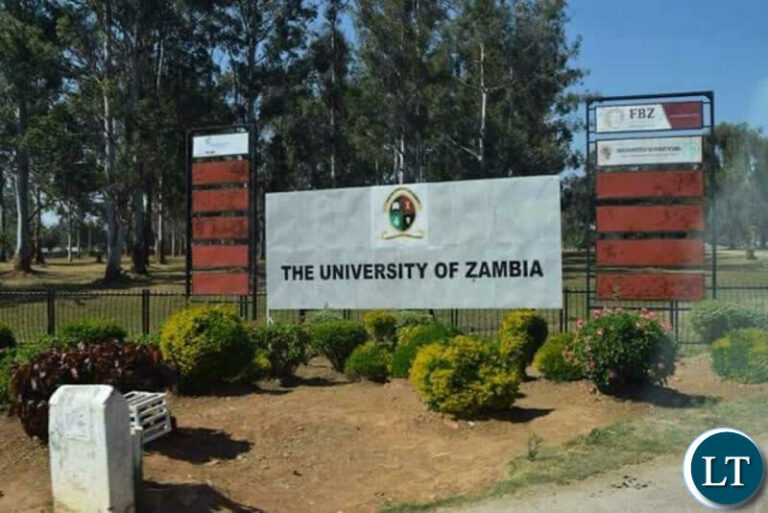
Government has commissioned the Bridge Maintenance and Management Centre at the University of Zambia (UNZA), marking a major milestone in strengthening the country’s capacity for sustainable bridge management.

Ministry of Infrastructure, Housing and Urban Development, Permanent Secretary Professor Albert Malama, says the Centre is as a result of the Improvement of Bridge Maintenance Capability Building in Zambia – Phase Two Project, supported by the Japan International Cooperation Agency (JICA).

Prof Malama described the Centre as a demonstration of JICA’s commitment to sustainable infrastructure management, institutional strengthening, and human capital development.

“Bridges are critical components of national infrastructure. They connect communities, facilitate trade, and support economic activity. But their long-term value depends on proper maintenance and monitoring,” Prof Malama said.

The Permanent Secretary added that the Government has prioritised preventive maintenance and infrastructure asset management as key pillars of sustainable development, and the Centre directly strengthens Zambia’s technical and institutional capacity in bridge management.

The facility, housed within UNZA’s School of Engineering, has been equipped with modern classrooms, specialised inspection tools, and a wheel running fatigue machine that will enhance structural performance assessments and long-term safety of bridges.

And speaking at the same handover ceremony, UNZA Vice Chancellor, Professor Mundia Muya said the Centre symbolises innovation, capacity building, and international cooperation.

“The Centre will provide students, researchers, and practitioners with hands-on experience in bridge inspection, monitoring, and maintenance planning, bridging the gap between academic training and industry requirements,” Prof Muya said.

He added that the facility will serve as a national hub for research, innovation, and professional development, supporting engineers from government institutions, local authorities, and the private sector.

Prof Muya acknowledged valued partners, including Gifu University, the National Council for Construction, and the Road Development Agency, whose expertise and collaboration contributed to the project’s success.

Meanwhile, Japan International Cooperation Agency (JICA) Chief Representative, Tomoko Ono said bridges are vital to Zambia’s economic growth and regional connectivity, adding that proper maintenance is critical to prevent costly failures.

Dr Ono noted that the center draws inspiration from Japan’s own Maintenance Expert programme while tailoring solutions to Zambia’s context.

She further assured of JICA’s continued support to BMMC through a new technical cooperation project beginning in March.

The Centre is expected to produce skilled professionals, innovative research outputs, and practical solutions to safeguard Zambia’s bridge infrastructure for generations to come.

Unity in Zambia’s opposition is possible, but not without a hard reset

1

UNITY IN ZAMBIA’S OPPOSITION: POSSIBLE, YES. PROBABLE, NOT WITHOUT A HARD RESET.

By Brian Matambo | Lusaka, Zambia

As Zambia edges toward the 2026 presidential election, the opposition’s greatest challenge is not the incumbent. It is itself.

Calls for unity have become the safest language in Zambian politics. They offend no one. They inspire applause. They also change nothing unless followed by discipline, structure, and sacrifice. The recent turbulence within the Tonse Alliance and the Patriotic Front has exposed a deeper truth: unity is not failing because Zambians reject it. It is failing because political actors continue to treat it as a slogan rather than a system.

The contradiction is now visible to the public. The Tonse Alliance has moved to expel the Patriotic Front from its ranks, while at the same time prominent PF figures continue to operate in Tonse-adjacent political spaces without consequence. This inconsistency has eroded trust and reinforced the perception that rules are applied selectively. Coalitions do not collapse only because of ideology. They collapse when fairness becomes negotiable.

The internal PF drama has not helped. The incarceration of Raphael Nakacinda has reshaped internal power dynamics and removed a key organiser at a critical moment. In politics, absence creates opportunity, but rarely stability. What followed has been a renewed scramble for control, influence, and legitimacy, with consequences spilling beyond the party into the wider opposition project.

Leadership ambition has further complicated the picture. Given Lubinda, in public reflections, has made it clear that he views the presidency not as a negotiable aspiration but as a personal mandate. Ambition in itself is not a flaw. Politics without ambition is charity. The problem arises when ambition becomes incompatible with coalition building. A leader who struggles to unite a party or an alliance cannot credibly promise to unite a country.

Others stand at a crossroads. Chishimba Kambwili has demonstrated political instinct before and understands timing, alignment, and consequence. Whether he applies that instinct now may define the remainder of his political career. Miles Sampa, by contrast, remains an unpredictable variable in an environment that can no longer afford miscalculations. In a compressed electoral cycle, errors are not corrected. They are punished.

Against this backdrop, Makebi Zulu has called for unity. The appeal is aligned with public sentiment and reflects what many Zambians say openly: the opposition must come together if it hopes to dislodge Hakainde Hichilema in 2026. But unity by appeal alone is insufficient. History shows that coalitions succeed only when guided by enforceable rules, transparent processes, and shared risk.

Winning in 2026 will require more than arithmetic. It will require judgment.

First, the opposition must choose a candidate who is legally resilient. This is not paranoia. It is realism. A politically exposed candidate with unresolved legal vulnerabilities offers the state an opportunity to shift the contest from the ballot to the courtroom. That is not strategy. That is negligence.

Second, the next flag bearer must represent continuity with the positive legacy of Edgar Chagwa Lungu while decisively breaking with the excesses that damaged the Patriotic Front before 2021. Zambians remember humility, accessibility, and faith consciousness. They also remember violence, indiscipline, and the failure to confront tribal rhetoric decisively. Any candidate who carries the latter baggage will struggle to persuade voters that a new chapter has truly begun.

Third, the opposition must present a visible generational renewal. This is not an argument against experience. It is an argument for balance. Zambia’s Parliament and Cabinet cannot continue to look like closed clubs. Younger leaders and women must be elevated to the front line, not as decoration, but as decision-makers. Senior figures must then accept the harder task of mentoring, stabilising, and guiding rather than dominating. That is how political cultures renew themselves.

Fourth, the policy offering must be credible and national in scope. Zambians are listening for commitments on resource ownership, economic sovereignty, diplomacy that restores Zambia’s non-aligned posture, and governance that respects the separation of powers. They also expect consistency in upholding Zambia’s identity as a Christian nation, not as a slogan, but through respect for the church and completion of national commitments such as the National House of Prayer.

Finally, the opposition must reform how it chooses leaders. Backroom consensus has failed repeatedly. The moment calls for an open, structured, and nationally visible process. Public debates. Clear qualification criteria. Transparent rules. Binding commitments to support the eventual winner. Without this, unity will remain performative and fragile.

So, is unity possible in Zambian politics ahead of 2026? Yes. But only if the opposition accepts a hard truth: unity is not declared. It is engineered.

Until personalities submit to process, and ambition yields to structure, the opposition will continue to rehearse unity while practicing division. In elections, that contradiction is fatal.

And so I propose we take all the opposition aspiring presidential candidates to a public widely televised, national, or even global debate. I will provide the production equipment. Uncle Frank will do the interviews. And we all the Zambians at home and abroad will help us choose the flag bear. And the rest must support the winner or be driven into political oblivions.

Muchinga Province records reduction in GBV cases last year

0

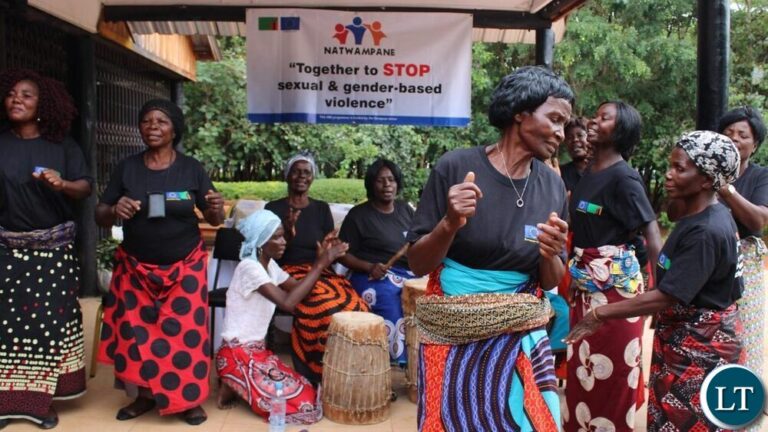
Muchinga Province has recorded a total of 1,119 Gender Based Violence (GBV) cases last year, with a decrease of 26% compared to the 1,413 cases recorded in the year 2024.

Muchinga Division, Victims Support Unit (VSU) Coordinator Stanslous Sikazwe disclosed this development on the sideline interview with the Zambia News and Information Services (ZANIS) in Isoka today during the Media and Public Relations (PR) Practitioners training workshop under the Spotlight Initiative 2.0 programme.

Mr Sikazwe revealed that a number of measures are being taken by Zambia Police in Muchinga Province to reduce GBV cases.

He cited some of the measures being taken as the training of police officers who are first responders to GBV, rehabilitation programmes for perpetrators as well as holding of GBV campaigns to raise awareness.

Mr Sikazwe said the variation in the number of cases reported may reflect improved confidence and awareness among residents adding that other cases remain unreported due to stigma and fear.

And Muchinga Province Gender Division Principal Officer Innocent Simbayi says the most affected groups with GBV in the Province are women and girls.

Mr Simbayi said the Gender Division with support from the United Nations Agency, and International Organization for Immigration (IOM) has been training a number of stakeholders which include the traditional leaders, the Clergy and the media.

“To enhance collaborative efforts against GBV, different stakeholders have undergone training and currently the media and PR practitioners are being trained with support from the United Nations Agency, International Organization for Migration,” he said.

Mr Simbayi said the Gender Division in the Province is working hand in hand with different stakeholders to raise public awareness on the GBV vice.

Meanwhile, participants say the knowledge being acquired is impactful, in that GBV reporting and advocacy will be enhanced in the province especially in the two districts of Isoka and Chinsali where the Spotlight Initiative 2.0 programme is being implemented.

Radio ISO FM News Editor Wanthula Nyondo said the training being undertaken is a wakeup call to the media and others in the communication sector to intensify GBV coverage and advocacy.

“This training will help us to report better on GBV related stories,” he said.

And Chinsali Municipal Council Public Relations Officer Elizabeth Mupanga said with the knowledge attained, the quality of GBV news reports will improve.

“As professional communicators we have been reminded to adhere to ethics especially when carrying out GBV related stories,” she said.

EFF president raises alarm over alleged secretly contracted IMF programme

EFF president raises alarm over alleged secretly contracted IMF programme

LUSAKA, January 8, 2026 — Economic Freedom Fighters (C-EFF) president Kasonde Mwenda has accused the Hakainde Hichilema–led government of secretly returning Zambia to the International Monetary Fund for a new loan programme, warning that the move risks plunging the country into deeper debt, harsher austerity, and a loss of economic sovereignty.

In a statement issued in Lusaka on Thursday, Mwenda said the government had resolved to replace the current IMF Extended Credit Facility with what he described as a new full IMF programme, without first informing the public. He argued that Zambians would be directly affected by the conditions attached to such an arrangement and should have been consulted before any decision was made.

Mwenda said Zambia’s previous engagements with the IMF had resulted in policies that disproportionately burdened ordinary citizens, including electricity shortages, load-shedding, austerity measures, shrinking public services, and a rising cost of living. He accused the government of prioritising the interests of foreign creditors and multinational corporations over domestic economic development.

The EFF leader pointed to the enactment of Statutory Instrument No. 47, which removed export tax on copper concentrate, arguing that the policy had weakened Zambia’s control over its mineral wealth at a time when global copper prices were rising. He claimed the measure had failed to deliver tangible benefits to citizens in the form of lower prices, job creation, or broader empowerment.

Mwenda warned that entering another multi-year IMF programme would, in his view, mean additional borrowing starting this year, deeper austerity, reduced national policy autonomy, and long-term dependence on external financiers. He cautioned that the social impact of such policies would intensify over time if the current direction was not reversed.

He accused the government of lacking an independent development vision, saying reliance on IMF programmes had become its default response to economic challenges. Mwenda said Zambia should instead pursue a development path anchored in national ownership of resources and domestic industrial growth.

Outlining his party’s position, Mwenda said a C-EFF government would prioritise using Zambia’s minerals and natural resources for the benefit of citizens, restructure the economy around national development objectives, and avoid borrowing arrangements that mortgage the country’s future.

He called on Zambians to reject what he described as a cycle of austerity and dependency and urged voters not to support the ruling party in the 2026 general elections.

The government had not issued a response to the claims by the time of publication.

Zambian peace keeper dies in Central Africa Republic

1

Ministry of Defence Permanent Secretary, Maambo Haamaundu has announced the death of Staff Sergeant Alick Banda of the Zambia Army, who passed away while serving with the United Nations Multidimensional Integrated Stabilisation Mission in the Central African Republic (MINUSCA).

Mr Haamaundu says the government has since informed the next of Kin of the deceased and the mortal remains of Sergeant Banda are expected to arrive in the country at 20:00 hours tonight ahead of burial.

The Permanent Secretary stated that Staff Sergeant Banda made the ultimate sacrifice in service to the cause of peace.

Mr Haamaundu said the late Staff Sergeant dedication to duty reflected the highest traditions of the Zambia Defence Force and brought honour to the country.

“I extend our deepest condolences to Staff Sergeant Banda’s loved ones. Your grief is our grief. Your loss is felt in every corner of this land,” he said.

Mr Haamaundu indicated that Staff Sergeant Banda’s service reminds every one of the courage and commitment of all Zambian men and women who wear the uniform in pursuit of peace, both at home and abroad.

This was made available to the media in a statement issued by the Ministry of Defence Permanent Secretary, Maambo

Zambia calls for urgent action on escalating conflict in DRC

0

Government has called for urgent action on the escalating security and humanitarian situation in the eastern Democratic Republic of Congo (DRC).

Zambia Army Commander Lieutenant General Geoffrey Zyeele says the situation in the eastern DRC remains precarious and needs urgent attention to protect women and children who have been caught up in the fighting.

Speaking when he opened the Extraordinary Meeting of the Specialised Committee of Defence Experts of the International Conference on the Great Lakes Region in Livingston, Lt Gen Zyeele urged defence experts to offer solidarity, compassion and determination to act decisively on the matter.

Lt Gen Zyeele stated that the conflict in the DRC has a wider effect on the Great Lakes region.

“Another critical task before us today is the reconsideration of the Expanded Joint Verification Mechanism and the terms of reference for the Ceasefire Oversight and Monitoring Mechanism signed in Doha. Let us ensure that the oversight remains credible, impartial and effective,” said the Army Commander.

And ICGLR Deputy Executive Secretary Ambassador Yasir Mohammed said the activities of the AFC/M23 rebels continue to destabilise the eastern part of the Democratic Republic of Congo, especially the capture of Uvira, a town near the DRC-Burundi border.

Ambassador Mohammed says the conflict has caused immense human suffering, mass displacement and disruption of humanitarian operations.

He has since called on member’s states to come up with decisive action to stop the escalation which has deepened the humanitarian crisis and heightened the risk of cross border destabilisation.

This is according to a statement issued to the media by Ministry of Defence Principal Public Relations Officer, Paul Shalala.

North-Western Chamber of Commerce Backs Government Yuan Decision

0

 The North-Western Chamber of Commerce has welcomed Government’s decision to accept the Chinese currency the Yuan alongside the United States dollar in selected financial transactions, describing the move as progressive and economically prudent.

Speaking in an interview with the media today, North-Western Chamber of Commerce President Amos Kapi said the acceptance of the Yuan poses no risk to the local economy, noting that the currency was already widely recognised and used internationally.

“As a Chamber, we see no problem with the acceptance of the Yuan. It is a widely accepted currency, just like other notable global currencies such as the United States Dollar,” Mr Kapi said.

He explained that the move would help streamline financial transactions between Zambia and China particularly in settling bilateral obligations saying that funds would be readily available in the required currency when debts fall due.

Mr Kapi noted that accepting the Yuan would reduce the need for frequent currency conversions which often result in unnecessary costs for both Government and the private sector.

He said conversion costs represent direct fiscal inefficiencies as they constitute expenditure that generates no economic value while simultaneously reducing resources that could otherwise be directed towards debt servicing or other critical government programmes.

Mr Kapi added that minimising currency conversion would improve financial efficiency, enhance liquidity management and promote smoother trade relations between Zambia and its international partners.

He further observed that the move could encourage increased trade and investment between Zambia and China as it simplifies payment processes and reduces transaction risks associated with exchange rate fluctuations.

Mr Kapi has urged stakeholders to view the development as a practical financial strategy rather than a threat to the local currency adding that strong regulatory oversight would ensure economic stability.

He reaffirmed the Chamber’s commitment to supporting policies that promote efficiency, trade facilitation and sustainable economic growth in the country.

Yesterday, Government announced a change in the way mining companies will pay taxes, allowing firms to remit part of their tax obligations in Chinese currency, the Yuan, alongside the US dollar.

North-Western Minister Pays Tribute to Late UPND Member Mbambiko

0

 North-Western Province Minister Robert Lihefu has described the late Bertha Mbambiko as a selfless person who advocated for development in the province.

Speaking during her memorial service held at Kimasala Evangelical Church in Solwezi District, Mr Lihefu said Ms Mbambiko was a kind-hearted woman who was appreciated by her family and the community at large.

“We need to celebrate the life of this great woman for the life she lived as a unifier,” Mr Lihefu noted.

He said Ms Mbambiko was a committed member of the United Party for National Development (UPND) who sacrificed and contributed to the growth of the party through her hard work and dedication.

He cited her commitment to expanding the lifespan of the mines in the Province and advocating for various policies that the UPND was currently implementing such as free education, which has benefited many people in Manyinga and the Province at large.

He said the party will always appreciate the commitment of Ms Mbambiko for her unwavering support to the UPND.

And in his sermon Rev Kingson Kilelemba of Kimasala Evangelical Church urged the family to continue praying for Bertha Mbambiko to rest in the Lord.

He encouraged the family to continue trusting in God and to live in peace.

“As a party, we will always remember and appreciate her works,” he said.

And speaking on behalf of the family Margret Mbambiko described the late Bertha as a family pillar.

She encouraged other family members to continue loving one another and to uphold the legacy of Ms Mbambiko

Kasempa Detective Found Dead at Home

0

A police criminal Investigations officer in Kasempa District of North-Western Province has been found dead at his residence in a suspected murder case.

The development was confirmed by North-Western Province Police Commissioner Brighton Siwale, who identified the deceased as Friday Mulauzi aged 38.

Mr Siwale confirmed the incident in a statement to the Zambia News and Information Service (ZANIS) in Kasempa District today.

He said the Kasempa Police Station recorded a case of murder, which was believed to have occurred between January 6, 2026 around 21:00 hours and January 7, 2026 around 05:00 hours.

“The matter was reported on January 7, 2026 around 05:30 hours by Mr Emmanuel Koloko aged 25, a neighbour to the deceased of Small-Mayard area, who reported that his neighbour was found lying unconscious and lifeless on the corridor of his house,” Mr Siwale added.

He explained that the deceased was until his death serving as a Criminal Investigations Officer at Kasempa Police Station.

Mr Siwale disclosed that brief facts indicated that on January 6, 2026 around 21:00 hours, the deceased was drinking at Breaking-Point Night Club in Kasempa Boma with his colleagues before returning home.

He added that on January 7, 2026 around 06:00 hours, an unknown woman who was passing by the deceased’s house noticed him lying unconscious on the ground and later alerted the deceased’s landlord’s son, who subsequently reported the matter to police.

Mr Siwale further disclosed that police officers rushed to the scene and found the body facing upwards in a pool of blood about a metre away from the door to the house, with the keys to the house lying on the ground.

“Upon physical inspection of the body, a deep cut was observed on the left upper side of the chest with intestines protruding, and it is suspected that an unknown sharp object was used in the act,” he said.

Mr Siwale further disclosed that the deceased’s motor vehicle was found parked beside his house, while the car keys were discovered in the right pocket of his coat.

He added that the body was later retrieved from the scene and deposited at Mukinge Mission Hospital Mortuary, where it was being kept awaiting postmortem examination.

Mr Siwale said a docket of murder had been opened and investigations had since been instituted, adding that no arrests had been made so far.

He appealed to members of the public with information that may lead to the arrest of the perpetrators to come forward and assist the police.