Wednesday, June 10, 2026
15.1 C
Lusaka
Home Blog Page 189

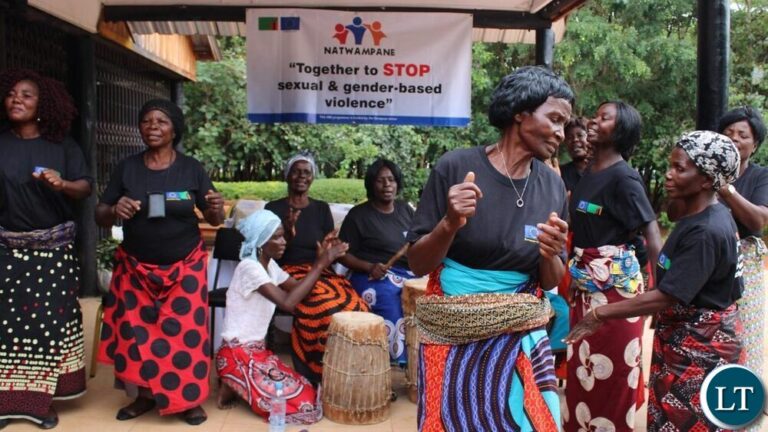
Muchinga Province records reduction in GBV cases last year

0

Muchinga Province has recorded a total of 1,119 Gender Based Violence (GBV) cases last year, with a decrease of 26% compared to the 1,413 cases recorded in the year 2024.

Muchinga Division, Victims Support Unit (VSU) Coordinator Stanslous Sikazwe disclosed this development on the sideline interview with the Zambia News and Information Services (ZANIS) in Isoka today during the Media and Public Relations (PR) Practitioners training workshop under the Spotlight Initiative 2.0 programme.

Mr Sikazwe revealed that a number of measures are being taken by Zambia Police in Muchinga Province to reduce GBV cases.

He cited some of the measures being taken as the training of police officers who are first responders to GBV, rehabilitation programmes for perpetrators as well as holding of GBV campaigns to raise awareness.

Mr Sikazwe said the variation in the number of cases reported may reflect improved confidence and awareness among residents adding that other cases remain unreported due to stigma and fear.

And Muchinga Province Gender Division Principal Officer Innocent Simbayi says the most affected groups with GBV in the Province are women and girls.

Mr Simbayi said the Gender Division with support from the United Nations Agency, and International Organization for Immigration (IOM) has been training a number of stakeholders which include the traditional leaders, the Clergy and the media.

“To enhance collaborative efforts against GBV, different stakeholders have undergone training and currently the media and PR practitioners are being trained with support from the United Nations Agency, International Organization for Migration,” he said.

Mr Simbayi said the Gender Division in the Province is working hand in hand with different stakeholders to raise public awareness on the GBV vice.

Meanwhile, participants say the knowledge being acquired is impactful, in that GBV reporting and advocacy will be enhanced in the province especially in the two districts of Isoka and Chinsali where the Spotlight Initiative 2.0 programme is being implemented.

Radio ISO FM News Editor Wanthula Nyondo said the training being undertaken is a wakeup call to the media and others in the communication sector to intensify GBV coverage and advocacy.

“This training will help us to report better on GBV related stories,” he said.

And Chinsali Municipal Council Public Relations Officer Elizabeth Mupanga said with the knowledge attained, the quality of GBV news reports will improve.

“As professional communicators we have been reminded to adhere to ethics especially when carrying out GBV related stories,” she said.
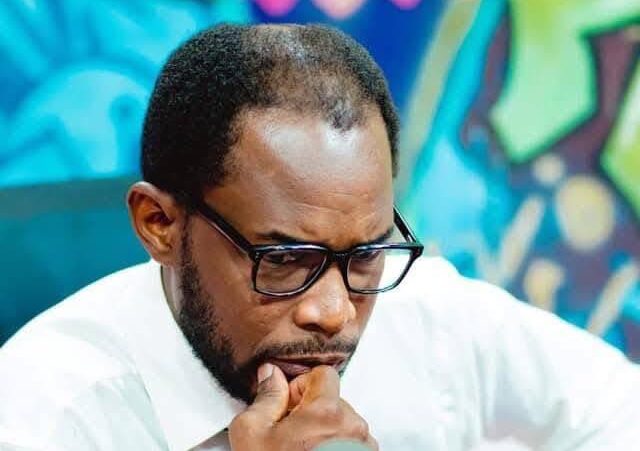
EFF president raises alarm over alleged secretly contracted IMF programme

EFF president raises alarm over alleged secretly contracted IMF programme

LUSAKA, January 8, 2026 — Economic Freedom Fighters (C-EFF) president Kasonde Mwenda has accused the Hakainde Hichilema–led government of secretly returning Zambia to the International Monetary Fund for a new loan programme, warning that the move risks plunging the country into deeper debt, harsher austerity, and a loss of economic sovereignty.

In a statement issued in Lusaka on Thursday, Mwenda said the government had resolved to replace the current IMF Extended Credit Facility with what he described as a new full IMF programme, without first informing the public. He argued that Zambians would be directly affected by the conditions attached to such an arrangement and should have been consulted before any decision was made.

Mwenda said Zambia’s previous engagements with the IMF had resulted in policies that disproportionately burdened ordinary citizens, including electricity shortages, load-shedding, austerity measures, shrinking public services, and a rising cost of living. He accused the government of prioritising the interests of foreign creditors and multinational corporations over domestic economic development.

The EFF leader pointed to the enactment of Statutory Instrument No. 47, which removed export tax on copper concentrate, arguing that the policy had weakened Zambia’s control over its mineral wealth at a time when global copper prices were rising. He claimed the measure had failed to deliver tangible benefits to citizens in the form of lower prices, job creation, or broader empowerment.

Mwenda warned that entering another multi-year IMF programme would, in his view, mean additional borrowing starting this year, deeper austerity, reduced national policy autonomy, and long-term dependence on external financiers. He cautioned that the social impact of such policies would intensify over time if the current direction was not reversed.

He accused the government of lacking an independent development vision, saying reliance on IMF programmes had become its default response to economic challenges. Mwenda said Zambia should instead pursue a development path anchored in national ownership of resources and domestic industrial growth.

Outlining his party’s position, Mwenda said a C-EFF government would prioritise using Zambia’s minerals and natural resources for the benefit of citizens, restructure the economy around national development objectives, and avoid borrowing arrangements that mortgage the country’s future.

He called on Zambians to reject what he described as a cycle of austerity and dependency and urged voters not to support the ruling party in the 2026 general elections.

The government had not issued a response to the claims by the time of publication.

Zambian peace keeper dies in Central Africa Republic

1

Ministry of Defence Permanent Secretary, Maambo Haamaundu has announced the death of Staff Sergeant Alick Banda of the Zambia Army, who passed away while serving with the United Nations Multidimensional Integrated Stabilisation Mission in the Central African Republic (MINUSCA).

Mr Haamaundu says the government has since informed the next of Kin of the deceased and the mortal remains of Sergeant Banda are expected to arrive in the country at 20:00 hours tonight ahead of burial.

The Permanent Secretary stated that Staff Sergeant Banda made the ultimate sacrifice in service to the cause of peace.

Mr Haamaundu said the late Staff Sergeant dedication to duty reflected the highest traditions of the Zambia Defence Force and brought honour to the country.

“I extend our deepest condolences to Staff Sergeant Banda’s loved ones. Your grief is our grief. Your loss is felt in every corner of this land,” he said.

Mr Haamaundu indicated that Staff Sergeant Banda’s service reminds every one of the courage and commitment of all Zambian men and women who wear the uniform in pursuit of peace, both at home and abroad.

This was made available to the media in a statement issued by the Ministry of Defence Permanent Secretary, Maambo

Zambia calls for urgent action on escalating conflict in DRC

0

Government has called for urgent action on the escalating security and humanitarian situation in the eastern Democratic Republic of Congo (DRC).

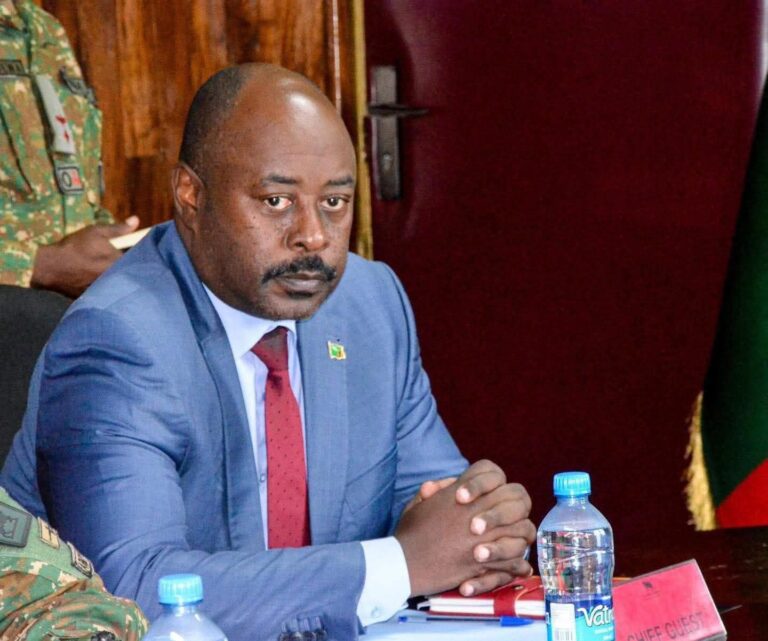
Zambia Army Commander Lieutenant General Geoffrey Zyeele says the situation in the eastern DRC remains precarious and needs urgent attention to protect women and children who have been caught up in the fighting.

Speaking when he opened the Extraordinary Meeting of the Specialised Committee of Defence Experts of the International Conference on the Great Lakes Region in Livingston, Lt Gen Zyeele urged defence experts to offer solidarity, compassion and determination to act decisively on the matter.

Lt Gen Zyeele stated that the conflict in the DRC has a wider effect on the Great Lakes region.

“Another critical task before us today is the reconsideration of the Expanded Joint Verification Mechanism and the terms of reference for the Ceasefire Oversight and Monitoring Mechanism signed in Doha. Let us ensure that the oversight remains credible, impartial and effective,” said the Army Commander.

And ICGLR Deputy Executive Secretary Ambassador Yasir Mohammed said the activities of the AFC/M23 rebels continue to destabilise the eastern part of the Democratic Republic of Congo, especially the capture of Uvira, a town near the DRC-Burundi border.

Ambassador Mohammed says the conflict has caused immense human suffering, mass displacement and disruption of humanitarian operations.

He has since called on member’s states to come up with decisive action to stop the escalation which has deepened the humanitarian crisis and heightened the risk of cross border destabilisation.

This is according to a statement issued to the media by Ministry of Defence Principal Public Relations Officer, Paul Shalala.

North-Western Chamber of Commerce Backs Government Yuan Decision

0

 The North-Western Chamber of Commerce has welcomed Government’s decision to accept the Chinese currency the Yuan alongside the United States dollar in selected financial transactions, describing the move as progressive and economically prudent.

Speaking in an interview with the media today, North-Western Chamber of Commerce President Amos Kapi said the acceptance of the Yuan poses no risk to the local economy, noting that the currency was already widely recognised and used internationally.

“As a Chamber, we see no problem with the acceptance of the Yuan. It is a widely accepted currency, just like other notable global currencies such as the United States Dollar,” Mr Kapi said.

He explained that the move would help streamline financial transactions between Zambia and China particularly in settling bilateral obligations saying that funds would be readily available in the required currency when debts fall due.

Mr Kapi noted that accepting the Yuan would reduce the need for frequent currency conversions which often result in unnecessary costs for both Government and the private sector.

He said conversion costs represent direct fiscal inefficiencies as they constitute expenditure that generates no economic value while simultaneously reducing resources that could otherwise be directed towards debt servicing or other critical government programmes.

Mr Kapi added that minimising currency conversion would improve financial efficiency, enhance liquidity management and promote smoother trade relations between Zambia and its international partners.

He further observed that the move could encourage increased trade and investment between Zambia and China as it simplifies payment processes and reduces transaction risks associated with exchange rate fluctuations.

Mr Kapi has urged stakeholders to view the development as a practical financial strategy rather than a threat to the local currency adding that strong regulatory oversight would ensure economic stability.

He reaffirmed the Chamber’s commitment to supporting policies that promote efficiency, trade facilitation and sustainable economic growth in the country.

Yesterday, Government announced a change in the way mining companies will pay taxes, allowing firms to remit part of their tax obligations in Chinese currency, the Yuan, alongside the US dollar.

North-Western Minister Pays Tribute to Late UPND Member Mbambiko

0

 North-Western Province Minister Robert Lihefu has described the late Bertha Mbambiko as a selfless person who advocated for development in the province.

Speaking during her memorial service held at Kimasala Evangelical Church in Solwezi District, Mr Lihefu said Ms Mbambiko was a kind-hearted woman who was appreciated by her family and the community at large.

“We need to celebrate the life of this great woman for the life she lived as a unifier,” Mr Lihefu noted.

He said Ms Mbambiko was a committed member of the United Party for National Development (UPND) who sacrificed and contributed to the growth of the party through her hard work and dedication.

He cited her commitment to expanding the lifespan of the mines in the Province and advocating for various policies that the UPND was currently implementing such as free education, which has benefited many people in Manyinga and the Province at large.

He said the party will always appreciate the commitment of Ms Mbambiko for her unwavering support to the UPND.

And in his sermon Rev Kingson Kilelemba of Kimasala Evangelical Church urged the family to continue praying for Bertha Mbambiko to rest in the Lord.

He encouraged the family to continue trusting in God and to live in peace.

“As a party, we will always remember and appreciate her works,” he said.

And speaking on behalf of the family Margret Mbambiko described the late Bertha as a family pillar.

She encouraged other family members to continue loving one another and to uphold the legacy of Ms Mbambiko

Kasempa Detective Found Dead at Home

0

A police criminal Investigations officer in Kasempa District of North-Western Province has been found dead at his residence in a suspected murder case.

The development was confirmed by North-Western Province Police Commissioner Brighton Siwale, who identified the deceased as Friday Mulauzi aged 38.

Mr Siwale confirmed the incident in a statement to the Zambia News and Information Service (ZANIS) in Kasempa District today.

He said the Kasempa Police Station recorded a case of murder, which was believed to have occurred between January 6, 2026 around 21:00 hours and January 7, 2026 around 05:00 hours.

“The matter was reported on January 7, 2026 around 05:30 hours by Mr Emmanuel Koloko aged 25, a neighbour to the deceased of Small-Mayard area, who reported that his neighbour was found lying unconscious and lifeless on the corridor of his house,” Mr Siwale added.

He explained that the deceased was until his death serving as a Criminal Investigations Officer at Kasempa Police Station.

Mr Siwale disclosed that brief facts indicated that on January 6, 2026 around 21:00 hours, the deceased was drinking at Breaking-Point Night Club in Kasempa Boma with his colleagues before returning home.

He added that on January 7, 2026 around 06:00 hours, an unknown woman who was passing by the deceased’s house noticed him lying unconscious on the ground and later alerted the deceased’s landlord’s son, who subsequently reported the matter to police.

Mr Siwale further disclosed that police officers rushed to the scene and found the body facing upwards in a pool of blood about a metre away from the door to the house, with the keys to the house lying on the ground.

“Upon physical inspection of the body, a deep cut was observed on the left upper side of the chest with intestines protruding, and it is suspected that an unknown sharp object was used in the act,” he said.

Mr Siwale further disclosed that the deceased’s motor vehicle was found parked beside his house, while the car keys were discovered in the right pocket of his coat.

He added that the body was later retrieved from the scene and deposited at Mukinge Mission Hospital Mortuary, where it was being kept awaiting postmortem examination.

Mr Siwale said a docket of murder had been opened and investigations had since been instituted, adding that no arrests had been made so far.

He appealed to members of the public with information that may lead to the arrest of the perpetrators to come forward and assist the police.

Over 200 Graves Collapse After Heavy Rains in Solwezi

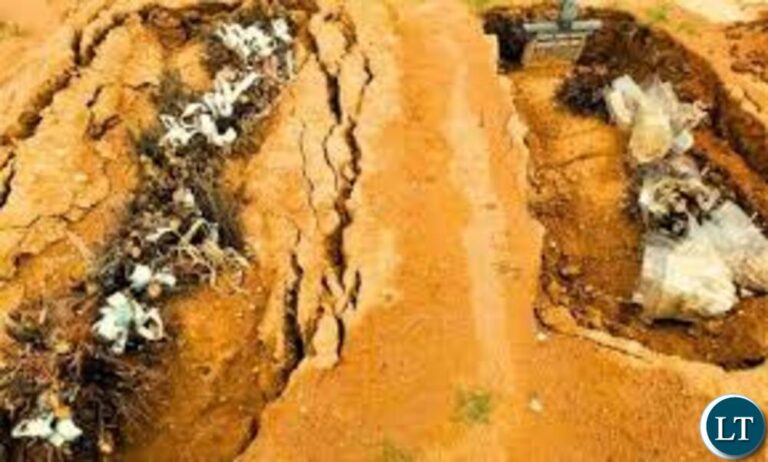
 Over 200 graves have collapsed at Kimiteto Cemetery in Solwezi District of the North-Western Province following heavy rains experienced in the area.

Acting Town Clerk Castro Chisanga revealed that 220 graves in the low-cost section and 35 in the high-cost section have sunk as a result of soil saturation caused by the prolonged rainfall.

Mr Chisanga is calling on members of the public who recently buried their loved ones to take time to visit the graves to assess the condition of the sites.

He said affected graves will require refilling and reinforcements and the council was on hand to render support through provision of gravel.

He has revealed that the council officers are   on the ground to assist the families with gravel to ensure that the sinking gravels are worked on.

” Our officers are on the ground to closely monitor the situation at the grave yard those who are affected can visit our offices,” Mr Chisanga stated.

He has assured members of the public that the local authority will continue providing guidance to ensure that there was dignity, safety and proper maintenance of the cemetery.

Central Province Councils Told to Fix Feeder Roads

0

Central Province Minister Mwabashike Nkulukusa has directed Councils in the province to start working on feeder roads following the procurement of earth moving equipment using the Constituency Development Fund (CDF).

Mr Nkulukusa expressed sadness that most of the Councils were not working on feeder roads despite being equipped with earth moving equipment and fuel for their operations.

He said the provincial administration will not entertain further excuses from the Local Authorities for failing to work on feeder roads in their respective districts.

Mr Nkulukusa, who made a directive when he featured on KNC’s One-on-One Radio programme, said government spent a lot of money to procure the earth moving equipment for all the 11 Councils.

He stated that government went further to provide money for fuel for the machines under the CDF component.

“The yellow machines should start working on the feeder roads in all the 11 districts. Government has done its part by providing the Councils with fuel,” Mr Nkulukusa said.

He emphasized that government will this year work towards improving the road network to meet the aspirations of the people.

Meanwhile, Mr Nkulukusa assured the people of Central Province that government remains committed to upgrading some of township roads to bituminous standard.

He disclosed that the road upgrade project will start with Kabwe, Chibombo, Chisamba and Kapiri Mposhi Districts.

He said 40 kilometres of roads in Kabwe will be upgraded to bituminous standard with Kapiri Mposhi allocated 20 kilometres while Chibombo and Chisamba have been allocated 15 kilometres and 10 kilometres respectively.

Milenge Husband Allegedly Beats Wife to Death

0

A 25-year-old woman in Milenge District in Luapula Province has allegedly been beaten to death by her husband.

The deceased identified as Alice Lungu of Talayi Village in Chief Sokontwe’s Chiefdom allegedly died from a suspected case of Gender-Based Violence (GBV).

Attending the funeral of the deceased, Milenge District Commissioner Kayula Mulenga called on the community to report cases of GBV and cautioned against dismissing abuse as a family or cultural matter.

The media reports that Mr Mulenga urged victims not be discouraged from speaking out under the pretext of protecting family image.

“When victims come out to report, they should not be reprimanded or told that they are embarrassing the family, let’s not encourage GBV,” Mr Mulenga said.

Mr Mulenga stressed that all forms of GBV must be reported to relevant authorities, warning that violence has far-reaching consequences, especially for children who are left to suffer when one parent is killed and the other is arrested.

And Chief Sokontwe has advised women to stop keeping quiet when they are being abused in their homes.

Speaking through his representative, Headman Orlando, Chief Sokontwe also advised men to reduce alcohol consumption, which he described as a major contributor to GBV incidents.

The traditional leader called for prompt reporting of GBV cases to police or One-Stop Centres, adding that early reporting can prevent loss of life.

Meanwhile, a community member close to the family of the deceased, Winfredah Kunda, said the circumstances surrounding the alleged assault remained unclear, adding that the family was still struggling to come to terms with the sudden loss.

Ms. Kunda disclosed that postmortem results revealed that the deceased sustained severe internal injuries

Ministry of Finance Consults Muchinga Stakeholders on INPF

0

Ministry of Finance and National Planning is consulting with various stakeholders in Muchinga Province on the formulation of the Integrated National Planning Framework (INPF) that seeks to align the country’s long strategic plans, medium plans and annual operating budgets.

The consultative meeting was officially opened by Muchinga Province Deputy Permanent Secretary Brian Sichande highlighted the importance of INPF for Zambia.

Mr Sichande said currently the country lacks a clear and comprehensive long-term plan that speaks to the strategic objectives and developmental goals upon which both the medium- and short-term plans can strive on.

Mr Sichande said it was against this background that the Ministry of Finance through the Planning unit was working on formulating an INPF that seeks to serve as a tool to facilitate, guide and harmonise the country’s long- and medium-term development planning efforts.

He said the INPF outlines the processes by which plans generated by various sectors.

The DPS highlighted that the INPF also defines clearly the roles and responsibilities of stakeholders at different levels of the national development planning process, planning horizons, cycles and expected outcome.

Mr Sichande said the Integrated National Planning Framework drive transformative change and sustainable growth by making adjustments to political, social and the economy of the country.

“This will be achieved through strengthening the linkages between the long term, medium term and short-term development planning,” Mr Sichande said.

He said in line with the National Planning and Budgeting Act, government has commended the process of formulating the 9th National Development Plan (9NDP) making it the last national planning plan before the expiration of the vision 2030.

Mr Sichande therefore, highlighted that the engagements that are on course in the province served as critical input and basis for the future and success of the national development plan.

And Ministry of Finance representative, Madalitso Mwanza highlighted some of the objective of the INPF as synchronising national planning with budgeting process and cycles and create a framework that will harmonise the national planning with planning at the sector and government levels among others.

Mr Mwanza said government was  making significant strides in ensuring that the country graduates from the Least Developed Countries (LDC) category by meeting the criteria through addressing shortfall aspects that Zambia failed to meet.

“In 2024 the country met the requirements to graduate from LDC category but over the years the nation failed short of the criteria required which made the nation not to graduate,” he stated.

Mr Mwanza added that in order for the nation to meet criteria of the graduation process, government has put up several measures aimed at meeting the set criteria adding that the INPF is one of the strategies being put in place.

” Government is committed to achieve this goal for the betterment of the nation,” he said.

And Consultant engaged for the development of INPF Michael Soko said INPF will facilitate a structured way of organizing thoughts, setting goals and management of resources.

Mr Soko also added that the framework will examine economic, social, political and environmental impacts.

The two days consultative meetings have been attended by Councilors, Ward Development Committees, Chamber of Commerce and Industry and Government departments including Civil Society Organisations.

Mpika Council Begins Restaurant Hygiene Inspections

0

Mpika Town Council Senior Health Inspector Francis Kapila says the local authority has commenced conducting restaurant compliance inspection on the hygiene practice around Mpika town.

Mr. Kapika said that the local authority was inspecting all food handlers across the district in order to prevent the outbreak of cholera and other waterborne diseases during the rainy season.

He was speaking when he visited the restaurants located at Mpika bus station.

Mr Kapila stated that the restaurants that were not adhering with hygiene practice will cease operations.

He said that during the rainy season the local authority intensifies inspections compared to their daily routine inspections.

‘’As health inspectors we collaborate with the council police in order to carry out these activities around the entire district, as this activity is not only meant for the Central Business District,” he said.

Mr Kapila stated that out of the 20 restaurants inspected at least 7 were closed down for non-compliance with required hygiene practices.

‘’We are not only looking at the surroundings but also if their restaurants have adequate water, hand washing liquid and also personal hygiene is vital in their area of work as they are dealing with so many customers,’’ he said.

He further disclosed that in 2025 the local authority organised a food handler training which was successful adding that most of the trained restaurant owners complied.

And Emma Chali one of the restaurant owner said keeping the surroundings clean was very vital as it helped prevent diseases like cholera, diarrhea, typhoid and dysentery.

Ms. Chali said that restaurant workers must always cover their heads with hair nets and also dress appropriately during working hours as a way to protect their customers from consuming dirty food.

‘’We should also dispose off our bins so that we avoid flies and maggots wash our aprons and provide our customers with hand wash to keep a clean environment,” she said.

And another restaurant owner Flevia Mutale said that food handlers must handle food with a lot of care as customers may fall sick due to dirty environment.

Ms. Mutale appealed to her counterparts to always keep their surroundings tidy at all times.

Meanwhile, Mpika District Commissioner David Siame commended the local authority for the on-going health inspection in the district.

Mr. Siame said the objective of the inspection was to make sure that public health standards were maintained adding that the act was in accordance with the public health act.

He said that food handlers must adhere to public health regulations as a way to avoid the outbreak of different diarrhea diseases.

‘’This is not only for restaurant owners but also butcheries and other food handlers because we do not want a situation where hospitals are packed with sick people,’’ he said.

He further said that especially that Mpika was one of fastest growing population, the local authority must conduct the inspections regularly adding that Mpika residents must also keep their homes clean at all times.

ECZ calls for discipline among Chawama Poll Staff

Electoral Commission of Zambia (ECZ), has urged polling officials, including presiding officers, polling assistants and support staff, set for the Chawama Parliamentary by-election to work with integrity and professionalism.

ECZ Chairperson Mwangala Zaloumis stressed that poll staff will play a key role in determining the credibility of the election, scheduled for January 15th, 2026.

She stated that the officers are central to the conduct of the election and their actions will directly affect public confidence in the outcome of the poll.

She was speaking in Lusaka during a meeting and training session with polling officials ahead of the by-election.

The media reports that Ms Zaloumis explained that the training programme will run for five days and is meant to equip polling officials with the necessary knowledge, skills and confidence to manage polling, vote counting and the overall electoral process effectively.

She stressed that all polling officials must remain neutral, strictly follow electoral procedures and treat every voter fairly and without bias.

The ECZ Chairperson also urged officers to remain calm during vote counting, which will be conducted in the presence of polling agents, election agents, monitors and observers.

She further encouraged polling officials to use the knowledge gained from the training to share correct information in their communities and help counter misinformation about the electoral process.

Tonse leadership crisis deepens after Lubinda rebuke

LUSAKA — Patriotic Front Vice President and Acting President Given Lubinda has issued a firm rejection of the Tonse Alliance’s January 2026 decision to demote the Patriotic Front from its position as the coalition’s primary political vehicle, describing the move as illegitimate, unconstitutional, and a betrayal of former president Edgar Chagwa Lungu’s democratic legacy.

In a detailed statement reported across multiple media platforms, Lubinda said the Patriotic Front remains the only legally registered and nationally structured political organisation capable of representing Lungu’s political vision and the millions of Zambians who supported it.

Lubinda dismissed assertions by Tonse Alliance acting chairperson Professor Dan Pule that an unregistered entity referred to as the “ECL PF Political Movement” constitutes an alternative or contingency platform for the coalition. He said no such arrangement exists in any Patriotic Front central committee resolution, party constitution, or formal public communication issued by Lungu before his death.

“The Patriotic Front is not a personal project that can be replaced at will,” Lubinda said, arguing that the party’s registration with the Electoral Commission of Zambia, nationwide constituency structures, and established membership distinguish it from informal political movements.

He recalled that in 2023, the PF central committee passed a binding resolution endorsing Edgar Lungu as the Tonse Alliance’s presidential candidate, a decision ratified by party delegates across the country. According to Lubinda, that resolution established PF as the anchor party of the alliance rather than a temporary participant.

Lubinda argued that dissolving PF’s role without a comparable democratic process undermines the principles the coalition claims to uphold. He said unity imposed through exclusion amounts to erasure rather than reform.

Reports in the Times of Zambia indicate that Tonse Alliance insiders have justified the decision by pointing to persistent internal divisions within PF following Lungu’s death. These include parallel leadership claims, court disputes over party symbols, and disagreements over candidate selection, which they say have weakened the party’s operational effectiveness.

Supporters of the shift argue that the ECL PF Political Movement, composed of former PF ministers, Members of Parliament, and senior officials loyal to Lungu, offers a more cohesive platform for the 2026 elections.

Lubinda rejected that view, warning that replacing a registered political party with an unregistered structure risks disenfranchising PF’s extensive grassroots base. He said the ECL PF Political Movement has no ECZ registration, no internal elections, and no official candidate lists, raising serious questions about its capacity to contest elections nationally.

He urged PF members to reject what he described as elite-driven political realignment and instead remain committed to the party’s constitutional processes, including planned internal elections.

Lubinda also criticised the Tonse council’s decision to remove a clause that had designated Lungu as the coalition’s 2026 flagbearer, describing the move as a posthumous slight. He maintained that leadership decisions must emerge from PF structures, not from an alliance that now excludes the party.

“If the Patriotic Front has challenges, they must be resolved internally,” Lubinda said. “Abandoning the party and calling it progress is neither democratic nor principled.”

He concluded by asserting that PF’s historical role in national development and opposition politics cannot be transferred to informal movements, insisting that only the registered Patriotic Front can legitimately carry forward Lungu’s political legacy.


Economist Sees Continued Economic Growth, but Warns Relief Is Lagging

Economist Sees Continued Economic Growth, but Warns Relief Is Lagging

Economist Dr. Mwamba Simbao says Zambia’s economic recovery is no longer fragile and is likely to remain on a steady growth path through 2026, but cautions that the benefits of that recovery are yet to be fully felt by ordinary households.

From his assessment of current macroeconomic indicators, Dr. Simbao projects that real GDP growth will remain within the range of 4.2 to 4.8 percent this year, a level he considers sustainable under prevailing conditions. He grounds this outlook in what he describes as measurable improvements in fiscal discipline, exchange-rate stability, and external confidence.

According to Dr. Simbao, fiscal consolidation has been a central pillar of the recovery. Reduced budget deficits have eased pressure on domestic borrowing, while the successful restructuring of Zambia’s external debt under the G20 Common Framework has restored predictability to the country’s fiscal outlook. That predictability, he notes, is critical for rebuilding investor confidence.

“The exchange rate has stabilised, inflation is trending downward from double-digit levels, and foreign reserves are rebuilding,” Dr. Simbao explains, adding that these developments create a more conducive environment for both domestic and foreign investment. In his view, credibility in policy execution now matters as much as incentives.

Copper remains a key anchor of the recovery. Dr. Simbao points to stable prices, consistent output, and improved transparency in royalty administration as factors that have strengthened public revenue without discouraging exploration or expansion in the mining sector. He argues that this balance has helped restore confidence in Zambia’s economic management.

However, Dr. Simbao is careful to separate macroeconomic progress from lived economic reality. He acknowledges a persistent disconnect between national indicators and household experience. While headline inflation has eased, food inflation remains elevated, driven by climate-related disruptions to maize production, global fertiliser costs, and supply pressures.

“Macroeconomic stability does not automatically translate into microeconomic relief,” he notes. Incomes have not risen fast enough to offset price pressures on essentials, and as a result, many households experience recovery as an abstract concept rather than a tangible improvement.

This gap, Dr. Simbao argues, explains growing public scepticism. People are told the economy is improving, yet they buy less than before. That contradiction, he says, is not emotional but structural. Economic repair begins at the top of the system and takes time to filter down.

He also warns of concentration risk. While copper has stabilised the economy, overreliance on a single commodity leaves Zambia exposed to external shocks. Price volatility or climate disruption could quickly reverse gains built over several seasons. Diversification into agriculture, manufacturing, and value-added processing is therefore not optional, but necessary.

Dr. Simbao places particular emphasis on job creation. Youth unemployment remains high, and he argues that no recovery can be considered durable if it fails to absorb new entrants into the labour market. Growth without employment, he cautions, produces statistics rather than stability.

Looking ahead to the 2026 election period, Dr. Simbao expresses confidence that Zambia’s economic momentum can be sustained, provided fiscal discipline is not sacrificed for short-term political convenience. Reversing reforms or loosening controls prematurely, he warns, would quickly undo recent progress.

His assessment is neither celebratory nor dismissive. Zambia, he says, is no longer in economic free fall, and that alone is significant. But recovery confined to balance sheets will always face scepticism.

“The foundation is firmer,” Dr. Simbao observes. “The challenge now is to ensure that what is built on it is broad enough to shelter everyone.”