Tuesday, June 9, 2026
26.8 C
Lusaka
Home Blog Page 196

Opposition Alliance Endorses M’Membe, Names Five Vice Presidents

Opposition Alliance Endorses M’Membe, Names Five Vice Presidents

The People’s Pact has selected Fred M’membe as its presidential candidate for the 2026 general election, marking the most formal attempt yet by opposition parties to present a single challenger to the ruling United Party for National Development.

The decision was announced in Lusaka following consultations among member parties of the alliance, with the pact confirming that it would use the Socialist Party as its electoral vehicle for the August poll. Five vice presidents were also named to support the ticket, a structure the alliance said was intended to reflect collective leadership and shared responsibility.

Officials said the endorsement of M’Membe was driven by the need to avoid fragmentation that has characterised previous opposition efforts. They stated that the pact had resolved to field one presidential candidate in response to public calls for unity and coordination ahead of the election.

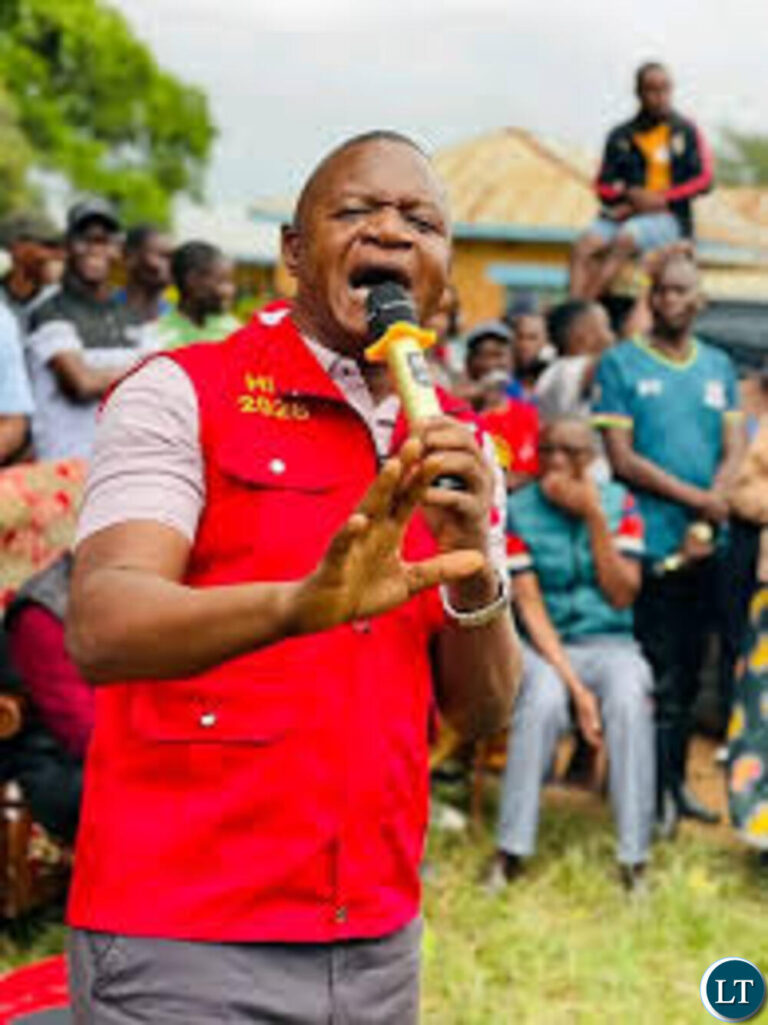
Addressing supporters after the announcement, M’Membe said the alliance had made a conscious decision to put aside internal competition in favour of what he described as a common national objective. He said the People’s Pact would campaign on a platform centred on economic justice, governance reform, and social protection.

M’Membe said the decision to unite behind one candidate followed extensive engagement with citizens, faith leaders, and civil society groups who had urged opposition parties to avoid splitting the vote. He said the pact believed Zambians wanted a credible alternative presented in a clear and organised manner.

The five vice presidents named to the ticket were identified as Robert Sichinga, Peter Sinkamba, Kaluba Simuyemba, and two other senior figures drawn from the alliance’s member parties. Pact officials said the appointments were intended to broaden representation across political and organisational lines within the opposition.

The announcement comes as Zambia moves into an election year marked by rising political activity and heightened scrutiny of economic management. Opposition parties have repeatedly cited concerns over the cost of living, energy supply, and public debt as key issues shaping voter sentiment ahead of August.

The ruling party, led by President Hakainde Hichilema, has maintained that its administration has stabilised the economy and laid the groundwork for long-term growth. Government officials have pointed to fiscal discipline, debt restructuring, and investment inflows as evidence of progress since 2021.

People’s Pact leaders said the selection of a single candidate was intended to ensure that opposition messaging remained focused and consistent throughout the campaign period. They said internal disagreements would be handled within alliance structures to avoid public disputes that could undermine credibility.

The alliance also said it would soon begin formal campaign preparations, including coordination of policy positions among member parties and engagement with the Electoral Commission of Zambia on procedural requirements.

The People’s Pact was formed as a coalition of opposition parties seeking to challenge the dominance of larger political formations by pooling resources and voter bases. Previous attempts at opposition alliances have struggled to maintain cohesion through election cycles, often collapsing over leadership disputes.

Pact officials said lessons had been drawn from those experiences, with the current arrangement placing emphasis on discipline and collective decision-making. They said the choice of M’Membe reflected internal consensus rather than individual ambition.

With the election calendar tightening, the alliance said its priority was to present itself as a stable and credible alternative capable of governing. Leaders said the coming months would test the durability of the pact and its ability to sustain unity under political pressure.
Lubinda says PF future hinges on unity, not court rulings

Lubinda says PF future hinges on unity, not court rulings

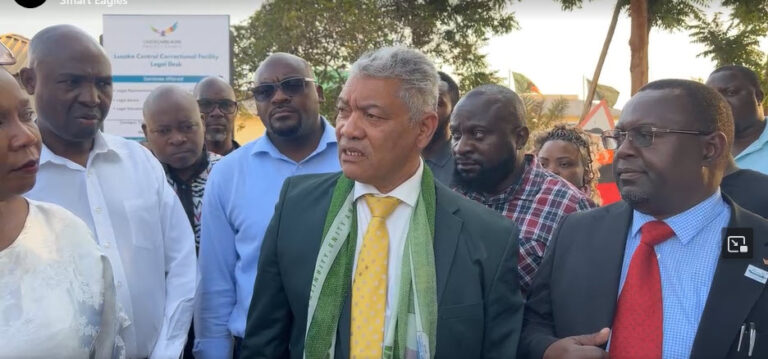
Given Lubinda has set out what he described as the Patriotic Front’s final path forward, telling journalists that the survival of the political movement founded by Michael Chilufya Sata would be determined by internal unity rather than court outcomes.

Speaking during a press interaction, Lubinda responded to pointed questions from Mr. Zulu, Madam Tawanda and Nelson on the credibility of state institutions, growing internal friction within the PF, and uncertainty surrounding the party’s convention scheduled after mid-January 2026. His remarks came amid sustained legal and political pressure on the opposition party, with several court processes expected to reach decisive stages in early January.

When asked by Nelson how the PF could accuse the justice system of being weaponised while still expressing confidence in court processes ahead of January 9 and January 12, Lubinda offered a cautious but firm response. He said the presence of selective justice did not cancel out the possibility of lawful decisions emerging from the courts. To illustrate the point, he compared the system to a handful of groundnuts, saying that the existence of a rotten one did not mean all were spoiled.

Lubinda pointed to the Constitutional Court ruling in the Mukandila and Munia Zulu case on Constitution Amendment Bill No. 7 as an example of what he described as correct judicial conduct within a broader environment he considers compromised. He said that ruling demonstrated why the PF had continued to pursue legal routes before taking major political decisions, despite its wider concerns about the justice system.

Pressed further by Mr. Zulu on what the party would do if the courts did not rule in its favour, Lubinda deliberately shifted his language away from formal party structures. He said the organisation created by Michael Sata and later led by Edgar Chagwalungu Lungu would continue “under whatever umbrella it chooses,” making clear that the movement would not allow its future to be determined by prolonged legal delays.

“We are giving ourselves only up to the 12th of January to use the judicial system,” Lubinda said, adding that once that window closed, the leadership would decide how to convene and elect new leadership without further postponement. His remarks suggested a readiness to move forward with internal processes regardless of the outcome of pending court matters.

The exchange with Madam Tawanda shifted the discussion inward, focusing on rising public concern over infighting among PF presidential hopefuls and the conduct of their supporters, particularly on social media platforms. She asked whether aspirants understood that the party’s interests should come before individual ambition at a time when the PF faced existential pressure.

Lubinda responded by drawing a clear line, stating that anyone within the PF who placed personal ambition above national duty was, in his words, “in the wrong place.” He said leadership ambition was legitimate only when it was anchored in service to citizens rather than factional advantage. Supporters who spread insults, hostility and division online, he added, were being closely watched by both party members and the wider public.

He said PF members were already forming their own judgments about which aspirants were working to unite the party and which were fuelling acrimony. Those contributing to division, Lubinda warned, were doing so at their own peril, as internal sentiment would ultimately influence the direction and leadership of the movement.

Lubinda also disclosed that the PF Council of Elders was actively engaging all aspiring candidates to secure agreement on a convention process that would strengthen the party rather than fracture it. He said holding a convention that produced a divided outcome would defeat the purpose of the exercise and weaken the movement at a critical moment.

“If I knew a convention would destroy the party, I would leave before it happened,” Lubinda said, stressing that the objective of the process was renewal, not rupture. His remarks underscored concerns within the party that unresolved rivalries could undermine efforts to present a united front ahead of the 2026 general election.

Beyond internal party dynamics, Lubinda addressed the broader role of the media and digital platforms in shaping political discourse. He urged journalists and social media users to resist becoming conduits for hostility, arguing that they carried a responsibility for national cohesion during politically sensitive periods. Responsible journalism, he said, was an essential pillar in maintaining stability and informed public debate.

The interaction highlighted the tension facing the PF as it navigates legal uncertainty, leadership succession and public expectations simultaneously. Lubinda’s responses framed the coming weeks as decisive, not only for determining how the party conducts its convention, but also for whether the movement can reassert cohesion after a prolonged period of internal and external pressure.

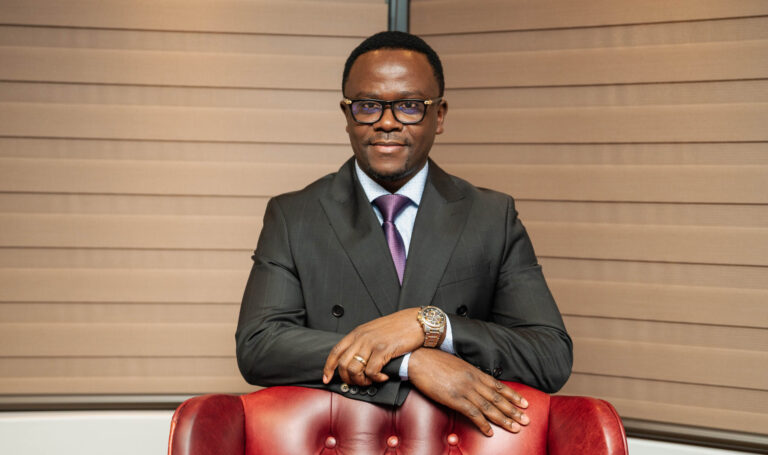
Rostam Aziz’s Taifa Group commits to a US $500 to Zambia

4
Rostam Aziz’s Taifa Group commits to a US $500 million Zambia expansion, setting a higher standard for regional trade and integration

Taifa Group is moving to deepen its regional platform with a planned investment of more than US $500 million in Zambia over the next two years, targeting gas distribution, power generation and contract mining.

For the East African businesses that have long argued for scale, value addition and intra-Africa capital, the announcement that heralds Taifa Group’s entry into Southern African country is notable for its clarity on scope, timelines and delivery.

The effort is being driven by Chairman Rostam Aziz, whose leadership is increasingly defined by execution at industrial scale and by an insistence that regional growth must be built on practical infrastructure that improves lives and productivity.

Unlocking Zambia’s Potential through Essential Infrastructure

Zambia’s economic prospects are closely tied to renewed momentum in copper mining, alongside agriculture and manufacturing.

Taifa Group is positioning itself to support that resurgence through the essentials that keep industry running, while strengthening the long term growth path of the Group across multiple markets.

“Zambia has become a major focus country for Taifa Group due to industrial ties, proximity and opportunities that are arising. We have some areas of focus but for now, we mainly concentrate on gas – both for home and industrial use,” Aziz said.

Strengthening Power Supply and Industrial Capacity

The immediate commercial logic is demand for reliable, cleaner energy inputs across households and industry.

The broader regional logic is that lack of energy access remains one of the most important constraints on productivity across East Africa and neighbouring markets.

Taifa Group is placing capital where the constraint is most visible, and where improvement can translate into measurable economic gains.

“We also have pipeline projects which include 500 megawatts power generation by solar PV because we believe we have a role to play in alleviating the current acute power problem. We are also focused on bringing our mining expertise that we have accumulated for over 30 years, mainly in contract mining and supply of key mining equipment and inputs. So, altogether, we are looking to invest US $500 million in Zambia over the next 24 months,” he said.

Widening access to cleaner energy beyond Lusaka

In energy, credibility is earned through availability. Taifa Gas is expected to begin shipping LPG to Zambia in June this year – 2026, alongside investments in distribution networks designed to keep supply consistent and accessible.

This is where Aziz’s approach matters for both Zambia and East Africa – success is built in depots, logistics and service coverage, not simply in headline numbers.

“Just like our operations in Tanzania and Kenya, we are going to build depots in every town we’ll go to in Zambia and we are not just concentrating in the capital Lusaka, but we go shall to every town,” he said.

Protecting Health, Strengthening Homes, and Reducing Harmful Fuels

Aziz is also using the Zambia programme to reinforce a wider point that resonates in East African boardrooms; stronger intra-Africa investment is not a slogan; it is a strategy for resilience, shared growth and reduced exposure to external disruptions.

“We should not wait until people come from outside and invest in our countries. Zambians should start investing in Tanzania; and equally Tanzanians must start investing in Zambia,” he said.

Just as importantly, the programme is presented as a response to social and economic realities that shape long run prosperity, including household health, cleaner cooking fuels, and the reduction of diesel dependence in industrial operations.

These are challenges that Zambia and East Africa share, and they are central to building a more competitive and sustainable regional economy.

“Zambia has the commodity (copper) which the whole world wants which is going to boom the economy. And so, we need to put in infrastructure to make life easy for our people in Zambia so that they benefit from this boom, and that is why we want to bring in gas for home and industrial use so that we reduce on exposing our women to the fumes from charcoal burning that is intoxicating them. We also need to reduce a lot of these diesel power generators in key industries, especially the mines to reduce carbon emissions for the sake of our environment. We need to preserve human life as well as the environment.”

Building Regional prosperity through African-led investment

For Taifa Group, the Zambia expansion strengthens the Group’s future by extending its energy and industrial services platform into a market with clear demand drivers.

Aziz is firmly committed to a large-scale deployment of capital into infrastructure across Zambia and the broader East and Southern African region. This investment is strategically aimed at supporting growth, creating jobs, and improving living standards.

“People are now more aware of what Zambia is all about. Today, you have two million foreigners coming here annually when four years ago, you only had 500, 000,” said Aziz.

Aziz argues that Zambia’s improving visibility and growing investor attention reinforce the case for strong confidence in the region’s next, promising phase of growth.

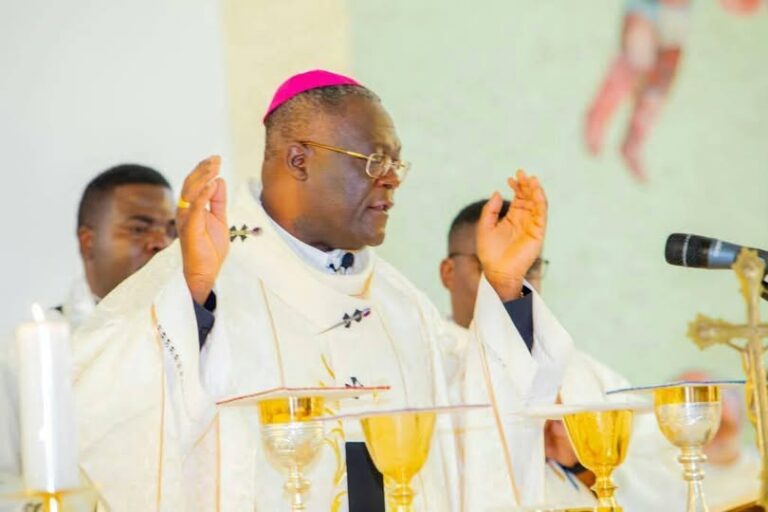
The DEC Summoning of Lusaka Archbishop, Dr. Alick Banda, Opening a Fresh Wound of Division

7

The DEC Summoning of Lusaka Archbishop, Dr. Alick Banda, Opening a Fresh Wound of Division

Amb. Emmanuel Mwamba Wrote;

KK was Right, President Hichilema Will Take Us to Civil Conflict

President Hakainde Hichilema has not hidden his disdain for Lusaka Archbishop Dr. Alick Banda snd the Catholic Church.

In his meeting with stakeholders including the Apostolic Nuncio (Papal Ambassador), he has accused Dr. Banda of treason and theft of ZRA motor vehicles.

We must remember that Zambia’s founding President, Dr. Kenneth Kaunda expressed deep fears about President Hichilema.

Dr. Kaunda warned that Zambians should not allow Hakainde Hichilema to become President as he would deeply divide the country.

Yet KK had endorsed Hichilema as a presidential candidate in 2008 and 2011 under some loose coalition including UNIP.

What changed? What did KK find out? What made him give us this ominous warning.

Icamona umukalamba ilyo ekele, umwaice teti acimone ilyo eminine.

Today Zambia stands at a precipice, at cross roads, as a highly divided nation, polarized and rivened by ethnic and partisan divisions, a sad state of affairs that has sown dangerous seeds that may lead to civil conflict, and civil unrest.

This is because we have a President who disregards the Constitution, ignores court orders, fears no institutions, fears no public pressure, fears no stakeholder influence and has keenly destroyed democratic institutions, blurred the line and independence of wings of government, weaponised Law Enforcement Agencies, skewed to punish critics and the members of the Opposition and turned the Judiciary to kowtow to him.

Hichilema doesn’t yield to the public pressure raised in the interest of the nation.

Bill 7 demonstrated that he now behaves like a King ruling by decree, and not an elected servant of the people, a tyrannical leader lording over a people and openly defiling its democratic institutions.

Similarly his summoning of the Lusaka Archbishop to present himself to the Drug Enforcement Commission should be seen in this light.

He has accused the Archbishop of bogus charges over ZRA donated vehicles made to various institutions including the catholic charity organisation.

There is another perspective that we must interrogate.

When UPND Secretary General Batuke Imenda went on a tirade rant calling Dr. Banda as “the Lucifer of Zambia”, everyone was appalled at the insults, hate and dangerous provocative speech against the Catholic foremost leader in Zambia.

It was expected that there would be a swift, strong reprimand and disciplinary action against Imenda from President Hichilema.

Instead there was quiet celebrations from State House encouraging the terrible statement as parroted by justifications from State Media.

Koswe Media, run by President Hichilema’s own State House media staff, proceeded to raise a relentless dirty and smear campaign against Dr. Banda.

Many may not see it.

President Hichilema says he is an “ELDER” in the Seventh Day Adventist Church (SDA).

The SDA doctrine views the Catholic Church and its lewder, the Pope critically, identifying the papacy as the man of sin”(Anti-Christ) and the Catholic Church as Babylon the Great from Revelation, a corrupt system that changed God’s law (specifically the Sabbath to Sunday) and persecuted believers during the Dark Ages.

The SDA doctrine, heavily influenced by founder Ellen G. White, views the Catholic Church and the Pope as central figures in end-time prophecy, often identifying the papacy as the “Beast” from Revelation 13 and 17.

It is clear that an SDA President could be using his office, to perpetuate these doctrinal differences and fighting the Catholic Church from a religious perspective.

His remarks at the commemoration of the Declaration of Zambia as a Christian Nation, give us a window of how he thinks about the Church, mocked the assertions that there was “Church Mother Bodies” a deliberate strike attack at both the Church and OASIS Forum.

President Hichilema is opening a fresh wound, a religious division as never seen before.

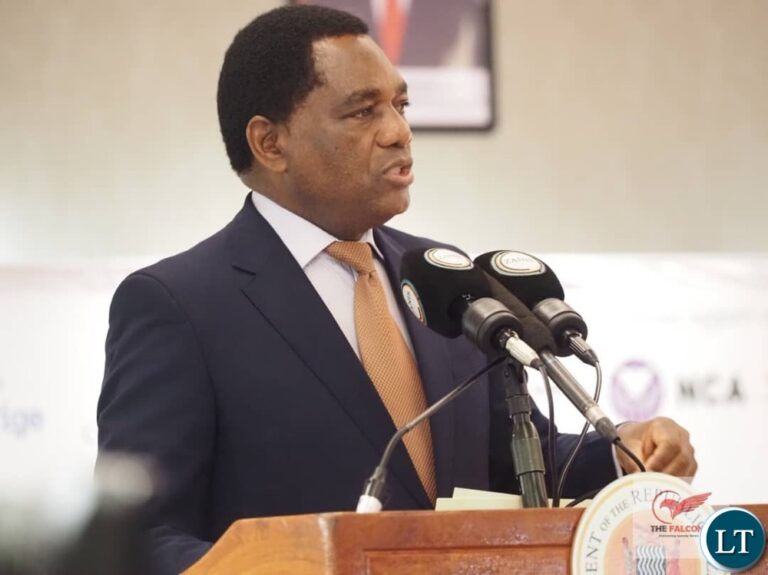
President Hichilema urges elected officials to explain new law

1

President Hakainde Hichilema has commenced his working holiday in Southern Province with a directive to all elected officials to sensitise the public on the application of the newly enacted Act No. 13 of 2025.

Speaking upon arrival at his Choma Farm, Mr Hichilema cautioned that those who preached against Bill number seven were still misleading the public so that many people do not understand the benefits of the new law.

He urged elected leaders to ensure that citizens are well-informed on the positive impact of the law.

President Hichilema also called on Zambians to embrace love, unity, and dialogue as the country heads towards the 2026 elections.

“When you have love, you conquer hatred; when you have unity, you conquer violence; and when you have dialogue, you conquer conflict,” President Hichilema explained.

 He emphasised that the principles would guide Zambia toward a peaceful and prosperous future.

The President further highlighted the achievements made so far during his leadership, noting that 2.3 million children have returned to school since the introduction of the free education policy.

 He also pointed out the improvements in infrastructure, particularly in health and education.

President Hichilema further urged members of the United Party for National Development (UPND) across the country to recruit more people into the party and encourage them to protect the development strides Zambia has recorded with their voter’s cards.

“We must guard against losing all this progress in 2026, I urge the citizens to vote thoughtfully and protect the strides the country has made,” he said.

Meanwhile, Minister of Information and Media, Cornelius Mweetwa, said his ministry will ensure that the presidential directive on sensitising the public about the new law is followed.

“We will work to make sure that the message reaches all Zambians across the country,” Mr Mweetwa assured.

He added that the Ministry of Information and Media has devised a countrywide sensitisation programme with the Ministry of Justice to ensure that the general citizenry appreciate the contents and applications of the new law.

Mr Mweetwa also urged the media to continue highlighting the benefits of Act No. 13.

Among the senior government officials who received the President were Choma Mayor Javern Simoloka, Southern Province Permanent Secretary, Namani Monze, District Commissioners, members of the Provincial Joint Operations Committee (PJOC), and other senior UPND officials.

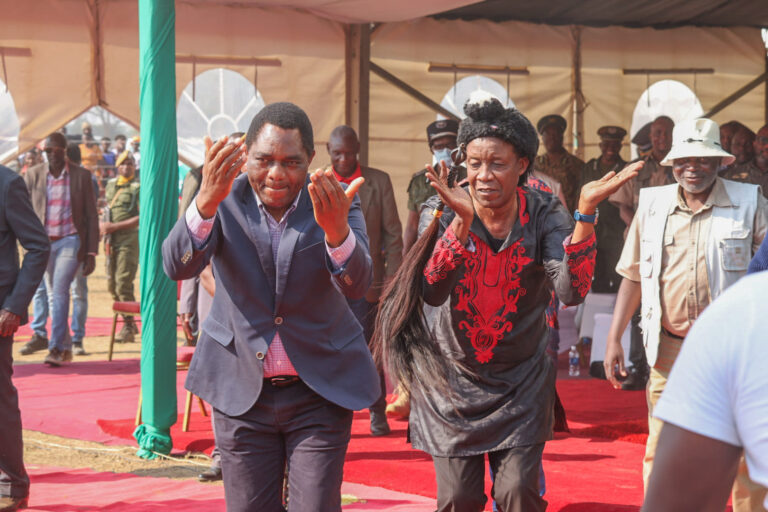
We give him another 20 years – wishes Snr Chief Shakumbila

9

We give him another 20 years – wishes Snr Chief Shakumbila

Senior Chief Shakumbila strongly praised President Hakainde Hichilema’s leadership, crediting his administration with restoring peace and delivering policies that many Zambians once considered impossible, while openly expressing his personal wish for the President to continue in office for a much longer period.

Speaking during a public engagement, Chief Shakumbila said Zambia is “now better” under President Hichilema, attributing the improvement to policy clarity, national stability, and a renewed sense of direction. He described the President as a leader with long-term plans who should not be disrupted by frequent political transitions.

“We are so lucky to have President Hakainde Hichilema as President because Zambia is now better,” the Chief said. “If it were up to me, I would say we give this young man another 20 years to put his plans properly.”

Chief Shakumbila went further, questioning the necessity of frequent elections when, in his view, a leader is performing well and delivering tangible results. He said interrupting such leadership risks confusing a President who has come with clear and workable plans for national development.

“If it were me, I would say elections, we give him another 20 years,” he said. “I don’t know what’s wrong with that. We don’t need to confuse somebody who has come with better plans.”

His remarks, while framed as a personal opinion, have drawn attention because of their direct reference to extending leadership beyond constitutionally prescribed electoral cycles. The comments come at a time when debates around governance, democracy, and term limits remain sensitive in Zambia’s political discourse.

Chief Shakumbila anchored much of his praise on the introduction of free education, a policy he said had long disappeared from the national imagination. He recalled that many Zambians had stopped believing free education was achievable, only for it to be implemented under the current administration.

“No one in Zambia knew that one day we shall have free education,” he said. “People were saying, where is he going to get the money from? They said this boy is a dreamer, that he is cheating people. But now it is working.”

He said the programme has given families across the country renewed hope, particularly in rural areas where school fees had previously locked many children out of education. According to the Chief, free education has restored opportunity and dignity to households that once saw schooling as a privilege rather than a right.

“I believe every Zambian is happy to have free education,” he said, adding that the policy empowers those who want to continue with school while leaving the choice with individuals. “Those who want to continue, they can continue.”

Beyond education, Chief Shakumbila also highlighted peace and security as defining features of the current period. He said Zambia is now calm, with citizens able to move freely without fear or intimidation.

“There is peace now in the country,” he said. “Everywhere you go, you don’t expect anybody to attack you. Everybody enjoys that.”

Supporters of the government often cite peace and improved civic space as evidence of progress since the change of administration. Traditional leaders in several regions have echoed similar sentiments, pointing to reduced political tension and improved relations between state institutions and communities.

However, the Chief’s suggestion that elections could be deferred to allow leadership continuity intersects with constitutional principles that firmly establish term limits and regular elections as cornerstones of Zambia’s democracy. Legal experts and civil society groups have consistently maintained that while performance can be debated, constitutional order must remain intact.

Chief Shakumbila did not frame his remarks as a call for constitutional change but as an expression of admiration for what he sees as effective leadership and policy delivery. Nonetheless, his comments illustrate how development outcomes can shape political attitudes beyond formal party structures.

As Zambia moves toward the 2026 general elections, endorsements and opinions from traditional leaders are likely to continue influencing national conversation, even as debates about democracy, leadership continuity, and constitutionalism intensify.

Chief Shakumbila closed his remarks by reiterating his belief that progress should not be interrupted, framing continuity as a practical response to results rather than a political manoeuvre.

Mudolo says Zambians are tired of promises without results

Mudolo says Zambians are tired of promises without results

Opposition figure Mudolo has issued a blunt warning to the government, saying Zambians are weary of assurances that are not matched by action and are increasingly demanding tangible outcomes rather than repeated commitments.

Mudolo’s remarks come amid growing public frustration over what many citizens describe as a widening gap between official statements and lived experience. He said repeated promises on economic relief, service delivery, and job creation have failed to translate into meaningful improvement for households struggling with high costs of living and uncertain incomes.

Speaking during recent engagements captured in today’s attached coverage, Mudolo argued that credibility in governance is no longer earned through speeches or policy projections, but through visible, measurable delivery. He said citizens have heard enough explanations and timelines and are now asking for results they can feel in their daily lives.

He pointed to persistent complaints over food prices, electricity supply interruptions, and delayed payments in key sectors as evidence that public patience is wearing thin. According to Mudolo, the cumulative effect of unfulfilled commitments has created scepticism toward official messaging, even where intentions may be genuine.

Mudolo said leadership should be judged by consistency between words and outcomes. He warned that repeated announcements without follow-through erode trust and weaken the social contract between citizens and those in power. In his view, trust once lost is difficult to rebuild, particularly when economic pressures are intense.

The remarks align with broader sentiments reflected across today’s news coverage, where multiple actors have raised concerns about accountability and delivery. While government officials continue to cite reform processes and structural constraints, critics argue that explanations alone cannot substitute for results.

Mudolo rejected arguments that citizens should simply be patient, saying patience has limits when livelihoods are under strain. He said households are adjusting their expectations downward, cutting consumption, and absorbing rising costs without corresponding relief from policy interventions.

He also cautioned against political messaging that leans heavily on future projections. Mudolo said promises tied to long-term plans mean little to families facing immediate challenges. He argued that leadership requires addressing present conditions even as longer-term reforms are pursued.

The opposition figure further suggested that the culture of promise-making has become entrenched across political cycles, with successive administrations inheriting and repeating patterns of overcommitment. He said breaking that cycle requires restraint in public communication and honesty about capacity and timelines.

Mudolo’s critique also touches on the broader issue of political accountability ahead of the 2026 general elections. He said voters are increasingly discerning and are less likely to be swayed by rhetoric alone. According to him, credibility will hinge on whether leaders can demonstrate impact rather than intention.

He urged the government to prioritise delivery in sectors that directly affect household welfare, including agriculture, energy, health, and social protection. Mudolo said even modest improvements in these areas would restore confidence more effectively than repeated assurances.

Government officials have previously defended their approach, arguing that reforms take time and that structural challenges inherited from previous administrations cannot be resolved overnight. They have pointed to progress in debt restructuring, fiscal discipline, and international re-engagement as evidence that foundations are being laid for sustained growth.

Mudolo acknowledged that reforms require time but maintained that communication should reflect reality rather than aspiration. He said overpromising creates expectations that, when unmet, deepen frustration and cynicism.

The opposition leader also warned that persistent gaps between promises and outcomes risk fuelling apathy or anger, both of which can destabilise democratic engagement. He said citizens who feel unheard or misled may disengage from formal politics or express dissatisfaction in unpredictable ways.

As political activity intensifies, Mudolo said leaders must recalibrate their engagement with the public. He argued that honesty, restraint, and delivery are more persuasive than ambitious pledges that lack clear pathways to implementation.

His remarks add to a growing chorus of voices calling for a shift in political culture, from promise-driven campaigns to performance-driven governance. Whether that shift materialises remains to be seen, but the message resonates strongly in a context where economic pressures dominate public conversation.

With the next election cycle approaching, Mudolo said the era of patience is ending. He said citizens are watching closely, not for what leaders say, but for what they do.


Nkandu focuses on road works in Kaputa

1

Kaputa Member of Parliament (MP), Elvis Nkandu, has assured residents of Kapulwa Ward that the government remains committed to rehabilitating roads in the area.

Speaking during a community engagement in Kapulwa Ward, Mr Nkandu, who is also Minister of Youth, Sport and Arts, said the government will work on the road as part of its efforts to improve infrastructure in the district.

He bemoaned that the poor state of roads has continued to affect the movement of people and goods, particularly for farmers and traders.

He said the government is committed to addressing the challenge so communities are better connected to markets, schools, and health facilities.

“Next year, our focus is just on this road; we don’t want to do any other projects. We want to ease your movements,” said Mr Nkandu.

The lawmaker explained that the planned rehabilitation works will focus on key feeder roads that link Kapulwa Ward to surrounding areas and the district centre.

Mr Nkandu further encouraged residents to support government programmes and remain patient as it continues to deliver on its promises.

And community members have welcomed this development, expressing hope that the works would solve the long-standing transport challenges in the area.

Chrispin Makungu also thanked the government for the construction of the first-ever maternity annex in the area.

Mr Makungu praised the MP for always being present and helpful to his constituents.

“This is how a Member of Parliament should be, we will continue to support him even in 2026,” he said.

He promised to work with the government in mobilising support during the 2026 general elections.

Government Hails Zambeef Investment

1

Government says Zambia’s improving economic stability is now driving real investment and growth, with companies such as Zambeef leading value addition, job creation and lower prices for consumers.

Minister of Commerce, Trade and Industry, Chipoka Mulenga stressed that sustained stability in key economic indicators has created confidence for businesses to invest, expand and pass on benefits to consumers.

Speaking during a media engagement in Lusaka today, Mr Mulenga described Zambeef’s recent investment decisions as a practical demonstration of how a stable economy can stimulate local manufacturing, job creation and affordability.

The media reports that Mr Mulenga highlighted Zambeef’s investment in leather processing, which is transforming animal hides that were previously wasted into finished products such as shoes, creating jobs and strengthening domestic value chains.

“Instead of exporting raw hides or letting them go to waste, value is now being added locally. This is exactly the type of investment Zambia needs,” he said.

He stressed that economic growth will only be meaningful if consumers feel the impact in their daily lives, noting that lower production costs must be reflected in affordable food and essential goods.

And Zambeef Products Plc has announced a series of price reductions and consumer promotions aimed at easing the cost of living, improving access to affordable food and supporting Zambia’s drive towards a healthier and food-secure nation.

 Zambeef Chief Executive Officer (CEO), Faith Mukutu said the promotions form part of the company’s broader local production and economic empowerment strategy, which prioritises consumers, job creation and sustainable development.

Among the key products announced is a 10 percent reduction in leather shoe prices, a move that goes beyond the company’s traditional back to school promotions.

The reduction is a permanent price adjustment intended to make locally manufactured products more affordable while supporting domestic industry and employment.

In the livestock and food production sector, Zambeef has reduced day-old chick prices by 5 percent effective 1 January, a decision expected to benefit small-scale and commercial poultry farmers.

To further support poultry production, the company has also cut animal feed prices between 3 and 5 percent, helping farmers’ lower production costs and increase output.

Ms Mukutu explained that these pricing decisions are designed to stimulate productivity across the value chain, from farmers to consumers, ultimately leading to increased availability of affordable protein foods such as chicken, which are essential for good nutrition and public health.

The company will also roll out additional monthly and quarterly promotions, encouraging households to take advantage of reduced prices on key food products.

Meanwhile, Zambia Association of Manufacturers (ZAM) President, Omar Mohammed disclosed that the manufacturing sector has attracted close to US$5.5 billion in actualised investment, accounting for 37 percent of total investments outperforming mining, transport and the services sector.

Mr Mohammed described the development as a clear endorsement of the Government’s policy direction and sustained engagement with the private sector, particularly through budget consultations and economic reform dialogues.

“This is a strong signal that Zambia’s industrialisation strategy is working and that investor confidence in domestic production is steadily growing,” he said.

 ZAM President has since commended Zambeef Products Plc, for the reductions on selected locally produced goods.

He noted that the announcement comes at a time when manufacturers are beginning to experience relief from long-standing operational pressures, citing relative fuel price stability, improved power supply reliability, and a more predictable exchange rate environment.

And Zambia Chamber of Commerce and Industry (ZACCI) Acting Chief Executive Officer (CEO), Emmanuel Mumba said Government’s recognition of the private sector as a strategic partner in economic growth, job creation and innovation is now being reflected through targeted reforms across critical sectors of the economy.

“These are not cosmetic reforms, they are structural interventions that are changing how businesses operate and invest,” Mr Mumba said.

Mr Mumba has since commended Zambeef Products Plc for responding to the improving economic environment by reducing prices on selected locally produced goods, describing the move as evidence that reforms can directly benefit consumers.

“This is what success looks like when policy reforms translate into affordable products, improved welfare, and real impact on the lives of Zambians,” he said.

Chipolopolo boys’ AFCON performance saddens Nkandu

4

Minister of Youths Sports and Arts, Elvis Nkandu has expressed disappointment towards the performance of the Zambia National team at the Africa Cup of Nations (AFCON).

In a statement Nkandu says the government has since called for a collective reflection and decisive action to restore Zambia’s competitiveness on the continental football stage.

The media reports that Mr Nkandu noted that Zambia’s failure to secure two points from a possible nine was a poor outcome for a country that has won the Africa Cup of Nations before.

He further said that the players did not show the required character patriotism and the will to win towards the tournament match.

He added that rich submissions were made at the Football indaba as guiding reforms which do not  need to be delayed to help counter these issues.

“We need to tap into very rich submissions because those reforms are meant to guide Zambian football,’’ he said.

Meanwhile, Zambia Premier league Radio Award winning journalist, Puncherello Chama said reforms need to be implemented to help address technical issues that the country faces in Football.

Mr Chama said action plans will help avoid them from dying in their first stages of being administered.

“I wish there was a simpler way that we could do it but there are mandates that need to be followed,’’ he said.

Zambia has been officially eliminated from the 2025 Africa Cup of Nations (AFCON) after a 3-0 loss to tournament hosts Morocco in their final Group A match on Monday, December 29, 2025, With a brace from Ayoub El Kaabi and a goal from Brahim Díaz which sealed the victory for Morocco who finished as the group winners and advanced to the knockout stage along with Mali.

Western PS commends media for partnering with government

0

Western Province Permanent Secretary (PS), Simomo Akapelwa, has commended the media fraternity for its continued support and partnership with the government throughout the year 2025.

In an end-of-year message to the media, Mr Akapelwa applauded Journalists in Western Province and across the country for playing a vital role in highlighting the government’s developmental agenda.

The PS noted that the media has helped to inform and engage the public on key programmes and projects being implemented across various sectors, including infrastructure, health, education, agriculture and social protection.

Mr Akapelwa said the media’s dedication to fair, timely and responsible reporting significantly contributed to transparency, accountability and increased public awareness of Government activities.

He further praised the Journalists for their commitment to telling the development story of Western Province, often under demanding circumstances.

Transitioning to 2026, Mr Akapelwa encouraged the media to continue working closely with the government in amplifying development initiatives, while also promoting peace, unity and national cohesion, especially as the country is preparing for the forthcoming general elections.

He reiterated the government’s commitment to openness and collaboration with the media in the collective effort to serve the people of Zambia.

It is shameful that ECL remains unburied – Chifumu Banda

7
It is shameful that ECL remains unburied – Chifumu Banda

Opposition politician Chifumu Banda has sharply criticised the continued delay in the burial of former President Edgar Lungu, describing the situation as shameful and deeply troubling for the country, seven months after Lungu’s death.

Banda said the prolonged stay of the former Head of State’s body in a South African mortuary has gone beyond a private family matter and has become a national concern that reflects poorly on Zambia’s political culture, leadership maturity, and respect for tradition. He argued that the inability to resolve the impasse exposes deeper political tensions and a failure of leadership restraint at the highest levels.

Speaking against the backdrop of renewed public debate on the matter, Banda said Zambians are witnessing an unprecedented situation in which a former President has not been laid to rest long after death, despite repeated public assurances that talks and consultations are ongoing. He said this has caused distress not only to the Lungu family but also to many citizens who regard the burial of a former Head of State as a matter of national dignity.

Banda questioned how a country that prides itself on peace, cultural values, and respect for elders could allow such a stalemate to persist. He said burial rites are not merely ceremonial but are deeply rooted in African tradition and national identity, especially when they concern a leader who once held the highest office in the land.

He accused the current political leadership of allowing partisan considerations to overshadow basic humanity and decency. Banda said disagreements over protocol, venue, or arrangements should never be allowed to override the need to give a former President a dignified send-off.

According to Banda, the continued delay risks setting a dangerous precedent in which political rivalry extends beyond life and into death. He warned that such a trajectory could further polarise the nation and erode the shared values that have historically guided Zambia through political transitions.

Banda also rejected arguments suggesting that the matter should be left entirely to private negotiations, insisting that the state has an unavoidable role when it comes to former Heads of State. He said while family wishes must be respected, the government equally carries constitutional, cultural, and moral responsibilities that cannot be indefinitely deferred.

He further criticised what he described as selective urgency in national affairs, arguing that issues affecting political optics often receive swift attention, while matters of deeper moral consequence are allowed to stagnate. Banda said the silence and delays surrounding the burial stand in stark contrast to the speed with which political disputes are often pursued when power or control is at stake.

The opposition figure urged the government to demonstrate statesmanship by separating political disagreements from matters of national closure. He said Zambia’s history of peaceful transitions should compel leaders to act with restraint and empathy, particularly in moments that test the country’s moral compass.

Banda also warned that the unresolved burial has begun to fuel public speculation, misinformation, and political messaging that could have been avoided through decisive and transparent action. He said prolonged uncertainty invites unnecessary narratives that further inflame tensions and distract from pressing economic and social challenges facing the country.

He called on all parties involved to prioritise national unity over ego and political positioning. Banda said leadership is most visible not in moments of triumph but in how power is exercised during sensitive and painful circumstances.

The issue of Lungu’s burial has been a prominent topic in recent political commentary, with traditional leaders, clerics, and opposition figures weighing in on what they describe as a disturbing impasse. While government officials have indicated that consultations are ongoing, no clear timeline has been publicly communicated, adding to public frustration.

Banda said the absence of closure has left a symbolic wound in the nation’s conscience. He argued that burying a former President should not be controversial, delayed, or politicised, but handled with dignity, speed, and respect in keeping with Zambia’s values.

history will judge harshly any leadership that allowed political differences to overshadow humanity. Banda said Zambia owes it to itself, and to future generations, to ensure that even in disagreement, the country does not lose its sense of decency.

Poll places HH at 75pc approval rate

13
Poll places HH at 75pc approval rate

An opinion poll placing President Hakainde Hichilema’s approval rating at 75 percent has triggered renewed political debate, with the governing United Party for National Development (UPND) citing the figures as evidence of public confidence, while opposition figures question both the timing and substance of the findings.

The poll, published as Zambia approaches the end of 2025, suggests that nearly three quarters of respondents approve of President Hichilema’s performance in office, while the combined opposition accounts for the remaining 25 percent. According to the survey’s presentation, the figures are attributed to what it describes as rising public optimism and growing approval of the President’s leadership style.

Supporters of the government argue that the approval rating reflects tangible economic and governance outcomes recorded over the past four years. They point to debt restructuring, improved fiscal discipline, re-engagement with international creditors, and relative macroeconomic stability as factors that have shaped public perception. The administration has repeatedly highlighted Zambia’s exit from debt distress, improved foreign exchange inflows, and renewed investor interest as markers of recovery following the economic challenges inherited in 2021.

Government-aligned voices also link the poll’s findings to policy decisions that have had visible social impact, including expanded social protection programmes, increased Constituency Development Fund allocations, and the continuation of free education. They argue that these interventions have strengthened household resilience at a time when global economic pressures, climate shocks, and energy disruptions have strained many developing economies.

However, the poll has also drawn scepticism from sections of the opposition and civil society, who caution against equating approval ratings with lived realities on the ground. Critics argue that headline figures may mask persistent structural challenges, including high food prices, intermittent electricity supply, delayed farmer payments, and youth unemployment.

Opposition leaders have questioned whether the methodology and sampling of the poll adequately capture the experiences of rural communities, informal sector workers, and urban low-income households. Some have argued that public sentiment is more fragmented than the figures suggest, particularly in constituencies where economic hardship remains pronounced.

Within opposition ranks, the poll has also reignited debate over unity and strategy ahead of the 2026 general elections. While the survey presents the opposition as a fragmented bloc sharing a quarter of voter support, some analysts note that approval ratings do not necessarily translate directly into electoral outcomes, especially in a competitive multiparty environment.

Political observers point out that approval ratings often reflect short-term sentiment rather than long-term voting intentions. They note that public opinion can shift rapidly in response to economic shocks, governance controversies, or changes in political messaging. In Zambia’s past electoral cycles, incumbents have faced strong challenges even when entering election years with perceived momentum.

The poll’s release has also drawn attention to the broader narrative of leadership performance that has followed President Hichilema throughout 2025. International recognition for economic reform has featured prominently in public discourse, with government officials citing foreign media and investor commentary as validation of policy direction. Critics, however, warn that external praise should not substitute for domestic accountability or overshadow unresolved governance concerns.

Some civil society actors have urged caution in how approval ratings are deployed in political communication, stressing the importance of safeguarding institutional neutrality, especially as the country moves closer to an election year. They argue that opinion polls should inform debate rather than be used to delegitimise dissenting voices or frame political competition as futile.

At the same time, governance analysts note that approval ratings, whether favourable or contested, place heightened responsibility on the incumbent administration. A high level of public approval raises expectations around service delivery, transparency, and ethical conduct, particularly in areas such as electoral administration, public finance management, and the use of state resources.

The opposition has signalled that it intends to focus its messaging on issues it believes resonate more strongly with voters than polling figures. These include the cost of living, agricultural support, energy reliability, and perceived uneven application of the law. Several opposition figures have argued that elections are ultimately decided at the ballot box, not in surveys.

As Zambia enters the final year before the 2026 polls, the poll placing President Hichilema at 75 percent approval has become part of a wider contest over narrative and legitimacy. For the ruling party, it reinforces claims of public endorsement. For critics, it underscores the need for vigilance, scrutiny, and sustained engagement with voters beyond statistical snapshots.

Police intensify road safety measure ahead of festivities

3

Police have heightened security and road safety measures across communities as the country prepares to cross over into 2026.

Speaking in a phone interview , Zambia Police spokesperson Godfrey Chilabi said, deployments are already underway in residential areas, business districts, and other public spaces to intensify security measures.

“We have put in place a number of measures to ensure safety and security, as well as road safety and police presence has been heightened in compounds, residential places, and business areas to ensure that everything goes on well,” Mr Chilabi said.

He explained that police patrols will continue through the night and into the following morning, with officers conducting both foot and motorized patrols to maintain law and order.

On road safety, Mr Chilabi said traffic officers have been deployed on major roads and key points to manage traffic flow, conduct observations, and guide motorists.

“Our officers are on the ground, you will see motorized patrols, traffic observation and controls, as well as officers advising motorists on the need to remain safe while driving,” he said.

The media reports that Mr Chilabi also raised concern over the unsafe use of fireworks, noting that police had recorded incidents that resulted in injuries.

“We discovered that some incidents arose from improper use of fireworks, we are advising parents and members of the public to ensure the responsible and safe use of these devices so that injuries are avoided and safety is enhanced,” Mr Chilabi said.

He emphasised that police will maintain visibility in all areas where their presence is required to ensure a peaceful transition into the New Year.

Eight Accused, Including 15-Year-Old Pupil, Committed to High Court for Murder of Fuel Attendant

0
A 15-year-old Grade seven pupil and seven men have been committed to the High Court for trial in connection with the brutal murder of fuel attendant Sibeso Akaliwa at  Rubis service station in Lusaka’s Hellen Kaunda area in July this year.

The group of eight appeared before Lusaka magistrate Idah Phiri yesterday, facing four counts of murder, attempted murder, and aggravated robbery. The court session was held in camera.

The accused are alleged to have stormed the service station around 03:00 hours on July 16, attacking and killing Ms. Akaliwa. Another attendant, Mapalo Mwelwa, was also attacked and survived with injuries.

The accused persons named in court are: a 15-year-old boy; Marriot Lungu, 22, a farmer of Chipata Township; Boniface Mwanza, 23, a painter of Chipata Maplot; Moses Zulu, 21, a security guard of Mtendere East; Given Banda, 28, a security guard of Kabanana Site and Service; Rabson Lungu, 32, a bricklayer of Chipata Township; Clifford Musanda, 30, a bricklayer of Chaisa Township; and Peter Daka, 18, of Chipata Township.

State prosecutor Lewis Loti presented the allegations. In the first count, it is alleged the eight unlawfully attempted to cause the death of Mr. Mwelwa.

The second count details an aggravated robbery where the accused, while armed with an iron bar, cutter, hammer, and screwdriver, allegedly stole a cell phone, wallet, four assorted bank cards, and K200 cash, all valued at K24,439.57 and belonging to the Rubis filling station. It is alleged they used threats or violence to prevent Mr. Mwelwa from resisting.

In the third count, allegations state that while similarly armed, the group stole Ms. Akaliwa’s headsock and cell phone, valued at K235, again using violence or threats.

The final count alleges that the eight murdered Ms. Akaliwa.

Mr. Loti informed the court that the Director of Public Prosecutions (DPP) had issued instructions for the accused to be committed to the High Court for trial.

Magistrate Idah Phiri stated, “I have received a committal certificate issued by office of DPP that this matter is fit for trial by the High Court, accordingly I commit the matter to the High Court.”