Wednesday, June 10, 2026
13.8 C
Lusaka
Home Blog Page 224

CDF-Driven Projects Accelerate Local Development Across Districts

CDF-Driven Projects Accelerate Local Development Across Districts

Developmental activity across Zambia continued to build pace as Constituency Development Fund allocations and district-level contributions produced visible improvements in schools, clinics, water systems and local enterprise facilities. The decentralised financing model, which places decision-making closer to communities, has resulted in a surge of projects completed or underway in several regions.

In Sinda and Kapoche, Government officials commissioned a group of CDF-funded initiatives valued at about K10 million. The projects include a youth-operated metal fabrication workshop, newly constructed classroom blocks and rehabilitated boreholes. Ward development committees identified the interventions as priority needs for their communities, and district authorities said the approach has strengthened local participation in planning. Teachers in the area said additional classrooms will reduce congestion, particularly in lower grades where large class sizes have disrupted learning. The fabrication workshop is expected to support technical training and introduce new income opportunities for young people.

Sinda District leadership noted that decentralised financing has shortened approval timelines and allowed constituencies to move more quickly on projects. Officials explained that communities now have increased visibility into the planning process, which has improved both accountability and engagement. They said the model enables authorities to act directly on concerns raised by residents without long waits for central approval.

In Kasama, the Municipal Council procured earthmoving machinery worth K16 million to improve feeder road networks. The equipment includes graders, rollers and tipper trucks intended to strengthen the district’s capacity to maintain rural roads that connect villages to markets and public services. Farmers have previously recorded losses during rainy seasons when roads became impassable. Council representatives said the new machinery will help address transport challenges and reduce crop spoilage linked to poor road conditions.

Several wards in Kabwe reported improvements in health facilities following CDF investments. Clinics received maternity beds, solar installations and structural repairs to ease pressure on overstretched health posts. Health workers said the upgrades will allow them to serve more patients, including expectant mothers who previously travelled long distances to find reliable care. Community representatives said the changes were long awaited and would help stabilise services in facilities that had struggled with limited infrastructure.

School construction also advanced in Mwinilunga, where CDF allocations have funded classroom blocks at multiple sites. Headteachers said the new structures have reduced absenteeism and dropout rates linked to deteriorated buildings. Many of the old classrooms suffered from leaks, insufficient space and poor ventilation. Local contractors were hired for the works, contributing to short-term employment and adding financial activity within the district.

Kapopo Secondary School completed a major rehabilitation project using its 2025 CDF allocation. Roof repairs, repainting, window replacements and staff room improvements were carried out to enhance durability and learning conditions. School administrators said the upgrades came at an ideal time, as enrolment has increased steadily and the school needed reliable infrastructure to accommodate growing numbers.

Other districts reported youth empowerment initiatives supported by the fund. Welding machines, carpentry kits and block-making equipment were distributed to youth cooperatives to support small business development. Local authorities said strengthening youth enterprises remains central to the aims of the CDF framework, as it can generate both skills and livelihoods.

District officials across several provinces said the decentralised model has accelerated development by reducing bureaucratic delays. They said ward participation has made project selection more responsive and community-focused. While they acknowledged the need for stronger monitoring to ensure timely completion and quality assurance, they described the overall momentum as encouraging.

Complementary support from ministries, NGOs and development partners added value to CDF-funded projects through additional school furniture, medical supplies and minor bridge construction. Combined, these efforts contributed to closing service gaps that have affected rural and peri-urban areas.

As of early December 2025, development gains across Zambia reflected a shift in how communities plan and implement infrastructure. With CDF at the centre of these changes and local authorities driving implementation, districts continued to record advances in education, health, transport and youth enterprise, contributing to a broader foundation for national progress.

Parliament begins hearings on Bill 7

3

Parliament has formally opened public hearings on the Constitution of Zambia (Amendment) Bill Number Seven of 2025, ushering in a critical stage of the Government’s effort to revise key parts of the national charter. The Select Committee, chaired by Nalolo Member of Parliament Imanga Wamunyima, held its first session in Lusaka, where the Zambia Law Development Commission appeared as the first witness.

The session began with an overview of the main issues under review: how by-elections are handled, the rules for independent candidates to qualify, and what happens when a parliamentary seat becomes vacant close to a general election. The Commission shared findings showing that frequent by-elections strain public finances and interrupt the normal rhythm of governance. Vice Chairperson Chipo Nkatha proposed a practical solution avoiding full elections for vacancies that occur within 180 days of a general poll, and instead managing them through administrative means.

Nkatha also spoke about Article 52, underlining that the law must safeguard the right of independent candidates to take part in elections on equal footing. She made it clear that the Constitution should not create unnecessary barriers that make it easier for party-backed candidates while making it harder for independents. The Commission argued that the current system needs fine-tuning to ensure electoral access is open, fair, and rooted in enduring democratic values.

Meanwhile, Government Chief Spokesperson Cornelius Mweetwa addressed the national conversation around the amendment process. He emphasized that the Government is not rushing changes but is working within the framework laid out by Parliament. According to Mweetwa, the proposed reforms aim to strengthen governance, and the process includes parliamentary oversight, legal scrutiny, and public input. He urged that the debate not be cast as a standoff between Government and civil society, but as a shared effort to shape a modern constitutional order.

In a related legal development, the Constitutional Court removed President Hakainde Hichilema from contempt proceedings brought by Brian Mundubile. The court found that the President had not been properly included in the case, noting the allegations did not meet the legal standard required to compel his appearance. It also chose not to stop the declaration of the Chawama parliamentary seat as vacant, clearing the way for by-election preparations to move forward.

Adding to the broader context, Speaker Nelly Mutti reminded all parties that Parliament exercises its own constitutional authority. She stressed that legislative work is carried out independently and cannot be swayed by outside pressure. Mutti said Members of Parliament are expected to review submissions on Bill 7 with fairness and care, and that the final decision will reflect Parliament’s collective judgment, not political agendas.

Separately, the Government called for calm, reasoned discussion on national issues. Religious groups, civic organisations, and traditional leaders were encouraged to engage thoughtfully in public conversations, especially as constitutional changes continue to draw close attention. Officials pointed out that Zambia’s democracy thrives when there is broad involvement, mutual respect, and a clear understanding of the law.

Together, these parliamentary, judicial, and executive actions mark a period of deep constitutional engagement. With public submissions now open, the Select Committee will hear from civil society groups, legal associations, citizen coalitions, and political parties before finalising its report. The views shared during these hearings are likely to influence political dynamics and help define the next steps in the legislative journey.

The Bill 7 hearings remain at the heart of Zambia’s current governance dialogue. As the process unfolds, Parliament faces the complex task of weighing legal insight, public expectations, and its own institutional duties in deciding the future shape of the nation’s Constitution.

Zambia Reviews National Standards for Adolescent Health Services

0

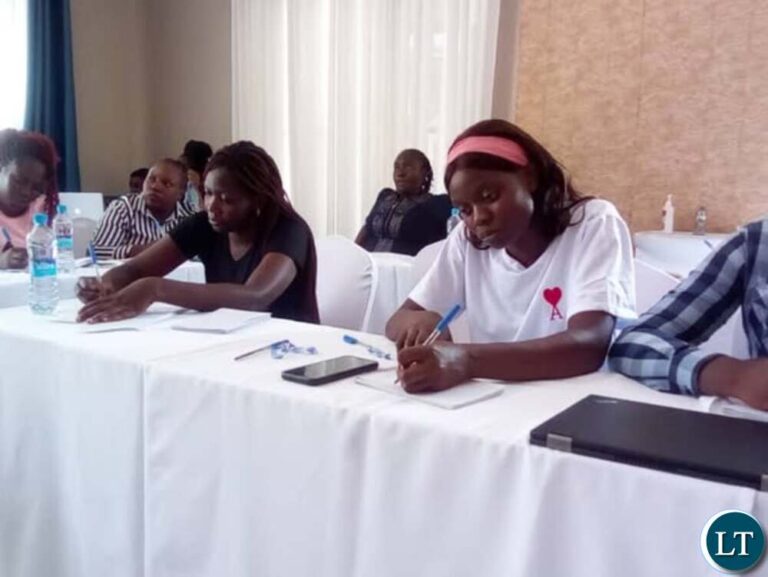
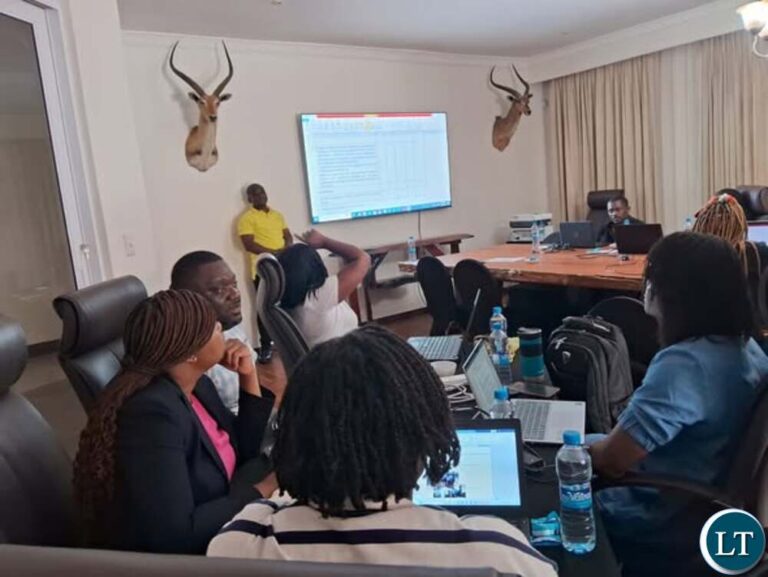
Zambia’s Ministry of Health is reviewing the Minimum Package and Standards for Adolescent Health services, with support from the AUDA-NEPAD and the WISH 2 program.

This review process has entered its first phase, led by the Ministry and involving key stakeholders at the national, provincial, and district levels. Participants include members of Adolescent Health Technical Working Groups, Civil Society Organizations, the Zambia Agency for Persons with Disabilities (ZAPD), various line ministries, and implementing partners like UNICEF and UNFPA.

The review acknowledges the unique health needs of adolescents, who undergo rapid physical, cognitive, and psychosocial growth. This development influences how they feel, think, and interact with their environment. To ensure healthy development, adolescents require age-appropriate information—including comprehensive sexuality education—opportunities to build life skills, equitable and effective health services, and safe, supportive environments.

Following the initial review, a validation meeting will be held. This meeting will include adolescents, young people, and other stakeholders to ensure the finalized guidelines are comprehensive, practical, and directly aligned with adolescent needs. The overall goal is to approve and disseminate an updated document that improves health outcomes for adolescents across the country.

PF Councillor Warns Internal Divisions Spell Doom for Party Ahead of 2026

1

A Patriotic Front (PF) councillor on the Copperbelt has issued a stark warning that the ongoing divisions among senior party members will lead to electoral doom.

The former ruling party, currently described as “leaderless,” has been engulfed in public infighting, with senior figures exchanging fierce accusations through the media. This has resulted in a series of daily press briefings where rival factions denounce one another.

Commenting on the situation, Chembe Ward Councillor in Kalulushi, Nivel Musukwa, appealed to the party’s leadership to stop prioritizing personal interests over the national interest. In a press statement, Musukwa expressed disappointment that the PF is mired in confusion and internal conflict just five months before the 2026 presidential nominations.

“There is no sign of unity among our top leadership despite all the provincial, district, constituency, ward leadership and general membership of PF being intact,” Musukwa observed.

The local government leader urged the feuding leadership to accept that not everyone can become President. “Learn to give chances to each other and support each other,” he advised.

He further cautioned that the opposition United Party for National Development (UPND) won the 2021 elections not because it was the preferred party, but because it was the most organized and disciplined at the time. “But with these divisions in the party [PF] we can’t go anywhere,” Musukwa observed, adding, “Let’s avoid hatred. Let’s avoid utterances which can bring divisions in the party. Let’s learn to forgive each other. Let’s love each other.”

Health Ministry Warns Professionals Against Using Marriage to Avoid Rural Postings

0
The Ministry of Health has expressed concern over the tendency of many health professionals to abandon their rural assignments in favor of positions in Lusaka. It has issued a warning against using marriage as a convenient excuse to escape remote postings.

The ministry is troubled by a growing trend where officers, after being deployed to rural districts, suddenly cite marital complications or argue that their spouses cannot find work outside the capital.

Speaking on behalf of Health Minister Dr. Elijah Muchima, the ministry’s Nursing and Midwifery Director, Daphne Shamambo, stated that such excuses amount to a silent sabotage of public service delivery, particularly in areas that desperately need health workers.

Dr. Muchima reminded health professionals that rural communities depend heavily on their presence. He emphasized that returning to Lusaka under the pretext of marriage is unprofessional and undermines national healthcare goals.

These remarks were delivered in Chongwe yesterday during the 10th graduation ceremony of the Starkey Hearing Institute (SHI) Zambia.

“Be ready to serve where you are needed most, including the rural areas. So if you are asked to serve in a rural area, ladies, don’t fake a marriage to come back to Lusaka. Gentlemen also, don’t think that where you are, your wife cannot work because the organization she works for is not found there,” he stated.

The minister urged graduates to uphold high ethical standards, embrace professionalism, and remain committed to serving communities regardless of location. He challenged them to view healthcare as a constantly evolving field and stressed the importance of lifelong learning.

“What you know today will evolve in the coming years. Relying solely on your current knowledge will leave you behind, so keep improving and adapting,” he said.

Dr. Muchima further reiterated the government’s priorities, which include expanding ear, nose, and throat (ENT) and audiology services, raising the profile of trained professionals, promoting early detection and school screenings, and ensuring that hearing care reaches communities beyond just hospitals.

New Opposition Coalition ‘We Are One Zambia Alliance’ Launched

1

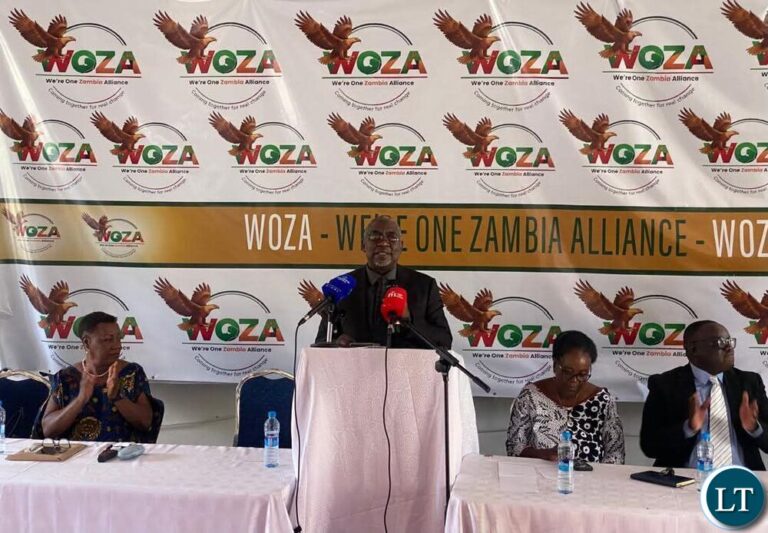
Former United Kwacha Alliance (UKA) chairperson Sakwiba Sikota has launched a new opposition coalition named the We Are One Zambia Alliance (WOZA).

The alliance unites Sikota’s United Liberal Party (ULP), Chishala Kateka’s New Heritage Party, the United National Independence Party (UNIP), the People’s Alliance Party (PAC), and the Zambia We Want Party (ZWW).

Unveiling the coalition, Sikota stated that WOZA was formed to address Zambia’s rising cost of living through decisive economic measures, including price controls, subsidies, and expanded social protection programmes.

He committed the alliance to running a government with zero tolerance for corruption and pledged to strengthen the country’s anti-corruption institutions.

“We shall ensure transparency in our administration, that appointments in the civil service are made on merit, and ensure accountability in public office,” he said.

Sikota outlined that the coalition would support agriculture by providing affordable farming inputs, improving extension services, and promoting agro-processing industries.

He explained that WOZA would foster inclusive politics by respecting dissenting views, engaging other opposition parties, and safeguarding democratic participation.

The alliance also promises to prioritize citizen-focused development by investing in healthcare, education, and rural infrastructure.

Addressing the energy crisis, Sikota pledged a pragmatic and intelligent approach to ending load shedding to support sustainable economic growth.

“Our coming together for real change means we shall address the load shedding in a pragmatic and intelligent manner, to ensure sustainable economic development,” he said.

The opposition leaders have called on Zambians to rally behind the newly formed We Are One Zambia Alliance.

Court Removes President Hichilema From Candidacy Challenge Case

1
The Constitutional Court has granted an application to remove President Hakainde Hichilema as a party from proceedings challenging his candidacy for the 2026 General Elections.

The application was brought by Attorney General Mulilo Kabesha, who argued that the President is immune from lawsuits concerning decisions made in the execution of his official executive functions.

Delivering the ruling, Constitutional Court Judge Mudford Mwandenga upheld the application. The original case was filed by Patriotic Front (PF) Presidential Candidate Brian Mundubile and Tonse Alliance Youth Chairperson Celestine Mukandila.

In his affidavit supporting the misjoinder, the Attorney General further contended that the Constitution prohibits civil proceedings against the President for actions taken in a private capacity.

Bill 7: The Quiet Doorway to Power, Lessons from 1993 Germany

0
𝐁𝐢𝐥𝐥 𝟕: 𝐓𝐡𝐞 𝐐𝐮𝐢𝐞𝐭 𝐃𝐨𝐨𝐫𝐰𝐚𝐲 𝐭𝐨 𝐏𝐨𝐰𝐞𝐫, 𝐋𝐞𝐬𝐬𝐨𝐧𝐬 𝐟𝐫𝐨𝐦 𝟏𝟗𝟑𝟑 𝐆𝐞𝐫𝐦𝐚𝐧𝐲

By Dr Mwelwa

The most dangerous moments in a nation’s life never arrive shouting; they come disguised as reforms, wrapped in politeness, coated in procedure, and delivered by committees that look balanced on paper but are poisoned at the roots. That is the quiet treachery we face with the Select Committee appointed to scrutinise Bill 7. At face value, Bishop Bilon Kalumbinga is correct, 7 UPND MPs and 8 from “opposition” parties appear balanced. But politics is never about arithmetic; it is about allegiance. As Hitler told the Reichstag in 1933 when pushing the Enabling Act, “Give us four years, and I will deliver peace and order.” The room applauded, not knowing they were cheering their own burial. Today, we are told, “Relax, this group is balanced,” when beneath the green skin lies a red belly, and beneath the red belly lies a constitutional knife sharpened for the throat of democracy.

Three Independents on this list publicly caucus with State House; every vote they cast in Parliament smells of UPND loyalty. Two PF MPs, Mung’andu and Elias Daka, have endorsed HH for 2026 and actively campaigned for UPND-backed candidates. Sibongile Mwamba has drifted so far from PF that even her colleagues wonder which party she belongs to. The Nalolo MP is from PNUP, a UPND alliance partner. What looks like opposition is, in truth, a choir rehearsing the ruling party’s chorus. This is why those who cried out for prayer were not being dramatic, they were reading the political weather. As our elders say, umulilo uchafula pa kuba abaumfwa: fire warns only those who can hear it.

And let us not forget the deeper deception. Hitler told Parliament, “The government will use these powers only where necessary.” That assurance was the coffin. Bill 7’s defenders say the President will dissolve Parliament only when “the Executive cannot govern.” But who decides failure? The same Executive. Hitler used legal language to override legal institutions; today we use “as prescribed” to erase judicial oversight and place Parliament under presidential mercy. Africans say ing’ombe isuma tabula bwali, a cow that is too quiet is planning to kick the pot. Bill 7 is that quiet cow.

The danger intensifies when you examine the skillset of this committee. On matters of constitutional weight, where are the legal heavyweights? Where are Mundubile, Kafwaya, Sampa, Katotobwe, the men who can smell constitutional fraud before it is printed? Replaced by political placeholders who nod more than they think. It reminds me again of Germany in 1933, Hitler packed committees not with thinkers but with loyalists whose greatest qualification was obedience. “The future of Germany,” he said, “requires unity.” Unity meant silence. Unity meant submission. Unity became dictatorship. Today, we are told, “These MPs will scrutinise objectively,” when their political survival depends entirely on pleasing the President.

African history is full of these warnings. In 1972, Kaunda used unity to create a one-party state. In 1996, Chiluba used constitutional amendments to scatter opponents. In 2016, Edgar Lungu used legal ambiguity to extend his stay. Each time, the people woke up late but eventually resisted. Zambia survives not because our leaders are wise, but because citizens eventually refuse to be fooled. Yet here we stand again, at the edge of the same old cliff, watching the same old script unfold. A committee that looks balanced like a watermelon, green outside, red inside. A bill that speaks softly but carries the power to crush dissent. A political class that pretends not to see what every child in the market can see clearly.

Hitler warned his Parliament: “Obedience is the foundation of order.” Bill 7 whispers the same message, obey or be dissolved; comply or be replaced; align or be politically eliminated. The President gains the power to declare Parliament uncooperative, then dissolve it, then govern with a compliant majority manufactured by delimitation. That is not reform. That is constitutional engineering of the darkest kind.

Zambians must not sleep. Icakulya cumfwa pamo, chilalalila. When people eat together in secrecy, the nation must ask what is on the menu. Those celebrating this committee’s composition must understand that democracies do not fall with guns, they fall with committees, with amendments, with silence.

If Germany could be destroyed by one vote in Parliament, Zambia can be reshaped by one committee pretending to be neutral.

And when the nation collapses, history will not blame the rulers; it will blame the citizens who saw the storm coming and said, “Let’s wait and see.”

Mundubile Questions Cost of Declaring Chawama Seat Vacant

Mundubile Questions Cost of Declaring Chawama Seat Vacant

Brian Mundubile has questioned the decision to declare the Chawama parliamentary seat vacant, saying the move will force the country to spend close to 30 million kwacha on a by election at a time when key national obligations remain unmet. Issuing his remarks in a recorded statement, he said he was speaking on behalf of people in Lunga District who expect leaders to make careful financial decisions, particularly when farmers and rural communities are struggling.

Mundubile noted that Parliament is expected to adjourn on 10 December, meaning that any MP elected early next year would sit for less than a month before the current session concludes. He said holding a by election under such conditions does not reflect prudent management of public resources, especially when the same amount could support women and families in rural areas who need relief.

He said farmers have not yet been paid and argued that government priorities appear misplaced. According to him, the decision reflects continued leadership shortcomings under President Hakainde Hichilema. He said the Patriotic Front positions itself as a pro poor party and that its approach is shaped by the daily reality of communities that are unable to access basic services.

Mundubile said the Speaker is aware that government is facing financial constraints, pointing to difficulties in meeting farmer payments and supplying medicines in hospitals. He questioned how a decision that creates new expenditure could be taken in such an environment.

He also referenced the earlier parliamentary ruling concerning Tasila Lungu Mwansa. He said the Speaker had indicated that she should be allowed to return to Parliament two weeks after the burial of her father, former president Edgar Chagwa Lungu. He argued that the burial has not yet taken place because government decided to take related matters to court, making the sudden declaration of a vacancy inconsistent with what was stated in the House.

Mundubile said the development shows disregard for communities he described as vulnerable. He urged Zambians to pay attention to decisions that affect national finances, saying government appears ready to commit 30 million kwacha to a by election yet has not cleared outstanding farmer payments. He added that he and his colleagues will continue to speak for the interests of poor households.

He concluded by reaffirming the PF’s intention to highlight what he described as financial and social pressures faced by remote districts.

The Chawama seat fell vacant after Speaker Nelly Mutti ruled that Tasila Lungu Mwansa had been absent from Parliament since June without complying with a directive to appear within 14 days. Mwansa has been outside the country since the death of her father, former president Edgar Chagwa Lungu, and the burial has not yet taken place. The Speaker’s decision, made under constitutional provisions on prolonged absence, set in motion preparations for a by election. This is the basis of Mundubile’s criticism, which focuses on the cost of holding the vote and the financial strain he says rural communities are facing.

UNZA FC faces Chainda Bombers in tomorrow’s FAZ Division II encounter

0

The University of Zambia Football Club (UNZA) FC, is tomorrow competing against top champions Chainda Bombers in the Football Association of Zambia (FAZ) Division II Tournament at UNZA Goma Fields.

Speaking in an interview with the media in Lusaka today, Chainda Bombers Head Coach, Alick Mhango, said the team has prepared adequately towards the match.

“We are definitely going for a win as it is a very important game for us to carry three points,” he said.

Mhango said the team has been working on the strikers to ensure they score goals.

“We have enough manpower to execute a win at their home ground,” he stated.

Meanwhile, UNZA FC Coach, Mwenya Chimbanengo, said the team is improving on goal scoring as well as defending.

“We are trying to improve on our scoring capabilities to secure the win for the match,” he said.

Chimbanengo said tomorrow’s game is important and not an easy one at the same time because the team has not lost any matches.

“This match will maintain our run in the top four of the table,” noted Chimbanengo.

He further indicated that a win will help boost the team’s confidence.

Chainda Bombers remain unbeaten and lead the standings with 28 points from 12 matches, while UNZA FC holds third position on the table, with 20 points and two defeats so far this season.

Govt. lauds Starkey Hearing Institute Zambia for support in health service provision

0

Minister of Health, Elija Muchima, has commended Starkey Hearing Institute Zambia for providing free hearing aid to more than 25,000 Zambians.

The media reports that the Minister said this in a speech read on his behalf by Ministry of Health Director for Nursing and Midwifery, Daphne Shimambo at the event.

Dr Muchima expressed gratitude to the founders of Starkey Institute on behalf of the government, saying the institute is improving hearing health care across more than 100 countries including Zambia.

The Minister further noted that President Hakainde Hichilema has put up measures to address the shortage of professional specialists in Zambia’s health care system and one such mechanism is private sector partnership in training health professionals.

Starkey Institute Audiologist and First Oncologist in Zambia and Sub Saharan Africa, Dr Alfred mwamba, emphasised the need to prioritise children with hearing difficulties, as they can be treated if detected early.

Meanwhile, Valedictorian, Harrison Kazembe, assured that the knowledge acquired with his fellow graduates during the training, will trickle down to communities where they come from.

ZNBC’s Franklin Tembo Jr. Mourns Loss of Son

0

It is with deep sorrow that we announce the passing of Franklin Tembo Jr. III, the beloved first-born son of ZNBC Executive Producer Franklin Tembo Jr.

Permanent Secretary for Information and Media, Thabo Kawana, confirmed the loss in an official statement. On behalf of the Ministry and the government, he extended profound condolences to the Tembo family.

“The government stands with you in your sorrow,” Dr. Kawana stated, encouraging the family to look to God for strength and comfort during this difficult time. He expressed the collective sadness of the ministry and offered prayers for the family and friends of the deceased.

The funeral home is located in Chalala, opposite Buffalo Park.

‎Hail storm damages roofs for 10 houses in Ndola

0

A hail storm has blown off roofs of 10 houses at Maybin Flats in Ndola District on the Copperbelt Province, leaving residents’ property extensively damaged.

‎The media  reports that the storm, which struck around 14:00 hours, also tore off roofs from several other houses in the area, leaving household goods soaked and a number of electrical appliances damaged.

‎The affected residents have appealed to the government for assistance as the hailstorm has left them stranded and exposed to harsh weather conditions.

‎Clement Mutelekwa, an affected resident at Maybin Flats, appealed for urgent shelter support.

‎“We need tents so that we can secure our rooftops and make the houses more bearable,” he said.

‎He added that most of the electrical appliances have been damaged and household goods like sofas and mattresses were completely soaked.

‎Another resident, Kondwani Sililo, who described how the hailstorm started, said his auntie’s car was damaged by pieces of asbestos roofing sheets that were ripped off by the strong winds, adding that it was a relief that no injuries were  recorded.

‎“We are fortunate that there were no casualties, even though some houses had children inside when it happened,” he said.

‎Mr Sililo also appealed for support from the authorities, noting that most residents did not have access to emergency funds to deal with the sudden disaster.

Representatives from the District Administration and the office of the Disaster Management and Mitigation Unit have inspected the premises, with the outcome of the visit yet to be established.

Health Workers in Chibombo District Ready for Mass Drug Administration Campaign

1

Health workers in Chibombo District of Central Province have declared their readiness for the upcoming Mass Drug Administration (MDA) campaign against Lymphatic Filariasis (LF), set to begin on December 10, 2025.

The campaign, running from December 10 to 18, aims to prevent Lymphatic Filariasis, commonly known as elephantiasis. The Ministry of Health is urging the people of Chibombo to participate fully in this preventive exercise.

To prepare for the campaign, officials from the Ministry of Health headquarters, provincial, and district levels conducted a training program in Kabwe for over 50 health workers from 51 facilities in the district. The training emphasized the importance of MDA in combating this Neglected Tropical Disease.

Following the two-day session, participants expressed confidence. Mr. John Banda, an Environmental Health Technologist from Chitende Rural Health Centre, stated his readiness to deliver the program. His facility serves 73 villages with an estimated population of 30,431 people. He plans to collaborate closely with Community-Based Volunteers, traditional leaders, church leaders, and civic authorities to achieve high coverage. He also appealed to community members not to avoid the program, stressing the government’s goal of preventing the disease.

Another participant, Benjamin Mweemba, said the training provided the impetus needed to effectively serve the community in the field. The health workers’ expectation is to achieve nearly 100 percent coverage.

Mass Drug Administration is the strategy used to prevent populations from Neglected Tropical Diseases. In Chibombo, the campaign’s objective is to prevent infection from the lymphatic filariasis parasite, working toward the eventual elimination of the disease.

Government committed to equip the Civil Aviation Authority

0

Government says it is committed to ensuring that the Civil Aviation Authority (CAA) is equipped with the digital tools and systems required to meet 21st-century regulatory demands.

Minister of Transport and Logistics, Frank Tayali, says despite the progress in aligning regulations with the International Civil Aviation Organisation (ICAO), the Authority still does not have a unified and modernised data system to oversee the entire aviation sector.

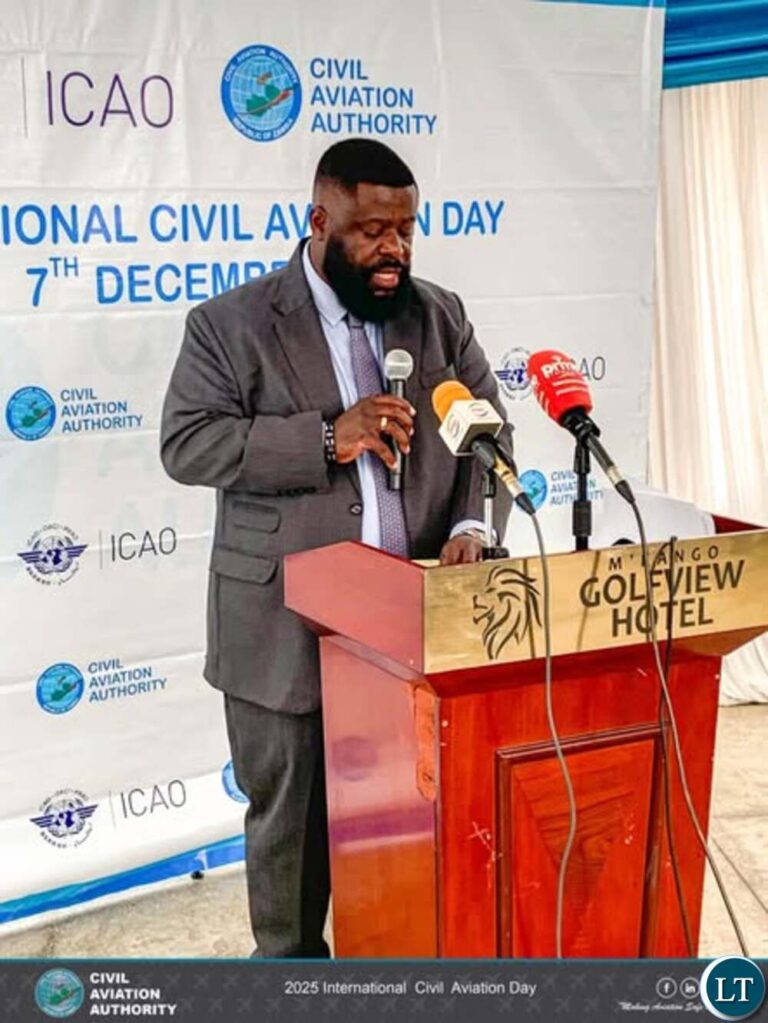
The media reports that in a speech delivered during the commemoration of the 2025 International Civil Aviation Day in Lusaka, Mr Tayali said aviation development must not be held hostage by institutional battles.

“The sector deserves clarity, unity, and decisive action. We aspire to become a regional logistics hub, yet we must face the truth our cargo handling capacity remains inadequate,

“If every province is to export fresh produce, livestock products, minerals and industrial goods through our airports, then we must urgently invest in cold-chain capacity, ground-handling equipment, and provincial cargo facilities, ” he said.

Mr Tayali said Zambia Airways still does not have a dedicated cargo plane, and its passenger fleet remains too small to meet the growing demand, noting that this is slowing the airline’s growth.

He however, assured that the government will support efforts to expand the fleet, strengthen governance and ensure that the airline becomes a viable contributor to national connectivity and economic development.

Speaking at the same event, Civil Aviation Authority(CAA), Director General, Captain Derrick Luembe said that over the past year, the Authority has strengthened surveillance and oversight activities, developed digital tools for regulatory processes, and improved its alignment with ICAO standards.

Captain Luembe added that this year, the Authority increased technical inspections and safety audits, updated regulations and industry guidance and enhanced inspector training through ICAO and regional capacity-building programmes.