Tuesday, June 9, 2026
13.4 C
Lusaka
Home Blog Page 283

President Hichilema to open the 2025 Mining and Investment Insaka

4

Minister of Mines and Minerals Development, Paul Kabuswe, has announced that President Hakainde Hichilema will officially open this year’s Zambia Mining and Investment Insaka (ZAMII 2025) on Tuesday, October 7, 2025.

Speaking during a press briefing ahead of the second ZAMII event, Mr Kabuswe said the mining Insaka will run from October 6 to 10 2025, at the Mulungushi International Conference Centre under the theme ‘Unlocking Africa’s Wealth: Advancing Sustainable Mining, Beneficiation, and Value Addition.’

Mr Kabuswe reaffirmed government’s commitment to transforming Zambia’s mining sector from one focused on extraction to one anchored on beneficiation, innovatio, and inclusive prosperity.

“This year’s Insaka builds on the success of the inaugural 2024 event, which created a strong platform for dialogue among government, investors, industry leaders and communities,” Mr Kabuswe said.

He noted that ZAMII 2025 aligns with Zambia’s long-term development frameworks, including the Eighth National Development Plan, Vision 2030 and the Green Growth Agenda, all of which emphasize value addition, job creation and industrial diversification.

Mr Kabuswe noted that these efforts aim to achieve the national target of producing three million metric tonnes of copper annually by 2031.

He also highlighted government initiatives to streamline licensing processes, strengthen regulatory institutions and expand critical infrastructure to support sustainable mining growth.

“True economic transformation will only be achieved when mining benefits reach local suppliers, women, youth and host communities. We are promoting local content, skills development and technology transfer to ensure Zambians actively participate in the mining value chain,” he said.

He further emphasized Zambia’s strategic role in the global energy transition, particularly in supplying critical minerals essential for electric vehicles, renewable energy and digital technologies.

The Minister reiterated the government’s commitment to enforcing strong Environmental, Social and Governance (ESG) standards to ensure sustainable and responsible mining operations.

He called on all stakeholders to play a transformative role in positioning Zambia as a key player in global supply chains supporting the green energy transition.

ZANIS

Senior Chief Muchinda directs verification of land, mining consents

1

Senior Chief Muchinda Kankomba Welala III of Serenje District, Central Province, has directed all individuals holding title deeds and occupancy documents for land and mines in his chiefdom to submit copies of their documents along with the Chief’s consent for verification.

The Chief instructed that documents be submitted through the Chairman of the Chiefdom Trust Committee and the Chiefdom Secretary within 14 days.

The directive was communicated through Chiefdom Secretary Eliud Katyoka in a statement issued by the chiefdom communications office.

Senior Chief Muchinda warned that failure to submit the required consents will compel the Chiefdom to seek legal redress in accordance with Section 3 of the Lands Act, Chapter 184 of the Laws of Zambia.

The directive follows meetings with key stakeholders, including the District Commissioner, Ministry of Agriculture, Ministry of Lands, Zambia National Farmers Union and Serenje Town Council.

The Chief expressed gratitude to Minister of Lands, Sylvia Masebo, for advising investors and farmers to ensure they obtain the necessary consents from Chiefs.

Senior Chief Muchinda expressed concern over reports of defenceless elderly men and women being unfairly displaced by investors over the past 14 years, when the Chiefdom was without a traditional leader.

“The move will enable the Chiefdom to initiate a land audit in the interest of patriotism and provide proper leadership,” the Chief said.

He noted that the demand for land by both locals and migrants has placed the Chiefdom under scrutiny, creating significant challenges.

Senior Chief Muchinda emphasized that acquiring title deeds and licences without written consent from the Chief is unlawful and will be addressed according to constitutional law.

He added that, where consents are not received, the Chiefdom will request cancellation of title deeds through the Ministry of Lands and the land will be returned to the Chiefdom.

Meanwhile, Trust Committee Chairman Raphael Lesa revealed that the land audit found that most displaced local occupants do not possess the required consents.

President Hichilema’s Actions Tell a Different Story on Women Empowerment

0

By Venus N Msyani

For three consecutive years, Zambia’s head of state has skipped the world’s most prominent diplomatic forum, the United Nations General Assembly, sending surrogates in his place. And while the president commends women empowerment as a cornerstone of his leadership, his actions tell a different story.

On Monday, September 29, the Foreign Affairs and International Cooperation minister, Hon. Mulambo Haimbe, successfully addressed the 80th Session of the United Nations General Assembly on behalf of President Hakainde Hichilema.

In 2021, fresh off his electoral victory, Hichilema stood before the 76th Session of UNGA and pledged a new era for Zambia. His speech, themed “Building resilience through hope,” was met with optimism. He promised to root out corruption, uphold human rights, and restore Zambia’s global reputation, which was tarnished under the previous Patriotic Front (PF) administration.

Corruption, he said, would be “at the center of Zambia’s economic transformation agenda.” The international community listened. So did all Zambians.

But by the time he returned to New York in 2022 for the 77th Session, themed “A watershed moment: transformative solutions to interlocking challenges,” the tone had shifted. Corruption scandals had begun to surface. Arrests related to freedom of expression raised eyebrows. And critics accused Hichilema’s anti-corruption campaign of being selectively enforced, targeting opposition figures while shielding allies.

Notably, the president omitted any mention of corruption in his 2022 address. The silence was deafening. As Lusaka Times noted in an October 5 column, “HH addressed the UN General Assembly without mentioning corruption, which is both surprising and not surprising.”

Since then, Hichilema has been skipping UNGA. In 2023, then Foreign Affairs and International Cooperation Minister Stanley Kakubo represented Zambia at the 78th Session, themed “Rebuilding Trust and Reigniting Global Solidarity.” In 2024, Justice Minister Hon. Mulambo Haimbe, SC, MP, took the podium for the 79th Session. This year, Haimbe, now Minister of Foreign Affairs and International Affairs, returned to New York for UNGA once more.

While delegating is not uncommon, the pattern raises questions, especially given the president’s vocal commitment to gender equity. For four years, Vice President Mutale Nalumango, Zambia’s highest-ranking female official, has been denied the opportunity to represent her country at UNGA.

Hichilema has anchored his push for constitutional reform ahead of the 2026 general election on the promise of empowering women. Yet his refusal to allow Vice President Nalumango to attend UNGA contradicts that narrative.

UNGA is more than a speech; it’s a platform for global engagement, media exposure, and legacy-building. Denying Hon. Nalumango this opportunity sends a troubling message: that women empowerment in Zambia may be more rhetorical than real.

Nalumango may shrug off the snub, but the symbolism is hard to ignore. Honest leadership demands consistency between words and actions. And in this case, the gap is widening.

President Hichilema’s absence from UNGA is not just a missed diplomatic opportunity; it’s a missed chance to live up to his own promises. If women empowerment is truly a priority, it must be reflected not just in policy proposals but in practice. Representation matters. And right now, Zambia’s leadership is failing that test.

They say charity begins at home. Contextually, home means Hichilema’s political circle. President Hakainde Hichilema has failed to prove that his women empowerment agenda is authentic by allowing his whole first term to slide without sending Nalumango to represent him at UNGA.

The Mumbi Phiri voicenote has vindicated us; PF/Tonse is tribal!

Right from the word go, we’ve always insisted PF, which has since metamorphosed as Tonse Alliance, is as a tribal and regional political grouping! The sooner our citizens realise this and banish them from our political horizon, the better. At the risk of sounding like a broken record, we’d like to reiterate that Edgar Lungu as President Sata’s Home Affairs Minister wanted to have us arrested and charged with treason for pointing out tribalism in his government!

As our book; Dilemma of One Zambia, One Nation will reveal, President Lungu recklessly and shamelessly continued on the same trajectory – sidelining certain tribal groupings from government for their only SIN of belonging to the so-called Zambezi provinces. And yet you want to insist, ours is a Christian nation where everyone is assumed equal before the eyes of our Almighty God?

If we may share practical examples as we are loathsome of speaking from without, in his 30 member cabinet, there were only two individuals from North Western and zero from Southern and Western provinces! And out of 34 Permanent Sectretaries, there was only one from North Western and another one from Southern province. The situation was the same, if not worse in foreign missions; we could only find Joseph Chilengi and Ndiyoyi Mutiti from the Zambezi provinces. How do you run a country at the exclusion of the rest of the country, particularly people from North Western province which is currently contributing the bulk of the National Treasury?

A voicenote has since surfaced which confirms that indeed PF/Tonse is a tribal/regional grouping with no regard for other tribes.

In the said voicenote which has since gone viral, Mumbi Phiri, a senior party official states as follows, “Counsel Chisanga, this post you’ve posted is saying the truth and this is what some people are failing to see. Whoever….if it’s a Bemba on top, an Easterner running mate we’ll win. If it’s an Easterner on top and a Bemba running mate, we’ll win. This is what people are failing to understand. These others are coming to divide us….”

We suspect “these others” definitely are Given Lubinda and Raphael Nakachinda. We wonder how they are feeling right now….being found in the company of individuals that demean them due to their ethnicity.

Naimwe ba UPND, let’s get our book published pronto we expose the PF/Tonse Alliance for what they are….. hardcore and unapologetic tribalists!

Prince Bill M. Kaping’a
Political/Social Analyst
Zambezi

Bitcoin breaks record at $125,000 as deVere CEO predicts surge to $150,000

0

Bitcoin has broken through $125,000 for the first time in its history, and financial advisory giant deVere Group CEO Nigel Green predicts the cryptocurrency will climb to $150,000 before the end of the year, supported by a weaker dollar, sustained institutional inflows, and political backing from Washington.

The world’s largest digital asset jumped almost 3% in Asian trading to reach $125,245, its highest ever level.

The rally extends a powerful upward run that has been building since the summer, driven by friendlier regulation, expanding exchange-traded fund volumes, and a steady shift of capital into digital assets as traditional markets lose traction.

Nigel Green says Bitcoin’s momentum is unlikely to fade soon.

“The price action reflects a deeper structural change in how investors view digital assets.

“Bitcoin is no longer a speculative corner of the market; it’s being treated as a legitimate macro instrument. Institutional capital, treasury allocations, and sovereign interest are reshaping the market’s depth and maturity,” he says.

The latest surge comes amid renewed weakness in the dollar, which has fallen to multi-week lows against major currencies as uncertainty around US fiscal policy weighs on confidence. Investors have responded by increasing exposure to alternative stores of value, with Bitcoin emerging as the preferred hedge against both inflation and fiscal risk.

He adds: “Every time the dollar softens or government data is delayed, the market is reminded of the value of decentralised, borderless assets.

“Bitcoin’s appeal strengthens when trust in central authority is questioned, and right now, that trust is under heavy strain.”

Trading volumes exceeded $50 billion over the past 24 hours, according to market data, as bullish momentum drew new inflows and forced the liquidation of more than $200 million in short positions.

Despite occasional profit-taking, underlying demand remains robust. “Volatility is a feature of price discovery, not a flaw,” says Nigel Green.

“Short-term corrections are part of a healthy market dynamic, especially in a phase of expansion like this.”

He notes that the environment for digital assets has shifted decisively since President Donald Trump reaffirmed his commitment to ensuring the US remains a global hub for crypto and blockchain development.

“Policy matters,” explains the deVere CEO. “When the administration signals openness to innovation, it catalyses institutional confidence. This policy tailwind, coupled with clearer regulatory direction, is propelling Bitcoin into the mainstream of portfolio strategy.”

In recent months, Bitcoin has mirrored risk-asset optimism while also attracting capital as a safe-haven alternative to gold. The dual role has broadened its investor base and enhanced its resilience.

“The current cycle is defined by integration, not speculation,” says Nigel Green.

“Large asset managers, corporates, and even governments are incorporating Bitcoin into their frameworks for diversification and strategic reserve management. The breadth of adoption is what gives this rally staying power.”

While the cryptocurrency’s rapid rise has prompted some traders to secure profits, deVere’s CEO believes any retracements will be shallow and short-lived. “Each dip this year has found higher support,” he comments.

“That pattern tells us the market is being underpinned by conviction capital rather than short-term bets. The accumulation trend among institutions and high-net-worth investors remains strong.”

Looking ahead, Nigel Green expects the combination of macroeconomic and political factors to sustain Bitcoin’s advance.

“We’re in a phase where digital assets are integral to the global financial system. Bitcoin’s limited supply and growing integration make it an essential hedge in a world of mounting fiscal pressure and currency depreciation.

“Should confidence continue, $150,000 looks increasingly achievable before the end of the year.”

Willah Mudolo’s Entry Reshapes PF Presidential Race

Willah Mudolo’s Entry Reshapes PF Presidential Race

Zambia’s opposition Patriotic Front (PF) is undergoing a major internal shift as the presidential bid of businessman and philanthropist Willah Mudolo rapidly alters the party’s leadership landscape.

Mudolo’s late entry into the race has triggered significant activity within PF structures, unsettling long-standing aspirants and drawing influential groups to strategic meetings in South Africa. His campaign has moved from speculation to a central factor in the leadership contest, prompting senior figures to reassess their positions and revealing divisions over succession.

Internal party figures indicate that Mudolo has built support across nine of Zambia’s ten provinces, with Lusaka remaining the only major area of resistance. This level of support, consolidated within weeks, has surprised senior PF officials and increased pressure on acting party president Given Lubinda and Mporokoso MP Brian Mundubile to respond strategically. Mundubile, previously viewed as the frontrunner to lead the party into the next general election, now faces a well-financed challenger whose backing cuts across traditional factions. Provincial and district structures have begun aligning their mobilisers with Mudolo’s camp ahead of the party convention.

The PF Central Committee has recently focused on the implications of his candidacy. At a meeting dedicated to the subject, officials debated whether to reopen the nomination process to include Mudolo, acknowledging the scale of his support. Some senior figures support this move as a way to legitimise his entry, while others view it as a deviation from existing procedures that could affect the party’s internal balance.

Endorsements from influential figures have added weight to Mudolo’s bid. Copperbelt provincial chairman Stardy Mwale has publicly backed him in Lamba, citing his financial capacity and organisational strength as crucial for revitalising PF. The Copperbelt remains a key political battleground, making this endorsement significant within the party.

Former secretary generals Mumbi Phiri and Davies Mwila have also endorsed Mudolo, grounding their support in specific clauses of the PF constitution. They argue that the constitution allows a candidate to file for the presidency up to 24 hours before the convention, even without reopening nominations. This legal position provides an alternative route for Mudolo’s candidacy and sets the stage for a potentially competitive delegate count.

When contacted for comment, Mumbi Phiri declined to elaborate but released an audio statement defending the legality of the meeting involving Mudolo’s supporters. This indicates an awareness within the campaign of the need to address procedural concerns in advance.

Attempts to reach Mundubile and Mwale for comment were unsuccessful. Sean Tembo, spokesperson for the Tonse Alliance, also declined to comment, stating that discussions would be held at a scheduled meeting next week. The limited public responses from key figures highlight the sensitivity surrounding the PF leadership race and the close attention it is receiving.

PF chairperson Emmanuel Mpankata issued a brief statement maintaining that the party was not reopening nominations for any individual. He declined to comment on the level of support Mudolo has gathered, underscoring the leadership’s cautious approach as the race intensifies.

Willah Mudolo has, until recently, operated outside PF’s inner leadership circles. Based in South Africa, he describes himself as a transformative leader and entrepreneur. He holds an MBA in Finance and Sustainability from the University of Cumbria, an MBA from the Edinburgh School of Business, and an MSc in Finance and Accounting from the University of Salford.

His background in business and international exposure have drawn interest from sections of the party looking for new leadership profiles. His emergence comes at a time when PF is preparing for its convention, where the leadership contest is expected to determine the party’s next direction. Mudolo’s entry has disrupted the previously clear leadership path, introducing a new dynamic to the competition for the presidency of Zambia’s largest opposition party.

Electoral Commission of Zambia rolls out nationwide voter education and registration campaign

The Electoral Commission of Zambia (ECZ) has commenced a nationwide voter education and registration campaign ahead of the 2026 general elections, with several districts beginning training workshops for Voter Education Facilitators (VEFs) and District Voter Education Committee (DVEC) members.

In Kabwe District of Central Province, the ECZ is targeting to register over 52,000 new voters during the forthcoming mass voter registration exercise. District Registration Officer and Kabwe Town Clerk, Jovax Ngoma, said the Commission projects to register 30,576 voters in Kabwe Central Constituency and 21,445 in Bwacha Constituency, based on 2022 Zambia Statistics Agency (ZamStat) data.

Mr. Ngoma was speaking when he opened a five-day training workshop for DVEC members and VEFs. He urged the facilitators to treat people with dignity and respect while executing their duties.
“We don’t doubt your capabilities, but the confidence reposed in you should not be betrayed,” he warned.

And Kabwe DVEC Coordinator, Lubeta Muyabala, reminded facilitators of their responsibility to guide and explain the registration requirements to prospective voters. The ECZ mass voter registration exercise will run from October 13 to November 11, 2025.

In Mitete District, the Electoral Commission has also commenced a five-day intensive training for VEFs and DVEC members ahead of the same mass voter registration exercise. The training, which started this week, is designed to equip participants with the necessary knowledge and skills to effectively deliver voter education to eligible citizens ahead of next year’s general elections.

Speaking during the opening of the workshop, Mitete District Registration Officer, Kennedy Kazanda, emphasized the importance of impartiality, describing voter education as a cornerstone of credible elections.

“Impartiality must be the guiding principle in this exercise. Voter education is about empowering citizens, not advancing political interests,” Mr. Kazanda said.

He warned that facilitators found engaging in partisan activities risk dismissal. The voter education campaign in Mitete will run from October 11 to November 11, 2025, while the mass voter registration exercise is scheduled for October 13 to November 11, 2025.

Meanwhile, in Petauke District, District Registration Officer, Kelvin Banda, has stressed the importance of impartiality, non-partisanship, and professionalism in delivering voter education during the forthcoming mass voter registration exercise. Mr. Banda said these principles are key to ensuring essential information reaches all eligible citizens, thereby reducing voter apathy.

“Voter registration is very important in delivering credible, free and fair elections. Building a complete and accurate voters’ register is the cornerstone of democratic participation and every participant has a responsibility to encourage citizens to register,” he said.

Mr. Banda made the remarks when he officiated at the district voter education training for VEFs, DVEC members, and school club patrons and matrons. Petauke DVEC Chairperson, Johnson Chaambwa, emphasized the need for locally responsive and inclusive strategies in delivering voter education.
“Community insights and oversight are vital for inclusivity, particularly in reaching men, women, farmers, youth, and persons with disabilities,” Mr. Chaambwa said.

Participants were encouraged to collaborate closely to ensure no eligible voter is left behind and that a comprehensive and accurate voters’ register is built.

In Chadiza District, training for District Voter Education Officers (DVEOs), VEFs, and DVECs has also begun as part of preparations for the 2026 general elections. District Registration Officer, David Mwansa, urged the facilitators to be proactive in ensuring that all eligible citizens are registered to vote, stressing the need for inclusivity, objectivity, and non-partisanship in their work.

He noted that the five-day training, which runs until October 8, is aimed at equipping facilitators to ensure universal coverage of the district during the mass voter registration exercise. Earlier, DVECs mapped out a roadmap of meetings and activities in line with the Electoral Voter Education Regulations and the Electoral Process Act No. 35 of 2016.

District Voter Education Trainer, Lewis Himoonga, reminded the public that anyone currently aged 17 but turning 18 by April 30, 2026, will be eligible to register as a voter. Mr. Himoonga encouraged the use of pre-application online registration to minimize errors.

Another trainer, Juliet Banda, disclosed that the compilation and printing of the Provisional Register of Voters will run from January 7 to February 3, 2026, and called for full public participation in the ECZ processes.

Zambia’s President Hichilema Follows Up on Development and Cultural Engagements Across Provinces

1

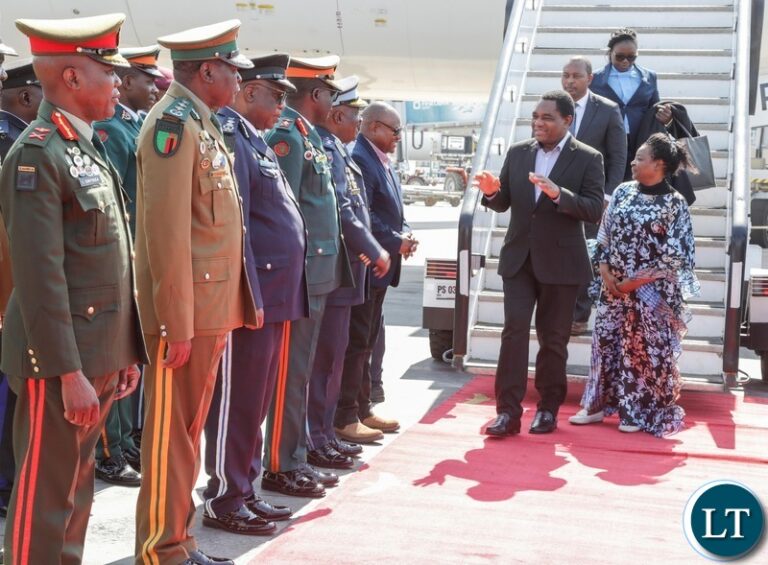
Zambia’s President Hakainde Hichilema has made several follow-ups on development and cultural engagements across the country, with government representatives delivering his messages in Luapula, North-Western, and Muchinga provinces.

In Luapula Province, the President, represented by Minister of Fisheries and Livestock Peter Kapala, announced the commissioning of the upgrade of the Samfya–Kasaba via Lubwe road in Chifunabuli District. Speaking during the Ukwanga Traditional Ceremony, Mr. Kapala said the road works were on track and would be completed within the planned timeframe.

“Last year when I attended this ceremony, I promised my government would work on this road, and just two days ago we commissioned the upgrade to bituminous standard,” President Hichilema said.

He added that construction of the stalled Kasaba Secondary School would soon resume and that the Social Cash Transfer programme would be expanded in the 2026 National Budget.

Luapula Province Minister Nason Musonda said the Samfya–Kasaba via Lubwe road would be completed in record time. “The Provincial Administration will work with stakeholders to ensure timely completion. Luapula is moving forward, opening new pathways of development for our communities,” he stated.

Mr. Musonda also said the Tuta and Pedicle roads would be upgraded in due course. Senior Chief Mwewa thanked the President for the road project, saying it would promote culture, tradition, and development in the district. He also called for the construction of district offices and a district hospital to support local development.

In North-Western Province, Senior Chief Sikufele of the Mbunda-speaking people in Manyinga District thanked President Hichilema for inviting all traditional leaders to State House. The traditional leader said the invitation allowed chiefs to discuss national matters and strengthen unity among them.

Speaking through his representative Clifford Mundeya during a courtesy call by Minister of Defence Ambrose Lufuma, the Senior Chief commended the government for increasing the Constituency Development Fund (CDF) to K40 million in the 2026 Budget. He said the CDF had already enabled projects such as the procurement of earth-moving equipment, which helped in road gravelling to improve connectivity.

The Senior Chief said the increased allocation would support more projects and thanked government for constructing chiefs’ palaces across the country. He urged the speedy completion of the palaces and recommended the installation of solar panels to address climate change concerns.

He also called on the government to complete the stalled district administration offices and to fulfill the promise of constructing a University Teaching Hospital in the province.

Minister of Defence Ambrose Lufuma said the CDF increase was designed to ensure development reached all parts of the country. “Our CDF was deliberately increased to K40.1 million to enable local communities to participate in development that meets their needs. That is what decentralization means,” he said.

He added that traditional leaders were key in promoting unity and encouraging their communities to engage in productive activities.

In Muchinga Province, President Hichilema, represented by Provincial Minister Njavwa Simutowe, highlighted the importance of traditional ceremonies in preserving Zambia’s culture and values.

Speaking during the Chambo Chalutanga Traditional Ceremony in Mafinga District, the President said traditional events remind the nation of the peace and unity enjoyed since independence 61 years ago. He reaffirmed government’s commitment to promoting development across the country regardless of tribe or political affiliation and cited the planned completion of the Isoka–Muyombe road to improve accessibility in Mafinga.

Chief Mwenechifungwe, speaking through the ceremony’s chairperson Chance Kabaghe, praised the government for the free education policy, which he said had led to the construction of more schools and classroom blocks, enabling more learners to return to school. He also thanked government for timely payments under the Farmer Input Support Programme (FISP) and called for banking facilities in the district to improve access to financial services.

Mafinga Member of Parliament Robert Chabinga said the groundbreaking ceremony for the Isoka–Muyombe road would be held within three weeks. He added that new schools with water facilities would be constructed under the Constituency Development Fund (CDF).

Zambia, Botswana Urged to Unlock Investment Through Strategic Partnership

0

Zambia’s High Commissioner to Botswana, Pamela M. Chisanga, has called for the two nations to leverage their shared opportunities to attract greater investment.

Speaking at the Africa Early-Stage Investor Summit in Gaborone, Ms. Chisanga emphasized that bilateral agreements can create a harmonized regulatory environment, allowing innovations to scale seamlessly across borders.

The summit, held under the theme “Africa, Built to Last: Capital, Strategy & Ownership,” was a partnership between the Zambia High Commission, the Africa Business Angel Network (ABAN), and VC4A.

“Our countries share a similar mining heritage, comparable economic challenges, and complementary strengths,” Ms. Chisanga stated. “The two countries have comparative advantages that they can leverage to avoid reinventing the wheel. This complementarity creates natural partnership opportunities.”

She highlighted that increasing private sector investment in key sectors like agriculture, tourism, and mining is a core pillar of Zambia’s economic diplomacy.

“Zambia recognizes the need for innovation, digitalization, and strategic partnerships as key enablers of sustainable development,” she added.

Echoing the focus on innovation, Pula Space Managing Partner Mooketsi Tekere emphasized the need for young people to develop startups and harness evolving technologies.

The summit brought together investors, startups, and ecosystem leaders to chart the future of early-stage investment across Africa.

ICT key to economic growth -Chileshe

0

Ministry of Youth, Sport and Arts, Kangwa Chileshe, has underscored the critical role the Information Communication and Technology (ICT) plays in enhancing operations in various sectors of the economy such as education, health and Agriculture.

Speaking when he officiated at the graduation ceremony for Anvil Coding Academy in Lusaka today, Mr Kangwa said his Ministry is keen to see an innovative youths that can propel Zambia’s economic transformation through digital

He explained that the vision of the Ministry is to have a creative and innovative Ministry promoting productivity and excellence in Youth, Sport and Arts

Mr Kangwa added that skills development continues to be a key vehicle to promote Youth empowerment and employment and emphasised that the Government is fully aware that skills development is one sure way to create jobs.

He said Government is working with Smart Zambia in facilitating the installation of Star link in all it’s 23 skills training centres through which Youths are able to access Internet during learning.

“We live in an era where we can afford to live without ICT. Everything we see is integrated with technology as all sectors depend on technology to innovate and be competitive,” he said.

He has thus commended Anvil Coding Academy management for teaching young learners computer coding, a skill which provides an opportunity for young people to develop APPs that help innovation and competitiveness.

The PS stated that coding is not just about building APPs and games, but about solving problems in areas such as agriculture, where farmers can predict weather, manage crops and connect to markets.

“I want to commend Anvil coding Academy for what they are doing, this is not a small achievement but a contribution to national building as it prepares young people to solve tomorrow’s problems,” he said.

And Family Development Initiative team leader, Sheilc Yossuf Ayani said Zambia needs to prepare young people with digital literacy if the country can realise economic growth.

He said his organisation has entered into partnership with Anvil Coding Academy after realising that education must go beyond just a class room but to empower youths with skills and innovation.

Earlier, Anvil coding Academy Director, Humprey Mpundu said the school management is training young minds in digital technology for them to be innovators in future.

He explained that at Anvil coding Academy, the role is to teach and produce content creators in digital space, saying that the richest man on earth is the technologist.

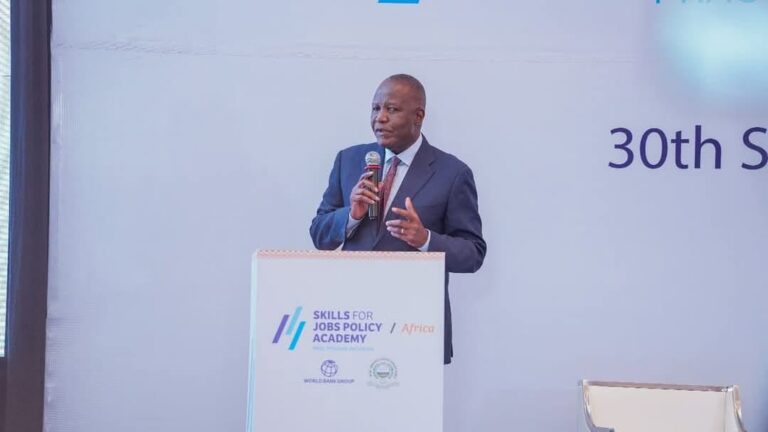
$100 Million Grant to Boost Zambia’s Skills Development

Zambia is set to strengthen its technical and vocational education sector through a new $100 million initiative known as the Skills Training for Resilience and Industry-Valued Employment (STRIVE) project. The announcement was made by the Minister of Technology and Science, Hon. Felix Mutati, marking what he described as a major milestone in the country’s efforts to equip young people with industry-relevant skills.

Although the project is still awaiting formal approval, Minister Mutati confirmed that Zambia plans to participate in the Multiphase Programmatic Approach to access regional funding from the International Development Association (IDA). This will enable the country to begin early preparations ahead of the project’s full approval.

The STRIVE project will focus on enhancing training opportunities for Zambian youth, particularly in key economic sectors such as mining, agribusiness, and hospitality. It will involve upgrading programs in selected public and private Technical Education, Vocational and Entrepreneurship Training (TEVET) institutions, establishing Centers of Excellence, piloting a TEVET student loans scheme, and expanding access to short-term and trade-related training.

In addition to improving entrepreneurship support and business development services, the project will strengthen system management through interoperable information systems and introduce performance-based reforms for the TEVET Fund.

Once operational, the project is expected to directly benefit more than 35,000 young people enrolled in advanced TEVET programs and a further 150,000 in trades and short courses. According to government projections, the initiative will address up to 80 percent of the mid-level technician gap in Zambia’s major economic sectors.

Minister Mutati said the STRIVE project represents a transformative opportunity for Zambia’s youth, emphasizing that it aims to link education directly with employment. “Our goal is to align skills training with industry needs, so that our youth can secure meaningful employment and drive national development. This project will ensure that training leads to real jobs and entrepreneurship opportunities,” he said.

The Ministry of Technology and Science will lead the implementation of the project, supported by a Steering Committee chaired by the Minister and composed of key stakeholders. The government has also requested a Project Preparation Advance (PPA) to fast-track groundwork, with full project approval anticipated by July 2026.

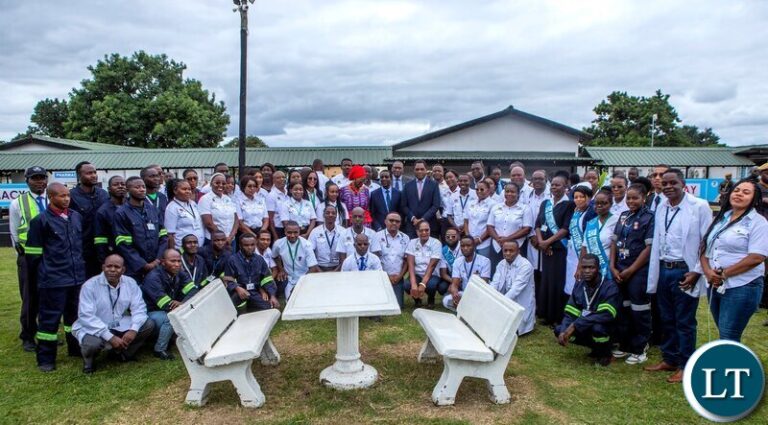
Health staff warned against unprofessional conduct

1

Solwezi District Commissioner Tradeson Mulofwa has urged health personnel in the district to uphold professionalism and adhere strictly to the Code of Conduct in the execution of their duties.

Speaking when he addressed health workers from Kimasala, Urban Clinic and Mushitala health facilities, Mr Mulofwa stressed that the health sector is critical to national productivity and must be treated with the seriousness it deserves.

He noted that the government has prioritized healthcare by recruiting more personnel and improving the supply of essential medicines, adding that Solwezi District currently has about 80 percent availability of essential drugs.

“Government is making every effort to bring healthcare services closer to the people and will not tolerate any individuals attempting to frustrate these efforts,” said Mr Mulofwa.

He warned that drug pilferage is a serious offence, cautioning that any staff found guilty will face disciplinary action.

He added that it was unacceptable for patients to be given prescriptions for medicines that are already supplied to health facilities.

The District Commissioner also spoke strongly against the mistreatment of patients and said he would continue making unannounced visits to health facilities to monitor performance and conduct.

“You are under oath and I expect you to remain professional at all times,” he said.

Mr Mulofwa further warned health workers against paying volunteers to cover their shifts, a practice he described as dishonest and unacceptable.

“If I find that you have paid a volunteer K80 or K100 to cover for you while you attend to personal errands, I will recommend that the volunteer take your job. Have you now become employers?” he asked.

He called on general workers to maintain cleanliness in and around health facilities to help prevent disease outbreaks.

Mr Mulofwa also urged health staff to report issues such as lack of water or electricity directly to his office for quick resolution.

“If your facility has a problem with power or water, let me know immediately so we can act,” he added.

Meanwhile, Solwezi District Health Director Yvonne Simfukwe announced the suspension of volunteer service provision in the district until further notice.

Dr Simfukwe urged facility in-charges to ensure all staff report for duty and do their jobs effectively.

“I will not tolerate in-charges hiding such information,” said Dr. Simfukwe, who also warned against the existence of cartels within the health system, saying they were undermining service delivery.

“There is no way a facility can have 30 people on paper but only two physically present. Where are the rest?” she questioned.

And Solwezi District Nursing Officer Lucia Chisanga encouraged nurses to maintain professionalism and help change the public perception of the nursing profession for the benefit of future generations.

Zambians in flood-prone areas urged to relocate

1

Green Cosmo Chief Executive Officer Martin Mulenga has urged Zambians living in flood-prone areas to relocate before the onset of the 2025/2026 rainy season, warning of potential flash floods, disease outbreaks and infrastructure damage.

Mr Mulenga’s remarks follow a ministerial statement delivered in Parliament by Minister of Green Economy and Environment Mike Mposha, who revealed that the country is expected to receive normal to above-normal rainfall in the upcoming season.

In an interview with ZANIS, Mr Mulenga expressed concern that floods have become a recurring crisis, particularly in vulnerable communities that remain in the same locations year after year.

“In Lusaka’s Kanyama Compound, floods are like traditional ceremonies, an annual event, but people continue to live there,” he observed.

Calling for a multi-sectoral approach, the environmental advocate stressed that climate change impacts are wide-ranging and require collaboration across various sectors.

He urged relevant ministries to begin preparations early to prevent disasters, especially disease outbreaks.

“While it is often said that disasters can’t be fully prepared for, with the information we have now, we can certainly put measures in place to ensure we are not caught off guard,” said Mr Mulenga.

He praised the government for issuing early warnings and emphasized the importance of using weather forecasts for critical planning in sectors such as agriculture, water, energy and health and disaster risk management.

Mr Mulenga also raised concerns over the implementation of the Cash-for-Work programme, which is meant to ensure clear drainage systems in all wards.

He called on councillors and local authorities to ensure accountability and value for money, stressing the need for proper supervision of the work being done.

“The government is spending a lot on the programme, and we must ensure it delivers results,” he stated.

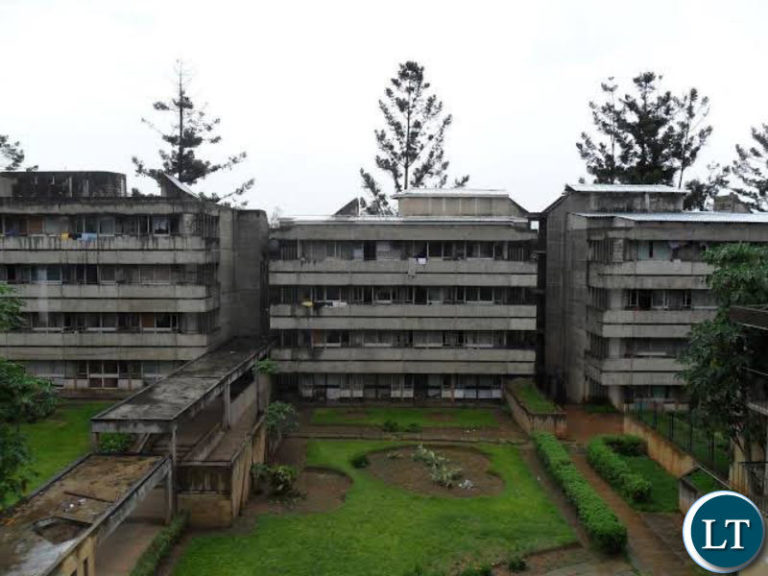
University of Zambia urgently requires K173 million to overhaul its ageing sanitation infrastructure

12

The University of Zambia (UNZA) has revealed that it urgently requires K173 million to overhaul its ageing sanitation infrastructure, which poses serious health and safety risks to students and staff.

UNZA Vice Chancellor, Mundia Muya, disclosed that the institution is grappling with outdated sewer systems, deteriorating underground infrastructure and invasive tree roots.

Professor Muya further noted that some original materials used in the sewerage system, such as asbestos pipes, are no longer safe for use.

He made these remarks during the signing ceremony of a Memorandum of Understanding (MoU) between UNZA and the Bremen Overseas Research and Development Association (BORDA) Zambia, held at the university’s main campus in Lusaka.

He described the MoU as a milestone in UNZA’s journey toward innovation, sustainability and community transformation.

The partnership will establish a Sanitation Hub, which will serve as a policy-responsive knowledge centre for decentralized sanitation solutions.

The hub will focus on research, innovation and capacity building, while also demonstrating technologies such as anaerobic treatment, biogas recovery and wastewater reuse.

“This initiative aligns with UNZA’s 2023–2027 Strategic Plan and the national development priorities outlined in the Eighth National Development Plan (8NDP) and Vision 2030,” Professor Muya said.

He appealed to development partners and the private sector to support the university’s efforts, emphasizing that investment in sanitation is an investment in the health, safety and productivity of over 30,000 students and staff.

“It is essential that we lead by example by ensuring our own systems reflect the principles of inclusive and sustainable sanitation that we teach and advocate,” he added.

Meanwhile, BORDA Zambia Country Director Amanda Mallaghan expressed satisfaction with the strategic partnership, noting that it aims to address Zambia’s sanitation challenges through evidence-based solutions, particularly in the face of rapid urbanisation and informal settlement growth.

Ms. Mallaghan said the Sanitation Hub will act as a space for knowledge exchange, learning and practical research, bridging the gap between academia, practitioners and communities.

“The hub will give students the chance to work on real-world challenges, while ensuring that communities benefit directly from the innovations and research produced,” she said.

She also called for multi-sectoral collaborations to develop sustainable and lasting sanitation solutions and thanked UNZA leadership and stakeholders for their commitment.

Ms. Mallaghan reiterated BORDA Zambia’s commitment to making the hub a regional centre of excellence for sanitation research and innovation.

Businessman Opposes State Forfeiture of Lusambo-Linked Property

Businessman Opposes State Forfeiture of Lusambo-Linked Property
A businessman, Mukuka Munkonge, has opposed the State’s application to forfeit a property in Chamba Valley that authorities have linked to jailed former Lusaka Province Minister Bowman Lusambo. He told the court that the land and developments in question belong to him, not Lusambo. The ongoing legal proceedings highlight the implications of State Forfeiture on private property rights. Munkonge’s case represents a significant challenge against the authority’s attempt to seize property without adequate evidence. The tension between state power and individual rights is brought to the forefront, raising critical questions about the balance of justice and the preservation of personal property.

This was revealed during a forfeiture hearing held before Lusaka Chief Resident Magistrate Davies Chibwili. Munkonge’s lawyer, Zyola Kakunka, testified that the businessman entered into a lease agreement for the property in 2018, which expired in 2022. He argued that the six incomplete blocks of flats at the center of the dispute are neither owned nor controlled by Lusambo, contrary to the State’s claim. The case raises significant concerns regarding the fairness of the State Forfeiture process, especially in light of how such actions can affect innocent parties who hold legitimate interests in properties that may be wrongfully associated with unlawful activities.

Munkonge said he had not committed any offense that would justify seizure of the property, urging the court to dismiss the forfeiture application. “Allowing the application by the State to forfeit the property will amount to unjust actions,” he argued. The outcome of this case could set a precedent for future State Forfeiture cases. Should the court rule in favor of Munkonge, it may embolden others in similar situations to fight against unjust forfeitures, fostering a more robust defense of property rights across the nation.

Lusambo, who was jailed for three years with hard labor on two counts of possession of property reasonably suspected to be proceeds of crime, has also opposed the forfeiture. His legal team, led by Jonas Zimba, submitted that the conviction is under appeal and therefore not final. They argued that enforcing forfeiture at this stage would render the appeal academic and cause irreparable prejudice. This situation highlights the complexity of legal battles involving State Forfeiture where individuals face not only the loss of property but also the ramifications of criminal convictions that may not yet be resolved.

The defense further argued that the Forfeiture of Proceeds of Crime Act limits confiscation to the value of benefits derived from offending conduct. They said this does not allow for wholesale seizure of property that may include legitimate or third-party interests. This legal principle is crucial in maintaining justice, as it protects individuals who may be inadvertently swept up in State Forfeiture actions due to associations with others who may be involved in criminal activities.

State prosecutor Chawezi Nalwenga maintained that the civil forfeiture proceedings should proceed independently of the criminal appeal. Nalwenga argued that property established as tainted may be subject to forfeiture, even if the criminal appeal has not been concluded. This stance reiterates the ongoing debate about the separation of civil and criminal law, particularly in cases involving State Forfeiture where the burden of proof and the standard of evidence may differ significantly.

The court has not yet delivered a ruling on the application. The outcome will determine whether the Chamba Valley property remains under the businessman’s control pending Lusambo’s appeal, or if it will be forfeited to the State under existing anti-corruption legislation.