
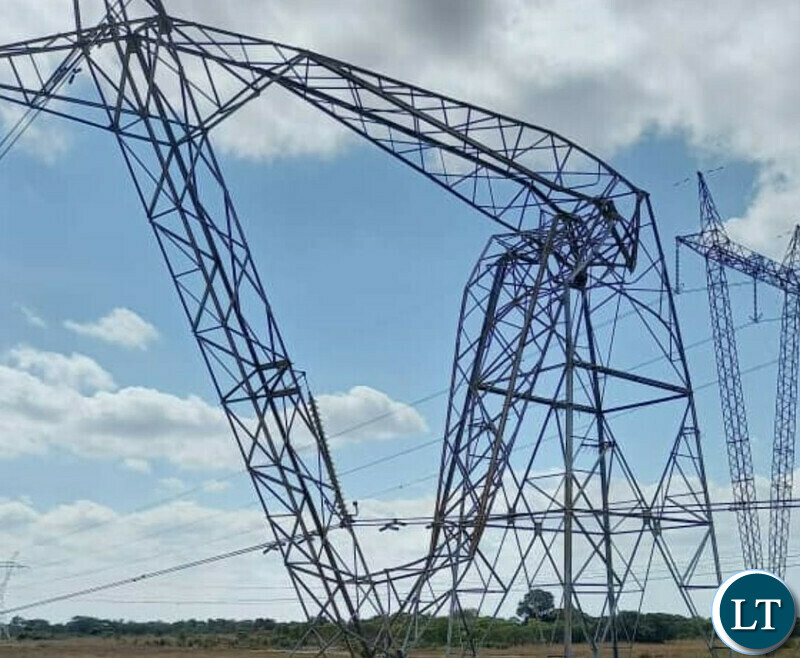
Zesco Cuts Back on Exports to Ease Domestic Power Strain
ZESCO, Zambia’s state-owned power utility, has announced a significant reduction in electricity exports to neighbouring countries in order to prioritise domestic consumption. The move follows mounting public frustration over load-shedding, which has increasingly disrupted households and businesses, as well as a broader acknowledgment of the country’s strained generation capacity.
Officials explained that while exports have been an important source of foreign exchange earnings, ensuring steady supply for Zambian consumers has become the government’s overriding priority. This shift reflects the growing pressure on authorities to demonstrate responsiveness at a time when rolling blackouts have undercut economic productivity and eroded public confidence in energy planning.
The utility’s decision comes against a backdrop of reduced generation capacity driven largely by low water levels in key hydroelectric reservoirs. These facilities, which contribute the bulk of Zambia’s electricity, have struggled under erratic rainfall patterns exacerbated by climate variability. ZESCO management indicated that load curtailment for domestic users had become politically and economically untenable, particularly as frustration boiled over in affected communities and urban centres.
For many businesses, inconsistent power has meant scaled-down operations, higher costs from backup generators, and lost production time. For households, especially in low-income areas, load-shedding has translated into cold meals, interrupted studies, and deteriorating food storage. The cumulative effect has been a wave of dissatisfaction that has spilled into public debate, with calls for government to act decisively.
By trimming electricity exports, ZESCO seeks to ease this pressure. However, analysts warn the measure, though immediately popular, only scratches the surface of deeper structural problems. Zambia’s energy mix remains heavily dependent on hydroelectricity, leaving the country vulnerable to droughts and shifting climate patterns. Unless new generation capacity from solar, thermal, and other renewable projects is brought on stream, officials risk fighting a recurring cycle of shortages.
There are also financial implications. Electricity exports to regional markets, particularly through the Southern African Power Pool, have been a steady source of foreign revenue for ZESCO. Reducing this flow may provide short-term political relief but comes at the expense of forex earnings. Balancing domestic needs with financial sustainability is thus a delicate act, particularly at a time when Zambia is working to consolidate economic reforms and strengthen external reserves.
The decision highlights the policy tension between addressing citizens’ immediate concerns and pursuing long-term energy sector reforms. While cutting exports demonstrates sensitivity to public frustration, the durability of the measure depends on how quickly Zambia can diversify its power sources and expand investment in generation.
Ongoing projects, including solar plants and thermal expansions, are touted as key to stabilising supply in the medium term. Yet, questions remain about timelines, financing, and whether implementation can keep pace with rising demand. In this context, the government faces the dual challenge of delivering urgent relief while maintaining credibility on its energy promises.
Observers note that clear communication will be vital in the weeks ahead. Transparent updates on generation levels, load management, and the progress of new projects can help temper frustration and build confidence. Citizens and businesses may accept hardship if they believe solutions are truly underway, but opaque handling risks deepening mistrust.
Ultimately, ZESCO’s export cut is a political as much as a technical decision. It signals that government recognises the centrality of electricity to social stability and economic recovery. Whether it marks the start of a coherent energy turnaround or simply a temporary reprieve will depend on what follows: investment, innovation, and the discipline to turn pledges into power at the socket.



The good report. Go on my great country. We are back in business
It is listening time! Election year. And these Zambians are ripe for the taking. Can they remember?
Too late some cried Taken 4 years to listen
As Lusaka Times readers know, Zambia’s electricity crisis isn’t new.
Load-shedding has become a stubborn feature of business and household life, and the latest move by ZESCO to curb exports in favor of domestic supply has kicked the debate into a sharper focus. This is not just a technical adjustment; it’s a test of credibility, accountability, and the political will to confront structural realities.
Citizens deserve a clear public ledger: what revenue is earned, what is spent, and what remains in reserve for future resilience. A side-by-side comparison with regional peers could illuminate whether funds are being used efficiently.
The long arc we need to see
The question is by how much? Why are we still not seeing the benefit? Maybe Zesco personnel is to blame as they are still waiting long hours to switch us on.
What genius after 20 years load shedding!
They only “prioritise domestic consumption” in election year. After the voting we will be back to one month-long loadshedding. How can they afford even to sponsor a football team?
And why are we exporting in the midst of debilitating domestic strains? Was there some breach of contract penalties built into the original deal?
Zesco and ministry of energy should be more open to the public through full disclosure. By cutting back how much have they cut back? What were they exporting before cutting back and how much are they exporting now after the so called cut back. What’s the current generation capacity etc etc.
Too little too late! I am not experiencing 15 hrs of power supply. Also too costly.
We should be having elections every year
Or recolonizing maybe ??
NOPE ,no we shouldn’t that’s an asinine suggestion.Zambia is a very poor country we can’t afford electioneering every year at the expense of development.
Even Tikki’s answer is asinine.