Ministry of Community Development and Social Services Permanent Secretary, Angela Kawandami, says supporting women and girls remains one of the most effective ways of reducing poverty and strengthening communities in Zambia.
She explains that when women are empowered with livelihoods and girls are kept in school, entire households benefit through improved welfare, better nutrition, and greater opportunities for future generations.
Ms Kawandami has emphasised that empowering women and girls is not only about social inclusion, but also about driving Zambia’s long-term economic growth.
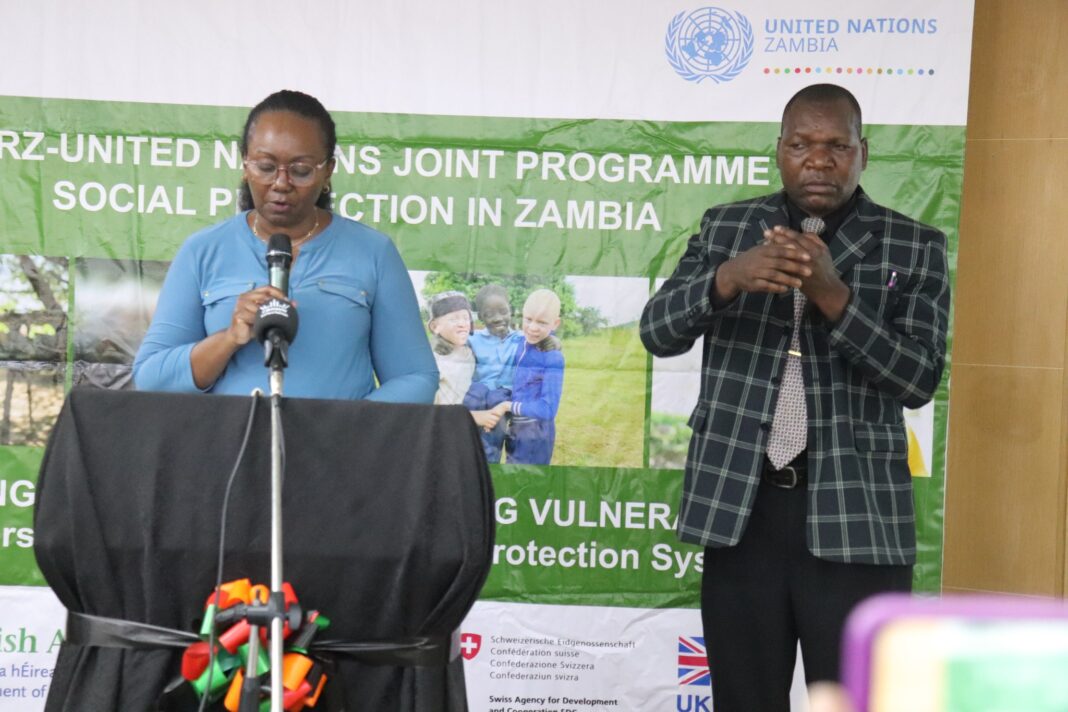
She was speaking in Lusaka today during the launch of the Supporting Women’s Livelihood (SWL) Impact Evaluation Findings, under the Girls’ Education and Women’s Empowerment and Livelihoods Project (GEWEL).
Ms Kawandami revealed that the project, implemented with support from the World Bank and cooperating partners, has provided direct cash transfers and food security packs to vulnerable households across the country.
She added that lessons from the impact evaluation will help the government design future graduation programmes that can scale up support for poor and vulnerable families.
The Permanent Secretary noted that the initiative comes at a critical time, with 60 percent of Zambians currently living in poverty and nearly half facing extreme poverty.
She restated that the government is prioritising social protection as the highway to inclusiveness to ensure that no one is left behind.
And, World Bank Country Manager, Achim Fock, described the GEWEL Project as an example of how layering interventions under a cash-plus approach can create a more comprehensive system of social services.
In a speech read on his behalf by World Bank Senior Social Protection Specialist, Nadia Selim, Mr Fock stated that the SWL component is the engine of the project, as it is deliberately designed to economically empower extremely poor women and help them sustainably move out of poverty.
He emphasised that a fully government led lean economic inclusion model, can lift households out of extreme poverty while enabling long-term growth.
Mr Fock further highlighted that the focus on self-employment is particularly relevant, given that two-thirds of Zambians are engaged in the informal sector, with women forming the majority.
“While structural transformation and private sector development will generate jobs in the long term, focusing on the informal sector provides immediate opportunities and quick wins,” he said.
Meanwhile, Ministry of Community Development and Social Services Department of Community Development Director, Changano Ngoi, revealed that under the Supporting Women’s Livelihood component, a total of 144,297 women across 81 districts aged between 19 and 64 have benefited from a comprehensive package.
He explained that this package includes life and business skills training, mentoring, peer support, productivity grants, links to other interventions, and support for the formation of savings groups.
Mr Ngoi noted that women beneficiaries are now running businesses such as livestock rearing, trading, and crop farming.
“To ensure sustainability, 5,329 savings groups have been formed nationwide, with a membership of more than 115,720 women,” he said.