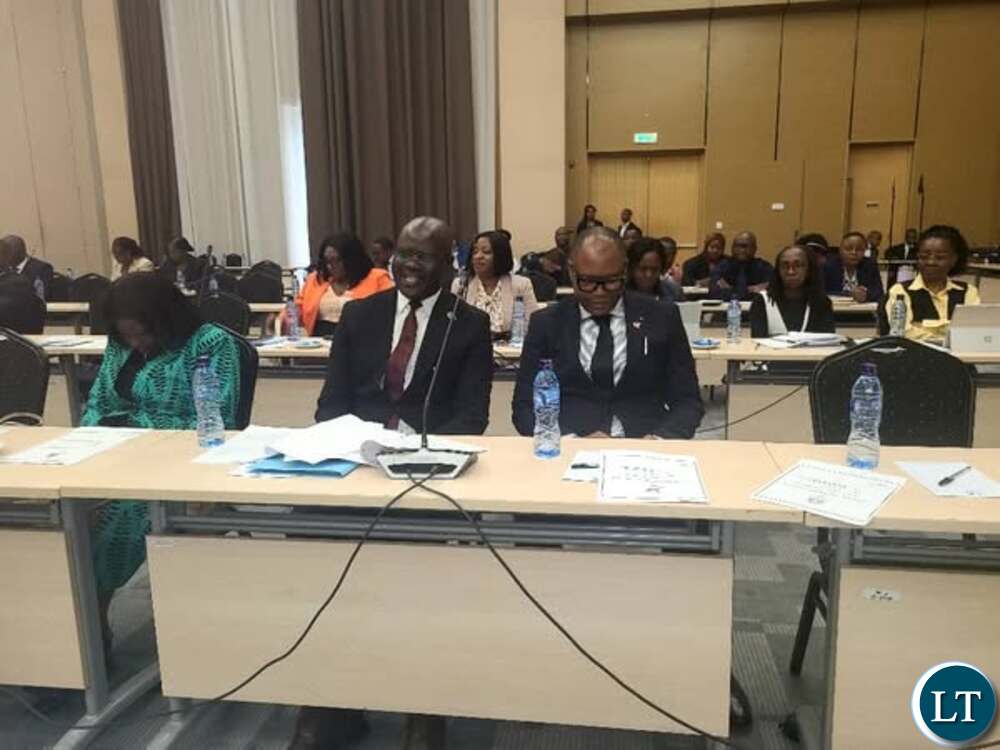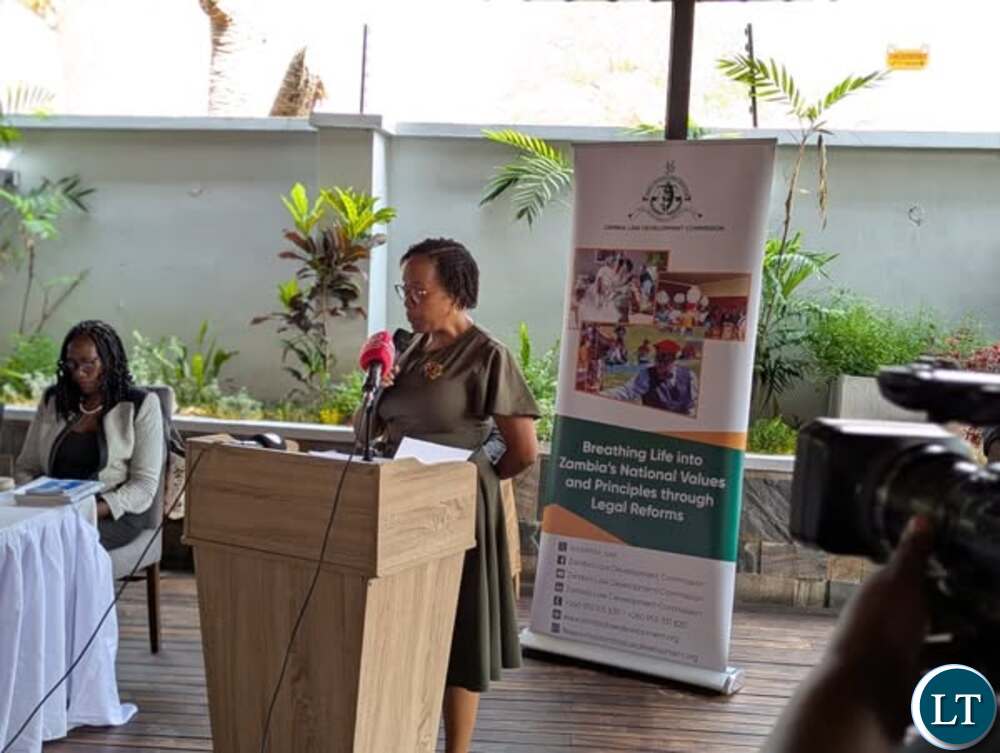
Minister of Justice, Princess Kasune, has officially unveiled the newly appointed and returning commissioners of the Zambia Law Development Commission (ZLDC) for another three-year term, while commending the commission’s achievements in over 20 law reform projects during its previous mandate.
Speaking during the unveiling of the Zambia Law Development Commissioners and handover of the commission’s end-of-term report for the period 1st July 2022 to 30th June 2025, Ms Kasune commended the outgoing commissioners for their role in delivering what she termed ‘remarkable body of work’, aimed at modernising Zambia’s legal system.
Among the highlighted reforms were the review of the Cyber Security and Cyber Crimes Act, the Public Order Act, which led to the 2024 Public Gatherings Bill, the drafting of regulations under the Anti-Human Trafficking Act, and substantial progress on laws addressing arbitration, gender-based violence, and alternative dispute resolution
“These are not merely documents, they are building blocks for a fairer, more modern, and more accessible body of Zambian law,” she said.
She said law reform is a collaborative endeavour and called on other government agencies, Parliament, civil society, development partners, and citizens to participate in shaping the nation’s legal landscape.
Ms Kasune also noted that the commission’s public outreach efforts, including seminars, media engagement, and educational initiatives such as the inaugural Zambia Parliamentary Model United Nations for secondary schools, have brought marginalised voices, particularly women, youth, and civil society, into the national conversation on legal reform.
“You inherit a commission with a proud record and an ambitious agenda, continuing the emphasis on inclusive, evidence-based law reform that is responsive to the needs of our people and aligned with Vision 2030 and the Eighth National Development Plan,” she said.
And Zambia Law Development Commission Chairperson, Ruth Chibbabbuka, outlined the commission’s key achievements during the term, emphasising its commitment to reviewing, developing, and reforming laws aimed at promoting social justice, equity, good governance, and democracy in Zambia. Impressive
Ms Chibbabbuka said among notable legislative milestones the commission completed are the review of the Security and Excise Crimes Act and the Public Order Act, which led to the drafting of the Public Gatherings Bill 2024.
She noted the progress on regulations under the Anti-Human Trafficking Act and initiatives tackling arbitration and gender-based violence, in collaboration with key ministries.
She said public awareness campaigns on constitutionalism, justice reform, and socio-economic rights reached wide audiences via digital and traditional media, including students through a parliamentary model United Nations programme.
She however acknowledged persistent challenges such as limited funding, staff shortages in research, unreliable utilities, outdated equipment, and an aging vehicle fleet, which hindered timely execution of activities.
Meanwhile, Ministry of Justice Permanent Secretary for Legal, Mwenya Bwalya, reaffirmed the commission’s commitment to legal review, reform, and development.
Ms Bwalya emphasised the commission’s evidence-based and inclusive approach aligned with the Eighth National Development Plan.
The commissioners include Justice Ruth Chibbabbuka (Chairperson), Munukayumbwa Munyima (Vice Chairperson).
Members of the commission include Emmanuel Sibonga, Eva Jhala , O’brien Kaaba, Herrick Mpuku , Bibian Kalinde, Chipo Nkhata , Bubala Chibbonta, Mwaka Chizinga, Dominic Kangongo , Kawama Simumba, and Yvonne Wilombe-Nakachinda