
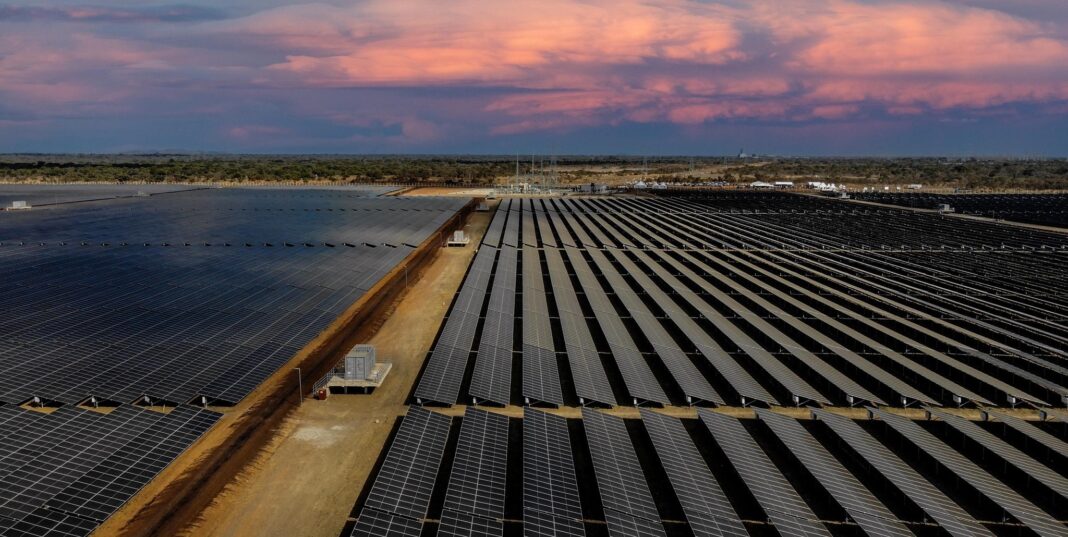
SERENJE, Central Province — Zambia’s transition to renewable energy has taken a major leap forward with the commissioning of the first phase of the Mailo Solar Photovoltaic Power Plant, jointly implemented by ZESCO Limited and Solar Century Africa.
The project, situated in Serenje District, is designed to generate a total of 110 megawatts (MW) upon completion, making it one of the largest grid-connected solar initiatives in the country.
During the commissioning ceremony, ZESCO Head of Renewable Energy Brian Kanyanga confirmed that 25 megawatts from phase one have already been connected to the national grid, providing immediate relief to Zambia’s power supply system.
“The Mailo Solar Project represents a key step in diversifying Zambia’s energy mix,” Kanyanga said. “It will strengthen grid stability, especially during low hydropower generation periods, and demonstrates ZESCO’s commitment to clean, reliable energy.”
The solar plant’s launch comes at a critical time when reduced water levels at the Kariba Dam continue to constrain hydroelectric production. The addition of solar power is expected to cushion supply gaps, stabilise electricity distribution, and lower dependence on weather-linked sources.
ZESCO said the project forms part of its Renewable Energy Expansion Programme, which aims to integrate solar, wind, and other sustainable sources into the generation portfolio in line with Vision 2030 and the Green Growth Strategy.
The company emphasised that renewable investment remains a long-term priority to ensure energy security for industrial, agricultural, and household consumers.
Construction of the Serenje facility has already created more than 480 jobs, supporting local employment and technology transfer. The plant is expected to boost economic activity within the district through infrastructure upgrades and the creation of supply-chain opportunities for nearby communities.
Solar Century Africa, ZESCO’s private-sector partner, commended Zambia’s consistent policy support for green-energy projects and highlighted the country’s abundant sunshine as a competitive advantage for future renewable investment.
“Zambia’s political will and strong regulatory framework make it an attractive destination for clean-energy development,” a Solar Century Africa representative noted.
The full project, when completed, will deliver its total 110 MW capacity to the national grid, reinforcing efforts to reduce carbon emissions while maintaining affordable electricity tariffs.
ZESCO said additional phases would incorporate advanced battery energy-storage systems to ensure round-the-clock supply and greater grid reliability.
The utility reaffirmed its focus on scaling up renewable infrastructure nationwide and expanding public-private partnerships to accelerate the diversification of Zambia’s power generation.
“Our mission is to guarantee sustainable, reliable, and affordable electricity for all,” ZESCO stated. “The Serenje Solar Plant is a practical demonstration of how Zambia is securing its energy future.”
The commissioning of the Mailo Solar Project marks a significant milestone in the country’s clean-energy journey and underscores growing cooperation between the public and private sectors in addressing Zambia’s long-term power needs.




Ati has taken a “major leap forward”, one would laugh if it were a laughing matter. This will be another Chisamba, with no impact completely on how we are still be loadshedded by the failed Dubai formula