

Bill 7 Returns to the House as Govt Presses Ahead
Government has formally resubmitted Bill 7 to Parliament for continued consideration, signaling its determination to proceed with the constitutional amendment process despite public disputes and pressure from civic groups and sections of the opposition. The return of the bill marks the next stage in a legislative journey that has drawn nationwide attention and generated extensive debate about procedure, timing and the depth of consultation carried out so far.
The updated version of Bill 7 has been sent back to the National Assembly with instructions to resume the legislative pathway that began earlier in the year. Officials close to the process have indicated that government wants Parliament to revisit the original proposals, consolidate amendments raised during earlier sessions and review areas that stirred public criticism. Although authorities maintain that the reform effort remains within the Constitution, several groups continue to argue that government is advancing the process too quickly.
Legislators are expected to resume discussion as part of the committee stages, where they will examine specific clauses, compare current provisions with the proposed amendments and seek clarification from the Ministry of Justice. Parliamentary staff familiar with the timetable said lawmakers will be asked to focus on clauses that generated the most contention during public hearings, including provisions linked to electoral rules, governance structures and administrative powers of state offices.
Government insists that the return of the bill is part of an orderly parliamentary cycle rather than an attempt to fast-track reforms. According to officials close to Cabinet, the Executive wants MPs to handle the process with thoroughness, noting that constitutional updates require legislative discipline, broad engagement and technical precision. They argue that institutions involved in constitutional work must follow structured timelines to avoid stagnation.
Civil society organisations, however, maintain that government’s decision to send the bill back to Parliament before addressing concerns raised by churches, legal bodies and student groups illustrates an unwillingness to reset the consultation process. Representatives from several networks have stated that the public expects a more inclusive approach, particularly on matters that influence electoral conditions and long-term governance. They have argued that a constitutional process must be guided by consensus rather than urgency.
Meanwhile, some opposition parties have accused government of using its parliamentary majority to drive the bill forward without proportionate regard for minority voices. They highlight specific amendments they believe carry political weight ahead of the next general election, and have demanded greater openness from the Ministry of Justice during committee reviews. Others in opposition benches want the bill withdrawn entirely until deeper dialogue takes place.
Sources within Parliament said committee members are likely to invite professional associations, researchers and governance experts to provide updated submissions. These stakeholders previously raised concerns about the level of public understanding of the bill and advised that reforms should not proceed before resolving uncertainties around key clauses. They highlighted the need for clarity on how certain changes would affect electoral boundaries, representation formulas and oversight institutions.
Inside the legislative complex, MPs from different provinces have acknowledged that the bill reflects issues that have been discussed for several years. They pointed out that constitutional adjustments do not emerge suddenly but develop from recurring policy debates. Many agree that Parliament must complete its scrutiny role, although levels of support for the bill vary across benches.
Government sources have stated that the Executive expects parliamentary structures to proceed step by step rather than rush to a vote. They have emphasised the need for the public to understand that resubmission to Parliament does not signal final endorsement, but marks the continuation of a statutory process that allows MPs to weigh the merits of each clause. They believe this cycle will help refine the final document.
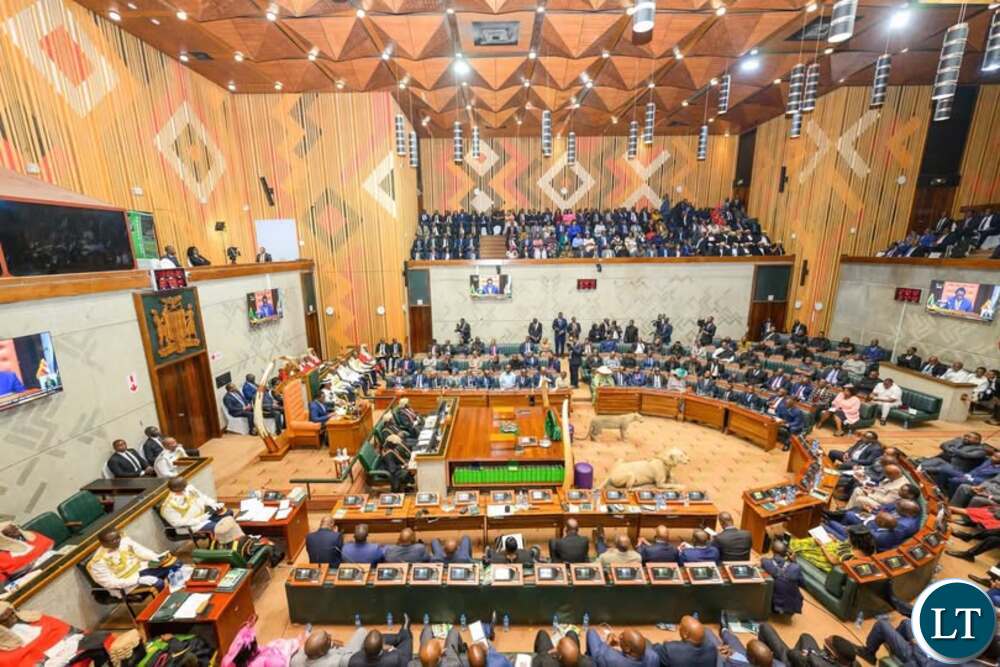
As the bill returns to the House, interest groups across the country are preparing updated position papers summarising their positions. Churches that recently met the President have also committed to reviewing the bill again once Parliament resumes deliberations. Parliamentarians are expected to debate the measure over several sittings before forwarding it to the next stage.
Bill 7 now moves into a renewed scrutiny phase, with lawmakers, civil society and political actors set to play their roles as the country weighs another chapter of constitutional reform.



Those who will deny themselves to read thoroughly between the lines will be the loudest mouths for the next coming. The current constitution amendments is a drive modern government and politics, equal balanced approach.
Good and well constitutionally move! This is the way to go. Let the parliament do its mandatory work. They are the right people and team/organ to come up with the required law. All of us we we just present our suggestions/opinions., but the final law makers are the parliamentarians ie the parliament. Thanks Mr president, HH, the wise leader for following the law. Bill7 has to be debated on, and I believe most of the mps have children, grandchildren and dependents, who are directly advantaged by Bill7. They have to support it regardless their political affiliation, promote justice and justified distribution of national resources
Uncertainty chips away trust. A constitution should inclusively empower all, not just government. Bill 7’s return to Parliament raises questions about broad consultation and minority voices. Let’s insist on thorough, transparent dialogue that reflects citizens’ needs, not hurried politicking. #ConstitutionForAll #Bill7
Uncertainty erodes trust when a constitution feels sided with few. A truly for-all constitution should empower every citizen, not just those in power. Bill 7’s return to Parliament highlights the need for broad, inclusive consultation and protection of minority voices. Let’s demand open, thorough dialogue that reflects the diverse needs of all Zambians. #ConstitutionForAll #Bill7
The opposition, who…………
Are the main proponents against this bill have to wait only 9 months before they are in power and can bin the bill as they pleas………..
Are they not confident of taking power, seeing the high cost of living and electricity crisis they so much point out ?????……….
We are however here………
FWD2041
I agree in our African politics Whatever is done can be undone
However loadshedding and Lungu will never be far from our minds
PF sacrificed the own party much as upnd is doing now
Unfortunately, jealous and extreme hatred don’t lead to winning elections. HH , is many hundreds of kilometres ahead of the opposition camp who have kept on dancing the Dununa Reverse. Bill 7 is not for upnd, not for pf, not for the church, not for ngos, but for the citizens of Zambia. And HH, being the republican president, is mandated and responsible to formulate the direction and process of any national issue, concluding the bill 7
Bill 7, loadshedding will be the end of upnd. The beginning of the end is near.
Hatred doesnt even come to mind it’s a matter of realising some are not suited to the postion they are in