
By Peter Wapa
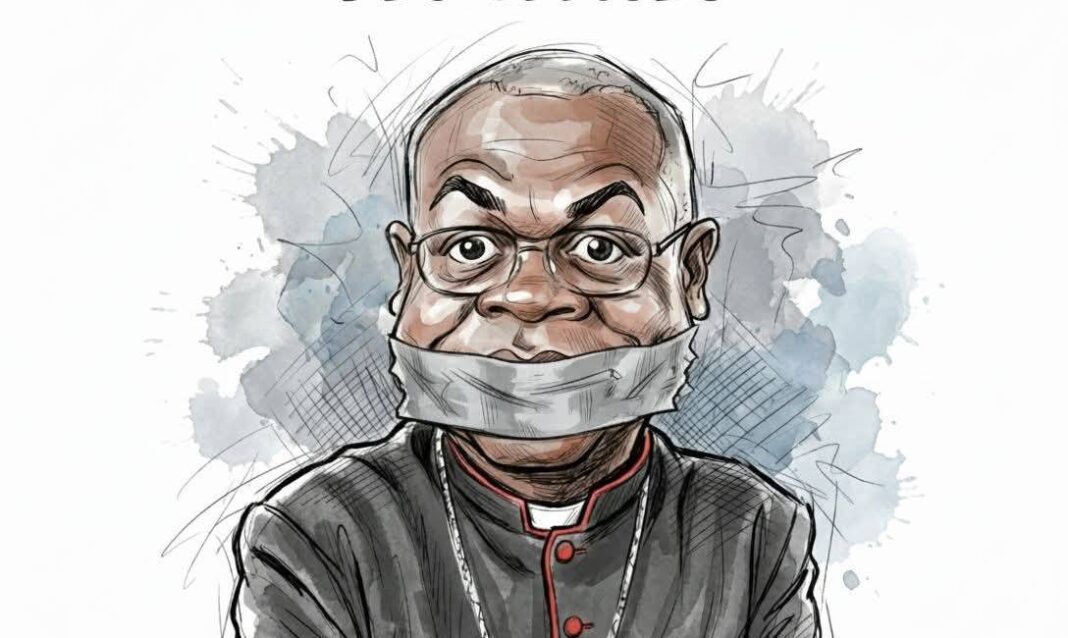
From where I stand, I paid close attention to the public statements issued by the Drug Enforcement Commission on the matter involving the Archbishop and the Toyota Hilux motor vehicle. There was a clear contrast between the two voices that spoke for the institution. The statement by the Commission’s spokesperson, Mr Allan Tamba, was measured, professional, and restrained. The statement by the Director General, however, crossed a line. It was not merely careless. It was malicious.
The Director General publicly demanded that the Archbishop explain how a government vehicle ended up in his name. That framing was deliberate, and deeply misleading. The Director General is fully aware that the vehicle in question was disposed of through a Zambia Revenue Authority auction. He is also aware that the Archbishop did not acquire the vehicle from the auction itself, but from the individual who lawfully purchased it at that auction. To suggest otherwise is not an oversight. It is a distortion.
The question that therefore arises is simple and unavoidable. What exactly is the suspected criminal wrongdoing on the part of the Archbishop?
If the vehicle was sold below market value, that is a matter for the auctioneers and ZRA management at the time of disposal, not the eventual third-party buyer. If proper disposal procedures were not followed, that again falls squarely on ZRA management. If the full auction price was not paid, then liability rests with the original auction purchaser, not with the Archbishop who later acquired the vehicle in good faith. In every possible scenario, the Archbishop is several steps removed from any conceivable offence.
Yet the Director General’s statement was crafted to create a different public impression. It implied that a government asset mysteriously vanished from official records and somehow appeared in the Archbishop’s possession. This narrative collapses under the weight of available facts. The auction was public. The disposal documents exist. The gate pass authorising final release of the vehicle is in the public domain. The Director General knows this. By omitting these facts when addressing the nation, he chose bias over balance and insinuation over truth.
The handling of the so-called “Call Out” deepens this concern. If the Commission merely sought clarification, why issue a Call Out at all, fully aware that such a document involving a prominent religious figure would almost certainly find its way into the public space? More troubling still was the Director General’s suggestion that the Call Out may have been leaked by the Archbishop to solicit sympathy. There is no evidence to support that claim. None. It is equally plausible, if not more so, that the leak originated from within the Commission itself, calculated to scandalise and embarrass.
Ordinarily, a Call Out is issued to a suspect. In this case, there is not even the remotest indication of wrongdoing by the Archbishop to justify treating him as one. If clarification was genuinely the objective, DEC officers could have discreetly interviewed the Archbishop at his office. That would have sufficed. The choice of a Call Out was not procedural necessity. It was a signal.
Even a cursory examination of the vehicle itself exposes the weakness of the insinuations. The registration number, ALF 7734, places first registration around 2010 or early 2011. Auction records show the vehicle was disposed of in 2020, after roughly a decade of service. Standard accounting practice depreciates motor vehicles at about 20 to 25 percent on a straight-line basis, meaning full depreciation within five years. By 2015, this vehicle should have been fully written off in ZRA’s books. The fact that it was still in service years later suggests revaluation and extended amortisation, not hidden value. By the time it was auctioned, it was effectively a worn-out asset, long past its prime.
I agree with the Director General on one point only: no one is above the law. Not even an Archbishop. But the law must never be weaponised to harass citizens who are plainly removed from any wrongdoing. In this instance, the Archbishop’s reputation has been publicly bruised by insinuation rather than evidence, by spectacle rather than substance.
The Director General owes the Zambian people an explanation, not about the Archbishop, but about his own judgment. Why was a Call Out deemed necessary? Why were known facts omitted? Why was suspicion elevated above fairness?
At a broader level, this episode raises an uncomfortable but necessary question for the appointing authority. Is this the calibre of conduct we expect from the heads of our law enforcement agencies? If institutions tasked with enforcing the law begin to blur the line between investigation and intimidation, then it is not only individual reputations that suffer. Public trust itself becomes the casualty.



As I scratch my head, I seem to vaguely remember that D.E-C is managed out of stati housy, D.E-C director is simply a chola-boy. So it is no surprise he is “parroting” what he was asked to do.
He is insinuating Ba Shikofu in his long robes, went in the dead of the night , scaling the high walls of ZRA to do a “gone in 20seconds” in a hilux of all cars, its got to have a turbo & V12 engine, in that they failed to apprehend him when he committed the crime!
This is what happens when one insists on “body viewing” alone without the deceased relatives. It doesn’t matter how many chola-boys you put out there to argue that this is normal procedure for call outs – no one will believe you, unless they are high on ganja!!
Ba UP&NDown you call this imingalato???
You have ‘imingalatoed ‘yourselves!!! What were you thinking????
UPND is a missed call
hechi hechi and his minions are frightened little men.
Frightened little men who can’t deal with Cholera so they try the Catholics
there is cholera being reported but politicians are too busy watching what the opposition is doing.
I find this opinion very faulty in its circumspective point of view. Corruption is a political, economic and social cancer that needs collective support to uproot. It can’t be won if selected people because of office they hold are exempted from being investigated. We have seen politicians in opposition claiming they are being persecuted by the ruling party when called to answer questions. No one can be jailed in a democracy without due process of the law, so fearing DEC before the investigation reach court means the Bishop is afraid his conduct in how this vehicle got into his hands is not backed by the law. In short he knows it wasn’t acquired lawfully as you claim
Yes have pointed out the difference in statements from the director general and PRO of DEC and also stated the A-Bishop did not purchase the vehicle but an individual from ZRA. Who by the way we hear allegedly gifted the Bishop of the said vehicle.
But are you aware that the same individual has denied having participated in any zra auction. He further states in a written article (diggers) that he never even saw the vehicle and denies ever exiting with the vehicle from zra premises.