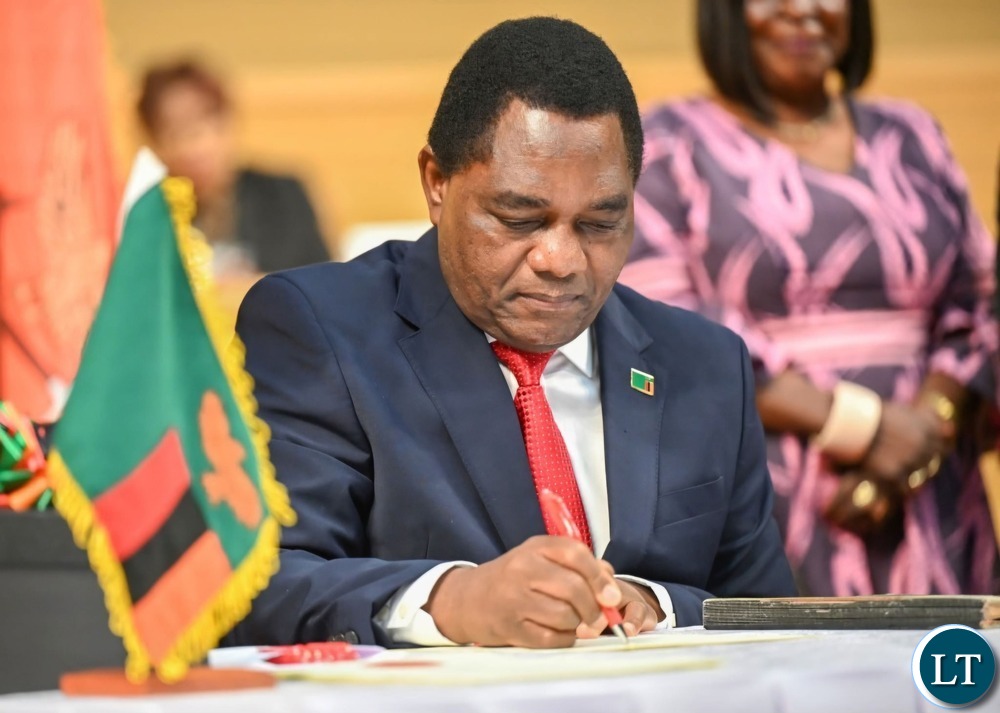
The United Nations Development Programme (UNDP) has handed over Information and Communication Technology (ICT) and office equipment valued at K1.32 million to the Government of the Republic of Zambia.
The equipment has been donated to the Resettlement Division under the Office of the Vice President to strengthen service delivery across the country.
speaking during the handover ceremony in Lusaka, Vice President Mutale Nalumango said the support comes at a crucial time when the Government is strengthening institutional capacity to ensure that public services are efficient, responsive, and citizen-centered.
Mrs Nalumango has described the handover of the equipment by the United Nations Development Programme (UNDP), as a critical investment in institutional efficiency, transparency, and improved service delivery in the country’s resettlement programmes.
“Today’s handover is more than just the transfer of equipment and furniture. It is an investment in institutional efficiency, transparency, and service excellence, and a clear statement of confidence in the Resettlement Division,” Mrs Nalumango said.
The Vice President noted that the equipment, consisting of computers, printers, scanners, projectors, office furniture and related ICT tools, will be distributed to all ten provincial resettlement offices, to significantly enhance coordination between provincial offices and headquarters in Lusaka.
Mrs Nalumango explained that the support is part of the Development of Basic Infrastructure (DBI) Project, being implemented by UNDP with funding from the Government of Japan through the Japan International Cooperation Agency (JICA), and forms the second phase of the Sustainable Resettlement Programme valued at US$5.3 million, running until 2027.
Mrs Nalumango said the DBI project supports refugees and host communities in North Maheba and Mayukwayukwa, which she said has already recorded tangible achievements.
“We have already seen achievements that include the construction and rehabilitation of roads and bridges, support to livelihood diversification, improved agricultural productivity, and strengthened institutional capacity at both national and local levels,” she said.
Mrs Nalumango added that ICT is no longer optional but a key driver of rural transformation, particularly in land administration and resettlement service.
The Vice President further acknowledged additional support from the World Food Programme (WFP), which has provided office furniture to complement UNDP intervention.
Meanwhile, UNDP Resident Coordinator James Wakiaga reaffirmed the organisation’s commitment to supporting Zambia’s development agenda, particularly in strengthening digital public infrastructure, saying the handover was a practical step towards enhancing the operational capacity of the Resettlement Division.
“Through this project, UNDP has provided full Starlink internet kits with a one-year subscription to headquarters and offices in Western and North-Western Provinces. This will significantly improve digital filing, document management, reporting turnaround times, and accountability,” Dr Wakiaga said.
The UNDP Resident Coordinator praised the Government’s leadership in promoting local transformation and evidence-based decision-making, particularly through programmes that require coordinated action across districts and communities.
Dr Wakiaga also revealed that UNDP stands ready to support the development of an integrated digital information management system for resettlement programmes, covering land allocation records, infrastructure assets, household profiles, and beneficiary tracking.