
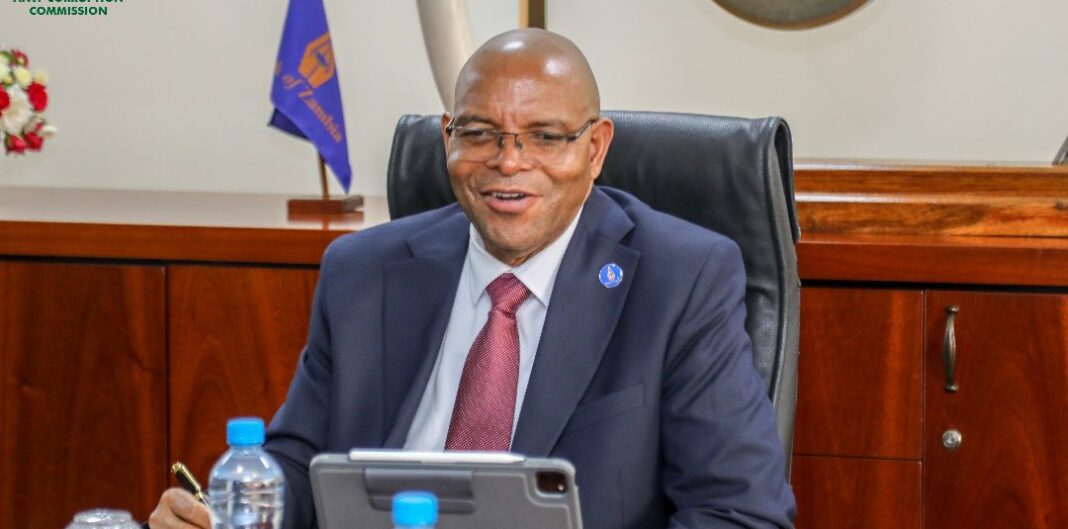
Bank of Zambia Governor Dr Denny Kalyalya said the kwacha appreciated by 4.1 percent in the final quarter of 2025, attributing the movement to improved foreign exchange supply and stabilising market sentiment during a monetary policy briefing in Lusaka.
Kalyalya stated that exchange rate performance reflected developments in foreign exchange inflows and tighter policy conditions aimed at supporting price stability. He indicated that the central bank continued to monitor inflation trends alongside currency movements to ensure that gains in the exchange rate align with broader macroeconomic targets.
The governor explained that the appreciation occurred within a context of measured monetary policy decisions designed to anchor expectations and maintain confidence in the financial system. He said the central bank’s framework prioritises inflation control while balancing liquidity conditions across the banking sector.
According to figures presented during the briefing, exchange rate improvements coincided with gradual adjustments in borrowing conditions and continued policy coordination with fiscal authorities. Kalyalya noted that external market conditions and domestic supply dynamics both contributed to the quarter’s performance.
He said the central bank remained cautious about interpreting short-term currency movements, emphasising that sustained stability depends on consistent economic fundamentals. Policy decisions, he added, would continue to reflect data on inflation, liquidity levels and global market developments.
The governor outlined that monetary policy settings had been calibrated to contain inflationary pressures while supporting confidence among investors and financial institutions. He indicated that currency stability forms part of a wider effort to reinforce economic predictability and maintain orderly market functioning.
Kalyalya also referenced foreign exchange supply improvements, saying these developments helped reduce volatility during the quarter. He added that the central bank continued to engage with market participants to ensure transparent communication around policy direction and exchange rate expectations.
During the briefing, he described exchange rate performance as one indicator among several used to assess economic conditions. He said the Bank would continue to rely on forward-looking data to determine policy adjustments, particularly in relation to inflation projections and global financial trends.
The governor emphasised that currency appreciation should be understood alongside broader economic variables rather than as a standalone measure of recovery. He stated that monetary policy decisions remain guided by the need to maintain price stability and financial system resilience.
He further explained that external sector developments, including commodity price movements and foreign exchange inflows, contributed to the environment in which the kwacha strengthened. The Bank, he added, continues to assess how these factors interact with domestic demand and credit conditions.
Kalyalya reiterated that the central bank’s role includes managing expectations through clear communication of policy objectives. He said maintaining credibility in monetary policy remains essential to sustaining investor confidence and ensuring orderly currency markets.
The briefing concluded with the governor outlining the Bank’s readiness to adjust policy instruments if economic conditions change, noting that stability requires continuous monitoring of both domestic and international developments.




Bank of Zambia Governor has communicated three key themes:
1. Stability is improving — the kwacha strengthened by 4.1%.
2. Policy tightening is working — inflation control remains central.
3. Caution remains necessary — sustainability depends on fundamentals.
Hence, the most important takeaway is that the Bank is prioritizing macroeconomic stability over rapid expansion. The appreciation of the kwacha is being framed as part of a stabilization process rather than as evidence of economic transformation.
Bank of Zambia Governor has communicated three key themes:
1. Stability is improving — the kwacha strengthened by 4.1%.
2. Policy tightening is working — inflation control remains central.
3. Caution remains necessary — sustainability depends on fundamentals.
Hence, the most important takeaway is that the Bank is prioritizing macroeconomic stability over rapid expansion. The appreciation of the kwacha is being framed as part of a stabilization process rather than as evidence of economic transformation.
Desparation leads to desparate measures stand by for reality
Your reality is not the national reality. Come to terms with good things happening in your country for once.
Thank you very much Ntaulu .Some people’s hatred of HH makes them wanna see Zambia fail just to spite one individual .No matter what , one man is never bigger than Zambia’s best interests.
Tell me again after elections.
If it was a freely traded currency this would be meaningful, but the exchange rate is decided for us not by market forces. USD has also weakened lately. So don’t be the fly on the rhino’s nose thinking he is the one driving the rhino
Tiuze Balance tiuze
How about a comparison with other currencies not just the US DOLLAR? How is the Kwacha fairing? After you do that, then you have the answer. Don’t just be negative.
@ Burns Dublin, do you understand what WORLD best performing currency mean?
Being realistic is not negative. The economy is doing well in a small way but there is still to reach… Imagine a journey to Chipata from Lusaka, and we are celebrating passing Chongwe as if the job is complete. Keep up the good work and we will arrive god willing
Both of those benchmarks (increased Forex and Kwacha’s rise) were never ever achieved in the entire 10yr tenure of PF rule.That says a lot .