
Fuel prices have been reduced following the latest Energy Regulation Board review, delivering measurable relief to transport operators and households already adjusting to cost pressures.
Petrol now retails at K26.61 per litre, diesel at K23.25, kerosene at K21.06 and Jet A-1 at K22.39. The adjustment reflects movements in international oil prices and exchange rate positioning during the review cycle.
The reduction arrives at a sensitive moment in the domestic economy.
Fuel pricing directly influences transport costs, food distribution, production input expenses and service delivery. Even modest shifts affect inflationary pressure. The latest review signals relative stability in external pricing variables, allowing regulators to adjust pump rates downward.
While consumers experience the change immediately at filling stations, the broader impact will unfold across supply chains over the coming weeks.
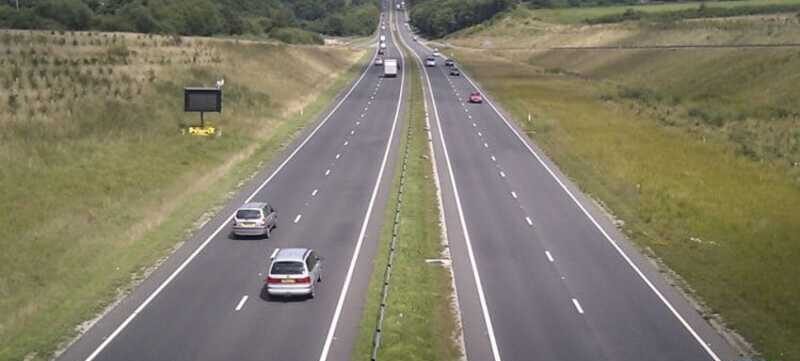
Parallel to the fuel adjustment, government has provided an update on one of its largest infrastructure undertakings. The Lusaka–Ndola Dual Carriageway project has reached 65 percent completion, with 338 kilometres now open to traffic.
The project, structured under a public-private partnership valued at approximately US$649 million, remains one of the most visible infrastructure interventions currently underway. Completion is projected for September 2026.
The 338 kilometres already open represent tangible progress along a route that connects major economic nodes. The Lusaka–Ndola corridor supports freight movement, mining-linked logistics and cross-province passenger transport. Improvements along this stretch carry implications for trade efficiency and travel safety.
Infrastructure delivery and fuel pricing intersect in economic terms. Reduced fuel costs lower operational expenses along improved transport routes. Upgraded roads reduce vehicle wear and transit time. Combined, these elements influence cost structures across industries.
Government has also addressed public concern regarding medicine availability in hospitals. Authorities have stated that there are no shortages of medicines in health facilities, countering circulating claims suggesting supply gaps.
Health sector stability remains central to public confidence. Medicine supply disruptions often trigger immediate anxiety due to their direct effect on patient care. The official assurance seeks to stabilise perception and reinforce administrative control over procurement and distribution systems.
Taken together, the three developments form part of a broader economic narrative.
Fuel reductions provide immediate visible relief. Road progress demonstrates medium-term structural investment. Medicine supply assurances speak to service continuity in the health sector.
Each component touches a different layer of public life. Households monitor fuel costs weekly. Businesses track transport efficiency monthly. Patients rely on medicine availability daily.
The Lusaka–Ndola project in particular remains politically significant because of its scale and visibility. Infrastructure projects of this magnitude serve as markers of administrative capacity. Delays draw criticism. Progress updates reinforce delivery claims.
The 65 percent milestone therefore carries both technical and symbolic weight.
At the same time, fuel pricing remains sensitive to external volatility. Global oil markets and currency fluctuations continue to shape domestic pump adjustments. Stability in one review cycle does not eliminate exposure in future cycles.
Economic management is rarely defined by a single announcement. It is shaped by consistency across sectors.
Fuel adjustment. Road completion progress. Medicine supply reassurance.
These are not isolated developments. They sit within the same governance matrix.
The coming months will determine whether the combined effect translates into sustained economic confidence. For now, the measurable indicators point toward incremental relief and visible infrastructure movement.




Good progress on that vital artery .When is Zambia building its own SGR to link with Tanzania ?
Why not showing actual pictures instead of downloading pictures from the internet or its AI generated