

Hakainde Hichilema says Zambia is hoping for a swift end to the ongoing conflict in the Middle East to prevent a surge in global fuel prices that could negatively impact the country’s economy.
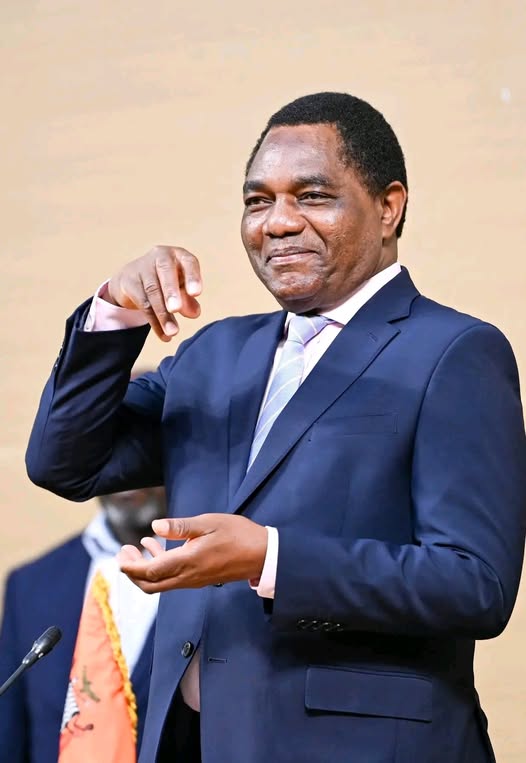
Speaking during a meeting with councillors and the Local Government Association of Zambia, President Hichilema said Zambia remains vulnerable to global shocks arising from instability in major oil-producing regions.
He said government is closely monitoring international developments, noting that even distant conflicts directly affect local pump prices and the cost of living.
“We all hope this war will come to an end quickly, so that it doesn’t shoot up the price of fuel and distort our inflation issues and other costs of doing business and living issues,” President Hichilema said.
The President stated that Zambia does not support war and believes dialogue is the only sustainable path to stability. He added that while his administration has implemented economic reforms and diversification measures to reduce vulnerability, global disturbances continue to pose challenges.
President Hichilema explained that Zambia’s fuel pricing is determined by three main factors: the exchange rate, transportation costs and the international price of crude oil. He said government has made progress in stabilising the exchange rate and reducing transport costs by promoting pipeline transportation, which is cheaper than road haulage.
“You have seen what we have been doing to the pump price. We have been pushing the pump price down, and it’s based on three parameters only; one is the exchange rate, which we are doing well. Two is the cost of transporting fuel. That’s why we are pushing more pipeline space, which is cheaper than road transportation,” he said.
“Three is the international price of fuel. We are doing well on one and two. Now on three, the war in Iran is causing an increase in the fuel price. Then that is beyond us,” he added.
Tensions in the Middle East escalated after reported US-Israeli strikes killed Iran’s Supreme Leader, Ali Khamenei, triggering retaliatory strikes across several countries, including the United Arab Emirates, Qatar, Bahrain and Kuwait.
According to the BBC, oil prices surged by more than 10 percent in early Asian trading, with Brent crude reaching US$78.72 per barrel and US oil trading at around US$72.20 per barrel.
The conflict has also affected maritime security, with reports indicating that vessels were attacked near the Strait of Hormuz, a critical global oil shipping route




Regardless Sir the fuel price will rise as sure as the sun comes up
@ Tikki to understand as you do is a blessing if only we all could understand why your statement is stated with a straight conclusion!
This is not a conflict. It’s a war. Some journalism.