
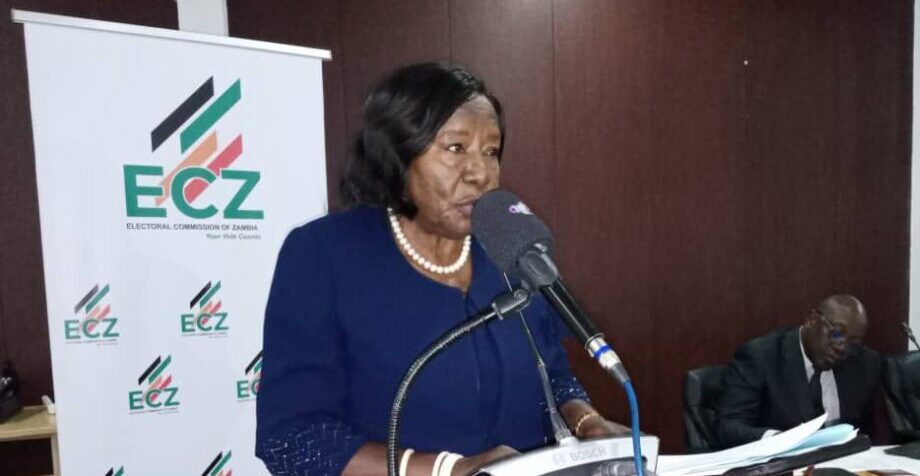
Lusaka is set to gain nine additional constituencies under the Electoral Commission of Zambia’s delimitation proposals, a development expected to significantly expand parliamentary representation in the capital as the country prepares for future elections.
The proposed expansion forms part of the broader constituency delimitation exercise being undertaken by the Electoral Commission of Zambia (ECZ), which seeks to realign electoral boundaries to reflect population growth and changing settlement patterns.
Under the proposals, Lusaka Province — and particularly the capital city — stands out as one of the regions expected to record the largest increase in constituencies.
The delimitation exercise follows constitutional provisions that allow the ECZ to periodically review constituency boundaries in order to ensure equitable representation.
Rapid population growth in Lusaka over the past two decades has placed increasing pressure on existing constituencies, many of which now contain significantly larger populations than originally anticipated when the current boundaries were drawn.
Electoral officials say the creation of additional constituencies is intended to improve representation by reducing the number of voters served by individual Members of Parliament.
The move is also expected to bring parliamentary representation closer to communities experiencing rapid urban expansion.
Urban growth in Lusaka has accelerated in recent years as migration from rural areas continues to increase the city’s population.
New residential areas have emerged on the outskirts of the city while previously sparsely populated areas have transformed into densely populated communities.
These demographic changes have created imbalances in the size of constituencies, with some MPs representing far larger populations than others.
The delimitation process aims to correct those disparities by adjusting electoral boundaries and creating additional constituencies where population growth has been most pronounced.
The Electoral Commission has been conducting consultations and technical reviews as part of the exercise.
Electoral boundary reviews often generate significant political interest because they influence the structure of parliamentary representation and can reshape political competition in affected areas.
In Lusaka, the addition of nine constituencies would increase the number of parliamentary seats allocated to the province and alter the electoral map of the capital.
The changes are expected to affect several existing constituencies whose boundaries may be adjusted to accommodate new electoral divisions.
Delimitation exercises are typically guided by several factors including population distribution, geographical considerations and administrative boundaries.
The ECZ has previously stated that the goal of the exercise is to strengthen representation and ensure fairness in the electoral system.
Electoral boundary adjustments are considered a normal part of democratic governance, particularly in countries experiencing rapid urban growth.
For Lusaka, the proposed increase reflects the city’s continued expansion and its growing political importance within Zambia’s electoral landscape.
The capital remains the country’s largest urban centre and one of the most influential regions during national elections.
Changes to its constituency structure therefore carry significant implications for parliamentary representation and future electoral contests.
The delimitation process is expected to continue with consultations and technical assessments before final boundaries are formally adopted.
The addition of nine constituencies would mark one of the most significant expansions of Lusaka’s parliamentary representation since the introduction of the current electoral boundary framework.





It is about time!
There is no gain or loss. There has been delimitaton before in Zambia with constituencies increased, with people still wallowing in poverty. The biggest scam is to tell people that with delimitation, there will be prosperity. That is an outright lie. Nothing will change. Can’t you get an example of bill 7 where MPs went to vote for the bill against the wishes of their constituents but for the wishes of their party boss
The republic of Lusaka?
All that means is there were nine strong contenders for position of MP from ruling party and rather than risk disappointing eight and choosing only one they decided to increase the number of constituencies. What a waste of resources.