
Government has outlined plans to implement a 24-hour economy in phases, positioning the strategy as part of broader efforts to expand productivity and extend economic activity beyond traditional working hours.
The phased approach is intended to allow gradual adjustment across sectors, with implementation guided by infrastructure readiness and operational capacity. Authorities have indicated that the model will not be introduced at once but will be rolled out progressively as supporting systems are strengthened.
The 24-hour economy concept centres on enabling continuous activity across industries such as manufacturing, retail, transport and services. By extending working hours, the policy aims to increase output, improve utilisation of infrastructure and create employment opportunities through shift-based operations.
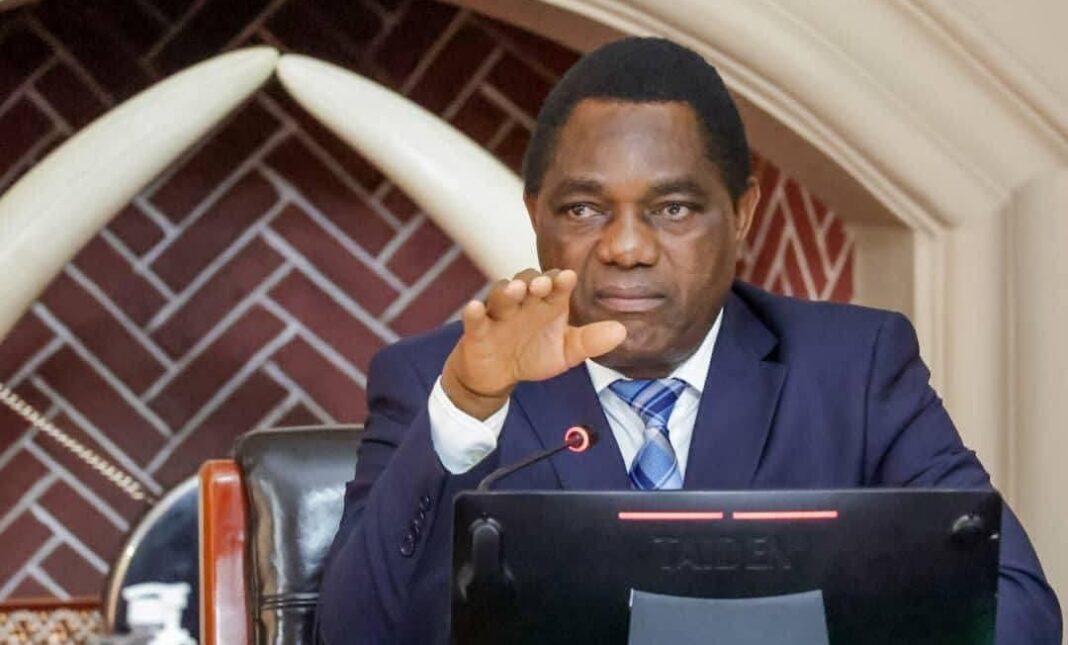
President Hakainde Hichilema has reinforced the importance of execution in economic programmes, expressing frustration with delays in implementation across sectors. He has indicated that slow action in getting things done undermines progress, placing emphasis on the need for timely delivery of policy initiatives.
His remarks position the 24-hour economy within a broader expectation that government programmes must translate into measurable outcomes. The focus on execution reflects a push to ensure that economic strategies move beyond planning into actual implementation.
While the proposal has received support, stakeholders have pointed to key challenges that could affect its effectiveness. Among the most significant is the issue of electricity supply. Experts have indicated that sustained operations across extended hours depend on stable and reliable power, noting that load-shedding remains a constraint.
The concern highlights a direct link between energy infrastructure and economic policy. Continuous production and service delivery require uninterrupted electricity, making power supply a critical factor in determining whether businesses can operate effectively under a 24-hour model.
Security has also emerged as an important consideration. Extending economic activity into night hours increases exposure to risks, prompting calls for strengthened security measures to protect businesses, workers and infrastructure. Stakeholders have indicated that safety frameworks will need to be reinforced to support operations beyond conventional hours.
These concerns have influenced the decision to adopt a phased rollout. By introducing the policy gradually, authorities are creating space to address infrastructure and operational gaps while allowing sectors to adapt to extended working hours.
The approach reflects an attempt to balance ambition with practical realities. Expanding economic activity requires coordination across multiple systems, including energy supply, security services and private sector readiness. Each of these elements plays a role in determining the success of the policy.
The 24-hour economy is also linked to broader objectives around job creation and economic growth. Extended working hours create opportunities for additional shifts, which can increase employment and expand participation in economic activity. This aligns with efforts to strengthen productivity and support industrial output.
At the same time, implementation will require alignment between public and private sector actors. Businesses must be willing and able to operate beyond traditional hours, while government systems must provide the necessary support in terms of infrastructure and regulation.
The evolving discussion reflects both opportunity and constraint. The policy presents a pathway for expanding economic output, but its effectiveness will depend on how well underlying challenges are addressed.
President Hichilema’s emphasis on execution underscores the importance of moving from policy design to delivery. The phased rollout provides a framework for this transition, allowing adjustments to be made as the programme develops.
As the process moves forward, attention is expected to remain on key enablers such as power supply and security, alongside broader measures to support business participation. The interaction between these elements will shape how the 24-hour economy functions in practice.
The success of the strategy will ultimately depend on whether these supporting systems can sustain continuous operations while delivering the intended gains in productivity, employment and economic activity.





Not to mention Power deficit ?
For close to 5 years the country has worsened into a limbo, hence the genuine concerns
Chipante pante Government….24 hour economy is very expensive…even here in USA we have normal business hours….only restaurants and bars but they still close after or before midnight…most gas stations are open 24hrs but again too much robberies
His blank commerce minister was even talking of price controls recently. Now they are talking of 24 hour economy. Remember these people just talk
Do we have a mini star for commerce trade and industry ????
So will there be adequate security for those operating business in the risky wee hours of the night? Remember we have plenty of other “Mailoni Brothers” waiting to pounce where they haven’t sown.