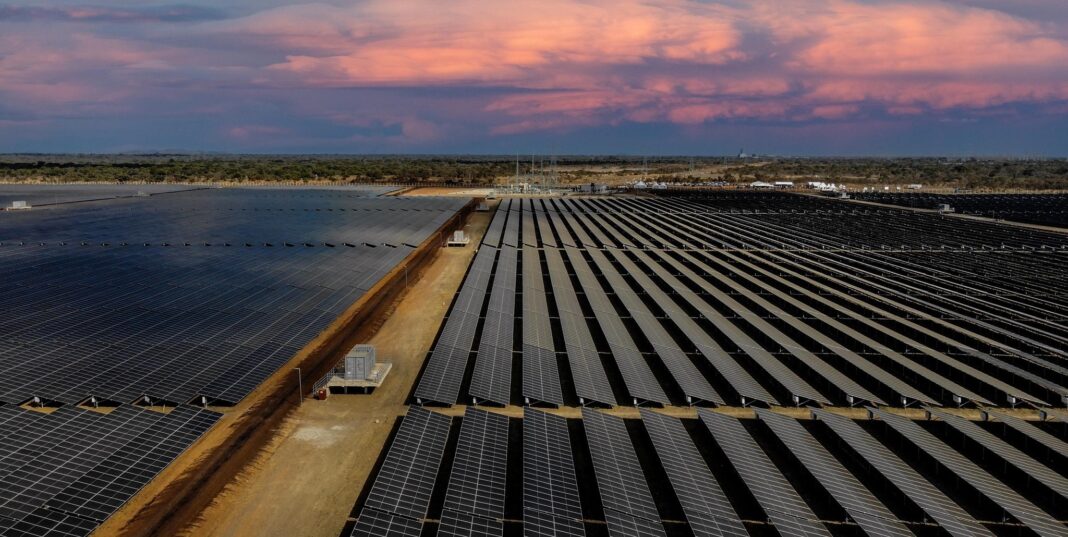
A fifty megawatt solar generation facility under construction in Mansa District is scheduled to enter its commissioning phase next month, according to technical teams supervising the project. The development is one of the major renewable-energy installations currently being implemented to broaden electricity generation capacity and reduce the country’s dependence on hydroelectric systems. The site covers fifty hectares in Chief Mabumba’s Chiefdom, where rows of mounted photovoltaic panels are being positioned and wired to feed power into the national transmission grid. Construction officials said the target output will be sufficient to support more than twenty thousand households once the plant begins its operational cycle.
Project engineers monitoring progress have indicated that mechanical assembly, power routing, civil works and related sub-structures have reached an advanced level, with the outstanding integration tasks now focused on control-room calibration, system interface configuration and switchgear installation. Technical breakdowns show that the sequencing of procurement was concluded earlier in the year, which enabled equipment mobilisation, delivery scheduling and construction timelines to run without interruption. Large consignments of modules, cabling instruments, steel mounting components and power-conditioning equipment have already been installed, while the remaining support systems are undergoing final checks. A dedicated testing facility has been positioned on the site to validate output parameters before full energisation takes place.
The project has created more than two hundred employment opportunities during its construction phase. Personnel include engineers, electricians, grid-integration specialists, heavy-equipment operators, steel fabricators and temporary labour teams sourced locally. Project coordinators said the labour intake is a direct downstream benefit for surrounding communities, who have experienced limited industrial employment in recent years. Workers have been deployed across panel-mounting fields, drilling zones, power-trench alignment areas and control-room assembly units. Technical teams said the hiring programme reflects the ongoing demand for manpower associated with large-scale renewable-energy engineering.
The Mansa installation forms part of a wider renewable-capacity expansion strategy designed to raise one thousand megawatts of solar-based power. The renewable programme is intended to stabilise electricity availability, especially during periods when hydropower output declines due to reduced rainfall and low water inflows into major reservoirs. The country has experienced several seasons in which power shortages forced supply interruptions for both households and industry. According to engineers involved in the renewable rollout, solar installations such as the Mansa plant offer an additional channel of generation that does not depend on rainfall outcomes or dam levels.
Project supervisors have explained that the plant is configured as a grid-connected node rather than a stand-alone system, meaning that once operational, the electricity generated at the site will enter the national transmission infrastructure rather than being restricted for use within immediate surrounding communities. Technical briefings show that grid-integration elements are being positioned as the final phase to allow power flow without structural delay once testing is cleared.
Progress-tracking reviews conducted by engineering teams have confirmed that the project is on schedule. Civil-works teams are finalising equipment enclosure platforms, while cable networks are being positioned across the mounting field in preparation for final binding, insulation and safety verification. Supervisors say installation of switchgear remains the final priority engineering step, and once completed, the facility will undergo coordinated system testing.
Commissioning is targeted for next month, subject to the completion of final inspection routines and technical assessments. Once electron flow is confirmed, the plant will contribute renewable power into the national supply framework, which is expected to ease the burden generated by restricted hydro output and strengthen overall supply reliability.