
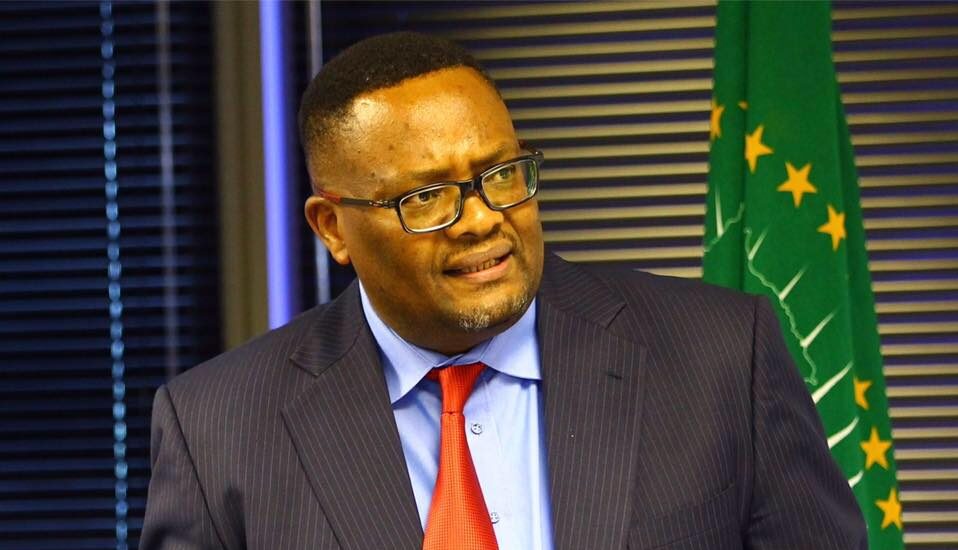
The Desperate Attempt to Steal the PF Using Democratic Institutions
By Emmanuel Mwamba
When institutions forget their limits, political chaos fills the gap; The turmoil inside the Patriotic Front has once again revealed how quickly institutions can drift when political pressure intensifies. What should be clear, neutral and procedural becomes reactive, selective and dangerously malleable. In the middle of this disorder, an invisible hand appears to guide events. It is invisible in law, yet extremely visible in practice, operating through the conduct of Robert Chabinga and reinforced by the influence of President Hakainde Hichilema. The pattern is unmistakable. When power is concentrated in one centre, institutions that should remain independent begin to bend.
The Registrar of Societies is the first institution repeatedly dragged into this turbulence. Its mandate is administrative, not political. It receives documents, verifies compliance and keeps records. It does not recognise factions, interpret constitutions, resolve disputes or decide who leads a political party. When the Registrar is used as a tool to rubber stamp contested political activity, it violates the very purpose of the office. Legitimacy inside a political organisation comes from its constitution and, where necessary, from the courts. The filing of forms cannot override democratic processes.
The Registrar’s responsibilities are simple: receive documentation, maintain registers and ensure compliance. Its prohibitions are equally clear: it must not choose leaders, declare factions legitimate or take instructions that undermine internal party democracy. Any attempt to push the Registrar beyond its mandate risks creating a dangerous administrative shortcut that serves political actors instead of the law.
The Zambia Police Service has also been drawn into the conflict. Its constitutional mandate is to maintain law, protect life and property and prevent crime. Yet in recent days, clearance certificates and fingerprint results have been issued with unusual speed, sometimes late at night, raising concerns about whether the police are being used to validate contested leadership claims. When police verification is processed with haste instead of thorough checks, it fuels suspicion that administrative tools are being used to advance political objectives.
The Ministry of Home Affairs supervises the police but cannot influence the Registrar of Societies to take unlawful or partisan actions. These institutions operate under different legal mandates. The ministry cannot instruct the Registrar to recognise certain individuals or to amend records in ways that favour specific factions. Attempting to do so would breach the Societies Act and undermine the independence of statutory bodies. The ministry is responsible for security oversight, not political intervention.
Attention has also turned to demands placed on the Speaker of the National Assembly. Her mandate is strictly parliamentary. She recognises party representatives only when the party communicates properly through its constitutional structures. She cannot determine who leads a political party outside Parliament, cannot interpret party constitutions and cannot pick sides in leadership disputes. Expecting her to do so places her office at risk of appearing partial, something the institution cannot afford.
Political parties themselves must uphold their constitutional procedures. The PF elects its president at a general conference convened by the central committee. The UPND follows a congress system overseen by its national management committee. The MMD uses conventions organised by its national executive committee, where delegates elect the president and senior officers. The Socialist Party holds congresses where elected delegates determine leadership. In all major parties, leadership is a product of internal constitutional processes, not external endorsements or administrative shortcuts.
The growing influence of external actors in PF disputes reflects a broader problem. When political leaders appear to operate behind the scenes, guiding institutions to tilt internal disputes in one direction, public trust collapses. The involvement of Chabinga and the visible signals of influence associated with President Hakainde Hichilema have intensified concerns that institutions are not acting independently. Even when their involvement is indirect, the impact is undeniable. When power leans, institutions begin to lean with it.
Zambia’s democracy depends on institutions knowing their limits. The Registrar must record, not rule. The police must enforce the law, not process midnight clearances to legitimise political manoeuvres. The Ministry of Home Affairs must supervise, not manipulate. The Speaker must protect Parliament, not enter party disputes.
The more these boundaries are crossed, the more political chaos fills the space where the law should stand.
All the above, when mixed with a generous serving of anger and an empty stomach, Three (3) hours of electricity, somehow brings out the worst version of human innovation, pushing certain citizens straight back into the “Stone Age Deluxe Edition”, recently re-launched on the Copperbelt. “Apparently regrettable though”


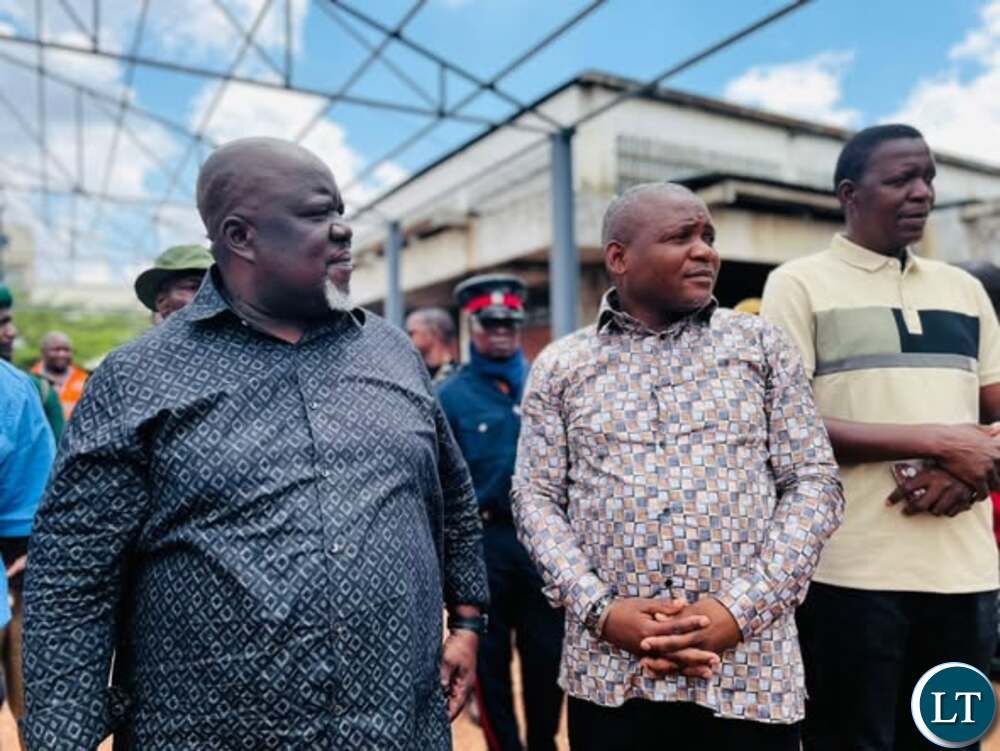


You should be an expert in panga-based decision making sir, tell them your experience of the flawless selection process in Kabwe that time
Again, there he goes. The one and chief propagandist Emmanuel P Mwamba. In my circle of vocabulary, he’s a pure “Adult Juvenile”.
A person of his caliber must know as to why there has been energy issues, anger and hungry citizens including many issues facing almost all Zambians. Zambians also faced so many issues between 1964 and 1972.
The question for chief propagandist is, how did we get here. I mean. The current issues you’ve stated in your paragraph. What did do about certain things that were openly being done by the government you worked jepatientzing the future which is now. Don’t play politics when you know how wrong you are. Zambians will never be taken for granted.
The problem is all in self interest and very little to do with bettering Zambia
PF is not the exception its in all parties including upnd which will only come to light after HH
It’s well known it’s a one man party
Please ask miles sampa. If what you are saying is true , then sampa is the master thief. But he used political and and membership rights to organize a convention. No any other party was involved. Chabinga too, used the same rights. Right now a lot of you have come out and fighting for the leadership of pf. You have even abandoned the corpse and the whole feneral of your leader. Even ba malukula, the funeral spokesman has also abandoned his special duties. For the sake gambling for power. Therefore, everyone is involved in the position gambling and if anything, everyone of you should be described as special thief for the party. No outsider should be labelled as involved. Money for bribery, corruption is flying like manna
People don’t steal rotten, smelly eggs like the PF.
Thieves always talk about stealing
Just get a skill sir, there is no need to hiding there in other countries come and productive you do the following rather politics everyday:
(1) Looking after goats
(2) Cattle keeping
(3) Farming
(4) Fishing
(5) PR consultant
As you can see the list is long