

Sinkamba cites traditional leaders and court ruling in Bill 7 dispute
Senior Chief Mwata Kazembe’s refusal to participate in the ongoing Constitution amendment process has intensified pressure on President Hakainde Hichilema to halt the current Bill 7 roadmap and revisit its legal foundation. Green Party president Peter Sinkamba, speaking in an interview, urged the President to listen to the Mwata and other traditional leaders who have rejected the process, arguing that the entire exercise lacks legitimacy and cannot be sustained in its present form.
Sinkamba said the Mwata had made his objections clear by refusing to make submissions to the Technical Committee, which is receiving views under a structure that several legal experts and civic groups have questioned. He argued that the process was built on the wrong legal framework and that the ruling of the Constitutional Court had already rendered the original Bill 7 approach invalid. He added that the new committee, which is operating outside the provisions of the Inquiries Act, remained without legal grounding.
He noted that the Mwata’s position was consistent with that of other senior traditional authorities, including Paramount Chief Mpezeni, a number of chiefs across provinces and several religious and civil organisations. Sinkamba said the collective rejection of the process should signal to the government that public confidence was absent and that the administration risked pushing ahead with a roadmap that citizens had already declined to accept.
Sinkamba said the major problem stemmed from the Constitutional Court’s earlier declaration that Bill 7, as initially formulated, was unconstitutional. He added that attempting to reintroduce the same components through indirect mechanisms could not cure the legal defect. According to him, the only honourable step for the government would be to withdraw the process entirely and defer any amendments until after the general elections.
He mentioned that the Mwata’s concerns extended beyond legality. They included the timing of the process, which he said coincided with the approach to the 2026 elections, creating a perception that the amendments may be politically motivated. He argued that if the process were genuinely intended to strengthen governance, then a more stable period after the election would be the appropriate time to revisit it.
Sinkamba said the Mwata had pointed to other important provisions that remain unimplemented from the 2016 Constitution, such as the State Audit Commission, the Political Parties Fund, the Gender Equity and Equality Commission and the Enhanced Bill of Rights. He noted that the absence of these institutions raised questions about why new amendments should be pursued when the existing framework had not been fully operationalised.
He argued that the Technical Committee would have been more credible had it been established under the Inquiries Act, consistent with previous national commissions. Instead, the current committee had been constituted under a mechanism that legal experts say contradicts established law. Sinkamba emphasised that the government should not ignore the Constitutional Court’s guidance and that adherence to legal procedure was essential for national unity.
According to Sinkamba, traditional leaders’ withdrawal from the process showed how deeply the issue had affected grassroots confidence. He said traditional leaders serve as custodians of local consensus and that their refusal to participate indicated a serious disconnect. He added that the Mwata’s stance demonstrated moral authority and was aligned with citizens’ concerns about the perceived deficiencies of the process.
Sinkamba said insisting on continuing with Bill 7 under these circumstances would be counterproductive. He emphasised that constitutional reform must be national in character, broad in participation and anchored in legitimacy. He said no amendment process could succeed without public confidence, and that the current approach risked weakening that trust further.
He said the President should show leadership by acknowledging the concerns raised by chiefs and institutions and redirecting the process to a more acceptable and legal path. Sinkamba added that a transparent and inclusive process undertaken after the elections would align with national expectations and reduce suspicion surrounding political motives.
The Green Party leader said traditional leaders had responded responsibly, and their input should not be dismissed. He said failure to respond to their concerns would undermine national cohesion and strain relations between government and communities that rely heavily on the guidance of traditional authorities.
He added that the Mwata had demonstrated consistency in defending constitutional integrity and that his intervention reflected a desire to protect national interests. Sinkamba said the country had reached a point where suspending the process was the most prudent action, allowing space for sober reflection and broader engagement.
Sinkamba concluded that Zambia needed to focus on strengthening the Bill of Rights, an issue that has been pending since the last referendum. He said addressing such matters required a process that carries public confidence, which the current approach does not command. He urged the President to consider national unity and stability and withdraw the process until an appropriate time when a well-structured, legal and inclusive review could take place.

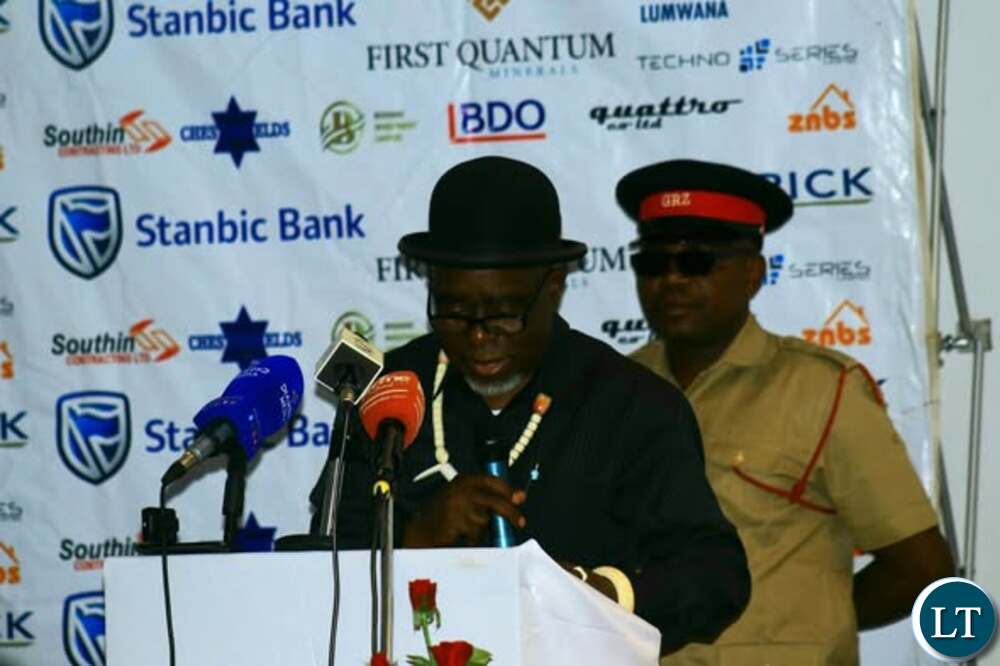



Chief kazembe contributed in his own capacity
So what if a chief is against Bill 7?
The last time I checked there are over 20 million other Zambians and the majority of them are in favour of it.
That 20 million is what can be called the silent majority.
The time has come to tell minority to end their trash talking.
Zambia is moving forward and needs a modern constitution, not the backwardness that the dissenters want to see.
Is your name Majority?