Edward Chisanga
The people of Chibu, who often vote for the Zambian politicians have kept quite for a long time over something extremely important to their lives. They’ve left politicians to decide for them all the time without their involvement. When common people are only left to listen to debates of politicians and economic experts making key decisions for them while using bombastic and often meaningless jargon that they hardy understand, there’s certainly something wrong because no one except they, understand. Amid this dearth of clear information reaching the majority of citizens, politicians continue to claim of inclusive governance.
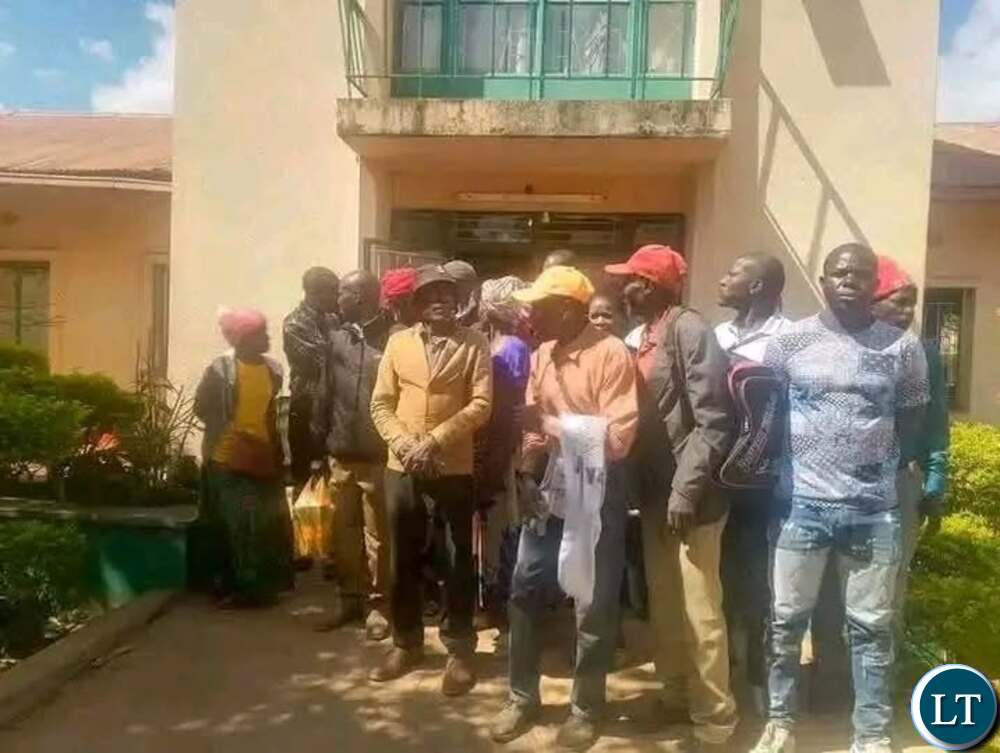
One day, I was in Chibu to pay a courtesy call on the chief. To my surprise, I found what was to be ordinarily a meeting between me and the chief turned out to be a village assembly awaiting me. “It’s good you’re here. At least we’ve among us, someone who understands these things. You can help me explain to the people.”
I asked, “What things my chief?” He replied, “They’ve been asking me about what’s happening in Lusaka. Let them speak for themselves.”
Then one of them stood and said, “We hear so much talk about percentages. Zambia’s Vision 2030 lists economic targets as: “Achieve GDP growth of 6 percent real growth over 5 years 2006 – 2010 with higher rates in each of the four succeeding 5-year plans—8 percent 2011-2015, 9 percent 2016 – 2020, and 10 percent 2021 – 2030. This assumes that population growth rates will progressively decline from 2.9 percent in 2006 to 0.8 percent in 2030 in accordance with Zambia’s Population Policy.”
At this point, the chief interjected and said, “Yes, I have also seen in the 8th National Development Plan ((8NDP) the same Minister of Finance explaining the economic performance of Vision 2030. My God, everything is in percentages.”
It states, “In Vision 2030, the government’s objective is to attain and sustain an annual real economic growth rate of between 6 and 10 percent. During the period 2006 to 2010, annual real Gross Domestic Product (GDP) growth rate was favourable, averaging 8.7 percent, with the highest annual growth rate registered at 10.3 percent in 2010. Between 2011 and 2016, however, the economic growth rate slowed down, and averaged 4.9 percent. Growth in wholesale and retail trade was mainly driven by increase in consumption, imp Between 2011 and 2016, however, the economic growth rate slowed down, and averaged 4.9 percent.”
Another villager supported the chief saying, “Then we hear the Minister of Finance telling us that Zambia’s economy is resilient, 2024 GDP growth revised to 4%, targets 6% for 2025. And when presenting a national budget, he said, “Global growth is projected to slow down to 3.2 percent in 2024 from 3.3 percent in 2023. Madam speaker, our economy is projected to grow by 2.3 percent in 2024 compared to 5.4 percent recorded in 2023.”
Then a woman villager reported about the Minister’s explanation on inflation. The Minister said, “Madam speaker, the country has experienced pressure over the past year, registering 15.6 per cent in September this year from 13.1 percent in December 2023. The kwacha-US dollar exchange rate, which saw a depreciation of 2.8 percent on a year-to-date basis has also been a factor in raising inflation. To moderate inflationary pressures the Bank of Zambia tightened monetary policy, raising the policy rate to 13.5 percent from 11.0 percent and the statutory reserve ratio to 26.0 percent from 17.0 percent.”
Another reported on what Minister of Finance said, “Zambia has made significant progress with its debt restricting, having achieved over 92 percent agreement in principle with its creditors amounting to U$12.4 billion. He assured that the Zambian government continued to engage with the remaining 7.8 percent, of whom were private creditors, not yet agreed in principle, and in good faith. The debt service to revenue ratio is currently calculated at 24.2 percent in 2025 and not 14 percent which is the target, mainly on account of PDI accrued in 2023 and 2024, as well as the fuel liability management operation.”
At this point, when I saw that all the main speakers had almost finished their interventions, I asked, “What’s all this about my chief?” Then the chief replied, “My people are confused with percentages. Everyone speaks percentages to them. The economy is explained in percentages. We don’t seem to understand anything. Perhaps the elite in Lusaka do. But we don’t. All strategic plans of public institutions are using the percentage growth language that most of my people, and I’m sure other Zambians do not understand. And they continue to claim to run an inclusive government. How can it be inclusive when the majority of our people do not understand percentages?”
I asked all the villagers if they understand these percentages. None answered in the affirmative. I told them I had travelled all over the provinces of the country talking to citizens and asking them the same question. Only economists and other elite were able to understand. The majority did not. They questioned why documents belonging to public institutions were only serving interests of a few. Why public presentations and announcements on the economy are always in percentages?
Another responded, “Yes, when they call us to vote, they make sure we understand what they’re saying. They don’t mention these percentages. But when we put them in power, they all resort to percentages. Inflation: Percentage. Exchange rate: percentage. GDP: percentage. So, we are basically a percentage nation. But who’s this percentage narrative or syndrome helping? And here, don’t get me wrong. I’m not attributing this percentage syndrome to the current government alone, but to proceeding ones too.”
Villagers take proposal to the Head of State
Then, another villager stood up and said, “I have a proposal. I propose that we see the Head of State and explain to him the alternative. We must propose to him that we stop using percentages and replace them by dollar values. No one understands percentages in this village. But we can perhaps understand better if we go back to basics and use numbers.”
A young woman said, “Citizens need something more familiar, elementary, simple, realistic and easily falling in the layman or laywoman’s path. They need the final message. What final message is the percentage giving us? Surely, growth in percentage is not the final message. They don’t need two calculations to understand GDP. When they’re given 6% growth, they still have to translate this into GDP dollar values when they could have simply been given the latter.”
She continued, “If I say Zambia’s GDP will grow by 6% in comparison with Viet Nam’s 3% in 20 26, what does this really mean? Or if I say that Zambia has experienced more GDP growths in the last twenty years than Viet Nam, what impression does that give?”
Another answered, “I would even think that Zambia’s economy is growing more than that of Viet Nam and perhaps in real terms, it’s even bigger than that of Viet Nam.”
Then the chief took over, “That’s right. Let me give an example of GDP growth expressed in annual increases or decreases in dollar values instead of percentages. I invite readers, in particular economists and government to take particular attention to Table 1 below, which compares Zambia’s GDP with that for Viet Nam. Several points can be made from this Table.”
After pausing, the chief continued, “First, by using dollar values and avoiding percentages, people can, with ease, understand that in 2024, Viet Nam’s GDP was seventeen-fold that of Zambia. Yet, in 1982, Zambia’s GDP was twofold that of Viet Nam. Where did Zambia go wrong and Viet Nam right?”
He continued, “Second, we show in the same Table annual increases or decreases of GDP by subtracting earlier years from later years, eg, for Viet Nam, 2020 GDP minus 2019 is equal to $12 billion compared with Zambia’s minus $5 billion. In 2021, Viet Nam’s GDP increased to 20 billion compared with Zambia’s $4 billion. And in 2024 Viet Nam’s GDP increased to $25 billion compared with Zambia’s minus $2 billion. Also, note that Viet Nam’s increase of GDP to $25 billion is basically the same as Zambia’s current GDP of $26 billion.”
One villager asked, “Can you explain in reality, what this means?”
The chief replied, “This explanation is much better and clearer than using percentages. You’ll notice GDP growths in percentages for both countries shown in the same Table. Just looking at them will not explain the real picture as using dollar values has. For example, if we see Viet Nam’s GDP growth of 7.4% for 2019, or Zambia’s 1.4 for the same year, what picture do readers really get? It’s difficult for ordinary people to get the picture quickly of GDP performance while in dollars, it tells the real picture immediately.”
He continued, “Let me put it differently. If the Minister of Finance says that Zambia’s GDP grew by 6.8% in 2022, and I say that it increased from $4 billion in 2021 to $7 billion in 2022, citizens will understand my narrative more clearly than the Minister’s. What’s wrong with the Minister explaining the economy in dollar values? Why’re we always complicating things when we can make them simple?”
Table 1: GDP of Zambia compared with Viet Nam at current prices in $ Billions
|
1982 |
|
2019 |
2020 |
2021 |
2022 |
2023 |
2024 |
|
| Viet Nam GDP |
2 |
|
334 |
347 |
366 |
410 |
430 |
454 |
| Annual increase/Decrease in $billions | — |
12 |
20 |
44 |
19 |
25 |
||
| Growth in percentages |
|
|
7.4 |
2.9 |
2.6 |
8.1 |
5.1 |
6.7 |
| Zambia GDP |
4 |
|
23 |
18 |
22 |
29 |
28 |
26 |
| Annual increase/Decrease in $billions | — |
-5 |
4 |
7 |
-2 |
-2 |
||
| Growth in percentages |
1.4 |
-2.8 |
4.6 |
6.8 |
5.9 |
2.3 |
Source: Unctadstat
Concluding
At this point, I too offered my expertise. I offer myself to be an integral part of the economic planning team. I can help in converting percentage growths into dollar values, including in the national budget, 8th or 9th NDP and other plans, including those prepared by public institutions like ministries and parastatal organizations. We need to demystify or simplify the GDP growth percentage narrative often used by government and its public institutions to explain economic governance to citizens.
Only a few Zambians, in particular economists and related people understand these public presentations of the economy while the majority do not. Just because everyone else uses percentages in the IMF, World Bank, developed countries and universities doesn’t mean that Zambia cannot make it simpler for its citizens.
It’s feasible. It can be taught in schools Let it become part of the cognitive function issues for our country so that at an early age, children learn this alternative way of explaining the economy. That’s the only way to empower many citizens to participate in economic governance. Perhaps in developed countries, most people understand easily the concept of GDP growth percentages. Not in Zambia or Africa. If it’s true, how can African governments argue that their citizens participate in economic governance when they don’t understand percentages?