
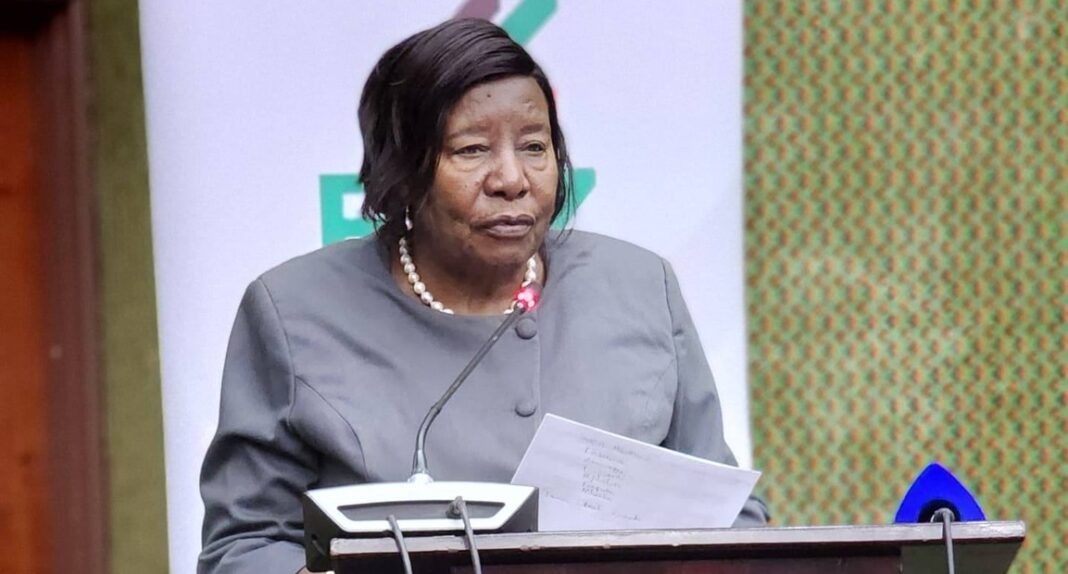
Electoral Commission of Zambia chairperson Mwangala Zaloumis has defended the ongoing delimitation exercise, assuring stakeholders that the process will be conducted fairly and in accordance with established legal frameworks. Her remarks come amid growing political attention surrounding electoral boundary adjustments, which have become a focal point of debate across Zambia’s political landscape.
Zaloumis emphasised that delimitation is a technical and consultative process designed to improve representation by reflecting demographic changes. She said the commission remains committed to transparency and inclusivity, noting that consultations with stakeholders form a central part of the exercise. The assurance follows concerns raised by various political actors who fear that boundary adjustments could influence electoral outcomes.
The delimitation exercise has generated discussion within both government and opposition circles, highlighting how electoral reforms often become politically sensitive. Supporters of the commission argue that periodic boundary reviews are necessary to maintain fairness as populations grow and shift. Critics, however, say public confidence depends on visible neutrality and consistent communication throughout the process.
Political leaders across the spectrum have expressed differing views on the exercise. Some opposition voices have called for stronger oversight mechanisms to ensure that constituency boundaries are adjusted without bias. Others have urged the commission to expand public engagement efforts, arguing that citizens need clearer explanations of how decisions are made and how changes may affect representation.
Zaloumis reiterated that the commission operates independently and that all decisions are guided by the Constitution and electoral laws. She said the process involves data analysis, consultations and adherence to legal standards, rather than political considerations. Her statement reflects an attempt to maintain institutional credibility during a period when electoral issues attract intense scrutiny.
The delimitation debate also intersects with broader discussions about governance and electoral integrity. Boundary reviews can shape campaign strategies, resource allocation and voter mobilisation, making them a critical component of election preparation. Political actors therefore closely monitor the process, often interpreting changes through the lens of competition rather than technical necessity.
Meanwhile, civil society organisations have encouraged continued dialogue between the commission and political stakeholders. They stress that open communication helps reduce misunderstandings and builds confidence in electoral institutions. Calls for transparency have been accompanied by appeals for responsible political messaging, urging leaders to avoid statements that could erode public trust.
Public reaction to the delimitation exercise has been mixed. Some citizens view the process as a positive step toward ensuring equitable representation, particularly in areas experiencing rapid population growth. Others remain cautious, citing historical debates over electoral boundaries as reasons for heightened vigilance.
Zaloumis’s remarks highlight the delicate balance electoral authorities must maintain. On one hand, they must implement technical reforms required by law. On the other, they must navigate political sensitivities and reassure stakeholders that the process remains impartial. As consultations continue, the commission faces the task of sustaining confidence while advancing reforms that will shape Zambia’s electoral framework in the years ahead.
The evolving discussion around delimitation underscores the importance of institutional communication and stakeholder engagement in maintaining trust during periods of political transition. With elections on the horizon, how the process unfolds will likely remain a central topic in national political discourse.





Assuring stakeholders. Iam a voter, thereby a major stakeholder and I’m not assured. As usual she s only assuring the ruling party.
Delimitation is actually a strategic non consultative process designed to improve chances of ruling party representation by reflecting demographic changes to favor ruling party strongholds.
In any case the constitution says review the constituencies after 10 years, it does not say review and implement. I am just feeling sorry for the naive and the gullible ones who think with delimitation their livelyhoods would improve.
We are not fooled.