
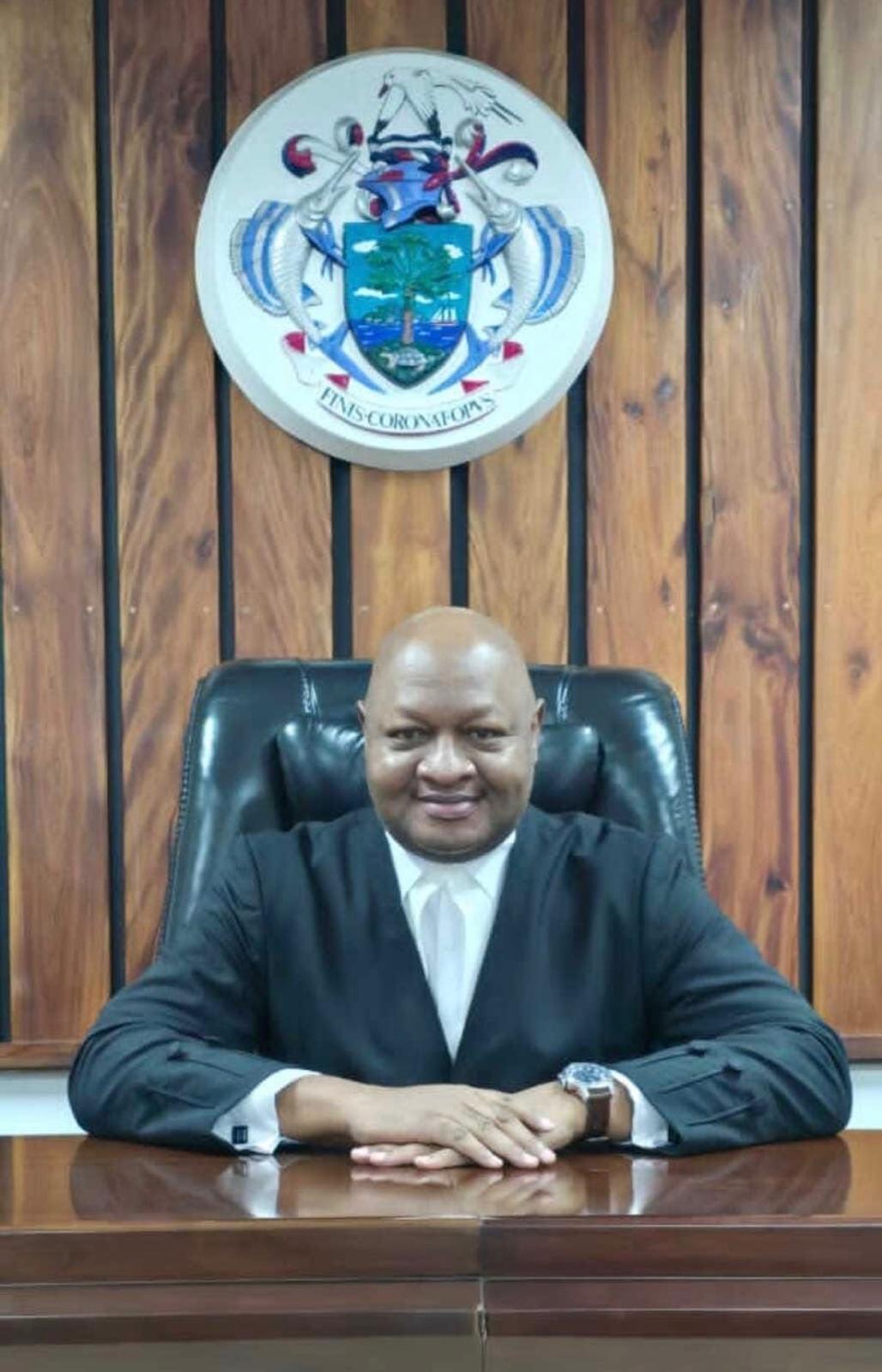
Magistrates and Judges Association Moves to Join High Stakes Constitutional Court Case on Judges’ External Appointments
LUSAKA — The Magistrate’s and Judges Association of Zambia (MAJAZ) has applied to the Constitutional Court to join a high-stakes matter that could redefine the boundaries of judicial service and external appointments for sitting judges in Zambia.
The application, scheduled for hearing on Monday, 8 June 2026, stems from an originating summons filed in November 2025 by former Court of Appeal Judge Dominic Yeta Sichinga, SC, who resigned from the bench on 31 March 2025 to take up an appointment as a Non-Resident Judge of the Seychelles Court of Appeal.
The legal battle centres on the interpretation of Article 142(6) of the Constitution of Zambia, which governs the external engagements of judicial officers.
In his originating summons, Justice Sichinga, SC, reveals a contentious backdrop to his departure from the bench. He states that he and fellow Justice Nicola Ann Sharpe-Phiri were compelled to resign from their positions as Justices of the Court of Appeal of Zambia after accepting ad-hoc positions in the apex court of Seychelles, a fellow Commonwealth jurisdiction.
Justice Sichinga, SC, argues that this compulsion represents an unequal application of the law, pointing out that other Zambian judges holding ad-hoc positions have historically retained their seats within the local judiciary. His application seeks a definitive interpretation from the Constitutional Court on:
• what strictly constitutes an “office” under Article 142(6), and whether it extends to public or private institutions either locally or abroad; and
• whether accepting a part-time, temporary, or ad-hoc assignment outside the Zambian judiciary legally mandates a judge’s immediate resignation.
A timely intervention
The joinder application comes at a particularly pointed moment. On 17 April 2026, Justice Flavia Malata-Chishimba was sworn in as a Judge of the SADC Administrative Tribunal (SADCAT) in Gaborone — without being required to resign from her Zambian judicial post. That appointment crystalized the very inconsistency at the heart of Justice Sichinga’s case: two judges accepting comparable external appointments, with two entirely different outcomes for their domestic tenure.
Why the Judges’ Association is stepping in
In an affidavit supporting the application for joinder, MAJAZ National Secretary Allan Ngobola argued that the association has a vital interest in the outcome of the case. While Justice Sichinga, SC, has already resigned, MAJAZ represents active judicial officers who face immediate exposure to the court’s eventual ruling.
According to the association, a restrictive interpretation of the Constitution could severely disrupt the professional development and international standing of the Zambian judiciary.
“Some of the members of the Intended Party are currently serving part-time appointments in various committees at international organisations such as the United Nations, while others are undertaking part-time local assignments such as lecturing in various Universities and institutions, and sitting as arbitrators,” Ngobola stated in the affidavit.
MAJAZ contends that joining the proceedings as a second applicant is necessary to protect the welfare, dignity, and traditions of judicial office, ensuring that the diverse interests of active sitting judges and magistrates are fully represented without duplicating legal actions.
The Constitutional Court will determine whether to grant MAJAZ leave to join the proceedings on Monday, 8 June 2026.




The laws can be bent this way and that anytime. Because we humans think we can monitor our behaviors by ourselves. Look at how the laws are being ignored and dumped into the trash bins in Trump’s US. Leaving society helpless.
Let’s just wait for judgment day.
If we lose seasoned judges every time they get a regional or Commonwealth posting, we are simply exporting our best legal minds permanently. Well done MAJAZ for stepping in.
The AG will of course argue resignation is mandatory. The State always argues for the strictest reading when it suits them and the loosest when it doesn’t!
@chembe that’s the point, isn’t it? Clear out the old guard, force a resignation here and there, stack the judiciary with their personal friends (most of whom have never litigated a case in a courtroom) and before you know it, the system will be selectively interpreting the law, prioritizing the ruling party interests above all else.