
The National Pension Scheme Authority (NAPSA) says its US$300 million commitment to the Lusaka-Ndola Dual Carriageway was based on commercial considerations and extensive due diligence, dismissing suggestions that it was directed by Government to finance the project.
NAPSA Director General Cephas Sinyangwe said the pension fund became involved after the concessionaire approached the institution with a financing proposal as part of a broader US$650 million funding package.
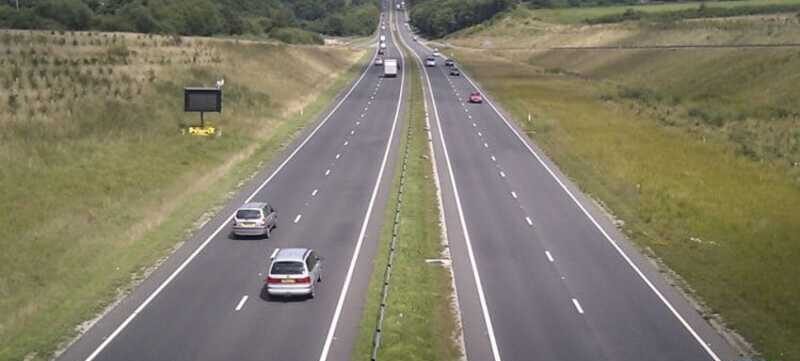
The clarification comes amid heightened public interest in the financing structure of the dual carriageway, one of Zambia’s largest infrastructure projects and a key transport corridor linking Lusaka to the Copperbelt.
According to Mr Sinyangwe, the proposal underwent detailed evaluation before approval, with particular attention given to repayment arrangements, revenue projections and security mechanisms designed to protect contributors’ funds.
“The concessionaire approached us with a proposal. We assessed the project, evaluated the risks and examined the available safeguards before making a decision,” he said.
NAPSA maintains that participation in the road project followed the same investment principles applied across its portfolio, where capital preservation and long-term returns remain central considerations.
The authority said the financing arrangement includes recovery mechanisms and security provisions intended to minimise exposure while allowing contributors to benefit from returns generated over the life of the facility.
Mr Sinyangwe said infrastructure remains an important asset class for pension funds because of its potential to generate stable long-term income while supporting economic activity.
He noted that the Lusaka-Ndola corridor carries a significant share of Zambia’s passenger and commercial traffic and has long been viewed as critical to trade, mining and industrial activity.
Supporters of the project argue that upgrading the route will improve road safety, reduce travel times and strengthen connectivity between the capital and the Copperbelt.
The Director General said NAPSA’s responsibility is not only to safeguard pension contributions but also to ensure that funds are invested in opportunities capable of delivering sustainable growth.
As a result, every major financing proposal is subjected to rigorous assessment before approval.
The authority believes the dual carriageway meets that threshold and expects the financing arrangement to deliver value over the long term while contributing to national infrastructure development.
The Lusaka-Ndola road remains one of the country’s most closely watched infrastructure projects, with public attention increasingly focused on financing arrangements, implementation timelines and expected economic benefits.
For NAPSA, however, the central message remains unchanged: the decision to participate was a commercial one, supported by due diligence, structured safeguards and an expectation of sustainable returns for pension contributors.





I think this is a good deal. NAPSA will get interest on the money they lent out. Instead of keeping the money idle, invest, get profit and enjoy. However, the biggest dividend is the product we will all happily enjoy as a country. The Ndola Lusaka Road has been a nightmare since independence. This is modernization we see in many other countries. After this let’s do a dual carriage way to Chirundu, mazabuka, Chongwe, and another between Solwezi and Chhingola.
Great,and please get rid of those awful speed bumps.I have never seen a highway riddled with very long speed bumps
The most rediculous layout this dual carriage way will record more deaths than ever before
plus speed reduded to 40 in some areas I ask you Purely for the sake of increasing lunch money
Hopefully change will come
Is he the DG?
We’ll never hear the truth about this smoke and mirrors all the time, $650Mil we were told 20+ years of tolls for the chinese never mention directly is that not a cost of a gift ? May turn out it will exceed $1.2mil
which was the origonal cost
Zambia doesnt deserve this nonsense