Saturday, June 13, 2026
12.7 C
Lusaka
Home Blog Page 104

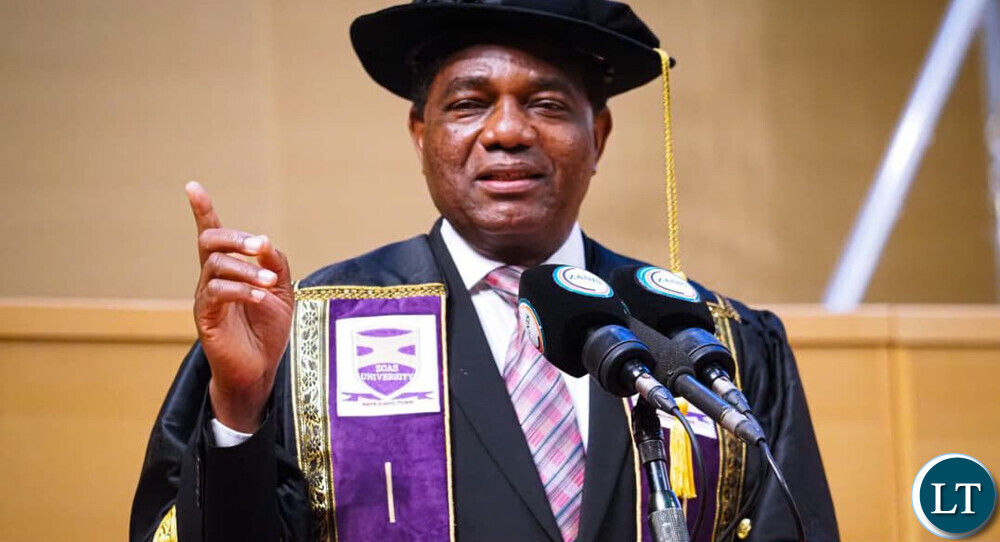
President Hichilema Awarded Honorary PhD by ZCAS University

8

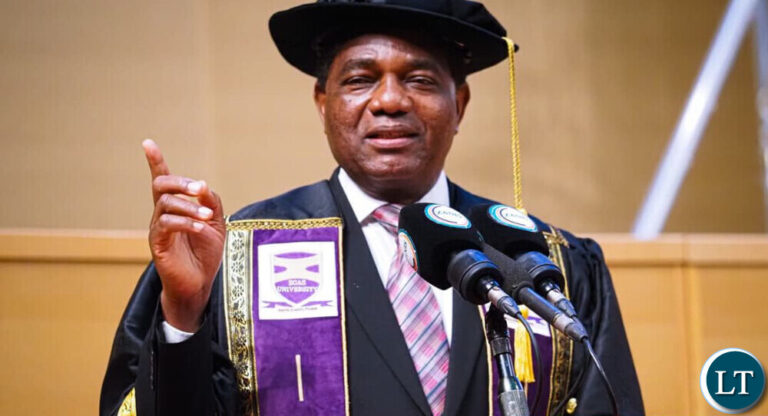
LUSAKA — President Hakainde Hichilema has been conferred with an Honorary Doctor of Philosophy (PhD) in Effective Leadership by ZCAS University.

ZCAS University Chancellor Tukiya Mabula said the conferment recognises effective leadership and celebrates stewardship grounded in accountability.

Dr. Mabula noted that President Hichilema has demonstrated strong leadership during challenging economic conditions, including periods characterised by high debt levels and inflation.

She said through deliberate policy reforms and engagement with cooperating partners, Zambia has begun to record economic recovery, with growth estimated at about five percent and inflation slowing to single digits.

Mabula further highlighted the President’s commitment to integrity in public finance management and consistency in policy direction, citing the expansion of the Constituency Development Fund (CDF) from K1.6 million to K40 million as a key example of transformative leadership.

Delivering the convocation speech, ZCAS University Vice Chancellor Edwin Bbenkele described the ceremony as a significant occasion recognising excellence and celebrating individuals who have made a meaningful impact on society.

Professor Bbenkele said the convocation bridges academia and practice by linking knowledge to delivery, and called on academic institutions to honour leaders whose contributions extend across multiple sectors.

24-Hour Economy Will Not Be Mandatory, Government Clarifies

7

LUSAKA — Government has clarified that the proposed 24-hour economy will not be compulsory for all businesses, with implementation set to be gradual and based on viability.

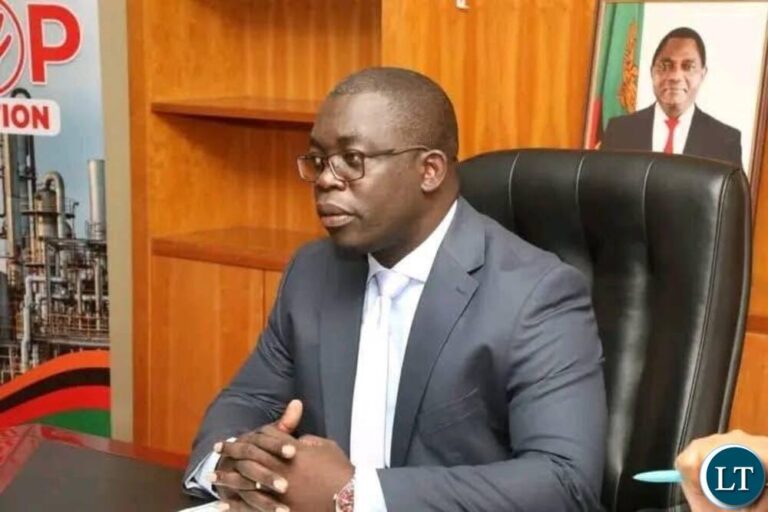
Commerce, Trade and Industry Minister Chipoka Mulenga said participation in the policy will depend on market demand and the ability of businesses to sustain extended operating hours.

Mulenga explained that the rollout will begin with sectors such as retail services, where operating beyond traditional hours is more practical.

He emphasised that businesses will not be forced to operate շուրջ the clock, noting that the initiative is designed to stimulate economic activity without placing undue pressure on enterprises.

“The approach is meant to unlock economic potential while allowing businesses to decide what works best for them in terms of profitability,” he said.

Meanwhile, University of Zambia economist John Munsantu called for a phased implementation of the policy, cautioning that not all sectors are suited for 24-hour operations. He urged government to prioritise sectors with the highest potential impact.

At the same time, Southern Africa Truck Drivers Association president Eugene Ndhlovu welcomed the initiative but called for enhanced security measures to support extended working hours.

Government says the phased approach aims to ensure sustainability while maximising economic benefits across key sectors.

Chief Mpezeni Calls for Inclusion of Traditional Leaders in Constituency Naming

0

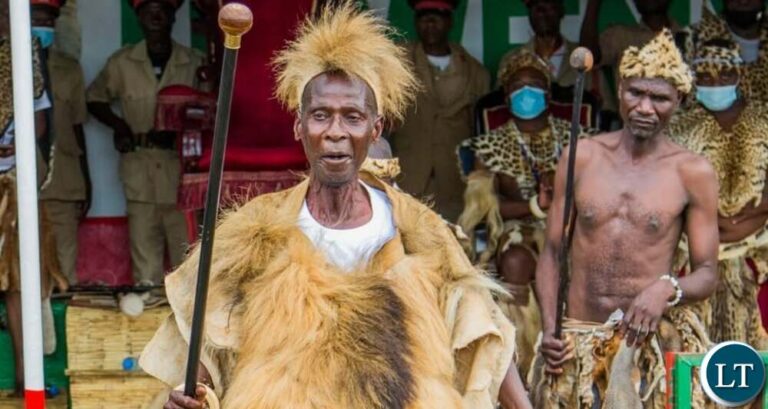
LUSAKA — Paramount Chief Mpezeni has called for greater engagement of traditional leaders in the naming of proposed constituencies in Eastern Province during the ongoing delimitation exercise.

The Ngoni Royal Establishment, he said, believes that constituency names should reflect the heritage and cultural identity of the communities they represent.

The message was delivered through Eastern Province House of Chiefs Chairperson Chief Munukwa when Mwangala Zaloumis, Chairperson of the Electoral Commission of Zambia (ECZ), paid a courtesy call on the House of Chiefs.

Chief Munukwa commended the ECZ for conducting the delimitation exercise in a transparent and inclusive manner.

Meanwhile, Zaloumis welcomed the interest shown by the Royal Establishment, noting that traditional leaders play a vital role in safeguarding the interests of their people.

She added that the commission values their input and considers their concerns a priority in the ongoing process.

Power draw disappoints coach Mutapa

1

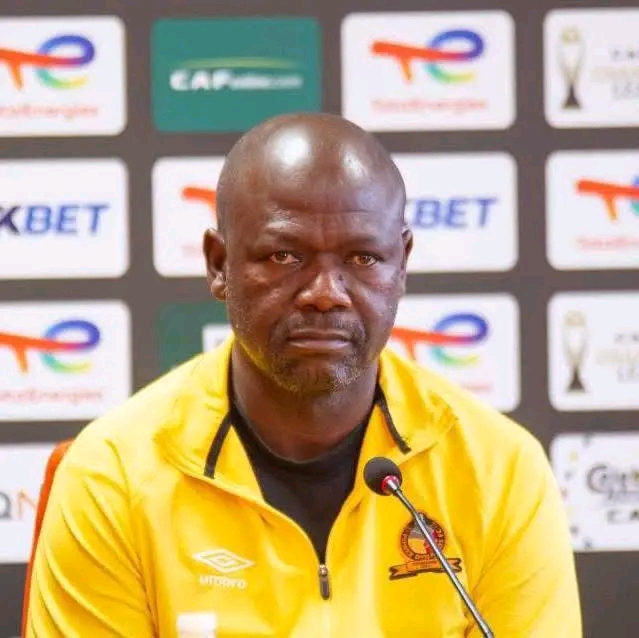
Power Dynamos coach Oswald Mutapa is disappointed with the 1-1 draw his team forced against relegation candidates FC Leopards at home in Kitwe in Friday’s Super League match.

This match was played over two-days due to the bad weather experienced in Kitwe on Thursday afternoon when officials halted it seven minutes into the first half.

Striker Emmanuel Chabula denied Power a win when equalising for Leopards three minutes into the second half stoppage time.

Regular scorer Moses Shumah had put Power in the driving seat after 35 minutes at the Arthur Davies Stadium in Ndeke, Kitwe.

“It is a disappointing result. We needed a win to open up the gap,” Mutapa said in a post-match comment.

“Much better in the first half but in the second half we didn’t come to the party, they (Leopards) were hungrier in-terms of wanting to equalise and they did just that,” he said.

Power have a four-point lead with 52 points in 24 matches played.

Leopards coach Albert Kachinga is demanding consistency as the club strives to avoid relegation in the top league.

“We still have a number of games and we will take each game as it comes, but the most important thing is not to drop all the three points, just as we have done today at Arthur Davies Stadium,” Kachinga said.

The coach is upbeat the Zambia Correction Service club would survive the Super League chop.

“When we play at home, we have to try to collect a maximum of three points. That is what can guarantee us survival. I think we are still in there and have a chance to fight,” Kachinga said.

Leopards remained second from the tail of the table with 21 points in 26 matches.

Kasune Launches School Feeding Programme in Chibombo

5

CHIBOMBO — Keembe Member of Parliament and Justice Minister Princess Kasune has launched a School Feeding Programme in Chibombo District, expected to benefit more than 230 schools.

Speaking during the launch at Mukuni Primary and Secondary School, Kasune encouraged schools to complement the initiative by establishing production units to grow vegetables and other crops to sustain feeding efforts.

She said the programme aligns with the vision of President Hakainde Hichilema to ensure learners are well nourished and able to attend classes consistently.

Kasune noted that the introduction of free education has significantly increased school enrolment in the area. Mukuni Primary School has grown from 250 learners in 2023 to 700 in 2026, while Mukuni Secondary School has seen enrolment rise from 450 learners in 2021 to 980 in 2026.

The Minister also highlighted additional development projects she has facilitated beyond Constituency Development Fund (CDF) allocations, including the construction of clinics and hospitals in partnership with Fountain of Life on Africa.

In a vote of thanks, Mukuni Secondary School Grade 12 pupil Annette Luundu expressed gratitude to the government, saying the feeding programme has improved school attendance and helped learners concentrate in class.

Meanwhile, Chibombo District Education Board Secretary Bishop Luputa revealed that K4.5 million has been released for the purchase of maize and beans to support the programme in over 230 schools during the first term of 2026.

Health Minister Demands Comprehensive Reports on State of Health Sector

LUSAKA — Health Minister Alex Katakwe has directed Provincial Health Directors across all ten provinces to submit urgent and detailed reports on the condition of the country’s health sector.

Speaking during a high-level meeting held in Lusaka, Dr. Katakwe underscored the critical role of provincial leadership in ensuring effective health service delivery, stressing that accountability for challenges within health facilities rests at that level.

He called for honest and accurate reporting, warning officials against presenting an overly positive picture of conditions on the ground. The Minister disclosed that his office continues to receive complaints from members of the public, including reports of patients being forced to buy medicines from private pharmacies.

To address these concerns, Dr. Katakwe instructed provinces to compile detailed reports covering key areas such as health infrastructure, including completed but non-operational facilities, particularly those funded under the Constituency Development Fund (CDF).

He further directed that the reports include information on the availability of medicines and medical supplies, stock levels, and expired commodities, as well as staffing levels, especially in newly established health facilities.

Additionally, provinces are required to provide updates on transport and logistics, focusing on the availability and functionality of ambulances and utility vehicles.

Dr. Katakwe reiterated that strengthening accountability and transparency is essential to improving healthcare service delivery across the country.

Chipolopolo to play Messi’s Argentina?

0

World Cup defending champions Argentina have announced that they will play Chipolopolo in a FIFA international friendly match on 31 March at La Bombonera.

‎The Argentine Football Association made the announcement on their official website.

‎”The Argentine National Team, led by Lionel Scaloni, will face Zambia in its second friendly match of the FIFA Date, next Tuesday, March 31st, starting at 8:15 PM, at La Bombonera,” the statement read.

‎”The Argentine Football Association thanks the Guatemalan Football Federation for their efforts and willingness to come to the country despite FIFA’s regulatory restrictions.”

‎The Football Association of Zambia is yet to comment on this planned friendly match.

‎This will be the first time Zambia will be playing Argentina at senior level.

‎Argentina are three time FIFA World Cup winners.

Mundubile arrest draws solidarity across PF factions

The arrest of Tonse Alliance president Brian Mundubile has triggered a wave of political reaction, with factions within the Patriotic Front (PF) showing signs of alignment in response to the development.

Reports indicate that Mundubile was intercepted by law enforcement officers at Kenneth Kaunda International Airport as he attempted to leave the country. He was subsequently taken into police custody and held for questioning, before being detained at a police facility in Lusaka.

The development has drawn immediate attention within opposition political circles, particularly within the PF, where internal divisions have previously defined the party’s direction. In the aftermath of the arrest, senior figures have expressed solidarity, signalling a shift in tone within the party.

Among those who publicly aligned with Mundubile is PF faction leader Given Lubinda, who was reported to have joined in expressing support following the detention. The response marks a notable moment in the party’s internal dynamics, where differing factions have often taken separate positions on leadership and strategy.

According to the report, Mundubile spent a night in police custody and was later released on police bond. The circumstances surrounding his arrest and subsequent release have become central to the political reaction that has followed.

Police have indicated that the detention relates to suspected offences, including allegations linked to aiding, abetting, and counselling the commission of hate speech. The statement was attributed to Police Deputy Public Relations Officer Chipo Kaitisha, who outlined the basis of the apprehension.

The case has therefore moved beyond an isolated incident into a broader political issue, with opposition figures framing it within the context of political space and state authority. The reaction from PF factions reflects how the arrest has resonated within the party and across the opposition landscape.

The coming together of PF figures around Mundubile suggests that the arrest has created a moment of convergence in a party that has experienced prolonged internal contestation. Political analysts often view such developments as potential turning points, particularly where external pressure influences internal cohesion.

At the same time, the incident has raised questions around the application of law and the conduct of investigations involving political figures. While police have outlined the basis for the detention, the political response indicates that the matter will continue to attract scrutiny.

Statements from opposition figures indicate concern over the nature of the interrogation and the circumstances under which Mundubile was detained. The reaction reflects broader sensitivities around how political actors are treated within the legal framework.

In parallel, the arrest has drawn attention to the broader political environment as the country moves toward a critical electoral period. Developments involving prominent political figures are likely to influence both party dynamics and public perception.

The alignment of PF factions in response to the arrest may carry implications beyond the immediate situation. Internal unity, even if temporary, has the potential to reshape how the party positions itself in the evolving political landscape.

At the same time, the legal process surrounding Mundubile’s case is expected to unfold within established procedures. The outcome of the matter will depend on how the allegations are handled and how the legal framework is applied.

The intersection between law enforcement action and political response remains a central feature of the situation. As events continue to develop, the balance between legal processes and political interpretation will remain under close observation.

Hichilema rejects claims he ignores advice

President Hakainde Hichilema has defended his approach to leadership, stating that while he listens to a wide range of views, his decisions will not always reflect the opinions offered to him, placing emphasis on judgment rather than consensus at a time of rising political pressure.

He told an audience that consultation remains central to governance, but leadership requires taking responsibility for final decisions, even when those choices diverge from expectations. The remarks come as scrutiny intensifies around policy direction, electoral positioning, and internal dynamics within both the ruling party and the opposition.

The statement lands within a broader political environment marked by competing narratives on governance, economic delivery, and electoral readiness. Attention has also turned to constitutional and political reforms, with the President recently linking legislative changes to electoral competitiveness ahead of the upcoming polls.

At the same time, the political temperature has been raised by developments surrounding opposition figures, particularly the detention of Tonse Alliance president Brian Mundubile, which has triggered reaction across Patriotic Front factions and reignited debates around political space and enforcement actions.

The convergence of these developments has placed leadership decisions under sharper focus, with both supporters and critics interpreting recent events through the lens of authority, accountability, and political strategy. Statements from within the ruling party have also pointed to internal pressures, including reported dissatisfaction around adoption processes in some areas, reflecting the intensity of competition as elections draw closer.

Alongside political developments, policy direction remains a central point of discussion. Government has continued to promote initiatives such as the transition toward a 24-hour economy, while financial institutions have signalled readiness to support extended operations. However, implementation questions persist, particularly around infrastructure, power supply, and security, which stakeholders have identified as critical to sustaining round-the-clock economic activity.

Economic governance has also come under scrutiny following reports highlighting both progress and vulnerabilities. While Zambia’s money laundering risk rating has been revised downward to medium, separate findings have pointed to ongoing illicit financial flows, particularly in the mining sector, where cross-border networks continue to exploit regulatory gaps.

These overlapping developments have shaped a political and economic landscape in which leadership messaging carries heightened significance. The President’s remarks on decision-making are therefore being interpreted not only as a reflection of leadership style, but also as a signal of how governance will be exercised in a period defined by competing pressures.

Within this context, the emphasis on independent judgment reinforces a leadership posture that prioritises direction over consensus, even as expectations for delivery continue to build across sectors ranging from agriculture and infrastructure to financial governance and public accountability.

The coming months are expected to test how that approach translates into outcomes, particularly as political competition intensifies and policy implementation moves from announcement to measurable impact.

Editors Note:
“Leadership now sits at the intersection of authority, delivery, and electoral consequence, where decisions are no longer judged by intent, but by their visible impact on citizens and political momentum.”

Why did Makebi even bother to visit Mundubile?

By Brian Matambo | Sandton, South Africa

Dear Readers,
The title above is rather sensational, but read to the end, because it is probably not what you think.

So, the news is splashed with the political mileage gained by Brian Mundubile after he was detained and prevented from travelling out of the country at Kenneth Kaunda International Airport. He was later taken to Ibex Police Station (the same police station where former First Lady Esther Lungu was detained in 2023). The good part is, he was released this morning, 20th March 2026, on police bond, and I am reliably informed that Patriotic Front Acting President Given Lubinda was on hand to welcome him out of police detention. But as I followed this news, I could not help but recall what happened only a few months ago.

On 9th December 2025, I was part of the team that travelled with Honourable Makebi Zulu from Lusaka to Kasama District to attend the funeral of the late Kasama Mayor. We had travelled through the night. But as Makebi Zulu and part of the team were arriving in Kasama in the early hours of the morning, around 8 a.m., the vehicle he was travelling in was involved in an accident. It flipped, was caught by trees, and landed upside down.

Makebi Zulu was trapped in the VIP seat. He had to be pulled out of the vehicle alongside Former DMMU coordinator Mr Chanda Kabwe, who was in the front passenger seat, and Honourable Richard Musukwa, who was at the back with him. They were rushed to Kasama District Hospital. My team and I were about an hour behind them.

By the time we reached the scene, the vehicle had already been lifted and returned to its normal position, but it was badly damaged. When we got to the hospital, we managed to see Makebi Zulu and the team. He was in pain. He complained about his chest, where the seatbelt had squeezed him. He also complained about pain in the back and had swelling behind his left ear. Even then, he was trying to be positive and lighthearted.

I spoke to Honourable Richard Musukwa, who, to me, is like my elder brother. He was trying to be strong, but it was clear he was not okay. He looked frail and shaken, though he did not want attention on himself. He wanted people to focus on President Makebi Zulu. Mr Chanda Kabwe was equally in pain. He, too, looked deeply affected, not just physically, but emotionally. It was a near miss. They could have perished in that accident.

Within a short time, they had received primary treatment at Kasama District Hospital. A number of Patriotic Front officials from the district and constituency came through to check on President Makebi Zulu. Before we got there, PF Acting President Given Lubinda had already visited him at the hospital. He was in town for the funeral programme of the late Mayor of Kasama, but he still made time to go and make sure Makebi was fine before returning to the programme.

Brian Mundubile was also in town. But he did not bother to see his friend. He did not go to the hospital. Makebi Zulu was later evacuated from Kasama, and Brian Mundubile simply did not care enough to show concern.

Everyone knew what had happened. Makebi Zulu had been involved in a serious car accident. Brian Mundubile was in the same town, but he ignored it. No call. No appearance. No care.

That did not stop us from doing what needed to be done. We organised a flight for Makebi Zulu, Honourable Musukwa and Chanda Kabwe to return to Lusaka. By 12:30, we were already at the airport. Once the formalities were complete, they boarded the plane and flew back to Lusaka. The rest of us had to find our way back after a programme that had been completely shattered.

But before we left Kasama, we heard that Brian Mundubile was holding meetings with party structures in the area. Those from the province, district and constituencies were meeting him. But at one of those meetings, he was said to have behaved disrespectfully toward Acting President Given Lubinda and chased him away. That incident would be forgiven but not forgotten. Mundubile was only a candidate for the PF presidency. Honourable Given Lubinda was the Acting President of the party.

Fast forward to 19th March 2026, barely three months and ten days later. Brian Mundubile was detained at Kenneth Kaunda International Airport and stopped from leaving the country. He was then taken to Ibex Police Station. Up to now, there has been no clear public explanation about where he was going or the exact reason for the detention.

What followed was striking. Photos spread all over social media. Politicians and supporters flooded the Ibex Police Station to stand with Brian Mundubile. The station was full of people around him. It became a political scene and a photo opportunity.

That is what makes the comparison impossible to ignore.

This is the same police station where former President Edgar Chagwa Lungu was blocked from entering when his wife, Esther Lungu, was detained inside on 6th September 2023. Yet in Mundubile’s case, his supporters were inside the precinct, taking photos and moving around freely. It looked like VIP treatment at the same place where even a former Head of State had once been made to stand outside.

But that is not even the most important part of this story.

Late in the night, well past 22 hours, Makebi Zulu drove to Ibex Police Station to see Brian Mundubile. He went there to show care for a colleague, a fellow lawyer, a former colleague in PF, and a man who is now his counterpart in the opposition. That is the part people must sit with.

Mundubile did not visit Makebi when Makebi was in the hospital after a serious accident in Kasama, even though he was in the same town and only minutes away. But when Mundubile found himself in police detention, Makebi still went to see him.

And what happened? Just like Edgar Lungu had once been prevented from entering the same police station, Makebi Zulu was also blocked from entering. He stood at the gate while there were many people inside, including Mundubile’s own supporters. He was not allowed in. While others were inside taking photos and smiling, Makebi remained outside until it started raining. Only then did his security pull him away and take him home.

That is the tale of two men.

The contrast does not end there. When Brian Mundubile’s wife lost her mother, Makebi Zulu was in Eastern Province. At the same time, Brenda Nyirenda, a close ally of Brian Mundubile, had people in her constituency issuing derogatory statements against Makebi Zulu. Makebi Zulu did not respond. Instead, he travelled back on the day of the burial, went straight to the cemetery, sat next to Brian Mundubile, and offered his condolences.

That is why the question matters: why did Makebi even bother to visit Mundubile?

The answer is in the pattern. When Mundubile had the chance to show concern, he did not. When Makebi had the chance to show concern, he did. When Mundubile could have visited Makebi in the hospital, he stayed away. When Mundubile had a funeral in the family, Makebi travelled back to stand with him. When Mundubile was detained at Ibex, Makebi went there to console him, even though he was denied entry.

So when some people say Makebi Zulu should not have gone because Mundubile is his political rival, I disagree. Makebi Zulu’s so-called mistake is a far better mistake than Mundubile’s.

Politics is not only revealed in speeches, rallies and television appearances. Sometimes it is revealed in these smaller moments. A hospital visit that never happened. A funeral where one man showed up. A police station gate where one man stood outside in the rain after coming to see someone who had not done the same for him.

That is where character shows.

When you are looking at politics, do not rush to condemn. It is in moments like these that a man reveals his heart.

Stop embarrassing the President imwe ba buju; why arrest Mundubile now?

There’s no doubt it……social media in this country is being ‘abused’ as a safe tool for Cyberbullying, promoting hate speech, online harassment and even spreading falsehoods and innuendos about others. Apart from instigating ill feelings and hatred amongst ethnic groupings, several individuals have had their reputations besmirched leading to the loss of self-esteem.

Hate speech must not be entertained in this country! It is hate speech that led to the genocide in Rwanda as some foolish individuals went on radio and referred to others as cockroaches who deserved to be exterminated, pronto! This is more the reason why we haven’t hesitated to report anyone engaging in this nefarious practice to the relevant authorities as patriotic citizens.

Not so long ago, we had a notorious Facebook page called Munyaule Zambia. This rogue page would go out of the way undressing people and describing their body anatomies in the most graphic and horrendous details. Through our impeccable sources within the Zambia Police service, we were able to gather that Tonse leader, Brian Mundubile was allegedly bankrolling the same, thanks to the confession they extracted from one of the admins when they arrested and detained him.

The police have been sitting on this information since last year. The question is why swing into action and arrest Mundubile and charge him for hate speech today…..a few months before the elections? If investigations indeed revealed that Mundubile was sponsoring this page, he deserved to be arrested immediately, there’s nothing so special about him.

Do you know what PF/Tonse cadres are saying at the moment?

HH is afraid of Mundubile, hence doing everything possible to frustrate him. The Tonse leader is now being celebrated as a hero due to the ineptitude of someone within the police service. Stop embarrassing the President imwe ba buju, we can do better than this!

Mulekutika?

Prince Bill M. Kaping’a
Political/Social Analyst
Zambezi

Africa’s next chapter: when growth meets responsibility in betting market

0

At industry summits, growth is often the easiest story to tell: more users, more markets,more mobile access, and more speed. SiGMA Africa 2026 was no exception. But alongside conversations about expansion, the event also focused on player protection, youth safety,and the question of whether market systems are evolving quickly enough. Nnanna Chigozie
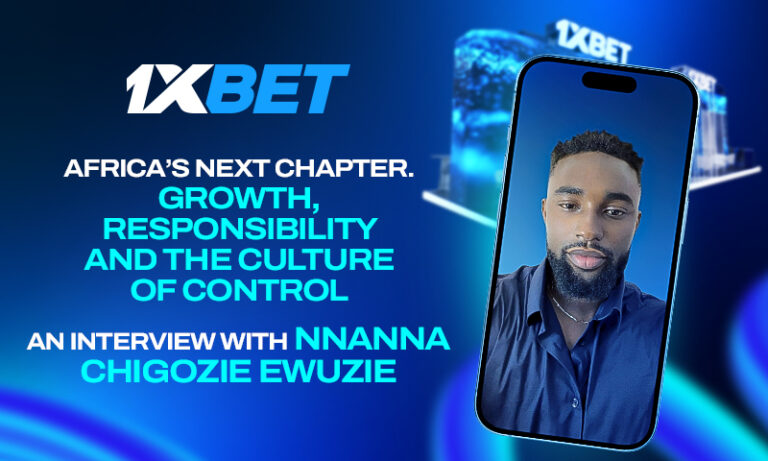
Ewuzie, Compliance Manager at 1xBet Nigeria, was among the panelists taking part in that discussion.

Budget, limits, and control

If self-awareness is the first step, the next one is understanding your numbers.That is where the 1xBalance calculator becomes useful. It is designed to help users look more clearly at their betting budget, possible limits, and the place betting takes in their overall spending. The goal is not restriction for its own sake. It is to make decision-making
more conscious and more manageable. Before habits become difficult to track, it helps to see the practical side of your choices in simple terms.

The point is not to judge how much you spend. It is to understand your limits well enough to stay in control of them.That shift matters, because Africa’s gambling industry is no longer a niche story. It is a large,uneven, fast-moving ecosystem. And as the newly released International Player Safety Index: Africa research by 1xBet makes clear, the continent is not short on momentum. What it still lacks in many places is consistency. The report describes a region in transition: some
markets are developing sophisticated frameworks, while others are only beginning to build the basics of player protection.

A market moving forward, but not at one speed

One of the most useful things about 1xBet’s Player Safety Index: Africa is that it avoids the usual extremes. Africa is not presented as either a regulatory vacuum or a finished model. It is something more complicated: a market modernising in real time, but unevenly. That unevenness appears early in the findings. 68% of respondents rated local regulatory frameworks between 5 and 8 out of 10, which suggests a generally positive direction. But at the same time, 44% said player-protection rules remain fragmented or inconsistent across African markets.As Ewuzie put it, “What the research shows is a mixed but important picture. There is progress, and that progress should be acknowledged. But it is not uniform. Some markets
are moving faster, some are still building the basics, and that means the overall environment remains uneven.”
That is the tension he kept returning to in the wider SiGMA discussion. Progress is real, but so is the gap between markets that are building systems and markets that are still patching together rules.

Why responsibility cannot live only in legislation

A market can have rules on paper and still fail to protect people in practice. That point runs through the 1xBet research as well. Operators repeatedly cite unclear regulations as the biggest barrier to implementing stronger player-protection measures. Other recurring problems include weak enforcement, uneven standards between online and retail, and limited guidance on how safer gambling policies should actually work day to day.

That is why Ewuzie’s way of talking about compliance is broader than box-ticking. At SiGMA Africa, he was part of a conversation about age verification, monitoring tools, youth exposure, and the real limits of marketing. But underneath those topics sat a more basic point: systems only work when people understand how to use them and why they exist.
“A market can have regulation and still fall short in practice,” Ewuzie said. “Rules matter, but rules alone do not create understanding. If systems are not clear, locally adapted, and actually usable, then protection remains incomplete.”
He also framed one of the industry’s main errors in simple terms:

“The biggest mistake is thinking all markets are the same. Licensing, AML requirements,data protection, responsible gaming rules — it all differs. Without locally adapted compliance, the risks are too high.”

That reading aligns closely with the research. Responsibility is not failing because nobody is talking about it. In many places, it is failing because the systems remain patchy.

Where the market is strong, and where it still lags

The research does show meaningful progress. KYC checks are used by 75% of African operators, almost identical to Western Europe. Advertising restrictions and bonus limits are also among the more common measures in African markets. In some categories, Africa is not behind at all.

But the same report also points to the next gap. More advanced player-protection infrastructure, especially AI-based player monitoring, remains far less developed. The study notes that no surveyed African operator cited AI player tracking as part of its current protection suite, even though many expect it to shape the future.

For Ewuzie, that gap matters because risk does not always arrive in dramatic form.“The next stage is not only about having rules in place. It is about visibility,” he said. “If you cannot recognise risky patterns early, then your response will always come too late.”

That is where his emphasis on behavior becomes more important than another generic warning label. Risk is not always a single event. More often, it appears as repetition, routine,and habits that become difficult to spot in time.

From “be careful” to “know yourself”
This is where the conversation turns from regulation to users. Ewuzie’s position is not that the market needs louder warnings. It is that players need better tools and earlier education.

“Standard warnings are often ignored because they feel like fine print or a legal chore. To actually change behaviour, we have to stop relying on just adverts and start focusing on early education.”

That idea points directly to 1xBalance. The 1xBet responsible betting initiative and platform is designed less as a restriction layer and more as an educational and self-check space. It offers a betting-style test, calculator, and educational material aimed at helping users understand their habits before those habits become harder to manage.

That also matches one of the report’s clearest lessons: player-protection tools work best when people understand them, trust them, and meet them in language that feels practical rather than legalistic.

Ewuzie framed that shift in direct terms:
“We don’t just say ‘be careful’ — we teach the community how to enjoy betting safely and responsibly, turning awareness into a habit.”

“If a person only learns about safety from a tiny warning on a betting slip, it is already too late. We have to give users tools for discipline, and discipline builds confidence.”

The real test for the market

This is what makes Ewuzie’s contribution at SiGMA worth paying attention to. He is speaking at the point where three conversations meet: industry growth, regulatory unevenness, and player behavior.

Africa’s betting sector will keep expanding. The real question is whether the market can build a culture where responsibility is not treated as a legal footnote, but as part of how betting is understood from the start.That is not only Ewuzie’s argument, but also part of 1xBet broader socially responsible
position. Through research, public discussion, and tools like 1xBalance, the brand is showing that player protection should be built into the culture of betting, not left at the level of formal compliance.Ewuzie’s conclusion brings that point together clearly:

“A market becomes truly mature when players are not only protected by rules, but also equipped to recognise themselves. Responsibility should not sound like an external instruction. It should become part of how people play, think, and decide.”
That may be the strongest idea in this discussion: a market becomes truly mature when players are not only protected by rules, but also equipped to recognize themselves.

Italian Government reschedules Zambia’s debt

The Italian government has rescheduled Zambia’s debt of about 94.6 Million Euros to be repaid over a period of 33 years.

Speaking during the signing ceremony, Finance and National Planning Minister Situmbeko Musokotwane described the agreement as a significant milestone in Zambia’s ongoing debt restructuring programme.

Dr Musokotwane noted that the deal was concluded under the G20 Common Framework for Debt Treatment, highlighting the importance of international cooperation in addressing Zambia’s debt challenges.

The Minister revealed that the government has resumed servicing debt on agreements that have already been finalised.

“This agreement is a clear indication that Zambia is making steady progress in resolving its debt challenges and restoring economic stability,” Dr Musokotwane said.

He said the agreement with Italy will not only reduce near-term debt service burdens but also create fiscal space for investments in infrastructure and social protection programmes.

Dr Musokotwane further urged remaining creditor countries to continue engaging with Zambia to conclude outstanding bilateral agreements and bring the debt restructuring process to completion.

And Italian Ambassador to Zambia Enrico De Agostini emphasised that Zambia’s commitment to repay its debt to Italy sends a positive signal to the international community and could improve investor confidence, which is critical for economic growth and attracting foreign direct investment.

“Perception plays a crucial role in economic development and moments like this help strengthen Zambia’s standing and create opportunities for increased investment,” he said.

The agreement restructures a loan facility originally signed in June 2018 between Zambia and Intesa Sanpaolo, the facility, which was initially set to mature in 2027, has now been extended to 2043, providing Zambia with more time to meet its obligations.

PIA Reports Net Assets Growth to K26.88 Billion

The Pensions and Insurance Authority (PIA) has reported significant growth in net assets, rising from K5.66 billion in December 2015 to K26.88 billion in December 2025.

PIA Registrar and Chief Executive Officer Namakau Ntini said the growth reflects the sector’s resilience and its contribution to Zambia’s economic development.

Mrs. Ntini explained that pension assets are being invested in a well-diversified portfolio both locally and internationally, helping to support employment creation and broader economic stability.

She added that the performance highlights the sector’s continued capacity to enhance financial inclusion across the country.

Mrs. Ntini made the remarks during the unveiling of Aflife Holdings brand identity in Lusaka.

Speaking at the same event, Finance and National Planning Minister Situmbeko Musokotwane, in a speech read on his behalf by Director of Economic Management and Finance Akapelwa Imwiko, urged the financial sector to innovate products and services that improve access for marginalized communities.

Dr. Musokotwane said the government is promoting financial inclusion through initiatives such as Savings Week, aimed at encouraging a culture of saving among citizens.

Meanwhile, Muna Hantuba, Group Chief Executive Officer of Aflife Holdings, said the company’s strategy aligns with government priorities, particularly in domestic resource mobilisation, financial sector development and private sector-led growth.

HH Reflects on Shepherd Roots, Credits Reforms for Zambia’s Progress as He Receives Honorary Doctorate

0
President Hakainde Hichilema says his early life as a shepherd shaped his leadership philosophy, which continues to guide his administration’s reform agenda and national development efforts.

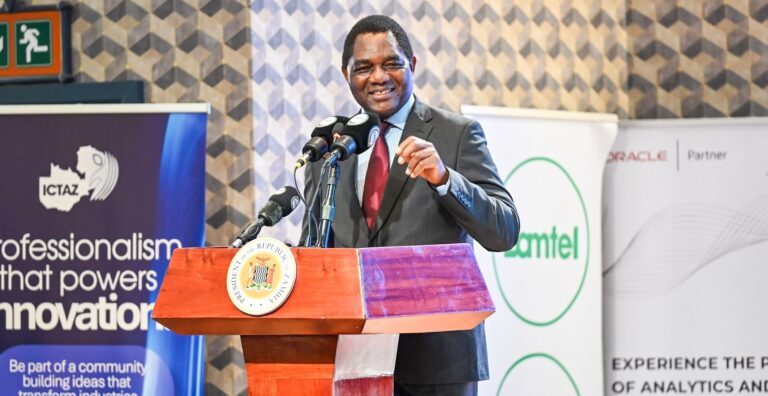
Speaking at the Mulungushi International Conference Centre, where he was conferred with a Doctor of Philosophy in Effective Leadership by ZCAS University, President Hichilema said his upbringing instilled values of responsibility, direction and service.

“As a shepherd boy, I understood where to lead cattle for pasture. That is the essence of leadership, knowing the path and guiding others towards it,” he said.

The President noted that the “New Dawn” administration’s reforms in key sectors such as mining, agriculture and energy have begun to yield results, citing reduced load shedding and a bumper harvest despite what he described as one of the worst droughts in recent history.

“Without these reforms, we would not have ended load shedding or produced the bumper harvest we are witnessing today,” he said.

President Hichilema described the honorary doctorate as a humbling recognition, which he accepted on behalf of Zambia’s estimated 21 million citizens.

“I do not take this honour lightly. I take it seriously to ensure that the dignity attached to it is upheld,” he said.

He paid tribute to his family, acknowledging the support of his wife and their three children, and expressed gratitude to citizens and stakeholders for contributing to his journey.

The Head of State said government reforms have enabled key social interventions, including the introduction of free education, removal of examination fees, reintroduction of meal allowances and increased Constituency Development Fund (CDF) allocations.

He stressed that leadership should be defined by service, responsibility, dialogue and non-violence, rather than titles.

“Leadership is about improving the lives of people, especially the vulnerable. It is about making decisions such as restructuring debt so that we can provide social services,” he said.

President Hichilema added that effective leadership requires integrity, accountability and restraint in the use of power.

“You don’t do things because you are being watched, but because you believe it is the right thing to do,” he said.

He further highlighted the need for courage in decision-making, warning that failure to act can negatively impact citizens. He said improving service delivery requires urgency and a focus on results, noting that this informed the establishment of the Presidential Delivery Unit.

“Don’t focus on working hours, focus on deliverables. Every hour is a working hour in public service,” he said.

The President also pointed to progress in the mining sector, including the revival of operations at Kitumba Mine, Konkola Copper Mines and Kalengwa Mine, some of which had been dormant for decades.

“Mining is not done in courts. We had to remove litigation and make clear policy choices to unlock production,” he said, adding that government’s target of producing three million tonnes of copper is deliberate.

He underscored the importance of education as both a social and economic driver, revealing that government has initiated steps to enact legislation that will make free education a legal right.

Drawing lessons from countries such as Singapore, President Hichilema said consistent policy implementation can transform economies. He also called for teamwork in governance and commended his Cabinet for supporting the administration’s agenda.