Sunday, June 7, 2026
16 C
Lusaka
Home Blog Page 119

Government Moves to Evacuate Zambian Family in Iraq, Traces Citizen in Iran

4

The Zambian government has initiated plans to evacuate a family of five living in the Kurdistan Region of Iraq as authorities work to secure their safety amid escalating tensions in the Middle East.

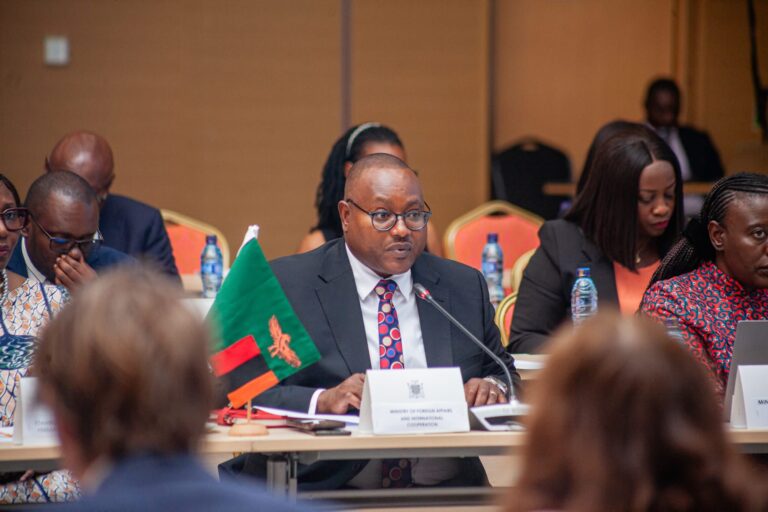
Delivering a ministerial statement in Parliament, Foreign Affairs and International Cooperation Minister Mulambo Haimbe said government was handling an urgent case involving the family as the security situation in the region continues to deteriorate.

Haimbe said emergency arrangements had already been activated through Zambia’s diplomatic mission in Cairo to facilitate the family’s evacuation from the semi-autonomous Kurdistan Region.

“Through coordinated engagement between our Missions in Cairo and Ankara, preparations are underway to facilitate safe transit through the nearest viable corridor, subject to prevailing security assessments,” Haimbe told Parliament.

The minister also disclosed that government is working to establish the whereabouts and safety of another Zambian believed to be living in Iran, where tensions remain high.

According to Haimbe, Zambia’s diplomatic missions in Cairo and Ankara are coordinating efforts to trace the individual and prepare a possible evacuation route should the security situation worsen.

Meanwhile, the minister assured the nation that no Zambian has been reported injured or killed in the ongoing hostilities across the Middle East based on updates from Zambian missions in several countries.

He further stated that the government of the United Arab Emirates has provided temporary accommodation and assistance to travellers, including Zambians, who have been stranded due to flight disruptions caused by the conflict.

Government has since advised Zambians living in the region to remain vigilant, avoid areas near military installations and maintain regular contact with the nearest Zambian diplomatic mission as authorities continue monitoring the situation.

Speaker Urges Political Parties to Adopt 30% Women Candidates

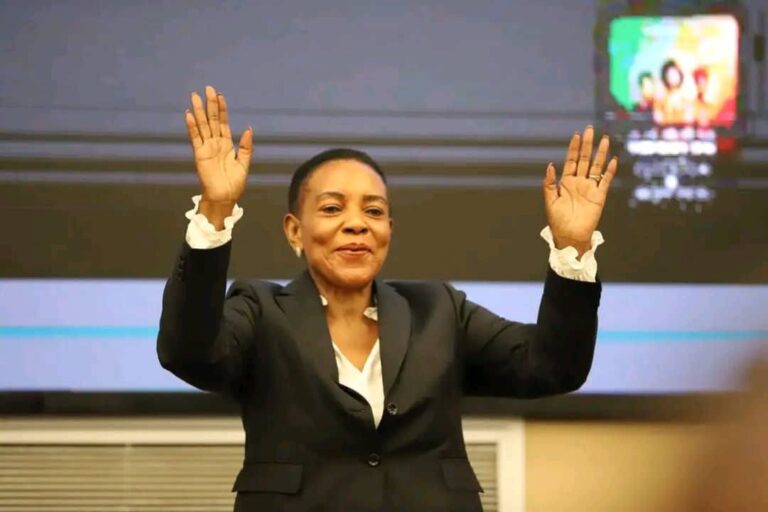
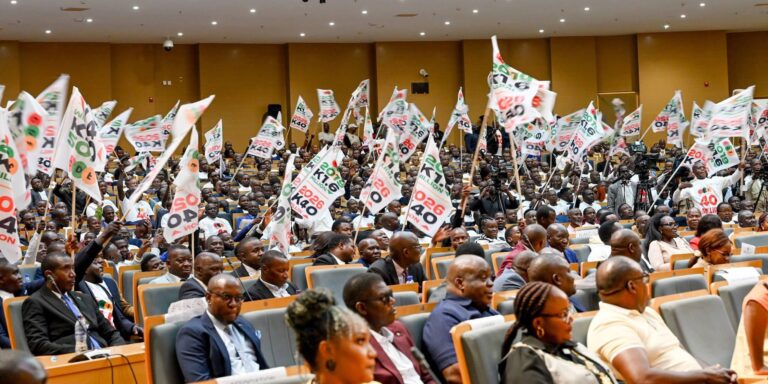
Nelly Mutti has called on political parties to adopt at least 30 percent women candidates ahead of the 2026 General Election, warning that Zambia’s democracy will not thrive without the full inclusion of women.

Speaking during the opening of the two-day Women’s Participation in Politics Conference at the Mulungushi International Conference Centre, the Speaker said the continued exclusion of women during candidate adoption had become a concerning trend since the advent of multiparty democracy.

“Please, as the representatives of political parties, endeavor to at least adopt 30 percent of the women in your political parties as candidates,” Mutti said.

She stressed that meaningful participation of women in politics is essential for strengthening democratic governance and ensuring balanced national development.

Gender Division Permanent Secretary Mainga Kabika echoed the call and commended women who attended the conference for sponsoring themselves to participate.

“In proving that they are committed, they sponsored themselves to come here. Government didn’t sponsor them, civil society didn’t sponsor them, but they said it’s our time to rise and we will do it,” Kabika said.

Kabika noted that Zambia’s democracy would only reach its full potential when women participate fully, effectively and equally in shaping the country’s political, economic and social agenda.

“Zambia’s democracy can only attain its full potential when women participate fully, effectively and equally in shaping the political, economic and social destiny of our country,” she said.

Meanwhile, Beauty Katebe, chairperson of the NGO Coordinating Council, challenged claims that there are not enough women ready to contest elective positions, pointing to the strong turnout at the conference.

“When I walked in this room I was actually amazed with the number of women that I’m seeing, and there is on the ground the notion that there are no women to be adopted,” Katebe said.

She also urged the media to play a more active role in changing perceptions around women’s participation in politics.

“Ba media, you should report that women are there and they want to stand,” she said.

The conference comes amid renewed calls for increased female representation in elective positions as political parties prepare for the August 13, 2026 general elections.

NWEC Plans LuSE Listing to Raise Capital for Expansion

0

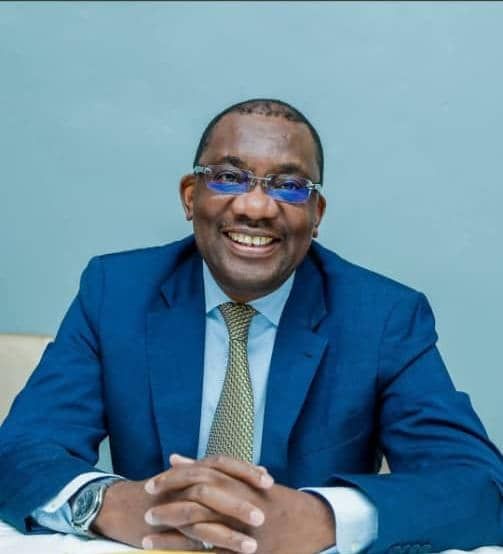
North Western Energy Corporation (NWEC) has announced plans to list on the Lusaka Securities Exchange (LuSE) as it seeks to raise fresh capital to support its diversification programme and allow Zambians and other investors to acquire shares in the company.

NWEC Managing Director Andrew Kamanga said the planned listing would help the company strengthen its financial base while opening ownership to the public.

Kamanga said recent government efforts to stabilise macroeconomic fundamentals and implement energy sector reforms have placed Zambia in a better position to avoid power shortages similar to those experienced last year.

NWEC, the country’s largest independent power distributor, has operated for 17 years in key districts of North-Western Province, including Solwezi, Kalumbila and Lumwana.

The company is planning to develop solar photovoltaic (PV) power plants in Solwezi and coal-fired thermal plants in Southern Province as part of its expansion strategy.

Kamanga said, in addition to supporting ongoing expansions in North-Western Province, NWEC intends to raise capital to supply electricity to planned housing developments of about 5,000 units each in Lusaka and Eastern Province.

“We are at a point where we believe bringing in new investors and new capital is going to strengthen the company and this listing gives an opportunity to the rest of the Zambians to participate in being a shareholder in North Western Energy Corporation,” Kamanga said in an interview from the Africa’s Energy Conference in South Africa, where NWEC is among the sponsors.

“We’re now moving from being a private company to partially being a public listed company and we think our presence here will help to create rapport with possible investors targeting the Zambian market because we have quite a number of equity investors at the conference who are on the lookout for opportunities and so this gives us that head start as we plan our listing,” he added.

Kamanga said the company’s diversification plans would require a significant injection of new capital. He added that NWEC is in advanced discussions with various developers for partnerships as Engineering, Procurement and Construction (EPC) contractors.

He said the improving economic environment, combined with ongoing energy reforms such as the gradual move toward cost-reflective electricity tariffs, is expected to encourage investment in new power generation projects and help avoid a repeat of the 2025 power crisis that saw rolling blackouts lasting up to 20 hours.

Kamanga also expressed support for government plans to increase copper production to three million metric tonnes by 2033 and raise national power generation capacity to about 10,000 megawatts (MW) from the current 3,909 MW over the same period.

“GDP is up this year, inflation is in single digits now and with the exchange rate equally performing well; these parameters are a good base to prepare for the future and of course we still think the government targets in terms of copper production and the 10,000 megawatts is achievable,” he said.

Kamanga further revealed that NWEC has applied for membership in the Southern African Power Pool (SAPP) as it seeks to join other private power traders in the region.

He added that the company is also holding discussions with regional power developers to construct additional transmission lines across Southern Africa to strengthen existing ageing transmission infrastructure.

12 Injured After Vehicle Carrying Bodies of Mother and Children Overturns

1
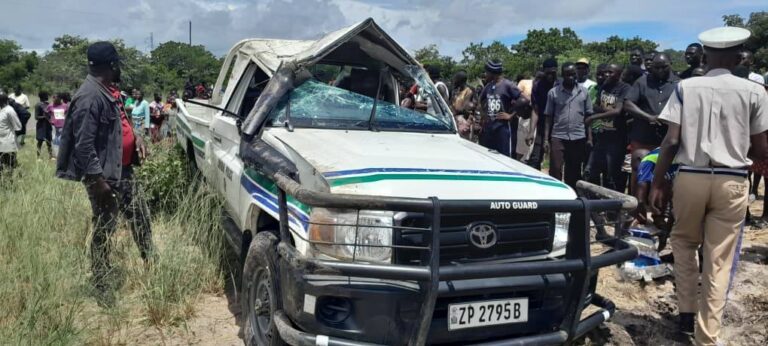
Twelve mourners were injured yesterday afternoon after a vehicle transporting the bodies of a mother and her two children overturned along the Mongu–Senanga Road.

The accident occurred around 13:30 hours in the Nambwata area as the group was travelling to Nalolo District for burial.

Police said a Toyota Land Cruiser, registration number ZP 2795 B, belonging to the police service and funded through the Constituency Development Fund (CDF), was carrying 12 passengers and three coffins containing the bodies of a woman and her two children who had drowned on February 28, 2026.

The vehicle was being driven by Sergeant Waluka Muyambango, 32, of Muoyo area in Nalolo District.

Western Division Police Commissioner Rae Hamoonga said the vehicle was travelling from Mongu towards the south when the driver allegedly lost control while attempting to avoid a cow that was crossing the road.

“The vehicle careered off the road and overturned,” Hamoonga said.

All the injured occupants were rushed to Lewanika General Hospital where they are receiving treatment.

Police said the vehicle was extensively damaged in the accident and investigations into the incident have since been instituted.

“The Zambia Police Service wishes the injured persons a quick recovery and urges motorists to exercise caution,” Hamoonga stated.

The Nonapeptide Oxytocin – Beyond Reproduction into Research Innovation

The Nonapeptide Oxytocin – Beyond Reproduction into Research Innovation
The nonapeptide Oxytocin is a cyclic nine-amino‐acid peptide that has long been studied for its possible roles in reproduction and neuroendocrine signaling. What has become increasingly appreciated in recent decades is its multifaceted nature: the peptide is believed to serve as a signaling molecule of broad scope across neural, metabolic, immune, and social domains.

In this article, we review the structural and functional characteristics of Oxytocin and explore the diverse research domains in which the peptide may hold promise, strictly with reference to cell – and system-level research models.

Structural and Receptor Basis
Oxytocin is a nonapeptide composed of the amino-acid sequence Cys–Tyr–Ile–Gln–Asn–Cys–Pro–Leu–Gly (amide). It features a disulfide bridge between the two cysteine residues, which forms a cyclic ring of six residues plus a three-residue tail. The peptide is derived from a larger precursor (prepro-oxytocin + neurophysin) that is processed via enzymatic cleavage and carrier proteins.

Its cognate receptor, the oxytocin receptor (OXTR), is a G-protein-coupled receptor (GPCR) of class I, which couples to heterotrimeric G proteins and triggers intracellular cascades including calcium signaling, MAP-kinase activation, and receptor internalization.

The receptor system is noted for being regulated by steroid hormones (gonadal and adrenal) and for exhibiting tissue-specific expression patterns that are dynamically modulated. More recently, the crystal structure of the oxytocin receptor has been resolved, offering a molecular blueprint of ligand-binding and receptor conformational changes.

Thus, from a structural viewpoint, the peptide-receptor system is well characterized and is thought to offer a robust platform for research probes (analogs, selective receptor ligands, structural biology) and for exploring downstream signaling networks.

Functional Versatility: Theoretical and Empirical Dimensions

  1. Social and affiliation signaling
    One prominent research direction investigates Oxytocin as a putative modulator of social cognition, social bonding, attachment, and affiliative behavior. Researchers have hypothesized that the peptide may act as a “social neuromodulator” in the central nervous system. Mechanistically, oxytocin neurons in the hypothalamus are known to project to limbic and forebrain sites (e.g., amygdala, hippocampus) and may support circuits underlying social perception and memory. However, critical reviews caution that while the literature is large, the data for a general prosocial ‘oxytocin impact’ is weaker than often assumed; the modulation likely depends on context, receptor expression, and individual differences.

From a research usage standpoint, experiments investigating how oxytocin receptor signaling might modulate neural synchronization, social decision-making, facial-emotion recognition, or group dynamics are of particular interest. For example, a network modeling of brain synchrony indicated that Oxytocin might increase variability in coupling strength in default-mode versus frontoparietal networks, suggesting a role in network flexibility.

  1. Metabolic and energetic research
    Another strand of investigation posits that Oxytocin may support metabolic homeostasis, food intake regulation, lipid metabolism, and energy balance. For instance, one article describes how long-acting and selective Oxytocin peptide analogs may have improved glycaemic control and lipid profiles in research models of diet-induced obesity. A review by the peptide manufacturer suggests that Oxytocin appears to potentially support caloric intake, satiety, and hunger hormone-related reward circuits linked to carbohydrate craving.These observations suggest that beyond classic neuroendocrine roles, Oxytocin signaling may cross-link with metabolic pathways, potentially via central regulation of hypothalamic centers or peripheral tissue receptor expression.
  2. Immune, inflammatory, and organ-system implications

A more emerging domain concerns the potential anti-inflammatory and immunomodulatory attributes of Oxytocin signaling. A recent review reports that Oxytocin and related peptides appear to possess broader and more potent anti-inflammatory properties than the paralogous vasopressin peptides, with potential implications in limiting organ damage during systemic inflammation or sepsis in experimental models. Although still at the pre-experimental/ mechanistic level, this suggests that Oxytocin may prove to be a relevant tool in research exploring how neuropeptides mediate cross-talk between the nervous system, immune system, and peripheral organ systems.

Neuroendocrine and stress-system interaction
The Oxytocin system is also speculated to be implicated in the modulation of the cellular response to stress-related signaling pathways. Reviews indicate that Oxytocin may support the hypothalamic–pituitary–adrenal (HPA) axis, playing a modulatory role in cortisol response, autonomic regulation (e.g., vagal tone), and emotional reactivity.

Possible Research Implications and Novel Investigative Domains

  1. Receptor-selective analog development and pharmacodynamic

The development of long-acting or receptor-selective analogs of Oxytocin seems to offer research value. For instance, a glycine-substituted analog of Oxytocin (OXT^Gly) was reported to have improved selectivity for OXTR over vasopressin receptors, reducing off-target activation and permitting delineated metabolic outcomes in research models. Relevant implications of such analogs is hypothesized to allow experimental parsing of OXTR-mediated pathways, evaluate receptor subtype specificity, binding kinetics, downstream gene-expression footprints, and tissue distribution of receptor signaling.

  1. Network neuroscience of oxytocin modulation
    The potential of Oxytocin to support large-scale brain network dynamics suggests a domain of investigation in network neuroscience. For example, how does OXTR activation modulate functional connectivity patterns, synchronization of neural ensembles, or neuroplasticity in social-behavioral circuits? The model-based study using brain-network modeling of Oxytocin’s relevance in laboratory settings is an example. Such work opens opportunities to integrate neuroimaging, network modeling, receptor genetics, and neuromodulator dynamics.
  2. Metabolic–neuropeptide cross-systems research
    Given speculation that the Oxytocin system may support metabolic phenotypes (weight, glucose, and lipid regulation) in research models, further investigation might explore how neuropeptide signaling integrates with hypothalamic metabolic centers, peripheral metabolic tissues, and reward systems.

The question: how does OXTR activation or modulation translate into transcriptional, proteomic, and metabolomic shifts in tissues? Also, research might compare endogenous peptides versus analogs, receptor selectivity, and dose-response in research models of metabolic stress.

  1. Inflammation and organ-system cross-talk
    The suggestion that Oxytocin signaling may regulate inflammatory responses and organ damage (for example, in sepsis-associated models) opens a rich domain: exploring how a “neuropeptide” typically associated with neural and reproductive functions may act in immune-organ system cross-dialogue.

Research may examine OXTR expression in immune cells, modulation of cytokine cascades by the peptide, links between autonomic regulation (vagal tone) and inflammatory state, and how analogs or receptor modulators may support organ-specific injury or repair.

Conclusion

In sum, the nonapeptide Oxytocin presents as a structurally well-defined peptide with a receptor system that is widely distributed, dynamically regulated, and functionally versatile. While its classical roles in reproduction remain foundational, research indicates that it may support metabolic regulation, immune-organ system cross-talk, neural network dynamics in social cognition, and cell-level stress and adaptation responses.

For scientific investigation, the peptide (and its analogs) is speculated to serve as powerful probes into how neuromodulatory peptides integrate across systems, how receptor modulation yields specific phenotypes, and how multi-system regulation emerges from molecular signaling. Visit https://www.corepeptides.com/peptides/oxytocin-10mg/ for the best research compounds.

References
[i] Waltenspühl, Y., Schöppe, J., Ehrenmann, J., Kummer, L., & Plückthun, A. (2020). Crystal structure of the human oxytocin receptor.Science Advances, 6(29), eabb5419. https://doi.org/10.1126/sciadv.abb5419

[ii] Lee, H. J., Macbeth, A. H., Pagani, J. H., & Young, W. S. III. (2009). Oxytocin: The great facilitator of life.Progress in Neurobiology, 88(2), 127–151. https://doi.org/10.1016/j.pneurobio.2009.04.001

[iii] Lawson, E. A., Miller, K. K., Blum, J. I., Meenaghan, E., Misra, M., & Klibanski, A. (2014). Oxytocin secretion is related to measures of energy homeostasis in young amenorrheic athletes. The Journal of Clinical Endocrinology & Metabolism, 99(5), E881–E889. https://doi.org/10.1210/jc.2013-3903

[iv] Li, X., Wang, Z., & Jiang, C. (2020). Oxytocin reduces adipose tissue inflammation in obese mice. Lipids in Health and Disease, 19, 188. https://doi.org/10.1186/s12944-020-01364-x

[v] Quintana, D. S., & Guastella, A. J. (2020). An allostatic theory of oxytocin. Trends in Cognitive Sciences, 24(7), 515–528. https://doi.org/10.1016/j.tics.2020.03.008

“I Will Not Be Intimidated”: M’membe Responds After Detention

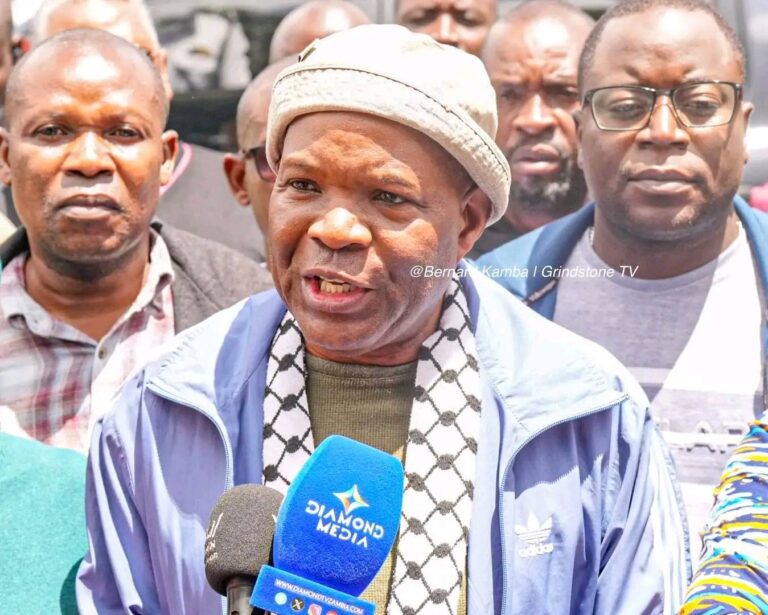
Socialist Party president Fred M’membe says pressure from state institutions will not silence him following his recent arrest.

Speaking after his release from police custody, M’membe said he would continue addressing national issues despite the legal action taken against him. He delivered the remarks in response to his detention over comments he made regarding the burial of former president Edgar Lungu.

HH won’t break me,” M’membe said, referring to President Hakainde Hichilema.

The opposition leader was detained after making statements about the prolonged burial arrangements of the late former head of state, a matter that has generated intense public discussion across the country.

His arrest immediately drew attention from political figures and the public, placing M’membe once again at the centre of Zambia’s highly charged political conversation.

Following his release, the Socialist Party leader insisted that the experience would not discourage him from speaking on matters he considers important to the country’s political direction.

M’membe has been among the most outspoken critics of the current administration. In recent years he has frequently commented on governance issues, economic policy and political developments. His remarks concerning Edgar Lungu’s burial brought renewed scrutiny from authorities and resulted in his detention and questioning by police.

After regaining his freedom, M’membe framed the episode as part of a wider contest involving political authority and freedom of expression. He maintained that his role as a political leader requires him to continue raising national issues even when those views attract strong reactions.

The burial of Edgar Lungu has remained a sensitive topic in the country’s political environment. The passage of time since the former president’s death has prompted debate among political actors and members of the public about the circumstances surrounding the delay.

M’membe’s comments therefore placed him directly within an already delicate national discussion. Supporters of the Socialist Party leader interpret the arrest as pressure on opposition figures who speak critically about government actions.

Government authorities have repeatedly stated that law enforcement institutions operate within legal frameworks when responding to statements believed to breach the law.

The contrasting interpretations illustrate the sharp political competition shaping Zambia’s current political atmosphere.

M’membe has remained a central figure within that environment. Before entering party politics, he spent decades as a newspaper editor and publisher, becoming one of the country’s most recognisable commentators on national affairs.

His transition into politics came with the formation of the Socialist Party, which positions itself as an alternative voice within Zambia’s multiparty political system.

Since establishing the party, M’membe has continued to engage actively in public debate, addressing issues related to governance, constitutional order and political accountability.

His comments following the arrest suggest the latest confrontation will not reduce his involvement in national political discussions.

Instead, the statement appears to reinforce his determination to remain vocal on matters affecting the country. The episode also highlights the increasingly intense nature of Zambia’s political discourse as parties strengthen their positions ahead of the next election period.

Public exchanges between opposition leaders and government representatives have become more frequent, often drawing widespread national attention.

In that environment, statements made by prominent political figures quickly become part of the broader political narrative.

M’membe’s declaration following his release therefore adds another moment to Zambia’s evolving political conversation.

For the Socialist Party leader, the message was direct: pressure will not silence him.

Middle East war affects Copper Queens preps

1

The heightened Middle East war involving Israel and Iran has negatively affected the anticipated early arrival of foreign based players as the Copper Queens begin preliminary preparations for the upcoming Women Africa Cup of Nations (WAFCON).

The WAFCON bound Copper Queens have entered camp in Lusaka with Coach Nora Häuptle naming 29 players.

‎Fit again Captain Barbra Banda is in the squad after an injury layoff while Malta based Misozi Zulu bounces back to the Copper Queens set-up after missing out at the last WAFCON.

‎‎”Copper Queens Coach Nora Häuptle is hopeful that the foreign based players that are unable to make it on time for camp due to travel complications will be available for the final stage of preparations for the Morocco 2026 Women Africa Cup of Nations (WAFCON),” FAZ said in a statement.

‎ Zambia is preparing for the WAFCON and the FIFA Series Tournament in Brazil, which takes place from April 11-18.

‎”Among those doubtful are Evarine Katongo (Ra’anan WFC-Israel), Ireene Lungu (Sichuan Jiangsu-China), Xiomara Mapepa (Altaraji Club-China), Hellen Chanda (Eastern Flames-Saudi Arabia), Ruth Mukoma (Shanghai WFC-China) and Rachael Kundananji (Bay FC) whose travel is tied to precautionary security measures.”

The 2026 WAFCON will serve as a qualifier for the Brazil 2027 FIFA Women World Cup with top four teams grabbing their tickets to the biggest women football showpiece.

‎At the WAFCON, Zambia is in Group C alongside defending champions Nigeria, Malawi and Egypt.

The WAFCON is scheduled to take place in Morocco from March 17-April 3.

This continental competition will serve as a qualifier for the Brazil 2027 FIFA Women World Cup with top four teams grabbing their tickets to the biggest women football showpiece.

‎PROVISIONAL SQUAD

‎(GOALKEEPERS)

‎Mufunte Chishala (Green Buffaloes), Catherine Musonda (Red Arrows), Hazel Nali (Zesco Ndola Girls)

‎(DEFENDERS)

‎Magaret Belemu (Red Arrows), Margaret Gondwe, Agness Musesa, Rachael Nachula, Memory Nthala, Esther Siamfuko (all Green Buffaloes), Maluba Blessings (Nchanga Queens), Saliya Mwanza (Elite Ladies), Judith Soko (Zesco Ndola Girls), Martha Tembo, Lushomo Mweemba (Hakkarigücü-Turkey)

‎(MIDFIELDERS)

‎Susan Banda (Cekmekoy BilgiDoga Spor-Turkey), Rhodah Chileshe (Indeni Roses), Avell Chitundu (Zesco Ndola Girls), Sampa Chisanga, Natasha Witika (Konkola Blades), Grace Chanda (Club Querétaro-Mexico), Misozi Zulu (Hibernians-Malta)

‎(STRIKERS)

‎Barbra Banda (Orlando Pride-USA), Regina Chanda (Zanaco Ladies), Maweta Chilenga, Agness Phiri (both Green Buffaloes), Mercy Chipasula (Kamfinsa Police), Kabanghe Mupopo (Henan WFC-China), Eneless Phiri (Zesco Ndola Girls), Prisca Chilufya (Angel City FC-USA)

Government Flags Possible Fuel Price Rise as Global Oil Shifts

Government has issued an early warning that Zambia may soon face renewed pressure on fuel prices as developments in global oil markets begin to influence domestic supply costs.

Officials say the country remains exposed to international price movements because Zambia imports refined petroleum products whose cost is determined largely by global market conditions and exchange rate movements.

The warning comes at a time when global oil prices have shown signs of volatility following shifts in international supply dynamics and geopolitical tensions affecting energy markets.

Authorities indicated that when global oil prices rise, import costs increase and eventually filter through to domestic pump prices.

Fuel occupies a central position in Zambia’s economic structure. Transport companies depend on diesel and petrol to move goods across the country, while agriculture, mining and manufacturing sectors rely heavily on energy costs when planning production and distribution.

A rise in fuel prices therefore carries consequences that extend well beyond the filling station.

Transport operators are usually among the first to react when pump prices move upward. Bus operators, freight companies and taxi drivers often adjust fares in response to rising operating costs.

Those adjustments eventually ripple through the wider economy.

Higher transport costs can push up the price of food and consumer goods as retailers factor in increased delivery expenses. Agricultural inputs transported from farms to markets also become more expensive.

Government officials say the country has limited capacity to shield itself from international price movements because the fuel supply chain begins with global oil markets.

Crude oil is traded internationally and refined petroleum products are priced within a competitive global system. Countries that import fuel must therefore respond to market changes rather than control them.

Exchange rate movements add another layer of influence.

When the kwacha weakens against major international currencies, the cost of importing fuel rises even if global oil prices remain stable. A stronger kwacha, on the other hand, can ease pressure on pump prices.

The interaction between global oil prices and currency movements often determines how domestic fuel prices evolve.

Businesses across Zambia monitor fuel price developments closely because transport and logistics remain major operational expenses.

Manufacturers moving raw materials between provinces rely on stable transport costs when calculating production budgets. Retail chains distributing goods across the country also depend on predictable fuel prices.

For ordinary households, the impact of fuel costs often becomes visible through transport fares and food prices.

Commuters travelling to work and school experience the effects through higher bus or taxi fares, while families purchasing food and essential goods may encounter gradual price increases linked to rising distribution costs.

Government has signalled that monitoring international oil markets remains a priority as authorities evaluate potential consequences for Zambia’s economy.

Officials say early communication about possible fuel price movements helps businesses and consumers prepare for adjustments that may follow.

The country has previously experienced similar cycles in which global oil prices drove local pump price changes.

Energy markets remain sensitive to geopolitical developments, production decisions by major oil producers, and fluctuations in global demand.

These forces operate beyond national borders but carry direct consequences for countries dependent on imported fuel.

For Zambia, maintaining economic stability often requires careful navigation of these international price movements.

The warning issued by authorities therefore reflects a broader effort to alert the public and economic sectors to developments unfolding in global energy markets.

Fuel prices remain one of the most closely watched indicators in the country’s economic environment.

Any movement at the pump can quickly influence transport, commerce and household budgets across the nation.

The Politics of Endorsement: Councillors, Money and a Rising Political Storm

Public declarations of support for President Hakainde Hichilema by several councillors have quickly become one of the most talked-about developments in the country’s political arena.

The statements followed meetings between councillors and the President in which local leaders expressed confidence in his leadership and development agenda. Photographs and reports of the meetings circulated widely, drawing immediate reaction from opposition figures and political activists.

Government allies describe the endorsements as a reflection of confidence at grassroots level. They point to development programmes implemented through local authorities, including community infrastructure projects and decentralised funding, as evidence that local leaders are responding to progress visible in their wards.

Opposition figures interpret the events differently.

Leaders from rival parties say the meetings and endorsements raise questions about how local officials interact with national political leadership. Some suggest councillors may have felt pressure to align publicly with the President after the meetings.

The Patriotic Front has also questioned the circumstances surrounding the declarations. Party representatives claim councillors may have attended the meetings because of allowances and financial considerations linked to the engagements.

Political activist Brebner Changala has criticised the situation, arguing that some councillors may have been misled into giving endorsements whose political consequences they may not have fully considered.

The controversy reflects the strategic importance of local government leadership in Zambia’s political competition.

Councillors serve as elected representatives at ward level and maintain direct contact with residents on matters affecting daily life. They oversee local development initiatives, address community concerns, and often act as the first point of contact between citizens and government structures.

Their public statements therefore carry weight beyond routine political messaging.

When councillors publicly endorse a national leader, the declarations often shape perceptions about political sentiment within communities. Political parties monitor these signals closely because they provide insight into how national policies resonate at local level.

The dispute also highlights the complex role councillors occupy within Zambia’s governance system.

Councillors are elected through political parties but remain responsible for serving communities regardless of political affiliation. That dual role can create tension when national politics intersects with local governance responsibilities.

Supporters of the President maintain that councillors have every right to express political views and support leaders they believe are delivering development.

They argue that local leaders are in a strong position to judge the impact of government programmes because they work directly with communities benefiting from those initiatives.

Opposition voices insist the situation deserves scrutiny. They argue that local government officials should remain cautious about making public political declarations that may appear to compromise their administrative neutrality.

The debate surrounding the councillor endorsements arrives at a time when Zambia’s political environment is already charged with anticipation of the next general election.

Political parties are increasing mobilisation activities across the country, with particular attention directed at districts and wards where grassroots leadership plays a decisive role in shaping voter attitudes.

Councillors are often influential voices during election campaigns because they maintain daily interaction with residents and understand the issues dominating community discussions.

That influence explains why their endorsements have attracted intense national attention.

What began as meetings between the President and local leaders has now evolved into a wider political argument about influence, loyalty and the role of grassroots leadership in national politics.

Councillors are likely to remain central figures in Zambia’s political conversation during the months ahead. Their positions and public statements will continue to shape interpretations of political momentum across the country.

In a system where national leadership ultimately depends on the confidence of voters in thousands of wards, the voices of local leaders often provide the earliest signals of where political winds may be shifting.

Frank Mutubila: Neither Broadcaster nor Journalist

45

By Dr. Field Ruwe

Frank Mutubila

Presenter, Broadcaster, Journalist Defined

I pen this article in my capacity as a media practitioner. I do so to clarify the misconception regarding Frank Mutubila’s role within the media sector. I have noticed with growing concern followers and those who interview him refer to him as a “veteran broadcaster” or “veteran journalist.” He is neither. Mutubila is a self-made presenter. In this article, I elaborate.

In my Media Studies course at California State University, Fresno, we analyzed the communicative skills of Larry King. The aim of the study was to assess the notable accomplishments in the life and persona of an individual who, despite having only a high school diploma, became one of the most celebrated television hosts of the 20th century.
Lawrence Harvey Zeiger, popularly known as Larry King, was neither a broadcaster nor journalist but rather a presenter(host) of radio and television programs. Born in 1933, in Brooklyn, New York, he lost his father at the age of nine to a heart attack. After completing high school, he took a job as a janitor at WAHR radio station in Miami, Florida, to help support his mother.

In 1957, after the disc jockey at the station resigned, King, who frequently boasted to his supervisor of his potential as an outstanding DJ, was given the opportunity to prove his claim. The experiment marked the beginning of King’s illustrious career as the world’s leading television presenter, a consummate interviewer, second only to the British David Frost.

Whenever Mutubila recounts his life story, he takes a page out of King’s playbook. Much like Larry, he too was ten years old when he endured the bereavement of his father, and initiated his career in broadcasting in 1970, equipped solely with a high school diploma, a common happenstance of the time.

Due to the lack of established local institutions for radio and television training, ZBS offered on-air talent that thrived in the absence of tertiary education. The personnel department sought individuals possessing a natural, versatile voice, a good command of the English language, and the good personality of a showman, with creativity being a fundamental requirement.

It can be stated that in the 1970s, almost all “broadcasters” at ZBS (now ZNBC) were self-made presenters who possessed only a high school diploma. At the time of my joining ZBS in 1975, the General Service (English Channel) was headed by Caleb Banda. Staff comprised Saboi Sishimba, Lewis Muliyunda, Mario Malyo, Charles Mando, Mann Sichalwe, Fred Chunga, Kenneth Maduma, Haggai Chisulo, Harold Besa, Mpazi Sinyangwe, Joseph Kuluneta, and Emelda Yumbe.

The television department headed by Ignatius Chileshe included Frank Mutubila, Timmy Mvula, Leornard Kantumoya, Chris Chinonge, Chewe Chiluba, Doreen Mukanzo, Emmanuel Kunda, and yours truly, who transitioned to the television production department from the radio technical department in 1976. A select few underwent a three-month training at the BBC, London, by courtesy of the British Council and returned home with a certificate of attendance. Among those who gained from the BBC courses was Mutubila.

When I first met Mutubila, he was known to have an elitist superiority complex that fueled his work ethic. He spoke with a distinctive and often phony British nasal accent, characterized by the habitual use of the verbal filler “you know, you know,” which became a hallmark of his persona.

For some of us who were acquainted with him by virtue of work, speculated that he embraced a “white” vocal style to project an air of sophistication. Emulating a British accent was, at that time, a psychological and sociological strategy employed by some to appear more “civilized” and “intelligent,” thereby circumventing the biases linked to vernacular English.

Mutubila honed his communication skills by employing his phony British accent, which ultimately secured him the role of presenter of the nightly “Tonight” program on Television Zambia. Over a span of 53 years, despite his apparent compensatory superiority complex, Mutubila has excelled as a presenter with a faux accent in both radio and television, deserving the title of Veteran Presenter, and not Veteran Broadcaster.

My class assignment on Larry King clarified the fundamental definition of the term “presenter.” King frequently asserted that he was not a broadcaster, but rather a presenter, or as he often referred to himself, an infotainer. Throughout his time at CNN, the approach taken by its gatekeepers was designed to create distinct boundaries within the media environment. This initiative was intended to ensure that staff comprehended the significant professional implications of the terms “presenter,” “broadcaster,” and “journalist.”

While “presenter” and “broadcaster” are frequently utilized synonymously, they each embody distinct interpretations of their roles and priorities. A presenter focuses on the delivery aspect. He serves as the “front person” who hosts, conducts interviews, connects segments, and introduces content, all the while engaging the audience and maintaining an effective on-screen presence.

Presenters may be employees or external facilitators who adjust to social contexts, participate in political discussions, manage moral frameworks, or provide entertainment. In my days they included outsiders like Mateo Phiri, Manasseh Phiri, Stanley Makulu, and Dennis Liwewe. They did not require compulsory academic qualifications.
In contrast, a broadcaster is a versatile professional who possesses both technical knowledge and extensive experience within the broadcasting sector. This individual is involved in research, scriptwriting, directing, and presenting content across various mediums such as radio, television, or digital platforms.

To proficiently conduct research and write scripts, along with having the technical abilities needed to operate broadcasting equipment, it is generally necessary to hold a foundational qualification, typically a bachelor’s degree in communication or broadcasting.

In the realm of “journalism,” the notion is perpetually evolving in accordance with its context. This ongoing transformation frequently results in its misuse in favor of alternative media forms. In its non-traditional dimension, journalism includes all media professionals and gifted free-lancers who participate in the gathering, reporting, and sharing of news. Given that it functions beyond the established norms of traditional media, specific qualifications for journalism are not necessary.

Traditional journalism, however, remains a fundamental pillar of the profession. Within its professional framework, it requires a distinct set of educated skills that markedly differ from those needed in broadcasting. Its role is associated with a long-standing ethical tradition of collecting, verifying, and distributing news via platforms such as newspapers and magazines. In Zambia, to secure a position with a newspaper organization, one must possess either a diploma or a bachelor’s degree.

Larry King preferred to be called a presenter or infotainer because he lacked a formal degree in broadcasting. His high school diploma was insufficient. Following his passing in 2021, journalism professionals recognized him as the quintessential American presenter, celebrated for his suspenders, direct questioning style, and over 50,000 interviews. Unless Frank Mutubila has since obtained a degree in broadcasting, his high school certificate denies him the title of Veteran Broadcaster or Veteran Journalist.

Author is a scholar and media practitioner affiliated with Northeastern University, Boston, Massachusetts, USA. He holds a Doctorate in Education, MA in World history and BA in mass communication and journalism. A scholar is not merely a writer of academic articles; rather, he is an academic who engages with ontological and epistemological issues, participates in critical thinking, and possesses extensive knowledge in a specific field.

Power Dynamos eye top spot ‎

0

Defending champions Power Dynamos will jump to the top of the Super League table should they beat Green Buffaloes on Thursday in Kitwe.

‎Power and Buffaloes clash heads in the rescheduled Week 19 match at Arthur Davies Stadium.

‎Second placed Power are just one point behind league leaders Red Arrows, who sits on 43 points after playing 22 matches.

‎Power are enjoying good form that has seen them post four wins in their last five matches.

‎Power coach Oswald Mutapa wants his team to be consistent.

‎”It is important that we get the three points,” Mutapa told the club media in a pre-match interview.

‎Buffaloes are searching for victory number seven as they sit on 27 points from 21 matches played.

‎Meanwhile, struggling side Zesco United will face Mutondo Stars away at Kafubu Stadium in Luanshya in the delayed Week 2 encounter.

‎This is a crucial match that will determine Zesco’s fate regarding ABSA Cup qualification.

State Seeks Dismissal of Tasila Lungu’s Court Challenge Over Chawama Sea

The State has asked the High Court of Zambia to dismiss an application by Tasila Lungu seeking judicial review of a decision by Speaker Nelly Mutti to declare the Chawama parliamentary seat vacant, arguing that the matter was improperly brought before the court.

Tasila, daughter of former President Edgar Lungu, who is currently in South Africa, is challenging the Speaker’s decision to invoke Article 72 of the Constitution. The seat was declared vacant on November 28, 2025, on grounds relating to her absence from Parliament.

The former Chawama lawmaker cited alleged breaches of parliamentary standing orders and named the Attorney General of Zambia and Nelly Mutti as respondents in her application for leave to commence judicial review proceedings.

During submissions before Judge Sharon Newa, Tasila’s lawyer, Leon Lemba, argued that the Speaker disregarded recommendations from the Committee on Privileges and Absences, which had been tasked with probing her absence.

Lemba described the decision as illegal, irrational and unreasonable, maintaining that the court was being asked to examine the process followed by the Speaker rather than the declaration of vacancy itself.

However, the State, represented by Kelvin Chipulu, contended that judicial review was not the appropriate legal avenue.

“The correct mode to approach this honourable court is not by judicial review but by petition as prescribed,” Chipulu submitted, urging the court to dismiss the matter for being improperly before it.

In response, Lemba clarified that the application was not intended to challenge the vacancy of the Chawama seat, but to scrutinise the legality of the Speaker’s actions.

“The applicant is asking the court to examine the Speaker’s actions to determine if they were illegal, irrational, or unreasonable. This is the proper route under judicial review, not to contest the declaration directly, which would require a petition in the prescribed forum,” Lemba said.

The court has reserved its ruling.

Following the vacancy, Chawama residents went to the polls on January 15, 2026. Bright Nundwe of the Forum for Democracy and Development, a former Patriotic Front official and ex-Copperbelt Permanent Secretary, won the seat and replaced Tasila Lungu in Parliament.

Security Tight as Father Attends Burial of Drowned Son

3
A Lusaka man required a security escort to bid farewell to his six-year-old son who allegedly drowned with his younger sibling after their stepmother reportedly threw them into the Ngwerere stream.

Security personnel stood shoulder-to-shoulder around 29-year-old Titus Kamanga at Mutumbi Cemetery as mourners gathered to bury his son, Martius, amid heightened tensions and accusations.

During the burial procession, two men positioned themselves beside Kamanga as sections of the crowd moved closer. Shortly after the burial rites, the men—who appeared to be officers—escorted him away from the graveside to a waiting vehicle as some mourners surged forward.

Kamanga has faced blame from some members of the community following allegations that his second wife, Mary Kachilika, 26, threw the children into the stream. It is alleged that Kachilika committed the act out of jealousy involving Kamanga’s first wife and the children’s mother, as she reportedly had no children of her own.

Earlier, residents of Meanwood confronted Kamanga outside his home after news of the drowning spread. Witnesses said officers from Chelstone Police Station formed a barrier around him and placed him in a police vehicle as an agitated crowd demanded answers.

At the burial, emotions remained high, with some mourners openly attributing the tragedy to events leading up to the incident, including Kamanga’s marriage to a second wife. The two men guarding him maintained a close presence throughout the proceedings.

Martius’ body was recovered on February 26 during a search operation involving the Zambia Police Service, the Zambia Army and the Chongwe Municipal Council Fire Brigade. The search for the younger sibling had not yielded results by the time of burial.

Meanwhile, Kachilika remains in police custody as investigations continue.

M’membe Released on Police Bond After Two Nights in Custody

After spending two nights in custody at Chilenje Police Station, Socialist Party leader Fred M’membe has been released on police bond.

M’membe was arrested on allegations of harassment and humiliation under the Cyber Crimes Act No. 4 of 2025. He was held as investigations continued before being granted bond.t

Kopala Drug Queen Jailed Three Years, Eligible for Release in October

3
Copperbelt-based businesswoman Khadijah Miguel has been sentenced to three years’ imprisonment for trafficking in 500 grammes of cocaine.

The Lusaka Magistrates’ Court handed down the sentence on Tuesday morning following her conviction on the drug trafficking charge.

However, Miguel is expected to regain her freedom by October this year. The court suspended 18 months of the sentence, and her custodial term was backdated to May last year when she was arrested.

With the suspended portion taken into account and time already served, she will only serve the remaining balance of the effective sentence before being released.