Sunday, June 7, 2026
16 C
Lusaka
Home Blog Page 146

ACC Discontinues Forfeiture Proceedings Against Lusambo’s Chamba Valley Properties

1

The Anti-Corruption Commission (ACC) has discontinued a forfeiture application involving properties linked to former Lusaka Province Minister Bowman Lusambo.

The properties, situated in Chamba Valley in Lusaka, include a single-storey four-bedroom house, a guest wing, and an unfinished block consisting of six flats.

In 2025, the same properties were forfeited to the State following Mr. Lusambo’s conviction by the Economic and Financial Crimes Court sitting at the Lusaka Magistrate Court.

A notice of discontinuance was later filed before the Lusaka High Court, where the ACC did not indicate the reasons for withdrawing the forfeiture proceedings.

The initial application had listed Mr. Lusambo’s wife, Nancy Lusambo, along with Mukuka Mukonge and ZDA – Henan Guoji Development Company, as interested parties in the matter.

Speaking in an interview , Mr. Lusambo’s lawyer, Charles Changano, welcomed the Commission’s decision, stating that the case had been awaiting judgment.

DPP and ACC Move to Appeal Acquittal of Livingstone Mayor in Corruption Case

2

The Director of Public Prosecutions (DPP), Gilbert Phiri, together with the Anti-Corruption Commission (ACC), has announced plans to appeal the acquittal of Livingstone Mayor Constance Muleabai on corruption-related charges.

Ms. Muleabai had been accused of soliciting K120,000 and corruptly receiving K180,000 as cash gratification from Mark Gabites. The alleged payments were said to be an inducement to facilitate a full remission of property rates owed by Zam Nuka Farm Limited to the Livingstone City Council, which had accumulated to more than K388,000.

In delivering judgment, Magistrate Trevor Kasanda stated that while solicitation had occurred, the prosecution did not meet the required burden of proof to demonstrate that the accused had solicited K120,000 from Mr. Gabites, who testified as a witness during the trial.

The court also found that the prosecution had proven that the accused corruptly obtained K180,000. However, it concluded that the evidence did not establish that the money was received from Mr. Gabites as outlined in the indictment. Instead, the court determined that the funds originated from Oliver Perry and were passed through another individual, Monde Sumbwa, before reaching the accused.

Following the ruling, the appellants filed six grounds of appeal. One of the grounds states that the court erred in law by failing to apply the provisions of Section 77(2) of the Anti-Corruption Act No. 3 of 2012 when it acquitted the accused, despite what they describe as prima facie evidence of an offence under Section 20(1).

The appellants further contend that the court erred in law by acknowledging that corrupt solicitation had occurred but still acquitting the accused on the basis that the prosecution failed to establish a direct connection between the accused and Mr. Gabites concerning the amounts specified in the charges.

ONLY THE BIGGEST CONSTITUENCIES SHOULD BE DELIMITATED

4

ONLY THE BIGGEST CONSTITUENCIES SHOULD BE DELIMITATED

By Brian Matambo | Sandton, South Africa

Dear Readers,

Forgive me if I do not extend automatic trust to President Hakainde Hichilema and his administration. He is the one who warned the nation about imingalato. Once people are told that tricks are in play, they would be foolish not to verify every move. So from this end, everything is fact-checked. Quietly. Carefully. Twice.

Come here, beloved. Let us talk about delimitation.

I hear that the Electoral Commission of Zambia intends to create 70 new constituencies. The number itself is not the issue. Seventy can be justified. What cannot be justified is the method being whispered about. The suggestion appears to be that one constituency per district will be selected, as though delimitation were some kind of district participation exercise. That is where the red flags begin to wave.

Delimitation is not a lottery. It is not a distribution of comfort prizes. It is a constitutional instrument designed to correct an imbalance. And imbalance is not measured by geography. It is measured by population.

So let us look at the data.

When we rank Zambia’s constituencies by registered voter totals, the distribution is not emotional. It is numerical. And numbers do not campaign. They do not negotiate. They simply exist.

Here is how the provinces rank by the number of constituencies appearing among the Top 70 largest nationwide:
1. Copperbelt Province: 14 constituencies
2. Eastern Province: 12 constituencies
3. Southern Province: 8 constituencies
4. Lusaka Province: 5 constituencies
5. Northern Province: 5 constituencies
6. Central Province: 4 constituencies
7. Muchinga Province: 3 constituencies
8. North Western Province: 3 constituencies
9. Luapula Province: 2 constituencies
10. Western Province: 1 constituency

Pause there.

If delimitation is about population fairness, then the province with the highest concentration of oversized constituencies must logically receive the highest number of boundary reviews. That means Copperbelt first. Eastern second. Southern third. Not by political colour. By voter weight.

Copperbelt alone accounts for 14 of the 70 largest constituencies. Chingola, Kalulushi, Kwacha, Ndola Central, Chimwemwe and others carry voter loads that dwarf many rural seats.

Eastern Province follows closely with 12 constituencies in the Top 70. Chipata Central exceeds 84,000 voters. Petauke and Chipangali both exceed 70,000. These are not modest administrative units. They are dense parliamentary blocks.

Southern Province has 8 constituencies in the Top 70, including Livingstone and Choma Central, both carrying substantial voter loads. Western Province appears only once in the Top 70. Mongu Central has 53,409 voters. That is the data.

Now the arithmetic question becomes unavoidable. If equity is the objective, why spread delimitation evenly across districts regardless of size? Why give equal restructuring attention to a district with one severely oversized constituency and another with none? That is not proportional reform. That is cosmetic balancing.

Delimitation must correct the imbalance. And imbalance is measured by voter concentration, not district count. If a constituency carries 170,000 voters, that is where the knife must cut first. If another carries 45,000 voters, there is no emergency there.

This is why the method matters more than the announcement. When the ECZ says 70 constituencies will be delimitated, the country must ask: based on what threshold? Based on which population metric? Based on which deviation standard?

Because if the largest constituencies are not prioritised, then the process cannot be defended as population-based. It begins to resemble political choreography.

Now, let us go deeper. The smallest constituency within the Top 70 largest nationwide stands at 44,638 voters. That becomes our benchmark. The floor itself sits inside the “largest” category.

Now compare that to the five biggest constituencies in Zambia:
1. Kanyama, Lusaka Province: 178,424 voters
2. Mandevu, Lusaka Province: 163,011 voters
3. Munali, Lusaka Province: 151,922 voters
4. Matero, Lusaka Province: 142,141 voters
5. Kabwata, Lusaka Province: 109,367 voters

Apply simple arithmetic. If the smallest Top 70 constituency sits at 44,638 voters, then:

* Kanyama would need to be divided approximately 4 times to approach parity.
178,424 ÷ 44,638 ≈ 4
* Mandevu would need to be divided approximately 4 times.
163,011 ÷ 44,638 ≈ 3.6

* Munali would need to be divided approximately 3 to 4 times.
151,922 ÷ 44,638 ≈ 3.4

* Matero would need to be divided approximately 3 times.
142,141 ÷ 44,638 ≈ 3.1

* Kabwata would need to be divided approximately 2 to 3 times.
109,367 ÷ 44,638 ≈ 2.4

And since we were warned about imingalato, forgive us for checking the mathematics twice.

Now, because criticism without structure is noise, I took the liberty of preparing a rational delimitation schedule based purely on population parity. If the constitutional mandate is equity, then numbers must lead the procession.

Here is the population-based schedule.

Constituencies to be Delimitated: 48

Split into 6 constituencies each
1. Kanyama → 6 constituencies (≈ 29,737 voters each)
2. Mandevu → 6 constituencies (≈ 27,168 voters each)

Split into 5 constituencies each
3. Munali → 5 constituencies (≈ 30,384 voters each)
4. Matero → 5 constituencies (≈ 28,428 voters each)

Split into 4 constituencies
5. Kabwata → 4 constituencies (≈ 27,342 voters each)

Split into 3 constituencies each
6. Chongwe → 3 constituencies (≈ 31,958 voters each)
7. Lusaka Central → 3 constituencies (≈ 31,324 voters each)
8. Chawama → 3 constituencies (≈ 31,041 voters each)
9. Kapiri Mposhi → 3 constituencies (≈ 30,109 voters each)
10. Chipata Central → 3 constituencies (≈ 28,096 voters each)
11. Solwezi Central → 3 constituencies (≈ 26,908 voters each)

Split into 2 constituencies each
12. Livingstone → 2 constituencies (≈ 39,899 voters each)
13. Malole → 2 constituencies (≈ 39,460 voters each)
14. Kafue → 2 constituencies (≈ 39,406 voters each)
15. Choma Central → 2 constituencies (≈ 38,219 voters each)
16. Mansa Central → 2 constituencies (≈ 37,200 voters each)
17. Nchelenge → 2 constituencies (≈ 36,393 voters each)
18. Chilanga → 2 constituencies (≈ 36,322 voters each)
19. Kasama Central → 2 constituencies (≈ 36,046 voters each)
20. Chipangali → 2 constituencies (≈ 35,090 voters each)
21. Petauke → 2 constituencies (≈ 35,050 voters each)
22. Chingola → 2 constituencies (≈ 34,884 voters each)
23. Lundazi → 2 constituencies (≈ 34,392 voters each)
24. Kabwe Central → 2 constituencies (≈ 33,839 voters each)
25. Lukashya → 2 constituencies (≈ 33,098 voters each)
26. Kalulushi → 2 constituencies (≈ 32,632 voters each)
27. Chienge → 2 constituencies (≈ 32,414 voters each)
28. Nakonde → 2 constituencies (≈ 32,392 voters each)
29. Kwacha → 2 constituencies (≈ 32,256 voters each)
30. Ndola Central → 2 constituencies (≈ 31,734 voters each)
31. Mpika → 2 constituencies (≈ 31,067 voters each)
32. Sinazongwe → 2 constituencies (≈ 30,846 voters each)
33. Chimwemwe → 2 constituencies (≈ 30,284 voters each)
34. Monze Central → 2 constituencies (≈ 29,828 voters each)
35. Mazabuka Central → 2 constituencies (≈ 29,474 voters each)
36. Chasefu → 2 constituencies (≈ 29,423 voters each)
37. Bangweulu → 2 constituencies (≈ 28,930 voters each)
38. Chinsali → 2 constituencies (≈ 28,281 voters each)
39. Mkushi North → 2 constituencies (≈ 28,200 voters each)
40. Mbala → 2 constituencies (≈ 27,678 voters each)
41. Katombola → 2 constituencies (≈ 27,512 voters each)
42. Bwana Mkubwa → 2 constituencies (≈ 27,462 voters each)
43. Chililabombwe → 2 constituencies (≈ 27,438 voters each)
44. Mpulungu → 2 constituencies (≈ 27,366 voters each)
45. Katuba → 2 constituencies (≈ 26,985 voters each)
46. Luanshya → 2 constituencies (≈ 26,930 voters each)
47. Lumezi → 2 constituencies (≈ 26,719 voters each)
48. Mongu Central → 2 constituencies (≈ 26,704 voters each)

That is arithmetic-based delimitation. No guessing. No district tokenism. No cosmetic symmetry. Just population weight. And if equity is truly the mandate, then the largest constituencies must carry the knife first. Anything else, in a nation warned about imingalato, will invite suspicion. And suspicion, especially in an election year, is never a small thing.


MHA waiting for authority to employ police officers

0

Minister of Home Affairs and Internal Security, Jack Mwiimbu says his ministry is awaiting for treasury authority to recruit 4,000 Police Officers.

The media reports that Mr Mwiimbu reiterated that the Government is transparent in its dealings.

Mr Mwiimbu said the public will be informed accordingly when authority to employ Police officers is granted.

Speaking in Parliament today, the Minister clarified that it was the Inspector General of Police, Graphel Musamba, who had requested the government to employ 4,000 Police officers.

He said Mr Musamba noted that the Zambia Police Service requires more officers in order to adequately re-enforce the security services ahead of the 2026 general elections.

Mr Mwiimbu however stated that the Government has not yet responded to that request.

“There is no treasury authority for us to employ, we need treasury authority. That authority has not been given to enable us to employ. However, we are a transparent Government,” he said.

He further explained that there is empirical evidence when people were told and the government employed over 40,000 teachers and health workers two years ago.

Mr Mwiimbu said there will be no exception if the Government is going to employ Police officers.

“There will be no exception if we are going to employ Police officers. When the opportunity arises, and we have the privilege of retiring or recruiting, we shall announce to the public, and the public will be informed accordingly,” he stated.

Government prioritises education sector in national development

0

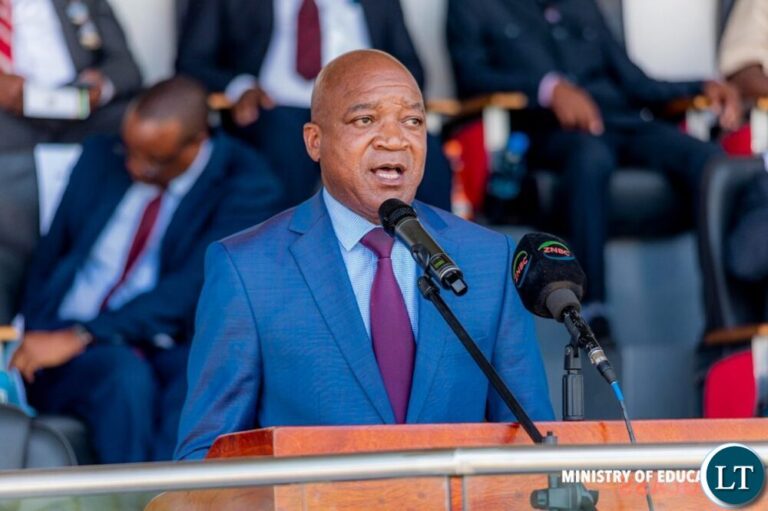
Minister of Education Douglas Siyakalima says the Government has placed education at the center of national development.

The media reports that Mr Siyakalima said the reintroduction of free education in Early Childhood to Secondary level is a testament of the importance the government attaches to the education sector.

Mr Siyakalima explained that the provision of free education has enabled thousands of families who would not have been able to access education.

The Minister indicated that the burden of school fees was a huge barrier in accessing education for many families and guardians.

He disclosed that with the advent of free education classrooms are full of vulnerable learners who would have been left behind.

Mr Siyakalima said the free education policy has rekindled belief in the power of free education.

The Minister said this in a speech read for him by Ministry of Education Director University Education, Brian Makufele during the launch of UNZA @ 60 anniversary and alumni reunion.

Meanwhile, Mr Siyakalima says the University of Zambia has continued to play an important role through research.

He said the research conducted by the university has helped to inform policy in health, education, agriculture and environment.

Mr Siyakalima stressed that UNZA has remained a trusted institution for knowledge production.

And speaking earlier, UNZA Vice Chancellor, Mundia Muya noted that the university has in the last six decades nurtured men and women who greatly contribute to the development of the country.

Prof Muya pointed out that UNZA has been a hub of research and innovation, generating knowledge that has shared policy, industry, and social progress.

He said the university has stood as a guardian of the nation’s values, ethical reflection and public responsibility.

Prof Muya said UNZA has been a home to generations of scholars who have shipped Zambia and influenced communities across the world.

“From Presidents to Cabinet Ministers, from Lawmakers to Judges, from Entrepreneurs to Researches, from public servants to global professionals,” stated Mr Muya.

He said UNZA alumni continue to make an indelible mark across continents.

Prof Muya has implored UNZA alumni to support the university as it celebrates its 60 years anniversary on the 11th of July 2026.

Stakeholders urged to probe depletion of ZESCO units

0

The Ministry of Energy has urged key stakeholders, consumer bodies, and experts to actively participate in the ongoing investigation into the rapid depletion of electricity units, amid rising concerns over increased ZESCO tariffs.

Ministry of Energy Principal Public Relations Officer, Bob Sianjalika, acknowledged the challenges faced by households and businesses, stressing that the Government is committed to protecting consumer interests.

“We are fully aware of the difficulties that our citizens are experiencing. This issue has arisen even as many Zambians believed the situation had improved, but isolated concerns require attention,” he said.

Mr Sianjalika emphasised the need for a collective effort, highlighting that Zambia’s energy sector has made significant strides, including the elimination of load shedding.

 “We trust the ERB and ZESCO experts to guide us through this process and ensure that the sector operates efficiently while safeguarding consumers,” he said.

And Small business owners and households in Lusaka district have raised concern over the increase in electricity tariffs, saying the move is putting pressure on their livelihoods and household budgets.

Barber shop owner, Joseph Bwalya said the higher tariffs have resulted in electricity units being depleted faster than before, forcing them to adjust service charges amid customer complaints making it difficult for businesses to operate normally.

“We buy units and before you notice they are finished. As a barber shop owner, electricity is very important, but now we have increased prices and customers are complaining,” he said.

Mr Bwalya added that some appliances have been damaged due to power fluctuations thereby worsening the situation.

He further disclosed that some barber shop owners have resorted to acquiring solar equipment through loans from companies such as Sun King in order to operate from morning to evening.

“We are getting loans just so that we can work, but we are still making losses because we have to repay the loans and at the same time buy electricity which does not even last two weeks,” he said.

Meanwhile, a Lusaka welder, Julius Sakala has also expressed concern that his machines consuming a lot of power and the increased tariffs are significantly raising operational costs.

Mr Bwalya further said the increased tariffs have affected their budgets and may force them to increase prices for their services.

“The machines we use require a lot of power. With the increase in electricity tariffs, we cannot continue charging the same prices because we will be making losses,” he said.

Martin Chirwa a resident of kalingalinga has equally bemoaned the impact of the tariff adjustment, saying electricity units that previously lasted a full month are now depleting within two weeks.

Mr Chirwa explained that the increase has compelled families to change how they use electricity at home.

“Before the increment, electricity units would last the whole month, but now it is a challenge. We may have to stop using appliances like electric stoves and consider alternatives such as solar panels,” he said.

The Ministry has since called on citizens and business owners to support efforts to strengthen the energy sector.

Police urged to uphold professionalism

1

Copperbelt Province Permanent Secretary, Lawrence Mwanza has urged the Zambia Police Service to uphold professionalism as the country heads towards the 2026 General elections.

Mr Mwanza said this when Deputy Inspector General of Police, Charity Munganga called on him at the Provincial Administration Office.

He noted that the police service needs to be non-partisan in the execution of their duties during and after the elections.

Mr Mwanza revealed that Copperbelt Province was a political hot spot that requires Police officers that are accountable and professional to the citizens during election period.

The Permanent Secretary has also commended Copperbelt Commanding Officer, Mwala Yuyi for the professionalism that has been carried out during his leadership.

And, Ms Munganga says the Police Service is committed to protecting the citizens during the election period.

She added that the Police Service will ensure that the 2026 General elections are run smoothly according to the Electoral Commission of Zambia guidelines noting that police officers should also be protected.

The Deputy Police Chief is in the Province to among other things understand the safety of the Province ahead of the 2026 General Elections.

ZRA seize US$145,000 during Gatbro International raid and inquiry

11

The Zambia Revenue Authority today raided Gatbro International Limited and initiated investigations into alleged tax evasion and related financial irregularities involving the company and associated entities. Officials confirmed that enforcement teams carried out the raid while launching inquiries centred on suspected under declaration of imported goods, possible non disclosure of actual sales revenue and questions surrounding financial reporting practices.

According to details released by the Authority, Irfaan Ismail Yosouf has been identified as the principal beneficial owner of the company, alongside directors Shalida Yosouf, Jamil Mitha, Shiraz Gathool, Nadeem Yousuf Muhammed and Mohammed Khanat. The investigation is examining whether goods imported into the country were declared accurately and whether tax obligations were fulfilled in line with existing legislation.

Preliminary findings outlined by investigators indicate suspected under declaration of imported goods and potential misrepresentation of financial records. Authorities stated that the company may have failed to declare the true value and volume of goods imported, which could have reduced its tax liability. Officials added that reported sales revenue is also under review as part of the inquiry.

Investigators indicated that there are suspicions regarding whether the correct amounts of Value Added Tax and Income Tax were remitted. The inquiry references provisions contained in the Income Tax Act and the Value Added Tax Act of Zambia, with officials maintaining that all findings remain allegations subject to verification through due legal processes.

A central part of the investigation focuses on patterns of intra group transactions among Gatbro International Limited’s associate entities. Authorities explained that inter company financial movements may have enabled the transfer of income, costs and goods across affiliated companies in ways that affected the group’s taxable position. The possible externalisation of taxable income is among the issues being reviewed through a detailed forensic examination.

Officials also highlighted the group’s diversified operations spanning FMCG distribution, hospitality, real estate, mining and energy. According to the Authority, this multi sector structure provides operational flexibility that may allow assets and financial flows to move between entities within the network. The purpose and full extent of these transactions remain under examination.

The investigation extends to several entities identified as operationally linked to the group, including companies involved in distribution, mining, property, tourism and energy activities. These operations are located in Lusaka, Mumbwa, the Lower Zambezi and Mfuwe. Senior management figures, directors of associated offshore entities and certain operational personnel are also subject to review under established procedures.

During the raid, authorities seized US$145,000. Officials did not disclose further operational details but confirmed that the seizure forms part of the ongoing investigation. The Authority reiterated that inquiries are continuing and that any conclusions will depend on the outcome of financial analysis and legal review.

The revenue authority stated that the raid and subsequent investigations are being conducted within the framework of Zambian law. Officials maintained that the agency remains committed to enforcing compliance objectively and professionally, adding that any taxpayer found to have contravened legislation will face action in accordance with national laws.

Authorities further assured the public that revenue protection, transparency and accountability remain central to their mandate. Updates will be provided where appropriate, consistent with legal and investigative considerations.

Credit/Source: Statement issued by Oliver Nzala, Manager ZRA Corporate Communications Click More the full Statement

Zambian Pastor in Canada Mourns 12-Year-Old Son Killed in British Columbia School Shooting

5

A Zambian pastor living in Canada is grieving the death of his 12-year-old son, who was among the victims of a mass school shooting in British Columbia.

International media reports indicate that the shooting occurred on Tuesday in the remote community of Tumbler Ridge, leaving eight people dead, including the suspected gunman. Authorities have described the incident as one of the deadliest attacks in Canada’s history and the worst school shooting in decades.

Pastor Abel Mwansa, who moved to Canada with his family two years ago, confirmed through social media that his son, Abel J, was among those killed.

“Our son went to school this morning and someone came to school with a gun, went to my kid’s classroom, shot some kids, and my son was killed too, just like that,” Pastor Mwansa wrote on Facebook.

In a tribute, he described his son as respectful, hardworking and committed to his faith. He recalled taking him out for dinner weeks earlier and spoke about his dedication to school and positive character.

The pastor shared that his son had recently expressed how much he loved attending school. He also recounted their final interaction before the child left for school on February 10, 2026, mentioning plans for a church youth meeting later that day.

Pastor Mwansa said he later received a call while at work reminding him to pick up his son from church, only to learn afterward that he had been shot.

In his message, he expressed gratitude for the 12 years and 11 months they spent together and reflected on the deep loss felt by the family following the tragedy.

UAE Investors Propose 500MW Solar Power Project During Talks with Local Government Minister

0

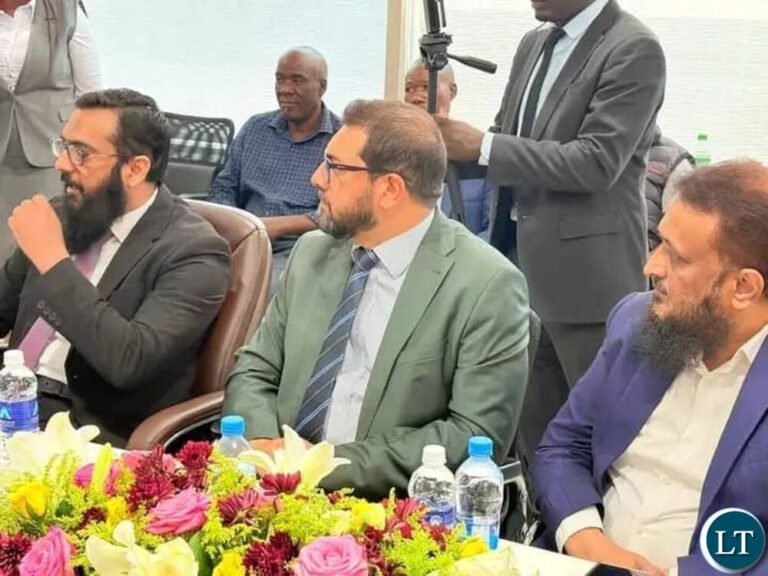
A proposed 500-megawatt solar power project was among key issues discussed during a courtesy call on Local Government and Rural Development Minister Gift Sialubalo by a delegation from SGC Investment LLC of the United Arab Emirates (UAE).

The delegation, led by Shaikh Humaid Abdulla Essa Abdulaziz Almualla of the ruling family of the Emirate of Umm Al Quain, held talks with the minister on potential investments in renewable energy, waste-to-energy solutions and infrastructure development.

Central to the discussions was a plan to develop a 500MW solar power project at multiple locations across Zambia. Minister Sialubalo said the proposed investment aligns with government’s efforts to diversify the country’s energy sources and reduce vulnerability to climate-related challenges.

He noted that the 2024–2025 drought had negatively affected power generation, water supply and livelihoods, adding that government has taken steps to strengthen resilience at community level. He said resources under the Constituency Development Fund (CDF) could complement large-scale investments, particularly in rural and underserved areas.

The minister also highlighted solid waste management as a major challenge for local authorities, especially in Lusaka, saying waste-to-energy initiatives could help manage environmental risks while contributing to electricity generation and improved service delivery.

Speaking on behalf of the delegation, Shaikh Essa Bin Abdullah Al Muala said SGC Investment LLC is ready to advance its proposed investments once modalities are agreed, expressing confidence in Zambia’s investment environment.

SGC Investment LLC Chief Investment Officer Muhammad Omar Farooqi said the company is considering both foreign direct investment and public-private partnership models, with solar energy identified as the initial focus area.

If implemented, the proposed 500MW solar project would be among the largest private renewable energy investments in Zambia and could also support waste management and infrastructure development initiatives.

Häuptle Unveils 23-Member Copper Queens Squad for 2026 COSAFA Women’s Championship

0

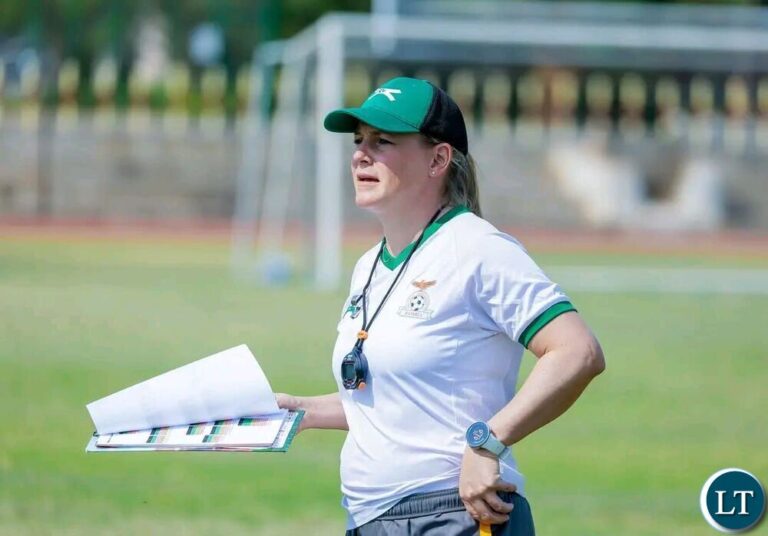
Copper Queens head coach Nora Häuptle has announced a 23-member squad for the 2026 COSAFA Women’s Championship, scheduled to take place in Polokwane, South Africa, from February 18 to March 1.

Zambia, who are the defending champions, have been drawn in Group B alongside Zimbabwe, Botswana and Eswatini. The tournament forms part of the team’s preparations for the 2026 Women’s Africa Cup of Nations to be hosted in Morocco.

The selected goalkeepers are Mufunte Chishala of Green Buffaloes, Catherine Musonda from Red Arrows and Hazel Nali of Zesco Ndola Girls.

In defence, the squad includes Margaret Belemu of Red Arrows, Margaret Gondwe, Agness Musesa, Rachael Nachula, Memory Nthala and Esther Siamfuko from Green Buffaloes. Also called up are Maluba Blessings of Nchanga Queens, Saliya Mwanza of Elite Ladies and Judith Soko of Zesco Ndola Girls.

The midfield department features Susan Banda, who plays for Cekmekoy BilgiDoga Spor in Turkey, alongside Rhodah Chileshe of Indeni Roses, Avell Chitundu of Zesco Ndola Girls, and Konkola Blades duo Sampa Chisanga and Natasha Witika.

The attacking lineup comprises Regina Chanda of Zanaco Ladies, Maweta Chilenga and Agness Phiri from Green Buffaloes, Mercy Chipasula of Kamfinsa Police, Kabanghe Mupopo of Henan WFC in China, and Eneless Phiri of Zesco Ndola Girls.

Some foreign-based players will miss part of the COSAFA training window due to club commitments but are expected to rejoin the squad during the final phase of preparations for the Women’s Africa Cup of Nations, which kicks off on March 17.

Ndola Police Launch Manhunt After Eight-Month-Old Baby Killed in Domestic Dispute

0

Police in Ndola have launched a manhunt for a man identified as David Zulu of Misundu Area, who is accused of killing his eight-month-old daughter, Nandi Zulu, in the early hours of Tuesday.

The incident reportedly occurred around 02:00 hours at the family home following a domestic dispute between Zulu and his wife. During the altercation, the suspect is alleged to have struck the infant on the head with a shovel, resulting in fatal injuries.

Neighbours rushed the child to Arthur Davison Hospital, where she was pronounced dead on arrival. Police later visited and processed the scene before transferring the body to Ndola Teaching Hospital Mortuary, where it is awaiting postmortem examination and burial.

Police Public Relations Officer Godfrey Chilabi confirmed the incident, stating that the motive has not yet been established and investigations are ongoing. He said the suspect fled the scene and remains at large, with efforts underway to locate and apprehend him.

The Zambia Police Service has appealed to members of the public to assist with information that could lead to the suspect’s arrest. Anyone with relevant details has been urged to come forward and support the ongoing investigation.

Zambia, Germany strengthen ties as SADC Troika Ministers confer

0

Minister of Foreign Affairs and International Cooperation, Mulambo Haimbe and Special Envoy of the German Federal Foreign Minister, Saline Sparwasser, have held a bilateral meeting on the margins of the Executive Council meeting at the African Union headquarters in Addis Ababa today.

The two officials discussed bilateral issues between Germany and Zambia and how to continue strengthening their relations going forward.

Mr Haimbe told Zambian journalists after the meeting that the two also talked about the need to support each other’s candidatures when they or their individual nationals vie for various positions in multilateral institutions.

He said Zambia is very pleased with the strengthening of relations with Germany.

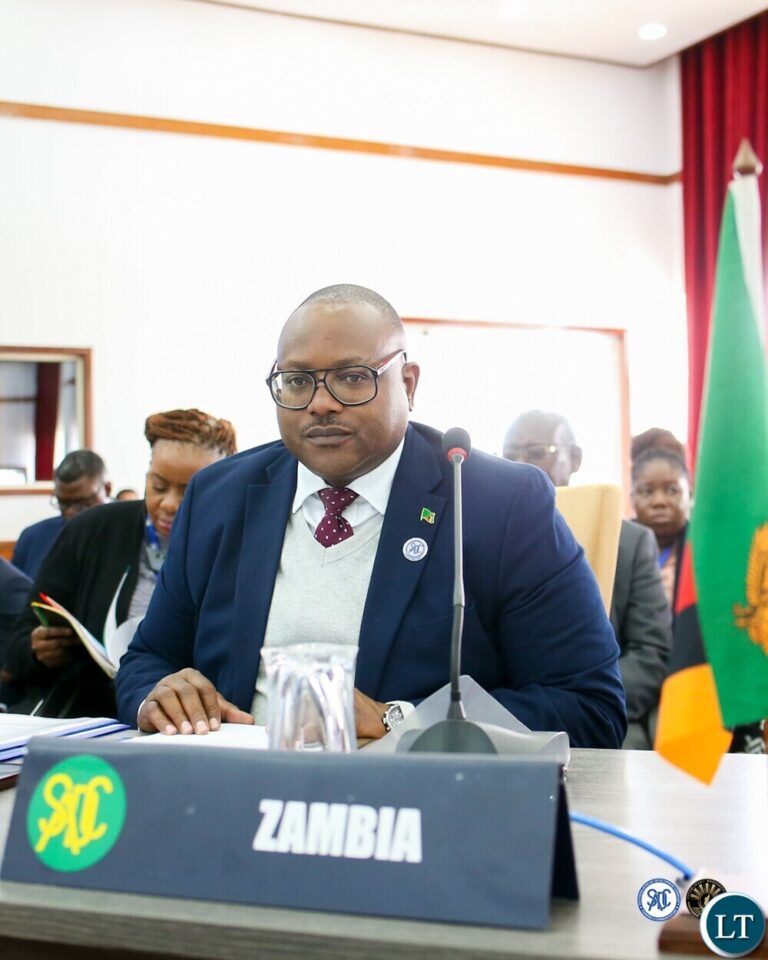
Meanwhile, Zambia, Zimbabwe and South Africa conferred in the Southern African Development Community (SADC) Troika Ministerial Committee meeting where they discuss various matters relating to the region.

South Africa’s Minister of International Relations and Cooperation led the delegation from his country while Minister of Foreign Affairs and International Trade from Zimbabwe, Amon Murwira represented his country.

Since the interim committee of the Troika main body was put in place, the ministers from the three countries have had no opportunity to meet, hence used their convergence at the Executive Council Ministers meeting to hold discussions on the sidelines.

The media reports that South Africa is the current chair of the Ministerial Committee of the Troika main body while Zambia is the incoming chair and Zimbabwe is the outgoing.

Kaputa court jails five over unlawful hunting and related Offences

2

 Kaputa Magistrates Court has sentenced five individuals to three years’ imprisonment with hard labour for unlawful hunting and two additional wildlife-related offences.

Before Magistrate Emmanuel Mukoma were Kapembwa Evans (43), Joe Mazimba (28), Felix Chola (32), Kennedy Mofu (30), and Kalumba Kopa (25), all of Nsenga Village in Chief Kaputa’s Chiefdom in Kaputa District.

This is in a matter that came up sentencing in which the five were facing three defferent counts.

In count one, the five were accused of unlawful entry in the national park contrary to Section 18 subsection (1) as read with Section 136 (a) and (b) of the Zambia Wildlife Act number 14 of 2015.

In count two, the three were facing one count of unlawful entry with weapons in the national park contrary to Section 20, subsection 1 (a) and (b), as read with Section 136, subsection (a) and (b), of the Wildlife Act number 14 of 2015 of the laws of Zambia.

In the third count, the five were facing the offence of unlawful hunting in a national park contrary to Section 19 subsection 1 (a) (b) and (c) as read with Section 128 subsection (a) and (b) of the Wildlife Act No. 14 of 2015 of the laws of Zambia.

Facts of the matter were that on February 1, 2026, around 02:00 hours, wildlife police officers, while on operation, apprehended the five at a place called Tushitu.

The five accused were later brought to Kaputa police station for safe custody.

The five, jointly, and whilst acting together, also unlawfully hunted 3 kg of assorted fresh fish at the same place they were apprehended from.

The five were also found with the wrong fishing gear, namely a mosquito net, a knife, five paddling sticks and a wooden boat.

Magistrate Mukoma found all five guilty and convicted them on all three charges.

In count one, the court ordered each one of them to pay a fine of K120,000 and, in default, serve 6 months imprisonment with hard labour.

In the second count, the court fined them K120,000 each, in default 6 months imprisonment with hard labour.

And in the third count, Magistrate Mukoma handed each one a custodial three-year imprisonment with hard labour effective the date of arrest.

The sentences are to run concurrently.

Zambia concludes participation at UN CSocD64

0

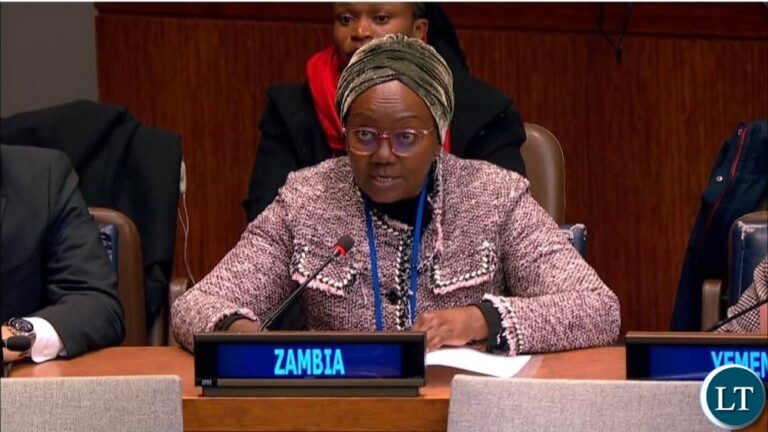
Zambia has concluded its participation at the 64th Session of the United Nations Commission for Social Development (CSocD64), reaffirming its commitment to inclusive social development and strengthened international cooperation.

Ministry of Community Development and Social Services Permanent Secretary for Administration, Angela Kawandami said on the sidelines of the session, Zambia held strategic bilateral engagements with the United Nations Special Representative of the Secretary-General on Violence Against Children, Najat Maalla M’jid, aimed at strengthening cooperation and sharing best practices.

Dr Najat Maalla M’jid commended Zambia for its systems-based reforms, prevention-focused child protection strategies and efforts to strengthen the social service workforce.

Ms Kawandami added that a bilateral exchange with Jamaica provided valuable lessons on multidimensional poverty measurement, resilient social protection systems and care-economy-based employment models.

She further noted that the Commission adopted key resolutions by consensus, including a landmark resolution on promoting care and support systems for social development, reinforcing global commitments to dignity, gender equality and inclusive social policies.

Meanwhile, Ms Kawandami said during the main session, Zambia reiterated its resolve to translate international social development commitments into coordinated national action, guided by the principle of leaving no one behind.

She explained that the forum followed the adoption of the Doha Political Declaration and focused on practical, people-centred implementation strategies.

The Permanent Secretary delivered Zambia’s national statement, reaffirming Government’s commitment to poverty eradication, inclusive economic growth and social justice.

She highlighted progress made in expanding social protection programmes, promoting youth employment, advancing gender equality and strengthening the inclusion of persons with disabilities.

Ms Kawandami also emphasized the use of digital platforms to improve efficiency, transparency and access to social services.

She stressed that social development cannot be achieved in isolation and underscored the need for strengthened international cooperation and enhanced inter-ministerial coordination to promote inclusive and sustainable progress.

Ms Kawandami said Zambia also participated in high-level panel discussions where she shared the country’s experiences in programme-based budgeting, integrated financing approaches and digital payment systems aimed at improving service delivery.

The session was held from February 2 to 10, 2026, at the United Nations Headquarters in New York under the theme, “Advancing social development and social justice through coordinated, equitable, and inclusive policies.”