Monday, June 8, 2026
17 C
Lusaka
Home Blog Page 151

Police apprehend suspect in Katete murder

0

A man aged between 33 and 40 who murdered a 55-year-old man in Katete has been apprehended.

Simon Phiri believed to be mentally challenged was apprehended at Chadula Village in Mbangombe Chiefdom about 5 kilometres away from the scene of crime.

The perpetrator was identified by villagers during a pursuit.

Phiri is however at St Francis Mission Hospital where he has been admitted for the head and General body pains after been attacked by a mob of people during his apprehension.

Eastern Province Police Commanding Officer Robertson Mweemba confirmed that his condition was currently critical.

The 55-year-old man from Katete District in Eastern Province was reportedly murdered yesterday, 9th January 2026, by a man believed to be mentally challenged.

The deceased was murdered at his house at Chasauka Village in Mbangombe Chiefdom in Katete, in the early hours of February 9, 2026, at around 02:00hours.

This was confirmed to the media by Eastern Province Police Commanding Officer Robertson Mweemba.

Information surrounding the matter is that yesterday, at around 02:00 hours, the young brother to the deceased heard some noise outside his house prompting him to go out to check.

” After lighting a torch, Mulongoti Banda, 53, saw a man who seemed to be mentally disturbed wearing a short and without shoes, saying audible things. The said man was heading in another direction,” he said.

Banda then went to wake his younger brother, and together they began searching for the person, who was later found at their elder brother’s place.

“He was spotted about 10 metres away from their elder brother who was lying lifeless. The two brothers saw their brother in a pool of blood as the unidentified man was sitted about 10 meters away, with stones around him, threatening to kill anyone who would approach him,” he noted.

Mr Mweemba said villagers were alerted and a crowd began to gather, but the suspect initially fled. He was later caught by an angry mob, who beat him as they apprehended him.

ECZ urged to clarify how delimitation rules will be applied

1

Rules governing the delimitation of constituencies have placed the Electoral Commission of Zambia under scrutiny, following renewed focus on how voter numbers and constituency boundaries are applied in practice.

Delimitation is provided for under the Constitution and related electoral laws, which allow the adjustment of constituency boundaries where population changes justify such action. The framework requires the ECZ to consider population size, geographical features, community links, and administrative practicality, while maintaining reasonable equality in voter representation.

Population growth in urban centres has widened disparities in voter numbers across constituencies. Some constituencies now carry significantly larger voter rolls than others, creating uneven representation in Parliament. The law permits variation within set limits, though the responsibility for applying those limits rests with the commission.

Attention has therefore shifted to how the ECZ interprets and applies its mandate when faced with rapid urban expansion, internal migration, and uneven population distribution. The discretion available to the commission under the law has become a central issue for political parties and civic groups seeking clarity on how future boundary reviews would be handled.

The ECZ has previously stated that delimitation is a technical process guided strictly by constitutional and statutory provisions. The commission has maintained that decisions are informed by population data and administrative considerations, rather than political interests. It has also indicated that public consultation forms part of any delimitation exercise.

Political actors have raised concerns about predictability and transparency. They argue that clearer communication on how population data is assessed and how permissible variations are applied would strengthen confidence in the process. Some parties have pointed to constituencies where voter numbers have grown substantially without boundary adjustment, while others remain comparatively small.

The legal framework allows the ECZ to weigh more than just population figures. Geography, accessibility, and the need to preserve community cohesion are factors recognised by law. Rural constituencies, though sometimes sparsely populated, may cover vast areas with limited infrastructure, a reality the commission is permitted to consider.

Any delimitation proposal is subject to formal approval procedures set out in the Constitution. This requirement introduces an additional layer of oversight, though it also raises the stakes for the commission to ensure that its proposals are defensible, consistent, and clearly explained.

Delimitation exercises are not conducted frequently. The law restricts how often boundaries may be altered, placing importance on accuracy when reviews are undertaken. Errors or perceptions of imbalance can have long-term consequences for representation and electoral confidence.

The issue carries significance beyond administrative boundaries. Constituency size affects how voters are represented in Parliament and how resources are channelled through elected officials. For this reason, the way delimitation rules are applied has implications for public trust in electoral institutions.

The ECZ has reiterated its commitment to neutrality and legality. It has emphasised that any boundary review would follow constitutional requirements, rely on verified data, and involve stakeholder engagement.

With voter distribution continuing to change, pressure on the delimitation framework is likely to persist. How the ECZ applies the rules, explains its decisions, and engages the public will shape perceptions of fairness in the electoral process.

Court strips Dalitso Lungu of over 70 vehicles and properties

11

The Economic and Financial Crimes Court, sitting as a division of the High Court, has ordered the forfeiture to the State of a substantial portfolio of vehicles and properties belonging to Dalitso Lungu, following a determination that the assets could not be sufficiently linked to lawful sources of income.

The forfeiture order was granted after an application by the Director of Public Prosecutions, who sought the seizure of more than 70 motor vehicles alongside several properties, including residential, commercial, and service-related holdings. Among the properties listed in the proceedings is a filling station. The court granted the application, resulting in the transfer of ownership and control of the assets to the State.

In the proceedings, the State argued that the scale, quantity, and value of the assets were disproportionate to the known and verifiable income streams attributed to Dalitso Lungu. The application was brought under laws that allow the State to seek forfeiture of property deemed to be unexplained, where a person is unable to reasonably account for how such assets were acquired through lawful earnings.

The court examined financial records, asset acquisition timelines, and explanations advanced in response to the State’s claims. Submissions addressed income declarations, business interests, and alleged sources of funding used to acquire the properties and vehicles. The State maintained that the explanations provided did not adequately reconcile the volume of assets with legitimate income.

The defence, in response, placed before the court explanations pointing to lawful business activity and income as the basis for acquisition of the assets. It was argued that ownership alone was not evidence of illegality and that the assets were accumulated over time through legitimate means. These explanations were assessed against the documentary and financial material presented during the proceedings.

After considering the evidence and submissions, the court found that the State had met the legal threshold required for forfeiture. In its ruling, the court concluded that the explanations offered were insufficient to displace the presumption established under the forfeiture framework governing unexplained property. The judges accordingly granted the forfeiture order in respect of the listed vehicles and properties.

The ruling results in the immediate vesting of the assets in the State, subject to administration under established legal procedures. Responsibility now shifts to the relevant authorities to manage, preserve, and ultimately dispose of the forfeited assets in accordance with the law.

The decision represents one of the more significant asset recovery outcomes in recent months, both in numerical scope and in estimated value. It underscores the State’s continued use of civil forfeiture mechanisms as a tool for recovering assets deemed to fall outside lawful accumulation, without the requirement that each asset be tied to a specific criminal conviction.

Under the forfeiture regime, proceedings focus on the property itself rather than criminal liability, placing the burden on the respondent to provide satisfactory explanations for asset acquisition once the State establishes a prima facie case. The court’s ruling reflects the application of this framework.

With the order now in effect, the forfeited vehicles and properties are expected to be processed through statutory asset management systems. Any subsequent challenges or appeals would follow established legal channels.

Mining must uplift communities, not fuel instability, says President

4

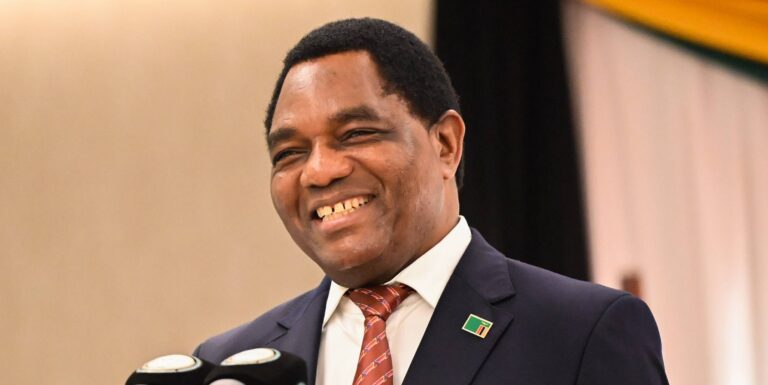
President Hakainde Hichilema has warned that Zambia’s mineral wealth must not become a source of insecurity, violence, or social instability, as the country intensifies efforts to reposition its mining sector as a driver of inclusive growth and national development.

Speaking at the African Mining Indaba in Cape Town, the President told investors that while Zambia remains open to investment, mineral exploitation must be conducted in a manner that strengthens social cohesion, protects communities, and upholds national security. He stressed that mining activity should generate broad-based benefits rather than deepen inequality or expose the country to environmental harm, organised crime, or economic sabotage.

The President’s remarks come at a time when Zambia’s mining sector is experiencing renewed attention following improving macroeconomic indicators, rising global copper prices, and government efforts to restore investor confidence after years of uncertainty. Copper remains Zambia’s economic backbone, and authorities have repeatedly stated that the sector’s revival is central to revenue generation, employment creation, and foreign exchange stability.

Hichilema’s emphasis on security reflects a growing recognition across mineral-rich countries that weak governance of extractive industries can fuel unrest, corruption, and conflict. He cautioned that mineral resources, if poorly managed, can become a liability rather than an asset, undermining peace and long-term development.

Alongside the President’s warning, questions over transparency in Zambia’s mining agreements have resurfaced in the public arena. Musenge, in remarks reported in the Daily Nation, raised concerns about what he described as secrecy surrounding mining deals, questioning how agreements are negotiated and the extent to which their terms are disclosed to the public.

Musenge argued that limited public access to information on mining contracts makes it difficult for citizens to assess whether Zambia is securing fair value from its mineral resources. He suggested that the lack of transparency weakens accountability and fuels suspicion, particularly at a time when mining is once again being presented as the cornerstone of economic recovery.

The concerns echo long-standing calls from various stakeholders for clearer disclosure of mining agreements, stronger oversight mechanisms, and greater parliamentary involvement in the approval of major extractive deals. Transparency advocates argue that open access to contract terms helps build public trust, reduces the risk of corruption, and ensures that resource revenues are managed in the national interest.

Government officials, for their part, have repeatedly defended recent policy measures aimed at strengthening governance in the mining sector. Mines Minister Paul Kabuswe has underscored the importance of value addition, stating that Zambia must move beyond exporting raw minerals if it is to maximise the benefits of its natural resources.

Kabuswe has argued that local processing and manufacturing can create jobs, stimulate industrial growth, and reduce Zambia’s vulnerability to commodity price shocks. The push for value addition aligns with broader regional and continental efforts to retain more value from Africa’s mineral wealth, particularly in critical minerals linked to the global energy transition.

Recent developments in the private sector suggest that confidence in Zambia’s mining industry is gradually returning. Zambia Metal Fabricators (ZAMACO) has secured financing amounting to $247 million to support its operations in the mining supply chain, a move seen as a sign of renewed optimism in the sector’s prospects.

However, analysts note that sustained recovery will depend not only on capital inflows but also on governance credibility. Investors are increasingly sensitive to issues of contract stability, regulatory clarity, community relations, and environmental standards. At the same time, citizens are demanding greater accountability to ensure that mineral wealth translates into improved living standards.

Hichilema’s message at the Indaba sought to balance these interests by assuring investors of Zambia’s openness while setting clear expectations around responsible conduct. By linking mining activity to security outcomes, the President signalled that economic growth cannot be pursued at the expense of social stability or national cohesion.

Zambia positions itself in a competitive global mining landscape, the convergence of security concerns, transparency demands, and value-addition ambitions highlights the complexity of managing mineral wealth in a way that delivers sustainable and inclusive development.


Government defends K700 salary hike as cost pressures persist

11

Patriotic Front presidential candidate Brian Mundubile has described the K700 salary increment for civil servants as a mockery, arguing that the adjustment fails to address the rising cost of living and does little to improve the welfare of public workers.

Mundubile says the increase does not reflect the economic realities facing civil servants, particularly as prices of food, transport, housing, and other essentials continue to rise. He maintains that the wage adjustment is inadequate and disconnected from the daily pressures faced by workers who rely on public sector incomes.

According to Mundubile, civil servants are struggling to meet basic needs despite government claims of economic improvement. He argues that salary adjustments should meaningfully cushion workers rather than offer what he describes as symbolic relief. In his view, the increment does not match the pace at which household expenses have increased, leaving many workers financially constrained.

The criticism adds to growing political debate around wages and living costs, an issue that has become increasingly prominent as Zambia approaches the 2026 general elections. Public sector workers form a significant portion of the electorate, and salary policy has emerged as a key point of contention between government and opposition figures.

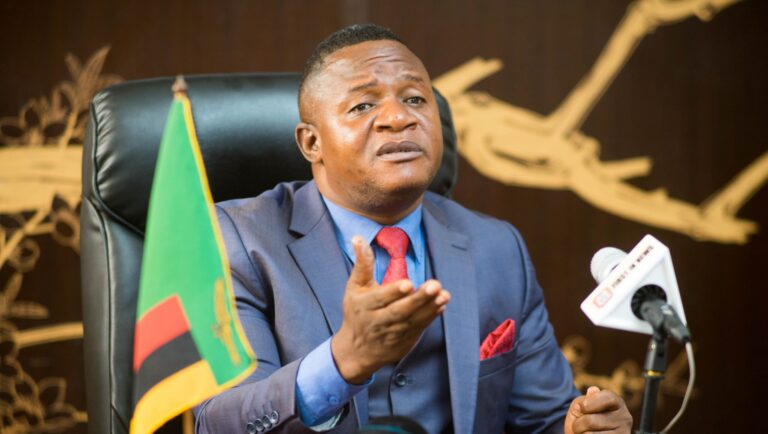
Government, however, has defended the K700 increment, arguing that the adjustment reflects fiscal discipline and affordability rather than neglect of workers’ needs. Youth and Sports Minister Elvis Nkandu says the salary increase should be understood within the broader framework of government’s wage policy since taking office.

Nkandu states that the increment represents about a 10 percent increase for civil servants earning around K7,000 and a higher percentage for those on lower pay scales. He argues that government has consistently adjusted wages since 2022, with previous increments ranging between 10 and 12 percent, despite economic constraints inherited from previous administrations.

The Minister maintains that wage increases must be balanced against national revenue performance, debt obligations, and the need to preserve macroeconomic stability. He cautions that unsustainable salary hikes could undermine economic recovery efforts and place pressure on public finances.

Nkandu further dismisses opposition criticism as politically motivated, stating that salary adjustments should not be used as campaign tools. He argues thaat responsible governance requires gradual and manageable improvements in wages rather than sudden increases that could destabilise the economy.

The divergent views reflect a broader tension between macroeconomic indicators and lived economic experience. While government has highlighted stabilisation measures, currency performance, and fiscal reforms as signs of recovery, many workers judge progress based on purchasing power and daily expenses.

Economists note that salary increments in the public sector carry implications beyond individual incomes, affecting government expenditure, inflationary pressures, and private sector wage expectations. As a result, wage policy often becomes a balancing act between social welfare and economic management.

As the debate continues, the K700 salary increment has become more than a technical adjustment, emerging instead as a symbol of competing narratives on economic recovery, affordability, and leadership credibility. With elections approaching, how government and opposition frame the issue is likely to shape public perception of economic performance and policy priorities.

Court forfeits vehicles and land linked to Dalitso Lungu

2

The Economic and Financial Crimes Court has ordered the forfeiture of 79 vehicles valued at about K24 million and 25 parcels of land that were claimed by Dalitso Lungu as birthday gifts from his late father, former president Edgar Lungu.

The court ruled that Mr Lungu failed to provide sufficient evidence to prove that the properties had been legitimately gifted to him.

The properties are located in several areas across the country, including Chongwe, Chibombo, Chisamba, Solwezi, Ndola, Chilanga, Petauke and Nakonde.

Following the ruling, the court directed Director of Public Prosecutions Gilbert Phiri to manage and utilise the forfeited assets in accordance with the law.

The court also ordered Mr Lungu to pay legal costs, to be taxed in default of agreement.

Woman, 44, charged with child stealing in Lusaka

0

A 44-year-old woman of Lusaka’s Makeni area, Esther Musonda Phiri, has been charged with child stealing contrary to Section 171(1)(a) of the Penal Code, Chapter 87 of the Laws of Zambia.

Zambia Police Service Public Relations Officer Godfrey Chilabi said the charge follows a report made by Astridah Chanda, 33, who alleged that her baby was stolen by an unknown woman on October 28, 2025 around 15:00 hours in the Mbasela area of Kanyama Compound.

Mr Chilabi said that on November 14, 2025, police conducted an intelligence-led operation that resulted in the apprehension of the suspect, Esther Phiri.

Investigations revealed that the suspect allegedly renamed the child “Jenipher Monta Mwila” and forged documents, including an Under-Five Card, which she used to falsely present the child as her own.

“In line with police standard operating procedures, DNA tests were conducted by the National Forensic Science and Biometrics Department to establish the biological mother of the child. Samples were collected from the child, the complainant and the suspect,” Mr Chilabi said in a statement issued in Lusaka.

He said DNA analysis confirmed Astridah Chanda as the biological mother of the six-week-old baby girl who was reported stolen last year.

Mr Chilabi added that Esther Phiri has since been formally charged, while investigations into additional charges of forgery and uttering false documents related to the falsified Under-Five Card are ongoing

.

He said the child is currently under the temporary care of the Department of Social Welfare pending court proceedings, and reiterated the police’s commitment to protecting children through evidence-based investigations.

More financial transactions emerge in Guntila Muleya murder trial

0

Additional financial transactions have been disclosed in the ongoing murder trial of former Independent Broadcasting Authority (IBA) Director General Guntila Muleya, who was killed on July 23, 2024. Mr Muleya is alleged to have been murdered by two police officers, a civilian and IBA accountant Francis Chipyoka.

Testifying before the Lusaka High Court, State witness Nunel Mulenga said a payment of more than K549,000, allegedly intended for the Zambia Revenue Authority (ZRA), was prepared on July 24, 2024, a day after Mr Muleya’s death. He told the court that the payment was prepared by his then supervisor, Peter Hambiya, while Mr Chipyoka was attending a meeting in the boardroom.

Mr Mulenga’s testimony follows earlier evidence from IBA Head of Procurement Sydney Mfuya, who told the court that a K400,000 payment to Veriedian Dynamics had been disguised as a statutory payment to ZRA. Mr Mfuya said the company is owned by Samuel Dokowe, one of the accused persons in the case.

Mr Mulenga further testified that he became suspicious after questioning the earlier payment and was informed that IBA allegedly owed ZRA more than K7 million. However, he said that during a subsequent forensic audit at IBA, he discovered that the bank statements used by auditors differed from those previously provided to him by Mr Hambiya.

Serenje receives ballot papers for Muchinda by-election

0

Ballot papers for the Muchinda Ward by-election have arrived in Serenje District ahead of Thursday’s poll.

Voters in Muchinda Ward are expected to go to the polls on Thursday, February 12, to elect a councillor to replace the late Thomas Phiri, who died after an illness.

The offloading and handover of the ballot papers to District Electoral Officer Stan Mwanakayaya was witnessed by representatives of political parties participating in the by-election.

Mr Mwanakayaya said the presence of political parties and other stakeholders during the offloading process was critical to ensuring transparency, accountability, and credibility of the electoral process.

He noted that involving all stakeholders helps build confidence in the integrity of the election materials.

In separate interviews with the Zambia News and Information Services (ZANIS), political party representatives expressed satisfaction with the ballot papers.

Forum for Democracy and Development (FDD) Campaign Manager Chester Kasonde described the process as transparent, saying party representatives had verified the materials.

Mr Kasonde urged electorates to turn out in large numbers on Thursday and vote for a councillor who would effectively represent the people of Muchinda Ward.

 He also expressed confidence in FDD candidate Ronald Chola.

United Prosperous and Peaceful Zambia (UPPZ) District Chairperson Jonathan Chilufya also expressed satisfaction with the arrival of the ballot papers, saying it had instilled confidence that the election would take place as scheduled by the Electoral Commission of Zambia (ECZ).

Meanwhile, United Party for National Development (UPND) District Vice Chairperson Misheck Tembo said the arrival of the ballot papers signalled readiness for the by-election.

Mr Tembo said the party had engaged the electorate on government achievements and expressed confidence of victory in the polls.

All the political party representatives called for a peaceful and violence-free election, urging voters to participate calmly in the democratic process.

Businessman caught with counterfeit notes pleads guilty

0

A-33-year-old businessman of Chibombo District in Central Province has pleaded guilty before Kabwe Magistrate court to the offence of possession of counterfeit bank notes contrary to the law.

This is in a matter of Emmanuel Kabwe who is charged with one count of possession of counterfeit notes contrary to section 358 of the penal code Chapter 87 of the law of Zambia.

When the matter came up for plea before Principal Resident Magistrate Mubita Kalaluka, Kabwe admitted the charge and pleaded guilty to the offence.

Particulars of the offence are that, between 31st December, 2025 and 7th January, 2026 in Kabwe District, knowingly and without lawful authority, did possess 130 x K500 forged notes, 31x K200 forged notes, 96×100 forged notes and 43 x 50 forged notes all bearing fake serial numbers.

Magistrate Kalaluka asked if Kabwe understood the charge against him of which in response the accused responded that he did.

“Where you in possession of the said forged bank notes, and you knew they were forged bank notes,” asked the magistrate Kalaluka.

In response Kabwe told the court that he was aware that the money was fake and that he had gotten it from his Tanzanian friend.

The court has since adjourned the matter to February 10, 2026 for the reading of facts and possible judgement as Kabwe remains on police bond.

Traditional ceremonies key to Lusaka tourism- Lusaka minister

1

Lusaka Province Minister, Sheal Mulyata has described traditional ceremonies as cornerstones of the tourism sector in the province.

Ms Mulyata says the events should be fully supported because they bring visitors, create jobs and showcase the beauty of the province and the nation to the world.

Speaking at the Zwangendaba’s Kraal Fundraising Gala Dinner in Luangwa District, she described the Nc’wala ceremony as a powerful symbol of one of Zambia’s rich cultures that has embraced everyone in Zambia.

Ms Mulyata explained that the Nc’wala ceremony was also a pillar of the nation’s “One Zambia, One Nation” motto.

“The Government under the able leadership of President Hakainde Hichilema remains steadfast in its commitment to supporting and preserving our diverse cultural heritage,” Ms. Mulyata emphasised.

The gala prepares for the Ngoni’s Zambezi River Crossing on February 21, 2026, in Luangwa District, and the main Nc’wala Traditional Ceremony on February 28, 2026.

She commended the local organising committee, saying the event preserves history, promotes national unity, drives tourism, and spurs economic growth.

Ms Mulyata, who donated K20,000 cash urged locals to support the cause financially.

Luangwa District Commissioner, Luke Chikani welcomed the Zambezi Crossing’s designation as an annual event on February 21, saying it will boost local tourism, hospitality and other businesses.

Feira Member of Parliament, Emmanuel Tembo thanked government for gazetting the crossing, noting it will greatly boost the district economy.

Zwangendaba’s Kraal organising chairperson, Chimbizani Bilima said this year’s Nc’wala is special, starting with King Zwangendaba kaHlatshwayo’s remembrance in Nakonde District on February 18, 2026, where he died.

Mr Bilima outlined the Zambezi Crossing on February 21, the king’s movement from Ekuphendukeni to eLawini in Chipata District on February 25 and the main Nc’wala at eMthenguleni in Chipata on February 28.

The gala was held under the theme: “Reconnecting Abenguni and promoting national unity and love.”

Lukulu Police arrest 40-yearold for cattle theft

0

 Police in Lukulu District of Western Province have arrested and detained Loyd Mwizabi aged 40 of Kwasoni area in Kaoma District for allegedly stealing two oxen all valued at K20,000.

According to Western Province Police Commanding Officer Ray Hamoonga, the suspect was found in possession of the oxen in luvuzi area of Lukulu District which were reported missing on 5th February 2026 in Mangongeni area.

The suspect was apprehended by alert members of the public and upon interrogations he admitted to have stolen the animals on question.

The matter was reported to Lukulu Police Station upon which officers promptly responded and arrested Mwizabi who is currently detained in lawful custody awaiting court proceedings.

The Western Province Police Chief has since firmly warned cattle rustlers stating that their days were numbered and also indicating that those found wanting would be dealt with according to the provisions of the law.

Mr Hamoonga  further noted that stock theft has become rampant in Western Province and that police are working around the clock to curtail the vice.

Katete nan, 55, murdered by mentally ill person

0

A 55-year-old man of Katete district in Eastern Province has been murdered by an alleged mentally ill man.

The deceased was murdered in his house at Chasauka Village in Mbangombe Chiefdom in Katete, in the early hours of today, February 9, 2026, at around 02:00hours.

This has been confirmed to the media by Eastern Province Police Commanding Officer Robertson Mweemba.

Information surrounding the matter is that today, at around 02:00 hours, the young brother to the deceased heard some noise outside his house prompting him to go out to check.

” After lighting a torch, Mulongoti Banda, 53, saw a man who seemed to be mentally disturbed wearing a short and without shoes, saying audible things. The said man was heading in another direction,” he said.

Banda then went to wake up his young brother, and the two started looking for the same person.

“He was spotted about 10 meters away from their elder brother who was lying lifeless.The two brothers saw their brother in a pool of blood as the unidentified man was sitted about 10 meters away, with stones around him, threatening to kill anyone who would approach him,” he noted.

Mr Mweemba said villagers were alerted, and a crowd started forming.

” The accused decided to run away. The villagers gave a chase but efforts to catch with him were futile,” he indicated.

The matter was then reported to Katete Police Station which led to the police officers visiting the scene.

The police found the deceased with a deep cut on the back of his head and the body was immediately picked and deposited into the mortuary at St Francis Hospital.

A docket of the case was been opened, while a manhunt has been launched to bring to book the culprit.

Construction of Michael Chilufya School progressing well

1

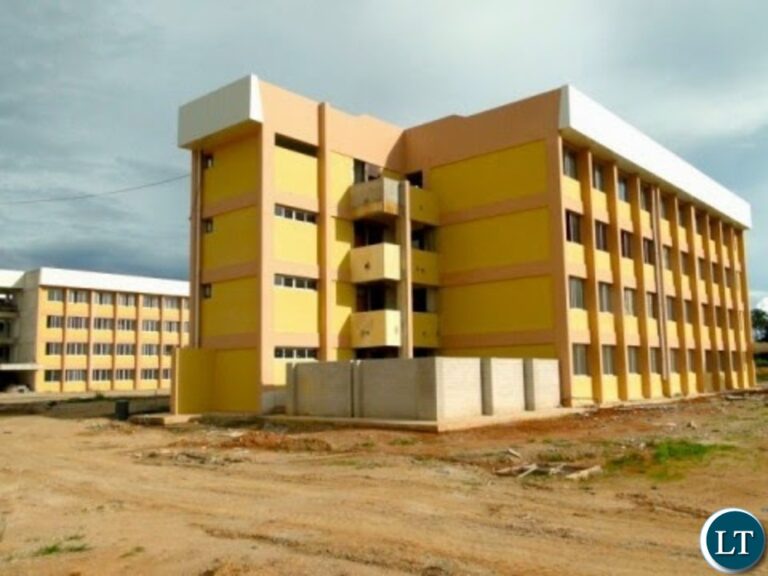
The Construction of Michael Chilufya Sata Secondary School in Kantenshya area of Isoka District in Muchinga Province is progressing well.

Speaking in an interview with the Zambia News and Information Services (ZANIS) when he visited the school, Isoka District Commissioner, Jairo Simbeye said the government remains committed to completing the project in order to improve access to education under the Free Education Policy.

Mr Simbeye disclosed that the government is aware that learners from the school are currently sharing facilities at the nearby Isoka Boys Secondary School due to the incomplete state of the institution.

The DC said the Government is committed to ensuring that the construction of Michael Chilufya Sata Secondary School is completed so that learners can access education in a conducive environment.

“It is unfortunate that pupils from Michael Chilufya Sata Secondary School are squatting at Isoka Boys Secondary School while the school in Kantenshya remains incomplete,” he said.

Mr Simbeye added that the temporary learning environment is not conducive, citing leaking classrooms, inadequate office space and poor staff facilities.

“The place they are using is in bad condition. The staff room is leaking, classes are leaking and teachers do not have decent offices,” he stated.

The District Commissioner emphasised that the situation is a matter of concern for the government, especially in view of the Free Education Policy being implemented.

“As government, this is something we are concerned about because our President wants every child to be educated. That is why we have the free education policy,” he noted .

And Mr Simbeye acknowledged the challenges being faced by the school and assured school management and the community that measures are being taken to address the situation.

“I know it is not easy with the difficulties you are facing, but this government is in a hurry to ensure that every child gets the education they deserve,” he emphasised.

Meanwhile, Mary Mulaisho, a pupil at Michael Chilufya Sata Secondary School, expressed optimism that construction works will be completed soon.

“I am hopeful that the school will be completed soon, and I am thankful to the government for the free education policy,” she said.

Mumba urges Zambians to reject leaders that are tribalists

5

New Nation Party president, Nevers Mumba, has urged Zambians to reject leaders and political parties who thrive on tribal divisions.

Dr Mumba says Zambia’s future depends on electing leaders based on competence rather than ethnic identity.

He has reiterated his party’s alliance with the ruling United Party for National Development (UPND).

He was speaking during the official launch of his political party in Kasama today.

He described the move to launch the party as the beginning of a political movement rooted in unity, morality, and integrity.

Dr Mumba explained that the New Nation Party emerged from the former Movement for Multi-Party Democracy (MMD), whose name he said had been dented by past controversies.

“While MMD no longer exists at the Registrar of Societies, its legacy will remain preserved in Zambia’s national archives,” said Dr Mumba.

He further condemned remarks of tribalism, which he described as one of the greatest threats to Zambia’s peace and unity.

“Our party stands on unity.  We condemn tribalism whether it comes from Northern Province or elsewhere. No one applied to be born a Bemba or any other tribe. Let people vote for the political party based on its ability to serve,” he noted.

Dr Mumba also defended his party’s alliance with the ruling UPND, insisting that cooperation is necessary to maintain peace and stability.

He further clarified that the New Nation Party is focused on the 2031 general election, with hopes of forming a government.

Dr Mumba reiterated his commitment to Zambia’s identity as a Christian nation and called on citizens to reject leaders who do not fear God and whose politics are bent on insults.

On economic policy, Mumba emphasized the need for Zambia to take ownership of its mineral wealth to ensure sustainable development.

“Zambia is endowed with minerals that can make this nation. We want the country to own its own wealth,” he said.

He has since commended President Hakainde Hichilema for stabilising the economy, the kwacha, and the electricity supply.