Monday, June 8, 2026
17 C
Lusaka
Home Blog Page 156

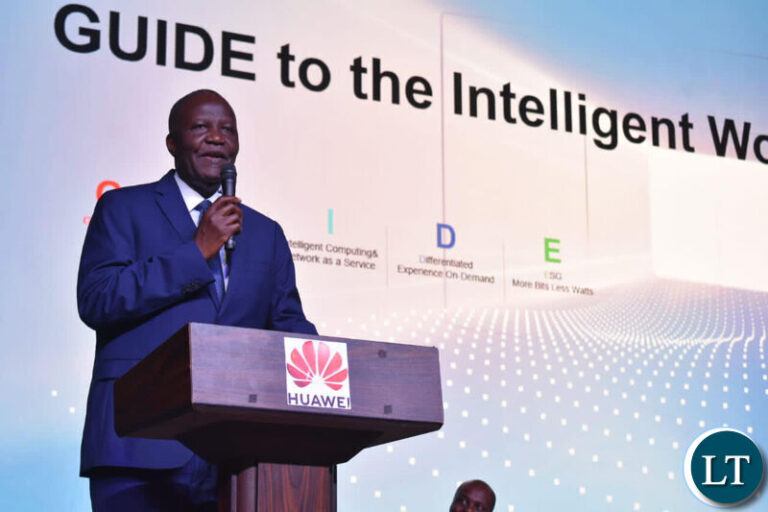
Mutati speaks Tech enhancement between Zambia and Ghana

0

Minister of Technology and Science Felix Mutati says there is need to simplify procedures to foster enhanced collaborations between the Zambian and Ghanaian Technology companies.

He noted that there is value in the open door policy, adding that this was seen during the business forum between Zambia and Ghana.

He thanked the Ghanaian team for ensuring that technology teams actually come to Zambia and actualise transactions between the two countries.

He noted that this is as a result of the government’s deliberate open door policy to investment, transactions as well as fostering enhanced economic growth for the two peoples.

He was speaking during the Zambia-Ghana cocktail event, following the successful Zambia-Ghana business dialogue forum.

“We are talking transactions, we are talking investment and I believe there is already about 7 million dollars that has landed because we are down to earth,” he said.

The Minister further thanked Ghana for bringing in tech companies, reassuring that Zambia will reciprocate sometime in September 2026.

Speaking at the same cocktail party, the Ghana Minister of Communications, Digital Technology and Innovations, Samuel George noted that leading his delegation to Zambia was aimed at initiating meaningful partnerships.

Mr George expressed the need for the two countries to enhance knowledge sharing in technology solutions.

He highlighted that there is technology in the energy sector, which Zambia has managed to find solutions to which Ghana can also learn from.

And Acting Minister of Foreign Affairs and International Cooperation, Rodney Sikumba called on the two countries to endeavour enhancing the Branding Zambia Initiative.

He called for a holistic approach to the initiative, citing that it is for all sectors, Zambia and beyond.

Earlier, Zambia Information and Communication Technology (ZICTA) Director General Collins Mbulo Commended the Zambia Ghana interactions for having achieved positive cooperation during the last three days.

He stated that it is in his hope that innovations and trade, among others, are enhanced even as some delegates will be going back to Ghana.
Use AI for Business, Not Fake News and Images – Hichilema

0

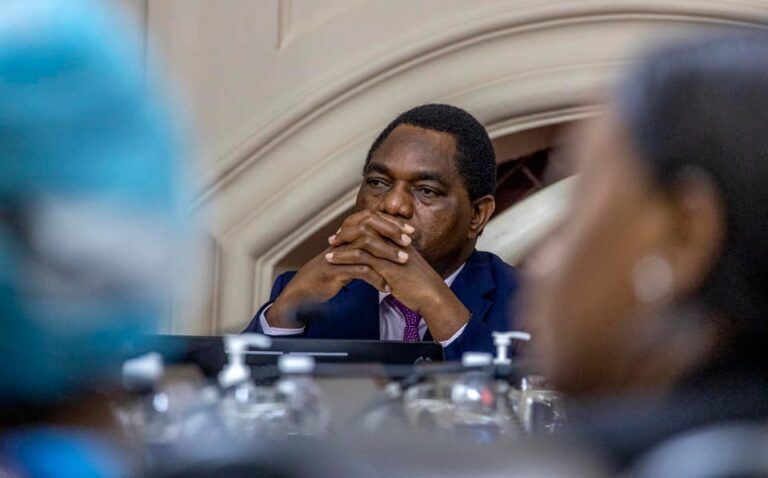
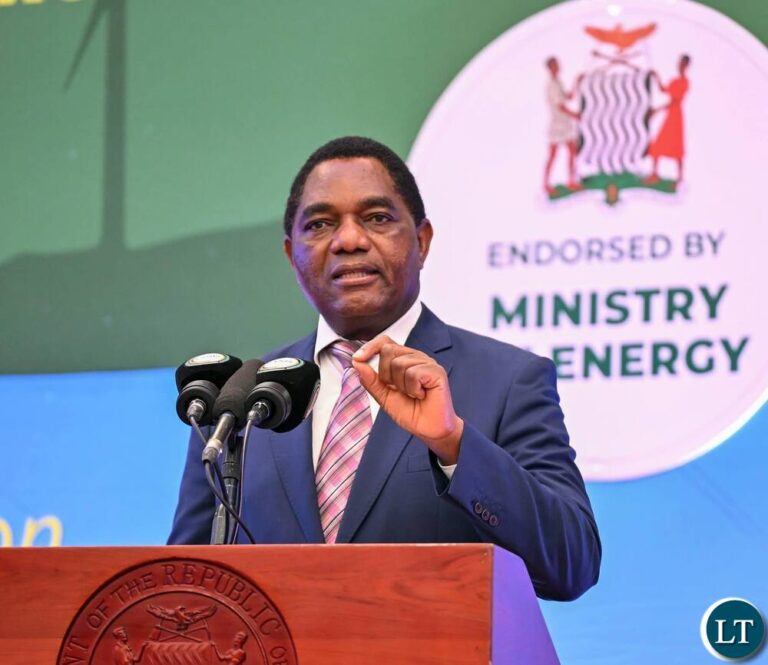
President Hakainde Hichilema has urged individuals and businesses to use artificial intelligence (AI) as a tool for economic growth and market connectivity rather than for producing fake news and images.

Speaking during the Ghana-Zambia Business Dialogue in Lusaka President Hichilema said he supports the advancement of AI but warned against its misuse for misinformation and online mischief.

“We are able to assess through AI — quickly you can put in information and get to know who wants what you produce, whether they are able to pay or not able to pay,” President Hichilema said. “So that’s a better use of AI than generating fake news and images.”

He encouraged African entrepreneurs to embrace technology as a bridge to new business opportunities and markets across the continent.

The President also disclosed that Zambia and Ghana had agreed to cooperate under a digital Ubuntu framework aimed at sharing knowledge and strengthening digital capacity between the two countries.

He added that technology has made global connections easier, noting that if young people can meet online and form relationships, then countries like Zambia and Ghana should be able to strengthen business and trade links.

“I hear now there are many marriages where young people meet on the internet and end up marrying each other. So there’s no place too far. If there’s no place too far in that space, then there should be no place too far in business, investment and trade,” he said.

Ghanaian President John Dramani Mahama, who visited Zambia with First Lady Lordina Mahama for a three-day state visit, departed the country yesterday.

From MMD to PF: How Court Victories Can Still Kill a Political Party

1

By Dr Mwelwa

Excitement is spreading among a few uninformed PF members who mistake courtroom dates for political victory, celebrating headlines without understanding Zambia’s power calculus, forgetting that judgments alone decide outcomes in a system where attrition matters.

History offers a sobering lesson: PF perfected the art of keeping MMD trapped in courtrooms, exhausting its leadership, draining momentum, and delaying recovery until power slipped quietly away, proving litigation can be a political weapon.

That episode taught one brutal truth: in Zambian politics, it is not always the ruling party that loses power, but the opposition that loses time, coherence, and relevance while celebrating procedural wins mistaken for momentum.

Today’s excitement around the February judgment risks repeating that mistake, mistaking legality for control, and assuming a favorable ruling ends the contest, when in reality it merely opens another chapter in a longer political struggle.

It is politically naive to assume finality here, because if the ruling does not favor Robert Chabinga, an appeal is almost certain, instantly suspending celebration and returning PF to injunctions, uncertainty, and administrative paralysis again.

This pattern is familiar: judgments trigger excitement, appeals restore stalemate, and months evaporate, leaving structures frozen and members confused, while opponents consolidate quietly, benefiting not from brilliance, but from the opposition’s self-inflicted gridlock over time.

PF members must remember how MMD’s internal energy bled away under endless litigation, until elections arrived with an organization tired, divided, and unprepared, showing that court survival does not equal electoral readiness or popular legitimacy.

Those cheering now forget that politics rewards endurance and organization, not momentary validation, and that every appeal delays conventions, confuses authority, weakens fundraising, and erodes trust among ordinary supporters waiting for direction from credible leadership.

Chabinga’s incentives are obvious: an appeal maintains recognition, prolongs leverage, and preserves bargaining power, regardless of party unity, making paralysis rational for individuals even when destructive for the collective opposition project and national democratic prospects.

This is why celebrating judgments without political preparation is dangerous optimism, because law can reset registers, but cannot manufacture trust, discipline, or a shared roadmap unless leaders choose resolution over endless procedural warfare and brinkmanship.

PF did not lose power to MMD; MMD lost power to itself through fragmentation, fatigue, and misread victories, a cautionary mirror now held before PF as history threatens to repeat itself with ruthless predictability again.

If the court restores PF leadership, the window for decisive action will be narrow, demanding restraint, unity, and a swift convention, because delay will invite appeals and return the party to the same immobilizing loop.

Should appeals follow, members must resist despair and recognize the tactic, understanding that legal motion without political movement favors incumbency, while opposition renewal requires courage to break cycles and rebuild authority through consensus and clarity.

Ultimately, wisdom demands sobriety: excitement is understandable, but victory comes from strategy beyond courtrooms, lest February’s judgment become another fleeting high before the familiar descent into stalemate resumes through appeals delays confusion and internal exhaustion.

ECZ Sets One-Day Window for Delimitation Submissions

2

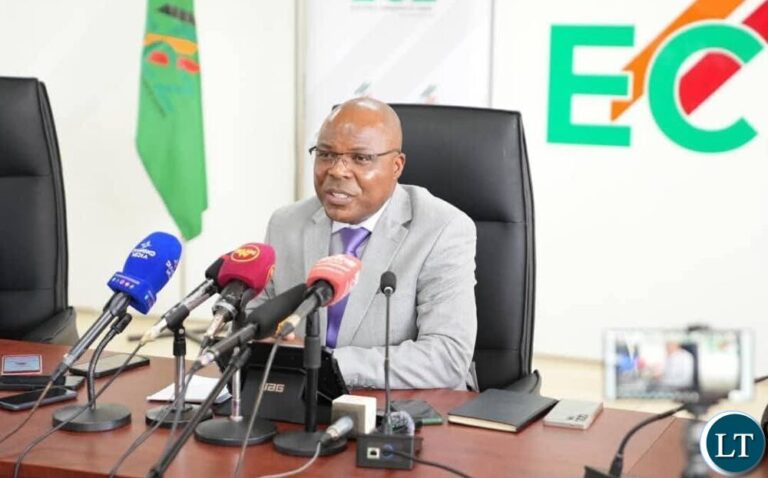
The Electoral Commission of Zambia (ECZ) has announced that members of the public will have only one day to submit representations and objections during the ongoing delimitation exercise ahead of the August 2026 general elections.

The Commission stated that the one-day submission window is provided for under the legal framework governing the delimitation process. It explained that the timeline is intended to ensure that the exercise is conducted within constitutional requirements while maintaining order and consistency throughout the process.

Delimitation involves the review and adjustment of constituency and ward boundaries to ensure equitable representation based on population changes and administrative considerations. As part of the process, the ECZ is required to publish preliminary proposals outlining proposed boundary changes before allowing stakeholders to make submissions.

According to the Commission, once the proposals are published, stakeholders including members of the public, political parties, traditional leaders, and other interested parties will be allowed to submit their views within the designated one-day period. Submissions made outside the stipulated timeframe will not be considered.

The ECZ said the one-day submission period should not be interpreted as an attempt to restrict public participation. Instead, it said the process includes prior stages that allow stakeholders to familiarise themselves with proposed changes and prepare their representations in advance.

The Commission further explained that delimitation is a technical exercise guided by constitutional principles, population data, geographic factors, and administrative efficiency. Public input, it said, remains important in highlighting local concerns that may not be fully captured through statistical data alone.

Concerns have been raised in some quarters regarding the brevity of the submission window. In response, the ECZ maintained that the process is structured to balance inclusivity with the need to complete the exercise within legally prescribed timelines. It said adequate notice would be provided to ensure that stakeholders are aware of the submission date and procedures.

The Commission also stressed that delimitation decisions are not influenced by political considerations. It said the exercise is conducted independently and objectively, with the aim of strengthening electoral fairness and representation.

As Zambia prepares for the 2026 general elections, the delimitation exercise is expected to play a critical role in shaping constituency and ward boundaries across the country. These boundaries will determine voter representation in the National Assembly and local government structures.

The ECZ reiterated its commitment to transparency and adherence to the law throughout the delimitation process. It encouraged stakeholders to engage constructively and to make use of the submission opportunity within the specified timeframe.

The outcome of the exercise will form the basis for electoral boundaries used in the August polls, influencing how communities are represented and how electoral administration is carried out nationwide.

Electoral Body Opens Delimitation to Traditional Leaders and Public

The Electoral Commission of Zambia (ECZ) has stated that chiefs and members of the public will be actively involved in the ongoing delimitation exercise as the country prepares for the August 2026 general elections.

According to reports published in News Diggers, the Commission said the delimitation process is designed to be inclusive and consultative, with traditional leaders and community members playing a role in shaping proposed changes to constituency and ward boundaries. The ECZ said this approach is intended to ensure that boundary adjustments reflect population distribution, local realities, and administrative considerations.

The Commission explained that delimitation is a constitutional process aimed at reviewing and, where necessary, redefining electoral boundaries to promote fair representation. ECZ officials said population changes and settlement patterns require periodic review to ensure that constituencies and wards remain balanced in terms of voter numbers.

The ECZ noted that chiefs, as custodians of customary land and community structures, are key stakeholders in the process. Their involvement, the Commission said, will help ensure that boundary adjustments respect traditional arrangements and local governance dynamics. Members of the public will also be given opportunities to make submissions and provide input during the exercise.

According to the Commission, public consultations are expected to form a central part of the delimitation process. These consultations will allow residents to express views on proposed boundary changes, raise concerns, and contribute local knowledge that may not be captured through demographic data alone.

The ECZ said the exercise will follow procedures outlined in the Constitution and electoral laws, including the publication of preliminary proposals and the receipt of submissions from stakeholders. The Commission said timelines would be communicated to ensure that the process remains transparent and orderly.

The delimitation exercise comes as Zambia prepares for the 2026 general elections, where voters will elect the President, Members of Parliament, and local government representatives. The ECZ has emphasised that accurate and fair electoral boundaries are critical to the credibility of the electoral process.

In its communication, the Commission said it is mindful of concerns that often arise during delimitation, including fears of political influence or marginalisation of certain communities. ECZ officials said the inclusion of chiefs and the public is intended to build confidence in the process and minimise disputes.

The Commission further stated that delimitation is not driven by political interests but by constitutional requirements and technical assessments. It said decisions would be based on population data, geographic considerations, and administrative efficiency.

Traditional leaders who spoke on the matter welcomed the opportunity to participate, noting that community involvement would help ensure that boundary changes do not disrupt social cohesion or service delivery arrangements. Some community members also expressed interest in engaging with the process, citing the impact of boundaries on representation and access to resources.

As the exercise progresses, the ECZ said it will continue to provide updates and guidance on how stakeholders can participate. The Commission reiterated that the success of delimitation depends on cooperation between electoral authorities, traditional leadership, and citizens.

The outcome of the process is expected to determine constituency and ward configurations ahead of the August polls, shaping how representation is distributed across the country.

HH Declines to Sign CCTV Bill, Citing Privacy Concerns

6

President Hakainde Hichilema has declined to assent to the Closed Circuit Television (CCTV) Bill, describing the proposed law as intrusive and raising concerns about its potential impact on the private lives of citizens. The decision has resulted in the Bill being returned to the National Assembly for further consideration.

According to information published by News Diggers, President Hichilema said the Bill, in its current form, posed a risk of intrusion into the private lives of citizens. He stated that the legislation required broader consultation and refinement before it could be enacted into law.

The CCTV Bill had previously passed through Parliament, paving the way for the expansion and regulation of surveillance systems in public spaces. However, concerns emerged regarding the scope of surveillance powers and the safeguards available to protect citizens’ rights.

President Hichilema said laws that touch on surveillance and personal privacy must be approached with caution, stressing the importance of balancing security objectives with constitutional protections. He noted that legislation of such nature should not undermine civil liberties or create room for abuse.

By returning the Bill to Parliament, the President effectively reopened debate on the framework governing CCTV surveillance. Government sources indicated that further consultations would be undertaken to address the issues raised, including the extent of monitoring powers and mechanisms for accountability.

The decision follows public debate and commentary around the proposed law, with concerns focusing on how CCTV footage would be accessed, stored, and used. Questions were also raised about oversight and whether sufficient safeguards existed to prevent misuse.

From the executive perspective, the return of the Bill signals a preference for inclusive legislative processes, particularly on matters that affect fundamental rights. The President’s stance places emphasis on ensuring that laws align with constitutional principles and public expectations.

The development also places the matter back before Members of Parliament, who will now be required to revisit the Bill, consider amendments, and determine whether additional stakeholder input is necessary. The National Assembly is expected to deliberate on the concerns highlighted by the President when the Bill is reintroduced.

The CCTV Bill forms part of broader efforts to modernise security infrastructure and enhance crime prevention. However, the President’s intervention highlights the complexities involved in legislating surveillance tools in a democratic society.

As Parliament prepares to reconsider the Bill, attention is expected to focus on how to strike a balance between enhancing public safety and safeguarding individual freedoms. The outcome of the renewed deliberations will determine whether the Bill is amended, withdrawn, or reintroduced in a revised form.

Chawama MP urges PF leaders to avoid solo presidential bids

2

Newly elected Chawama Member of Parliament Bright Nundwe (Tonse/FDD) says voters do not want to see presidential candidates from the Patriotic Front, Given Lubinda, Makebi Zulu and Brian Mundubile, standing independently of each other in the August 2026 general elections.

Nundwe made the remarks in an interview with Daily Revelation on Wednesday, where he stated that PF members did not want to see their leaders go into the August 13 election with split votes. He said the situation was linked to ongoing infighting among PF leaders and stressed that unity is essential.

He said his message was rooted in what residents were telling him, adding that people were paying attention to how political leaders were positioning themselves ahead of the elections. Nundwe said he had remained hopeful that the ongoing infighting was going to be resolved among PF leaders, but added that he was not sure the disputes would be settled.

Nundwe also spoke from the perspective of his own constituency, describing the concerns of residents and what they want addressed. He said he is “just an MP for Chawama constituency” and that he has heard people raise issues linked to development and service delivery. He said he wants leaders to work together in harmony and that unity was the best route to avoid confusion and division.

In the same interview, Nundwe addressed commentary questioning his ties to the constituency. He said claims that he did not reside in Chawama were laughable. He stated that he was a resident of Chawama, was born in Chawama constituency, and that he had lived there from Grade Seven up to that point. He rejected claims that he lives in Rufunsa, saying he has no petty issues and does not want to take part in petty disputes.

He said political work should not be reduced to what he described as petty talk, emphasising that his focus is on the concerns of residents and what the constituency needs. He said people should concentrate on what will improve communities and should not be distracted by accusations and rumours about where individuals live.

Nundwe also spoke about the need for unity beyond Chawama. He stated that he wants people to be trading freely in the country and repeated his view that unity should matter across constituencies. He said Chawama must coexist in the constituency, regardless of their tribe, and framed that as a broader national message.

He also raised local development issues that he said residents care about, including water. Nundwe said he wanted to look at the issue of security in the constituency and also spoke about the construction of the police post, saying there was a construction that had almost been done. He said the matter needed attention.

Nundwe further described what he said were practical opportunities in the area, referring to a water feature and development potential. He referenced the Blue Water dam and described it as a feature that could support activities such as irrigation, boat cruising, and other related activities. He said those were among the things people talk about when discussing development possibilities.

He also spoke about how he wants to approach development in a way that supports investors and local opportunity, while pointing to what he described as unfortunate conditions related to water and development needs.

The remarks were made as Zambia approaches the 2026 general elections and as political parties and leaders weigh campaign strategies. Nundwe’s statement placed emphasis on unity, leadership coordination, and constituency priorities, while also pushing back against what he described as distractions that do not address residents’ needs.

Be Agents of Change, Mweemba Urges FIFA-Trained Goalkeeper Coaches

0

Football Association of Zambia (FAZ) President Keith Mweemba has called on 26 goalkeeper coaches who completed a five-day FIFA Elite Goalkeeping Course to become agents of change in Zambia’s goalkeeping sector.

Speaking at the conclusion of the high-intensity course at Lusaka’s Tecla Hotel, Mweemba emphasized that the knowledge gained during the course would only be valuable if it was shared and applied effectively.

“As I said on Monday, the knowledge you have acquired is an investment that must be exploited and shared with others so that the challenges we face in the goalkeeping area begin to subside,” Mweemba stated.

He announced that, effective immediately, FAZ will take a proactive role in delivering goalkeeper coaching courses, with a focus on ensuring that the knowledge from the course is passed on to others in the coaching community. FAZ will also closely monitor the graduates to ensure they apply the lessons learned and help elevate the goalkeeping standards across Zambia.

FIFA instructor Alessandro Heredia, who led the course, assured the participants that the content was well-researched, tried and tested, and relevant to all aspects of the modern game.

Samuel Ngulube, a goalkeeper coach at Nkwazi Football Club and one of the course participants, described the training as highly insightful. He pledged that he and his colleagues would work towards transforming the goalkeeping landscape in Zambia.

A total of 26 participants graduated from the course, which included both theoretical and practical training hosted by FIFA.

Mpika Town Council Chairperson’s Seat to Remain Vacant Until General Election – Mwiimbu

0

Government has announced that no by-election will be held to fill the vacant Mpika Town Council chairperson’s seat following the death of Morgan Musoma, citing constitutional restrictions as the country enters the 180-day period leading to the general elections.

Home Affairs and Internal Security Minister Jack Mwiimbu made the announcement in Parliament today while responding to an urgent question raised by Shiwang’andu MP Stephen Kampyongo.

Acting as the leader of Government business in the House, Mwiimbu explained in a ministerial statement that, although the Electoral Commission of Zambia (ECZ) had received formal notification of the vacancy on February 4, 2026, the Constitution prohibits by-elections within 180 days before a general election.

He clarified that Article 158 of the Constitution requires by-elections to be held within 90 days of a vacancy. However, Article 57(2) overrides this provision by barring any by-election during the six months preceding a general election.

With Zambia’s next general election scheduled for Thursday, August 13, 2026, the 180-day period began on February 14, 2026, leaving just nine days from the date the vacancy was reported.

Mwiimbu stated that the remaining timeframe was too short for ECZ to conduct a credible and lawful by-election. “Holding a credible by-election within such a timeframe is logistically and legally impractical,” he said.

He outlined several statutory requirements that could not be completed in the limited time, including issuing public notices, training election officers, verifying nominations, conducting campaigns, and printing and delivering ballot papers.

The minister further emphasized that rushing the process would compromise the integrity of the election and violate candidates’ rights to a fair and meaningful campaign period.

As a result, Mwiimbu confirmed that the Mpika Town Council chairperson’s seat will remain vacant until the general election on August 13, 2026, in accordance with constitutional provisions.

ECZ Announces Creation of 70 New Constituencies

1

The Electoral Commission of Zambia (ECZ) has announced that the names and boundaries of the country’s 70 new constituencies will be published in the Government Gazette by April 15, 2026, as preparations continue for the August 13 general election.

Speaking at a stakeholder meeting , ECZ Chairperson Mwangala Zaloumis said the delimitation process will start with public consultations in all 116 districts from February 16 to February 20, 2026. During this period, the public will be invited to propose names and boundaries for the new constituencies.

Following the district consultations, the process will shift to the provincial level, with submissions being accepted at provincial headquarters from February 23 to March 16, 2026.

“The 2026 delimitation of constituencies will begin with stakeholder consultations in each of the 116 districts. We will invite Members of Parliament, mayors, council chairpersons, councillors, chiefs, traditional leaders, heads of government departments, civil society, and faith-based organisations,” Zaloumis explained.

These consultations will be open to the general public, and stakeholders will have the opportunity to make both oral and written submissions regarding the proposed constituency boundaries and names.

After the consultations, ECZ will review the submissions before finalizing the constituencies’ names and boundaries. The finalized details will be published in the Government Gazette by April 15, 2026, and the new constituencies will become operational following the dissolution of Parliament in May, in line with constitutional provisions.

ECZ Chief Electoral Officer Brown Kasaro clarified that the delimitation process would not create new wards, but rather reorganize polling districts to align with the newly created constituencies. He also announced that the 2026 voters’ register will be certified by April 30, 2026. Before certification, the public will be given a chance to inspect and verify their voter details to ensure accuracy ahead of the August elections.

In addition to the delimitation process, ECZ has launched the implementation of the new Mixed Member Proportional Representation (MMPR) electoral system. The Commission is inviting stakeholders and the public to submit comments on a draft bill designed to operationalize the reform. The MMPR system was introduced under the Constitution of Zambia (Amendment) Act No. 13 of 2025, with the aim of promoting broader democratic participation, improving inclusivity, and enhancing representation for women, youth, and persons with disabilities in both Parliament and local councils.

To give effect to these constitutional changes, ECZ is in the process of amending the Electoral Process Act No. 35 of 2016. The draft amendment bill is now ready for review and will be circulated to stakeholders for feedback.

“The Commission invites stakeholders, civil society organisations, political parties, and members of the public to submit written comments on the draft legislation by Tuesday next week,” Zaloumis said.

Riot in Kalukwiso Leaves Three Police Officers Severely Injured

1

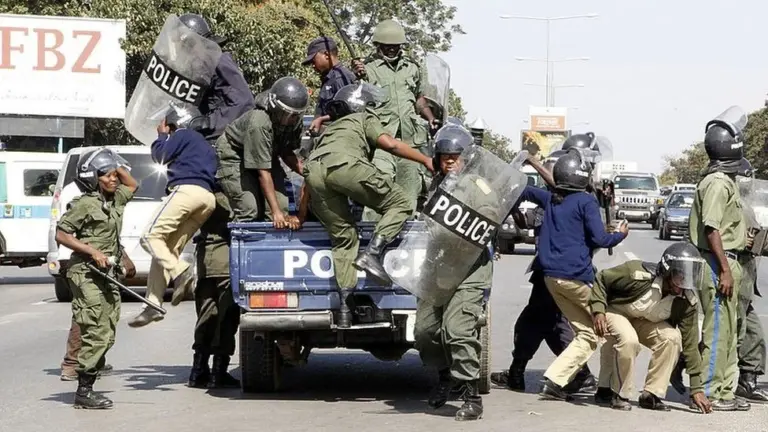
Three police officers from Mpongwe police station are in critical condition at Mpongwe Mission Hospital after being severely beaten and left for dead during a riot that erupted  in Kalukwiso area, Mpongwe district.

Also badly injured was a farm manager, Mr. Kabisa, who was rushed to Nampamba Clinic for medical attention.

The Radio Mpongwe team that arrived at the scene found a vehicle belonging to farm owner Clayton Jones burned to the ground, while squatters waited for Copperbelt Permanent Secretary Lawrence Mwanza to address them.

The unrest began when Mpongwe police set up a camp to enforce a court order evicting squatters from the farm. However, the squatters, who felt harassed by Jones, believed that the government was not doing enough to protect them and decided to take matters into their own hands.

Some squatters argued that the land had been legally obtained through traditional leadership, questioning why the government was not offering them protection. Many expressed feelings of fear and insecurity, comparing their situation to being under colonization.

In response, Copperbelt Permanent Secretary Lawrence Mwanza acknowledged the issue, assuring that the government was working to resolve it in accordance with the law. He urged the squatters to refrain from taking the law into their own hands and warned that those responsible for the violence, including the burning of property and assaulting officers, would face legal consequences.

Nakonde DC warns against illegal mining

0

Nakonde District Commissioner Marvelous Sikapizye has warned residents of Nakonde and the surrounding areas not to engage themselves in illegal mining activities.

This follows the recent discovery of gold in Movu village of Nakonde district in Muchinga Province which saw 16 people being apprehended.

Mr Sikapizye told the the media in an interview in Nakonde district this morning that those who will be found wanting will face the law.

He said residents should not engage in the gold mining activities that has been recently discovered in Nakonde district if they do not have proper documentation.

“I want to take this opportunity to warn those who want to engage in illegal mining activities that the government will not tolerate such, let them do a better thing by following the right procedure,” he said.

The DC further encouraged cooperatives and those willing to take part in mining activities to follow procedures through acquiring the necessary mining documents that will allow them to carry out mining activities in a legal manner.

He further stated that recently police apprehended a total of 16 Nakonde residents for undertaking illegal mining at the newly discovered site.

Meanwhile, Muchinga Province United Party for National Development (UPND) Coordinator Frederick Chimeya has appealed to residents in the area to adhere to President Hakainde Hichilema’s directive on mining activities.

Mr Chimeya explained that following the directive will bring sanity in mining areas.

The recently discovered gold site in Nakonde district marks the number of gold mines in Muchinga rising to three with two mines located in Mpika and Shiwang’andu districts.

Mutale Mwanza cyber-harassing case goes to trial

1

Trial in a matter in which Lusaka media socialite Mutale Mwanza is accused of cyber-harassing media personality, Daisy Lusumpa, popularly known as Chichi Daisy, has commenced in the Lusaka Magistrate’s court.

The first witness, a Copperbelt University student, Mwiya Nyambe 27, narrated before Magistrate Mbuywana Sinvula, how he came across a posting on Facebook purported to have been posted by Ms Mwanza concerning Ms Lusumpa.

Mr Nyambe told the court during cross-examination that while scrolling on facebook, a post popped up where Ms Mwanze is alleged to have posted a message demeaning Ms Lusumpa.

He told the court that he saw the post on facebook on November 9th, 2024, when he was scrolling between 14:00 hours and 22:00 hours.

The media reports that Mr Nyambe however did not state specifically the time the post popped up on facebook when quizzed by the defense lawyers.

“I was on facebook scrolling like any other day and I came across a post made by Mutale Mwanza concerning Chichi,” he told the court.

Mr Nyambe further testified that upon reading the alleged post, he made a phone call to alert Ms Lusumpa of the post allegedly made by Ms Mwanza.

He informed the court during cross-examination that Ms Lusumpa sounded disturbed when he informed her of the post.

He further said the facebook post which was allegedly made by Ms Mwanza on November 7th 2024, was circulating on her facebook page called M-Nation.

The witness stated during trial that he was not imagining things, as he had seen the post which obviously referred to Ms Lusumpa.

He explained that after having a pre-conversation with Ms Lusumpa, he was then instructed to go and report the matter to the Zambia Police headquarters.

Mr Nyambe added that the complainant, Ms Lusumpa, gave him the name of the Police Officer to see at the Zambia Police headquarters.

When further quizzed by the defense lawyers, Mr Nyambe revealed that the person Ms Lusumpa instructed him to see was a female Police Officer.

During his testimony to the court, Mr Nyambe said he had known the complainant since childhood, adding that he considers Ms Lusumpa as an elder sister.

The court also heard that the witness was using an iPhone XR when he came across the post on facebook allegedly shared by Ms Mwanza.

And when asked by the defense lawyers representing Ms Mwanza whether he was in possession of the iPhone, Mr Nyambe said he did not have the said iPhone XR.

The defense lawyers told the court that they wanted the iPhone XR in question, which was used by the witness to verify the post.

The state prosecutors then made an application to the court that the trial be adjourned as they were unable to proceed because the phone which was supposed to be used during trial was off.

And the prosecutor informed the court that the adjournment is to enable the prosecution team to prepare.

However, the defense lawyers objected to the application for adjournment, saying that the state lawyers earlier informed the court that they were ready for trial.

The defense lawyers wondered why the state lawyers wanted the trial to be adjourned after indicating that they were ready.

In response, the state lawyers argued that they will not be hurried or directed by the defense as they are the owners of the case.

The matter has since been adjourned to March 6th 2026 for mention and March 13th 2026 for continuation of trial.

This is in a case where Ms Mwanza is charged with harassment, utilising means of electronic communication, Contrary to Section 69 of the Cyber Security and Cyber Crimes Act.

Under this provision, a person who intentionally uses a computer system to initiate electronic communication with intent to coerce, intimidate, harass, or cause emotional distress towards another person, commits an offence.

It is alleged that on November 7, 2024, Ms Mwanza used her facebook page called M-Nation with intent to intimidate, harass or cause emotional distress to Ms Lusumpa.

Upon conviction, such a person is liable to a fine not exceeding five hundred thousand penalty units, imprisonment for a period not exceeding five years, or both.

Judgment in PF case coming up on 25 February 2026

9
Judgment in PF case coming up on 25 February 2026

The Lusaka High Court is set to deliver judgment on 25 February 2026 in the long-running legal dispute concerning the leadership of the Patriotic Front (PF), a case that has exposed deep fractures within Zambia’s former ruling party.

According to a Notice of Judgment issued by the court, Lusaka High Court Judge Conceptor Chinyanwa Zulu will hand down the ruling in a matter that centres on the legitimacy of PF leadership arrangements following internal disputes that escalated into litigation.

The case arises from a consent agreement entered into in May 2025 between senior PF members led by Brian Mundubile, the Mporokoso Member of Parliament and a member of the party’s Central Committee, and Miles Sampa, the Matero Member of Parliament who has laid claim to the PF presidency.

The consent agreement was intended to resolve the protracted leadership crisis that had engulfed the party following competing claims to its top office. However, disputes over the interpretation and implementation of that agreement later prompted further legal action.

Court records indicate that a petition was filed in August 2025 outlining the terms agreed upon by the parties in May. Central to the agreement was the nullification of the PF meeting held on 24 October 2023, during which Miles Sampa was elected as party president. The parties agreed that the meeting and its outcomes were to be declared null and void.

The agreement further provided for the restoration of PF leadership to the status quo that existed prior to the disputed October 2023 meeting. This included the nullification of all appointments and decisions arising from that meeting, as well as the reinstatement of office bearers as they stood before that date through the office of the Registrar of Societies.

Despite the consent agreement, disputes persisted, culminating in continued court proceedings to determine the legal standing of the various leadership claims and the effect of subsequent actions taken within the party.

The matter before the High Court also involves additional parties who were later joined to the proceedings as interested parties. These include the expelled Mafinga Member of Parliament, whom government has recognised as Acting President of the Patriotic Front and as Leader of the Opposition in the National Assembly. Also joined to the case is Morgan Ngona, who has been presented as Secretary General of the party.

The inclusion of these parties reflects the complexity of the dispute, which has extended beyond internal party mechanisms into broader questions of recognition, authority, and representation within Parliament and public institutions.

At the heart of the case is the question of whether the consent agreement reached in May 2025 remains binding, how it should be interpreted, and whether subsequent actions taken by any of the parties were consistent with its terms. The court is also expected to address the legal status of decisions made following the disputed leadership meeting and the role of statutory bodies in recognising party officials.

The PF leadership wrangle has had significant political consequences, including uncertainty over who holds legitimate authority within the party and who is entitled to act on its behalf in official forums. The dispute has also affected the party’s standing as the largest opposition grouping in Parliament.

The judgment scheduled for 25 February 2026 is expected to provide clarity on these outstanding issues. Once delivered, the ruling is likely to determine the immediate leadership structure of the Patriotic Front and set the legal parameters for any further actions by the party and its members.a

Nevers Mumba makes careless statement over ECL’s burial

10

Nevers Mumba makes careless statement over ECL’s burial
By Brian Matambo | 6 February, 2026

I have just listened to a clip of former Republican Vice President Nevers Mumba preparing his audience for what he described as a careless statement. The words that followed were more than careless. They were reckless. No one expects Dr Mumba to be generous in tone toward anything connected to the late Sixth Republican President Edgar Chagwa Lungu, his family, or the Patriotic Front. That reality has long been accepted by many.

What cannot pass without correction, however, is the quiet rewriting of facts and law that Dr Mumba attempts to slip into the public conversation under the banner of moderation and unity. He suggests that government has merely sought to ensure President Lungu is buried in Zambia, that there has been no insistence by President Hakainde Hichilema to see the body, and that the dispute has been inflated by suspicion and misunderstanding. This framing misleads.

There is no legal obligation on President Hichilema to view the body of his predecessor, nor is there any legal obligation on the family to facilitate such an act. Burial decisions, in law and custom, begin with the family. The State’s role is facilitative, not coercive. Dr Mumba’s emphasis on what the President has or has not said about seeing the body distracts from the real issue. The family’s concern has never been voyeurism. It has been dignity and non-interference.

Dr Mumba’s attempt to reduce the matter to a light, almost administrative issue collapses when placed against reality. For eight months, the Lungu family has been dragged through an aggressive court process in a foreign jurisdiction. That fact is not peripheral. It is central. One cannot speak of honour, respect, or unity while the full force of the State bears down on a widow and her children. Minimising that reality is not neutrality. It is wilful blindness, particularly troubling from a man of the collar who should understand compassion.

The naivety on display is uncanny. Dr Mumba strains to avoid offending President Hichilema even where candour is required. He acknowledges there was no friendship between the two men. He concedes the President does not need to attend the funeral. He admits the relationship was cold and professional at best. Yet he stops short of the obvious conclusion. If the President does not need to be present, and if there was no personal bond to honour, then the family’s insistence on privacy should have been respected from the outset. A vuvuzela remains a vuvuzela, period.

Most troubling is Dr Mumba’s warning that President Lungu should not be remembered as someone buried in bitterness. That raises a simple question: whose bitterness? In public life, only three men have displayed a visible and unresolved bitterness toward ECL: Nevers Mumba himself, President Hichilema, and Wynter Kabimba. The Lungu family has shown none. They have asked for no favours, demanded no spectacle, and sought only to mourn in peace and dignity. Perhaps that single piece of advice would have been better directed elsewhere.

It is disingenuous to suggest the family is staining ECL’s legacy. Legacies are not preserved by force, protected by court orders, or enhanced by dragging grief through litigation. If bitterness has been injected into this moment, it is through the disproportionate use of State power against a bereaved family. That is what the world has seen. That is what history will record.

Dr Mumba says he made a careless statement. He did. But carelessness in moments like these is not harmless. It becomes a shield for excess and a soft landing for injustice. The law does not compel what he implies. The family owes the State nothing beyond the respect already shown. Dignity, which Dr Mumba himself invokes, cannot coexist with intimidation.

The Lungu family seeks no validation from State House, no reconciliation ceremonies, no public theatre. They seek space, quiet, and the simple right to lay a husband and father to rest without the shadow of power hovering over the grave. That is not bitterness. That is humanity.