Sunday, June 14, 2026
18 C
Lusaka
Home Blog Page 172

UN praises Zambia for overcoming daunting challenges

1

The United Nations (UN) has commended the Zambian government for overcoming various challenges in the past few years.

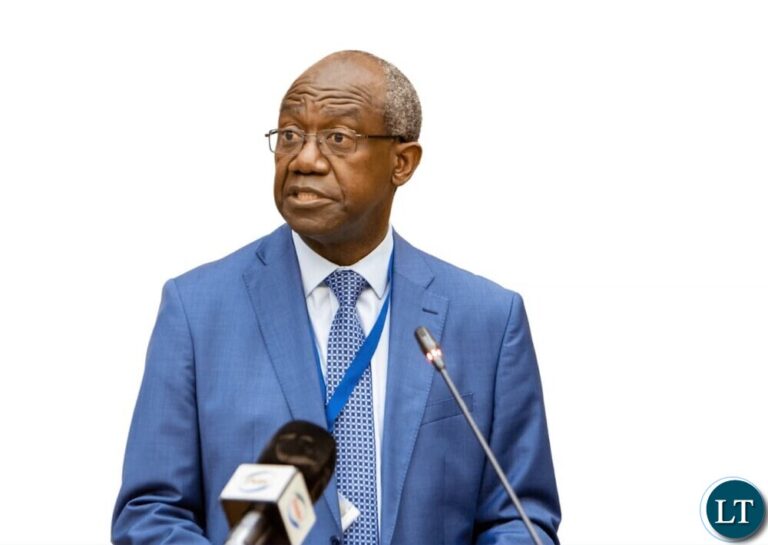
United Nations Resident Coordinator, Beatrice Mutali, particularly mentioned the country’s successful debt restructuring and the natural calamities like the drought as the challenges which Zambia endured.

Ms Mutali was speaking on the sidelines of President Hakainde Hichilema’s address to the annual greeting of the diplomatic corps event today where he highlighted the country’s remarkable progress and steadfast commitment to sustainable development.

She described the President’s address as enlightening and well structured, saying it also provides a clear overview of Zambia’s journey and aspirations.

She said from the United Nations’ perspective, Mr Hichilema’s speech reaffirmed Zambia’s unwavering dedication to the Sustainable Development Goals (SDGs).

Ms Mutali noted that the President emphasised the country’s commitment to achieving these global targets and acknowledged ongoing reforms within the UN, which are vital in a rapidly changing world.

The United Nations Resident Coordinator further appreciated the President’s assurance for a peaceful and transparent electoral process scheduled for August 2026.

Ms Mutali added that Zambia’s progress and dedication to sustainable development and democratic stability continue to earn the country international support and optimism for the future.

“The address highlighted significant improvements across various sectors. Zambia has experienced positive growth in the energy and mining sectors, fostering a more conducive environment for investment and economic development. These advancements indicate that Zambia is on an upward trajectory,” she stated

Kangwa directs senior public service officers to work harder

0

Secretary to the Cabinet, Patrick Kangwa has directed senior public service officers to intensify their work and ensure uninterrupted service delivery to citizens, particularly as the country prepares for the 2026 general elections.

Mr Kangwa said the public service must remain professional, efficient and non-partisan, noting that government business must continue seamlessly regardless of the political calendar.

He was speaking in Lusaka today when he officiated at the first Senior Public Service Management meeting of 2026, which brought together Permanent Secretaries, Chief Administrators and other senior government officials.

At the same meeting, the Provincial Service Delivery Charters were launched.

“I urge you to work even harder and ensure that there is no gap in service delivery to the people of Zambia,” Mr Kangwa said.

He clarified that during the election period, the constitutional responsibility for the discharge of ministerial functions will rest solely on the republican President, supported by the Vice President, and not with Permanent Secretaries.

“There will be no Permanent Secretary acting as a minister. Permanent Secretaries will remain in their substantive positions and continue delivering for the Zambian people as we have always done,” he emphasised.

He reminded the officials that the core purpose of the Senior Public Service Management meetings is to ensure that Cabinet decisions are communicated, monitored and implemented without delay as they feed directly into cabinet.

He directed that the last Thursday of every month be reserved strictly for Senior Public Service Management meetings, warning that no travel or alternative engagements will be approved on those dates.

Mr Kangwa has meanwhile commended the public service for achievements recorded over the past four years under President Hakainde Hichilema’s administration, describing the progress as unprecedented.

He cited milestones such as the speedy constitutional amendment process, reduction of inflation to single digits, successful engagement with the International Monetary Fund, improved agricultural productivity, and expanded social services as some of the major achievements in the past four years.

Mr Kangwa also noted progress in health infrastructure, energy, mining, resettlement and agriculture, saying these achievements are a direct result of a focused and professional public service.

“Even as political activity intensifies, our role as the public service is to remain focused and deliver. Government business must continue efficiently and without interruption,” he said.

And the Secretary to the Cabinet has urged civil servants that have political ambitions to resign from the civil service.

“Our loyalty to the Constitution, the duly elected government of the day, and the Zambian people must be unquestionable. Any Permanent Secretary intending to join active politics must resign from the civil service immediately. Failure to do so will result in strict enforcement of the law,” he stated.

Speaking at the same event, Head of the Presidential Delivery Unit (PDU), Kusobile Kamwambi, described the launch of the Provincial Service Delivery Charters as a major milestone in decentralising services.

Ms Kamwambi noted that the launch puts all 10 provincial administrations into the programme which will further strengthen service delivery at grassroots level.

She revealed that the generic Provincial Service Delivery Charter covers 103 services across 19 functional areas, ranging from the issuance of national registration cards to soil mapping.

She explained that while the charter provides a national framework, provinces will customise it to reflect local administrative realities and service availability, adding that they were aligned with parent ministries, devolved to provincial level and validated through consultations held in November last year.

And Secretary to the Treasury, Felix Nkulukusa, said the government has made significant progress in stabilising the economy through fiscal consolidation, debt restructuring and sustained policy reforms, with a strong focus now shifting to job creation and private sector-led growth.

Mr Nkulukusa said the meeting was meant to reflect on the state of the economy which the government inherited in 2021, the priorities set at the time, and the extent to which those priorities have been achieved.

He explained since 2021, the key priority has been fiscal consolidation and debt restructuring to restore macroeconomic stability and sustainability.

President Hichilema pays tribute to diplomatic corps

0

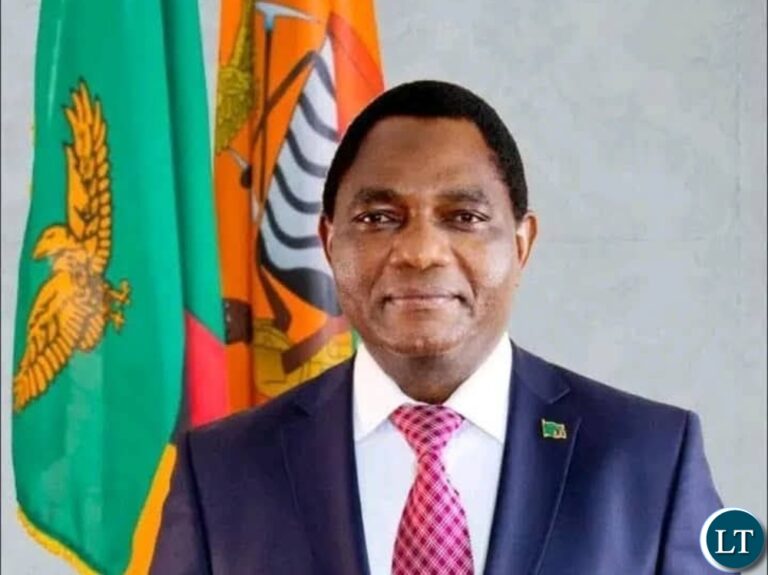
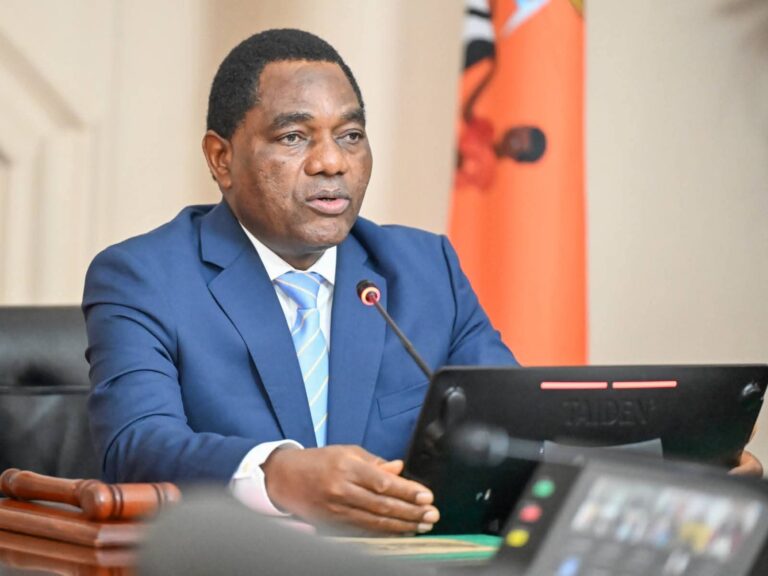
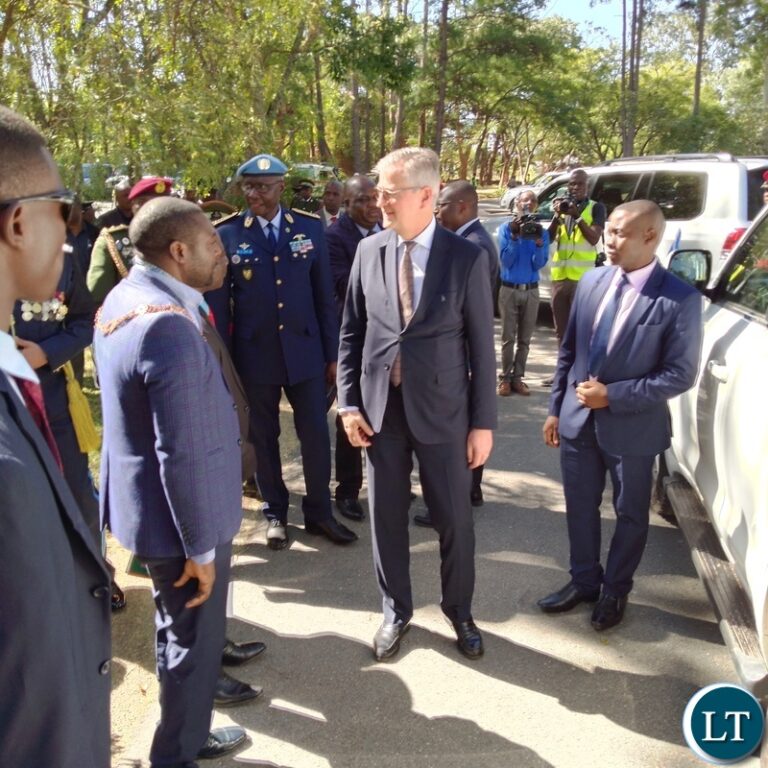
President Hakainde Hichilema has appreciated the working bilateral relations with the diplomatic corps that have continually supported reforms in the country’s economic agenda, particularly in 2025.

Speaking during the annual greeting of the diplomatic corps in Lusaka today, President Hichilema said Zambia values dialogue, partnership and cooperation with foreign envoys that strengthen relations with different states and envoys.

The President said Zambia has continued to advance with positive reforms in areas such as the rule of law, procurement, utilisation of public resources, regulations, laws and policies which are central for improving the operating environment for the economic reconstruction programme.

The Head of State explained that economic reconstruction remains the government’s priority, indicating that Zambia is looking to over 6.0 percent gross domestic product growth in 2026.

“It is the economic diplomacy reforms around increased trade and investment that will lead to benefiting the ordinary people of Zambia,” President Hichilema stated.

And the President noted that strong reforms in mining have led to the country’s economic growth.

President Hichilema said the mining industry has also recorded the largest investment while correcting the fallacy that mining companies are not paying tax.

“This has supported the social sector like health, social cash transfer, education and the welfare of the elderly, youths, children and women’s welfare,” he added.

The President further said agriculture also contributed significantly to economic growth, with a record breaking production of over 3.7 million tonnes of grain maize in the last season.

Meanwhile, President Hichilema said there is need to accelerate the interconnector projects with Tanzania, Malawi and Mozambique to help advance in the provision of electricity for Zambians.

And speaking on behalf of the foreign envoys accredited to Zambia, Dean of the Diplomatic Corps, Hawa Hassan Mohammad, assured continued support to Zambia’s development agenda.

Ambassador Mohammad stated that the diplomatic corps will continue to engage with the government in areas of shared interest.

The Dean of the Diplomatic Corps also congratulated Zambia for being appointed as the current Vice Chair and in-coming Chairperson of the Southern African Development Community (SADC).

“This reflects the country’s constructive engagement and regional affairs. Zambia’s engagement at regional, continental and global levels including the promotion of peaceful resolution is worthy of recognition,” Ambassador Mohammad said.

Ambassador Mohammad further acknowledged Zambia’s progress in food security, which she said supports livelihoods and economic stability.

Meanwhile, acting Minister of Foreign Affairs, Rodney Sikumba, indicated that such engagements continue to strengthen understanding, foster cooperation, as well as advance the collective aspirations for peace, stability and sustainable development.

Mr Sikumba said Zambia has placed strong emphasis on re-engagement with the international community, with a desire to build trust, attract investment, expand trade, and create opportunities to improve livelihoods, while contributing positively to regional and global development.

He expressed gratitude to the Diplomatic Corps for the partnerships, the technical and financial cooperation extended to Zambia, as well as the constructive engagement that has characterised the relations.

Energy Minister launches NRDC 20MW solar project

0

Government has launched the construction of a 20-megawatt solar power plant and two grid-connected solar facilities at the Natural Resources Development College (NRDC) in Lusaka.

The Project, which   is being developed by ZESCO Limited, through its subsidiary company Kiyona Energy Limited, is part of Zambia’s strategy to diversify its energy mix and reduce reliance on hydropower, the Energy Minister said on Tuesday.

Speaking at the groundbreaking ceremony, Minister of Energy Makozo Chikote said the project marked a key milestone in the country’s transition toward a cleaner, more resilient and sustainable energy system.

He said the project includes a 20 MW solar power plant that will feed into the national grid and two dedicated solar facilities that will supply NRDC directly, ensuring uninterrupted power for teaching, research and agricultural production.

 “Eighty-five percent of Zambia’s electricity generation has historically depended on hydropower, when our reservoirs were depleted by drought, it exposed the vulnerability of that model and forced us to accelerate investment in alternative energy sources, particularly solar,” Mr Chikote said.

The minister reiterated the government’s commitment to powering public institutions with solar energy to prevent future power crises, describing the NRDC project as a model for similar developments across the country.

ZESCO Ltd Managing Director Engineer Justin Loongo reaffirmed ZESCO’s commitment to building a resilient, affordable and sustainable energy sector, citing climate change and rising electricity demand as key drivers for increased investment in renewable energy.

Mr Loongo said solar energy projects such as the NRDC plant would help reduce pressure on the national grid, improve system resilience and support long-term energy stability, especially as reliance on hydropower becomes increasingly uncertain due to changing rainfall patterns.

Munali Member of Parliament Mike Mposha said the project would benefit surrounding communities through job creation, use of local skills and stimulation of economic activity.

“These are the kinds of projects our people want to see, projects that not only produce power but also transform communities,” he said.

And Ministry of Agriculture Acting Permanent Secretary Chizumba Shepande said the project would provide reliable and sustainable energy to support irrigation systems, modern laboratories and research facilities at the college.

Meanwhile, Attorney General Mulilo Kabesha said the project reflected sound governance, strong partnerships and a commitment to sustainable national development.

Taiho Service Company Limited representative Zhou Bing said the project reflected effective collaboration among key public and private sector stakeholders.

And Kiyoma Energy Chief Executive Officer Clement Siame said his firm was committed to operating the plant in line with the highest technical, environmental and safety standards.

Meanwhile residents of Munali constituency have thanked government for the project.

Naomi Mubili said the project site was a dumping site where people used to get killed and said the project will empower youths through employment.

While Gala Banda thanked government for allocating the former dumping site to the Kiyo Energy Company which, he said, had brought development to the area.

President Hichilema urges stronger AU political will for reforms

0

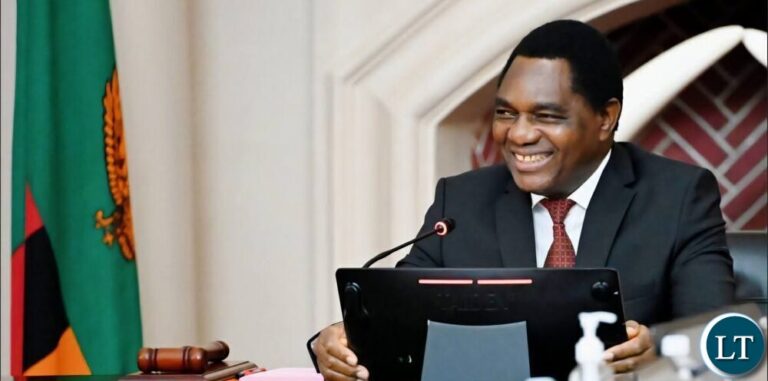
President Hakainde Hichilema has urged African Union (AU) member states to demonstrate stronger political will in implementing institutional reforms, stressing the need to accelerate decision-making and overcome fragmentation within the continental body.

Speaking during a virtual AU Heads of State Summit on institutional reforms at State House, President Hichilema emphasized the importance of peace and security, calling on the AU Peace and Security Council to uphold the principle of rotation and strengthen early warning and response mechanisms.

President Hichilema noted that early warnings must be matched with decisive action, while accountability and responsibility within the AU must be enhanced to improve effectiveness.

“As we advance institutional reforms, we must confront issues of fragmentation and strengthen political will to deliver tangible results,” he said.

The President further underscored the importance of deepening intra-African trade as a driver of economic growth, noting that direct trade among African countries would generate resources for critical sectors such as education and health.

He added that investing in education, particularly for young people, would foster lasting peace and stability.

President Hichilema commended Kenyan President William Ruto for his leadership in advancing AU reforms.

Meanwhile, Burundian President Évariste Ndayishimiye reaffirmed his country’s support for reforms aligned with Agenda 2063, stressing the need for financial independence from external partners and greater investment in mediation and negotiation to promote peace.

President Ruto, as champion of AU institutional reform oversight, highlighted the importance of operationalising the AU Court of Justice to strengthen justice delivery across the continent.

Earlier, AU Chairperson and Angolan President João Lourenço, represented by Foreign Affairs Minister Tete António, urged swift implementation of reforms and collective action by member states to address challenges facing the AU.

 the virtual summit was convened to review progress on AU institutional reforms and to chart the way forward towards a more efficient, accountable and people-centered African Union.

Selective Justice and the PF Convention: Hichilema Must Answer Growing Doubts Over Judicial Independence in Zambia

4

Yesterday was a day of coincidences – injunction against the authentic Patriotic Front leadership, Miles Sampa’s hold on the Matero’s parliamentary seat protected, and the Tonse leadership taken away from the authentic PF leadership at night!

But let me focus a bit more on what has unfolded around the continued court denials of the PF convention. This is not merely a legal controversy. It is a direct assault on Zambia’s democratic architecture. When courts repeatedly intervene in internal party processes at a time of heightened political sensitivity, the issue ceases to be about law alone and becomes a matter of national conscience.

It is now impossible to ignore the growing perception that some sections of the judiciary have abandoned the sacred principle of impartiality and chosen instead to play an active role in shaping political outcomes. Whether by design, fear, convenience, or quiet alignment with the Executive, the result is the same: justice delayed, justice distorted, and democracy weakened.

Zambia is heading into a critical general election in August. At such a moment, judges with even a modest commitment to democratic stability should understand the weight of their decisions. Courts are not operating in a vacuum. Every injunction, delay, and selective urgency carry political consequences. To pretend otherwise is either dishonest or dangerously naïve.

The continued blocking of the PF convention does not punish a political party alone. It punishes millions of citizens who believe in competitive politics, pluralism, and the right of political organisations to organise without judicial micromanagement. Democracy thrives on choice. When courts are seen to systematically narrow that choice, they are no longer neutral arbiters; they become political actors.

This is where the tragedy lies. A judiciary that should serve as the final shield against abuse of power is increasingly viewed as an extension of that power. That perception, once entrenched, is extremely difficult to reverse. Public confidence in the courts is not a luxury; it is the oxygen of constitutional governance. Without it, rulings may be legally clothed but morally naked.

Mr Hakainde Hichilema can not escape responsibility for this crisis of confidence. Even if one were to assume that he gives no direct instructions to the courts, leadership is also about perception, restraint, and safeguarding institutional independence. Silence in the face of obvious public concern is not neutrality; it is complicity by omission. A president who truly respects the separation of powers must be visibly uncomfortable when courts are accused, rightly or wrongly, of serving his political interests.

What we are witnessing is not the strengthening of the rule of law but its weaponisation. Legal technicalities are being elevated above democratic substance. Speed is applied selectively. Urgency appears only when opposition processes are at stake. This pattern, whether intentional or not, feeds the belief that justice is no longer blind but politically guided.

History is unforgiving to judges who confuse temporary favour with lasting legacy. Political seasons change. Presidents come and go. What remains is the record. Those who use judicial authority to advance or protect political agendas will be remembered not as guardians of the Constitution but as contributors to democratic decay.
Zambia has walked this road before. We know where it leads: weakened institutions, polarised citizens, and elections whose credibility is questioned before the first ballot is cast. Recovering from such damage is costly and slow. Some nations never fully do.

This moment demands courage from the bench. It demands restraint from the executive. Above all, it demands honesty. Courts must act and be seen to act, with independence, balance, and urgency that serves democracy, not suffocates it.

If the judiciary continues on its current path, it will not be the Patriotic Front alone that suffers. It will be Zambia’s democratic soul that is placed on trial. History will pass a verdict far harsher than any injunction issued today.

Fred M’membe
President of the Socialist Party and People’s Pact Presidential 2026 Candidate

Hichilema Credits Zambians as Economic Reforms Show Results

President Hakainde Hichilema has acknowledged progress in Zambia’s economic recovery, pointing to stabilisation of the kwacha, a decline in inflation, and the completion of the International Monetary Fund’s Extended Credit Facility Programme.
According to a press release issued by the Office of the President, inflation fell into single digits for the first time since August 2023, dropping to 9.4 percent in January 2026 from 11.2 percent the previous month. The reduction was described as a sign of easing pressure on household budgets.

The President expressed appreciation to Zambians for what the statement described as patience, resilience, and continued support throughout the country’s economic recovery efforts. The progress was attributed to fiscal discipline and structural reforms implemented over recent years.
The statement indicated that Zambia’s recent economic gains follow the successful conclusion of the IMF-supported programme, with the President acknowledging the Fund’s role in supporting the reform agenda. It noted that the government intends to build on the foundations established under the programme as it pursues continued economic stabilisation and growth.

The release recalled that Zambia was in sovereign debt default in 2021, contrasting that position with what it described as the country’s current trajectory toward economic recovery and improved stability. It stated that the past four years were dedicated to implementing reforms intended to restore macroeconomic stability, strengthen public finances, and support sustainable growth.

The IMF was cited as confirming Zambia’s positive economic outlook, including a projected real GDP growth rate of 5.8 percent in 2026. The statement also reported a reduction in public debt, noting that debt levels declined from 112 percent of GDP in 2021 to a projected 78 percent in 2025.
According to the release, lower debt levels have contributed to reduced interest payments, creating fiscal space for increased spending on public services and social programmes. The statement indicated that this shift has allowed more resources to be directed toward clinics, schools, and road infrastructure, with the President linking debt relief to improved national investment capacity.

The press release also referenced increased government investment in social and development initiatives, including the Farmer Input Support Programme (FISP), free education, expanded Constituency Development Fund (CDF) allocations, and the reintroduction of university bursaries. These measures were presented as part of broader efforts to strengthen livelihoods and expand access to essential services.

The President acknowledged that economic recovery remains ongoing and stated that the reform process is not yet complete. The statement noted that work remains in areas such as job creation, energy reliability, and expanding opportunities for young people.

The release further emphasised that lower debt and improved fiscal space can contribute to long-term national development, linking debt reduction to the ability of families to invest in education and future opportunities rather than being constrained by financial obligations.

The statement encouraged Zambians to continue working with the government as it seeks to translate macroeconomic gains into broader employment opportunities and improved living conditions across the country.
The press release was issued by Clayson Hamasaka, Chief Communications Specialist at State House, and dated 29 January 2026. Click link below.

PRESIDENT HICHILEMA THANKS ZAMBIANS AS ECONOMIC REFORMS DELIVER, 29TH JANUARY,2026


Zambia records highest-ever FDI inflows at US$2.36 billion in 2024

4
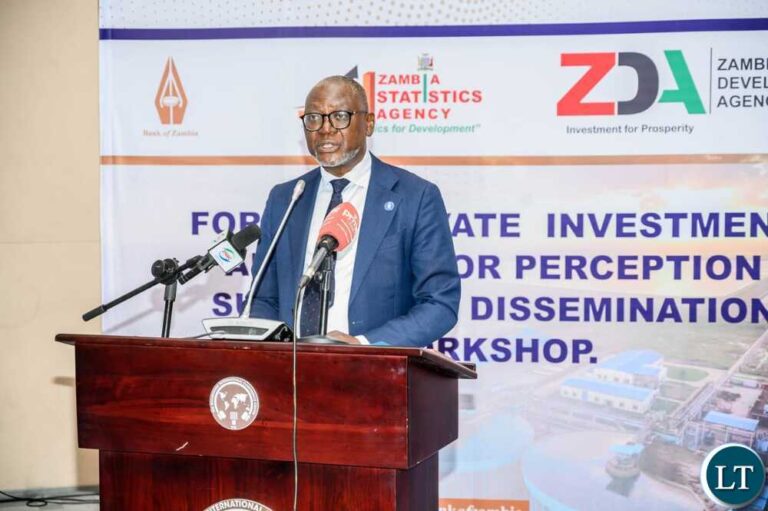
Zambia recorded a historic high in foreign direct investment (FDI) inflows, reaching US$2.36 billion in 2024, according to the Bank of Zambia (BoZ).

BoZ Deputy Governor Dr Francis Chipimo said the figure represents the highest FDI inflow ever recorded in the country and marks a sharp increase from US$641.1 million in 2023. He said the growth reflects renewed investor confidence in Zambia’s economic recovery and policy direction.

Dr Chipimo said the increase was largely driven by reinvested earnings in the mining, manufacturing and deposit-taking sectors, as well as higher equity capital and intercompany debt flows into mining.

Findings from the 2025 Foreign Private Investment and Investor Perceptions Survey (18th edition) show that Zambia’s net private-sector foreign liabilities remained relatively stable, recording a net inflow of US$712.9 million. The stock of foreign liabilities rose by 9.9 percent to US$19.8 billion, with mining accounting for 60.1 percent, manufacturing 15.5 percent, and deposit-taking corporations 8 percent.

However, preliminary data for the first half of 2025 indicate that FDI inflows declined to US$157.9 million, compared to US$580.5 million during the same period in 2024. The decline has been attributed mainly to debt repayments by mining firms to affiliated entities.

Zambia Development Agency Director General Albert Halwampa said the strong FDI performance in 2024 was linked to government reforms, particularly the debt restructuring programme, which improved investor confidence.

The survey is jointly conducted by the Bank of Zambia, the Zambia Development Agency and the Zambia Statistics Agency under the Balance of Payments Statistical Committee, and is compiled in line with international statistical standards.

PF downplays Mundubile’s Tonse Alliance victory

2

The Given Lubinda-led Patriotic Front (PF) faction has played down Brian Mundubile’s election as Tonse Alliance chairman, likening it to a footballer scoring an own goal.

The Dan Pule-led Tonse Alliance on Monday elected Mr Mundubile as its chairperson and presidential candidate for the August 13 general election, despite Mr Lubinda having directed PF structures to disregard activities initiated by Mr Pule and his associates.

PF mobilisation chairperson and presidential hopeful Greyford Monde said Mr Mundubile’s decision to defy the directive showed what he described as “inside trading” within the alliance faction.

Mr Monde said Mr Mundubile should have followed agreed instructions, guidelines and processes, adding that his actions were intended to demobilise the party. He said the alliance had earlier agreed to select its leader at an agreed time.

He further said Mr Mundubile’s alleged insubordination was not new, citing his attendance at what he described as an illegal Dan Pule-led Tonse Alliance meeting that resulted in the PF’s removal from the alliance.

Mr Monde made the remarks during an interview on the breakfast show.

Lungu family yet to file notice of appeal – Government

5

Government has disclosed that it has not yet received a notice of appeal from the family of former President Edgar Lungu, who intend to challenge a court order directing that his body be repatriated to Zambia for burial.

In an interview with Diamond News, Attorney General Mulilo Kabesha said the Zambian government has not been served with either the notice of appeal or the grounds of appeal.

Mr Kabesha noted, however, that the Lungu family still has until February 11, 2026, to file their submissions in accordance with the court order.

In December last year, the South African Court of Appeal granted the Lungu family permission to appeal against the order requiring that Mr Lungu’s remains be repatriated to Zambia.

It has now been 237 days since former President Edgar Lungu died on June 5, 2025, and he has yet to be buried.

Chingola will not be tolerated as a lawless town – Army Commander Zyeele

3

Zambia Army Commander Lieutenant General Geoffrey Choongo Zyeele has warned that the perception of Chingola as a lawless town and a haven for criminal activities will not be tolerated.

Lt Gen Zyeele said security is a collective responsibility that requires close collaboration among all stakeholders to ensure peace and stability. He said as Chairperson of the Central Joint Operations Committee, all necessary measures will be taken to keep Chingola and the rest of the country peaceful and secure.

He made the remarks yesterday during a joint courtesy call on Chingola Mayor Johnson Kang’ombe and District Commissioner Howard Kamwandi.

The Army Commander assured local authorities that the Zambia Army will maintain a permanent presence in Chingola to support security operations and promote sustainable development on the Copperbelt.

Later, Lt Gen Zyeele visited the Senseli Open Pit Copper Mine, where he met Zambia National Service personnel and assured them that the Airborne Regiment remains on standby to respond to any security challenges.

ACC arrests four in $10m Livestock loan scandal

0

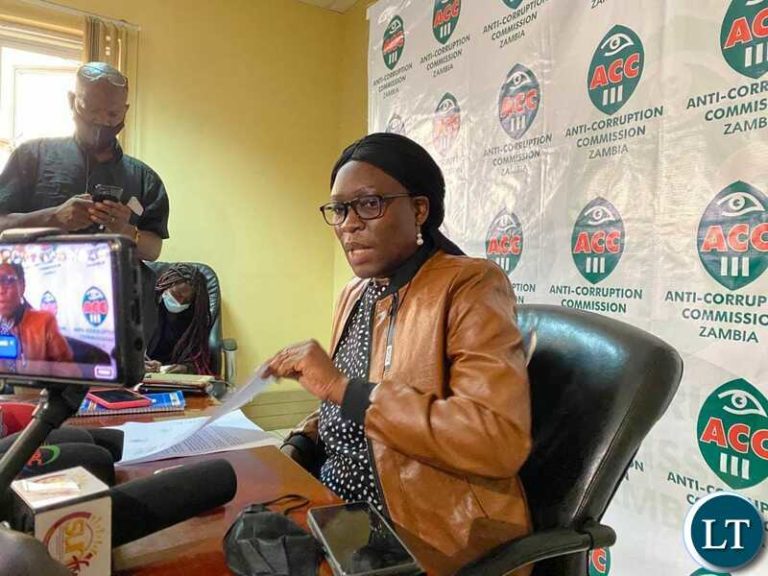
The Anti-Corruption Commission (ACC) has arrested and charged four public officers in connection with the alleged misappropriation of part of a USD 10 million loan facility obtained from the African Development Bank (ADB) under the Strategic Livestock Investment and Management Project (SLIMP).

The arrests bring the total number of suspects arrested in the case to seven, as investigations into the alleged abuse of public resources continue.

In a statement issued by ACC Director General, Daphne Chabu, the suspects were apprehended during the second phase of investigations into the alleged diversion of funds from the SLIMP loan, which was secured by government in 2019 to support livestock development.

The Director General noted that among those arrested is Emmanuel Chilala (41), an Accountant at the Ministry of Fisheries and Livestock, who has been charged with three counts of corrupt acquisition of public property, contrary to the Anti-Corruption Act No. 3 of 2012.

She said the charges relate to the alleged fraudulent diversion of K15.6 million, which he is accused of drawing as imprest through his personal account from various SLIMP accounts.

Mr Chilala is also facing three counts of possession of property reasonably suspected to be proceeds of crime, involving landed properties valued at K4.56 million and a motor vehicle valued at K200,000.

In addition, Ms. Chabu said Mr Chilala  has been charged with six counts of concealment of property after allegedly transferring ownership of seven properties in Chilanga District to his mother and a farm to his father.

Another suspect, Ackim Mwalilino (32), an Acting Livestock Research Production Officer, has been charged with one count of corrupt acquisition of public property following the alleged diversion of part of K4.7 million drawn as imprest through his personal account.

The Director stated that Mr Mwalilino has further been charged with three counts of possession of property suspected to be proceeds of crime, involving assets valued at K3.45 million.

The Commission has also charged Sharon Hikaumba (40), a Stenographer at the Ministry of Agriculture and spouse to Mr Chilala, with three counts of concealment of property, while the charges relate to the alleged transfer of ownership of three motor vehicles valued at K1.5 million to her grandmother and father-in-law.

Meanwhile, Kabemba Mwambilwa (47), an Assistant Director for Livestock Development, has been charged with two counts of possession of property reasonably suspected to be proceeds of crime, involving landed properties valued at K11.9 million.

Ms. Chabu disclosed that a total of 37 properties have so far been restricted in relation to the case, including 27 houses, three farms and seven motor vehicles located in different parts of the country.

She added that the Commission has expressed satisfaction with the progress made in the investigations, attributing it to collaboration with key stakeholders.

It reaffirmed its commitment to protecting public resources and carrying out its mandate professionally and impartially.

The Director General further revealed that investigations are still ongoing and that the Office of the Auditor General has been engaged to conduct a forensic audit of the SLIMP loan.

The Commission said the audit may lead to the arrest of more suspects as the full extent of the alleged abuse of public resources is established.

Matero Court Ruling Exposes the False Claim to PF Ownership

3

Matero Court Ruling Exposes the False Claim to PF Ownership and Sends a Warning to the Ruling Party
By Michael Zephaniah Phiri, Political Activist

The Constitutional Court’s decision to dismiss the petition seeking to declare the Matero parliamentary seat vacant, and to order that each party bears its own costs, has delivered a decisive political message that extends far beyond the courtroom. It has exposed the hollow claims of authority by Mr. Robert Chabinga and Mr. Morgan Ngona, and reaffirmed a fundamental truth: the Patriotic Front (PF) cannot be hijacked through litigation, manipulation, or political engineering.

This ruling represents a clear rejection of the narrative that the PF belongs to a small group of individuals propped up by external interests. Had Mr. Chabinga and Mr. Ngona genuinely commanded legitimate control over the party, the courts would have reflected that reality. Instead, the judgment reinforces what PF members and supporters have consistently maintained: party legitimacy flows from the people, not from repeated trips to court.

Faith, Gratitude, and the Voice of the People

Following the ruling, Hon. Miles Mbempe Sampa expressed heartfelt gratitude to PF members across the country and to senior party leadership who stood firm throughout more than a year of sustained legal pressure. He specifically thanked PF President Hon. Given Lubinda, National Chairperson Hon. Jean Katapa, and senior party leader Hon. Chishimba Kambwili for their steadfast support and leadership during a period marked by deliberate attempts to destabilize the party.

Hon. Sampa also thanked God for enabling him to remain the duly elected Member of Parliament for Matero, stating that the court’s decision reflects not only legal correctness but also the will of the people of Matero, who have consistently rejected imposed leadership and political interference.

PF President Hon. Given Lubinda echoed these sentiments, thanking God and describing the ruling as historic. He noted that, despite being a minority judgment, it marked the first time the Constitutional Court had issued such a ruling in circumstances so closely tied to internal party democracy and voter sovereignty.

“This ruling is historic,” President Lubinda stated, “because it confirms that the courts cannot be used to override the will of the people.”

Matero: The Grassroots Reality the Ruling Party Fears

Matero remains politically significant precisely because Hon. Miles Sampa commands genuine grassroots support. His influence is not manufactured through press statements or court filings; it is built through consistent engagement with the people on the ground. This is the reality that has unsettled both the ruling UPND government and its political proxies within PF disputes.

The persistent legal attacks on Hon. Sampa and the PF reveal a strategy aimed not at justice, but at political attrition, an attempt to exhaust the opposition through the courts after failing to defeat it politically.

Exposing the Chabinga–Ngona Agenda

If Mr. Chabinga and Mr. Ngona were sincere and principled actors within the Patriotic Front, they would have withdrawn all court cases affecting the party and allowed internal democratic processes to function. Instead, their continued reliance on litigation has only exposed an agenda disconnected from the party’s membership and grassroots base.

Their strategy has failed. The court’s decision has stripped away the illusion of legitimacy and confirmed that the true and genuine PF leadership is that which enjoys the confidence of its members and reflects the values and vision of the party’s founding principles.

A Direct Warning to the Ruling Party

President Given Lubinda further stated firmly and without ambiguity that dragging the Patriotic Front through endless court battles will not weaken its membership or erode its support. He emphasized that PF supporters remain resolute and unmoved by legal harassmeant.

He pointed out that Hon. Miles Sampa has been subjected to court proceedings for over one year, yet despite these prolonged attempts to frustrate his mandate, the court has now spoken in line with the will of the people of Matero. According to President Lubinda, this outcome exposes the futility of using legal processes to overturn democratic choices.

President Lubinda issued a stern warning to the ruling UPND government: keeping the PF permanently in court is a dangerous and self-defeating political strategy. Citizens did not vote for the UPND to dismantle the opposition or silence alternative voices. They voted for leadership, governance, and national development.

“Using state power and court processes to fight the opposition will only deepen public mistrust,” President Lubinda stated. “The ruling party is already losing credibility because it has betrayed the mandate given to it by the people who voted for change, not for the destruction of the Patriotic Front.”

The dismissal of the Matero petition is more than a legal outcome; it is a political reckoning. It confirms that the Patriotic Front cannot be captured through the courts, nor can its leadership be imposed by convenience or coercion.

The PF remains a mass-based, people-driven movement whose legitimacy lies with its members and supporters across the country. Those who continue to ignore this reality do so at their own political peril.

Those who have eyes can see clearly: the courts have spoken, the people have spoken, and history is recording who stands on the side of democracy and who does not.

Mundubile elected Tonse Alliance president as PF remains under court block

4

Mundubile elected Tonse Alliance president as PF remains under court block

Hon. Brian Mundubile, the Mporokoso Member of Parliament and a constitutional lawyer, on Wednesday evening defeated Rev. Pastor Danny Pule to become president and presidential candidate of the opposition Tonse Alliance.

The election, held on 28 January 2026, saw Mundubile secure 129 votes against Pule’s 34, placing him at the centre of a reconfigured opposition ahead of Zambia’s 13 August 2026 general election, in which President Hakainde Hichilema is expected to seek another term.

The result positions Mundubile as Tonse’s top political figure, though Zambia’s electoral framework requires that a presidential candidate must be anchored in a registered political party. This means Mundubile will need to formally lead one of Tonse’s constituent member parties, such as the Forum for Democracy and Development (FDD), in order to legally qualify to file presidential nomination papers.

With the Patriotic Front still tied down by court injunctions and internal disputes, the Tonse pathway presents Mundubile with an alternative political vehicle at a time when PF’s organisational future remains uncertain. Political observers note that his move appears carefully timed, potentially allowing him to secure a legally compliant party platform if PF structures remain immobilised.

In brief remarks after his election, Mundubile acknowledged the mandate given to him by Tonse members.

“I stand before you as a deeply humbled man to accept the high privilege you bestowed upon me to lead this great, inimitable alliance as president,” he said.

His election comes against the backdrop of a High Court ruling that continues to restrict the operations of the Patriotic Front faction led by Hon. Given Lubinda. On 27 January 2026, the Kabwe High Court, presided over by Hon. Mr. Justice Kelvin Hancubwili Limbani, upheld an injunction restraining that PF faction from holding a General Conference, occupying the PF Secretariat, using party materials, or convening meetings in the name of the party pending a full trial.

The injunction was granted in favour of Morgan Ng’ona, who is suing as a member and Secretary General of the Patriotic Front. In his ruling, Justice Limbani stated that the plaintiff had demonstrated a clear right to the relief sought and that there was a serious question requiring determination at trial.

“Having found that the Plaintiff has a clear right to the relief sought and that there is a serious question to be tried, it follows that the balance of convenience tilts in favour of granting the injunction,” the judge ruled.

The court further restrained the defendant and associated agents from occupying PF premises, using party property, holding meetings in the party’s name, or purporting to conduct an elective convention until the legal dispute is resolved. The matter has been set down for full trial.

The case traces back to an earlier ex parte injunction granted in November 2025, which had already prevented the Lubinda and Miles Sampa aligned PF faction from holding a General Conference or exercising control over party infrastructure.

In the current proceedings, Morgan Ng’ona is listed as plaintiff, suing in his capacity as a PF member and Secretary General. The defendants include Brenda Nyirenda, who is sued as the purported Acting Secretary General of the PF. Legal representation includes Mr. P. Chiteta of Paul Chiteta and Company for the plaintiff, and Mr. B. C. Mutale S.C. of Ellis and Company together with Mr. J. Zimba of Makebi Zulu Advocates for the defendants.

The High Court ruling effectively freezes PF’s ability to regularise its leadership, hold an elective conference, or conclusively settle competing claims to authority within the party. This has created uncertainty over whether PF will be able to organise in time to mount a unified and legally secure presidential campaign.

Mundubile’s positioning within Tonse follows earlier public statements in which he said he recognised only the Tonse Alliance structure associated with former President Edgar Lungu and Dan Pule. He also indicated that he was prepared to face sanctions from PF for his continued involvement in Tonse, stating that he did not believe he was acting outside legitimate political structures.

He previously criticised delays in convening a PF convention, arguing that prolonged postponements had fuelled internal tension and weakened the party’s organisational coherence.

On Monday before the Tonse election, the Lubinda aligned Tonse faction held a meeting at which PF Deputy Secretary General for Administration Celestine Mukandila disclosed that one of the resolutions adopted was that any PF member associating with what was described as a breakaway illegal Tonse would be deemed to have exited the party.

So far, no formal expulsion of Mundubile from PF has been confirmed, leaving open the question of how the party will respond to his Tonse leadership role.

With PF still constrained by court action and Tonse now led by an elected presidential candidate, the opposition landscape has entered a new phase. Mundubile’s next move, particularly whether he secures leadership of a Tonse member party to meet legal nomination requirements, is expected to shape the direction of the opposition campaign in the run up to the August election.

Oasis Forum withdraws Bill 7 court challenge

2

The Oasis Forum has withdrawn its petition challenging the constitutional amendment process relating to Bill 7.

In a notice of motion supported by an affidavit, the civil society consortium formally discontinued the matter, stating that it had decided not to proceed further in the interest of justice, judicial economy and orderly case management.

The petition, filed under the Oasis Forum umbrella, brought together several organisations, including the Law Association of Zambia, the Non-Governmental Organisations’ Coordinating Council, the Evangelical Fellowship of Zambia, the Council of Churches in Zambia, the Zambia Conference of Catholic Bishops and the LCK Freedom Foundation.

The organisations had challenged the constitutional amendment process being driven by the Technical Committee and had sought, among other reliefs, the nullification of acts and documents produced by the committee.

However, court documents filed before the Constitutional Court show that the petitioners have now elected to discontinue the case. In an affidavit, LCK Chambers legal practitioner Linda Kasonde said the decision was deliberate and made in good faith, in line with the Constitutional Court Rules.

She stated that the withdrawal was voluntary, not intended to secure any procedural or substantive advantage, and would not prejudice the respondents, including the Attorney General. She added that no final determination had been made in the matter and that the withdrawal was without admission of liability, with issues of costs left to the discretion of the co