Monday, June 8, 2026
14 C
Lusaka
Home Blog Page 183

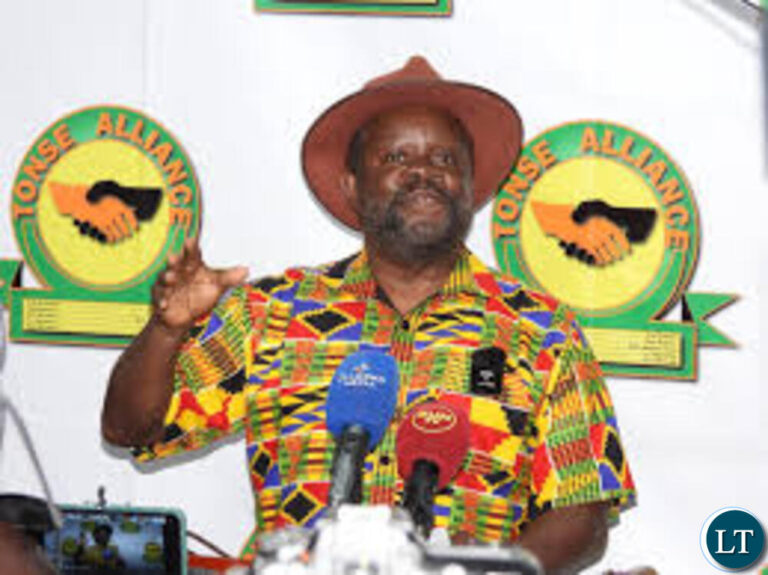
Lubinda Should Abandon Presidential Ambitions, Remain Kingmaker – Jay Banda

7

Fugitive former Petauke Member of Parliament Emmanuel Jay Banda has called on PF faction leader Given Lubinda to immediately withdraw his presidential ambitions, warning that remaining in the race would amount to a betrayal of late former president Edgar Lungu.

Banda accused Lubinda of abandoning the kingmaker role he was entrusted with by Lungu in order to pursue the party presidency. He claimed that Lubinda was not meant to seek the top position but was instead positioned to stabilise and unite the Patriotic Front during a difficult period.

The former Petauke Central lawmaker said that while Lungu was receiving medical treatment in South Africa, he left Lubinda as acting party president because he believed the veteran politician would not contest the presidency but would act as a neutral unifier.

Speaking in a recent interview on EMTV, Banda stated that Lubinda’s decision to seek the PF presidency now represents a breach of trust, describing it as a betrayal of the understanding he had with Lungu. He added that Lubinda had previously declined to pay the K200,000 nomination fee for aspiring candidates, citing an agreement to remain a kingmaker.

“Because he sat down with ECL and agreed to be a kingmaker,” Banda said. “But today, in the absence of ECL, Lubinda wants to abandon that agreement.”

Banda urged senior PF members and individuals close to Lubinda to engage him and remind him of the responsibility entrusted to him by Lungu. He maintained that Lubinda should withdraw from the race and retain the kingmaker role, cautioning that the move could have lasting consequences for the party.

Zambia Army lays peacekeeper Banda to rest in Ndola

3

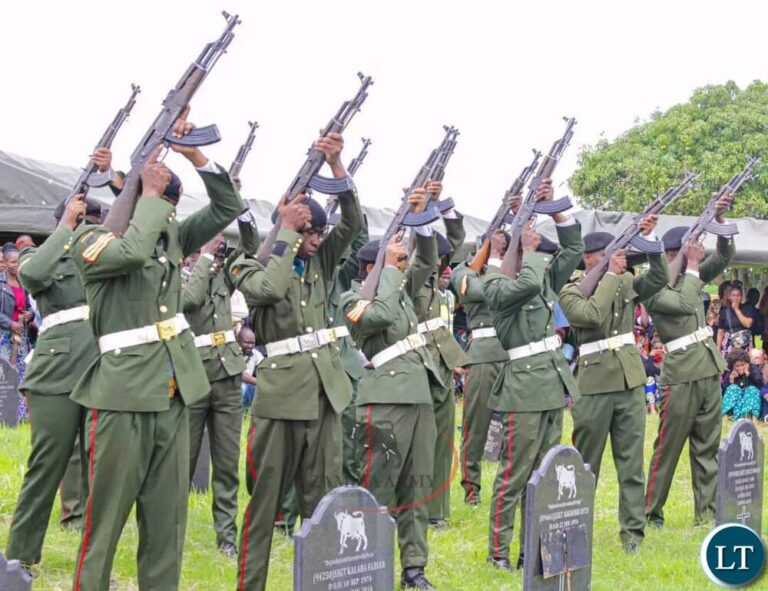
THE nation is mourning the death of Staff Sergeant Alick Banda, who died on December 29, 2025, after a short illness while serving under the United Nations Multidimensional Integrated Stabilisation Mission in the Central African Republic (MINUSCA).

Born on May 25, 1990, in Ndola, Ssgt Banda attended Kalewa Primary School, Chifubu Secondary School and Kansenshi Secondary School, where he completed his senior secondary education in 2009.

He joined the Zambia Army on July 1, 2012, and undertook basic military training at the Lukanga Recruit Training Centre. During his service, he progressed through the ranks of Private and Lance Corporal in 2013, Corporal in 2018, Sergeant in 2019, and was promoted to Staff Sergeant in 2024. He served in the Corps of Armour.

Zambia Army Commander Lieutenant General Geoffrey Zyeele described Ssgt Banda as a dedicated and professional soldier.

A sombre atmosphere prevailed yesterday at Kawama Last Post burial site as family members, fellow soldiers and members of the public gathered for the burial ceremony. The casket was lowered as a bugle was sounded, followed by a three-volley salute.

The army stated that his widow, Megan Banda, described her late husband as a source of strength to the family. Lieutenant General Zyeele, who was represented by Colonel Harry Ngulube, later presented the late soldier’s medals to his daughter during the ceremony.

THE nation is mourning the death of Staff Sergeant Alick Banda, who died on December 29, 2025, after a short illness while serving under the United Nations Multidimensional Integrated Stabilisation Mission in the Central African Republic (MINUSCA).

Born on May 25, 1990, in Ndola, Ssgt Banda attended Kalewa Primary School, Chifubu Secondary School and Kansenshi Secondary School, where he completed his senior secondary education in 2009.

He joined the Zambia Army on July 1, 2012, and undertook basic military training at the Lukanga Recruit Training Centre. During his service, he progressed through the ranks of Private and Lance Corporal in 2013, Corporal in 2018, Sergeant in 2019, and was promoted to Staff Sergeant in 2024. He served in the Corps of Armour.

Zambia Army Commander Lieutenant General Geoffrey Zyeele described Ssgt Banda as a dedicated and professional soldier.

A sombre atmosphere prevailed  at Kawama Last Post burial site as family members, fellow soldiers and members of the public gathered for the burial ceremony. The casket was lowered as a bugle was sounded, followed by a three-volley salute.

The army stated that his widow, Megan Banda, described her late husband as a source of strength to the family. Lieutenant General Zyeele, who was represented by Colonel Harry Ngulube, later presented the late soldier’s medals to his daughter during the ceremony.

Access Bank Disburses K3bn to 311,000 Farmers Nationwide

4

Access Bank Zambia has confirmed the disbursement of more than K3 billion to 311,000 farmers under the Government’s Farmer Input Support Programme payment framework administered through the Food Reserve Agency.

The bank stated that the payments were processed across its branch network following coordination with the FRA and relevant government authorities to ensure timely settlement to beneficiaries. According to the bank, extended operating hours were implemented to manage volumes and reduce congestion during the peak payment period.

Access Bank said it adjusted weekday and weekend hours at selected branches to accommodate farmers, particularly in high-traffic agricultural regions. The bank added that payment schedules were aligned with lists provided by the FRA to ensure that farmers who delivered maize received funds within agreed timelines.

Officials indicated that internal systems were reinforced to handle transaction volumes efficiently while maintaining audit controls and reconciliation standards. The bank stated that verification processes were applied to confirm beneficiary identities and payment accuracy.

The FRA has relied on commercial banks to process payments following maize purchases, with the objective of supporting liquidity for small-scale and commercial farmers. Access Bank said the payment programme formed part of its broader participation in government-supported agricultural financing and service delivery.

Farmers in several districts reported receipt of funds through Access Bank branches, with some indicating that extended hours reduced waiting times. The bank said it continued to engage local authorities and farmer representatives to address operational challenges as they arose.

Access Bank reiterated its commitment to transparency, stating that payment records are subject to internal and external review in line with banking regulations. The bank added that it remains available to address queries from farmers regarding payment status through branch channels.

Kapyanga Defends Mundubile Amid PF Leadership Dispute

4

Kapyanga Defends Mundubile Amid PF Leadership Dispute

Member of Parliament for Mpika Constituency Francis Robert Kapyanga has issued a detailed public statement defending Brian Mundubile and rejecting assertions that the late former president Edgar Chagwa Lungu bears responsibility for the ongoing leadership turmoil within the Patriotic Front.

In the statement, Kapyanga responds to claims circulating within party discourse that Lungu failed to designate a successor before stepping back from active leadership, a situation some party figures have cited as contributing to current divisions. Kapyanga describes that position as inaccurate and unfair, stating that Lungu had expressed a clear preference for party unity and had taken steps to guide leadership succession following the 2021 General Elections.

According to Kapyanga, internal tensions within the PF began well before the loss of power in 2021. He states that during Lungu’s final term in office, certain senior figures openly challenged his authority, undermined his leadership, and publicly opposed him, actions that he says weakened internal cohesion and contributed to electoral defeat.

After the election loss, Kapyanga recounts that criticism of Lungu intensified, with some party members attributing the outcome directly to him. He states that this environment led Lungu to step down as PF president and retire from active politics, despite resistance from members of the party’s Central Committee. During that transitional period, Lungu appointed individuals to act in leadership positions while the party sought to stabilise.

Kapyanga provides a specific account of events in early 2022, stating that while Parliament was in session, Mundubile received a call from Lungu inviting him to a meeting at his government-rented retirement residence in Ibex. During that meeting, Kapyanga says Lungu instructed Mundubile to contest the PF presidency, citing their working relationship and Mundubile’s commitment to the party.

He states that Mundubile did not immediately disclose the instruction and had not previously expressed ambitions to lead the party or to contest the presidency of the Republic. At the time, according to Kapyanga, Mundubile’s focus remained on his parliamentary responsibilities and eventual retirement from politics.

Kapyanga further states that Lungu subsequently contacted several trusted party members, including himself, and directed them to support Mundubile’s bid for the PF presidency. He says efforts were then made to mobilise support, assemble campaign structures, and prepare for an internal contest.

However, Kapyanga states that resistance emerged from individuals he describes as having previously opposed Lungu while he was in office. He alleges that these figures conveyed false information to Lungu, including claims that Mundubile was secretly engaging with President Hakainde Hichilema through family connections, funding attacks against Lungu, and pursuing other undisclosed agendas. Kapyanga states that Mundubile did not respond publicly to these allegations.

According to Kapyanga, when these claims failed to gain traction, attention shifted toward encouraging Lungu to return to active politics. He links this development to events surrounding Miles Sampa, whose assumption of control within the PF followed the cancellation of a conference and his suspension by an acting party president. Kapyanga states that this period marked a significant compromise of party structures.

Kapyanga recounts that when Lungu later engaged in broader opposition cooperation through the United Kwacha Alliance, some of the same individuals opposed the initiative and subjected Lungu to public attacks. He says this led to Lungu’s withdrawal from the alliance and the subsequent formation of the Tonse Alliance.

Throughout these developments, Kapyanga maintains that accusations against Mundubile continued, including allegations related to judicial interference in Lungu’s eligibility case and associations with political activist Chilufya Tayali. He rejects those claims and states that Lungu himself instructed party members to assist Tayali during legal difficulties.

Kapyanga states that following Lungu’s return to active politics, Mundubile halted his own activities and instructed his supporters to mobilise in support of Lungu. He says this was done in line with Lungu’s authority and wishes at the time.

With Lungu’s death, Kapyanga states that continued references to his name in internal disputes are inappropriate. He calls on party leaders to take responsibility for current decisions and to pursue unity through established constitutional processes, including convening a party conference to elect new leadership.

Injunction Bars PF Convention as Disciplinary Letters Continue

Injunction Bars PF Convention as Disciplinary Letters Continue

A legal dispute within the Patriotic Front has intensified following the continued issuance of internal party correspondence despite a court injunction that has been cited to block the holding of a party convention.

The injunction, which has been repeatedly referenced by certain party officials, is presented as binding and restrictive, with warnings issued to party members against organising or participating in convention-related activities. Party leaders invoking the order have insisted that all constitutional processes connected to the convention remain suspended until further direction from the courts.

At the same time, official party letters bearing formal letterheads and signatures have continued to circulate. These letters include disciplinary notices, references to party regulations, and timelines linked to alleged breaches of party rules. The parallel actions have drawn attention from party members and legal observers, who question how internal disciplinary steps are proceeding while a court order is being relied upon to halt other constitutional activities.

Central to the controversy is Celestine Mukandila, who has been identified in party communications as acting in a leadership capacity. In public statements, he has dismissed claims that disciplinary action has already been decided against senior party officials. He has described reports of imminent expulsions as inaccurate and misleading.

However, documents issued under his authority outline allegations, cite specific party provisions, and propose procedural steps associated with disciplinary action. The letters set out structured processes that, according to critics within the party, resemble preparatory steps toward sanctions, including possible expulsion.

Among those named in public discussion is Brian Mundubile, whose position within the party has been the subject of speculation following the circulation of disciplinary correspondence. While formal confirmation of any sanction has not been issued, the existence of detailed notices has heightened tensions and uncertainty within party ranks.

Legal practitioners observing the situation note that injunctions typically preserve the status quo pending further judicial determination. In such circumstances, actions that materially alter internal governance structures may attract scrutiny, particularly where those actions appear inconsistent with the stated effect of the court order.

Party officials defending the continued issuance of correspondence argue that administrative functions must continue and that not all internal communication falls within the scope of the injunction. They maintain that the court order applies specifically to the holding of a convention and does not extinguish broader organisational authority.

Others within the party reject that interpretation. They argue that if the injunction is relied upon to halt constitutional gatherings, then any formal steps that could influence party leadership structures should also be paused to avoid prejudicing the outcome of the court process. According to this view, selective application of the injunction risks undermining internal legitimacy and exposing the party to further legal challenge.

The dispute has unfolded through a series of public statements, counter-statements, and leaked correspondence, reflecting deepening factional divisions. Observers note that the use of official letterheads and regulatory citations carries legal and political weight, particularly when issued during a period of active litigation.

The matter has also raised broader questions about internal party governance and the boundaries between legal compliance and political strategy. As the injunction remains in force, the absence of a unified interpretation has resulted in parallel processes that appear to pull the organisation in opposing directions.

Court proceedings connected to the injunction are ongoing, and no definitive ruling has yet been issued clarifying the full extent of permissible internal action. Until such guidance is provided, the party continues to operate in a contested legal environment where authority, process, and compliance are actively disputed.

The situation has attracted national attention as it unfolds in full public view, with legal documents, party statements, and internal notices becoming part of the broader political discourse. The outcome of the court process is expected to determine whether the actions taken during the injunction period are upheld or challenged in subsequent proceedings.

Politics is Simply chess, not noise.

Politics is Simply chess, not noise.

Politics is often mistaken for a contest of volume. The loudest voices are assumed to be the most powerful, and constant public confrontation is confused with momentum. This misreading has shaped how much of the opposition interprets the conduct of the governing party, frequently describing it as slow, disorganised, or surviving on chance. That interpretation overlooks the method that is quietly shaping Zambia’s political terrain.

The ruling movement is not loud, but it is deliberate. It does not rush to respond to every headline, insult, or provocation. While opposition actors spend time on reactive press conferences and social media skirmishes, the focus remains on appointments, institutional alignment, and long-term political positioning. That difference is not accidental. It reflects an understanding that durable power is built away from public noise.

Real political control is rarely achieved through constant confrontation. It is consolidated through discipline, message restraint, and familiarity with state systems. Controlled communication reduces contradictions. Internal cohesion limits fractures. Institutional command secures continuity. What is often dismissed as silence is, in practice, a strategic choice to act without exposure.

The opposition, by contrast, frequently mistakes anger for a plan. Public frustration attracts attention, but attention alone does not secure electoral outcomes. Without unity, structured leadership, and sustained organisation, emotional mobilisation fades quickly, leaving little behind once the moment passes.

UPND also operates with a longer electoral horizon. Elections are not won during campaign season alone. They are decided years earlier. By the time campaigns begin, alliances have already formed or collapsed, narratives have already settled, and grassroots structures are either functioning or broken. Campaigns reveal preparation; they do not replace it.

Rather than confronting opponents directly, UPND often allows internal divisions, leadership disputes, and repeated miscalculations to weaken them from within. This approach does not depend on confrontation. It depends on patience. Over time, fragmentation erodes coordination, confuses supporters, and exhausts organisational capacity. That process unfolds quietly, but its impact compounds.

You do not have to support UPND to recognise this reality. Calm execution, careful calculation, and political maturity remain visible, and as long as silence continues to be mistaken for weakness, the strategic imbalance will persist.

In Zambia’s political landscape, strategy outweighs noise, and those who ignore that lesson do so at their own cost.

Richard Makwembo II
Political Commentary

Tonse Alliance Sets January 31 Congress Date, Clears Path to Leadership Elections

6

Tonse Alliance Sets January 31 Congress Date, Clears Path to Leadership Elections

The Tonse Alliance has formally set January 31, 2026, as the date for its General Congress after validating constitutional amendments and adopting a detailed roadmap toward leadership elections ahead of the 2026 General Elections.

The decisions were taken at a meeting held on January 10, 2026, at the Forum for Democracy and Development headquarters in Lusaka. The meeting brought together leaders from long-standing and newly admitted member organisations, alongside prominent individual members, marking one of the Alliance’s most inclusive and procedurally significant gatherings in recent years.

The central focus of the meeting was the formal validation of amendments to the Tonse Alliance Constitution. This was achieved through a membership renewal and admission signing session, a legal and procedural step designed to confirm commitment to the revised governance framework before leadership elections are conducted.

The meeting was chaired by Danny Pule, serving as Caretaker Chairman, and supported by Chifumu Banda, First Vice Chairman, and Kelvin Bwalya Fube, Second Vice Chairman. The chairing team was tasked with ensuring procedural compliance, neutrality, and orderly conduct during the Council of Leaders session.

Following the signing ceremony, the Council of Leaders adopted a series of resolutions that now form the official roadmap to the January 31 General Congress.

First, the Council resolved that the Tonse Alliance General Congress will be held on January 31, 2026. At the Congress, the Alliance will elect both its Chairman and its Presidential Candidate for the 2026 General Elections.

Second, the Congress will also elect three additional positions: First Vice Chairman, Second Vice Chairman, and Alliance Spokesperson, completing the Alliance’s top-tier leadership structure ahead of the national polls.

Third, nomination fees were harmonised across positions. Candidates contesting for Chairman or Presidential Candidate will be required to pay K50,000, while those contesting for Vice Chairperson positions and the Spokesperson role will pay K10,000.

Fourth, January 20, 2026, was set as both the deadline and the actual nomination day for all elective positions. Nominations will be conducted once, in the morning, at the FDD Secretariat, under the supervision of the Alliance Secretariat and the Tonse Electoral Commission.

Fifth, all member organisations were directed to submit their General Congress delegate lists by January 20, 2026. The Council stated that this measure is intended to allow sufficient time for verification, inspection, and approval of the General Congress voters’ register to safeguard the legitimacy of the electoral process.

To oversee the elections, the Council unanimously appointed Debby Kambwa Aongola as Chairperson of the Tonse Electoral Commission. He will be assisted by Mwaba Mushota and Benjamin Mwelwa, all of whom are lawyers.

The Council further resolved that two additional legal practitioners will be co-opted into the Commission to strengthen its capacity and reinforce confidence among stakeholders that the General Congress elections will be administered professionally, independently, and transparently.

The meeting reflected the expanding breadth of the Tonse Alliance, with representation from political parties, civic organisations, professional groupings, and individual leaders. Organisations represented included the National Freedom Front, Development People’s Party, New Era Democratic Party, Zambia Must Prosper, Forum for Democracy and Development, Christian Democratic Party, National Revolutionary Party, All People’s Congress, ECL PF Movement, Developmental Partnership Initiatives, Governance Enhancement Initiative, Umodzi Kumawa Development Coalition, ZAYEF, CLAGGO, Centre for Economic Development and Social Change, Centre for Constitutionalism and Legal Justice, and the Apostolic Prophetic Council.

Notable individual participants included Lawrence Mwelwa, Joseph Chirwa, who sent apologies due to travel challenges, Cephas Mukuka, Chris Zumani Zimba, and Mwape, among others.

Taken together, the resolutions of January 10, 2026, establish a clear, time-bound, and rule-based pathway to the Tonse Alliance General Congress. By fixing dates, defining nomination fees, appointing an Electoral Commission, and requiring early submission of delegate lists, the Alliance has outlined a structured internal democratic process.

As the Alliance moves toward January 31, attention will shift to nominations, delegate verification, and engagement among contenders for leadership. The outcome of the General Congress will determine the Alliance’s leadership and its strategic posture ahead of the 2026 General Elections.


PF Acting Leadership Charges Brian Mundubile With Gross Indiscipline

5

PF Acting Leadership Charges Brian Mundubile With Gross Indiscipline

The deepening internal crisis within the Patriotic Front entered a formal and highly consequential phase today after senior party member and Member of Parliament Brian Mundubile was officially charged with gross indiscipline under the party’s constitution and regulations.

The charges are contained in a confidential exculpatory letter dated January 10, 2026, issued under the authority of the Patriotic Front secretariat and signed by Celestine Mukandila, Acting Deputy Secretary General for Administration. The letter states that the action is being taken pursuant to directives from the party’s Acting President, Given Lubinda.

According to the document, Mundubile, who serves as a Central Committee member and Member of Parliament, is accused of violating the Patriotic Front Constitution of 2007 and multiple internal regulations governing party conduct, discipline, and organisational order.

The letter outlines four principal charges.

First, Mundubile is accused of making unsubstantiated public accusations against the party leadership, including claims circulated via Facebook alleging that the leadership was scheming to expel him and his campaign team to bar him from contesting intra-party elections. The letter asserts that these claims lacked factual basis and contravened party rules on misinformation and conduct injurious to the party’s reputation.

Second, the acting administration accuses Mundubile of establishing and promoting parallel party structures. According to the charge, activities undertaken by his campaign team allegedly created division within the party and violated constitutional provisions requiring unified and democratically organised structures.

Third, the letter cites a breach of public event protocols, alleging that Mundubile attended an unauthorised Tonse Alliance meeting without approval from the Party President or the Acting Deputy Secretaries General, in contravention of party regulations governing obedience to lawful directives.

Fourth, Mundubile is accused of continuing to recognise individuals who had already been dismissed from party positions, an act described as undermining hierarchical authority and disciplinary oversight within the Patriotic Front.

The acting administration argues that these actions collectively undermine party unity, weaken organisational integrity, and disrupt constitutional order. Mundubile has been given seven days to submit a written exculpatory statement to the Disciplinary Committee, failing which acceptance of the charges may be inferred under party regulations.

The letter further advises that following the disciplinary committee’s determination, Mundubile retains the right of appeal to the Central Committee, National Council, or the General Conference.

The development marks one of the most explicit internal disciplinary escalations within the Patriotic Front since the party’s post-2021 transition, laying bare the depth of fragmentation within Zambia’s largest opposition formation. The formalisation of the dispute underscores how internal contestation has moved beyond political disagreement into constitutional and procedural confrontation.

The Actual Letter Below:

PATRIOTIC FRONT

Date: 10th January 2026

Hon. Brian M. Mundubile, MP
C/o Patriotic Front Secretariat
Lusaka, Zambia

Dear Hon. Mundubile,

RE: EXCULPATORY LETTER – GROSS INDISCIPLINE – YOURSELF

Refer to the above caption.

This letter formally charges you, as a Patriotic Front Central Committee Member (MCC/Member of Parliament), with violating the 2007 Constitution. As an MCC/MP, you owe the highest fiduciary duty to the Party, yet your actions constitute a gross breach of constitutional authority and trust. You are hereby charged with serious breaches of the Patriotic Front (PF) Constitution and Regulations, as follows:

1. Unsubstantiated Accusations Against Party Leadership:
You made false claims via a Facebook statement on that the party leadership is scheming to expel you and your campaign team to bar your intra-party election candidacy, claims with no factual basis. This violates Regulation 29(h) (spreading false information injuring the party’s or its officials’ reputation) and Article 15(g) (obligation to fight against conduct harming the party).

2. Establishing Parallel Structures:
Under your watch, your campaign team is purposefully promoting division by creating parallel party structures contrary to party regulations, violating Article 20 (party structure based on democratic principles of unified, elective organs) and Regulation 43 (requirement for all party organs to be registered with the Secretary-General).

3. Breach of Public Event Protocols:
Likewise, you deliberately violated established protocols by attending an illegal Tonse Alliance meeting without the authority of the Party President and Acting Deputy Secretary Generals, contravening Regulation 29(d) (disobeying party organ directives).

4. Unauthorized Recognition of Dismissed Members:
You have continued to recognize individuals dismissed from party positions by the President, violating Article 13 (prohibiting leaders from acting contrary to party authority) and Article 58(c) (Central Committee’s mandate to enforce discipline and regulate party organ activities).

These actions undermine party unity, disregard hierarchical authority, harm the PF’s integrity, and disrupt organizational order. You are required to submit a written exculpatory statement within 7 days to the Disciplinary Committee, per Regulation 100(1). Failure to respond constitutes acceptance.

Post-response, a decision will be rendered promptly, with appeal rights to the Central Committee, National Council, or General Conference (Regulation 99).

As an MCC, you are entrusted to uphold the Constitution. This charge enforces accountability to protect the Party’s unity and mission.

Yours sincerely,

Celestine M. Mukandila
ACTING DEPUTY SECRETARY GENERAL – ADMINISTRATION

Cc:
The Party President
Acting National Chairperson
Acting Deputy Secretary General – Political
Disciplinary Committee

Opposition infighting is undermining any real chance of a 2026 victory

Opposition infighting is undermining any real chance of a 2026 victory

Opinion: By Lusubilo Kondolo

The most effective strategy President Hakainde Hichilema has pursued since assuming office has not been persuasion or policy, but disruption. From the outset, his focus has been to prevent the Patriotic Front from meaningfully participating in the 2026 General Election.

That strategy has unfolded in stages. First came the political neutralisation of former President Edgar Chagwa Lungu through a Constitutional Court ruling that removed his eligibility to contest. Then followed sustained pressure on the Patriotic Front through arrests, intimidation of supporters, inducements aimed at Members of Parliament, and deliberate efforts to weaken party structures on the ground. Parallel to this was the installation of a surrogate figure in the expelled Mafinga Member of Parliament, Robert Chabinga, widely viewed as an instrument designed to fracture the party from within.

These actions amounted to a direct assault on democratic competition. What is more troubling, however, is that sections of the opposition did not resist this project. Instead, they miscalculated. They assumed the weakening or collapse of the Patriotic Front would benefit them. Rather than defend democratic space, they moved to scavenge from a wounded ally.

That misjudgment has proven costly. Today, the opposition is so deeply infiltrated, divided, and consumed by internal ambition that it no longer requires external sabotage to unravel. It is dismantling itself.

Nowhere is this clearer than in the current confusion surrounding the Tonse Alliance. Public statements from Tonse suggest that the alliance has expelled the Patriotic Front led by Given Lubinda, while claiming to retain an association with an undefined “ECL grouping.” This position is not only incoherent, it is historically and legally indefensible.

Fact matters. Zambia’s Sixth President, Dr. Edgar Chagwa Lungu, left Given Lubinda as Acting President of the Patriotic Front and Chairperson of the Tonse Alliance. There is no alternative structure that carries that mandate. There is no separate grouping authorised to act in his name. Any attempt to invoke President Lungu’s legacy while discarding the leadership he formally appointed amounts to using his name without authority.

Equally clear is this: the only PF faction rejected by the Zambian public is the one led by Robert Chabinga. That group is widely regarded as illegitimate, externally sponsored, and hostile to the broader opposition cause. It is viewed not as a political alternative, but as a destabilising device.

Against this background, the expulsion of Given Lubinda cannot be explained as reform or realignment. It fits the definition of an unconstitutional power grab. For PF members within Tonse to participate in such a process would amount to betrayal of their own party, encouragement of internal revolt, and complicity in dismantling legitimate leadership.

The spectacle is exhausting and deeply discouraging. At a time when Zambians are struggling under economic pressure, insecurity, and political exclusion, the opposition is absorbed in factional warfare. Instead of confronting the central power of the state, it is turning inward, consuming its own energy and resources.

The irony is painful. Zambians are desperate for change. They are actively searching for leadership capable of organising, mobilising, and protecting their vote. Yet the opposition appears unable or unwilling to grasp the urgency of the moment.

Winning in 2026 will require discipline, unity, and resources on a national scale. It will require organisation across more than 12,000 polling stations, effective monitoring, legal preparedness, and the capacity to counter manipulation witnessed in recent by-elections. None of this is possible in an environment of endless internal conflict.

Instead, what we see is an opposition spending countless hours in meetings, phone calls, and intrigue directed at one another, while President Hichilema enjoys an unobstructed political landscape.

One is left to ask whether this dysfunction is accidental or engineered. It is telling that every opposition leadership process is met with coordinated disruption. It happens in PF. It happens in UKA. It happens in Tonse. It happens elsewhere. The pattern is consistent.

Zambians deserve honesty. If sections of the opposition have become so compromised that they now function as extensions of the ruling party’s strategy, then the public deserves to know. Silence and ambiguity only deepen suspicion.

The clock is no longer ticking. It is almost out. Either the opposition recognises the scale of infiltration, restores internal discipline, and confronts power collectively, or it will walk into 2026 divided, weakened, and defeated, having done the work of its opponent for him.

Milupi happy with Niko-Monze road works

0

Minister of Infrastructure, Housing and Urban Development Charles Milupi has expressed satisfaction with the construction works on the 71-kilometer Niko Road in Monze District of Southern Province.

Mr Milupi who inspected the road is happy that the works are progressing well with 85 percent of works done.

He noted that China GEO Construction Company has exhibited quality workmanship, making the road to stand the test of time, for the benefit of the people in the area.

“Looking at the works here on Niko Road, I am satisfied with the good quality works. This is translating into improving service delivery to the people in the area”, said Mr Milupi.

And the Road Development Agency (RDA) Provincial Roads Engineer Namalala Chilala echoed that the government has obtained the value of the funds spent on the road with a long-life span.

“The role of the agency on this project was to supervise both the contractor and the consultant in order to ensure that the contract is adhered to.

All the materials used on the road were tested and approved before the onset of the project and we guarantee good standards of the work done on the road and the government has obtained the value of the funds spent”, he said.

Later, Mr Milupi called on Chief Hamusonde of Bweengwa and commended the role traditional leadership plays in supplementing government efforts in fostering development.

He pointed out the cooperation between the traditional leadership and the government in delivering different developmental projects for the people.

And Chief Hamusonde thanked the government for working on the road stating that it has been in a bad state for a long time despite its economic value.

The traditional leader also commended the contractor for the good workmanship.

Meanwhile, Hamwiinga Hamusonde, a driver noted that the construction of the road has greatly improved and eased transport mobility with improved business ventures.

Catholic Relief Services donates to Lundazi flood victims

0

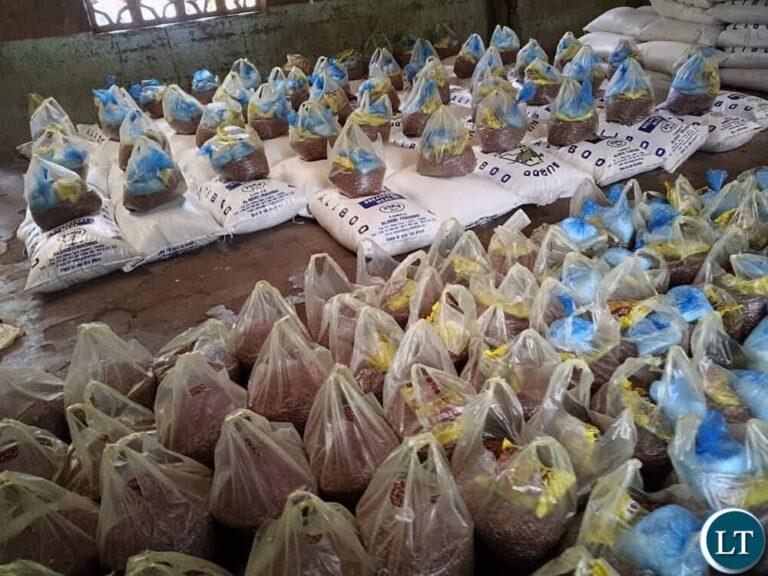
The Catholic Relief Services (CRS) has donated an assortment of relief aid valued at over K1 million to flood victims in Lundazi District of Eastern Province.

The media reports that the donation was made through Caritas Chipata today.

Speaking during the handover of the items to Lundazi Disaster Management and Mitigation Unit (DMMU), Auxiliary Bishop of Chipata Diocese, Gabriel Msipu, said the gesture is in the spirit of oneness.

“We are grateful to God that no life has been lost as destroyed property could be replaced,” Bishop Msipu said, as he gave words of encouragement to victims who benefitted from the donation.

Bishop Msipu indicated that the church is fair in the distribution process by considering levels of vulnerability.

And the Government is grateful for the assistance that has continued to pour in from cooperating partners during this time.

Lundazi District Registration Officer, Lloyd Daka, said access to clean and safe water in the district following the flooding of the water treatment plant, has remained a challenge.

” We are looking at combining effort in repairing the collapsed dam wall, as this is the only sustainable way to address the current water challenge,” he stated.

Mr Daka has since commended CRS for the assistance being rendered to alleviate challenges resulting from damage caused by the floods.

In a vote of thanks, a beneficiary, Daniel Nyirenda expressed gratitude for the donation.

“The problem is big. We have been displaced and left traumatised. We are still in the middle of the rainy season, so it is only through help like this that we are trying to cope,” Mr Nyirenda said.

The donated items include mealie meal, blankets, chlorine, ORS and nutritional supplements.

The organisation is also working towards providing a permanent solution to the water challenges being faced, by drilling mechanised boreholes in affected communities.

Tonse Alliance to hold national convention

1

Tonse Alliance has announced that it will hold its National Convention this month on January 31, 2026.

This was announced by Tonse Alliance Caretaker Chairman, Danny Pule, at a media briefing held at the Forum for Democracy and Development (FDD) office in Lusaka.

Dr Pule further disclosed that the Tonse Alliance Council has decided to put the application fee for the position of President at 50 Thousand kwacha.

While the positions for Vice Chairman and Spokesperson, the application fee has been put at 10 Thousand Kwacha.

Dr Pule indicated that the Tonse Alliance has only four elective positions to be contested at its National Convention.

“The fees for the Presidential candidates who want to apply is 50 Thousand Kwacha, the fee for other positions is 10 Thousand Kwacha,” he said.

The Tonse Alliance Caretaker Chairman explained that the four elective positions to be contested include the offices of President, First Vice Chairman, Second Vice Chairman, and Party Spokesperson.

“It has been decided by the Council that the application fee for those who want to participate in the presidential election and Chairman as while as Vice Chairman and Spokesperson, they are only four elective positions in Tonse, Chairman who is also the Presidential candidate and then we have the two Vice Chairman, First and Second Vice Chairman and the Party Spokesperson for the Alliance.”

Dr Pule said the venue for the National Convention will be announced to the delegates at a later date.

PF Faces Mounting Pressure to Resolve Leadership Uncertainty Ahead of 2026

4

The internal condition of the Patriotic Front has come under renewed scrutiny following a wide-ranging discussion on the Emmanuel Mwamba Verified Show aired on January 9, 2026, where party members and supporters openly questioned leadership clarity, internal trust, and the cost of continued delay as Zambia moves deeper into an election year.

The programme, hosted by Emmanuel Mwamba, who serves as a member of the Patriotic Front Central Committee and chairperson for publicity and communication, offered a rare public window into concerns that have been circulating within the party but are now being voiced with increasing urgency.

Throughout the broadcast, callers from across Zambia and the diaspora returned to a central issue: the Patriotic Front remains nationally significant in structure and reach, but its ability to act decisively is being constrained by unresolved leadership questions. Contributors stressed that the party’s challenge is not a lack of visibility or organisational presence, but uncertainty over who holds authority and under what mandate.

Several callers expressed frustration that the party has yet to settle leadership arrangements despite the proximity of nomination deadlines and campaign timelines. January, they noted, is already passing, while electoral calendars remain fixed and unforgiving. For some supporters, the concern was no longer abstract. It was practical, rooted in the fear that unresolved authority could leave the party legally or administratively exposed as the election period advances.

A recurring point of tension centred on perceptions of fairness within the leadership process. Callers raised concerns about arrangements in which authority and ambition appear to converge, arguing that even if such configurations are constitutionally permissible, they risk undermining confidence. One contributor framed the issue plainly, stating that no individual can credibly function as both participant and overseer within the same contest.

The discussion also returned repeatedly to the period following the death of former President Edgar Lungu. While contributors differed on whether explicit understandings existed regarding succession and stewardship, the lack of a clearly communicated transition process was identified as a source of lingering suspicion. That unresolved space, callers suggested, has allowed internal disagreement to spill into public uncertainty, weakening trust at a critical moment.

Beyond procedure, the programme captured signs of emotional fatigue among supporters. Some callers described a growing sense of disorientation, unsure where to anchor their political expectations. Others warned that prolonged confusion only strengthens the ruling party, as opposition disarray carries its own political consequences without any direct intervention.

The issue of time emerged as a defining theme. Callers warned that each delay compounds risk, not only by shrinking room for manoeuvre but by signalling a lack of urgency to voters. One contributor summarised the concern by noting that hesitation itself can become a decision, shaping outcomes before campaigns formally begin.

At the same time, the discussion resisted simplistic solutions. Contributors challenged the notion that victory could be engineered through demographic formulas, regional calculations, or factional arithmetic alone. Zambia’s electoral record, they argued, rewards clarity, organisation, and visible preparedness rather than internal bargaining extended beyond necessity.

Throughout the programme, Mwamba maintained that the Patriotic Front’s national footprint remains an asset, but one that is being steadily eroded by hesitation and internal contestation. He cautioned that disciplinary actions or expulsions at this stage would deepen fractures rather than restore cohesion, stressing that restraint and unity are strategic requirements rather than rhetorical slogans.

The broadcast did not attempt to settle the party’s leadership question. Instead, it functioned as an informal audit, exposing the widening gap between internal processes and external expectations. It underscored a growing recognition among supporters that history and inherited loyalty cannot substitute for readiness.

As Zambia approaches the 2026 polls, the message from the programme was consistent: relevance will be determined not by legacy, but by the ability to resolve uncertainty, project authority, and act within the narrowing window still available.

Red Flag Raised as ECZ Numbers Do Not Tally

6

By Brian Matambo | Lusaka, Zambia

As we approach the 2026 general elections here in Zambia, I would like to urge opposition political parties to not only run emotionally driven campaigns with nice slogans and danceable music. They must invest heavily in data and systems if they are to avoid being shocked on 13 August. On election day, it is not slogans that decide outcomes. It is numbers.

And speaking of numbers, the nation, and particularly opposition politicians, may wish to know that the Electoral Commission of Zambia has been releasing figures that do not align with its own official records.

The most striking example emerges from Southern Province. ECZ publicly announced that the province had 1,119,174 registered voters in 2025. The figure travelled widely, shaping political calculations and public perception. Yet ECZ’s own official final register for Southern Province records only 858,103 registered voters. The difference, 261,071 voters, is not a technical inconvenience. It is a contradiction large enough to alter turnout analysis, provincial weight, and confidence in the entire electoral process.

In elections, numbers are not commentary. They are the legal architecture of legitimacy.

Demographic context sharpens the concern even further. Southern Province’s voting-age population in 2022 stood at approximately 1,135,121. Applying Zambia’s average annual population growth rate of 4%, the projected voting-age population for 2025 rises to roughly 1.27 million. Against this reality, a register of 858,103 represents a plausible and historically consistent registration rate in a largely rural province. A register of 1,119,174, on the other hand, implies a registration coverage approaching total saturation of eligible adults, a statistical outcome rarely achieved even in highly urbanised societies.

What unsettles the situation is not merely that two numbers exist, but that the public has not been taken through the journey from provisional to final with clarity. One number was announced. Another now governs the official register. Between the two, no reconciliation has been offered.

This pattern is not new. New Heritage Party President Chishala Kateka has raised similar concerns at the national level. In her article dated 10 January 2026, she noted that ECZ Chief Executive Officer Brown Kasaro reported 8,861,918 total registered voters in his mass registration statistics speech, yet ECZ’s own “Registered Voters Per Polling Station” document reflected only 7,073,513 voters. The difference was 1,788,405 voters, representing a variance of 25.28 percent.

“Granted, the figure in the speech by the CEO was provisional,” Kateka wrote, “however a differential of 1,788,405 in the number of registered voters, a significant and whopping 25.28 percent variance from the actual, surely should be a cause of concern to any perceptive person even if not savvy with statistics.”

Her words echo directly into the Southern Province case. Different scale. Same pattern.

In both the national and provincial cases, the issue is not that provisional figures differ from final ones. That is expected. The issue is that the difference is vast and the explanation absent. Numbers change, but the public is not told why. And in elections, unexplained change does not remain neutral. It invites doubt.

The Southern Province discrepancy fits neatly into this wider pattern. No electoral commission is protected by silence. It is protected by transparency. Clear reconciliation reports, open explanations, and disciplined public communication are not favours to the nation. They are obligations to it.

When numbers refuse to agree, citizens do not become cynical by choice. They become cautious by necessity. And when numbers begin to argue, democracy has every right to worry.

Senior Chief Musele endorse President Hichilema

3

Senior Chief Musele of Kalumbila District in North western Province has endorsed President Hakainde Hichilema for the 2026 General Elections, slated for August 13, 2026.

Senior Chief Musele has since called for unity of purpose and stability as the country heads towards the elections.

He said this in an interview  in Solwezi today.

The traditional leader indicated that Zambia does not deserve another disruptive regime change after just five years.

Senior Chief Musele said the constant shift in administrations burdens ordinary citizens and derails national progress in terms of development citing the country’s political history experiencing multiple political transitions since 2011.

The traditional leader warned that regime change is particularly dangerous for developing countries like Zambia adding that each new administration abandons previous policies and holds no solution for Zambia’s economy other than reverse gains.

He advocated for allowing the elected government to complete its mandate for its ongoing developmental agenda.

Senior Chief Musele further appealed for unity while calling on the opposition political parties to support and constructively critique the government of the day instead of seeking its immediate removal.