Tuesday, June 16, 2026
17.7 C
Lusaka
Home Blog Page 223

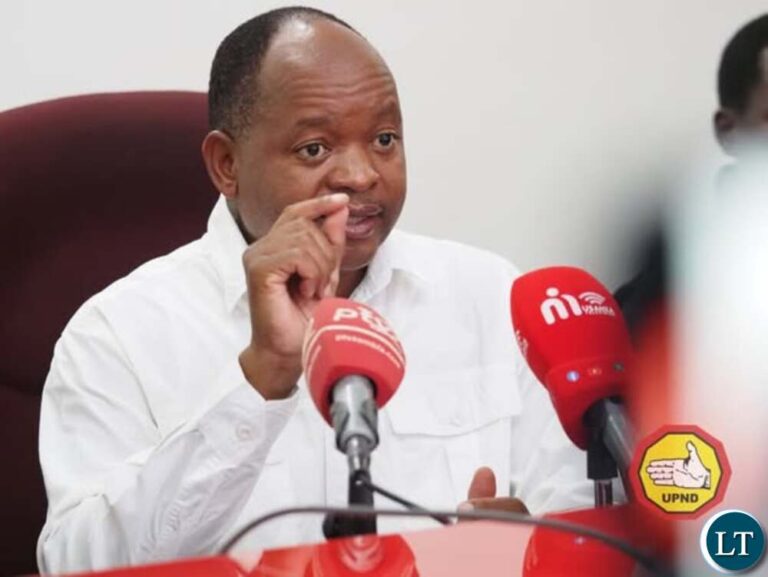
Kambwili Declares Lubinda PF President, Dismisses Need for Conference

5

LUSAKA – Former Roan Constituency member of parliament Chishimba Kambwili has stated that Given Lubinda is not merely the acting president of the Patriotic Front (PF) but the substantive president of the party.

Speaking at a press briefing in Lusaka yesterday, Mr. Kambwili, who is also an aspiring PF presidential candidate, cited the party constitution. He argued that when a party president dies, the vice president automatically assumes the full presidency, rendering a general conference unnecessary.

“We have had this kind of indiscipline in the PF because people think he’s the acting president. As a founder of the PF and one who was involved in drafting the party constitution, the PF constitution has two provisions such as, in the absence of the president, the vice president acts but when the president dies, automatically the vice president assumes the full role of being president,” Mr. Kambwili explained.

Addressing Mr. Lubinda directly, he said, “Comrade zayelo, in case you don’t know yourself, I’m telling you today that you are the president of the PF and all those who don’t want to recognise you as such will face the whip. As far as the constitution is concerned, we don’t have a vacancy in the office of the president. We only have a flag bearer.”

Mr. Kambwili added that Mr. Lubinda had demonstrated leadership by allowing the party to prepare for a general conference despite already being the president. The statement adds another layer to the ongoing internal dispute within the former ruling party regarding its leadership structure.

PF Faction Issues Expulsion Threat to MPs Over Bill 7 Vote

0

LUSAKA – A faction of the Patriotic Front (PF) has issued a stern warning to its Members of Parliament, stating that any lawmaker who votes in favour of Constitution Amendment Bill No. 7 today will be automatically expelled from the party.

Addressing a press briefing in Lusaka yesterday, the faction’s National Chairperson, Jean Kapata, instructed PF MPs to abstain from attending the National Assembly as the bill comes up for its second reading and potential vote.

“PF MPs that will go to parliament tomorrow, consider yourself automatically expelled. We will follow you to your constituencies and give them other people,” Ms. Kapata warned.

Speaking at the same event, former Minister Chishimba Kambwili cautioned that history would judge harshly any lawmakers who support the bill. “Insansa shinya ubulanda [Extreme happiness breeds poverty]. Posterity will judge you harshly if you vote for that Bill,” Mr. Kambwili said.

He contended that the proposed legislation would abolish provisions allowing independent candidates to contest parliamentary elections.

The faction’s Acting President, Given Lubinda, added that any MPs who fail to vote against the bill will come to regret their decision in the future. The warnings set the stage for a high-stakes parliamentary session as legislators prepare to deliberate on the controversial bill.

Bill 7 Heads to Parliament Amid Claims of Threats and Predictions of Landslide Support

0

LUSAKA – The Constitution of Zambia (Amendment) Bill No. 7 of 2025 is scheduled to be tabled before Parliament this morning for debate, determination, and a possible vote. The proposed legislation seeks, among other objectives, to increase the participation of women, youth, and persons with disabilities in decision-making processes.

Ahead of the critical session, United Party for National Development (UPND) spokesperson Cornelius Mweetwa revealed that some Members of Parliament have faced threats from certain church and traditional leaders. He alleged that these leaders have warned MPs they would be ‘de-campaigned’ in future elections if they vote in favour of the bill.

Despite these claims, Mr. Mweetwa stressed that parliamentarians are resolved and united, predicting a landslide vote to pass the bill. “After Honourable Kasune, Minister of Justice, presented the bill yesterday (Saturday) as sponsor, with amendments in line with the technical committee report carrying the aspirations of the people of Zambia, there is now a convergence zone among parliamentarians,” he said.

He asserted that the bill, which incorporates the spirit of the Mushabati Technical Committee Report, the draft bill, and various public submissions, would not be forced on citizens. Mr. Mweetwa also dismissed a purported select committee report circulating on social media that listed about 22 MPs and suggested the bill’s fate depended on their support. He urged the public to ignore the document, arguing that the majority of MPs support the bill and that surrounding criticism is politically motivated.

Vice-President Arrives at Parliament for Critical Bill 7 Deliberations

2

LUSAKA – Vice-President Mutale Nalumango has arrived at Parliament Buildings, describing herself as prepared “thoughtfully and sound” to take part in the deliberations and voting on the Constitution of Zambia (Amendment) Bill No. 7 of 2025.

In a statement on her official Facebook page, the Vice-President stated that the moment represents a critical step in shaping the nation’s future. “… and I stand ready to fulfil my constitutional duty with integrity and commitment,” she wrote.

She further emphasized a collective effort, stating, “Together with my colleagues, I will ensure that the voices of our people are reflected in the decisions we make today.”

The Bill, which seeks to increase the participation of women, youth, and persons with disabilities in decision-making, among other provisions, is scheduled to be tabled before Parliament this morning for debate, determination, and a possible vote.

Senior Chief Shakumbila Endorses President Hichilema, Praises Free Education and Peace

4

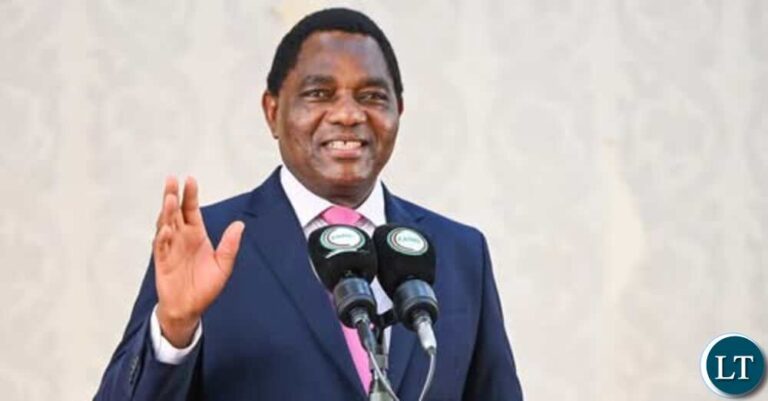
NANGOMA – Senior Chief Shakumbila has publicly endorsed President Hakainde Hichilema ahead of the 2026 general elections, commending the Head of State’s leadership and his administration’s people-centred policies.

The traditional leader, speaking during a courtesy call by a delegation from Nangoma Constituency, specifically highlighted the impact of the free education policy. He stated that the initiative has enabled many young people across the country to access quality education.

“No one in Zambia imagined that one day we would have free education. People had stopped thinking about it,” Senior Chief Shakumbila said. He acknowledged that the policy initially faced scepticism, with critics questioning its funding. “Many people were asking where the money would come from, saying he was a dreamer and that he was cheating people. But today it is working. I believe every Zambian is happy to have free education,” he added.

Senior Chief Shakumbila also commended the UPND administration for fostering peace and unity nationwide. “There is peace everywhere you go. You do not expect anyone to attack you. People are happy. What more can we ask for?” he stated.

Expressing strong support for the President’s continuation, the traditional leader said, “We wish him to continue for the next 20 years if it were possible. If it were up to me, I would even say no elections. Let this young man continue for another 20 years to properly implement his plans, and thereafter we can go for elections.”

He concluded that there was no justification for disrupting a leader whose progressive policies are benefiting citizens.

Police Issue Warning Over Planned Parliament Disruption

0

LUSAKA, Monday, December 15, 2025 – The Zambia Police Service has issued a public warning regarding intelligence indicating a planned disruption at the Parliament Buildings and surrounding areas today.

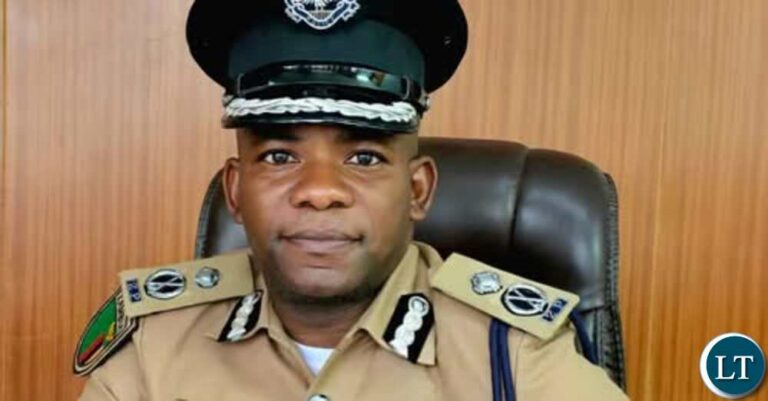
Police Spokesperson Geoffrey Chilabi stated in a release that the service has received information suggesting unidentified individuals intend to disrupt parliamentary proceedings. He further indicated that there are reports some Members of Parliament and other persons are being targeted for harassment.

“Charged with the responsibility to maintain law and order, protect life and property, and perform other functions as stipulated under Article 193(2) of the Constitution of Zambia, the Zambia Police Service has put in place operational security measures across all identified areas to uphold public order,” Mr. Chilabi said.

He cautioned potential perpetrators that police will not tolerate any acts of lawlessness. Anyone found engaging in unlawful activities, he stated, will be dealt with firmly in accordance with the law.

Mr. Chilabi advised members of the public wishing to express concerns or grievances to do so through legally established and lawful procedures.

MPs Vote for Bill 7 as Legal Experts Warn It Is Void Ab Initio

8

The National Assembly of Zambia passed the Constitution of Zambia (Amendment) Bill No. 7 of 2025 after a special session convened for that purpose. The vote followed the suspension of key parliamentary Standing Orders on Friday, December 12, which allowed the bill to be rushed through its final stages without the standard notice period or procedural delays.

The motion to suspend Standing Orders 116(3) and 123 was moved by Vice President Mutale Nalumango. These rules typically require 24 hours’ notice for proposed amendments to legislation and prohibit more than one stage of a bill Second Reading, Committee Stage, and Third Reading from being completed in a single sitting. Their suspension enabled the government to complete all remaining stages of Bill 7 in a single day, before Parliament adjourns until February 2026.

Constitutional law expert Professor Cephas Lumina had submitted a formal written opinion to the Parliamentary Select Committee on December 9, 2025. In his submission, he argued that the bill is void ab initio because it originated from an unconstitutional initiation process. He also contended that the Technical Committee on Amendments to the Constitution had acted beyond its authority after becoming functus officio on December 1, rendering its subsequent report and engagement with the Select Committee legally impermissible. Professor Lumina urged the committee to discontinue all further consideration of Bill 7 and recommend that any future amendment process restart in full compliance with the Constitution.

Despite acknowledging receipt of Professor Lumina’s submission, the Select Committee’s final report did not list him as a witness. The committee completed and tabled its report with what some observers described as astonishing haste, raising questions about whether written submissions were meaningfully considered during the deliberations.

Opposition parties signaled their intent to boycott the vote. Patriotic Front (PF) senior member Brian Mundubile announced that PF Members of Parliament would not participate in the deliberations on Bill 7, citing concerns over its legality and the government’s disregard for a court judgment that declared the bill a nullity. Socialist Party (SP) president Dr. Fred M’membe echoed this stance, urging all opposition MPs, including independents and UPND members of goodwill, to stay away from Parliament on voting day. All People’s Congress (APC) president Nason Msoni described the upcoming vote as a serious public test of MPs’ loyalty.

Dr. M’membe referenced the UPND’s actions during the vote on Bill 10, when then-opposition leader Hakainde Hichilema kept his party’s MPs at his residence to prevent them from voting. He called on current MPs to heed the warnings from religious, traditional, civic, and intellectual leaders who have spoken against Bill 7.

The bill’s proponents, including the ruling United Party for National Development (UPND), maintain that the proposed amendments are non-contentious and aimed at improving governance. However, critics argue that the bill seeks to expand executive power, alter electoral timelines to entrench incumbency advantage, and replace by-elections with party-controlled replacements. They contend these changes threaten the country’s democratic foundations.

Legal scholar Sakwiba Sikota criticized President Hichilema for prioritizing constitutional amendments over pressing economic issues facing the nation, such as unpaid farmers and inadequate healthcare and education services. Leadership Movement president Dr. Richard Silumbe warned that Bill 7 is a “death trap” for Zambians, potentially creating a presidency that could disregard the Constitution at will. Movement for Multiparty Democracy (MMD) interim chairman Gaston Sichilima urged citizens to ignore threats from New Nation Party president Dr. Nevers Mumba, who has warned of a potential constitutional crisis if Bill 7 fails, noting that similar predictions in the past have not materialized.

The Electoral Commission of Zambia (ECZ) has been asked to provide a delimitation report that justifies the proposed increase in constituencies. The ECZ disclosed to the Select Committee that a report was prepared in 2019 and revised, but it is now under the control of the Executive. Minister of Foreign Affairs Mulambo Haimbe stated during a televised debate that it is up to the ECZ to publish the report, creating a contradiction with the ECZ’s position.

The Zambia We Want (ZWW) party has warned the ECZ against tampering with the voters’ register, expressing concern that the current civil service has become aligned with the UPND. ZWW secretary general Muhabi Lungu demanded an urgent external audit of the voter register, which is targeted to reach 10.5 million people, citing doubts about the practical possibility of achieving this target.

In a separate development, Police Public Relations Officer Godfrey Chilabi issued a warning to individuals planning to disrupt proceedings at Parliament Buildings and surrounding areas. He stated that anyone engaging in unlawful activities would face firm action in accordance with the law.

Girl, 14, impregnated by teenage boyfriend

4

A 14-year-old girl in chief Pembamoyo’s area in Vubwi district in Eastern Province, has conceived after being allegedly defiled by her fellow teenage lover of the same chiefdom.

The victim, who is currently four months pregnant, was defiled by a 17-year-old boy who also hails from the same village.

Eastern Province Police Commanding Officer, Robertson Mweemba has confirmed the development to the media in a statement, noting that the matter was reported by the victim’s grandmother.

“The grandmother, aged 37-years noticed that her granddaughter was pregnant, took her to the police station where she was given a police medical report form and was taken to the hospital where it was discovered that she was four months pregnant,” he said.

Brief facts of the matter are that the victim had been in a relationship with the offender for three months.

“They have been in this relationship from September 2025 and the suspect had unprotected carnal knowledge of the victim on several occasions,” he noted.

A docket has since been opened and no arrest has been made yet.

Meanwhile, Vubwi District Commissioner, Given Sakala has issued a firm warning to would-be-defilers saying the government has stiffened laws surrounding defilement.

Mr Sakala noted that defilers will be dealt with without fear or favour.

He has since called on residents to report any violation of children’s rights to the police, whom he also urged to be vigilant.

“When it comes to the issue of defilement, in fact, to any violation of children’s rights, the police are on standby to pick offenders,” he noted.

In Zambia, defilement attracts a minimum sentence of 15-years imprisonment, which can extend to life imprisonment.

This is in accordance with Section 138(1) of the Penal Code and Chapter 87 of the laws of Zambia.

Chief Chikaza Munyama urges MPs to be patriotic over Bill 7

2

Chief Chikaza Munyama of the Ila people of Itezhi-tezhi district has urged Members of Parliament to put the national interest first as they debate the Constitutional Amendments Bill number seven in the National Assembly.

The traditional leader said lawmakers, whether from the ruling United Party for National Development (UPND) or the opposition Patriotic Front (PF), were elected to serve the country and must therefore ensure that deliberations reflect the will and interests of the Zambian people.

“They should look at national interest first. Whether they are from UPND or PF, they are there to work for the nation. When they go there, they should ensure that whatever is discussed is in the interest of the nation,” he said.

Chief Chikaza Munyama added that constitutional reforms were no longer a matter of debate regarding whether or not they should be undertaken, noting that the country had already endorsed the process following widespread consultations.

“As far as I am concerned, these constitutional reforms are not a debate anymore. We have already endorsed them through consultations countrywide. So when they go there, they should do what we have told them,” he said.

The chief was commenting on the Constitutional Amendments Bill No. 7, currently before parliament being scrutinised by a parliamentary select committee appointed by the Speaker. The committee is expected to present its report on 15th December 2025.

Meanwhile, Itezhi-Tezhi Member of Parliament, Twaambo Mutinta, said he has extensively consulted residents of his constituency and will vote yes when the bill is tabled for voting.

“My people have guided me to support the provisions that will be put on the floor of the House on Monday by the parliamentary select committee under Bill seven. The chiefs of Itezhi-Tezhi, youths, civil servants and the church have all stated what they want to see in Bill seven,” Mr Mutinta said.

He said the people of Itezhi-Tezhi support the bill because it promotes inclusion of women, youths, persons living with disabilities, and enhances delimitation.

Ongoing pension reforms consultations critical

0

Muchinga Province Deputy Permanent Secretary, Brian Sichande, says stakeholder consultations on the Pension Reforms being undertaken is critical towards reviewing and refining the draft pension Bills.

Mr Sichande said reviewing and refining the draft pension Bills will build a shared vision for a sustainable and equitable pension system for all.

He made the remarks when he graced the provincial stakeholder consultative meeting on pension reforms in Chinsali district.

Mr Sichande noted that following extensive stakeholder consultations in the 10 provinces of Zambia in June 2025, three Bills were drafted namely the National Pension Scheme Bill of 2025, the Public Service Pensions Fund Bill of 2025 and the Local Authorities Superannuation Fund Bill of 2025.

He noted that among the key issues, the three proposed Bills aim to address inadequate benefits, low coverage, unsustainable funding models and disparities across pension schemes.

“With a common goal of improving the welfare of retirees, let us work together to find a mutual solution to the issues that are pointed out during this consultative meeting,” he said.

Speaking earlier, Member of the Steering Committee on National Pension Reforms, Francis Nyirenda, who is also Chief Executive Officer for the Public Service Pension Fund (PSPF), said the reforms intend to create a more equitable system where employees contribute to both National Pension Scheme Authority (NAPSA) and their respective pension funds, such as the PSPF, and the Local Authorities Superannuation Fund (LASF).

Mr Nyirenda added that those who were previously left out from the Public Service Pension Fund (PSPF) will now be able to join and access benefits, including loans, once the necessary legislative pieces are in place.

Mongu police nab suspected cattle rustler

0

Police in Mongu district have apprehended a male suspect in connection with the theft of six herds of cattle from Situlo village.

Western Province Commissioner of Police, Rae Hamoonga, has confirmed the arrest to the media in Mongu today, identifying the suspect as Given Siyenge Kamwengo, aged 42.

Mr Hamoonga said the theft was reported on December 12, 2025, at 08:15 hours by Malindi Munalula of Situlo village in chief Namutwi’s area in Mongu district.

He added that the theft is believed to have occurred from the complainant’s kraal between 22:00 hours on December 11, 2025, and 06:00 hours on December 12, 2025.

The Provincial Police Chief further revealed that the complainant secured his cattle in the kraal around 18:00 hours on the fateful day, and a physical check at 22:00 hours confirmed the cattle were still intact.

However, upon checking again in the morning at 06:00 hours, Mr Munalula found that six cattle were missing.

Mr Hamoonga said upon realising that some cattle were missing, the complainant went to Namushekende Police Post and reported the matter at exactly 08:15 hours.

“It was from this report that police acted on credible intelligence, having been tipped that three individuals were seen in possession of six cattle in the bush near Belgravia area, close to TAZAMA in Mongu district,” he explained.

He said police officers were deployed to the area and the suspect was found with the six stolen cattle and was successfully apprehended, while two others fled.

The stolen cattle with brand marks were positively identified by the owner and have since been secured.

The six cattle have been valued at approximately K48, 000.

Mr Hamoonga has since urged the community to remain vigilant and report all suspicious activities to the nearest police station.

“The Zambia Police Service reiterates its commitment to combating livestock theft, which continues to negatively affect the livelihoods of our people in Western Province,” Mr Hamoonga said.

A manhunt for the two other suspects has been launched.

UPND is Struggling to Find the Right Term to Describe the Opposition to Bill 7

3

By Venus N Msyani

President Hakainde Hichilema’s push to amend Zambia’s constitution through Bill 7 has become one of the most contentious issues of his presidency. Persistence in resistance against the idea has forced the president to repeat himself; characterization of opposition to the bill as “hatred.”

On June 24, 2025, Hichilema met with civil society organizations at State House to discuss governance reforms. During the meeting, he expressed frustration that his administration was being treated differently from past governments. H pointed to UNIP, MMD, and the Patriotic Front (PF), all of which amended the constitution during their tenure. “Why is my administration being prevented from doing the same?” he asked, describing the resistance as hatred he could “feel.”

The remarks drew immediate backlash. Headlines such as “Mr. President, Criticism Is Not Hatred” captured the public mood, with many accusing Hichilema of dismissing legitimate concerns. Civil society groups argued that constitutional amendments should be approached with caution and broad consensus, not framed as personal attacks against the presidency.

Five months later, on November 25, Hichilema repeated the same sentiments during a live press conference at State House. Switching between English and Bemba, he told reporters: “UPND, this man they don’t like for whatever reason… this level of hatred is shocking, right! You can see that there is venom here, you can even touch it.”

He went on to question again why critics now reject constitutional amendments when previous governments faced little resistance. “We go to amend the constitution using the same law, using the same clauses that were used before. They say no, the timing is wrong. But what about those other timings when it was amended? What was right? Why didn’t you go in the streets?” he asked, his tone mixing frustration with disbelief.

It is hard to tell why President Hichilema has repeated remarks that had previously attracted so much criticism from the general public.

These remarks have only deepened public skepticism. His insistence that opposition stems from hatred and regional bias has been interpreted as divisive. At one point, he suggested that resistance was linked to his birthplace, saying: “I feel punished because I come from a certain region of the country. I didn’t choose where to be born. Neither did you. None of us should serve a sentence for crimes we didn’t commit.”

Civil society organizations, led by the Oasis Forum, have vowed to resist what they see as a rushed process. Plans for street protests have been mentioned, with activists warning that Bill 7 undermines democratic safeguards. Church bodies have also voiced concern, urging the President to adopt a more conciliatory tone and prioritize national unity.

Critics argue that Hichilema’s repeated references to hatred and regionalism is a hunt for sympathy and they maybe be right. Sympathy was among the major factors in the 2021 elections.

The 2017 prolonged detention of Hichilema and the mistreatment that followed after his release, including open remarks by then in power the Patriotic Front (PF) officials that Hakainde Hichilema would never rule Zambia, made a lot of people sympathize with Hichilema and the United Party for National Development (UPND).

Is the president hunting for sympathy? What is clear is that the President’s words have become as much a part of the debate as the bill itself. By framing criticism as hatred, Hichilema risks alienating stakeholders and fueling division at a time when Zambia needs consensus. Whether he can recalibrate his message and build trust will be a decisive factor in the months ahead.

Meanwhile, it appears the UPND has not come up with the right term to describe the opposition to Bill 7. On Friday, December 12, 2025, Minister of Information and Media, Hon. Cormelius Mweetwa, who is also the Chief Government Spokesperson, described it “malice.”

Under pressure, Bill 7 was deferred and now back in parliament. The resistance against it has intensified, with the Law Association of Zambia (LAZ) saying it is unconstitutional and demanding its withdrawal. Mweetwa says it is malice. Does it sound better than hatred?

UPND Cadres Clash at Kulima Tower Bus Station

UPND Cadres Clash at Kulima Tower Bus Station

Police detained ten people following violent disturbances at Kulima Tower Bus Station in Lusaka after rival groups clashed over control of illegal revenue collections at the government-owned transport facility.

The violence broke out in the early hours of Sunday when groups armed with stones and metal objects confronted each other at the station, forcing drivers and passengers to flee. Several buses sustained damage during the chaos, with windows shattered as the confrontation escalated.

Kulima Tower Bus Station, one of Lusaka’s busiest transport hubs, has for months operated under informal control structures linked to unauthorised daily collections imposed on drivers. Operators have reported being forced to pay fixed amounts before being allowed to load passengers, with additional charges levied per trip.

Investigations indicate that the violence was triggered by disputes over how the collected money was being shared. One group accused another of monopolising the proceeds, leading to a breakdown in the informal arrangement that had governed operations at the station.

The confrontation disrupted transport services and raised safety concerns for commuters using the facility. Witnesses reported scenes of panic as passengers scrambled to escape the fighting, while drivers abandoned vehicles to avoid injury.

Police responded to the incident and managed to restore order after several hours. Officers cordoned off sections of the station while suspects were rounded up. Those arrested face charges related to malicious damage to property and public disorder.

The incident has renewed attention on persistent illegal activities at bus stations despite repeated efforts to restore control to local authorities. Kulima Tower is under the jurisdiction of the Lusaka City Council, yet unauthorised collections have continued largely unchecked.

Drivers operating at the station have previously complained of intimidation, including demands for personal documents as proof of compliance with the informal system. Those who resisted were reportedly barred from operating at the station.

The violence has prompted calls for decisive action to dismantle illegal control structures at public transport facilities. Observers argue that failure to address the issue fuels lawlessness and places commuters at risk.

As investigations continue, pressure is mounting on authorities to enforce regulations governing public transport operations and restore lawful management at Kulima Tower to prevent further unrest.

Government Rolls Out Power Expansion Plan to Stabilise Electricity Supply

19
Government Rolls Out Power Expansion Plan to Stabilise Electricity Supply

The government has unveiled a comprehensive power expansion plan aimed at increasing electricity generation capacity, strengthening the national grid, and addressing supply pressures driven by rising demand and climate-related challenges.

Officials say the strategy is designed to ensure reliable electricity for households, businesses, and public institutions while supporting long-term economic growth. The plan focuses on expanding generation capacity, diversifying energy sources, and upgrading transmission and distribution infrastructure to improve efficiency and resilience.

Electricity demand in Zambia has continued to grow as population levels increase, urbanisation expands, and industrial activity intensifies. At the same time, hydropower generation, which remains the backbone of the country’s energy system, has become increasingly vulnerable to variable rainfall patterns. Authorities say these factors have exposed structural weaknesses in the power sector that require decisive and coordinated intervention.

The expansion plan prioritises the development of new generation projects across multiple energy sources. While hydropower remains an important component, government officials say future investments will place greater emphasis on alternative and complementary sources such as solar, thermal, and other renewable technologies. The objective is to reduce overreliance on a single source and ensure stable supply during periods of reduced water availability.

Officials say diversification of the energy mix is central to strengthening energy security. By spreading generation across different technologies, the country can better manage seasonal fluctuations and external shocks. The plan also seeks to position Zambia to take advantage of emerging technologies and private sector investment in the energy sector.

In addition to generation, the strategy includes significant upgrades to transmission and distribution infrastructure. Authorities acknowledge that ageing infrastructure and technical losses have contributed to inefficiencies, resulting in power outages and reduced reliability. Planned investments include strengthening transmission lines, expanding substations, and modernising distribution networks to accommodate increased generation capacity.

The government has also highlighted the role of independent power producers in accelerating implementation of the expansion plan. Officials say partnerships with private investors are critical to mobilising capital, technical expertise, and innovation. Clear regulatory frameworks and predictable policy environments are being prioritised to attract investment and reduce project delays.

Energy planners say the expansion plan is being implemented in phases to align new capacity with demand growth and available financing. Feasibility studies, environmental assessments, and grid integration planning are being undertaken to ensure projects are delivered efficiently and sustainably.

Beyond supply-side measures, the plan incorporates demand management strategies aimed at promoting efficient electricity use. Authorities say reducing wastage through energy efficiency programmes will complement generation expansion and ease pressure on the grid. Public awareness campaigns and incentives for efficient technologies are expected to form part of this effort.

Rural electrification remains a key component of the expansion strategy. Government officials say extending electricity access to underserved areas supports development, improves quality of life, and stimulates local economic activity. The expansion plan seeks to ensure that increased generation capacity translates into broader national access rather than benefiting only urban centres.

The strategy also considers Zambia’s role within the regional power market. By strengthening domestic capacity and grid stability, the country aims to participate more effectively in regional electricity trade, allowing for imports during shortages and exports during surplus periods. Officials say regional integration enhances flexibility and contributes to overall energy security.

Financing remains one of the major challenges facing the expansion plan. Power projects require substantial upfront investment and long-term commitment. Authorities say efforts are under way to combine public funding, private investment, and development financing to support implementation while maintaining fiscal sustainability.

Officials emphasise that the expansion plan is not a short-term fix but a long-term framework intended to guide energy development over several years. They say sustained coordination among government agencies, regulators, utilities, and investors will be essential to achieving the plan’s objectives.

As implementation progresses, government says it will continue to refine timelines and priorities based on demand trends, resource availability, and technological developments. The expansion plan is expected to play a central role in stabilising electricity supply, supporting economic activity, and strengthening Zambia’s energy resilience.


Government Moves to Formalise Artisanal Mining at Kikonge

1

Government Moves to Formalise Artisanal Mining at Kikonge
Government has commenced efforts to formalise artisanal mining activities at Kikonge Mine as part of a broader strategy to regulate small scale mining, improve safety standards, and bring informal mineral production into the formal economy.

According to a report in the Sunday Times of Zambia, authorities said the move was aimed at addressing longstanding challenges associated with unregulated artisanal mining, including safety risks, environmental degradation, and loss of revenue to the state. Officials said the initiative would introduce clear operational guidelines and oversight mechanisms to govern activities at the site.

The report states that artisanal mining has played a significant role in livelihoods for many communities, but has often operated outside formal regulatory structures. Government officials said formalisation was necessary to ensure that mining activities complied with the law while protecting miners from hazardous working conditions.

Authorities said the process would involve registering miners, issuing permits, and setting designated mining zones to reduce conflicts and unsafe practices. Officials said formal structures would also enable better monitoring of production and environmental management at Kikonge Mine.

The report indicates that government intends to work closely with local communities, traditional leaders, and miners themselves to ensure a smooth transition. Officials said consultation was essential to avoid disruption to livelihoods while improving compliance and safety.

Government representatives said one of the key objectives of the initiative was to reduce accidents and fatalities associated with artisanal mining. They said unregulated operations often expose miners to dangerous working conditions, including unstable shafts and lack of protective equipment. Formalisation, they said, would allow enforcement of basic safety requirements.

The Sunday Times of Zambia report adds that environmental protection is another focus of the programme. Officials said uncontrolled mining had led to land degradation and water pollution in some areas. Formal regulation would introduce environmental safeguards and rehabilitation obligations to minimise damage.

Authorities also said formalisation would enhance revenue collection. By bringing artisanal mining into the formal system, government expects to improve transparency and ensure that mineral production contributes to national revenue through taxes and royalties. Officials said this would support public services and development programmes.

The report states that government acknowledged challenges in implementing formalisation, including resistance from some informal operators and the need for capacity building. Officials said education and sensitisation campaigns would be conducted to help miners understand the benefits of compliance.

According to the report, the initiative at Kikonge Mine forms part of a wider national effort to reform the artisanal and small scale mining sector. Government has previously indicated that formalisation is necessary to curb illegal mining and ensure responsible resource extraction.

Officials said the success of the programme would depend on effective coordination among regulatory agencies, including mining authorities, environmental bodies, and local government structures. They said clear roles and enforcement mechanisms were being established to support implementation.

The report also notes that government plans to support artisanal miners through training and access to appropriate equipment. Officials said improving technical skills and safety awareness would help miners operate more efficiently and reduce risks.

Authorities said the formalisation process would be implemented in phases, allowing time for adjustments based on feedback and observed challenges. They said lessons from Kikonge Mine would inform similar initiatives in other parts of the country.

As government proceeds with the initiative, officials said their objective was to strike a balance between economic inclusion and regulatory compliance. They said artisanal mining would continue to provide livelihoods, but within a framework that protects workers, communities, and the environment.