Sunday, June 14, 2026
24.3 C
Lusaka
Home Blog Page 234

Opposition Tells HH: “Nation Is Boiling, Withdraw Bill 7 Now”

A coalition of opposition leaders has written to President Hakainde Hichilema warning that his recent public remarks and the approach taken toward constitutional reforms risk heightening political tension in the country. The joint letter, dated 2 December 2025 and signed by Citizens First leader Harry Kalaba and Socialist Party president Dr Fred M’membe, accuses the Head of State of using divisive language in defending the proposed constitutional amendment process under Bill 7. The group states that comments linking criticism of the bill to tribal hostility have unsettled citizens, faith bodies and civil society organisations, and argues that the government’s conduct is undermining confidence in national unity.

The opposition leaders urge the President to withdraw the current process, engage in broad-based dialogue after the 2026 elections and adopt what they describe as a reconciliatory approach in dealing with institutions such as the Church and the Oasis Forum. They also call on regional and international bodies to monitor the political climate, saying the country’s governance environment requires close attention as debate over Bill 7 intensifies.

Full letter Below.

His Excellency Mr. Hakainde Hichilema
President of the Republic of Zambia
State House
Independence Avenue
Lusaka,Zambia

02 December 2025

REF: AN URGENT CALL FOR NATIONAL UNITY, DIALOGUE, AND RESPONSIBILITY

Your Excellency,

We write to you today not as adversaries, but as concerned Opposition Leaders who hold a profound love for our nation, Zambia. Our message is motivated by an alarming and growing national sentiment, echoed by faith leaders and the civil society, that “something is wrong in the way we are living as a nation,” where division and anger are slowly replacing our cherished unity and oneness.

Mr. President, we are particularly disturbed by your reckless claim that those opposed to this non-inclusive, rushed and politically-engineered constitution amendment process hate you because of your tribe.

Such a statement is unfortunate, dangerous and unbecoming of one who holds the highest office in the land. It is an attempt to weaponize regional sentiment and sow seeds of tribal mistrust for personal political gain. Zambia does not belong to any tribe or region, it belongs to all of us.

This letter therefore serves as a formal reprimand and an urgent appeal regarding your administration’s conduct in pursuing constitutional amendments and exercising executive authority. We are compelled to remind you of the foundational principles upon which our peaceful nation was built and to alert you to the dangerous path of division you are currently navigating. At every turn when you speak to the people regarding the constitution, you have opted to use the language that is divisive rather than that which seeks to unite the nation.

1. Seek Unity not Division:
A true leader seeks to unite, not divide. The process surrounding the proposed constitutional amendments Bill No. 7 has been characterized by language and actions that are deeply divisive. Leadership demands rising above partisan rhetoric to apply fairness, compassion, and common sense. We urge you to immediately cease any communication that funs the flames of ethnic or political discord and to embrace a language of national cohesion, love and reconciliation.

Your posture thus far is to perceive anyone opposed to the amendment as your enemy. In essence, your actions surrounding Bill 7 constitute a real and immediate threat to national peace, security, unity and social cohesion. Instead of healing the country, you have opted to divide it. Instead of building consensus, you are seeking to bulldoze and beat everyone into submission. Instead of strengthening democracy, you are eroding it.

2. Disregard of OASIS Forum:

In your selfish pursuit to see Bill 7 through by any means possible, you have exposed yourself to the point of having your hypocrisy laid bare for all to see.

The Oasis Forum you seek to demonize and humiliate through your surrogate institutions and gutter media outfits is the very Oasis Forum you walked shoulder to shoulder with in fighting Bill 10 that was a much better crafted Bill and was not meant to give the PF a lifeline as is the case with Bill 7.

The conduct displayed by your guests on Monday December, 1 2025 during the so-called Courtesy Call Meeting on Consultations for the Constitutional Review at State House is a clear manifestation of your mindset over this matter: chaotic, patronizing, divisive and insulting to say the least. You clearly gave your guests enough protection to use State House to insult the wisdom and integrity of the Oasis Forum, its membership and the Catholic Bishops..

We would like to remind you that it is the same Oasis Forum you are insulting today that stood by you in rejecting Bill 10 in 2021 and at that time you showered them with praises as it suited your intentions.

Your inconsistency has revealed to
us a leadership that is more interested in convenient alliances than principled governance.

3. Respect for the Church:

The Church in Zambia is a cornerstone of our moral and social fabric. It is not a political opponent to be vanquished. The collective voice of church leaders from the Zambia Conference of Catholic Bishops (ZCCB), the Council of Churches in Zambia, and the Evangelical Fellowship of Zambia has unequivocally called for the withdrawal of Bill 7, citing the outcome of the ConCourt that ruled against the said bill as lacking consensus and the very spirit of constitution making. They have equally questioned the urgency of seeking to tie this constitution to the 2026 election cycle opting instead to allow for a more inclusive people driven process. Demeaning these institutions and dismissing their concerns—as some of your supporters have done by labeling bishops as “tribalists”—is an affront to a vast section of the Zambian populace and risks creating a painful and unnecessary rift within the body of Christ. The Church must remain a beacon of hope and dialogue.

Let it be placed on record that it is the same Catholic Church that stood by you when you were incarcerated and charged with treason.

For you to now permit attacks on the Church is hypocritical, disrespectful, and a betrayal of the moral voice of our nation.

4. National Division:
Your actions have reminded us of the prescient words of our founding father, Dr. Kenneth David Kaunda, who warned the nation of the risk the nation faced if the presidency was to be in your hands. We are sure you recall that he was very emphatic that anyone was better placed to lead this nation except one person who he feared would divide the country, and that’s – You. It is sad to witness that warning fast materialising and becoming a reality before our own eyes. The nation is boiling. The perception that your government is becoming increasingly intolerant to dissent and embracing intimidating tactics against the opposition, and eroding institutional independence is quite widespread.
Actions such as the suspension of Constitutional Court judges and the weaponization of laws like the Public Order Act are not signs of strength but of fragility, and they are tearing our social fabric apart. We would like to call upon you to reflect as to how you would like your legacy to be remembered when you leave office next year – a man who stood against all odds and united the nation or a man who threw everything to the wind and brought about division, tribal intolerance and regionalism.

5. A Call for the International Community:
We echo the painful lessons from our own recent history and that of our region: silence in the face of democratic backsliding is complicity. We, therefore, call upon the United Nations, the African Union (AU) Southern African Development Community (SADC), the African Union (AU), and all international partners committed to democracy to pay close attention to the deteriorating political and social environment in Zambia. Do not wait until there is bloodletting begore you act. Preventive diplomacy and clear support for inclusive dialogue are required now. The international community played a crucial role in ensuring a peaceful transfer of power in 2021; that vigilance must not wane.

We, therefore, call upon you to take keen interest in Mr. Hichilema’s divisive conduct, which points to a worrying departure from democratic governance towards intolerance and authoritarian tendencies.

This is not the democracy we fought for in 1991 and it is certainly not the unity we pledged to uphold.

Conclusion: The Unifying Truth

Your Excellency, the ultimate power you wield is not to amend a constitution by force of will, but to steward the peace and unity of our nation. The prayer of Zambians today is for a dialogue that promotes “a people who do justice, who love goodness, and who walk humbly with their God”.

We conclude with the solemn and unifying truth that must guide all your actions: We have only one Zambia.

In this regards, we expect your immediate and public commitment to de-escalation, genuine national dialogue, and a leadership style that heals rather than wounds.

We therefore call upon you Mr. President to forthwith:

1. Abandon the divisive and confrontational approach you have taken on this Constitutional amendment process;

2. Withdraw the Bill 7 process until genuine, inclusive national dialogue is secured after the elections;

3. Respect the Church, Civil Society and all stakeholders who speak for the voiceless; and

4. Take responsibility for the rising political and tribal tensions and take steps toward national healing.

As opposition political parties, we reaffirm our commitment to stand with the Oasis Forum as they seek to speak for the Zambian citizens and defend our democracy, our Constitution, and our national unity.

Respectfully,

For and on behalf of the Concerned Citizens of the Republic of Zambia,

Harry Kalaba
President, Citizens First (CF)

Dr Fred M’membe
President, Socialist Party (SP)

Cc:

The Secretary-General,United Nations
The Secretary General – United Nations
The Chairperson, African Union Commission
The Executive Secretary, Southern African Development Community (SADC)
The Executive Director – Oasis Forum
The Zambia Conference of Catholic Bishops(ZCCB)
The Council of Churches in Zambia
The Evangelical Fellowship of Zambia
All Media Houses
Localised Fiscal Decentralisation Training Programme launched

0

Government has launched the Localised Fiscal Decentralisation Training Programme to strengthen local governance and improve service delivery.

Acting Deputy Secretary to the Cabinet Alfred Sakwiya, emphasised the country’s long standing commitment to decentralisation.

The media reports that speaking during the launch, Mr Sakwiya highlighted Zambia’s history of decentralisation, noting that leaders have long desired to govern the country from its roots.

He expressed gratitude to the Hague Academy for Local Governance and GIZ for their support in developing the programme.

Mr Sakwiya Indicated that the programme is tailored to the Zambian context and focuses on building practical competences in fiscal decentralisation and local public financial management.

He emphasised that the initiative aligns with the government ‘s commitment to decentralisation.

Mr Sakwiya has since urged participants to approach the training with commitment and openness, stating that the knowledge gained must translate into tangible improvements in governance and service delivery.

He also directed that the baseline data must be collected in order to measure the programme’s effectiveness and impact.

Mr Sakwiya expressed confidence that the programme would improve mobilisation of resource revenues by local authorities, enhance prudent financial management, and strengthen collaboration between central and local government.

Speaking at the same event, Good Financial Governance (GFG) Programme representative, James Kema, expressed pleasure in being part of the official launch of the Localised Fiscal Decentralisation and Local Public Financial Management Training Course.

Mr Kema said the launch is the first specialised training course on fiscal decentralisation and local Public Financial Management to be offered in the country.

“Through this course different actors at all levels with a role to play fiscal decentralisation will have an opportunity to learn about the state of art in the field, ” he said.

Government launches Bush2Business Project

0

Ministry of Green Economy and Environment has launched the Bush2Business project, an initiative aimed at promoting sustainable natural resource management, enhancing livelihoods, and conserving Zambia’s forests.

The project, which is implemented in partnership with the French Development Agency (AFD) and Agronomists and Veterinarians Without Borders (AVSF), will focus on strengthening Non Timber Forest Product (NTFP) value chains, supporting producer groups, and facilitating access to local, regional, and international markets.

The media report that speaking at the launch, Ministry of Green Economy and Environment Permanent Secretary Douty Chibamba stated that the project is aligned with government’s vision for inclusive economic growth, environmental stewardship, and sustainable development.

Mr Chibamba noted that Bush2Business Project is a critical initiative that will contribute to the conservation of our forests, promote sustainable livelihoods, and empower rural communities, particularly women and youth.

“The project will target districts in Zambia, working with local communities to develop sustainable forest-based enterprises, improve market linkages, and enhance value addition to NTFPs such as honey, mushrooms, caterpillars, wild fruits, and herbs, ’he said.

Mr Chibamba also  highlighted the project’s potential to create jobs, stimulate economic growth, and promote environmental sustainability.

Speaking at the same event, the Forestry Department, Principal Forestry Officer Nsofwa Katongo noted the initiative’s potential to support sustainable forest management and improve livelihoods of local communities.

“The Bush2Business project aligns with our efforts to promote sustainable forest management and conservation,” he said.

Mr Katongo stated that the department is committed to working with all stakeholders to ensure the project’s success.

Meanwhile, Small, Medium and Enterprise (SMEs) Representative Stafford Hamweemba also expressed support for the project, highlighting its potential to contribute to economic development and job creation.

“We are delighted to see the launch of the Bush2Business Project, which will focus on reinforcing and diversifying forest product and forestry service value chains, ” he added.

UPND Alliance happy with government’s developmental agenda

0

The United Party for National Development UPND Alliance Spokesperson, Leslie Chikuse says his alliance is happy with the scores that government is making across education, health, youth empowerment, community development as well as economic reforms since it came into office.

Mr Chikuse, says his alliance stays committed to supporting government reforms, and national unity for the wellbeing of the Zambian people.

He observes that this massive national progress that the country is experiencing since the government resumed office is due to President Hakainde Hichilema’s good leadership.

The media reports that Mr Chikuse was speaking today during a media briefing at the UPND Alliance New Secretariat in Ibex, Lusaka.

Mr Chikuse expressed that the Alliance partners have continued to commend government initiatives in taking health care services to people’s door steps through infrastructure development across the country.

“Zambia deserves economic stability, peace and development for all,

“The UPND Alliance took over the government, Alliance partners have continued to work collectively to drive inclusive growth,” he said.

Mr Chikuse adds that this is the kind of progress that is timeless and strengthens the country.

“Since 2021 the UPND Alliance government has remained united in its commitment to support President Hakainde Hichilema, “he said.

He observed that with a favorable environment, meaningful change balances sustainable and possible development.

Mr Chikuse further, welcomed three political parties that recently joined the alliance, citing that their joining is a clear indication of progress in the right direction.

Earlier, Alliance Deputy Spokesperson Edmond Miti, and Alliance Secretary Ezra Ngulube shared their solidarity and support for the Constitutional Amendment Bill.

Mr Miti observed that the government has provided and is still securing a resilient Zambia through notable inclusive developments across the country.

Meanwhile, Mr Ngulube observed that Zambians often do not acquaint themselves with national issues, citing that even after the call to the Constitutional Amendment and Voter Registration some people chose to shun away and did not come through to present their submissions.

National smart health systems connectivity workshop opens

0

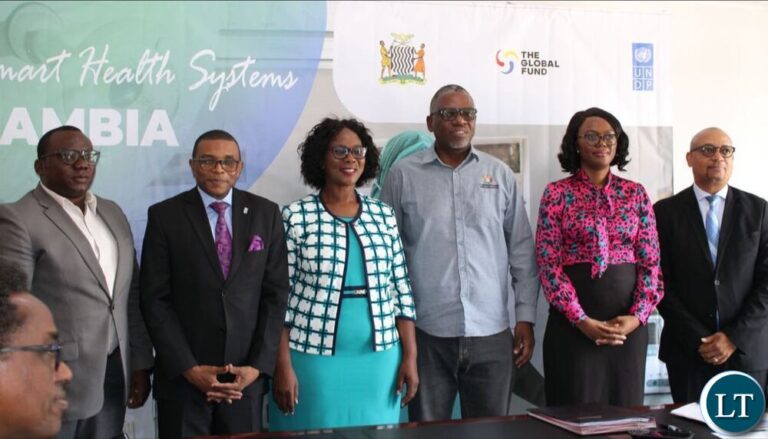
The National Smart Health Systems Connectivity Training of Trainers (TOT) workshop, aimed at providing support to health facilities, through technical skills on Digital Health Platforms has officially opened.

The media reports that speaking during the event, Smart Zambia Institute National Coordinator Percy Chinyama who was represented by the Director for Digital Government Services, Mulomba Hameja, says the workshop will transform health services, through improved connectivity and reliable energy.

“For many years, inadequate connectivity and unreliable power have hindered the full implementation of digital-health platforms such as SmartCare, Telemedicine, e-Learning, Health Information Systems, and supply-chain tools,” he added.

Mr Chinyama said the project will ensure that rural and underserved health facilities benefit from stable, high-speed internet through starlink satellite connectivity and reliable solar power systems.

“This workshop goes beyond technology. We are strengthening governance, accountability, and safety in the implementation of digital health systems,” said Mr Chinyama.

Meanwhile, United Nations Development Plan (UNDP) Resident Representative, James Wakiaga, who was represented by Senior Adviser Health, Energy and Climate Change, Saleban Omar, described the project as an investment in national capacity to install, maintain and sustain the digital backbone of Zambia’s future health systems.

Dr Wakiaga added that his institution is committed to ensuring that every Zambian can walk into a health facility and receive timely, dignified and reliable health care service.

“When you install a system correctly, when you pass on the skills to the next technician, when you troubleshoot a problem that keeps a rural clinic online, you are strengthening the very foundation of public health in Zambia and contributing to a cleaner , greener future,” said Dr Wakiaga.

The Smart Health Systems project is jointly being implemented by UNDP, Smart Zambia Institute, and the Ministry of Health as a Key Intervention towards supporting the National Digital Health Strategy.

Zambia Moves to Enshrine Free Education in Law

1

The government has taken a step toward securing free education as a legal right, with the Ministry of Education initiating amendments to the Education Act of 2011.

Minister of Education, Hon. Douglas Syakalima, announced that the proposed amendments have been submitted to the Ministry of Justice for fine-tuning. Once enacted, the law would guarantee free education for children from Early Childhood Education through secondary school.

“We have seen the massive benefits that the introduction of free education has brought to the country, and we want to ensure that this policy is backed by law,” Hon. Syakalima said.

The Minister stated that the surge in school enrolments demonstrates the strong demand for education, previously hindered by school fees. He also noted the establishment of the Educational Association for Quality Assurance in Zambia (EAQAZ), which will play a role in monitoring and enhancing the quality of education nationwide.

“As government, we have provided free education, recruited teachers, supplied desks, completed stalled infrastructure projects, and reintroduced meal allowances. Now, what we want is to ensure that the provision of quality education is upheld,” Hon. Syakalima added.

During a courtesy call, EAQAZ president Dr. Chilao Mutesa, accompanied by a four-member delegation, formally introduced the Association to the Minister. Dr. Mutesa highlighted EAQAZ’s mission to promote excellence, foster collaboration, and strengthen capacity in quality assurance across Zambia’s education sector.

Dr. Mutesa explained that EAQAZ is a professional body comprising quality assurance practitioners and higher education institutions. “EAQAZ wishes to convey its support for the recent policy changes, such as the introduction of free education, teacher recruitment, and the revision of the school curriculum, among other positive initiatives,” Dr. Mutesa said.

He further proposed that the free education policy be enshrined in the Constitution to ensure its permanence.

Speaker Accused of Acting Prematurely in Chawama Seat Case

A petition has been filed before the Constitutional Court challenging the Speaker of the National Assembly’s declaration that the Chawama parliamentary seat is vacant. The action is being taken by individuals who argue that the seat was not legally vacant at the time of the Speaker’s announcement. The petitioners are seeking a judicial review of the circumstances under which the declaration was made, stating that the decision lacked proper legal basis.

According to the petition, the Speaker acted prematurely by declaring the seat vacant before the conclusion of related legal processes. The petitioners argue that matters concerning the eligibility or disqualification of a sitting Member of Parliament must follow established procedures, including the exhaustion of legal avenues. They state that the Speaker’s decision created unnecessary uncertainty and may have been taken without full consideration of constitutional requirements.

The petitioners contend that the Constitution outlines specific conditions under which a seat can be declared vacant. They argue that these standards were not met when the Speaker made the announcement. The petition states that allowing such decisions to proceed without proper legal grounding undermines parliamentary accountability and threatens the rights of elected representatives.

The filing asks the Constitutional Court to determine whether the Speaker exceeded his authority. The petitioners want the Court to clarify whether the Speaker is allowed to make a declaration while other processes remain pending. They argue that the decision may have interfered with the rights of the affected MP by preventing them from completing legal steps available under the law.

According to the petition, the declaration had immediate political and administrative consequences. The petitioners claim that the announcement set in motion preparations for a by election. They argue that such actions can influence political expectations and affect constituency service. The petition calls for the Court to halt any moves associated with the declaration until the matter is resolved.

The petitioners also argue that the Speaker’s decision could set a precedent if left unchallenged. They stated that future Speakers might declare seats vacant without thoroughly verifying the legal position. The petition warns that this would create instability in parliamentary representation. The applicants said the constitutional framework demands clear, predictable procedures for managing disputes involving parliamentary seats.

The petition highlights concerns about fairness. It suggests that the MP affected by the declaration may not have been given adequate opportunity to present their case. The petitioners argue that due process requires an MP to be notified and allowed to respond before a vacancy is declared. They said fundamental fairness must guide decisions involving elected positions.

The matter has drawn attention because of its potential impact on future parliamentary procedures. Observers are following the case closely because it involves the interpretation of constitutional provisions that safeguard democratic representation. The petitioners said the Constitutional Court must reinforce the rule of law by ensuring that all parliamentary decisions align with legal requirements.

The filing also notes that declaring a seat vacant is a significant action because it affects the electorate. The petitioners argued that such a decision must not be made lightly. They said voters must be protected from decisions that disrupt representation without lawful justification. The petition emphasises that a declaration of vacancy affects not only the MP but also the constituency.

The Constitutional Court is being asked to determine whether the Speaker acted within the scope of his authority. The petitioners believe that the matter requires urgent attention because of the by election timetable. They want the Court to freeze any steps toward a new election until the petition is heard and decided. They maintain that the matter raises important constitutional issues.

The Court is expected to set a hearing date after reviewing the filing. Legal analysts note that the case could provide clarity on the role of the Speaker when handling matters that have legal implications beyond the National Assembly. The final decision will shape how similar disputes are addressed in the future

CCJP Tells HH Public Hardship Remains Widespread

4

CCJP Tells HH Public Hardship Remains Widespread

The Catholic Commission for Justice and Peace has urged President Hakainde Hichilema to pay close attention to the rising public frustration across communities, warning that living conditions remain difficult despite government assurances of economic stabilisation. CCJP stated that feedback collected from parishes indicates households are struggling with high food prices, limited job opportunities, and increasing pressure on essential services. The organisation emphasised that these concerns require urgent government attention because they reflect the daily realities of citizens across districts.

CCJP explained that parish committees routinely gather information from ordinary residents, including market traders, youths, farmers, teachers, and healthcare workers. According to the Commission, their latest assessments show that most citizens do not feel the benefits of government policies that are frequently presented as progress. The organisation noted that economic indicators alone are not a sufficient reflection of public welfare, adding that the lived experience of many citizens suggests continuing hardship.

The Commission reported that feedback shows families facing significant difficulty in meeting the cost of basic needs such as mealie meal, cooking oil, transport, and school-related expenses. It said many youths continue to express deep frustration over limited employment prospects. According to CCJP, communities want the government to prioritise economic relief that directly affects household budgets instead of relying heavily on macroeconomic gains.

CCJP acknowledged that households appreciate government commitments in areas such as debt restructuring and inflation control but remain concerned that these gains have not translated into lower prices for essential goods and services. It reported that families in rural areas face added challenges due to recurrent dry spells, livestock diseases, and limited access to farming inputs. The Commission said these factors severely affect food security and contribute to widespread anxiety about the coming agricultural season.

The organisation stressed that the concerns raised by communities should not be interpreted as political opposition but as factual realities that demand immediate attention. CCJP said the government must understand that ordinary citizens do not measure national progress by official statements but by what they can afford and how they live from day to day. According to the Commission, communities want the government to acknowledge their concerns and respond with targeted, practical interventions.

CCJP also noted that parish leaders have raised concerns about persistent delays in the distribution of farming inputs. It reported that several farmers have expressed uncertainty regarding the availability and timing of fertiliser delivery. The organisation said farmers worry that these delays will significantly affect agricultural production and further undermine national food security. The Commission highlighted that small-scale farmers depend heavily on timely access to inputs to sustain their livelihoods.

The organisation further pointed to ongoing concerns about water shortages in some communities. It reported that women and children in certain areas are forced to walk long distances to access clean and safe water. CCJP said this situation places considerable stress on households and negatively affects sanitation and hygiene. The Commission reiterated that these issues must be treated as urgent because they directly impact public health and overall community welfare.

CCJP urged the government to adopt a more attentive and responsive approach by engaging with communities more directly and ensuring that relief efforts are tailored to local realities. The organisation argued that meaningful community engagement can significantly improve trust between citizens and state authorities. It emphasised that localised feedback is essential for accurately understanding the depth and nature of public frustration.

The Commission noted that citizens do appreciate development projects such as road construction and school upgrades but believe that daily survival remains the most pressing and immediate issue. It said communities desire leadership that recognises their ongoing struggles and provides tangible relief in critical areas such as food affordability and job creation. CCJP affirmed that civil society organisations play an essential role in presenting accurate, grassroots-level feedback to decision-makers.

The organisation encouraged the President to reflect seriously on the concerns raised and to integrate them into future policy decisions. CCJP said strong and compassionate leadership involves acknowledging challenges openly and working collaboratively with citizens to resolve them. It urged the government to address economic pressures at the household level and ensure that national development strategies incorporate direct, practical support for families.

The Commission reaffirmed its commitment to presenting factual, community-based feedback to authorities. It stated that the wellbeing of citizens must remain the central priority of national leadership. CCJP expressed its hope that the government will respond to these concerns with decisive and effective action that meaningfully improves the daily lives of households across Zambia.

M’membe Accuses HH of Blocking Genuine Constitutional Dialogue

4

M’membe Accuses HH of Blocking Genuine Constitutional Dialogue

Socialist Party presidential candidate Dr Fred M’membe says President Hakainde Hichilema has weakened constitutional order and shown little regard for alternative views by suspending talks with the Oasis Forum. He stated that the collapse of the discussions confirms concerns that the President is attempting to consolidate political control rather than genuinely consult stakeholders on the constitutional amendment process. Dr M’membe was reacting to the government’s decision to end dialogue with the Oasis Forum following disagreements over Bill 7.

According to Dr M’membe, the President’s actions reflect a pattern in which the administration invites participants to discussions but refuses to adjust its position. He said the government seeks to create an impression of consultation while continuing with a predetermined agenda. Dr M’membe referenced developments surrounding Bill 7, describing the proposed amendments as divisive and authoritarian. He said the Oasis Forum could not be expected to trust a process that was already viewed as flawed.

He noted that participants entered the dialogue with principled positions on constitutional procedure. Dr M’membe explained that a democratic government should be prepared to listen, negotiate, and adjust, especially when dealing with amendments to the supreme law. He said this did not occur in the recent engagements. Dr M’membe stated that genuine dialogue requires openness rather than rigid positions. In his view, the government’s posture demonstrated an unwillingness to consider objections raised by civil society, churches, and legal bodies.

The Socialist Party leader said the President has repeatedly shown a reluctance to tolerate criticism. He argued that the suspension of the meeting should not surprise citizens because the administration has consistently resisted scrutiny on national issues. Dr M’membe said the events surrounding the Oasis Forum meeting illustrate the government’s broader approach to governance. He cited previous disputes involving the Lungu family and various public concerns, saying these suggest a pattern of handling disagreements through unilateral action rather than consultation.

Dr M’membe said the attempt by the government to frame the Oasis Forum as unprepared to engage constructively was misleading. He explained that raising constitutional concerns does not amount to obstruction. Instead, he said it reflects a commitment to protecting the integrity of the constitutional order. He insisted that stakeholders who question the current process are acting in the national interest.

He argued that Bill 7 would concentrate authority in one office and alter fundamental aspects of Zambia’s governance structure. Dr M’membe said such changes cannot be pushed without broad national agreement. He warned that moving forward with the amendments without consensus poses risks to the country’s democratic future.

Dr M’membe said the suspension of dialogue appears intended to weaken public resistance and buy time for further moves in the amendment process. He described this approach as tactical rather than procedural. Dr M’membe warned citizens to remain alert to developments surrounding the constitutional debate. He said constitutional reform must not be conducted through strategies that reduce public participation.

He urged Zambians to speak out and defend the Constitution, saying it is the responsibility of citizens, civil society, churches, trade unions, professional bodies, and youth groups to protect the country’s democratic framework. Dr M’membe said this period demands active involvement to ensure that the country does not adopt a constitutional amendment process that undermines democratic values.

He concluded that the Constitution cannot be reshaped according to the preferences of a single office. Dr M’membe said constitutional amendments require transparency, consultation, and national unity. He encouraged citizens to recognise the importance of safeguarding the document that defines the structure of governance and limits the exercise of state authority.


Chavuma women urged to vie for political positions

0

Northwestern Province Principal Gender Officer, Limpo Sishekanu, has encouraged women in the area to be proactive by taking a lead and actively participating in the electoral process ahead of the 2026 general elections.

Ms Sishekanu said women play a key role in issues of national governance hence the need for them to consider vying for leadership positions even those perceived to be for men in the forthcoming elections.

She said this in Chavuma when she paid a courtesy call on District Commissioner Geoffrey Kasonda.

“Women too must vie and stand for positions like Members of Parliaments, councilors and mayors in the 2026 general elections,” she said.

Ms Sishekanu said it was through vying for leadership positions that women can understand the challenges females face especially on gender based violence.

She said the government through her department was ready to give women all the necessary support as they participate in the electoral system and take up leadership positions.

Ms Sishekanu further advised women not to relent and go through the entire electoral process from registering as voters to the time of voting.

And Chavuma District Commissioner, Geoffrey Kasonda, said he wants to see more women coming on board to participate in decision making positions and in issues of national importance.

Mr Kasonda has since called on women to stand firm and support each other.

Meanwhile, Mr Kasonda said cases of gender based violence in the district were high and went unreported due to the long distance victims have to cover to the police station situated 11 kilometres away from the central business district.

“Some cases go unreported for fear of being victimised, especially among male forks,” he said.

Kalomo DC calls for collective action to end GBV

0

Kalomo District Commissioner, Joshua Sikaduli, has called on a cross section of society to come on board to curb violence against women and girls in communities.

Speaking during the launch of various activities to be undertaken by several organisations during this year’s 16 days of Activism against Gender Based Violence in Kalomo, Mr Sikaduli noted that violence against women and girls has expanded beyond homes and communities into new frontiers such as phones, social media, and the digital space.

This year’s 16 days of Activism against Gender Based Violence is under the theme, ‘Unite to end digital violence against women and girls’.

And Mr Sikaduli further observes that despite the lack of comprehensive national and district statistics about digital violence on women and girls as many cases go unreported, traditional gender based violence remains high in the country and urged all stakeholders to come on board to curb the vice.

“Digital violence , sometimes referred to as technology-facilitated gender based violence includes a wide array of harmful behaviours such as online harassment, cyber stalking, threats, non- consensual sharing of intimate images; all targeting women and girls  often in ways that are hard to detect, shameful to report or devastating to endure,” he said.

He pointed out that leaders, parents, and community stakeholders should not ignore digital violence hence the need for unity to fight the scourge.

The Kalomo District Health Office has recorded 333 cases of physical violence from January to October 2025 while the figure for sexual violence stood at 278, emotional and economical violence at 75.

In all the three categories of gender based violence, females are the most affected.

The activism period started on November 25, which is also an international day for the elimination of violence against women and ends on December 10, 2025 which coincides with Human Rights Day.

A wide range of activities are to be undertaken by several Kalomo youth groups, traditional leaders, civic authority, schools, churches and civil society and non-governmental organisations during the activism period.

Hailstorm destroys Zesco installations in Kabwe

1

A hailstorm has destroyed Zesco Limited power installations in Kabwe district, Central Province, leaving some residential areas without electricity and water.

Central Province Permanent Secretary, Milner Mwanakampwe, said at a media briefing in Kabwe that the heavy rains, which were experienced on Saturday, left a trail of destruction to households and institutional property.

Dr Mwanakampwe said a number of power transmission lines in Chimanimani, Pollen, Ngungu and Mukobeko areas were damaged, with some houses and churches equally having their roofs blown-off.

“I can confirm that most of Zesco poles and installations were affected by the storm, resulting in some areas not having both electricity and water,” he said.

Dr Mwanakampwe said the power utility company, Zesco, is working round the clock to restore power in all affected areas.

He noted that the power problem has also affected the Lukanga Water Supply and Sanitation Company.

He said some residential areas such as Mpima and Mine Township have not had water for two days due to the destruction of electrical installations.

Dr Mwanakampwe, however, assured the residents of Kabwe that Zesco and Lukanga Water Supply and Sanitation Company were working hard to restore electricity and water supply in the district.

Meanwhile, Dr Mwanakampwe has said the Disaster Management and Mitigation Unit (DMMU), under the Office of the Vice-President, was compiling data on the extent of the damage and that a comprehensive statement will be issued on the matter soon.

Dr Mwanakampwe has since urged affected members of the public, whose houses were damaged, to report to the DMMU for possible assistance.

Chawama MP Petition Challenges Parliamentary Seat Vacancy Ruling

1

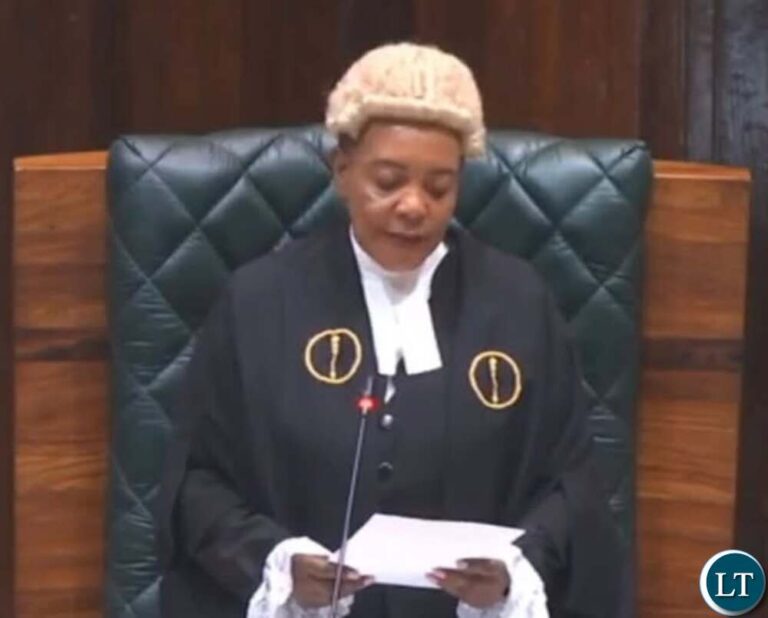
Chawama Constituency Member of Parliament, Clement Chali, has petitioned the Constitutional Court to challenge Speaker Nelly Mutti’s decision to declare the parliamentary seat vacant.

On Friday, November 2025, Speaker Mutti declared the seat, previously held by Tasila Lungu, vacant. The ruling followed Ms. Lungu’s continued absence from Parliament since the death of her father five months ago. Ms. Mutti stated that Ms. Lungu breached Standing Orders 215 and 234 of the National Assembly Standing Orders of 2024.

In an urgent petition filed today, Mr. Chali argues that the decision was unconstitutional and illegal. Citing the Attorney General as the respondent, he asks the court to set aside the Speaker’s ruling, contending it contravenes the Constitution.

Mr. Chali contends the action violated Article 72(2)(c) of the Constitution, which refers to conduct contrary to a Code of Conduct “prescribed” by an Act of Parliament. He argues this is not the same as the Standing Orders relied upon by the Speaker, stating that Article 266 requires prescribed matters to be provided for in legislation. He submits that Standing Orders are internal parliamentary procedures and are not supported by the Parliamentary and Ministerial Code of Conduct.

The petition seeks several remedies, including a declaration that the Speaker’s decision is null and void, an order of certiorari to quash the ruling, and a stay of the decision until the petition is fully determined.

President Hichilema receives report on constitution amendment

7

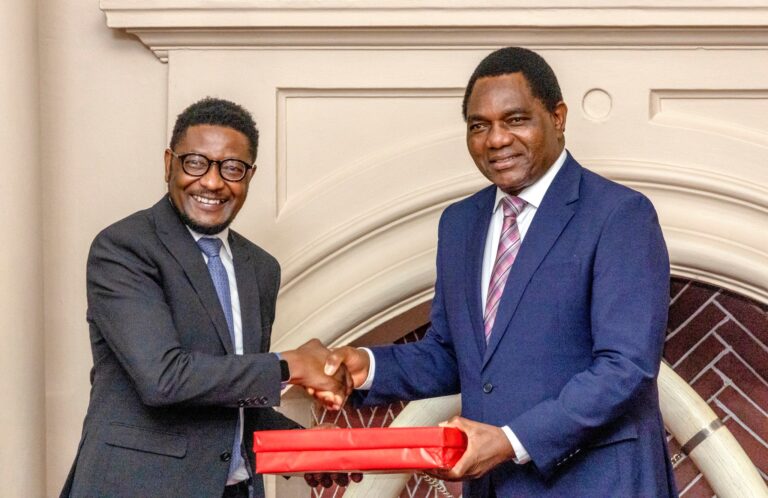
President Hakainde Hichilema has received the draft bill and final report produced by the Technical Committee appointed on 2 October 2025 to consult citizens on proposed constitutional amendments. The committee delivered the documents during a session held at State House, where its vice chairperson outlined the work completed over the past two months. The chairperson was absent due to a bereavement, and the vice chair presented the report on his behalf.

The committee reported that it carried out both physical and virtual sittings across all provinces and districts, receiving submissions in English, local languages and sign language. Written submissions were delivered through district drop-boxes and online platforms, including the committee’s website and official email channels. The vice chair told the President that Zambians in the diaspora also participated through online platforms.

According to the committee, a total of more than 11,860 submissions were collected. The team noted that this was among the highest ever recorded in a constitutional review or amendment process, with the only higher figure reaching about 12,000 in a previous multi-year exercise. The vice chair stated that the committee concluded its work in two months and described this as an example of efficiency, cost management and effective coordination.

He said the committee worked independently from the start, adopted its own rules of procedure, and conducted deliberations without interference from any institution. The members held extensive debates and consultations, which the vice chair said reflected the independence and diversity of the team. Traditional leaders, professionals, persons with disabilities, students, labour representatives, business groups and religious bodies all participated in the process.

The committee thanked citizens for contributing to the exercise and expressed appreciation for logistical support from government departments, councils and security wings. The vice chair highlighted assistance from the Zambia Air Force, which provided transport to allow the team to move between districts efficiently. The committee also noted that its proceedings were televised from the beginning to the end, and said this increased transparency and public visibility.

President Hichilema thanked the committee for completing the assignment within the set timeframe and described the work as efficient in both time and resource use. He said the team had demonstrated prudence and displayed a work ethic that aligned with the administration’s expectations. He noted that the number of submissions collected in two months was comparable to those gathered over a two-year period in past constitutional processes.

The President also thanked the support teams from various ministries, Cabinet Office, councils and Smart Zambia, which provided the online platforms used in the submission process. He acknowledged the contribution of the Zambia Air Force and the police, as well as the traditional leaders who took part in both the committee and the consultations.

Hichilema said the next steps would follow established parliamentary and administrative procedures. He emphasised that the process would proceed without any shortcuts, noting that the constitution belongs to the people and must therefore be handled in a way that respects proper channels. He stated that recent meetings held with civil society and other stakeholders were part of listening to citizens and did not alter the committee’s work.

The President encouraged the committee to remain available for follow-up engagement, saying that parliamentary select committees or administrative bodies may require technical clarification as the process moves to the next stage. He asked the members to take a short rest while remaining on standby for any questions that may arise during formal procedures.

Hichilema also expressed condolences to the committee chairperson for the loss of his son, noting that the bereavement occurred while the committee was carrying out a national assignment. He said he would personally call the chair to convey condolences on behalf of the government.

As the session closed, the President thanked the committee for what he described as national service, telling members that any citizen who followed the process would recognise the effort involved. He said the committee had shown that national tasks can be completed within clear timelines when teams are focused and supported by the appropriate institutions.

The handover marks the beginning of the next stage of constitutional consideration, which will involve examination of the draft bill and public submissions through the formal parliamentary process.

Well done Germany; let’s put a moratorium on overseas travel & workshops!

2

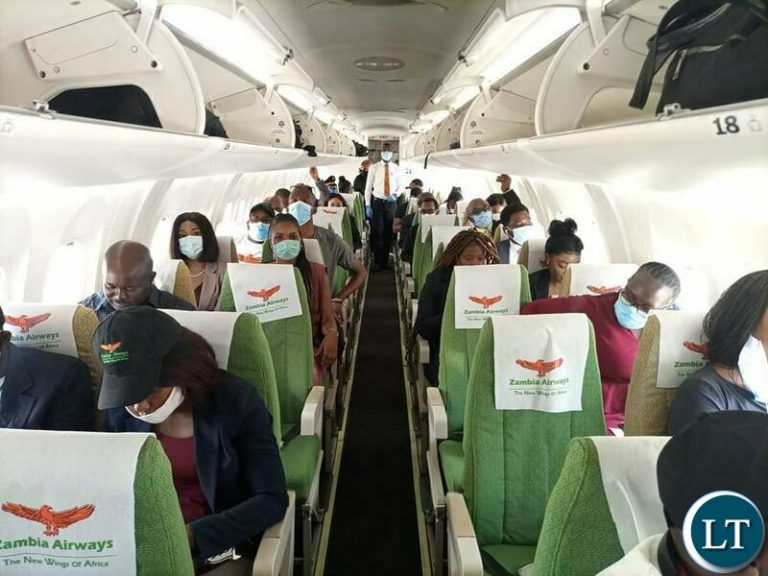
A prominent Lusaka lawyer has expressed sadness on his Facebook page at the decision by the Germany government to deny Visas to a battalion of 18 Zambian MPs who were supposed to travel to that country for official duties.

All we can is, well done Germany for applying emergency brakes on this trip. We see this problem elsewhere in Africa! Who has bewitched us? Why do we seem to have our priorities upside down?

Our country is currently grappling with a serious energy crisis due to our failure to invest in the energy sector over the years. When such challenges arise, it becomes necessary to spare every available coin to help mitigate the situation.

Civil servants and public officers have a tendency of organizing countless trips abroad and endless workshops at plush hotels so as to accrue maximum benefits in terms of allowances even when the nation is in a desperate situation. Honestly, do we need foreigners to remind us such trips are not necessary at this stage? This is quite sad and embarrassing.

If you review the reactions from the followers of this lawyer who happens to be a former senior government official, which are of course collosal in number; they are all in agreement this trip was not necessary…..18 MPs in number!

Why do our MPs and other public officers keep on flocking abroad? If we want to learn a few things from others, why can’t we simply sponsor a few individuals, and then workshop the same afterwards?

Consider the issue of HIV/AIDS pandemic for instance….this problem has been with us for several donkey ages and yet we keep on organizing seminars and workshops in 5 star hotels to discuss the same devoid of any tangible results!

As a person who is frugal and believes in fiscal discipline, we are appealing to our beloved President to consider pulling a plug on all the unnecessary travels abroad and workshops!

Salute!

Prince Bill M. Kaping’a
Political/Social Analyst
Zambezi