Thursday, June 4, 2026
24.2 C
Lusaka
Home Blog Page 239

PF Appeals to SADC as It Cites Barriers to Free and Fair Elections

9

Lusaka, November 17, 2025 — The Patriotic Front (PF) has formally lodged a protest with the Southern African Development Community (SADC), accusing the Zambian government of systematically undermining democratic institutions, the rule of law, and fundamental human rights ahead of the 2026 general elections.

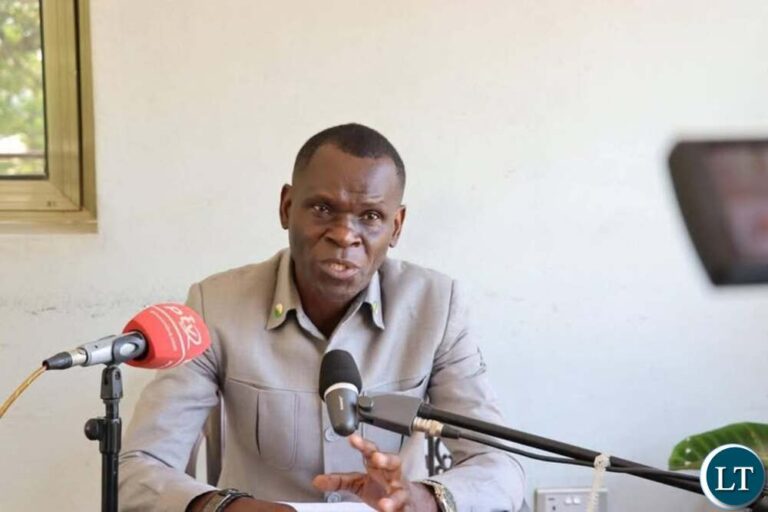
In a detailed letter addressed to SADC leadership, PF Chairperson for Information and Publicity, Ambassador Emmanuel Mwamba, outlined a pattern of state-backed repression targeting opposition activities. He cited documented violations already recognized by international bodies, including the U.S. Department of State’s Country Report on Human Rights Practices and findings from the United Nations Human Rights Council.

Mwamba condemned the consistent denial of permits for PF rallies, protests, and public gatherings, stating that the Zambia Police routinely invoke vague “security concerns” or the outdated Public Order Act to suppress legitimate political expression. He added that since 2024, the PF has been effectively barred from participating in any electoral processes.

He further accused President Hakainde Hichilema’s administration of orchestrating the takeover of a rival political party through political surrogates  an act he described as an abuse of state power to eliminate competition.

Mwamba alleged that law enforcement agencies have been weaponized against opposition figures, with PF members subjected to frequent arbitrary arrests, prolonged detentions, and imprisonment under repressive legislation designed to silence dissent

He also reported repeated raids on the PF national headquarters by police and ruling United Party for National Development (UPND) cadres. During these incursions, Mwamba said, party property — including furniture, vehicles, and communication equipment — has been vandalized or destroyed, and security personnel have been physically assaulted.

“These actions are not isolated incidents,” Mwamba stated. “They constitute a coordinated campaign to neutralize political opposition and manipulate the electoral environment in favor of the ruling party.”

He emphasized that these conduct violate the SADC Principles and Guidelines Governing Democratic Elections, as enshrined in the SADC Treaty, and threaten regional stability. “Elections conducted under conditions of fear, intimidation, and institutional bias do not produce legitimate outcomes — and they do not guarantee peace,” he said.

Mwamba called on SADC Chairperson, President Cyril Ramaphosa, and the Chairperson of the Organ on Politics, Defence and Security, Peter Mutharika, to intervene urgently. He urged SADC to initiate formal dialogue with the Zambian government, demand compliance with regional democratic standards, and deploy monitoring mechanisms to ensure the integrity of the 2026 polls.

“The people of Zambia deserve elections that are free, fair, and credible,” Mwamba concluded. “SADC must not remain silent while democracy is eroded in one of its member states.”

Full letter Below,

HIS EXCELLENCY ELIAS M MAGOSI

EXECUTIVE SECRETARY

SADC HOUSE

CENTRAL BUSINESS DISTRICT

PRIVATE BAG 0095

GABORONE

BOTSWANA

RE; THREATS TO DEMOCRACY, AND THE HOLDING OF FREE &FAIR ELECTIONS IN THE REPUBLIC OF ZAMBIA

I’m a senior member of the Opposition Patriotic Front party here in Zambia. I’m a Member of the Central Committee and hold the position of Chairperson for Information and Publicity.

We wish to bring to attention serious development occurring in Zambia that requires immediate attention by the leaders of the member states.

This letter has been written to the attention of both the Chairperson of SADC, His Excellency President Cyrill Ramaposa and the  Chairperson of the SADC Organ on Politics, Defence  and Security, His Excellency Prof. Arthur Peter Mutharika.

Various international reports including the United Nations Huiman Rights Council and the United States Country Report have cited Zambia for serious violations and abuse of human rights, for negative activities shrinking both the democratic and media space, the break down of the Rule of Law, the abuse of the law against political opponents and critics of government.

Zambia is scheduled to hold Presidential, Parliamentary, Mayoral, Council Chairpersons and Local Government elections in August 2026.

However, the holding of credible, democratic, free, and fair elections is under serious threats unless the government of President Hakainde Hichilema is persuaded to abandon the course it currently is on.

As you are aware, elections are a process and most of the irregularities, infringements, violence and negative conditions occur way before the voting day.

The SADC Principles and Guidelines Governing Democratic Elections, mandates member states to hold elections using shared values that promote values of Democracy, respect for human rights and the Rule of Law as enshrined in the SADC Treaty signed at Windhoek, Namibia in 1992, a matter that guarantees durable peace and security in member states and the SADC region.

The Government of President Hichilema has:

  1. Since 2021, banned political campaigns, protests, demonstrations, and picketing by the Opposition and other social formations. The Zambia Police uses the pretext of “security concerns” and the archaic Public Order Act to stop, arrest and prosecute those that may hold “Illegal Assembly”. Although President Hichilema promised to repeal the law whilst in Opposition, he has weaponized it together with other laws such as the colonial laws on sedition reprised to criminalize speech and criticism against government.
  2. He has weaponized Law Enforcement Agencies that are being used as tools to detain, arrest and imprison political opponents. He has also effectively interfered with the Judiciary, issuing running commentaries, threats and accusations against members of the Judiciary. He has caused transfers and dismissals of those deemed, without foundation, sympathetic to the previous regime.
  3. Government has passed oppressive and repressive laws that have literally taken away constitutionally guaranteed rights and freedoms. Among the laws passed include the Cyber Security and Crimes Acts passed in March 2025.
  4. He has caused a significant purge of the civil service, dismissing, retiring or suspending professionals and with open discrimination caused appointments of persons to man key institutions based on tribe and region.
  5. He has appointed members of the UPND, the ruling party, to run the Electoral Commission of Zambia thereby depriving it of its sense of independence, objectivity and fairness.
  6. President Hichilema has engaged in systematic process to steal, kill and destroy the largest political party in Zambia, the former ruling party, the Patriotic Front party. He has installed his own surrogates as Office Bearers of the Party, displacing the legitimately and legally constituted team. He has since caused the recognition of these surrogates in Parliament masquerading as Leaders of the Opposition and illegally drawing public resources and fringe benefits. Despite the overwhelming evidence that State House is behind these sponsored schemes, he alleges that this is mere factional or internal fights in the Party, a false assertion betrayed by the evidence.
  7. Consequently, he has caused the banning of participation in elections of the Patriotic Front Party and causing his surrogates to enter into alliance with his Party thereby denying millions of members of the Party from their right to associate with the Party of their own choice.
  8. The Party’s Secretariat located on Corner of Lumumba/Panganani Road in Lusaka is frequently attacked and invaded by both the Zambia Police and the UPND. Party property, furniture, cars and other equipment have been frequently destroyed and damaged and personnel manning the premises have suffered brutal attacks. Since 2021, there have been several attacks on the Party Headquarters with authorities failing to arrest or prosecute anyone of the culprits.
  9. He has embarked on a constitutional-making process to negatively influence the upcoming elections. This process has been rejected by almost all stakeholders including the Law Association of Zambia, Church Mother Bodies, NGOs and Civil Society Groupings.
  10. Currently, our Secretary General of the Party, Hon. Raphael Nakacinda has been jailed for a speech offence and imprisoned for 18 months. He has been denied bail pending appeal and like many of the leaders in the Opposition and critics of President Hichilema, he is also facing numerous charges, like many of our leaders and members of the Opposition suffering similar fate.

All these actions go to threatens the holding of credible, democratic, free and fair elections and if not handled will threaten Zambia’s enduring peace cherished and held for decades.

We are ready to travel to Gaborone and present evidence of the matters presented in this letter for the attention of the SADC Organ on Politics, Defence and Security Cooperation, responsible for promoting peace, security and stability in the region.

Yours Faithfully,

SIGNED;

Amb. Emmanuel Mwamba

Chairperson for Information and Publicity

Member of the Central Committee

PATRIOTIC FRONT
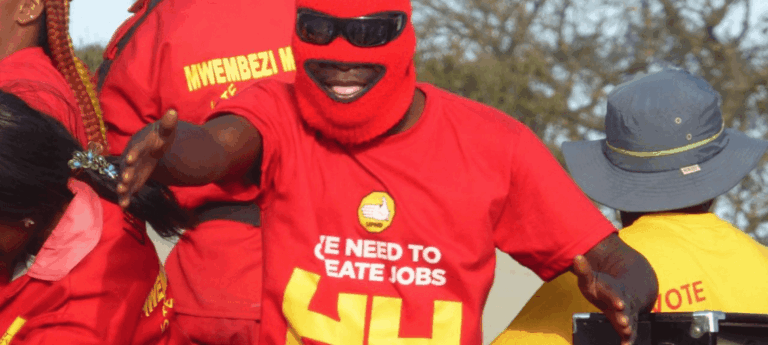
UPND Cadres Accused of Raiding PF Secretariat

9

UPND Cadres Accused of Raiding PF Secretariat

A violent attack on the Patriotic Front secretariat in Lusaka is concerning after a group believed to be UPND cadres stormed the premises on Saturday, injuring people and damaging property in an incident recorded on mobile phones and widely shared online. The group had earlier gathered at Kulima Tower bus station, where witnesses said they assembled in small groups throughout the day, some wearing masks and party-branded clothing.

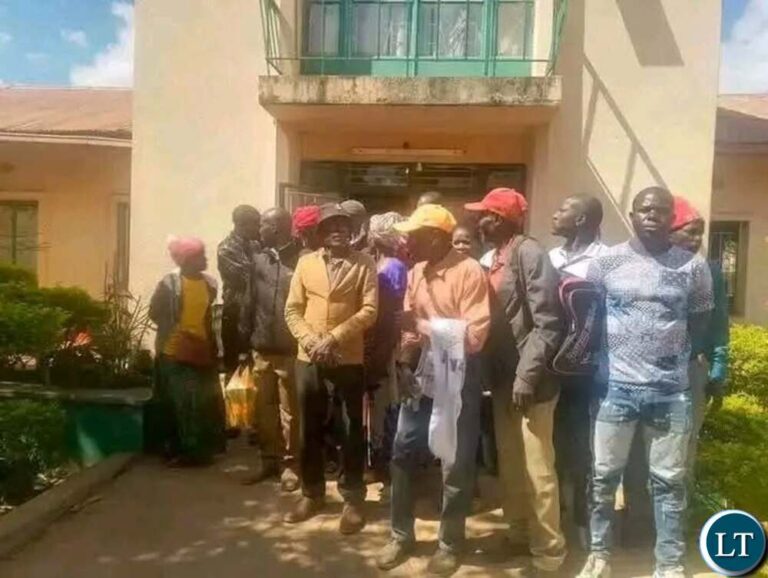
The attack took place at the junction of Panganani and Lumumba roads, a location where mechanics, small-scale traders and PF members operate daily. When the convoy of motorcycles and public buses arrived, the men rushed towards the secretariat and began beating anyone in the vicinity. Mechanics said they were attacked without warning, losing tools and personal items as they tried to escape. Vendors nearby also fled after seeing people being struck repeatedly while lying on the ground.

Political commentator Dr. Lawrence Mwelwa criticised the incident, saying it revived fears linked to the Mapatizya Formula, a tactic associated with confrontational political conduct. He pointed to recent public remarks made in Bweengwa and Monze, where senior UPND figures spoke about bringing back cadre visibility and showing political strength. He said these public statements may have emboldened groups already known for confrontational behaviour.

Dr. Mwelwa also noted that the UPND had previously condemned the PF for allowing cadres to dominate public spaces during its time in office. He said the public expected a different approach from the ruling party, especially after the 2021 change of government. According to him, the return of organised groups in bus stations and markets would take the country back to conditions that citizens thought had ended.

People who live and work near the PF secretariat said the attack appeared planned. They reported that the group moved together, acted in unison and left the area quickly once the raid was completed. Mechanics who store materials near the PF office said they were beaten despite having no link to any political activity that day. A vendor who sells drinks outside the area said she ran as soon as she saw the group rush into the street.

The PF described the incident as unprovoked, stating that there was no meeting or activity at the secretariat that could have triggered a confrontation. Individuals present said they were standing outside the office when the group arrived. Some of them, who were not involved in politics, said they found themselves targeted simply because they were near the building.

Videos from the scene show several men in red attire punching and kicking people who had fallen to the ground. Other clips show men smashing items outside the secretariat and shouting as they moved through the area. The online circulation of the footage drew strong reactions from members of the public who said such scenes threatened Zambia’s political climate as the 2026 elections approach.

People familiar with operations at Kulima Tower said groups wearing political colours had been more visible in recent months. Traders at the station said they were not surprised when they heard the attackers came from that direction, as some men had been gathering there throughout the week. They said the station had once again become a place where politically aligned groups exert informal control.

Dr. Mwelwa said the responsibility to prevent a return to such behaviour lies with party leadership. He said political competition should never place citizens in danger, and that silence over these acts may create the impression that groups acting violently are protected. He added that Zambia has struggled with similar episodes in past administrations, and repeating them would weaken public confidence in institutions responsible for safeguarding political freedoms.

The attack has renewed calls for clear and firm action from both the ruling party and law enforcement. Members of the public said they want to see a visible response that discourages any group from using political affiliation to justify violent behaviour. They warned that failure to act could create an atmosphere in which intimidation becomes normal during the election period.

President Hichilema Meets Donald Trump Jr. During Private Visit

3

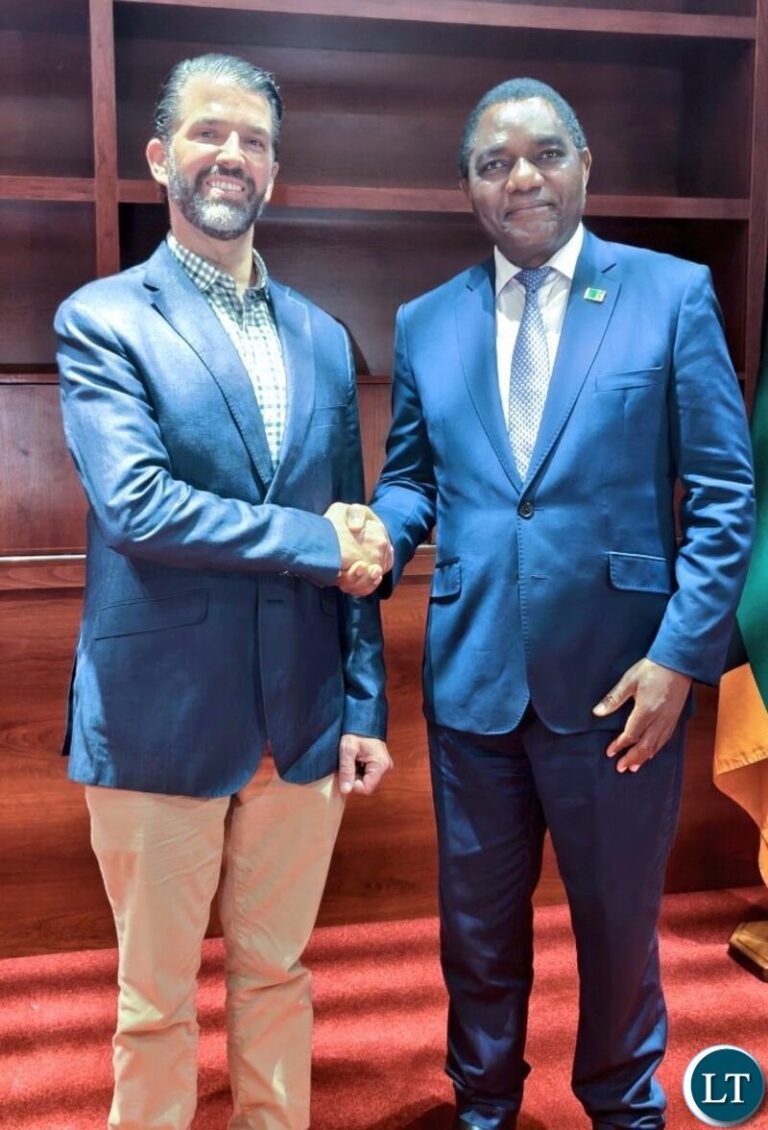
President Hakainde Hichilema met Mr. Donald Trump Jr. during his private stay in Zambia, holding discussions on investment opportunities, tourism and Zambia’s growing relationship with the United States. The engagement, which took place while Trump Jr. vacationed in the country, underscored Zambia’s growing visibility among American visitors and investors exploring prospects across Africa.

Officials said Trump Jr. expressed appreciation for Zambia’s natural attractions, wildlife and the hospitality extended to him during his visit. He also indicated interest in the country’s investment climate and the reforms shaping it. President Hichilema conveyed warm regards to U.S. President Donald J. Trump and reaffirmed Zambia’s commitment to expanding cooperation with Washington in energy, infrastructure, agriculture and technology.

The meeting with Trump Jr. came at the end of a period marked by intensive diplomatic and economic activity for the President. State House noted that the engagements reflect a deliberate strategy to strengthen partnerships, deepen regional cooperation and position Zambia as a stable anchor in Southern Africa.

As part of this wider outreach, President Hichilema travelled to Tanzania to join President Samia Suluhu Hassan during her inauguration, he highlighted the deep historical and economic ties between the two countries, particularly in transport, energy and trade. Tanzania is home to the TAZARA railway and the TAZAMA pipeline, both critical arteries for Zambia’s import and export routes. Officials described the visit as a reaffirmation of Zambia’s long-standing relationship with Dar es Salaam and a signal of readiness to work with Tanzania on modernising shared infrastructure. The meeting also reinforced regional unity and acknowledged Tanzania’s role as a key maritime and transit partner for Zambia’s economy.

Earlier in the week, President Hichilema restored and strengthened relations with Israel by hosting President Isaac Herzog in Lusaka. Their talks focused on agriculture technology, security cooperation and areas of shared interest. He later travelled to Zimbabwe for engagements with President Emmerson Mnangagwa under the Zambia–Zimbabwe cooperation framework. During the Bi-National Commission Meeting, President Hichilema called for the removal of duties and tariffs between the two countries, saying lower barriers would boost trade and widen economic opportunities for citizens on both sides. He described the relationship as strong and focused on shared development. President Mnangagwa agreed that Zambia and Zimbabwe must work closely to advance their common interests and improve the wellbeing of their people.

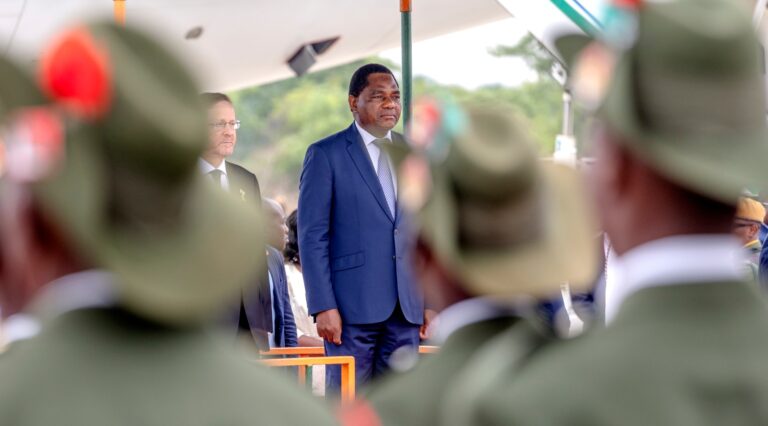
At home, the President participated in several Remembrance Day ceremonies, paying tribute to veterans, service personnel and families of fallen soldiers. State House noted that these engagements form part of the administration’s commitment to honouring the defence forces and promoting national unity.

The week also carried a strong economic agenda. President Hichilema hosted the European Union Business Delegation before meeting a high-level German investment mission exploring opportunities in mining, manufacturing and renewable energy. His address at a major EU event secured an additional 50 million euros in funding for priority development projects.

During the same period, the President also met two of Africa’s most influential business leaders. Nigerian philanthropist Tony Elumelu discussed entrepreneurship support and regional financing opportunities, while Aliko Dangote, Africa’s richest man, conferred with the President on measures to address Zambia’s ongoing energy challenges. Both engagements were aimed at creating pathways for job creation, industrial expansion and improved energy security.

State House described the combined diplomatic and economic calendar as part of a sustained effort to anchor Zambia firmly within regional and global networks. Officials noted that the meeting with Trump Jr. complements this broader strategy by strengthening connections with influential American business circles and reinforcing Zambia’s reputation as a welcoming and credible destination for global investment.

The Presidency said Zambia will continue engaging partners across multiple regions to accelerate economic recovery, expand market access and deepen bilateral cooperation. The engagements with Israel, Tanzania, Zimbabwe, the European Union, African business leaders and the United States, they added, reflect a coordinated approach to securing long-term national benefits.

UPND Cadres’ Silence on Buses Speaks Louder Than Slogans Mr. President

2

By Kapya Kaoma

I have said it before and I’ll say it again—if President Hakainde Hichilema stepped out of his bubble and took public transportation, he would see that his self-praise insults his own intelligence. Sitting among the ordinary Zambians he governs—not behind tinted windows or cushioned by paid cadres, but face to face with those who endure daily struggles—would silence him instantly.

Has he done it? Not likely. Perhaps he sent his team to gauge public sentiment on buses, and what they discovered unsettled him. You could see it in his expression as he addressed the nation: the weary face of a leader confronted by the gulf between his rhetoric and the lived reality of the people. His plea to his cadres—“mulelanda, mulevoka. Bambi tamulelanda. Mu bus umuntu alelanda ati UPND tapali efyo bachiita ba UPND. Mwaikalafye tondolo ndwii, mu bus. Muleasuka abantu ngabalanda.”—was less a rallying cry than an admission of failure. He seemed to beg his followers to speak for him while the public declares plainly, “UPND tapali ifyo icitile.” And who could argue?

That moment revealed something deeper– the chorus of blind praise is thinning, and the silence of ordinary citizens has become a verdict. His gestures betrayed what his words could not—he knows legitimacy built on slogans is crumbling. No amount of self-congratulation can hide the perception that he is out of touch. Many believe he has failed—and they are no longer afraid to say so.

When I heard that speech, I laughed—not out of cruelty, but disbelief. After five years of unfulfilled promises, how could Hichilema still seem surprised by public disillusionment? I love Zambia. I want to see our national football team reclaim its glory at the Africa Cup of Nations and one day play at the World Cup. But under Avram Grant, hope without delivery eventually collapses. Even the most loyal fans grow impatient. Once defended fiercely, Grant was eventually dismissed for failing to deliver results. Who could defend him?

That is precisely where HH now stands. What will his supporters celebrate? Fuel shortages and unstable high fuel prices? Load shedding? The skyrocketing price of mealie meal? Corruption? Unpaid farmers? Police brutality? Cadres harassing citizens? Human-rights abuses? There is nothing left to applaud. Zambians do not live in Community House—they live in communities, struggling to stretch a Kwacha that shrinks week by week. They remember what life was like five years ago.

For Hichilema to expect that people enduring hunger and hardship will defend him out of loyalty is naïve. Yes, a few may still wear his T-shirts, not out of conviction, but to earn a few Kwacha. Some did so under Kaunda, Banda, and Lungu. Others remain silent, embarrassed that the man they once hailed as a reformer now resembles the very politicians he vowed to replace.

But silence is not consent. Political legitimacy depends not only on consent but on trust—the tacit agreement that promises will translate into justice and dignity. When that trust is broken, silence becomes protest—a quiet force waiting for its moment.

I believe the quiet voices on the buses today will roar at the ballot box in August 2026. They may call themselves UPND now, but when that day comes, they will vote for change.

President Hichilema, Zambians are not fools. The time has come for you to fall silent—not in surrender, but in reflection. Listen—truly listen—to the people you once claimed to represent. You may yet discover that silence often speaks louder than slogans. Zambians regret believing your promises; the tragedy is that you do not regret lying to them.

Why President Hichilema must demystify government’s abstruse economic presentations to the public

0

Edward Chisanga

The people of Chibu, who often vote for the Zambian politicians have kept quite for a long time over something extremely important to their lives. They’ve left politicians to decide for them all the time without their involvement. When common people are only left to listen to debates of politicians and economic experts making key decisions for them while using bombastic and often meaningless jargon that they hardy understand, there’s certainly something wrong because no one except they, understand. Amid this dearth of clear information reaching the majority of citizens, politicians continue to claim of inclusive governance.

One day, I was in Chibu to pay a courtesy call on the chief. To my surprise, I found what was to be ordinarily a meeting between me and the chief turned out to be a village assembly awaiting me. “It’s good you’re here. At least we’ve among us, someone who understands these things. You can help me explain to the people.”
I asked, “What things my chief?” He replied, “They’ve been asking me about what’s happening in Lusaka. Let them speak for themselves.”

Then one of them stood and said, “We hear so much talk about percentages. Zambia’s Vision 2030 lists economic targets as: “Achieve GDP growth of 6 percent real growth over 5 years 2006 – 2010 with higher rates in each of the four succeeding 5-year plans—8 percent 2011-2015, 9 percent 2016 – 2020, and 10 percent 2021 – 2030. This assumes that population growth rates will progressively decline from 2.9 percent in 2006 to 0.8 percent in 2030 in accordance with Zambia’s Population Policy.”

At this point, the chief interjected and said, “Yes, I have also seen in the 8th National Development Plan ((8NDP) the same Minister of Finance explaining the economic performance of Vision 2030. My God, everything is in percentages.”
It states, “In Vision 2030, the government’s objective is to attain and sustain an annual real economic growth rate of between 6 and 10 percent. During the period 2006 to 2010, annual real Gross Domestic Product (GDP) growth rate was favourable, averaging 8.7 percent, with the highest annual growth rate registered at 10.3 percent in 2010. Between 2011 and 2016, however, the economic growth rate slowed down, and averaged 4.9 percent. Growth in wholesale and retail trade was mainly driven by increase in consumption, imp Between 2011 and 2016, however, the economic growth rate slowed down, and averaged 4.9 percent.”

Another villager supported the chief saying, “Then we hear the Minister of Finance telling us that Zambia’s economy is resilient, 2024 GDP growth revised to 4%, targets 6% for 2025. And when presenting a national budget, he said, “Global growth is projected to slow down to 3.2 percent in 2024 from 3.3 percent in 2023. Madam speaker, our economy is projected to grow by 2.3 percent in 2024 compared to 5.4 percent recorded in 2023.”

Then a woman villager reported about the Minister’s explanation on inflation. The Minister said, “Madam speaker, the country has experienced pressure over the past year, registering 15.6 per cent in September this year from 13.1 percent in December 2023. The kwacha-US dollar exchange rate, which saw a depreciation of 2.8 percent on a year-to-date basis has also been a factor in raising inflation. To moderate inflationary pressures the Bank of Zambia tightened monetary policy, raising the policy rate to 13.5 percent from 11.0 percent and the statutory reserve ratio to 26.0 percent from 17.0 percent.”

Another reported on what Minister of Finance said, “Zambia has made significant progress with its debt restricting, having achieved over 92 percent agreement in principle with its creditors amounting to U$12.4 billion. He assured that the Zambian government continued to engage with the remaining 7.8 percent, of whom were private creditors, not yet agreed in principle, and in good faith. The debt service to revenue ratio is currently calculated at 24.2 percent in 2025 and not 14 percent which is the target, mainly on account of PDI accrued in 2023 and 2024, as well as the fuel liability management operation.”

At this point, when I saw that all the main speakers had almost finished their interventions, I asked, “What’s all this about my chief?” Then the chief replied, “My people are confused with percentages. Everyone speaks percentages to them. The economy is explained in percentages. We don’t seem to understand anything. Perhaps the elite in Lusaka do. But we don’t. All strategic plans of public institutions are using the percentage growth language that most of my people, and I’m sure other Zambians do not understand. And they continue to claim to run an inclusive government. How can it be inclusive when the majority of our people do not understand percentages?”
I asked all the villagers if they understand these percentages. None answered in the affirmative. I told them I had travelled all over the provinces of the country talking to citizens and asking them the same question. Only economists and other elite were able to understand. The majority did not. They questioned why documents belonging to public institutions were only serving interests of a few. Why public presentations and announcements on the economy are always in percentages?

Another responded, “Yes, when they call us to vote, they make sure we understand what they’re saying. They don’t mention these percentages. But when we put them in power, they all resort to percentages. Inflation: Percentage. Exchange rate: percentage. GDP: percentage. So, we are basically a percentage nation. But who’s this percentage narrative or syndrome helping? And here, don’t get me wrong. I’m not attributing this percentage syndrome to the current government alone, but to proceeding ones too.”

Villagers take proposal to the Head of State

Then, another villager stood up and said, “I have a proposal. I propose that we see the Head of State and explain to him the alternative. We must propose to him that we stop using percentages and replace them by dollar values. No one understands percentages in this village. But we can perhaps understand better if we go back to basics and use numbers.”

A young woman said, “Citizens need something more familiar, elementary, simple, realistic and easily falling in the layman or laywoman’s path. They need the final message. What final message is the percentage giving us? Surely, growth in percentage is not the final message. They don’t need two calculations to understand GDP. When they’re given 6% growth, they still have to translate this into GDP dollar values when they could have simply been given the latter.”
She continued, “If I say Zambia’s GDP will grow by 6% in comparison with Viet Nam’s 3% in 20 26, what does this really mean? Or if I say that Zambia has experienced more GDP growths in the last twenty years than Viet Nam, what impression does that give?”

Another answered, “I would even think that Zambia’s economy is growing more than that of Viet Nam and perhaps in real terms, it’s even bigger than that of Viet Nam.”
Then the chief took over, “That’s right. Let me give an example of GDP growth expressed in annual increases or decreases in dollar values instead of percentages. I invite readers, in particular economists and government to take particular attention to Table 1 below, which compares Zambia’s GDP with that for Viet Nam. Several points can be made from this Table.”

After pausing, the chief continued, “First, by using dollar values and avoiding percentages, people can, with ease, understand that in 2024, Viet Nam’s GDP was seventeen-fold that of Zambia. Yet, in 1982, Zambia’s GDP was twofold that of Viet Nam. Where did Zambia go wrong and Viet Nam right?”

He continued, “Second, we show in the same Table annual increases or decreases of GDP by subtracting earlier years from later years, eg, for Viet Nam, 2020 GDP minus 2019 is equal to $12 billion compared with Zambia’s minus $5 billion. In 2021, Viet Nam’s GDP increased to 20 billion compared with Zambia’s $4 billion. And in 2024 Viet Nam’s GDP increased to $25 billion compared with Zambia’s minus $2 billion. Also, note that Viet Nam’s increase of GDP to $25 billion is basically the same as Zambia’s current GDP of $26 billion.”

One villager asked, “Can you explain in reality, what this means?”
The chief replied, “This explanation is much better and clearer than using percentages. You’ll notice GDP growths in percentages for both countries shown in the same Table. Just looking at them will not explain the real picture as using dollar values has. For example, if we see Viet Nam’s GDP growth of 7.4% for 2019, or Zambia’s 1.4 for the same year, what picture do readers really get? It’s difficult for ordinary people to get the picture quickly of GDP performance while in dollars, it tells the real picture immediately.”

He continued, “Let me put it differently. If the Minister of Finance says that Zambia’s GDP grew by 6.8% in 2022, and I say that it increased from $4 billion in 2021 to $7 billion in 2022, citizens will understand my narrative more clearly than the Minister’s. What’s wrong with the Minister explaining the economy in dollar values? Why’re we always complicating things when we can make them simple?”

Table 1: GDP of Zambia compared with Viet Nam at current prices in $ Billions


1982


2019

2020

2021

2022

2023

2024

Viet Nam GDP

2


334

347

366

410

430

454

Annual increase/Decrease in $billions      

12

20

44

19

25

Growth in percentages


7.4

2.9

2.6

8.1

5.1

6.7

Zambia GDP

4


23

18

22

29

28

26

Annual increase/Decrease in $billions      

-5

4

7

-2

-2

Growth in percentages    

1.4

-2.8

4.6

6.8

5.9

2.3

Source: Unctadstat

Concluding

At this point, I too offered my expertise. I offer myself to be an integral part of the economic planning team. I can help in converting percentage growths into dollar values, including in the national budget, 8th or 9th NDP and other plans, including those prepared by public institutions like ministries and parastatal organizations. We need to demystify or simplify the GDP growth percentage narrative often used by government and its public institutions to explain economic governance to citizens.

Only a few Zambians, in particular economists and related people understand these public presentations of the economy while the majority do not. Just because everyone else uses percentages in the IMF, World Bank, developed countries and universities doesn’t mean that Zambia cannot make it simpler for its citizens.

It’s feasible. It can be taught in schools Let it become part of the cognitive function issues for our country so that at an early age, children learn this alternative way of explaining the economy. That’s the only way to empower many citizens to participate in economic governance. Perhaps in developed countries, most people understand easily the concept of GDP growth percentages. Not in Zambia or Africa. If it’s true, how can African governments argue that their citizens participate in economic governance when they don’t understand percentages?

Tayali calls for stronger road safety measures

1

Transport and Logistics Minister, Frank Tayali, has called on all Zambians to confront the growing road safety crisis and take collective action to reduce the alarming rates of deaths and injuries resulting from road carnages.

Speaking at the Cathedral of the Holy Cross during this year’s World Day of Remembrance for Road Traffic Victims, themed “Lost Talents”, Mr Tayali said road crashes continue to be one of Zambia’s leading causes of death and injury.

He pointed out that motorcyclists are increasingly becoming victims of such accidents.

He has since urged motorists to show great care on the roads and advocated for slower driving and heightened awareness about the risks involved.

Mr Tayali also outlined several key government initiatives aimed at improving road safety and reducing fatalities.

To ensure safer roads, Mr Tayali announced that the government is accelerating the construction of the Lusaka–Ndola dual carriageway, as well as nationwide rehabilitation projects to improve road markings, lighting, and junction safety.

On stronger enforcement, he said the Road Transport and Safety Agency (RTSA) is increasing patrols, implementing the demerit point system, monitoring fleet safety, and deploying Artificial Intelligence (AI) and average-speed cameras to enhance oversight.

Regarding motorcycle regulation, the Minister of Transport and Logistics reaffirmed that mandatory helmets and reflective jackets for motorcyclists will be strictly enforced with no compromises.

He also emphasised the government’s expanded nationwide campaigns aimed at raising awareness among all road users, from pedestrians to commercial drivers.

Mr Tayali also highlighted enhanced coordination with the Ministry of Health and hospitals to ensure that road accident victims receive timely medical care, rehabilitation, and psychological support.

The minister also stressed that the United Party for National Development (UPND) government is addressing infrastructure gaps, curbing reckless driving behaviour, and tackling corruption in enforcement systems.

“Reducing road crashes requires shared responsibility between both the public and private sectors,” Mr Tayali said.

And RTSA Chief Executive Officer, Amon Mweemba, echoed the need for intensified national action to prevent road traffic deaths.

Reflecting on Zambia’s participation in the global commemoration, Mr Mweemba presented sobering statistics and revealed that Zambia recorded 35,731 road traffic accidents in 2024, which resulted in 2,199 deaths and 5,798 serious injuries. Among those who died, 201 were children.

By the third quarter of 2025, Zambia had already recorded 28,312 road traffic accidents that claimed 1,830 lives, including 187 children.

Mr Mweemba reiterated RTSA’s dedication to the five internationally recognised pillars of road safety namely education, enforcement, engineering, emergency response and evaluation.

He also shared that RTSA has finalized new safety guidelines for buses transporting school going children, a step he described as vital to protecting Zambia’s most vulnerable road users.

Mr Mweemba has since urged all road users to take responsibility for their actions and work together to reduce road traffic accidents.

Police nab man, 27, for using, possessing counterfeit notes

0

Police in Mufumbwe district have arrested a 27-year-old man for allegedly using K1,000 counterfeit notes and for being in possession of an additional K16,000  counterfeit notes.

Northwestern Province Police Commissioner, Brighton Siwale, who confirmed the development to the media in Solwezi, said the incident occurred on November 12, 2025, between 00:00 and 02:00 hours at the makeshift market at Kikonge gold mine in Mufumbwe.

Mr Siwale identified the suspect as Moses Mupila aged 27 of Soweto compound in Chingola.

He said the brief facts of the case are that a businesswoman was selling goods when the suspect bought biscuits worth K50 using a counterfeit K500 note and she gave him K450 as change.

Mr Siwale said the same suspect later used another counterfeit K500 note to buy beer from a different businesswomen in the same market and received K370 as change.

He said he was later apprehended after attempting to deposit K16,000 in counterfeit notes into an Airtel Mobile Money account.

“The booth attendant became suspicious upon examining the money and that is how he was arrested,” he said.

Kalumbila girls warned against getting pregnant prematurely

1

Kalumbila Town Council Chairperson, Shadrick Munjunga, has siad the construction of maternity annexes by government in rural areas is not an encouragement for girls to start falling pregnant prematurely.

Mr Munjunga explained that the maternity annexes that are being constructed across the district are not for young girls who are supposed to be in school.

Speaking when he commissioned the Kachiwezhi maternity annex in Chitungu ward in Solwezi West Constituency, Mr Munjunga said he does not expect to find young girls who are supposed to be in school nursing pregnancies in the newly constructed maternity annexes.

He noted that it is not government policy to construct maternity annexes for young girls who are under age and are supposed to be in school.

“I want to urge you girls, please take note that these maternity annexes the government is constructing are not meant for you to start getting pregnant anyhow because the maternity annex has been brought near your house, no!” he said.

He revealed that using Constituency Development Fund (CDF), the government is constructing maternity annexes to support the women who are settled to deliver in a safe environment and reduce maternal mortality.

And speaking during the same occasion, Kalumbila District Commissioner, Brenda Sankisa, said the massive construction of maternity annexes in wards is a clear demonstration by the government that it cares even for the unborn babies.

Ms Sankisa said it has never happened in the history of the area for each ward to receive an equal share of the national cake.

“I can testify to you that before, pregnant women used to walk long distances to seek maternity services, but now that will be a thing of the past. From now on please mothers make use of these maternity annexes where you have professionals to prevent babies and mothers from dying during childbirth,” she advised.

She said the government though the local authority is working very hard to ensure that the maternity annexes are well equipped for them to be operational.

Ms Sankisa added that the Kalumbila Town Council, using the locally generated funds, has done wonders by equipping maternity annexes with beds, linen, and constructing staff houses and putting up water reticulation systems.

Meanwhile, Ms Sankisa has thanked the government for providing medical personnel in the newly constructed maternity annexes.

She said each commissioned maternity annex is being handled by trained personnel.

Zambia Correctional Service chaplains receive kudos

0

The Kasempa District Administration has praised Zambia Correctional Service chaplains for the important role they play in rehabilitating inmates and supporting their successful reintegration into society after being released from prison.

District Commissioner, Benson Malipenga, commended the chaplains for their continued efforts in guiding and transforming inmates.

Mr Malipenga said this during a thanksgiving service held at Kasempa Correctional facility.

“We recognise the important role that chaplains play in the rehabilitation of inmates. Their spiritual guidance shapes character, encourages good behaviour, and reconnects inmates to society and the church,” he said.

Mr Malipenga revealed that the thanksgiving service reflects the government’s values of promoting a just system focused on rehabilitation rather than punishment.

“The new dawn government believes every citizen has value, and everyone deserves an opportunity to rebuild their life. This is why the government continues supporting reforms in the correctional service, improving conditions in facilities, and promoting skills training to ensure inmates reintegrate successfully into society,” Mr Malipenga added.

Meanwhile, Kasempa Correctional Facility Officer-In-Charge, Beston Hawaala, noted that the rehabilitation of inmates would not be possible without the involvement of various stakeholders.

“To ensure inmates are transformed and ready to return to society, we cannot manage this work alone. The support of other stakeholders is essential,” Mr Hawaala said.

He has since commended the church for its partnership in rehabilitating and transforming inmates across the country.

Nurses, midwives backbone of health system-Muchima

0

Minister of Health, Elijah Muchima, has underscored the role that establishing nursing and midwifery colleges play in addressing human resource challenges in the health sector.

Dr Muchima said nurses and midwives are the backbone of the health system because they are the first and most frequent point of contact for patients.

He said this therefore calls for more schools for nursing and midwifery in the country.

The Minister of Health said expanding the capacity to train nurses and midwives is not only a necessity but a strategic step towards achieving sustainable development goal number three, which promotes the wellbeing for all.

The media reports that Dr Muchima said this during the commissioning of Mporokoso College of Nursing and Midwifery in a speech read for him by Northern Province Minister, Leonard Mbao.

“The establishment of this institution is a key step towards addressing the human resource challenges in our health sector, particularly nursing and midwifery,” Dr Muchima said.

He reiterated that the government remains committed to delivering high quality and accessible health services to everyone in the country.

“We will continue to modernise learning institutions and strengthen partnerships to enhance practical training and ensure that graduates are equipped to meet the evolving needs of modern health care,” Dr Muchima added.

And Northern Province Health Director, Ernest Mutale, said the infrastructure provides a vital investment in Zambia’s healthcare workforce.

Professor Mutale disclosed that before the opening of Mporokoso School of Nursing and Midwifery, Northern Province only had five public nursing colleges and two private institutions.

“This college has exhibited excellent performance with an average of 85 percent pass rate, a clear sign of its impact in the province,” he said.

And Chief Mumpolokoso of the Bemba people of Mporokoso district, who was represented by his wife, has thanked the government and its partners for the infrastructure development.

The chief has since urged the government to continue developing the area in order to motivate its people to aspire for more.

Mporokoso College of Nursing was built by Furrer Foundation and the government has since taken over the running of the institution.

2,100 Luangwa farmers receive FSP inputs for 2025/2026 season

1

Luangwa District Commissioner, Luke Chikani, has flagged off the distribution of the farming inputs under the Food Security Pack (FSP) programme to over 2,100 vulnerable but viable beneficiaries in the district.

Mr Chikani said the government’s vision is to ensure that every household that is vulnerable but viable in the country has enough food, hence the continued implementation of the food security interventions programmes.

The media reports that Mr Chikani, who was represented by Luangwa District Administrative Officer, Prisca Kabosha, encouraged farmers to produce as much crops as possible in order to ensure domestic food security.

“Please do not sell these farming inputs that you are receiving today because they are meant to improve the livelihoods of you and your families so that you can be food secure,” he said.

Mr Chikani further advised the farmers to be wary of the possible devastation of their crops by wild animals, urging them to be proactive by protecting their fields from invasions by elephants.

And Assistant Luangwa District Community Development Officer, Harriet Phiri, explained that this is the last time the current beneficiaries are receiving the FSP farming inputs because they have been on the programme for three years now.

Ms Phiri said the beneficiaries can only be on the programme for three years where they get two bags of D-Compound fertilizer, two bags of Urea, ten-kilogramme bags of maize and bean seed.

She explained that the FSP beneficiaries are then weaned off to other social protection interventions such as Farmer Input Support Programme (FISP).

“Since this their last year on the programme, these beneficiaries will not be paying back any recoveries, making the FSP inputs a gift to them from the government,” she explained

Ms Phiri clarified that the beneficiaries pay back recoveries from their yields in the first and second year, saying the money is meant to help improve their operations by purchasing equipment such as hummer mills, egg incubators and sewing machines that will benefit the entire community.

She underscored the need for the beneficiaries to utilise the farming inputs prudently because it is their last year of being on the FSP programme.

Meanwhile, Vincent Njobvu, a beneficiary, thanked the government for the opportunity to be on the programme for the past three years.

Mr Njobvu has meanwhile appealed to the government to consider drought resistant crops such as sorghum and cowpeas for Luangwa district that has a poor rainfall pattern.

EIB Global and ZICB Unveil 30 Million Euro Facility for Zambia’s Agriculture

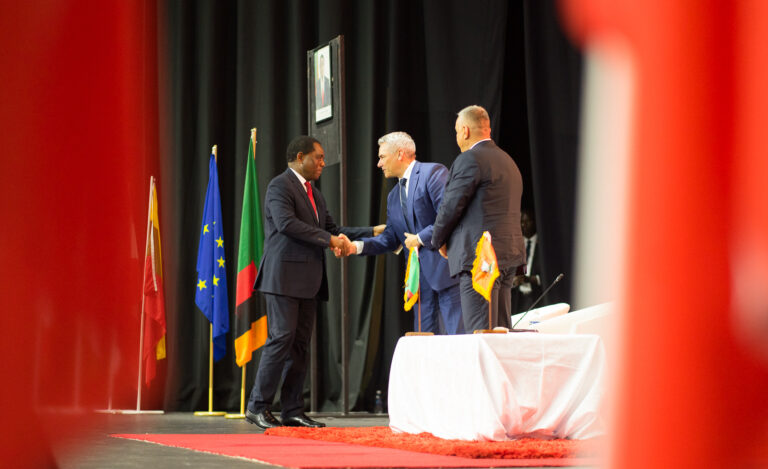
EIB Global and Zambia Industrial Commercial Bank have signed a financing agreement that will mobilise a combined 30 million euros to support agricultural value chains and strengthen private sector growth across Zambia. The facility, announced during the EU-Zambia Lobito Corridor Business Forum, was unveiled in the presence of President Hakainde Hichilema and European Union Commissioner for International Partnerships Josef Síkela. It marks one of the most significant joint agricultural financing commitments extended to Zambia through the Agri Value Chain Facility.

Under the arrangement, EIB Global will provide 15 million euros, equivalent to 388 million kwacha, while ZICB will match the same amount. The funds will be channelled to eligible small and medium enterprises involved in the agri-food value chain. According to the agreement, the goal is to expand access to financing for businesses that depend on smallholder producers, thereby strengthening the commercial linkages that allow farmers to access markets, expand production and invest in improved practices.

The initiative is part of three ongoing partnerships between EIB Global and Zambian financial institutions supported by EU funding under the Agri Value Chain Facility. The broader programme focuses on long-term capital, technical assistance and a risk-sharing fund designed to increase lending to agriculture and aquaculture SMEs. These sectors employ large portions of Zambia’s rural population and play a central role in national food security and export growth.

During the signing ceremony, ZICB Chief Executive Officer Ngenda Nyambe said the partnership would help protect and accelerate progress in the country’s agriculture sector. He stated that the facility will allow ZICB to extend affordable, long-tenure financing to agri-food SMEs, enabling them to expand operations and sustain employment. He added that the expansion of agricultural lending aligns with government objectives to position Zambia as a regional agricultural hub by increasing productivity, supporting mechanisation and promoting value addition among local enterprises.

EIB Global Vice President Karl Nehammer highlighted the importance of agriculture to Africa’s economic landscape. He noted that agriculture contributes significantly to the continent’s gross domestic product and remains central to poverty reduction and food security. Nehammer said the agreement supports Zambia’s efforts to foster an environment that attracts private sector investment by ensuring that financial institutions have the tools and resources required to lend sustainably to agricultural enterprises. He added that the aim is to strengthen the entire value chain from small-scale producers to large agribusinesses.

EU Commissioner Síkela said the support falls within the Global Gateway framework, which seeks to improve access to credit for developing economies. He explained that the project will help farmers and agri-entrepreneurs invest in productivity, resilience and modernisation. He also emphasised that such investments are expected to create employment opportunities and deepen the efficiency of Zambia’s agri-food systems under a wider Team Europe approach.

According to the agreement, at least 30 percent of the funds will be directed to women-owned or women-led enterprises. This provision responds to long-standing barriers that restrict women’s access to agricultural finance. Currently, female farmers in developing countries receive less than 10 percent of agricultural financing. In Zambia, nearly half of women-owned SMEs cite limited access to capital as one of their primary obstacles. Women also constitute a significant portion of the agricultural labour force, making gender-targeted support essential for inclusive sectoral growth.

Beyond capital provision, EIB Global will deliver technical assistance to ZICB to strengthen its gender-responsive lending strategies. This support is expected to improve the bank’s ability to design products that address challenges facing women entrepreneurs. The partnership also includes a 4 million euro risk-sharing facility funded by the European Commission. This component will help mitigate lending risks associated with agricultural financing, particularly for SMEs operating in environments affected by climate change and market volatility.

EIB Global’s broader support to Zambia includes a separate commitment of 110 million dollars for agricultural development projects through a credit line to the commodities firm ETC Group. The funding supports logistics and infrastructure initiatives across sub-Saharan Africa, including investments in Zambia’s farming systems. The European Investment Bank has been active in Zambia since 1978 and has invested more than 1 billion euros in various sectors such as renewable energy, transport, water systems and SME development.

In the background information released with the agreement, EIB Global described itself as a long-term financing institution owned by European Union Member States and tasked with supporting projects that align with EU policy priorities. The bank noted that its development arm aims to support 100 billion euros in global investment by 2027 under the Global Gateway initiative, working closely with financial institutions and governments in developing countries.

ZICB, established in 2017 and operational since 2018, is fully Zambian-owned. Its main shareholders include NAPSA Investment Holdings, the Industrial Development Corporation and the Workers’ Compensation Fund Control Board. The bank’s mandate is to promote industrialisation and commercial growth among micro, small and medium enterprises, as well as local corporate entities. Through this new facility, ZICB is expected to deepen its footprint in agriculture by supporting farmers, processors and value chain enterprises.

The project forms part of the European Union’s programme supporting the commercialisation of Zambia’s smallholder farmers. The facility is intended to enable farmers to move from low-output subsistence farming to diversified, market-oriented agricultural systems. It is also expected to help reduce financing gaps, improve liquidity within the value chain and increase resilience against climate-related challenges.

The agreement concludes with contact details for EIB Global and ZICB communication teams, signalling the start of implementation activities that will involve technical missions, SME engagement and risk-sharing framework rollout.

Source: Press Release, EIB Global Partners with ZICB, 12 November 2025

Newly Promoted Police Boss Urges Citizens to Back President Hichilema

39

Newly Promoted Police Boss Urges Citizens to Back President Hichilema

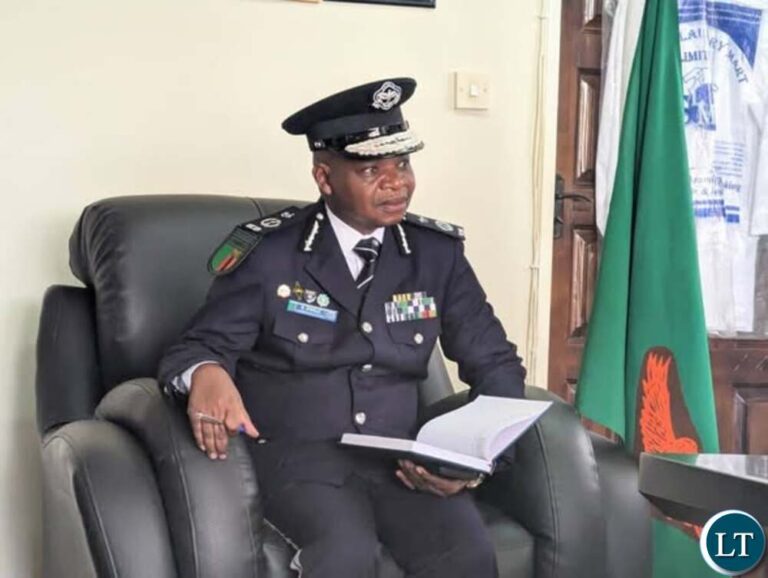
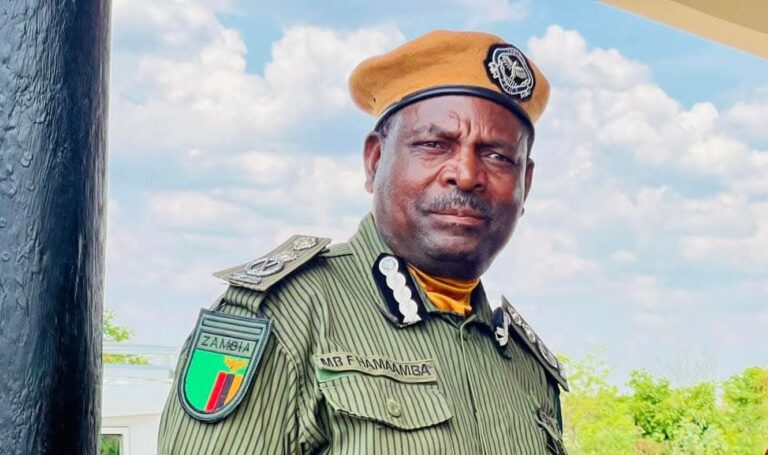
During a recent working visit to Nakonde, Deputy Inspector General of Police Fred Hamaamba commended President Hakainde Hichilema’s leadership, asserting that the nation is on a positive trajectory under his direction. In a meeting with district officials, DIG Hamaamba urged full public backing for the Head of State’s agenda.

The senior police officer explained that his trip to the border district was intended to align his command with the government’s development priorities and to better comprehend what he characterized as the President’s unambiguous vision for national advancement.

Hamaamba contrasted the current climate with the period preceding the 2021 general elections, stating that the administration’s reforms have yielded visible progress across multiple sectors. He contended that all citizens, irrespective of political allegiance, should recognize these gains, adding that even the government’s critics acknowledge the country’s positive shift in direction.

He openly declared his support for the President’s efforts to stabilize the nation and foster peace, attributing an improved sense of citizen welfare to what he termed committed leadership. The DIG argued that the President’s governance approach has alleviated past tensions that once fostered widespread uncertainty.

Reflecting on more challenging periods, Hamaamba recalled instances where police officers faced difficult working conditions, at times even being displaced from their homes due to political friction. He credited the current era of calm to the President’s consistent emphasis on rules-based governance and peaceful engagement, expressing a firm desire to avoid a return to former instabilities. He suggested that the continuity of the present leadership is crucial to safeguarding the stability the country now enjoys.

Shifting to operational matters, DIG Hamaamba outlined steps taken by the police command to enhance efficiency and service delivery. He noted that recent leadership changes within the service, including his own promotion and that of Charity Mung’anga to Deputy Inspector General for Administration, reflect the President’s confidence in the institution’s capacity to fulfill its mandate.

His familiarization tour, which included Mpika, Serenje, Mkushi, Chinsali, Isoka, and Nakonde, was described as essential for identifying operational gaps and assessing policing needs. He underscored the importance of close coordination between the police, local authorities, and communities to effectively maintain order and address public safety concerns.

Hamaamba concluded by calling on citizens in Nakonde and across Zambia to support the ruling party’s vision, emphasizing that such partnership is vital for sustained national progress. He urged the public to uphold peace, particularly as the nation prepares for future political activities, stating that a stable environment is the bedrock of economic development and national unity.

Why Is Hichilema Afraid Of Free And Fair 2026 Elections?

10

Why Is Hichilema Afraid Of Free And Fair 2026 Elections?

By Dr Mwelwa

President Hichilema’s behaviour as the country moves toward 2026 raises one unavoidable question: why is a government that once enjoyed strong public goodwill now acting like it is terrified of the people’s verdict?

The signs are visible everywhere.
A confident administration does not tighten institutions in secret or summon journalists for doing their jobs. It does not rush constitutional changes at night or intimidate broadcasters because of Facebook comments. Only a government unsure of its own record begins to fight shadows.

If the UPND had delivered, there would be no need to silence anyone. Farmers would be celebrating a stable season, not queuing for input explanations. Young people would be hopeful, not restless. Job creation would be a reality, not a slogan. An economy that was truly thriving would not require state machinery to mute criticism.

If the governing party genuinely believed in its popularity, Bill 7 would not be returning through indirect processes, carefully packaged but clearly designed to influence the electoral ground before 2026.

The truth is simple and uncomfortable. The national mood has shifted.

Farmers feel neglected. Students are frustrated by limited opportunities. Civil servants are weighed down by loans. Marketeers complain that business has dried up. Bus drivers face rising taxes. Many households are down to one meal a day. Load shedding has taken away what little optimism families had left.

  • These pressures explain the tightening of institutions.
  • They explain the repeated warnings issued to the media.
  • They explain the attempts to adjust constitutional provisions seven months before Parliament dissolves.
  • They explain the sudden increase in propaganda designed to create a reality that citizens no longer recognise.

None of this is a sign of strength. It is fear.

A government confident in its achievements walks freely into an election. A government aware that it has fallen short tries to shape the battlefield before the referee whistles for kickoff.

State institutions are increasingly being directed to weaken the opposition, not through popular contest but through political engineering. This trend has created uncertainty among citizens who worry that democratic norms are being slowly eroded.

So the important question is not merely why President Hichilema appears nervous about a fair contest.

The deeper question is: why should Zambians be afraid to choose new leadership when those in office have not lived up to their promises?

The 2026 election is no longer about parties.
It is not a traditional PF versus UPND contest.
It is a moment that pits truth against deception, leadership against improvisation, the people against a system that no longer listens.

And the people are awakening to that reality.

Ministry of Tourism commence stakeholders consultation

0

The Ministry of Tourism has commenced stakeholder consultations on the review of three (3) bills under the National Heritage Conservation Commission (NHCC) in Muchinga Province.

NHCC Executive Director Kagosi Mwamulowe says the reviewing of the bills is aimed at strengthening the protection, preservation and management of the country’s unique cultural and natural legacy.

ZANIS reports that speaking when he paid a courtesy call on Muchinga Province Deputy Permanent Secretary Brian Sichande at his office Chinsali yesterday, Mr Mwamulowe stated that for the bills to be responsive to the needs of the Ministry, there is need for stakeholder consultations.

He mentioned that the 3 bills being reviewed are the Heritage Regulations Bill, National Museums Bill and the National Heritage Bill.

“The new Government approach is to make sure that we have institutions that are managing affairs whilst others are providing an oversight on the regulatory function, hence the involvement of various stakeholders,” he added.

Mr Mwamulowe further explained that the heritage resources are not only limited to public enjoyment but should also contribute towards economic development.

The Executive Director also expressed optimism that the contributions of stakeholders towards the review of the bills will add value in helping to enact the bill into law.

And Muchinga Province Permanent Secretary Mathews Chilekwa who was represented by the Deputy Permanent Secretary Brian Sichande, said the stakeholder’s consultations of the 3 bills are timely.

Rev Chilekwa charged that the collaborative efforts of departments in the Ministry of Tourism towards the review of the bill is highly commendable.

He stated that for proper service delivery to be actualised, there is need to ensure that the latest programmes are infiltrated into the old ones to make them sustainable.

“This move will help maximise potential in this area and I think you have embarked on this programme at the right time,” he added.

Rev Chilekwa further assured of continued Government support towards programmes being implemented under the Ministry of Tourism in Muchinga Province.