By Venus N Msyani
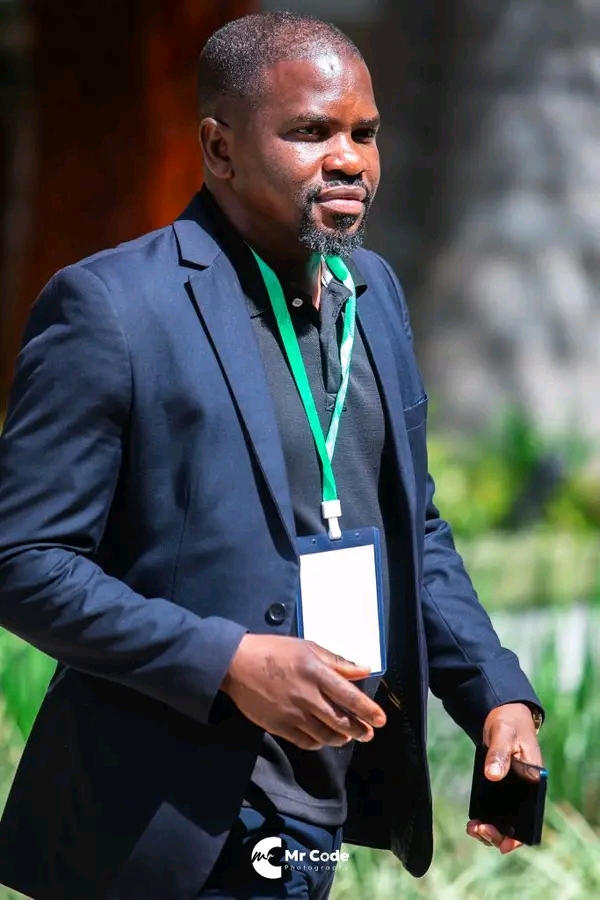
The unfolding situation surrounding Economic Freedom Fighters (EFF) president Kasonde C. Mwenda has ignited a national conversation about the state of democracy in Zambia.
At its core lies a troubling question: Are checks and balances now grounds for disqualification from participating in the presidential race? If so, what does this mean for the future of political competition and civic freedom in our country?
Under the Electoral Commission of Zambia (ECZ) guidelines, all presidential aspirants must present 100 registered voters per province for pre‑processing before they can officially file their nomination papers.
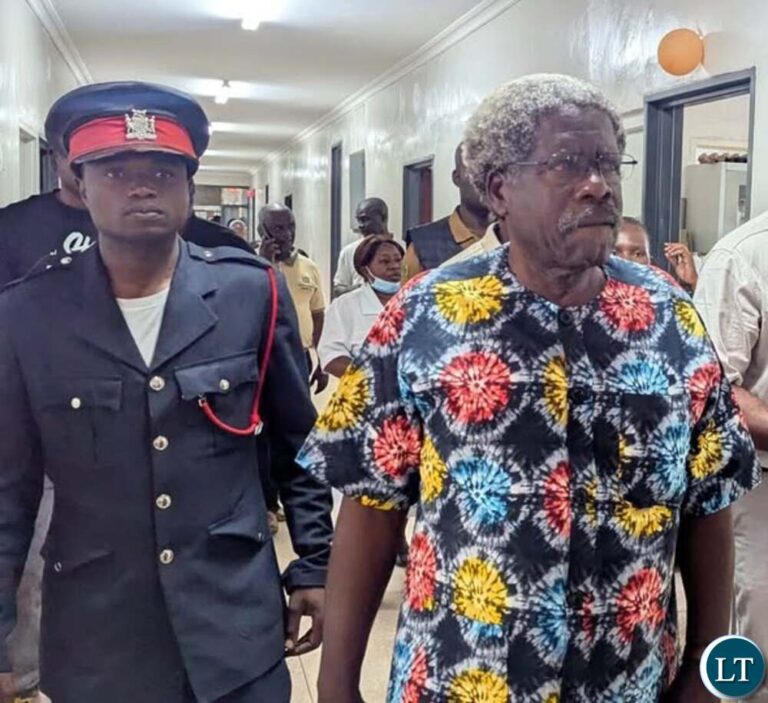
This requirement is not new, nor is it controversial. What is controversial, however, is the fact that Mr. Mwenda has been unable to meet this requirement; not because he lacks supporters, but because he is in police custody.
Mr. Mwenda has long been known as a persistent critic of President Hakainde Hichilema’s administration. He has consistently used public platforms to scrutinize government actions, challenge official narratives, and highlight what he sees as governance failures.
Whether one agrees with his views or not, his role fits squarely within the democratic tradition of checks and balances; a tradition that should be protected, not punished.
The events leading to his arrest began on May 1st, when President Hichilema visited Chinsali District in Muchinga Province for Labour Day commemorations. The visit inadvertently exposed the poor state of the district’s roads, a reality that many residents have long lamented.
Mr. Mwenda seized the moment to highlight this contradiction by posting a video of the presidential motorcade navigating a severely damaged road. In the video, he remarked in Bemba, “Abena Chinsali, balimilekelesha,” suggesting that the people of Chinsali have been neglected by the current administration.
At one point the presidential motorcade appears to make a U‑turn, prompting Mwenda to comment, “Nabaluba,” a common expression implying a loss of direction. His broader argument, however, was not that the motorcade was literally lost.
Rather, Mwenda sought to challenge the government’s narrative on development, particularly claims surrounding increased Constituency Development Fund (CDF) allocations. In his view, the condition of Chinsali’s roads contradicts the administration’s assertions of progress.
Such commentary, whether viewed as fair criticism or political provocation, falls within the realm of legitimate democratic expression.
Yet on May 5th, Mr. Mwenda was arrested and charged with Transmission of Unsolicited Deceptive Electronic Communications under Section 19 of the Cyber Crimes Act No. 4 of 2025. As a result, he was unable to appear before the ECZ on May 12th to present his required supporters.
There is currently no public record indicating Mwenda release. Available information suggests he remains in custody awaiting a court appearance.
This raises a profound concern: Should a citizen’s ability to contest the presidency be determined by the timing of their arrest? And more importantly, should political criticism, however sharp, be grounds for criminal charges that interfere with electoral participation?
It has been reported that ECZ has directed aspiring presidential candidates who did not manage to present supporters for pre-screening exercise to present them this week.
Mr. Mwenda may be released before the end of the week, but will few days be enough for him? To ensure fairness, it is reasonable to argue that the Commission should schedule a separate screening for him. Anything less risks creating the perception that the electoral playing field is being tilted; intentionally or otherwise.
If the electoral process proceeds without accommodating Mr. Mwenda’s circumstances, the ECZ risks undermining the principle of political equality. Democracy is fundamentally about choice. When legal or procedural actions prevent citizens from participating in elections, the rights of their supporters are equally compromised.
Excluding a candidate under such circumstances does not merely affect the individual; it diminishes the democratic space for all. It sends a message that dissent carries a cost, and that cost may be one’s political future.
As a nation, we must reflect deeply on the implications of this moment. If checks and balances become grounds for exclusion, then the democratic fabric we claim to uphold is at risk. Zambia’s democracy has always been strongest when it embraces plurality, tolerates criticism, and protects the rights of all citizens, regardless of their political alignment.