Friday, June 12, 2026
11.1 C
Lusaka
Home Blog Page 270

Zambia Mozambique to strengthen bilateral ties

0

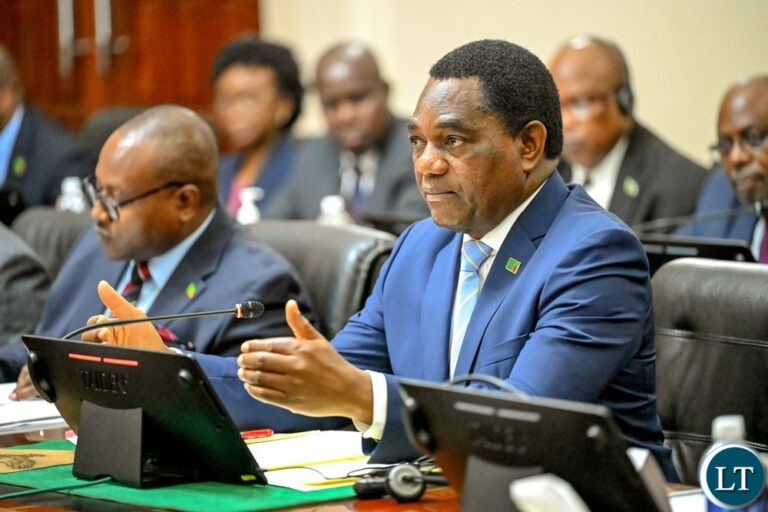
President Hakainde Hichilema says Zambia is committed to strengthening bilateral ties with Mozambique, emphasising enhanced cooperation in energy, transport, and trade.

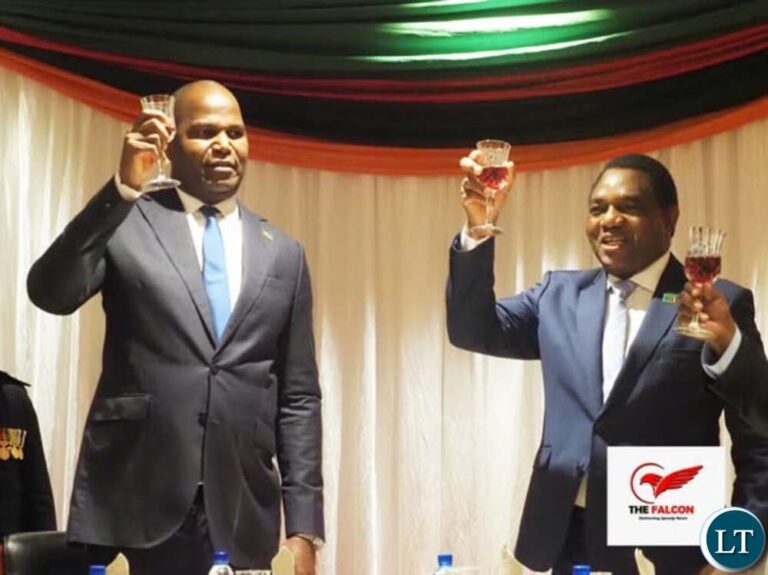
Speaking during a state banquet held in honour of visiting Mozambican President Daniel Chapo at the InterContinental Hotel in Lusaka last night, President Hichilema praised Mozambique’s role in regional stability and trade facilitation, noting that both countries are working to strengthen transport links through the Nacala and Beira corridors, which provide Zambia access to the Indian Ocean.

The media reports that President Hichilema highlighted ongoing and prospective areas of collaboration, including energy generation and sharing, transport corridors linking the two countries, and increased business partnerships.

“Zambia is deeply grateful that you have joined us as we celebrate our 61st Independence anniversary, your presence demonstrates the strong bond and shared history between our two nations, which dates back to the liberation struggle,” said President Hichilema.

He thanked Mozambique for supporting Zambia during periods of power shortages and expressed optimism about expanding regional energy connectivity.

“We agreed that we will work together to improve transport corridors and energy interconnections, we want to see more Mozambican investments in Zambia, and vice versa. Our partnership must deliver tangible economic benefits for our people,” President Hichilema said.

He noted that the two countries share a common vision of transforming historical solidarity into modern economic cooperation.

“Our freedom fighters liberated us politically. Now it is our duty to deliver economic liberation through jobs, trade, and opportunities,” President Hichilema said.

He also encouraged greater people-to-people exchange between the two nations, stressing that borders should serve as bridges rather than barriers.

Meanwhile, Mozambique’s President Daniel Chapo reaffirmed his country’s commitment to deepening economic and energy cooperation with Zambia.

President Chapo said Mozambique and Zambia shared historic bonds of brotherhood and mutual struggle that dates back to the colonial era and the liberation movements that led to Mozambique’s independence on 25 June 1975.

The Mozambican leader emphasised his government’s priority to expand energy cooperation proposing new projects to increase electricity generation and cross-border power connectivity between the two countries

“This year marks 50 years of our independence, half a century of friendship and solidarity, Zambia was our second home during the struggle, and today it remains our partner in building prosperity,” President Chapo said.

 “Mozambique can supply power and gas to Zambia, while Zambia’s growing economy opens new markets for our industries,” he said.

President Chapo suggested that the two governments sign a memorandum of understanding to reduce bureaucratic delays and accelerate joint investment projects.

He also invited Zambian investors to explore opportunities in Mozambique’s energy, agriculture, and infrastructure sectors.

“Our partnership must be nonstop, from energy to trade, from our generation to our grandchildren, we owe it to the future to transform our historic friendship into sustainable economic growth,” he said.

The state banquet was attended by, Senior government officials, diplomats, and business leaders from both Zambia and Mozambique.

The state banquet capped a day of high-level talks focused on energy, transport, and trade integration, part of President Chapo’s three-day state visit aimed at enhancing bilateral cooperation between Mozambique and Zambia.
Don’t take peace for granted, Zambians told

0

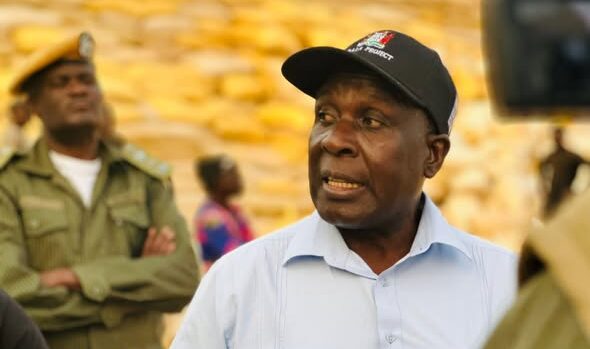
Minister of Technology and Science, Felix Mutati, today led dignitaries in a wreath laying ceremony at the Chipata cenotaph in Eastern Province.

The laying of wreaths is done in remembrance of the different fallen heroes that took part in the liberation struggle of the country.

And in his homily, Zambia Army Chaplain, Mwape Mwaba, emphasised the importance of Independence Day stating that the freedom being enjoyed came at a great cost.

“Guest of honour, this freedom that we have today as a nation, came at a great cost and it cannot be taken for granted because the struggle for freedom was recognized by bloodshed and loss of life as well as property,” he said.

Rev Mwaba explained that this year’s theme is a reminder to everyone to reflect on the country’s common history in the last 61 years, adding that there was need to remain determined and resilient.

He stated that unity will help in not only building a peaceful, but also a prosperous nation.

Rev Mwaba disclosed that the fight for freedom by the gallant soldiers has ensured that citizens in the country continue to enjoy peace.

“With gratitude, we continue to honour our fallen heroes for the patriotism and loyalty to mother Zambia which yielded the peace and unity we are enjoying today,” he said.

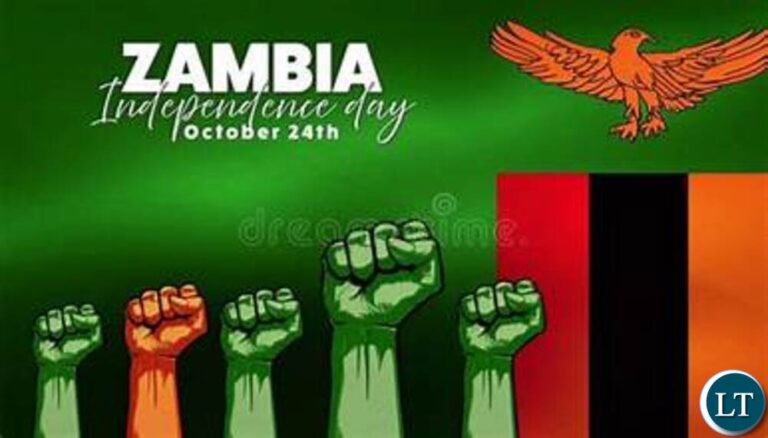
This year’s Independence Day celebrations are being commemorated under the theme “61 years of peace and unity, building a resilient and peaceful nation”.

Zambia and Malawi Sign $77 Million Maize Export Deal Amid Regional Hunger

Zambia and Malawi Sign $77 Million Maize Export Deal Amid Regional Hunger

Zambia and Malawi have signed a maize export agreement worth US$77 million, a move the government says will strengthen regional food security and bring valuable foreign exchange  but not without sparking fresh debate over local food prices and transparency in agricultural exports.

The deal, sealed in Lusaka between Zambia’s Food Reserve Agency (FRA) and Malawi’s Agricultural Development and Marketing Corporation (ADMARC), will see thousands of tonnes of Zambian maize supplied to Malawi in structured phases. Officials described the transaction as “a landmark in regional agricultural cooperation,” but opposition politicians and farmers’ groups are already questioning whether the export could tighten domestic grain supply.

Agriculture Minister Reuben Mtolo Phiri said the agreement underscores Zambia’s strength as a reliable grain producer and exporter. “This is a well-negotiated, mutually beneficial deal. Zambia can feed itself and still trade responsibly,” he said. He assured that the export would not threaten national food security, adding that the FRA had enough carryover stocks to maintain a comfortable buffer.

Phiri emphasised that the contract would help reduce excess grain in storage, stimulate local production, and boost foreign currency inflows. “Our farmers deserve fair access to regional markets, and this agreement gives them exactly that,” he said.

Malawi’s Agriculture Minister Sam Kawale hailed Zambia’s “solidarity and friendship” in signing the agreement, saying the supply will help his country manage grain shortages triggered by drought and erratic rainfall. “Zambia has once again shown regional leadership by standing with its neighbours in a time of need,” Kawale said during the signing ceremony.

However, some Zambian millers and consumer advocates have warned that exporting such large volumes could cause domestic prices for mealie meal to rise. The Zambia National Farmers Union (ZNFU) called for more clarity on how much maize would remain in local reserves after exports, while some traders accused the government of sidelining private exporters in favour of state institutions.

Opposition MPs in the National Assembly also questioned the transparency of the negotiations, arguing that Parliament should have been briefed before final approval. One legislator described the deal as “a secretive contract dressed in regional cooperation,” suggesting that the transaction might benefit a few politically connected suppliers.

The Food Reserve Agency has dismissed those fears, stating that the contract was conducted under standard procedures and that both governments agreed on open verification of shipment volumes and payment schedules. Officials from the Ministry of Commerce said the transaction will not affect FRA’s national security reserves, which currently stand at more than 1.2 million tonnes.

Economists, however, remain divided. Some view the deal as a strategic export success that cements Zambia’s role as a key regional food supplier, while others argue it exposes recurring contradictions in government policy — balancing between helping neighbours and protecting local consumers.

“This is diplomacy through maize,” said one Lusaka-based analyst. “It strengthens Zambia’s soft power in the region, but if the price of mealie meal goes up in January, the same deal could quickly become politically unpopular.”

The Ministry of Agriculture has pledged to monitor domestic stock levels closely and impose export limits if shortages appear. Officials say part of the proceeds from the deal will go toward improving storage facilities and irrigation schemes to boost resilience against drought.

For now, the government insists the agreement represents a win-win scenario. But with the farming season ahead and inflationary pressures still felt in households, the US$77 million maize deal may soon become another political test of whether Zambia can feed its neighbours without angering its own citizens.


Hichilema, Chapo lay wreaths at Freedom Statue

0

President Hakainde Hichilema and his Mozambican counterpart Daniel Chapo, today led Service and Defence Chiefs, members of the Diplomatic Corps and other government officials in laying wreaths at the Freedom Statue in Lusaka, in memory of those who died during the struggle for independence.

This was in commemoration of Zambia’s 61st independence anniversary, under the theme “61 years of Peace and Unity, building a resilient and prosperous Zambia “.

In his homily drawn from Isaiah chapter 61 verse 4 during the ceremony, Zambia National Service Chief for Religious and Moral Services, Bossy Nkhoma, urged Zambians to revive the pre-independence spirit of resilience.

Brigadier General Reverend Nkhoma noted that it is only then that Zambia will overcome various challenges such as economic and climatic shocks.

He stressed that economic challenges are not a sign of failure but a call to courage and unity.

Brigadier General Reverend Nkhoma further called on the youth in Zambia to unite, uphold integrity and use their energy to drive innovation for the benefit of future generations.

CSOs Urge Govt to Abandon Current Constitution-Making Terms of Refer

0

CSOs Urge Govt to Abandon Current Constitution-Making Terms of Reference

A consortium of twelve Civil Society Organisations (CSOs) has accused the government of manipulating the ongoing constitutional review process and warned that history will judge harshly those placing political or personal interests above the collective will of the Zambian people.The review process is crucial for the future of the Zambian Constitution.

The organisations, led by Chapter One Foundation executive director Josiah Kalala, said the current Technical Committee on Constitutional Amendments is operating under terms of reference that make it accountable to the Executive, compromising its independence and ability to reflect the aspirations of ordinary citizens in the Constitution.

“The Committee operates under provisions that make it accountable to the Executive, undermining its independence and ability to reflect the will of the people of Zambia,” Kalala said. He argued that this structure contradicts President Hakainde Hichilema’s earlier calls, when in opposition, for an inclusive, transparent and legally protected constitution-making process.

Kalala said President Hichilema had previously advocated for a people-driven document anchored on broad consultation and consensus, but the present process was far from that vision. “The direction President Hichilema has taken now contradicts his own long-held position. We wonder what could have changed,” he said.

The CSOs said the lack of transparency in how the committee was appointed and its continued insistence on proceeding despite growing public criticism has eroded confidence in the reform process. They warned that the government’s approach risks producing a document that serves narrow political goals rather than national unity.

“The government’s insistence on going ahead, particularly as the country moves closer to elections, erodes public trust and casts doubt on the credibility of the process,” Kalala added. He said the constitutional review should be an empowering national exercise, not a controlled operation under political supervision.

The organisations have demanded that the government abandon the current Terms of Reference (ToRs) and the entire structure of the Technical Committee. They proposed the creation of a new framework that guarantees representation of all sectors of society, including opposition parties, faith-based organisations, women’s movements, and youth bodies.

Kalala said genuine constitution-making must affirm every citizen’s stake in the nation’s future and warned that failure to uphold this principle would mark a betrayal of Zambia’s democratic values. “Constitution making, when done right, is an empowering tool that affirms every citizen’s stake in the nation’s future. What we have now is a process that lacks consensus and is driven by political expediency,” he said.

The CSOs further stated that the current Terms of Reference fall short of facilitating inclusivity and consensus. They described them as “a disaster” that risks producing a divisive outcome instead of a unifying national charter.

“The Terms of Reference, as they stand, do not provide for genuine citizen participation,” Kalala explained. “They are designed to legitimise decisions already made by a few individuals in power.”

The organisations have vowed to continue engaging the public through community meetings and civic education campaigns to raise awareness of what they describe as the dangers of an exclusive process. They called on Zambians to reject any draft constitution that is not derived from broad public consultation.

The dispute echoes earlier constitutional crises in Zambia’s political history, where rushed amendments were later reversed due to lack of legitimacy. The CSOs have urged the government to learn from those experiences and allow adequate debate before any adoption.

Kalala concluded by saying that only a genuinely inclusive process can produce a constitution that stands the test of time. “If this process continues unchecked, it will only deepen division and mistrust. The constitution belongs to the people, not the government of the day,” he said.

NAC Concerned with Rising HIV Infections among youths

0

The National AIDS Council of Zambia (NAC) has expressed concern over the increasing number of new HIV infections among young people in the country.

This came to light during a stakeholders’ meeting held at Izu Hotel in Ndola District to discuss the implementation of the National HIV/AIDS Strategic Framework (2023–2027).

Speaking during the meeting, Policy and Planning Coordinator at NAC Headquarters, Dr. Peter Ndemena, said the fight against HIV and AIDS requires concerted efforts from all stakeholders. He emphasized the importance of a collective response to reduce new infections.

“Good morals should be taught and upheld in the home first, even before society takes responsibility. Equally, the church also has a major role to play in shaping the moral character of children, especially in a Christian nation like Zambia,” Dr. Ndemena said.

He noted that while the Ministry of Health is working closely with stakeholders to develop effective strategies to curb the spread of the virus, schools, communities, and faith-based institutions must complement these efforts by instilling positive values among the youth.

During the same meeting, a youth representative from the Adolescent Health Centre, Eric Machingauta, urged his peers to avoid risky behaviours such as drug abuse and illicit sexual activities, which increase the risk of contracting HIV.

Mr. Machingauta said many youths are influenced by peer pressure and limited access to adolescent-friendly health services.

He also highlighted the need to increase awareness about available support services for vulnerable adolescents, especially those battling substance abuse.

“Many young people are unaware of where to seek help and often view law enforcement as punitive rather than a source of guidance and protection,” he said.

Mr. Machingauta further encouraged the Ministry of Health to use digital platforms, particularly social media, to reach more young people with HIV and drug abuse awareness messages.

“Most of us young people are on TikTok, Facebook or Instagram. If these platforms can be used to share information on HIV-related matters, many adolescents and young people can be reached,” he added.

The meeting served as a platform to reinforce the importance of multi-sectoral collaboration in achieving the goals of the National HIV/AIDS Strategic Framework (2023–2027).

Zambia, Mozambique in Joint 1,500 MW Power Generation Project

6

Zambia, Mozambique in Joint 1,500 MW Power Generation Project

Zambia and Mozambique have agreed to develop a 1,500-megawatt power generation project that will significantly boost electricity supply across southern Africa and help stabilise energy security in both countries. The agreement, signed in Maputo this week, marks a new chapter in regional energy co-operation under the Southern African Development Community (SADC) power-integration programme.

Energy Minister Peter Kapala, who represented Zambia at the signing ceremony, said the project is part of a broader plan to diversify Zambia’s generation mix and reduce reliance on hydropower sources that have been affected by climate change. He explained that the 1,500 MW facility will be jointly constructed and operated along the Mozambique–Zambia power corridor and will incorporate hydro, thermal, and solar components to ensure sustainable output.

“This agreement is historic because it gives our two countries the opportunity to share capacity, technology and investment benefits,” Kapala said. “Once completed, it will not only cover our domestic demand but also provide excess power for export to neighbouring states through the Southern African Power Pool.”

The project will be implemented in phases over five years, with funding drawn from a blend of government contributions, development finance institutions and private sector investors. Pre-feasibility studies have already identified sites suitable for generation and transmission linkages to existing infrastructure on both sides of the border. Technical teams from ZESCO and Mozambique’s Electricidade de Moçambique (EDM) have been tasked to finalise engineering designs and costing details by mid-2026.

ZESCO Managing Director Victor Mapani said the joint initiative represents a strategic shift from short-term energy imports toward shared generation projects that enhance long-term stability. He stressed that Zambia has faced power deficits during periods of low water levels at Kariba and Kafue Gorge, and that regional interconnectivity offers a reliable solution.

Under the agreement, the two countries will also construct a new high-voltage transmission line linking western Mozambique to eastern Zambia, allowing for two-way power flows. This infrastructure will support Zambia’s industrial zones in Central and Copperbelt provinces and enhance electricity access in Mozambique’s northern districts. Engineers expect the project to generate over 1,000 direct jobs during construction and hundreds of technical and maintenance positions once operational.

Mozambique’s Energy Minister Carlos Zacarias said the initiative illustrates African solidarity in addressing energy shortages through shared resources. “This partnership strengthens our friendship and ensures that electricity will fuel industrial growth on both sides of the border,” he said. He also confirmed that Mozambique has earmarked land for the power station and pledged policy support to fast-track implementation.

The deal could position Zambia as a net exporter of power within three years and help Mozambique monetise its vast energy resources. The project aligns with Zambia’s Energy Transition Strategy, which seeks to increase renewable capacity by 40 percent by 2030.

Once complete, the 1,500 MW plant is expected to feed into the Southern African Power Pool, benefiting countries such as Zimbabwe, Malawi and Tanzania through enhanced regional power trade. Officials say the agreement has received endorsement from the African Development Bank and other international partners who view it as a model for cross-border energy integration.

“This project is not just about electricity but about economic growth and regional integration,” Kapala said after the signing. “With 1,500 megawatts on the grid, Zambia and Mozambique will move closer to energy independence and help stabilise power supply for the entire region.”

Levy Mwanawasa hospital performs first partial kidney surgery

0

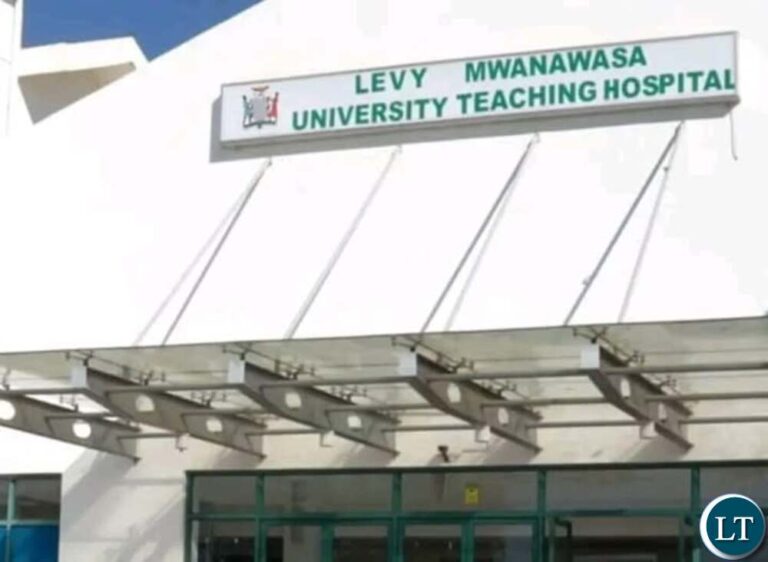
As medical technology and innovation continue to advance globally, Levy Mwanawasa Teaching Hospital (LMTH) has made history by becoming the first hospital in Zambia to perform a partial kidney surgery, known as a nephrectomy.

LMTH Senior Registrar, Dr  Kamaki Mushila, revealed that the milestone follows a successful operation conducted this month on two female patients.

Dr  Mushila further disclosed that another successful procedure was recently performed on a prostate cancer patient using laparoscopic prostatectomy technology.

Speaking in an exclusive interview with the media in Lusaka, Dr. Mushila said the hospital has now successfully conducted 15 major surgeries since it was designated as a national centre for prostate cancer treatment.

“We are overwhelmed by the number of patients coming from all parts of Zambia such as Chipata, Ndola and Kitwe, who are treated for prostate cancer at our facility,” he said.

The surgeon explained that the partial kidney operation typically takes about six hours to complete and requires advanced surgical precision.

Meanwhile, Paul Kapinga, a patient from Mwembeshi area in Mumbwa District, expressed gratitude after undergoing a successful operation at the hospital.

“I am now healed because the doctors successfully operated on me,” Mr Kapinga said.

The development marks a major milestone in Zambia’s healthcare sector, demonstrating the growing capacity of local medical institutions to perform advanced surgical procedures previously referred abroad.

National Shame: Independence Eve Prayer Rally Crushed by Police

3

Worshippers Dispersed at Night of Prayer, Government Issues Apology

The Zambian government has issued a public apology following a controversial police operation that halted an overnight Christian prayer gathering at the OYDC in Lusaka on the eve of Independence Day. The event, dubbed Standing in the Gap Night of Freedom, had drawn hundreds of worshippers from across the capital before police officers ordered the crowd to disperse around 21:00 hours.

Authorities reportedly claimed the gathering conflicted with a government programme scheduled for the same venue. Eyewitnesses described scenes of confusion as congregants prayed, sang, and prepared for the night’s worship when officers moved in, instructing them to vacate the premises. Many were left stranded, sparking anger among residents who viewed the disruption as unnecessary and disrespectful to a day associated with national prayer and reflection.

The incident triggered immediate backlash online and across civic platforms, with critics accusing the police of overstepping constitutional rights to freedom of worship and assembly. One widely circulated post read, “In a Christian Nation, on the eve of Independence and just days after the national day of prayer, police disrupted a vigil. Freedom of conscience is dying.” Other commentators suggested the move was politically motivated, alleging that officers acted “to please the powers that be.”

Among those who voiced concern was academic and writer Dr Lawrence Mwelwa, who published a reflective piece titled The Walls of Jericho Will Fall Again: Freedom on Our Knees. In it, he urged Zambians to respond to repression with prayerful persistence rather than anger. Drawing from figures like Martin Luther King Jr. and Nelson Mandela, Dr Mwelwa framed prayer as an act of civic courage, writing that kneeling was not surrender but defiance through faith. His essay, widely shared, became a rallying point for citizens who saw the incident as part of a broader struggle for freedom of expression.

The controversy intensified as social and political figures questioned who authorised the police action. Commentator Kennedy K. Mambwe asked pointedly on Facebook, “The President didn’t know? What about the Inspector General or the Minister of Home Affairs? On whose instruction did the Police act?” His remarks captured growing public frustration over perceived disconnection between the President’s public stance and enforcement actions on the ground.

As criticism mounted, State House released an official statement signed by Chief Communications Specialist Clayson Hamasaka, categorically denying that President Hakainde Hichilema had ordered the shutdown. The statement reaffirmed the Head of State’s devotion to Christian values and commitment to religious liberty, describing the incident as regrettable and announcing an immediate investigation. “The President would never prevent Christians or any faith group from holding prayers, especially during the Independence period,” it read. “He deeply regrets the incident and has directed an immediate inquiry to ensure accountability.”

The clarification aimed to calm tensions but raised further questions about institutional discipline within the police command. Some critics described the apology as damage control, insisting that accountability must include dismissals of those who issued unlawful orders. One post bluntly stated, “There’s nothing that happens under the HH regime that the President doesn’t know. Then let him fire the culprits. Zambia kuchalo twasebana.”

Despite differing views, the official tone from State House emphasised reconciliation. The statement urged citizens to remain united in prayer for peace and national unity, reaffirming the country’s motto of One Zambia, One Nation. It also reminded the public that Zambia remains a nation anchored in love and mutual respect, even amid misunderstandings between state institutions and communities of faith.

The episode has reopened debate on the professionalism of the Zambia Police and the government’s approach to civil liberties. Many observers argue that the apology, while welcome, must be followed by tangible action to rebuild confidence in state institutions. For worshippers whose vigil was cut short, the incident has become both a test of accountability and a reminder of the fragile balance between authority and faith in a democratic society.

When Power Jails Itself: The Lesson HH Refuses to Learn On Kambwili

7

By Kapya Kaoma

Each time a Zambian leader turns the law into a weapon, history reloads it for revenge. President Hakainde Hichilema’s treatment of Chishimba Kambwili is not justice—it is déjà vu. The same prisons that swallow opponents today will one day open for those in power tomorrow.

The recent arrest of Patriotic Front (PF) figure Chishimba Kambwili—this time by the Immigration Department while he was already serving time—should make every Zambian pause and ask, what kind of justice system have we become?

The charges reek of political vengeance. The government’s true aim seems clear–to block Kambwili from seeking medical treatment abroad. That is not justice—it is fear masquerading as law. His “crime,” it appears, was simply preserving his own life. If the state had a legitimate case, why wait until his release was near? Why not charge him from the start? The answer is obvious—to ensure he suffers to the very end.

Sadly, those who wield power to humiliate others always forget one enduring truth, power turns.

I recall the days of Frederick Chiluba, who also used courts and prisons as instruments of punishment. Like Hichilema today, Chiluba mistook democracy for permanence. He mocked and persecuted men like Kenneth Kaunda and Dean Mung’omba, reducing justice to a personal weapon. The courts obeyed him. The police served his whims.

Yet the system he commanded later devoured him. Who can forget the image of Chiluba—stripped of dignity, humiliated before the nation, his legacy in ruins? The hunter had become the hunted. He died a broken man, undone by the machinery he built to crush others.

President Hichilema should take heed: he does not own the police, the courts, or the prisons. No president does. These institutions serve power, not principle. They always bow to whoever sits on the throne—until the next ruler comes along, they switch allegiance as easily as flipping a switch. It is what it is–the Constitution is nothing when it comes to the President. He is the LAW, the Police and the Courts!

This is the curse of Zambian politics– impunity without memory. Those in power forget that authority is never permanent. It is borrowed, and history always demands it back. Once the votes are counted, the new winner becomes all powerful.

I write not in anger, but in warning. Today it is Kambwili. Tomorrow it could be Hichilema and his allies. When another leader rises, the same officers and judges will find new targets. They will dust off old files and reopen the same cells for those who once commanded them.

To imagine that scandals surrounding the Constituency Development Fund (CDF) will disappear when HH leaves office is wishful thinking. The questionable dealings within the Anti-Corruption Commission, the Drug Enforcement Commission, and other state agencies will not vanish—they will return with a vengeance. When that day comes, many who now celebrate the downfall of others will face their own reckoning.

This is our national tragedy: those who shout “power forever!” soon cry from behind prison walls. Leadership is temporary; accountability is eternal.

If history teaches anything, it is this–the same hand that turns the key today may one day rattle the same lock from inside. I pray it will not come to that. But judging by the vindictiveness and lack of compassion marking this administration, it may take a modern-day Mother Teresa to let Hichilema and his circle walk Zambia’s streets freely once their season of power has passed. I will be watching.

Equitable water sector financing, a national investment- Kamanga

0

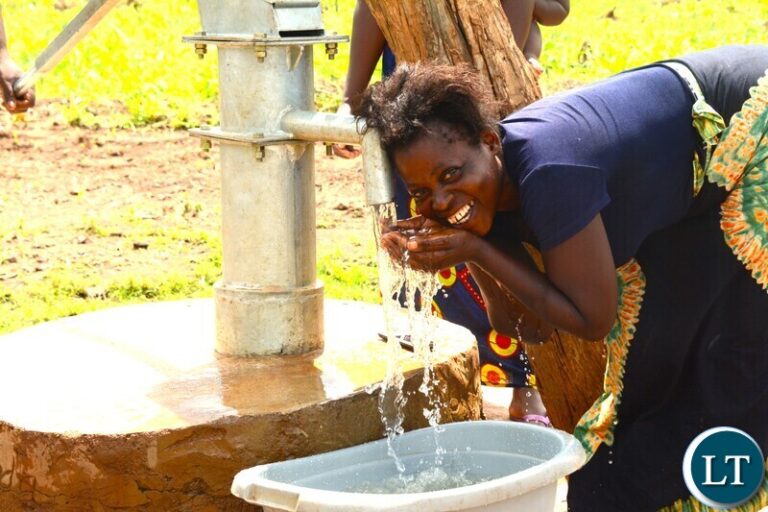
Ministry of Water Development and Sanitation Permanent Secretary, Romas Kamanga says his Ministry views sustained and equitable water sector financing as a national investment in health, economic growth, and human dignity.

Mr Kamanga states that the water sector is not just a service sector, but is a foundation for human development, economic productivity, and public health.

The Permanent Secretary said this in a speech read on his behalf by Ministry of Water Development and Sanitation Assistant Director Water Supply, Pasca Mwila during the unveiling of the 2026 WASH Budget Analysis Brief in Lusaka.

The Permanent Secretary noted that the National Urban Water Supply and Sanitation Programme (NUWSSP) and the National Rural Water Supply and Sanitation Programme (NRWSSP) needs proper financing if their frameworks are to progress.

Mr Kamanga also pointed out that if the Vision 2030 and the SDGs are to be realised, financing must reach the subnational level.

“Decentralised financing mechanisms such as the Constituency Development Fund (CDF), Local Government Equalisation Fund, local revenue generation, and performance-based grants must therefore be aligned with the water sector’s priorities and accountability standards,” he added.

He indicated that strengthening local government capacity to plan, budget, and manage WASH investments is vital to closing the gap between policy and practice.

Mr Kamanga highlighted that without empowering local actors financially and technically, the national vision of “leaving no one behind” will remain elusive.

He further commended WaterAid Zambia, Local Government Association of Zambia and civil society partners for their continued advocacy in promoting accountability and evidence-based financing.

Speaking at the same event, Local Government Association of Zambia Director Corporate Services, Abraham Moboola reaffirmed LGAZ’s continued commitment to championing local government interests, strengthening community-centered leadership, and collaborating with partners such as WaterAid.

Mr Moboola said the partnerships help to influence policy shifts that advance effective decentralisation and quality service delivery.

He further encouraged the stakeholders to be candid, solution-oriented and forward-looking as the insights and recommendations generated will be crucial in shaping the joint advocacy priorities and strengthening sector learning moving into 2026 and beyond.

Meanwhile, WaterAid Zambia Country Director, Yankho Mataya disclosed that 42 percent of Zambians living in rural areas lack water supply, 70 percent lack rural sanitation and 70 percent lack national hygiene.

Ms Mataya highlighted the importance of good water supply saying in 2022 Zambia recorded 242, 000 hospital acquired infections and spent $115 million to treat the infections.

The review offered a targeted analysis of Zambia’s 2026 National Budget, with a particular focus on its implications for the Water, Sanitation and Hygiene (WASH) sub-sector.

Ministries are being engaged to review age of consent in Zambia from 16 to a much older age

0

Parliamentary Caucus on Sexual Reproductive Health Rights (SRHR) Secretary General Sunday Chanda, says various line Ministries are being engaged to review the age of consent to a much older age from 16 years as provided for in the law in Zambia.

Mr Chanda who is also Kanchibiya Member of Parliament said the Parliamentary Caucus on SRHR is working towards harmonising what is provided for in the panel code and the constitution regarding the right age to consent for sexual reproductive services and rights.

Mr Chanda said the gaps existing on the definition of a child in the laws provided conflict each and must be amended for a better generation.

The Children Code and the Constitution defines a child as any person who has not reached the age of 18 while the Penal Code 87 section 138 (1) defines a child as a person under the age of 16.

Mr Chanda was speaking during the three-day orientation workshop for media professionals in Lusaka.

He also stressed that Parliamentarians have the responsibility to design interventions on Sexual Reproductive Health and mental health issues from the perspective of the youths.

“We want to amend what is defined as a child in the Children’s Code Act and the penal code, because these issues have brought a lot of problems and if we dont resolve the problem, we are failing this society,” he said.

He noted that the law provides that a child aged 16 can consent to sex while at the same time, the same child cannot access SRHR services because they are deemed as children.

The three-day workshop is in preparation for the 8th Mental Health and Psychosocial Support Forum set to be held from October 25 to 29 under the theme ‘See us’-Amplfying the voices of the African Child and young people.

United Nations Development Programme hands over agriculture inputs to DMMU

0

The United Nations Development Programme (UNDP) has handed over agricultural inputs to the Disaster Management and Mitigation Unit (DMMU) in the Office of the Vice President to benefit the Mambwe vulnerable victims that suffered last year’s climate shocks.

UNDP Country Deputy Resident Representative Laurent Rudasingwa says 335 farmer beneficiaries from Mambwe District of Eastern Province will get the resilient climate farming inputs.

Mr Rudasingwa notes that the farming inputs comprising seed, fertiliser, chemicals and sweet potato vines valued at K650,000 are under the jointly run UNDP/Government Community Recovery and Resilience Facility (CRRF) Project.

Mr Rudasingwa was speaking in Lusaka when he handed over the farming inputs to DMMU National Co-ordinator, Norman Chipakupaku.

Mr Rudasingwa stated that UNDP has demonstrated a step forward in its shared mission to support vulnerable communities that continue to face devastating effects of drought and other climate change-induced disasters.

He reiterated the UN’s commitment to helping households recover, rebuild, and strengthen their resilience to future climate shocks.

Mr Rudasingwa explained that UNDP remains committed to working with the Government and all partners to ensure that recovery efforts lead to lasting resilience and inclusive growth.

“This support of essential agriculture supplies will enable farmers, groups mostly at risk of being left behind, like women and youth, to sustain farming activities in times of anticipated climate extremes, increase agricultural productivity, and strengthen household resilience,” he said.

Mr Rudasingwa added that the CRRF project is not only aiding recovery but also promoting long-term food security and income generation to affected households.

Meanwhile, DMMU National Co-ordinator, Norman Chipakupaku who received the donation said Zambia, like many countries in the region, continues to experience recurrent droughts that threaten lives, livelihoods, and ecosystems.

Mr Chipakupaku who flagged off the dispatch of the farming inputs at his office said the 2023/2024 agricultural season was one of the most challenging in the country’s history, characterised by prolonged dry spells and below-average rainfall.

He welcomed the Community Recovery and Resilience Facility Project saying the collaboration with UNDP underscores the urgent need for long-term resilience and adaptation measures.

The National Co-ordinator commended the donors namely Denmark, Korea and Luxembourg that have provided the funds adding that communities will not only recover from crises but also emerge stronger, more self-reliant and better prepared for the future.

“As we dispatch these inputs to Mambwe District, let us remember that resilience is built collectively. Government alone cannot achieve this goal. I am confident that by continuing to work hand in hand, we will create lasting, locally driven solutions that empower communities to thrive now and well into the future,” he said.

The CRRF project focuses on three key pillars namely development of climate-resilient infrastructure, enhancement of community livelihoods; and promotion of women’s leadership and participation in resilience-building.

Mambwe District in Eastern Province is among the 84 out of 116 districts that were affected by climate change resulting in widespread crop failure, reduced water availability, and heightened food insecurity.

Mozambique Daniel Chapo invites Zambia to invest in Mozambique’s Energy sector

0

The President of Mozambique Daniel Chapo has invited Zambia to consider investing in his country’s energy sector for economic growth in both countries.

President Chapo says that investing in his country’s energy sector will support Zambia’s electricity deficit, translating into economic development.

The Mozambican Head of State indicated that with its endowments in water bodies, Mozambique is the solution to energy problems and wants to be the hub of energy in the SADC region.

He was speaking at the Business Leaders Roundtable on leveraging the economic potential of Zambia and Mozambique, in Lusaka district.

The President went on to state other investment opportunities in his country including tourism, agriculture and infrastructure development.

He noted that the historic relationship between the two countries that were established in solidarity with a shared vision for a prosperous future, should transform into friendly investment.

” I am here to invite you to make business in the energy sector, and in agriculture we have fertile land, water and also a blooming tourism sector,” he said.

He also said that Mozambique offers Zambia strategic access to logistics through the Nacala Logistics Corridor, a major transportation and trade route in South Eastern Africa that connects the landlocked countries of Malawi and Zambia to the deep-water port of Nacala in Mozambique.

The Mozambican President added that his government wants to construct a new road to access the Port of Beira, hence looking for investors to achieve this vision.

“I am working with my brother President Hakainde Hichilema to find land to do a dry port here in Zambia that connects Nacala and Beira, because we know that transport and logistics is important to development,” he added.

He also disclosed plans to put up a one border post between Zambia, Mozambique and Zimbabwe to enhance the transport and logistics sector.

Mozambican Secretary of State and Industry, Custodia Paunde was hopeful that the round table brings fruitful results for more cooperation between the two countries

Zambia Development Agency Director General, Albert Halwampa called for more collaboration between the two countries stating that it has an assured market.

Mr Halwampa highlighted the investment landscape of Zambia, stating that due to stable economic policies, the country has built high level confidence from local and foreign businesses, and now a preferred investment destination.

Encouraging intra African investment and trade, Mr Halwampa urged Mozambican investors to invest in Zambia.

He noted the areas of investment that include mining in critical minerals, agriculture, animal breeding to support beef export and renewable energy.

“We have generous investment incentives such as zero tax on equipment being brought in the country, 10 years tax holiday for investment in the farm blocks,” Mr Halwampa said.

Chairman of the Board and President of Beira Business Association, Felix Machando expressed hope that the private sector in Mozambique and Zambia will continue to invest, believing in a better future.

Mr Machanso called on the private sector to take advantage of the opportunities by both governments to grow economies in both countries.

He explained that the Beira development corridor is a live utterly for development for both countries, therefore calling for investment in digitalisation, reduce border processes

“Governments set the rule that the private sector drives results. They create favourable conditions for investment and policies to which we must take advantage of,” he said.

And Mr Machanso appreciated the Industrial capacity of Zambia, citing the trade King’s Group adding that cooperation between the two countries has a promising future.

Zambia Association of Manufacturers president, Ashu Sagar said the meeting is not just a platform for learning but to develop together.

Mr Sagar indicated that Zambia is the heart for development, and Mozambique should consider growing its cooperation focusing on infrastructure that links the countries through the Lobito Corridor to drive and grow regional trade.

Zambia Chamber of Commerce and Industry, Anthony Kabaghe said that the round table lays a foundation for a new economic destiny between Zambia and Mozambique.

President Hichilema commits to SADC’s peace and stability agenda

0

President Hakainde Hichilema has reaffirmed Zambia’s commitment to the Southern Africa Development Community (SADC) agenda for peace, security and stability as key components in fostering economic development.

President Hichilema says there is a need for Zambia and Mozambique to prioritise peace, security and stability even as the two Countries focus on joint trade and investment.

That the Head of State said this when he held bilateral talks with his visiting Mozambique counterpart, Daniel Francisco Chapo.

President Hichilema has also emphasised the need for the two countries to continue working together on strategic infrastructure projects, such as the Nacala and Beira corridors, and getting the oil pipeline from Mozambique into Ndola.

He has further expressed gratitude to Mozambique for supporting Zambia with electricity, during the country’s struggle with energy crisis, resulting from the 2023-2024 drought.

“Without your support, our economy would have shut down because of our mining agenda and also our infrastructure needs a lot of energy, so we need to move quickly in that area”, the Head of State indicated.

President Hichilema has also called for a holistic approach in addressing the challenges of climate change not just between the two countries but the region at large.

He acknowledged long standing relations and interdependence between the two Countries through shared borders resulting in joint ownership of assets, stressing the need to protect them.

President Hichilema added that the bilateral relationship shared by the two countries is therefore beyond just political but also economic ties, stressing the need for continued intergovernmental interactions to ease economic collaboration.

And President of Mozambique, Daniel Francisco Chapo has disclosed that the two nations are working towards a One Stop Border Post, starting with Cassacatiza and Chanida.

Mr Chapo noted that this will improve trade in both countries which will therefore improve the economies of both countries.

He has also acknowledged the importance of the two countries collaborating to improve infrastructure, such as the road network, connection of the Nacala corridor to Chipata and ultimately the Lobito corridor for regional benefit.

Mr Chapo also affirmed his commitment to improving peace and stability in his country, through dialogue, in order to create an enabling environment for development to flourish.

He has since thanked Zambia for its solidarity in his country’s efforts to restore peace and security.

Meanwhile, Mr Chapo thanked the people of Zambia for contributing to his country’s liberation, further revealing that Mozambique has set a public holiday dubbed the “Lusaka Cord”, in memory of the signing of a Cord in the Zambian capital city that ended colonialism.

“Zambia is the cradle of our independence and the city of Lusaka is a very special city for the population of Mozambique. From primary school, the children of Mozambique learn about the Lusaka Cord”, he narrated.

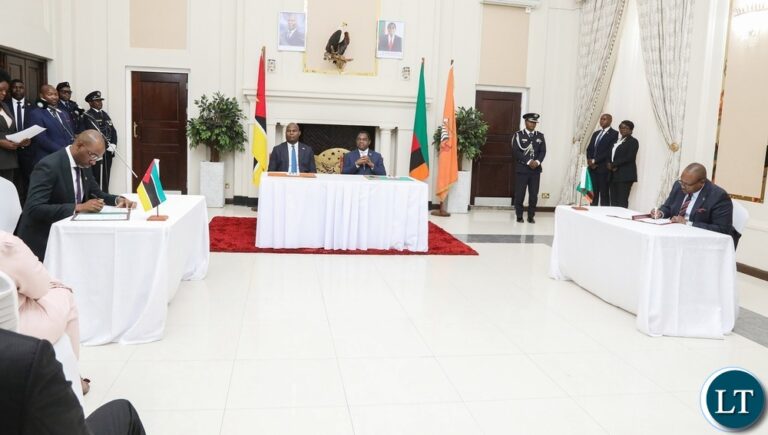
The two Heads of State later witnessed the signing of a bilateral agreement between the two countries, by the Ministers of Transport and Logistics, for Zambia’s Frank Tayali and Mozambique’s Joao Matlombe.