Thursday, June 11, 2026
18 C
Lusaka
Home Blog Page 275

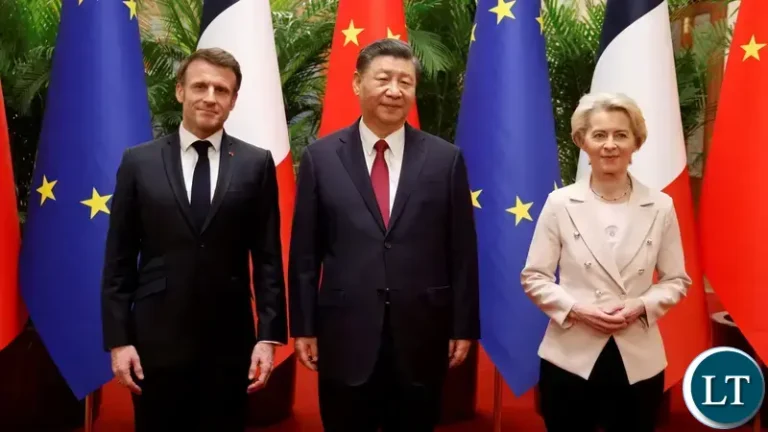
China’s export surge strengthens Xi’s hand as Trump raises trade war stakes

0

China’s booming exports have handed Beijing critical leverage as President Xi Jinping and US President Donald Trump lock into the fiercest trade confrontation in years, warns global financial advisory giant deVere Group.

China’s exports jumped 8.3% in September from a year earlier, smashing forecasts and outpacing August’s growth.

Imports climbed 7.4%, a signal that the country’s industrial engine remains formidable despite Washington’s efforts to apply pressure through tariffs and technology restrictions.

The surge lands as US Treasury Secretary Scott Bessent hints that the current three-month pause on import duties could be extended — but only if China abandons its plan to impose strict new export controls on rare-earth elements.

These materials are indispensable for global manufacturing, from electric vehicles to advanced chips and weapons systems.

Nigel Green, CEO of deVere Group, says: “Scott Bessent is trying to use tariff relief as leverage, but Beijing’s export rebound means the pressure is flowing both ways.

“Xi Jinping now has proof that China’s trade engine is resilient and that his government can absorb external shocks while the US is still searching for negotiating traction.”

The standoff has escalated since Beijing announced sweeping export licences for rare-earth and magnet technologies, effectively tightening its grip over supply chains that the West cannot yet replace.

Washington’s reaction was immediate: threats of 100% tariffs, new curbs on Chinese software, and talk of allied coordination through the G7 to deter further Chinese restrictions.

“The trade war has evolved into a power contest over who controls the materials and technologies that drive the modern economy,” says Nigel Green.

“China’s message is that it can dictate the pace of global production. Washington’s message is that it’s willing to risk economic pain to prevent that dominance.

“Neither side looks ready to blink.”

Despite the stand-off, China’s export growth is being driven by markets far beyond the US. Shipments to the European Union, Southeast Asia, Africa, and Latin America are all rising at double-digit rates, showing how effectively Beijing has diversified its trade routes.

Exports to the US, by contrast, continue to shrink sharply, down more than a quarter year on year, yet China’s overall export growth remains robust.

Nigel Green says: “Beijing’s ability to expand into new markets while withstanding US tariffs is one of the defining shifts of the decade.

“It shows how global manufacturing still relies on China’s capacity, logistics, and pricing power. Even in a period of confrontation, the rest of the world cannot easily step away.”

Markets are already feeling the tension. Currency volatility has increased, commodity prices have jumped, and equity investors are recalibrating exposure to sectors tied to global manufacturing.

“The next phase of this trade battle will shape monetary policy and investor sentiment worldwide,” says the deVere CEO.

“If tariffs rise and supply chains fracture, inflationary pressures could return just as central banks are preparing to loosen policy. The combination could create both disruption and opportunity across portfolios.”

He adds: “Periods of geopolitical stress often produce outsized gains for those positioned ahead of the cycle.

“Countries and companies able to fill the production gaps left by restricted trade will emerge as major winners.

“Investors who maintain diversified exposure across regions and asset classes will be best placed to benefit.”

For now, Beijing appears emboldened. The export data bolster its claim that China can weather any tariff escalation and sustain global demand. Washington, meanwhile, faces the dilemma of tightening further without triggering inflation or alienating allies who depend on Chinese supply chains.

Nigel Green concludes: “The numbers out of Beijing change the tone of the talks. China goes into the next round stronger, not weaker.

“The US may hold the world’s largest consumer market, but China is proving it still controls the world’s factory floor.”
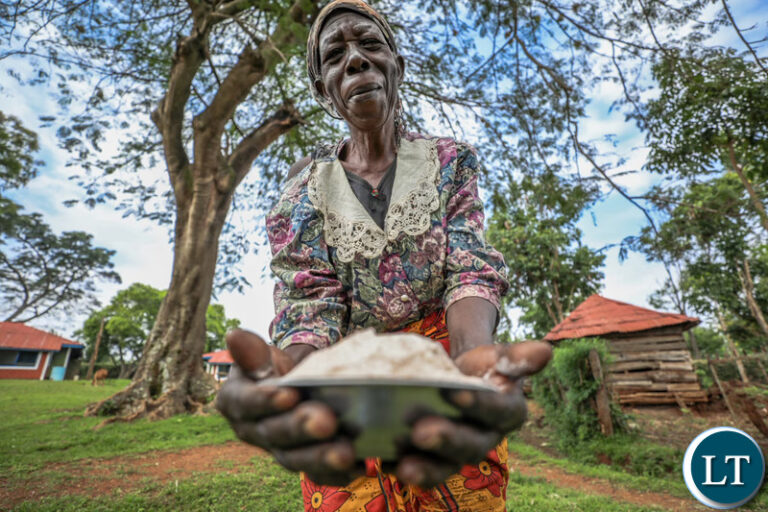
World Food Day : A Hungry World Knows No Borders

0

Opinion piece by Dr Himanshu Pathak Director General, International Crops Research Institute for the Semi-Arid Tropics (ICRISAT)


When crops fail, people move not by choice, but by necessity. As families are displaced by droughts and failed harvests, the pressures do not always stop at national boundaries. In short, hunger has become one of the most powerful forces shaping our century.

From the Sahel, the vast semi-arid belt stretching across Africa from Senegal to Sudan and the Horn of Africa to South Asia’s dry zones and Southeast Asia’s coastal farmlands, climate shocks are undermining food production and disrupting communities across the Global South. ​

In the Sahel, prolonged drought and poor harvests, among other factors, are driving migration north through Niger and Mali toward North Africa and, for some, across the Mediterranean.

Across South Asia, recurrent floods and heat stress have displaced millions in India and Bangladesh, while in Southeast Asia, rising seas are forcing coastal farmers and fishers inland.

These pressures are magnified by rapid population growth, especially in the Sahel, where the population is projected to more than double by 2050, placing immense strain on already limited arable land.

The same story is unfolding across the globe. In Central America’s drought-stricken Dry Corridor, years of crop failure are pushing families to leave their farms and migrate north in search of food and safety.

Safeguarding the right of people to remain where their families have lived for generations, now depends on enabling communities to produce more food from every hectare, even as conditions grow harsher.

History shows that when people cannot feed their families, societies fracture and conflicts occur. The world’s most strategic investment today is in the hands that grow our food and not in walls or weapons.

By investing in climate resilient crops such as the drought and heat tolerant varieties developed by the International Crops Research Institute for the Semi-Arid Tropics (ICRISAT) and expanding access to scientific innovation and improved seeds, we enable communities to withstand climate shocks, secure their livelihoods, and remain in their traditional lands instead of being forced to migrate by a crisis not of their making.

These positive impacts are already visible, but they must now be scaled up dramatically to match the magnitude of the challenge.

The World Bank estimates that up to 216 million people could be forced to migrate within their own countries by 2050 as climate impacts intensify most of them in Africa and South Asia.

Investing in resilient food systems in the Global South is one of the most effective and humane strategies for ensuring regional and ultimately global stability.

The UNDP estimates that every dollar invested in sustainable agriculture today saves seven to ten dollars in humanitarian aid and migration management later.

At ICRISAT we witness this every day. Across Africa and Asia, we work with governments and communities to turn drylands, some of the harshest farming environments on Earth, into zones of opportunity.

In India’s Bundelkhand region, stretching across southern Uttar Pradesh and northern Madhya Pradesh our science-led watershed interventions have turned what were once parched and deserted wastelands into thriving, water-abundant croplands.

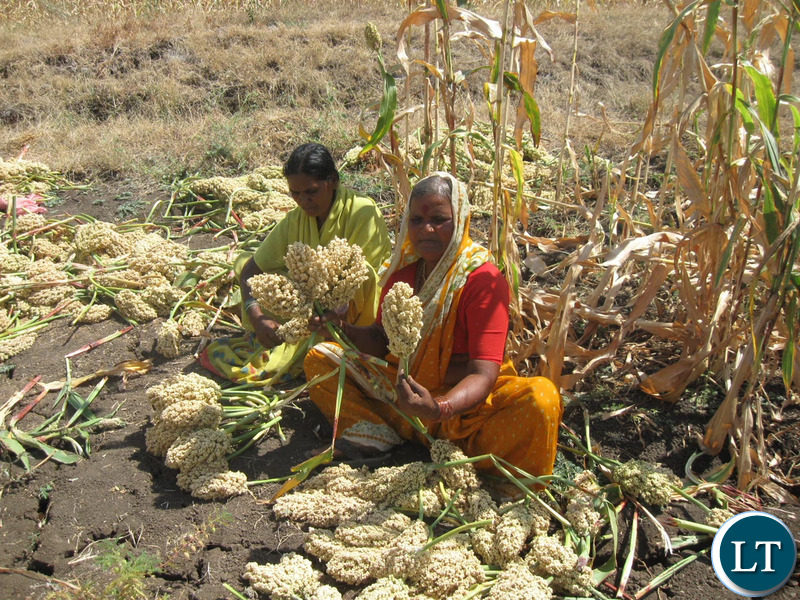
In Niger, climate-resilient seed systems are now transforming uncertainty into productivity. From drought-tolerant sorghum and pearl millet to digital tools that guide farmers on planting and water management, science is helping people stay and thrive where they are.

These few examples show that solutions exist. What is missing is scale and that requires more sustained investment.

Developed nations have both the capacity and the self-interest to act. Supporting food systems in the Global South should also be seen as insurance against instability.

FAO’s 2025 World Food Day theme, “Hand in Hand for Better Food and a Better Future”, captures what this moment demands, a deeper investment in science that make a real difference, and genuine partnership.

Across the Global South, collaboration is already strengthening through the ICRISAT Center of Excellence for South-South Cooperation in Agriculture as nations share knowledge, seeds, and strategies to build resilience together.

Yet the North, too, has a vital role to play in recognition that hunger and instability anywhere can threaten prosperity everywhere.

The future of food security, peace, and climate resilience must be built together.

As the climate crisis tightens its hold, the world must choose, act now to strengthen the foundations of food and farming, or face the growing cost of displacement and unrest.

This World Food Day let us remember that peace, like harvests, depends on what we sow today.

Dr Himanshu Pathak Director General, International Crops Research Institute for the Semi-Arid Tropics (ICRISAT)

Stakeholders welcome establishment of MFEZ in Monze

0

Stakeholders in Southern Province have welcomed President Hakainde Hichilema’s announcement on the establishment of a Multi-Facility Economic Zone (MFEZ) in Monze District, describing it as a major milestone towards boosting economic growth in the province.

President Hichilema made the announcement during the official opening of the Southern Province Trade Exposition 2025 in Livingstone recently, where he revealed that Cabinet had approved the creation of the MFEZ to attract investment and promote industrialisation in the region.

The media reports that the Livingstone Chamber of Commerce and the Pemba District Administration are among the stakeholders that have expressed support for the initiative.

Livingstone Chamber of Commerce President, Banwell Mwila, says the Chamber of Commerce has for a long time wished for an economic zone in the province.

Mr Mwila noted that the MFEZ will bring about economic growth as jobs will be created.

“District economic performance will increase, and local authorities will be able to get levy, so we are so excited,” Mr Mwila stated.

Pemba District Commissioner, Obey Habeenzu, noted that Pemba, being a neighbouring district to Monze, stands a good chance of benefiting from the MFEZ.

“We join Monze in celebrating the incoming MFEZ, which as Pemba District we believe is going to benefit our district,” Mr Habeenzu said.

Mr Habeenzu added that the MFEZ will also open up markets for the people in a number of ways including agriculture.

And, Pemba Town Council Secretary, Samuel Chilombo, is also optimistic that the economic benefits which will be accrued in Monze will spill over to Pemba.

“We feel as a sister council which is near Monze, the economic benefits that will be accrued in Monze will extend to Pemba which is about 35 Kilometers from Monze,” Mr Chilombo said.

Govt. praised for Mufulira-Mokambo-Mansa Road Project

0

Chief Kasomalwela of the Ushi people in Chembe District has commended government for allocating funds in the 2026 National Budget for the Mufulira-Mokambo-Mansa Road Project.

The media reports that the traditional leader observes that the road, connecting Zambia through the Democratic Republic of Congo (DRC), holds a significant economic value for the country, making its improvement overdue.

Chief Kasomalwe said this when Luapula Province Acting Deputy Permanent Secretary, Evans Sikabubba, paid a courtesy call on him at his palace.

And, Mr Sikabubba highlighted government’s commitment to supporting all sectors with resources in order to grow the economy at all levels across the country.

He, therefore, assured farmers in Chembe that supplied maize to the Food Reserve Agency (FRA) during the just ended crop marketing exercise of their payment.

Mr Sikabubba further disclosed that government has committed to a weekly payment schedule to clear all outstanding dues.

55 escape unhurt, one injured in bus infernal

0

About 55 passengers have escaped unhurt while a 56-year-old woman has sustained a leg injury after a Samfya-bound bus belonging to P-Mwansa caught fire.

The Media reports that Luapula Province Police Commanding Officer, Mwala Yuyi, has disclosed the accident which occurred around 14:50 Hours at Lukola area on the Chembe-Mansa Road.

Mr Yuyi said the driver of the Zhongtong Bus, Registration Number ASB 2276, Peter Mwansa, suspected the fire to have been ignited by an electrical fault.

“Police officers accompanied by fire officers from Chembe Town Council rushed to the scene and found a Zhongtong Bus belonging to P. Mwansa Company of Samfya District, which was coming from Kitwe in route to Samfya, still on fire,” Mr Yuyi stated.

He regretted that the bus was completely engulfed in flames and all passengers’ luggage was destroyed in the inferno as efforts to extinguish the fire proved futile.

“Efforts by the fire officers to extinguish the fire proved futile, as the flames were too intense to be contained with the available fire extinguishers. Consequently, the bus was extensively damaged,” Mr Yuyi added.

He, however, indicated that the total value of the damaged property has not yet been established.

Mr Yuyi stated that an inquiry file has been opened to establish the actual cause of the fire.

Govt. seeks more partnerships in addressing mental health issues

0

Copperbelt Province Minister, Elisha Matambo, has urged the church to supplement government’s efforts in addressing mental health issues in communities.

And, Mr Matambo has emphasised that the church is a key partner in national development.

The media reports that Mr Matambo was speaking during the 13th Anniversary Celebration of the Light Embassy Ministry in Kitwe.

He praised the role of the church in fostering good values, peace, and unity.

During the event, Mr Matambo made a donation of K40, 000 towards the construction of a new church building for the Light Embassy Ministry.

He further reaffirmed the government’s commitment to supporting faith-based organisations.

Light Embassy Ministry, Apostle Mupesa Mwenya, thanked the government for its continued support to religious institutions.

He also expresses gratitude to Mr Matambo for the generous contribution to the church’s construction project.

KBF Condemns Eviction from Catholic Fundraising Event, Accuses State Institutions of Political Intimidation and Abuse of Power

6

Zambia Must Prosper (ZMP) President Kelvin Fube Bwalya (KBF) has condemned what he described as political discrimination and the abuse of state institutions after he and his wife were ordered to leave a Catholic fundraising event at the Zambia National Service (ZNS) Chamba Valley without explanation.

KBF said that “barely five minutes into the event,” senior ZNS officials instructed them to leave the venue, a move he described as “humiliating and politically motivated.” He added that “no legal reason was provided for our eviction — only the heavy hand of political fear and intimidation.”

He said the incident occurred during a Dinner Fundraising Event for the Catholic Sisters’ “Sister to Sister” initiative, which he attended with senior party officials and his wife, “a devout Catholic and long-time supporter of Church initiatives.” The ZMP leader described the act as “unlawful” and “an example of state institutions being weaponized for political purposes under the UPND government.”

“A government that fears its people is a failed state,” he said, stressing that Zambia is not a one-party state and that the Constitution guarantees freedom of assembly, association, and religion. “No government — however powerful it imagines itself — has the right to violate these constitutional freedoms,” he added.

KBF stated that the Catholic Church has always been a place of “truth, unity, and compassion” and should remain a “neutral and safe space.” He said the Church “must remain independent and inclusive — not a place where citizens are profiled or expelled for political reasons.”

“The ‘Sister to Sister’ initiative represents the spirit of Christ — love, service, and inclusion,” he said. “Turning such an event into a stage for political discrimination is both shameful and unchristian.”

KBF called upon the Zambia National Service Command “to explain the basis of this misconduct,” and urged the Ministry of Defence “to immediately investigate the abuse of authority by ZNS officials.” He also appealed to the Catholic Secretariat to “reaffirm its position as a non-partisan and welcoming institution for all believers.”

He said Zambia Must Prosper “stands firm in defense of every Zambian’s right to freedom and dignity,” and that the party rejects “intimidation, exclusion, and fear politics.” He warned that “the misuse of public institutions to silence opponents is unconstitutional, immoral, and politically dangerous.”

Meanwhile, in a separate reflection made earlier on the National Day of Prayer, Fasting, and Reconciliation, KBF spoke about the importance of humility, unity, and renewed cooperation among the country’s political leaders. He said that members of the TONSE Alliance, both past and present, “came together in a spirit of reflection and reconciliation.”

“We sat across from one another not as rivals or aggrieved partners but as leaders who once dared to unite for the sake of Zambia,” he said. “We acknowledged our differences, admitted our collective mistakes, and agreed that the spirit of unity must not die because of past political fractures.”

He explained that the meeting “was not about reviving a political pact for convenience,” but about “reigniting a shared commitment to national purpose.” According to KBF, “the TONSE Alliance may have faltered along the way, but the ideals that birthed it — unity, inclusiveness, and a people-driven agenda — still matter.”

Reflecting on the moment, KBF said, “as we bowed our heads in prayer and opened our hearts to reconciliation, we were reminded that Zambia can only prosper when her leaders are humble enough to make peace, and wise enough to work together again.”

He concluded by emphasizing that the day should mark the beginning of renewed collaboration among national leaders. “May this not be a moment that ends with the day but the beginning of a renewed spirit of collaboration. The nation is bigger than any single political camp. Only when we unite, Zambia will prosper.”

Mwabashike urges the church to pray for national leaders

2

Central Province Minister Mwabashike Nkulukusa has called on the church to remain steadfast in praying for national leaders as they navigate the country through various developmental challenges.

The media reports that speaking during the National Day of Prayer, Fasting, and Reconciliation at the United Church of Zambia (UCZ) St. Paul’s Congregation in Mkushi, Mr Nkulukusa underscored the importance of unity within the body of Christ, regardless of denominational or ideological differences.

He acknowledged that leaders, being human, are prone to making mistakes, and therefore, require ongoing spiritual guidance and intercession from the church.

Mr Nkulukusa emphasised that the church plays a critical role in promoting peace and unity which are key pillars for sustainable national development.

“Peace is fundamental to any nation’s social and economic prosperity. Where there is peace, citizens can freely participate in productive and economic activities,” he said.

He added that a peaceful environment allows communities to thrive and build a lasting legacy for future generations.

The Provincial Minister also urged political leaders to consistently uphold peace and unity, not only during the commemoration of the National Day of Prayer, Fasting, and Reconciliation, but in their daily conduct.

He further commended the church and the people of Mkushi for their dedication to prayer and encouraged continued collaboration between the Church and government in promoting good morals and national unity.

Christians in Lusaka observe national day of prayer

0

The Lusaka Showgrounds today transformed into a sanctuary of faith and unity as thousands gathered from various denominations and faith to observe Zambia’s 10th National Day of Prayer, Fasting, Repentance, and Reconciliation.

The environment filled with a triumphant and hopeful spirit, as voices from all walks of life rose in unison to heaven.

The event, a significant annual national occasion, was attended by President Hakainde Hichilema, who graced the gathering.

The media reports that the proceedings began with a heartfelt statement of purpose from the Chairperson of the National Day of Prayer Organising Committee, Robert Sihubwa, setting the tone for a day dedicated to spiritual renewal and national healing.

This year’s national day of prayer was commemorated under the theme, One Nation under God: Consolidating and Harvesting National Development and Spiritual Resilience in the Tenth Wave of National Prayers.

The event brought together clergy, traditional leaders, government officials, and ordinary citizens in prayer and thanksgiving.

The programme featured various prayer points, including supplications by clergy for the country’s farmers and the agriculture sector, which is vital to Zambia’s economy, while others thanked God for the unity demonstrated by the church in the country among other areas.

Throughout the event, musical ministrations energised the gathering, with uplifting performances that fostered joy and jubilations among attendees.

Later, His Royal Highnesses, Representing the House of Chiefs and led by Chief Chipepo, offered prayers for national healing and reconciliation, calling for divine intervention to bring peace and unity to the land.

Today’s observance underscored Zambia’s ongoing commitment to spiritual resilience and national development, emphasising the importance of faith and unity in shaping the country’s future.

President Hichilema underscores the church’s role in national unity

0

President Hakainde Hichilema has underscored the critical role the church plays in promoting unity in the nation, citing that government and the church are equal partners in national development.

The President has further acknowledged that his government values the peace and unity being enjoyed in the country, further recognising that Zambians are God’s people.

He has outlined the continued achievements the country has scored in sectors such as mining and agriculture among others, noting that all this has been possible due to God’s goodness.

The media reports that the Head of State said this when he officiated at this year’s celebrations of the 10th National Day of Prayer, Fasting, Repentance and Reconciliation in Lusaka at the show grounds.

President Hichilema also called for families across the country to strive to raise responsible and God fearing children as this is important to growing a society of decent children.

He further called for dialogue at all levels in the country, stressing that it is the route every Zambian must take in order to move forward.

The National Day of Prayer Organising Committee Chairperson, Robert Sihubwa, has commended President Hichilema for showing commitment to the country.

He noted that the presence of the Head of State at the National Day of Prayer and his family, demonstrates his commitment to the betterment of the country.

Fr Sihubwa highlighted that this year’s event has also deliberately incorporated young people as they are both leaders of today and tomorrow.

Earlier in his homily, Tabernacle of David from the Pentecostal Assemblies of God, Harrison Sakala, indicated that as Zambia celebrates 10 years since the national day of Prayer was initiated, there is a need for continuation.

Bishop Sakala also urged people not to just pray but also change the work culture as a country if development is to be achieved at both levels.

Various prayers were offered from representatives of various church denominations who prayed for farmers and the agriculture sector as a whole, and others thanked God for the unity of the church to stand in the gap for the nation.

Among the praying leads were Grace Ministry’s International, Presiding Bishop Lucky Simumba, and Winners Chapel National Pastor, Adediran Johnson.

This year’s event was held under the theme ‘One Nation under God: Consolidating and Harvesting National Development and Spiritual Resilience in the Tenth Wave of National Prayers’.

President Hichilema Joins Nation in Marking National Day of Prayer, Fasting, Repentance, and Reconciliation

7

President Hakainde Hichilema today joined citizens across Zambia in commemorating the National Day of Prayer, Fasting, Repentance, and Reconciliation. The solemn occasion, held annually, is dedicated to seeking divine guidance, unity, and national renewal.

This year’s observance marks the tenth wave of the national prayers and was held under the theme, “One Nation under God: Consolidating and Harvesting National Development and Spiritual Resilience,” a theme inspired by Genesis 8:22 and Acts 3:19.

At the main event held at the Lusaka Showgrounds, the nation was led through a series of prayers focusing on key national pillars. These included thanksgiving for Zambia’s spiritual journey over the past nine years, the preservation of a united national altar, and recognition of answered prayers throughout the period. The gathering also expressed “special gratitude for the wisdom and unity among the church and its commitment to standing in the gap for the nation.” Worshippers offered prayers of thanksgiving for divine guidance, national peace, and continued cohesion among citizens.

One segment of the ceremony was dedicated to intercession for the agricultural sector. According to the programme, prayers were made “for the country’s farmers and the agricultural process, particularly for a favourable 2025/2026 rainy season, vital to national food security and economic growth.” The prayer leaders emphasized the importance of agriculture to Zambia’s economy and encouraged continued reliance on divine provision for favorable conditions.

Citizens, religious leaders, and government officials joined together in intercession for various areas of national life. They prayed for families and individuals “to walk in God’s blessings and seasons of new beginnings,” asking for renewed strength and unity within homes. Prayers were also offered for all Government Ministries, with participants calling for “effective delivery of public services” and a spirit of diligence among public servants. Another area of focus was the youth, as citizens sought divine intervention “for the emergence of a new generation that inspires hope and national progress,” with a vision of nurturing leaders committed to the country’s growth.

Peace and stability ahead of the 2026 Presidential and General Elections formed a major prayer point, as participants called upon God “to preserve harmony and unity during the election period.” Additional prayers were lifted “for protection against spontaneous fires, accidents, and extreme weather events,” reflecting concerns over climate-related challenges and national safety. The congregation also interceded “for unity within families and responsible parenting,” emphasizing the family as the cornerstone of moral and social stability.

The nationwide programme also featured provincial-focused prayers. In the Northern and Muchinga Provinces, worshippers prayed “for effective agriculture and aquatic development,” while in Luapula and Western Provinces, prayers centered on “the stewardship of water bodies, energy production, and preservation of cultural heritage.” The Northwestern and Copperbelt Provinces were remembered “for responsible management of mineral resources,” acknowledging the regions’ contributions to the nation’s economy. Similarly, the Southern and Eastern Provinces were prayed for “land fertility and agricultural restoration,” while the Central and Lusaka Provinces were lifted “for excellence in leadership and administration.”

Special prayers were offered for President Hichilema, members of the Cabinet, Parliament, and the Judiciary. The prayers sought “divine protection and wisdom as they lead the country.” Participants emphasized the need for moral integrity and humility among those in leadership, calling for God’s guidance in governance and decision-making.

The interdenominational gathering also served as a “symbolic covering of Zambia with the blood of Jesus for the next ten years and a prophetic declaration to separate light from darkness across the land.” Organizers noted that the event continued a tradition established to strengthen national unity and promote reconciliation among citizens.

The National Day of Prayer has become a central feature of Zambia’s faith-based national identity, bringing together diverse communities to seek God’s favour on the nation’s future. As the event concluded, religious leaders urged citizens to remain steadfast in prayer and uphold values of forgiveness, repentance, and national unity. The day’s activities reflected a shared desire for peace, prosperity, and continued dependence on divine guidance for Zambia’s development and resilience.

UNICEF Commends Zambia for Developing National Hand Hygiene Roadmap

1

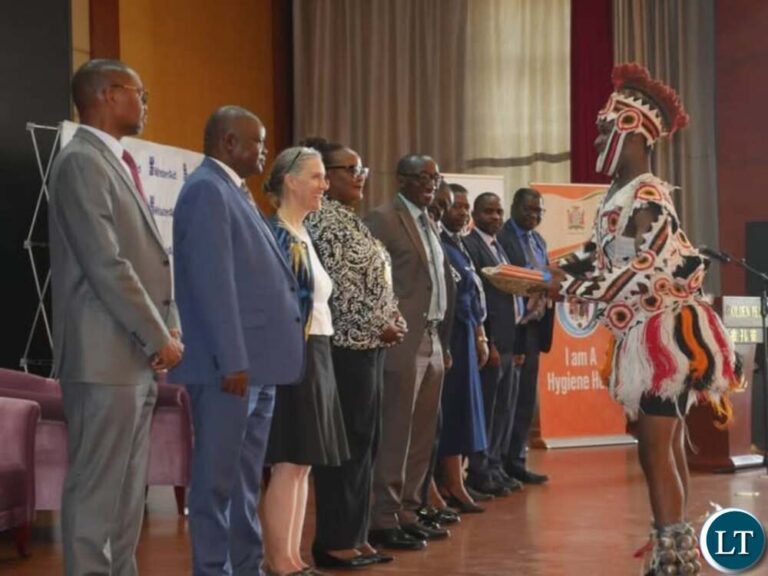
UNICEF Zambia’s Chief of Water, Sanitation and Hygiene (WASH), Emily Rand, has commended the country’s collaborative efforts in the development of the National Hand Hygiene for All Roadmap.

Ms. Rand said government’s leadership in championing the initiative and close collaborations with international partners such as the European Union and the German government are commendable.

She further thanked other stakeholders and individuals who have provided practical tools, which have enabled broader participation in the campaign.

Ms. Rand said this during the Global Handwashing Day and the launch of the Hand Hygiene Roadmap in Lusaka, held under the theme “Be a Hand Washing Hero.”

She noted that the lack of adequate infrastructure and the difficulty in achieving behavioural change are the two major challenges identified in the research.

Ms. Rand stated that despite water being a basic human right and its actual cost of production standing at K18 in some areas, residents pay only K8, a discrepancy which results in financial losses and strains service delivery.

She further disclosed that UNICEF and its partners are currently working across 90 districts in the country to improve access to water and sanitation services.

“There is a need for everyone to reflect personally on hygiene habits, particularly hand washing, and also foster collective commitment that will ensure real progress in the coming year,” she said.

World Bank Country Manager, Wedex Ilunga, said the launch of the Hand Hygiene Roadmap is a progressive step towards protecting public health.

Mr. Ilunga said the roadmap reflects a national commitment to lasting behaviour change and infrastructure development anchored on good hygiene practices.

He reiterated that the World Bank, a lead partner in the country’s water and sanitation sector, will continue to collaborate closely with the Ministry of Water Development and Sanitation following the launch of the Hand Hygiene Roadmap.

Mr. Ilunga said while hand washing may appear as a simple act, it remains a powerful tool in disease prevention, adding that the launch is not just a campaign but a movement demanding collective action, innovation, and sustained commitment from all sectors of society.

“While we are celebrating this progress made so far, we still have some challenges because according to data from the World Health Organisation (WHO)-UNICEF Joint Monitoring Programme, as at 2024, only 18 percent of the country’s population had access to basic hand washing facilities at home,” he said.

Mr. Ilunga said this means over 80 percent of the country’s population still lack access to basic hygiene, adding that this further underscores the urgency of achieving Sustainable Development Goal Number 6 which points at universal and equitable access to adequate sanitation and hygiene for all by 2030.

Luapula DPS advises ZCSA ahead of Mwenda-Kasomeno Road Project completion

0

Luapula Province Deputy Permanent Secretary, Evans Sikabbubba, has urged the Zambia Standards Compulsory Agency (ZCSA) to position itself ahead of the completion of the Mwenda-Kasomeno Road Project.

Speaking when the ZCSA Board members paid a courtesy call on the Provincial Administration in Mansa, Mr Sikabbubba said once complete, the Mwenda-Kasomeno road will experience an increase in trade activities for various products.

He further disclosed that the construction works of the bridge on the Mwenda-Kasomeno Road Project will be completed in December 2026, while the One Stop Border Post will be completed in May 2027.

The media reports that Mr Sikabbubba also noted that Mwense District will be one of the biggest trading Centers in Luapula once the project is complete, hence, the agency needs to have its presence in the area.

The Provincial Deputy Permanent Secretary also noted the responsibility that ZCSA has towards members of the public.

“The people should also be the priority, and so I urge you to take advantage of community radio stations so that you explain to our people what your agency does and how they can also play a role,” Mr Sikabbubba said.

ZCSA Board Chairperson, Ian Mupeta, appealed to the business community in Luapula to engage the agency in their operations early to be properly guided and equipped with the necessary knowledge on good manufacturing practices for specific products.

Mr Mupeta stated that doing so, will result in improved product safety, increase chances of success through compliance with regulatory requirements, as well as increased market access for manufacturers domestically and internationally.

“The agency stands ready to support producers to comply with the required standards for them to not only access local markets but also penetrate the markets beyond our borders,” Mr Mupeta said.

Mbekise Ward in Nalikwanda Constituency in Mongu to receive water boost

2

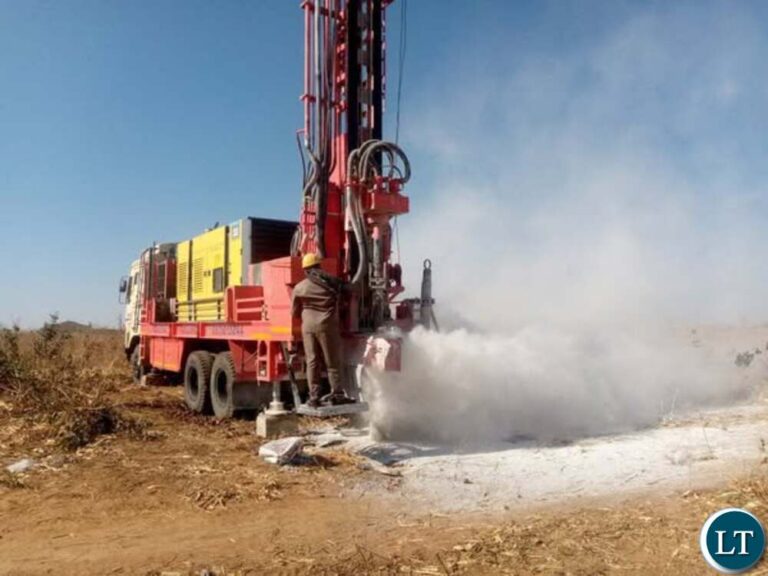
The people of Mbekise Ward in Nalikwanda Constituency in Mongu District of Western Province have received a significant boost in their quest for clean water, with the donation of four boreholes by Friends of Hope International, a non-governmental organisation.

The boreholes, valued at over K80, 000, will be drilled in a couple of weeks.

The media reports that Mongu District Commissioner, Morgan Akabeswa, who attended the meeting with community leaders, government officials, and representatives from Friends of Hope International, urged the residents to work closely with the government to drive development in the area.

“This project is meant to supplement government’s efforts in providing clean and safe water to the community,”

“We appreciate the efforts of Friends of Hope International in supporting our initiatives to improve the lives of our people,” Mr Akabeswa noted.

He also emphasised the importance of community involvement in developmental projects.

 “Development can only flourish when the community works hand-in-hand with the government,” he stressed.

Meanwhile, Area Chief Mwanakonga Imakando, welcomed the donation, calling on the government to address other challenges facing the community.

“We appreciate this gesture, but we also have other pressing needs, such as healthcare, and we urge the government to look into other issues and support our community,” he urged.

A Local resident, Nalucha Mundia, expressed gratitude, saying the boreholes will greatly benefit the community, especially women and children who previously had to walk long distances to fetch water.

 “This is a huge relief for us. We will access clean water without having to walk long distances, which will improve our health and overall well-being,” she stated.

The donation of boreholes is part of Friends of Hope International’s efforts to support communities in Zambia, particularly in rural areas where access to clean water is limited.

The organisation has been working in partnership with the government to implement various development projects, including healthcare initiatives and education programmes.

Police officer in Livingstone nabbed for swindling members of the public

1

A police officer in Livingstone has been arrested for allegedly swindling members of the public out of money by falsely promising to secure jobs and facilitate the release of suspects from police custody.

The suspect, identified as Constable Imangolwa Chibunda, aged 29, of Livingstone Central Police Station, was apprehended on Friday after going into hiding for several weeks.

He was traced and arrested from his hideout in Maramba Compound around midday.

The media reports that according to Southern Province Police Commissioner, Auxensio Daka, several complaints were received between March and October this year from individuals who claimed the officer had deceived them into paying money in exchange for favours that never materialised.

Mr Daka indicated that investigations revealed that the officer had developed a pattern of extorting money from unsuspecting victims, both while on duty and outside work, under the pretext of using his influence within the police service to secure employment for their relatives or to assist in the release of detained suspects.

He explained that the victims reported losing various sums of money, with some paying as much as K11, 500, while others lost smaller amounts.

“Those who have so far lodged complaints include Emeldah Mutema, Simon Zulu, Euphenia Sipunu, Joselyn Banda Habeenzu, John Kazala, and Eunice Grende,” he said.

Mr Daka further stated that after receiving the payments, the officer allegedly began avoiding the complainants and eventually stopped reporting for work, adding that he was later located and detained at Livingstone Central Police Station, where he is facing charges of obtaining money by false pretenses.

Mr Daka said the officer will appear in court soon, adding that more complainants are expected to come forward as investigations continue.

He assured that the Zambia Police Service remains committed to professionalism and accountability, stating that any officer found engaging in criminal activities will face the full consequences of the law.