Monday, June 8, 2026
25.4 C
Lusaka
Home Blog Page 280

SWEPA commits to strengthening mining governance in Zambia

0

The Swedish Environmental Protection Agency (SWEPA), has reaffirmed its commitment to strengthening mining governance in Zambia through the development of the National Corporate Social Responsibility (CSR) Guiding Framework.

SWEPA International Unit of the Policy Development Department Senior Advisor, Andreas Lindstrom, says CSR is a critical tool that helps in ensuring that mining activities meaningfully contribute to the development of local communities.

Mr Lindstrom notes that the guiding framework focuses on strengthening mining governance in Zambia by aligning private sector practices with community needs and environmental standards.

Mr Lindstrom said this yesterday, during the Zambia Mining and Environment Nexus (ZAMNEX) Task Force Validation Meeting held in Lusaka.

“The CSR Guiding Framework is being developed under a broader programme funded by the Swedish International Development Cooperation Agency (SIDA) through the Swedish Embassy, and implemented by the SWEPA),” he stated.

Mr Lindstrom emphasised that one of the key outcomes of the ongoing consultations is the creation of a harmonised national approach that will guide how mining companies engage with host communities.

He emphasised that the collaborative approach will ensure that the document becomes a truly Zambian owned product, reflecting diverse perspectives and promoting shared responsibility in achieving responsible mining practices.

Meanwhile, CSR Network Zambia Executive Director, Lee Muzala, explained that this was done following a baseline study that identified key challenges faced by businesses, particularly in the mining sector including issues of governance, human rights, labor relations, community displacement, and compensation.

He emphasised that one of the main findings of the study was the absence of a standardised national reference document to guide how companies engage with communities and implement CSR projects.

“It seeks to close that gap by providing clear principles and guidelines that promote transparency, inclusiveness, and accountability across industries,’ he said.

“The Ministry of Green Economy and Environment and the Ministry of Mines and Mineral Development are the two anchor ministries driving the process, with other government ministries expected to come on board as the framework nears completion, “Mr Muzala disclosed.

Mr Muzala stated that once finalised, the framework will not only serve as a national guide but will also help harmonise existing policies and legal frameworks to ensure that CSR practices in Zambia are aligned with international standards and responsive to community needs.

He also revealed that the framework is expected to be fully completed and launched in the first quarter of 2026, marking a significant step forward in ensuring that mining and other business operations contribute meaningfully to sustainable national development.
Botswana Vice President calls for deeper cooperation among African countries

0

Botswana’s Vice President Ndaba Gaolathe has called for deeper continental cooperation and bold national reforms to drive Africa’s digital transformation.

Speaking at the Africa Digital Summit being held at the Ciela Resort in Lusaka, Mr Gaolathe said time for isolated progress was over and urged countries to harmonise laws, co-invest in infrastructure, and build federated digital systems to unlock Africa’s collective digital potential.

Mr Gaolathe said these were not merely technical topics but the foundation of a more integrated, prosperous, and equitable Africa.

“It is clear that our discussions today have moved beyond ideas to action. We have spoken of secure digital identities, resilient infrastructure, and regional cooperation. “he said.

He outlined Botswana’s own digital transformation journey, which he described as critical for reducing dependence on diamonds and diversifying the economy.

He pointed out that through its Economic Transformation Programme and national blueprint, Botswana aims to become a “digitally empowered, export-driven, and economically diversified nation.

Mr Gaolathe called for accelerated collaboration across African borders.

He urged countries to harmonise policies on data protection, e-signatures, and digital identity laws, and to establish cross-border trust frameworks.

Mr Gaolathe also proposed shared investment in regional data centres and internet exchange points to increase resilience and reduce costs continent-wide.

“Our digital transformation is not just a national agenda, it is a continental mission, Africa’s digital destiny will be written through collaboration, or we must forget it.” The Vice President said.

And speaking earlier Minister of Home Affairs and Internal Security Jack Mwiimbu said Zambia was intensifying its digital transformation efforts with the aim of delivering every public service online by 2027.

Mr Mwiimbu revealed that Zambia has already digitised most of its national ID and civil registration records through the Integrated National Registration Information System (INRIS), which uses biometric data to give citizens easier access to services like healthcare, education, and social protection.

“Our next priority is full interoperability across government systems, by 2027, we aim to ensure every government service is just a click away for every Zambian.” Mr Mwiimbu said.

Mr Mwiimbu said the INRIS project, launched in 2024, is already improving lives. He cited examples such as farmers receiving agricultural subsidies and students enrolling in school through a single digital ID.

He pointed out that the Ministry of Home Affairs and Internal Security was also using digital identity tools to enhance border security and streamline immigration services adding that a biometric pilot project at one border post has helped reduce smuggling and facilitate legitimate trade.

“By integrating digital identity with immigration systems, Zambia will verify travelers securely, prevent identity fraud, and strengthen collaboration with regional security frameworks,” Mwiimbu said.

Mr Mwiimbu said to ensure inclusivity, the Ministry plans to deploy more mobile registration kits to rural areas by the end of 2026, expand digital literacy campaigns, and implement a new Data Protection Act to safeguard citizens’ personal information.

He further said Zambia was also working with the Southern African Development Community (SADC) and the East African Community to develop cross-border digital ID verification, aligning with the African Union’s Agenda 2063 for a digitally integrated continent.

The Digital Government Summit which was opened by President Hakainde Hichilema on 7th October runs from October 7 to 9 with different regional leaders, government officials, and tech experts in attendance to discuss the future of e-government in Africa.

President Hichilema commends CHAZ for delivering health care services

1

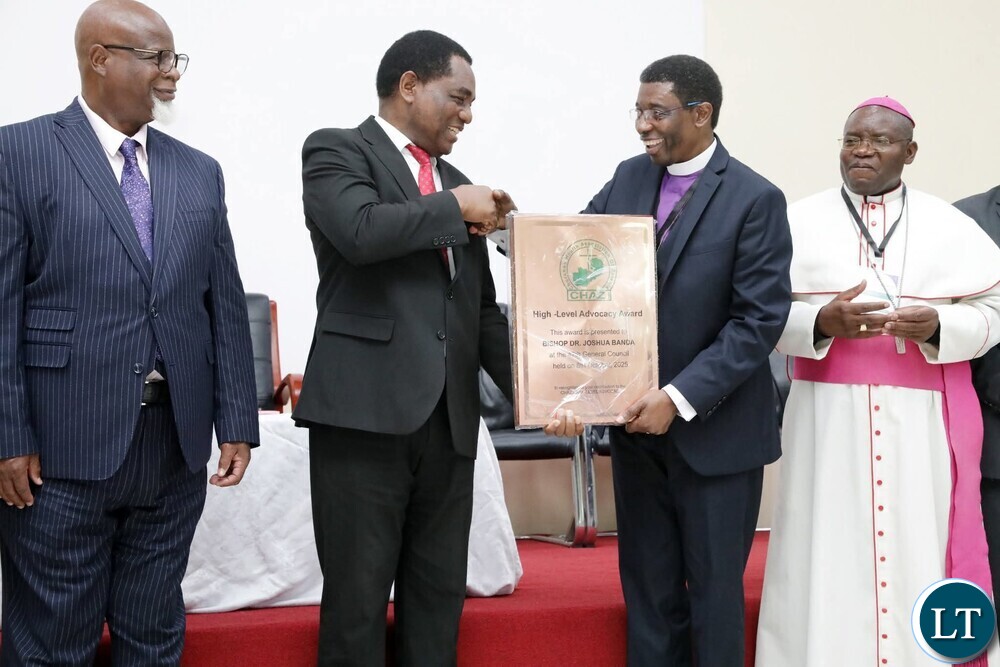
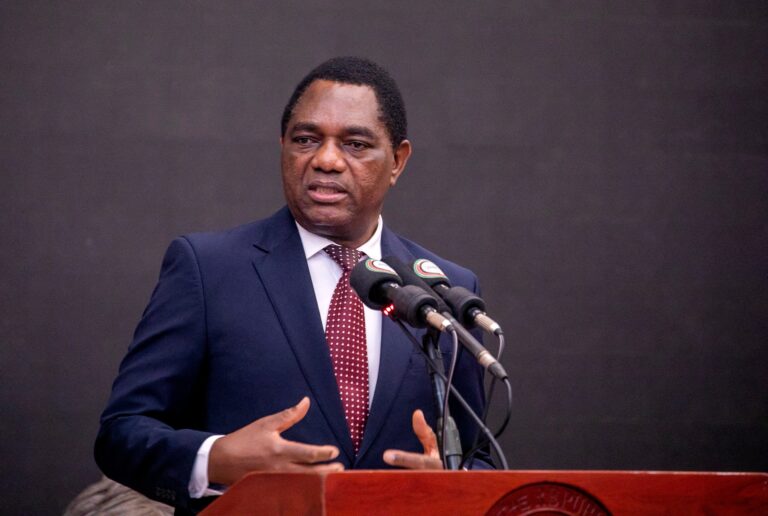
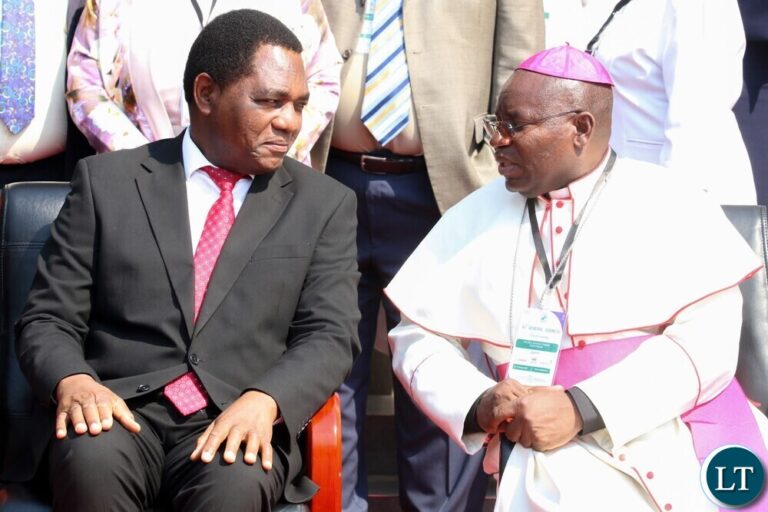
President Hakainde Hichilema has praised the Churches Health Association of Zambia (CHAZ) for promoting unity among its members and for its ongoing commitment to delivering healthcare services country wide.

President Hichilema notes that saving humanity and providing quality health for all, is the government’s priority, adding that the unity exhibited should not only be deepened but also protected.

He states that CHAZ is a trusted partner of the government that demonstrates sustainability and consistent support by complementing the government’s health efforts.

The Head of State made these remarks during the CHAZ’s 47th General Council meeting held in Lusaka yesterday.

President Hichilema has since underscored the importance of government and CHAZ working together to ensure that drugs in health facilities are not pilfered.

He further called for the harmonisation of the Zambia Medicines and Medical Supplies Agency (ZAMMSA) and CHAZ systems to foster medicine availability in health institutions, citing that stealing drugs will not be condoned.

President Hichilema further reiterated the government’s open-door policy of dialogue for resolving issues, citing that through dialogue issues pertaining to the wellbeing of the will can be sorted.

And Minister of Health, Elijah Muchima disclosed that through government’s commitment, President Hichilema directed the placement of the 254 classified health workers, recognising CHAZ in fostering health services.

Dr Muchima also reiterated the government’s position in ensuring that medicines are not stolen, adding that progress is often hindered by people.

Meanwhile, the World Council of Churches Representative , Nomonde Mqhayi-Mbambo reiterated the role of faith based health institutions such as CHAZ in fostering assistance especially through health care services to far flung areas.

Dr Mqhayi-Mbambo called on the church to add their voices in the establishment of health policies.

And Representative Churches Forum (RCF) Chairperson, Evans Chinyemba re-echoed the government’s commitment to being a partner of the church.

Bishop Chinyemba, noted that the Church has been providing health care services by complimenting the government’s efforts.

Earlier, CHAZ Board Chairperson, Justin Matepa, commended the government for considering his institution’s request to place 254 classified employees from its member institutions into the government payroll.

Fr Matepa highlighted that this demonstrates the government’s recognition of the important role the church health facilities play in delivering health services.

In her welcoming remarks, CHAZ Chief Executive Officer (CEO), Karen Sichali-Sichinga expressed gratitude to the government adding that the institution mostly depends on government support.

Minister Sialubalo Commends Innoray Medical Equipment for Advancing Local Manufacturing and Healthcare Delivery

0

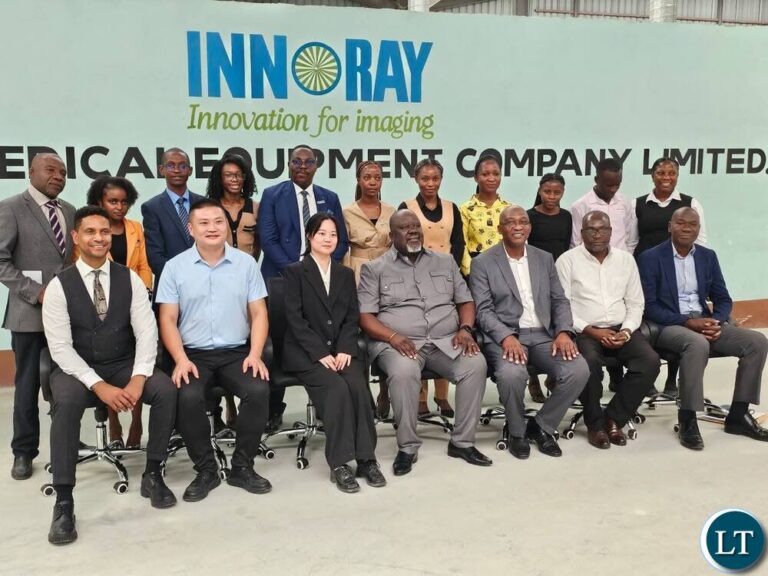
Minister of Local Government and Rural Development, Hon. Gift Sialubalo, MP, today led a high-level delegation on a tour of Innoray Medical Equipment Company Limited, a local manufacturer of hospital furniture and assembler of X-ray machines. The Minister was accompanied by Information and Media Permanent Secretary, Mr. Thabo Kawana, and Local Government and Rural Development Permanent Secretary for Administration, Dr. Gabriel Pollen.

During the visit, Hon. Sialubalo praised Innoray Medical Equipment Company for responding to President Hakainde Hichilema’s call for Public Private Partnerships (PPPs) that drive investment, job creation, and revenue generation in Zambia. He noted that the company’s collaboration with local and foreign partners embodies the President’s vision of fostering a conducive business environment and promoting productive cooperation between domestic enterprises and international investors.

The Minister highlighted that the increased Constituency Development Fund (CDF) allocation presents an opportunity for local authorities to procure Zambian-made medical equipment, such as hospital furniture and X-ray machines, for use in community-level projects. These include maternity annexes, mortuary units, and health posts, which he said would significantly enhance healthcare delivery across the country.

Hon. Sialubalo urged Members of Parliament and local authorities to prioritise the procurement of locally manufactured medical equipment, citing Zambia’s capacity to meet national healthcare needs. He commended Innoray Medical Equipment Company for providing competitive prices and high-quality products, helping reduce import dependence and saving valuable resources.

Reaffirming Government’s commitment to universal primary healthcare, the Minister emphasized that locally produced medical equipment will play a vital role in extending healthcare services to even the most remote parts of Zambia.

Meanwhile, Information and Media Permanent Secretary, Mr. Thabo Kawana, said the visit aligns with President Hichilema’s call for partnerships that promote investment, skills transfer, and knowledge exchange. He stressed that the President has been clear about Zambia’s need to embrace world-class technology in all sectors rather than settling for second-rate alternatives.

Speaking during the tour, Atwende Healthcare Chief Executive Officer, Dr. Crispin Moyo, said the Government’s engagement with local manufacturers demonstrates its recognition of local industry as a key partner in national development. Dr. Moyo explained that Atwende Healthcare, a wholly Zambian-owned company, was established to strengthen the healthcare sector through local production and supply of hospital equipment.
In his remarks, Dr. Gabriel Pollen, Permanent Secretary for Administration at the Ministry of Local Government and Rural Development, commended Innoray Medical Equipment Company as an impressive example of innovation and collaboration, addressing global healthcare challenges through local initiative. He echoed the sentiment that partnerships between local enterprises and foreign investors reflect President Hichilema’s broader economic vision.

Innoray Medical Equipment Company Limited Chief Executive Officer, Mr. Lei Andrew Qu, expressed appreciation for the Zambian Government’s support of foreign investment and local joint ventures, particularly its collaboration with Atwende Healthcare. He reaffirmed the company’s commitment to supporting Zambia’s healthcare goals through innovation, quality, and sustainable local partnerships.

Zambezi Civil Groups Demand Justice After Disturbing Video Shows Public Abuse of Young Girl

1

Civil societies in Zambezi District of North-western Province have called for the immediate arrest of people involved in a video circulating on social media involving a naked girl child whose hand and legs were tied while being poured water in public.

District Women for Change Chairperson Philis Samukonga has condemned the act describing it as barbaric and inhuman.

Ms Samukanga said their action is a clear violation of children’s rights and has since called for urgent intervention to protect the young girl by arresting the perpetrators.

“The young girl was defenceless and what they did to her was not right. Regardless of her offence, they have no right to humiliate their fellow human in the manner they did to her,” she bemoaned.

And Zambezi District Women Lobby Chairperson Joy Fundulu has urged law enforcement to expedite the investigation and ensure the culprits are arrested.

Speaking in a telephone interview with ZANIS, Ms Fundula expressed sadness over the incident and bemoaned that women who are supposed to protect girls are in the forefront to humiliate a girl child in public.

She described their actions a gross violation of human dignity and more specifically, a profound act of gender-based violence against a minor.

Ms Fundulu has since demanded for maximum punishment against the perpetrators, noting that anything less than that would set a dangerous precedent towards the violation of children and women.

Meanwhile Zambezi District Commissioner Simeon Machayi has confirmed to ZANIS that so far two people have been arrested and released on bond and will soon appeal in court.

Mr Machayi said investigations in the matter are still ongoing and that efforts to arrest other culprits are underway.

He has since reiterated government commitment to protecting the welfare of a girl child adding all those involved will face the law.

COMESA Foreign Affairs Ministers discuss regional peace, security

0

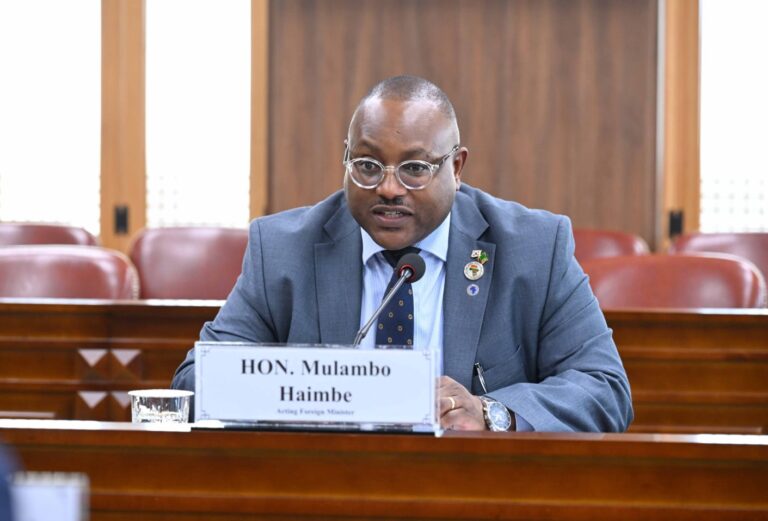
Minister of Foreign Affairs and International Cooperation, Mulambo Haimbe, has attended the Common Market for Eastern and Southern Africa (COMESA) 20th Meeting for Ministers of Foreign Affairs in Nairobi, Kenya.

The meeting focused on reviewing the peace and security situation in the COMESA region and finding ways of promoting peace and democracy, as well as encouraging dialogue in conflict resolution.

Speaking in an interview with ZANIS shortly after the meeting, Mr Haimbe said various issues were discussed in order to seek lasting solutions to conflicts that are ongoing in some parts of the region.

He added that the focus was also aimed at ensuring that the region resolves such matters collectively.

“This was an important undertaking where we discussed areas around peace and security within the COMESA region, and various issues were discussed, of course we are all aware that within the region we have certain conflicts that are ongoing in DRC for example and in Sudan.

“And our focus was to say there is need for these matters to be addressed by us collectively as COMESA because it feeds directly into our objective, ultimately of integration and of increased investment and trade amongst us,” he stated.

The Minister further said it is important that the security situation in the region is addressed, adding that for Zambia, the meeting spoke directly to the country’s foreign policy which anchors on peace and security, and on economic diplomacy.

“And so, it is critical that the security situation within the COMESA region is addressed and these are some of the interventions that have been put in place as a collective.

“For us as Zambia, it speaks directly to our foreign policy objectives which borders on peace and security and economic diplomacy,” Mr Haimbe stressed.

And Mr Haimbe said Zambia will continue to take part in platforms such as the COMESA meeting in order to add value and a voice to issues surrounding the region.

“We continue as Zambia to participate in these forums and add value, add our voice to the particular issues we have talked about in accordance with her policy position as espoused by President Hakainde Hichilema over and over again,” he noted.

Mr Haimbe further explained that the meeting also brought out issues of global financing architecture and the need for African countries and COMESA member states to actualise their potential of self sustainability.

“Another perspective that came out is the issue of global financing architecture and the need for us as African countries and of course as member states of COMESA to actualise what we have determined for ourselves, the Africa credit rating agency, and of course our efforts towards finding that finance which will support our development in our respective countries,” he said.

Mr Haimbe is tomorrow expected to represent President Hakainde Hichilema at the 24th COMESA Summit of Heads of State and Government in Nairobi.

Zambia Unveils First Electric Vehicle, Marking a Bold Step Toward a Green and Sustainable Future

25

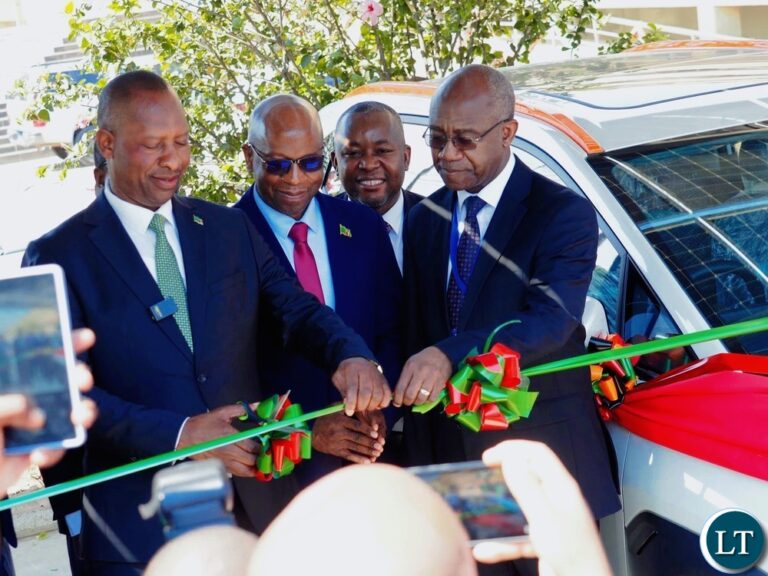
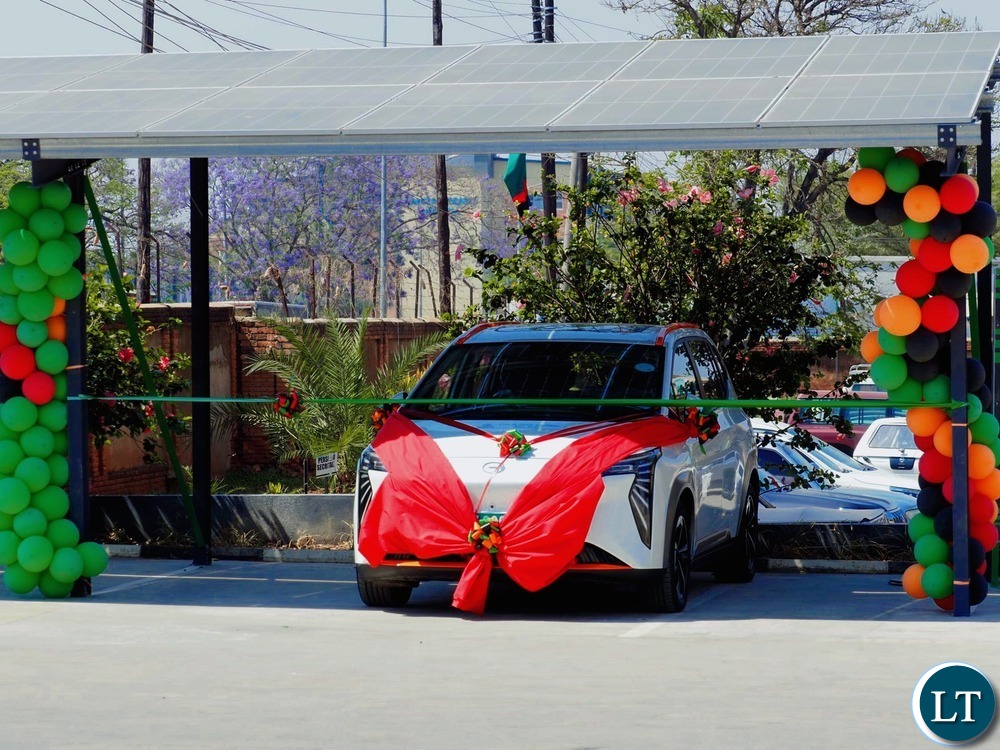
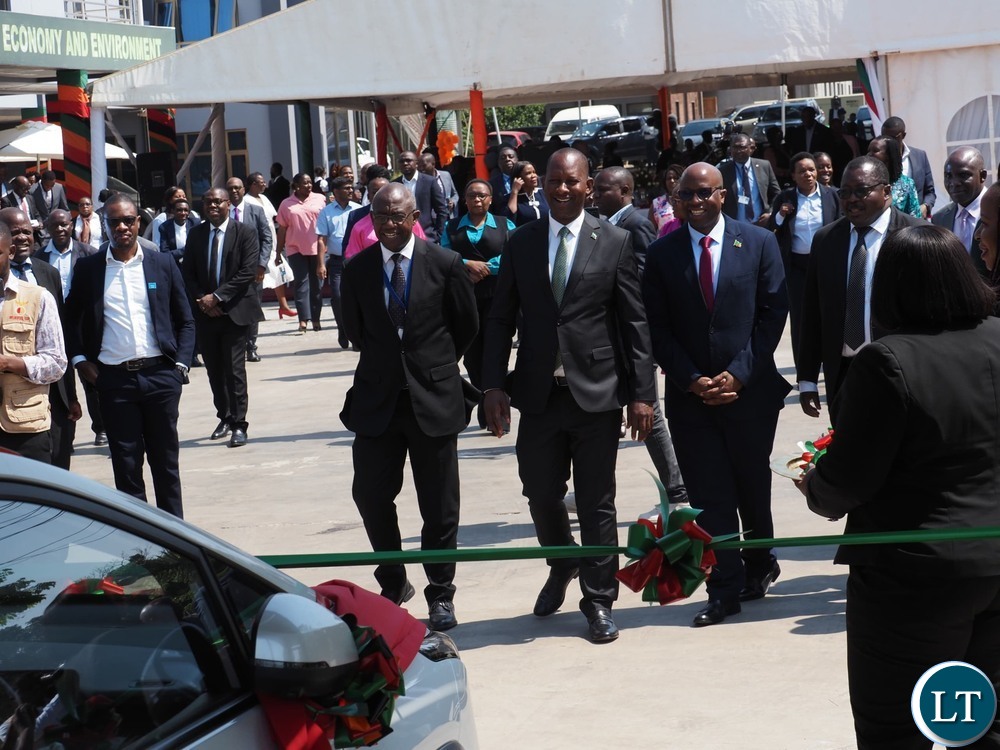
The Ministry of Green Economy and Environment has unveiled its first Electric Vehicle, marking a major step in Zambia’s transition, towards a sustainable and low emission economy.

Speaking during the Inaugural Chief Executives Forum for the Electric Vehicle Ambassador Zambia Initiative, Minister of Green Economy and Environment Mike Mposha, said the event marks not only the unveiling of an electric vehicle but also a new investment narrative for Zambia.

He says under the visionary leadership of President Hakainde Hichilema, the government is repositioning the country as a regional climate investment hub, driven by clean technology, renewable energy and sustainable finance.

Mr Mposha explained that Zambia has adopted a whole-of-government approach to green mobility anchored in the Eighth National Development Plan, Nationally Determined Contribution (NDC) and the Green Growth Strategy, supported by clear fiscal industrial incentives.

He added that the government has removed all import duties except VAT on imported electric vehicles, while VAT has been waived for locally produced units.

He further revealed that the Energy Regulation Board (ERB) has developed licensing standards for electric vehicle charging stations, in order to ensure safety and regulatory clarity.

Mr Mposha has also emphasised that banking, insurance and pension industries need to develop green asset financing, EV leasing models and climate credit lines, noting that the “future of finance is green.

He also reaffirmed Zambia’s readiness to partner with development partners and international financiers to mobilize resources from facilities such as the Green Climate Fund and Climate Investment Funds to de-risk early stage electric vehicle investments and expand charging infrastructure.

“E-mobility is a triple dividend that drives economic growth, reduces carbon emissions and promotes social inclusion through cleaner cities and green jobs,” he said.

Furthermore, the Minister noted that the government sees electric mobility not as a cost but as a modernization strategy aligned with President Hichilema’s vision of transforming Zambia into a green industrial economy by 2030.

“As we unveil this electric vehicle today, we are not only unveiling a car we are unveiling a vision,” he said.

He explained that a vision of Zambia as Africa’s green investment frontier, where policy meets innovation and public-private partnerships deliver prosperity and sustainability.”

And Secretary to the Cabinet Patrick Kangwa says the launch demonstrates the government’s resolve to embed sustainability and innovation at the heart of national development.

He described electric mobility as more than a technological advancement, noting that it symbolizes Zambia’s broader economic transformation anchored in industrialisation and green growth.

“Our challenge is no longer policy design, but policy delivery,” he said.

Mr Kangwa also called on the private sector to invest in electric vehicle charging infrastructure, assembly plants and battery recycling.

He also urged stakeholders to collaborate through technology transfer and blended finance, in order to drive scalable green investments.

And Permanent Secretary in the Ministry of Green Economy and Environment Douty Chibamba said the procurement of the electric vehicles is not just a compliance measure but a practical demonstration of government’s commitment to implementing the Green Economy Agenda through evidence-based action.

Dr Chibamba has also disclosed that a pilot study conducted by the ministry shows that an electric vehicle can travel from Lusaka to Kitwe (357 km) on a single full charge costing only K200, compared to K1, 500 to K2,000 in fuel for a petrol-powered vehicle of similar size.

He has explained that electric vehicles run entirely on renewable energy, adding that the ministry has also installed a solar-powered charging station, which demonstrates Zambia’s ability to harness solar and hydro resources while easing pressure on the nation.

He has also highlighted that Zambia’s transition to e-mobility is guided by standards, infrastructure and policy coherence, noting that the Energy Regulation Board (ERB) has developed technical and safety standards for charging stations, while the Electric Mobility Policy and Strategic Framework is nearing completion under the Ministry of Transport and Logistics.

He emphasised that the initiative is aligned with Zambia’s Eighth National Development Plan (8NDP), the Green Growth Strategy and the country’s Nationally Determined Contribution (NDC), which targets a 47 percent reduction in greenhouse gas emissions by 2030.

He has since urged collaboration among regulators, businesses and development partners to make Zambia’s e-mobility story a model for Africa, one that is technically sound, economically competitive and environmentally transformative.

For a long time now, Zambia has not had a budget where 23 percent of it is centered on economic development-CSPR

1

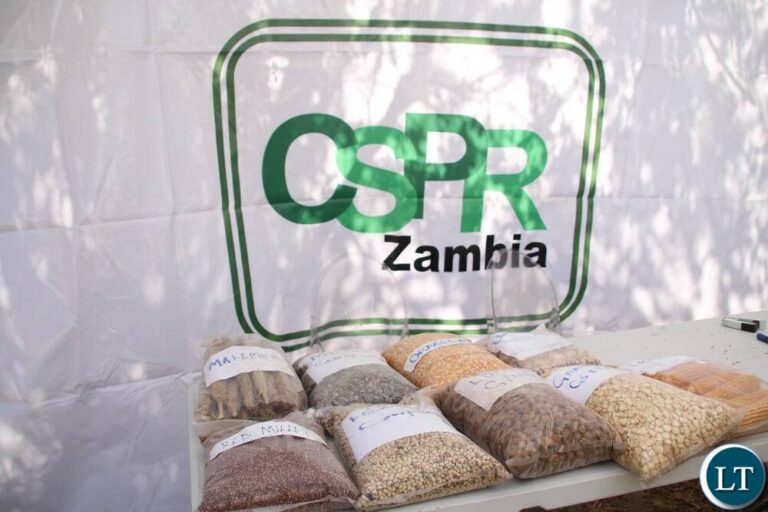
The Civil Society for Poverty Reduction (CSPR) has commended the government for heightening measures targeted at ensuring sustained economic growth and development in the country.

CSPR Board Chairperson, Partner Siabutuba, has described efforts by the government such as the increased national budgetary allocation for 2026 as a step in the right direction towards growing the economy.

Mr Siabutuba has noted that the 2026 national budget is standing on strong policy framework and macro-economic fundamentals such as policies targeted at reducing inflation and the growth of GDP, which if achieved, will have a direct impact at improving the livelihoods of citizens.

“For a long time now, we have not had a budget where 23 percent of it is centered on economic development. This shows that the government is deliberate in ensuring sustainable economic development is achieved,” he explained.

Mr Siabutuba has also commended the government for its decision to finance 80 percent of the 2026 national budget through domestic financing initiatives.

He noted that this is an important step towards weaning the country from depending on external funding such as loans and donor funding.

He added that this will further reduce the economy’s susceptibility to internal and external shocks.

“The decision by the government to fund a significant part of the 2026 budget is communicating a message that the country is seeking to break new grounds towards sustaining our own developmental initiatives. This is important especially that for a long time now, the development of this country has been anchored on external funding which threatens the sustainability of development initiatives,” he explained.

Mr Siabutuba has since urged citizens across the country to take an interest in funding the national budget by ensuring they meet their tax obligations.

“The call by the minister of finance for everyone to participate in funding the national budget is crucial and should be adhered to, especially that the country has various viable income streams where funds can be collected and ploughed back into the economy,” Mr Siabutuba explained.

He observed that returns will be huge if all landlords in the country pay their landlord tax.

“This money can be used in funding parts of the budget, ultimately impacting the development of the country,” he added.

Laura Miti on Archbishop Banda’s ZRA Vehicle Gift

Laura Miti on Archbishop Banda’s ZRA Vehicle Gift

Lusaka, Zambia — Human rights activist Laura Miti has publicly questioned why Lusaka Archbishop Alick Banda was gifted a Zambia Revenue Authority (ZRA) vehicle, reigniting scrutiny around the irregular disposal of public assets that led to former ZRA Commissioner General Kingsley Chanda being jailed for six years. This situation raises critical questions for zambia.

Miti published her remarks on social media , using pointed questions to highlight what she described as the moral and governance implications of the transaction. In her post, she wrote:

“I wonder what Archbishop Alick Banda thought was a good reason for him to be gifted a ZRA car.
I mean, what was he told was the reason he had been selected to receive an asset from a public institution, he had no relationship with?
Interesting to know too, would be how the Archbishop feels about two people going to jail for unprocedurally giving him and others cars bought by taxpayers.”

Her comments came a day after the Lusaka Magistrates Court convicted and sentenced Chanda to six years imprisonment with hard labour, and former ZRA Director of Administration Callistus Kaoma to nine years, over the irregular “gifting” of 22 ZRA-owned vehicles to Patriotic Front (PF) figures and sympathisers.

During trial, testimony revealed that Archbishop Banda was among the recipients of the vehicles. Witness Sitali Mulozi, a former administration manager at ZRA and described by Magistrate Sylvia Muyinya as an accomplice witness, told the court that vehicles initially listed for internal staff tenders were deliberately withdrawn and handed to the then ruling PF for election campaigns using employees’ personal details.

Other witnesses detailed breaches of procedure. Security supervisor Emmanuel Moyo testified that on 18 September 2018, he was instructed to release six vehicles—including a Toyota Hilux, four Mitsubishi Pajeros, and a Nissan Navara—under a single name, in clear violation of auction rules. Moyo said he raised concerns but complied under Kaoma’s directives.

Former employee Emily Banda told the court she received a vehicle valued at K35,000 as a “gift” but was told to pay only K12,000 despite not qualifying for the auction. The court found that several vehicles were disposed of without board approval, not advertised publicly, and allocated irregularly.

Chanda, who appeared in court in a blue suit, reportedly listened with faint smiles as judgment began but appeared visibly shaken as the six-year sentence was read. He pleaded for leniency, citing family responsibilities and his long public service career, insisting he believed he was acting in the institution’s interest.

He was convicted on three of the 22 counts, while Kaoma was found guilty on 16 counts. Magistrate Muyinya said the disposal process was “unprocedural, unlawful, and benefited individuals outside the prescribed tender system.”

Miti’s intervention places renewed focus on Archbishop Banda, raising questions about accountability and ethical leadership. Her use of direct questions rather than statements has stirred discussion among commentators and the public on platforms like X and Facebook.

As of Wednesday, Archbishop Banda had not issued a public response to Miti’s remarks or to the renewed spotlight on the ZRA vehicle gift. The Catholic Church has also not released an official statement on the matter.

The ZRA vehicle case has been one of the most prominent corruption-related prosecutions linked to the former ruling party, touching senior public figures and politically connected individuals.

Five human trafficking victims intercepted in Kazungula

0

Five children believed to be victims of human trafficking have been intercepted in Kazungula District, a border town that has increasingly become a hotspot for transnational trafficking activities.

 Kazungula District Social Welfare Officer Bryson Mweemba said the five victims include two Ugandan nationals, two Congolese, and one Malawian national, who were being transported through Kazungula to unknown destinations.

Mr Mweemba explained that the children who were earlier placed under the care of relevant welfare authorities have since been repatriated back to their countries of origin.

He noted that the interception of the children by law enforcement officers in the area is believed to have occurred between July and September this year.

Mr Mweemba stated that following the incident, a stakeholders’ meeting convened in Kazungula to deliberate on ways to curb the growing trend of human trafficking in the area.

He said the town’s geographical position as a major entry and exit point, makes it vulnerable to trafficking syndicates.

Mr Mweemba noted that most cases recorded involve children who are trafficked for labour, sexual exploitation, or transit to other countries in the region.

“Kazungula has continued to experience worrying cases of human trafficking, especially involving minors. We need stronger coordination among law enforcement agencies and community awareness to protect vulnerable children,” Mr Mweemba said.

The meeting has brought together representatives from key institutions including the Judiciary, National Prosecution Authority (NPA), Zambia Police Service, Department of Immigration, Drug Enforcement Commission (DEC), Social Welfare Department, and the media.
Stakeholders at the meeting have since called for enhanced border surveillance, improved information sharing among agencies, and sensitisation campaigns targeting local communities to help identify and report suspected trafficking activities.

The meeting will also seek to strengthen the district’s response mechanisms through closer collaboration between security agencies, social welfare officers, and the judiciary to ensure that perpetrators are swiftly brought to justice.

Human trafficking remains a major challenge in Southern Province, with Kazungula and Livingstone identified as key transit points owing  to their proximity to neighboring countries.

African countries urged to fast track digital transformation- President Hichilema

8

President Hakainde Hichilema has urged African leaders to fast‑track digital transformation as a key driver of economic growth, calling it essential for the continent to no longer linger “at the back of the queue.”

President Hichilema notes that digital platforms and identity systems must form the bedrock of inclusive service delivery.

President Hichilema said this when he officially opened the Third Annual Africa Digital Summit at Ciela Resort in Lusaka.

“Identity and inclusive services are our foundation for us to achieve our express position in the community, not at the back of the queue,” he said.

President Hichilema emphasised that political leadership must be justified by visible economic outcomes.

“Our primary duty is to deliver and that leaders remain in office by virtue of creating opportunities and improving the lives of citizens’’, he stated.

President Hichilema deplored the continent’s dependence on external digital platforms for trade even between neighboring countries, noting that it is inefficient and costly and called for platforms that enable African‑to‑African commerce directly.

The Head of State urged investment in digital infrastructure that would, for instance, allow real‑time tracking of trucks en route to and across borders.

President Hichilema said by digitising processes at trucking points and border posts, he said, time and cost could be significantly reduced.

On travel and identity documents, the President proposed systems that make it easier for African citizens to cross borders with minimal friction.

President Hichilema noted that despite belonging to the same continent and sharing histories, many systems still treat Africans as strangers to each other.

To support these ambitions, the Head of State called on governments, private sector actors, and investors to scale up collaboration and infrastructure development.

President Hichilema described digitisation not as optional but as essential for investment, trade, and competitiveness.

He also acknowledged one of the continent’s most pressing obstacles: unreliable electricity supply.

“Without electricity, digital services cannot function,” President Hichilema said, highlighting the urgent need to expand power infrastructure to support digital ecosystems.

Meanwhile, Minister of Home Affairs and Internal Security Jack Mwiimbu reaffirmed Zambia’s commitment to digital innovation, transparency, and secure governance.

He emphasised the importance of strengthening digital systems, including citizen data protection, to enhance the government’s ability to serve its people effectively.

“As we collectively chart the future, our priorities must remain transformation, efficiency, transparency, and security,” Mr Mwiimbu said.

Highlighting the role of international collaboration, Mr Mwiimbu acknowledged the contributions of foreign partners and investors whose technological expertise supports Zambia’s and Africa’s broader digital agenda.

Minister of Finance and National Planning, Situmbeko Musokotwane hailed digital technology as a transformative force in delivering social protection and driving inclusive economic growth especially in rural areas.

He said Zambia was witnessing digital revolution that is changing lives particularly in the countryside where access to services was once difficult or impossible

Minister of Technology and Science Felix Mutati lauded the Smart Village project as a transformative initiative aimed at bridging the digital divide and bringing prosperity to Zambia’s most remote communities.

Mr Mutati emphasised that technology must serve all citizens, including those in villages, by providing access to quality education, healthcare, and economic opportunity.

He said the Smart Village project demonstrates that digital transformation is not just about infrastructure, but about people.

“This year, we are expanding a lot more, regardless of where you are, we are going to ensure you have the same opportunity,” Mr Mutati said.

Executive Governor of Zamfara state in Nigeria Dauda Lawal commended Zambia for successfully hosting the summit consecutively for three years.

Zambia unveils legislative and policy agenda

0

Cabinet has approved Zambia’s accession to the amended International Sugar Agreement (ISA 1992) to foster efficient global sugar trade. The country has been a signatory since December 1992 and a ratified member since June 21, 2000.

This is according to a press statement released to the media by Chief Government Spokesperson, Cornelius Mweetwa.

Mr Mweetwa stated that the 19th Cabinet Meeting was held at State House on Monday, October 6, 2025, chaired by President Hakainde Hichilema where they focused on policy and legislative matters aimed at enhancing national development.

He added that cabinet approved the ratification of the Southern African Development Community (SADC) Protocol on Employment and Labour to promote inclusive employment, labour standards, and sustainable enterprises.

Mr Mweetwa further said that cabinet approved the introduction of Local Content Regulations in the mining sector to increase participation of Zambians in the mining value chain, accelerate job creation, and poverty reduction.

“Cabinet has also approved the issuance of the Animal Identification and Traceability (Cattle) Regulations, 2025, to establish a comprehensive framework for livestock management and trade,” he said.

Mr Mweetwa added that cabinet approved amendments to the Civil Aviation Authority Act and Civil Aviation Act to align with international best practices and standards and approved statutory instruments to operationalise the Social Workers Association of Zambia (SWAZ) Act of 2022.

“Zambia will host the Poultry Futures Forum 2025 on November 25-26, 2025, to accelerate inclusive and sustainable growth in the poultry sector,” Mr Mweetwa added

Mr Mweetwa stated that Zambia will host the 18th Africa Leather Value Chain Forum from November 24-28, 2025, to reaffirm its strong partnership with the Africa Leather and Leather Products Institute and will also host the 26th WaterNet/Water Research Fund for Southern Africa/Global Water Partnership Southern Africa Symposium from October 29-31, 2025.

“Cabinet reflected on the importance of the Framework Agreement on Economic Partnership for Shared Development between Zambia and China, signed on June 12, 2025, which aims to deepen commercial relations and strengthen economic cooperation,” he added.

Haimbe arrives for COMESA Summit in Kenya

1

Minister of Foreign Affairs and International Cooperation, Mulambo Haimbe, says the 24th Heads of State and Government Common Market for Southern and Eastern Africa (COMESA) slated for Thursday, October 9, 2025, is an important undertaking as it will highlight aspects of sustainable development in the region, among other things.

Speaking in an interview with ZANIS in Nairobi, Mr Haimbe, who will represent Present Hakainde Hichilema at the Summit, notes that with the ever changing environment, African countries must concentrate more on where to add value in terms of trade and investment.

He stressed that African countries must ensure that interactions during such events has a direct benefit for the people in the COMESA region.

The Minister noted that the theme for the summit dubbed ‘Leveraging Digitalisation to Deepen Regional Value Chains for Sustainable and Inclusive Growth’ speaks to key issues such as digitisation and its impact on the development agenda and sustainable growth building value chains amongst African countries.

“So this is why we are here, for us as Zambia to participate in this very important meeting and to bring out those aspects,” he stated.

Mr Haimbe further noted that through such interactions, Africa is able to bring out value and the vast potential within COMESA for countries to become self-sustaining.

“It is so diverse, as COMESA, we are talking of countries that are more industrialised, we can talk about Egypt, we can bring value through our interactions with them.

“And on the other hand, we have ourselves to offer, we have other countries of course our host, Kenya, Burundi, Somalia, Sudan, you name them. There is vast potential within COMESA for us to now start being self-sustaining as countries and for Zambia that is a keen interest because we also want to look at how we can get to leverage on what we all bring to the table to ensure that we address the key concerns that we as Zambia has expressed at many platforms including the AU and here as well,” explained the Minister.

And, Mr Haimbe hinted that Zambia will express matters relating to global financial architecture as well as the country’s capital needs to be able to raise financing for the various projects that need to be undertaken.

“We all know that infrastructural projects are amongst the key drivers for development.

So this is all encompassing but also of key importance.

“We need to ask questions like what does digitalisation bring to the table? What does it offer for us as countries? Where do we leverage this modern phenomenon to ensure that our interactions are productive for the good of achieving sustainable development goals. I’m sure there will be eye opening positions here,” he said.

Mr Haimbe, who arrived in Nairobi, Kenya today, is tomorrow expected to attend the COMESA 20th Meeting for Ministers of Foreign Affairs at the Jomo Kenyatta Conference Centre.

Fingerprints match suspect in IBA Director murder case

0

The Lusaka High Court has today heard that fingerprints lifted from the vehicle of murdered Independent Broadcasting Authority (IBA) Director General Guntila Muleya matched those of one of the suspects, Samuel Dokowe.

This is according to scenes from Crime Officer Victor Shamapango, who testified before Judge Vincent Siloka that the vehicle in question, which was abandoned, is a brown Toyota Prado, registration number BAL 5763.

Mr Shamapango narrated that on July 26th, 2024, he was assigned by his supervisor to go to Chawama compound where there was an abandoned vehicle at G and SOS garage.

Mr Shamapango testified that he took photos of the vehicle and collected fingerprints from the door handles, windows and steering wheel using specialised equipment and powder, then saved the images on a memory card and sent the samples to a lab for analysis.

He stated that forensic analysis confirmed a match between the lifted fingerprints and those of accused Samuel Dokowe.

Mr Shamapango notified the Investigating Officer, who subsequently arrested four suspects, including Dokowe, in connection with the case.

This was during a continued trial today.

This is a case where four men are accused of killing Mr Muleya on July 23, 2024, a day before he was reported missing.

The suspects are police officers M’thusani Dokowe, Alex Zulu, Samuel Dokowe and IBA accountant Francis Chipyoka.

Mr Muleya was found dead in Njolwe area, Chongwe, on July 24, 2024 by a passer-by.

Nitrogen Chemicals gets $US6.8 million Aid

2

Minister of Agriculture, Reuben Mtolo, says the Nitrogen Chemicals of Zambia (NCZ) is set to increase fertilizer production from 70,000 to 432,000 metric tonnes annually.

This follows a 6.8 million United States dollars investment towards the fertilizer blending and granulating plant from the African Development Bank (AFDB) under the Zambia Emergency Food Production Facility -ZAEFPF.

Mr Mtolo says the new blending and granulating plant will strengthen food security, promote climate-resilient agriculture and stabilise fertilizer supply across the country.

He added that NCZ is positioning itself to tap into regional export markets between 2025 and 2030, boosting Zambia’s competitiveness in the fertiliser industry.

Mr Mtolo was speaking when he visited the newly installed blending and granulating plant at Nitrogen Chemicals of Zambia in the company of visiting AFDB Vice President, Marie-Laure Akin-Olugbade in Kafue district.

He said with a total investment of US$6.8 million, the plant is testament to the government’s resolve to recapitalise NCZ and modernise its operations.

“Agriculture remains the backbone of Zambia’s economy, employing the majority of our people and feeding our families,” he said.

The Minister noted that the new NCZ Plant is a new chapter in Zambia’s agricultural and industrial journey.

He added that the facility will strengthen Zambia’s ability to feed the nation, empower farmers and position Zambia as a leader in fertilizer production in the region.

Mr Mtolo said the establishment of NCZ’s blending plant is a historic achievement which enables the company to produce customised fertilizer formulations based on specific soil and crop requirement of Zambian farmers.

And AfDB Vice President, Marie-Laure Akin-Olugbade, said the facility will help mitigate global supply disruptions caused by the Russia–Ukraine conflict, supporting smallholder farmers with inputs and financing.

She said through the contribution of ZEFPF, NCZ has contributed to Zambia attaining self-sufficiency in local fertilizer production, and reduction on import reliance.

She explained that with the increased access to fertilizer, credit to farmers and matching funds for seed and fertilizer, Zambia produced over 3.7million metric tonnes of food in 2024/25, with a surplus above its national consumption level of 2.5 million.

Meanwhile, NCZ CEO Chanda Mongo noted that the plant will play a key role in achieving the government’s ambitious targets of producing 10 million tonnes of maize, 1 million tonnes of soybeans, and one million tonnes of wheat.

He said with 440,000 tonnes of production capacity, NCZ is ready to stand shoulder to shoulder with the government and farmers in making this vision a reality.