Sunday, June 14, 2026
18 C
Lusaka
Home Blog Page 42

BRE engages consultant for northern agriculture survey

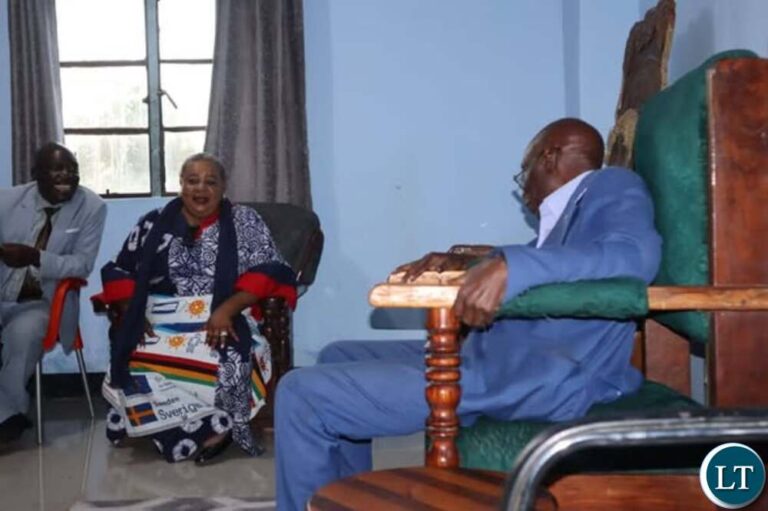
Paramount Chief Chitimukulu has disclosed that the Bemba Royal Establishment (BRE) has engaged a consultant to carry out a survey aimed at boosting agricultural productivity in Northern Province.

The Mwine Lubemba observed that the province is blessed with a favorable rainfall pattern and that should serve as Zambia’s breadbasket hence the need for the survey to find ways of boosting productivity.

The Mwine Lubemba made the remarks when Chief Mumena of Kaonde people of Kalumbila District in north Western province visited him at his palace in Mungwi.

He explained that the survey will provide expert technical advice on soil quality and crop suitability, helping farmers maximize yields and strengthen food security.

“We want to know what kind of crops are suitable for our province because Northern Province should be the country’s food basket due to the favorable rain pattern. We need technical advice from experts, for example on our soils,” the Mwine Lubemba Chitimukulu said.

The Mwine Lubemba has noted that agriculture remains the backbone of rural livelihoods and national food security and the survey will be key in boosting food security.

He said the Bemba Royal Establishment initiative was designed to position Northern Province as a leading contributor to Zambia’s grain and crop supply and strengthening the economy.

And Chief Mumena urged traditional leaders to safeguard customary land, warning that indiscriminate allocation of land in some parts of the country was threatening local communities’ access to the vital land resource.

The traditional leader said it was regrettable that land  was being given out without proper regulation, often to foreign interests.

“The colonial mentality that started has not stopped. We have foreigners acquiring land at an alarming rate in the name of development, of course looking for precious minerals,” Chief Mumena added.

He stressed that while development was welcome, it should not come at the expense of local communities who depend on land for farming and livelihoods.

And Pentecostal Assemblies of God Presiding Bishop, Joshua Banda, praised Mwine Lubemba Chitimukulu for spearheading efforts to engage a consultant in boosting agricultural productivity in Northern Province.

Professor Banda said the region was blessed with fertile soils, good rainfall and vast tracts of land that remain underutilized.

“You have so much land, good rainfall that we cannot compare to any other region. Unfortunately, the locals do not take this endowment seriously,” he observed.

The Bishop explained that the church has responded to the protecting land by establishing an organization called Impanga Emayo.

“The initiative is designed to empower small-scale farmers with knowledge and support to help them increase yields and take advantage of the province’s natural resources in this case land, to use for their benefit,” he added.

Professor Banda stressed that initiatives like Impanga Emayo complement the Bemba Royal Establishment’s vision of transforming Northern Province into Zambia’s breadbasket.

He further said that by equipping farmers with practical skills and technical guidance, the church hopes to inspire communities to fully exploit their agricultural potential.

Mwiimbu defends budget changes after new constituencies

1

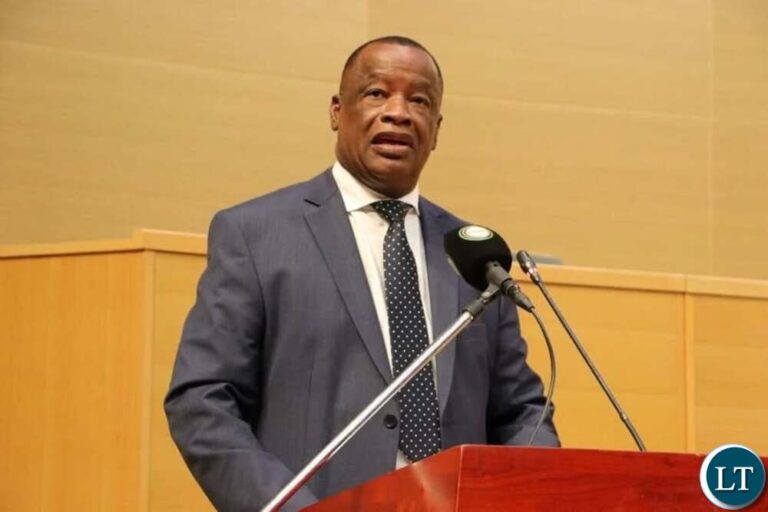
 Acting Leader of Government Business in the National Assembly Jack Mwiimbu says government was compelled to adjust the national budget following the creation of 70 new constituencies after the recent delimitation exercise.

Mr Mwiimbu told Parliament today that Zambia initially had 156 constituencies, but the enactment of Constitutional Amendment Number 13 necessitated the expansion of constituency boundaries by the Electoral Commission of Zambia (ECZ).

“As a result, the budget that was made for the Electoral Commission was not adequate to cover the new 70 constituencies. Hence, our request to have this supplementary budget for the Commission,” Mr. Mwiimbu said.

Parliament subsequently approved K1.139 billion in supplementary funding for the ECZ as part of the Supplementary Estimates of Expenditure Number One of 2026.

The House also approved K14.8 million for the Office of the Auditor General.

Moving the motion, Mr. Mwiimbu, who is Minister of Home Affairs and Internal Security and Monze Central Member of Parliament (MP), said the funds would support critical operations of the Auditor General’s office despite the country operating within a constrained financial envelope.

During debate, Shiwangandu MP Stephen Kampyongo questioned whether the additional allocation would be sufficient for the Auditor General’s expanded scope of work.

Mr Kampyongo observed that even during the consideration of the 2026 national estimates, the institution (Office of Auditor General)’s budget had already appeared inadequate.

“Looking at the scope of works that’ve increased, you now have serious audits that they have to undertake annually. Are you now sure that this minor increment in the approved budget will be able to meet their operational obligations?” he asked.

In response, the Minister acknowledged the limitations in the national resource envelope are constrained but said the government had allocated the available funds strategically to ensure key institutions continued operating.

“All of us, as MPs, are aware that the financial envelope is limited, and we share the little we’ve to ensure the operations of each ministry are not affected,” he said.

The House later approved the allocation for the Auditor General’s office after members voted in favour of the motion.

Parliament also proceeded to consider the Cabinet Office, where Mr Mwiimbu moved a motion seeking approval of K616.4 million for the Office of the President as part of the Supplementary Estimates of Expenditure Number One of 2026.

The supplementary allocations come a day after Parliament approved a K26.3 billion supplementary budget for the 2026 fiscal year.

SMEs urged to formalise their businesses

Government has urged Small and Medium Enterprises (SMEs) in Central Province to formalise their businesses if they are to benefit from various government empowerment programmes.

Central Province Small and Medium Enterprise Development Officer, Lazarus Nyirenda, said in an interview with ZANIS that the government has rolled out various empowerment products for SMEs.

Mr Nyirenda said the empowerment loans and grants are there to boost local businesses across the region to spur national economic development.

“The empowerment products being offered by the government can only be accessed by registered companies. It is important for all business owners in Central Province to formalise their businesses so that they can also benefit from empowerment programmes,” he said.

Mr Nyirenda said the Citizens Economic Empowerment Commission (CEEC) has continued empowering local businesses stressing the need for business owners in the province to take advantage of such empowerment programmes to grow their businesses.

He said the Ministry will always be on hand to provide technical support to business owners on the registration formalities and information on the available empowerment programmes.

Mr Nyirenda also advised entrepreneurs to be conversant with the Constituency Development Fund (CDF) guidelines on the empowerment component of the expanded fund.

He said the CDF empowerment loans and grants have enormous potential to transform small and medium businesses if well-harnessed.

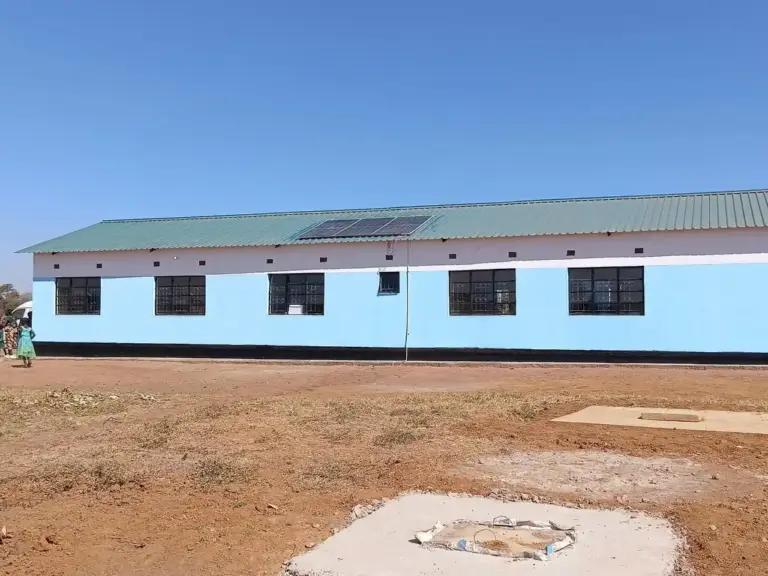
Government Commissions 35 CDF-Funded Projects in Sinda District

Government has commissioned 35 projects in Sinda District under the Constituency Development Fund (CDF), aimed at improving livelihoods and accelerating development in rural communities.

The projects, which include community grants, skills development programmes, boarding school bursaries for 1,715 beneficiaries, and 32 infrastructure developments in Sinda and Kapoche constituencies, are collectively valued at more than K32.4 million.

Speaking during the handover ceremony, Eastern Province Minister Peter Phiri, in a speech read  on his behalf by Eastern Province Deputy Permanent Secretary Lewis Mwape, said Government remains committed to transforming rural communities and improving the welfare of citizens through inclusive development initiatives.

Mr Phiri said the New Dawn Administration is determined to take development closer to the people by implementing projects that directly impact communities, including villages, schools and health facilities.

He disclosed that in Sinda Constituency alone, Government has implemented major projects under the 2025 CDF allocation, including construction of staff houses, health posts, water reticulation systems and a secondary school dormitory valued at over K10.3 million.

Mr Phiri said in Kapoche Constituency, projects implemented include the construction of Chibuyu Bridge, drilling of 15 boreholes across three wards and construction of staff houses, among others, at a total cost of over K3 million.

He emphasised that Government wants development to reach every part of the country, including remote villages and wards, through the Bottom-Up Economic Transformation Agenda.

He said the approach has empowered communities to identify and prioritise projects that respond to their actual needs.

The Provincial Minister urged local authorities in the province to uphold accountability and transparency to ensure that projects delivered to communities meet high quality standards.

Meanwhile, Sinda Town Council Secretary Mary Chongo said the local authority was proud to implement projects that were community driven and responsive to local needs.

Ms Chongo said the projects address long-standing challenges faced by residents, including access to nearby maternity services and clean water sources.

She encouraged beneficiaries to safeguard the infrastructure and report acts of vandalism, stressing that development was a continuous process.

Ms Chongo further said the council had also released empowerment grants and bursaries under the 2026 CDF allocation to support youths, women, cooperatives and vulnerable learners.

Traditional leaders in the district have since commended government for bringing development to remote communities through improved infrastructure and access to safe water.

Speaking on behalf of the chiefs, Nduna Aggripa Banda said Sinda District was undergoing significant transformation due to the pace of development being implemented across the area.

The Traditional Leadership also praised the local authority for promoting community-driven projects that are visibly improving people’s lives.

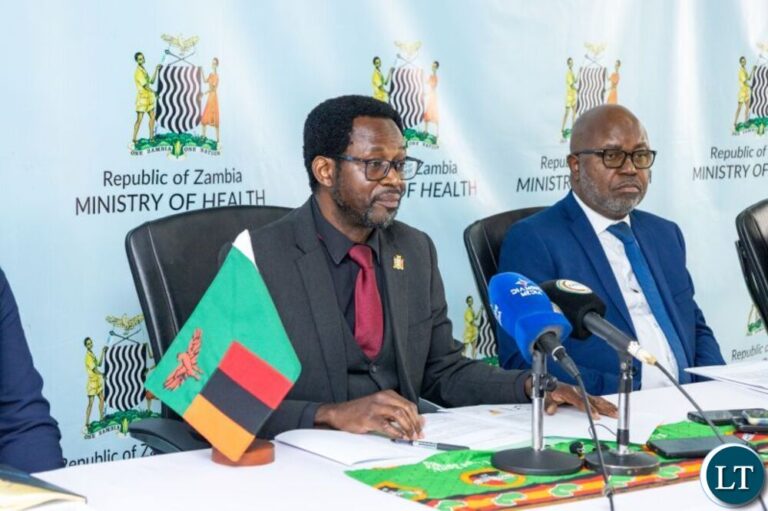
Govt. launches 2026 National Health Policy

Government has launched the 2026 National Health Policy and its Implementation Plan aimed at strengthening healthcare delivery and ensuring equitable, affordable and people-centred health services for all Zambians.

Speaking during the launch of the policy in Lusaka today, Minister of Health, Alex Katakwe said the new framework demonstrates government’s commitment to achieving Universal Health Coverage and building a healthy and productive population in line with Zambia’s Vision 2030.

Dr Katakwe said the policy builds on gains recorded under the 2013 National Health Policy, which saw improvements in maternal and child health indicators, expansion of health infrastructure and increased recruitment of healthcare workers across the country.

“This policy is a reflection of government’s resolve to ensure that every Zambian has access to quality healthcare services without suffering financial hardship,” he said.

He noted that despite progress made in recent years, Zambia continues to face significant health challenges, including communicable diseases such as HIV, tuberculosis and malaria, as well as the growing burden of non-communicable diseases such as cancer, diabetes and cardiovascular conditions.

Dr Katakwe explained that the policy is anchored on key health system pillars such as health service delivery, human resources for health, financing, medicines and medical supplies, infrastructure development, leadership and governance.

He added that government will prioritise strengthening primary healthcare services, improving disease surveillance systems, expanding digital health innovation and increasing the recruitment and retention of skilled health personnel, especially in underserved communities.

“A resilient health system begins with strong primary healthcare and a motivated workforce. Government remains committed to investing in both,” he said.

Meanwhile, Ministry of Health Permanent Secretary for Administration,  Joma Sumuyi said the policy provides a clear roadmap for addressing existing challenges in the health sector through sustainable financing and improved service delivery.

Ms Sumuyi said the policy also responds to emerging issues such as rapid urbanisation, changing disease patterns and the increasing demand for integrated healthcare services.

“This policy is timely as it responds to the country’s evolving healthcare needs and places emphasis on resilience, equity and sustainability,” she said.

She further called on cooperating partners, civil society organisations, the private sector and communities to support the successful implementation of the policy.

And Churches Health Association of Zambia (CHAZ) Executive Director, Karen Sichinga emphasised the need for balanced deployment of health workers, particularly in rural areas where access to healthcare remains limited.

Ms Sichinga also stressed the importance of local production of medicines and vaccines to reduce dependence on donor support.

“The country must begin investing in local pharmaceutical manufacturing to guarantee consistent supply of medicines and strengthen health security,” she said.

At the same event, speaking on behalf of the Health Cooperating Partners Group, United Nations Population Fund (UNFPA) Deputy Representative Anna Holmstorm commended government for demonstrating commitment towards strengthening the country’s health system.

Ms Holmstorm reaffirmed continued support from cooperating partners towards the implementation of the policy.

“This policy presents a strong foundation for a more resilient and inclusive health system, and we remain committed to supporting Zambia’s health sector reforms,” she said.

President Hichilema arrives in Nairobi for France-Africa Summit

President Hakainde Hichilema has arrived in Nairobi, Kenya, for the two-day France–Africa Summit co-hosted by French President Emmanuel Macron and Kenyan President William Ruto.

President Hichilema’s plane touched down at Jomo Kenyatta International Airport at 15:30 hours local time.

The Head of State was received by Kenya’s Minister of Public Service, Human Capital Development and Special Programmes, Geoffrey Ruku alongside Minister of Foreign Affairs and International Cooperation Mulambo Haimbe, along with other government officials.

Shortly after his arrival, the President signed the visitors’ register before proceeding to the hotel.

Later this evening, President Hichilema will attend a gala dinner with other Heads of State and government, hosted by President William Ruto.

More than 30 African Heads of State and government, together with business leaders, are participating in the summit dubbed Forward Africa, with the main gathering scheduled for tomorrow at the Kenyatta International Conference Centre.

The summit is expected to provide a platform for African countries to strengthen diplomatic and economic ties with France while advancing investment and sustainable development partnerships.

Discussions will focus on seven thematic areas, including green industrialisation and energy transition, economic partnerships and investment, as well as reforming the global financial architecture.

Youth employability and entrepreneurship, climate sustainability, peace, and security will also form part of the agenda.

Musokotwane defends Zambia’s borrowing and debt management

9

Minister of Finance and National Planning Situmbeko Musokotwane has defended the government’s stance on borrowing, stating that Zambia has managed to bring its debt situation under control through prudent fiscal management and strategic investments.

Dr Musokotwane said international credit rating agencies were increasingly improving Zambia’s credit scores, an indication that confidence in the country’s debt management was growing.

The minister urged lawmakers and citizens to avoid negative perceptions regarding government borrowing.

“The Credit Agencies, those who look at the debt for the country, are assigning A, A+ (plus), which is good. These Agencies, one by one, have been improving their credit scores for Zambia. It means that we’re saying that the debt situation of our country is being brought under control,” he said.

“So, colleagues, remove this negative perception, perceive things correctly and normally. What is good is good, and what is bad is bad,” he stated.

Dr Musokotwane, who is Liuwa Member of Parliament (MP), was contributing to debate in Parliament on the Report of the Planning and Budgeting Committee on the Consideration of the 2026 Annual Borrowing Plan Amendment for the Fifth Session of the Thirteenth National Assembly.

Earlier, Moomba MP Fred Chaatila, who moved the motion to adopt the Committee Report, said the 2023 Public Investment Management Guidelines required that all capital projects undergo appraisal before the government could contract a loan.

The House learned that the government intends to borrow U$D252 million from the African Development Bank to invest in the Lobito Corridor.

Minister of Transport and Logistics Frank Tayali described the Lobito Corridor project as one of the most significant infrastructure undertakings on the African continent since the construction of the TAZARA railway in the 1970s.

Mr Tayali explained that the Lobito Corridor would run from Chingola on the Copperbelt Province through Solwezi via Kanongesha area in the North-Western Province hence it has huge economic benefits to the peoples

Mr Tayali said the corridor was designed as a multi-modal economic corridor incorporating railway, road, energy, agriculture, and logistics infrastructure.

He added that the project would create employment opportunities for young people while enhancing mineral transportation and value addition among Zambia, Angola, and the Democratic Republic of Congo.

Contributing to the debate, Minister of Education Douglas Syakalima, said the UPND administration had never stated that it would completely stop borrowing from international lenders.

He accused the previous Patriotic Front government of borrowing recklessly.

He endorsed that the current administration is borrowing responsibly for productive investments.

Luena lawmaker, Mubita Anakoka submitted that the Lobito Corridor should be viewed as a long-term regional investment capable of transforming economies and unlocking economic activities across the region.

Mr Anakoka called for responsible fiscal management, saying government borrowing should be aligned with economic growth and debt servicing capacity

“If a road is being constructed as part of our contribution to the Lobito Corridor; That’s what a responsible government should actually be doing, to invest now for the benefit of the generations that will come after us,” he added.

Meanwhile, some opposition lawmakers also sought clarity on the financing structure of the Lobito Corridor project and raised concerns on whether the anticipated benefits would outweigh the cost of borrowing.

However, MPs from the executive argued that infrastructure development linked to the Lobito Corridor, particularly in North-Western Province, would stimulate agriculture, mining, and trade activities while opening up previously under-developed areas to investment and spur economic growth.

ZRA Prosecutes seven over smart invoice compliance

The Zambia Revenue Authority (ZRA) has initiated prosecution proceedings against seven taxpayers for willful failure to comply with Smart Invoice requirements.

According to the tax Authority, the prosecutions form part of an intensified enforcement programme aimed at increasing compliance and boosting the usage of the Smart Invoicing system among registered taxpayers.

In a statement issued to the media in Lusaka today by ZRA Corporate Affairs Manager, Oliver Nzala said failure to issue invoices through the mandated electronic system, or issuing non-compliant invoices outside the Smart Invoice platform, constitutes a serious violation under the Value Added Tax Act.

Mr Nzala disclosed that although more than 44,110 businesses have registered for the Smart Invoice system, registration alone was insufficient without consistent and accurate usage.

“Registration alone is no longer enough , usage must be consistent, accurate, and timely. The Authority warned that taxpayers who fail to issue Smart Invoice-compliant receipts risk facing penalties, including fines of up to K120,000 or imprisonment for up to three years,” he said.

Mr Nzala explained that every Smart Invoice issued under the system carries a QR code that can be scanned to verify the authenticity of the invoice.

He stressed that Smart Invoicing had now become an integral part of doing business in Zambia and urged businesses to fully comply with the system to avoid operational disruptions arising from non-compliance.

“I encourage the business community to take this seriously. The cost of non-compliance — both financial and reputational is simply too high,” the statement reads.

The Corporate Affairs Manager revealed that the Authority has since increased field inspections targeting eligible businesses to ensure proper implementation of the Smart Invoice system.

Mr Nzala said inspections include issuing compliance notices to businesses with irregular usage patterns or gaps in transaction reporting.

Judicial benefits bill needs wider Inclusion, Kampyongo

Shiwangandu Member of Parliament Stephen Kampyongo has called for a more inclusive approach in the proposed legislation on benefits for former Chief Justices, arguing that other senior judicial officers should also be considered under improved conditions of service.

Debating the Benefits of Former Chief Justice Bill Number 67 of 2026 in Parliament today, Mr Kampyongo said while he supported the proposed amendments aimed at creating a stand-alone law for former Chief Justices, the government should avoid isolating one office at the expense of other key judicial positions.

Mr Kampyongo noted that benefits for former Chief Justices were previously provided for under the Judges’ Conditions of Service Act, Chapter 277 of the Laws of Zambia, and cautioned against narrowly focusing on a single office without reviewing the broader judicial framework.

“Yes, we know the financial implications that come with such improvements, but if we’ve to honour people that serve at that high level of government, being the judiciary, we must just try and find resources,” he said.

The Shiwang’andu lawmaker argued that deputy Chief Justices and presidents of superior courts such as the Constitutional Court also performed significant responsibilities and should not be excluded from improved post-retirement benefits.

“Some of them hold that office up to retirement and more often than not perform the same duties as the Chief Justice in their absence. So why should we leave out such important office holders?” he asked.

The former Home Affairs minister further questioned what provisions would apply to the President of the Constitutional Court, describing it as an equally important and independent court.

Mr Kampyongo urged the sponsors of the Bill to reconsider the proposed legislation and adopt a holistic approach that caters for all senior judicial officers.

“We should have been looking at improving the judges’ conditions under the Act so that as you improve conditions at the top, you’re also considering those at the bottom,” he stated.

According to Mr Kampyongo,  the proposed law risked creating a piecemeal approach to judicial benefits, similar to delays experienced in revising benefits for the Office of the Vice President following the enactment of the 2016 Constitution.

He also raised concern over provisions relating to surviving spouses, saying failure to clearly address such issues in legislation could create future disputes.

“I don’t know why this issue of saying ‘the spouse, surviving spouse, surviving spouses’ has been such an issue, and how we fail to deal with simple straightforward issues like this,” he said

Meanwhile, the Parliamentary Committee considering the Bill recommended the removal of active politics as grounds for loss of benefits for former Chief Justices.

The Committee observed that former judicial office holders remained entitled to constitutional freedoms, including freedom of association and participation in public affairs.

However, the Committee recommended that state-provided ancillary benefits should not be used for partisan political activities.

He urged the government to consider the recommendations contained in the report to enhance the credibility, constitutionality, and fairness of the proposed legislation.

The Committee supported the enactment of the Benefits of Former Chief Justice Bill Number 67 of 2026, describing it as an important step towards strengthening the institutional dignity and independence of the judiciary.

The House has a lot of work to do of adopting some reports and passing and amending 69 pieces of legislation ahead of its adjournment.

Initially, there were 74 bills to be attended to within a short period of time but five of them were withdrawn by respective ministries.

Women’s electoral safety efforts receive government praise

Muchinga Province Permanent Secretary Tuesday Bwalya has commended Caritas Zambia for intensifying efforts to challenge harmful social norms and promote the safety of women’s participation ahead of the 2026 general elections.

Dr Bwalya said Faith-Based Organisations are key in curbing gender-based violence.

He said the move by Caritas Zambia to build capacity in faith leaders is of value as it will help them to play their role in the fight against GBV.

“What you are doing to build capacity of stakeholders such as faith-based organisations and community members is commendable work to prevent GBV and violence against women participating in politics because prevention is better than cure,” he said.

Dr Bwalya praised Caritas Zambia for taking continuous action to challenge harmful gender norms and safeguard the wellbeing of women.

He noted that such interventions were critical as the country prepared for the 2026 polls.

The Permanent Secretary further said that the Muchinga Provincial Administration wants to see an environment that is free and fair for women to participate in elections.

“We shall ensure that the police protect everyone, including women participating in elections,” he said.

 Dr Bwalya said this in Chinsali when Caritas Zambia Project Coordinator Christabel Mwango paid a courtesy call at his office.

And Ms Mwango said Caritas Zambia, through phase two of the Spotlight Initiative programme, was implementing a campaign to prevent gender-based violence and violence against women participating in elections.

Ms Mwango said the organisation was in Chinsali to build the capacity of faith leaders and community members to prevent GBV and promote safe participation of women in elections.

“Ending violence against women in elections requires collective action, and this is more reason we are bringing on board faith-based organisations and community members through capacity building,” Ms Mwango said.

Phase two of the Spotlight Initiative is currently being implemented in Isoka and Chinsali districts in Muchinga Province and in Katete and Chipangali districts in Eastern Province.

Eastern province records over 200 defilement cases

Over 200 defilement cases have been recorded in Eastern Province from January to April this year.

Eastern Province Police Commanding Officer Robertson Mweemba has expressed concern over the rising cases of defilement in the province.

He says the current situation involving defilement cases in Eastern Province has become alarming.

In an interview with the media, Mr Mweemba disclosed that the province continues to record the highest number of defilement cases in the country, with more than 200 cases involving children below the age of 16 recorded between January and April this year.

During community sensitisation meetings held in Mwase and Kapichila chiefdoms of Lundazi District, Mr Mweemba called upon the people from the two chiefdoms and the province as a whole to effectively join in the fight against defilement.

He condemned the abuse of children and questioned the behaviour of some men involved in such crimes.

“What has come over some men to even think of having carnal knowledge of a two-year-old child, including their own biological children?” Mr Mweemba asked.

He warned that Government has stiffened laws against defilement, adding that perpetrators are no longer entitled to police bond or bail.

Mr Mweemba further appealed to communities to protect the girl child and support their education and development.

“Let us protect the girl child and allow them to attain education and grow into productive women who can contribute to national development,” he said.

Meanwhile, Senior Chief Mwase of the Chewa people of Lundazi District described the increasing cases of child defilement as embarrassing and unacceptable.

The Traditional Leader said he felt ashamed that some of the perpetrators were from his chiefdom.

“I am deeply embarrassed because it is my subjects who are involved in these acts. I can no longer walk with my head held high because of this vice,” Senior Chief Mwase lamented.

He said that he has directed all headmen in his chiefdom to handle defilement cases seriously and ensure offenders were  reported to the police without fear or favour.

“I have instructed all headmen in my chiefdom to ensure that perpetrators of this abominable crime are reported to the police so that the law can take its course,” he said.

K8.5 million CDF power project lights up Luangeni communities

 A Constituency Development Fund (CDF)-funded electrification project valued at K8.5 million has been launched in Kaphinde and Kazimule areas of Luangeni Constituency in Eastern Province, bringing electricity to schools, health facilities, trading centres and surrounding villages.

Luangeni Constituency Member of Parliament Moses Moyo praised the effective utilisation of the Constituency Development Fund (CDF), saying the initiative is delivering meaningful development to rural communities.

Speaking during the commissioning of the electrification project, Mr Moyo described the connection of the two communities to the national electricity grid as a major milestone that was already creating economic opportunities for local residents.

The project has connected schools, rural health posts, agriculture camp houses, trading centres and several villages to electricity.

Mr Moyo said the development had long been awaited, as residents previously travelled more than 10 kilometres to access essential services such as hammer mills and sunflower oil processing machines.

He noted that community members have already started opening businesses including welding shops, barbershops, salons, bars and retail stores following the electrification of the area.

Mr Moyo, who also serves as Second Deputy Speaker of the National Assembly, commended President Hakainde Hichilema for increasing the CDF allocation, saying the move has enabled resources to reach rural communities and empowered citizens to identify their own development priorities.

Meanwhile, Langamu Chifunda said the electrification project will help Zesco Ltd expand its customer base while contributing to increased revenue generation.

Mr Chifunda said the project will improve living standards and create opportunities for economic growth and social development in Luangeni Constituency.

He further urged residents to observe electricity safety measures by avoiding illegal power connections, unsafe wiring and constructing structures close to power lines.

“As ZESCO, we are urging the people here to avoid illegal electricity connections, unsafe wiring and constructing structures close to or under power lines,” he said.

And Helminnah Phiri commended government and the area Member of Parliament for ensuring the project became a reality.

Ms Phiri said electricity will greatly improve administrative operations at Kaphinde Primary School, which has an enrolment of 732 pupils.

She explained that teachers previously relied on writing examination questions on classroom boards due to the lack of printing facilities.

“Pupils will now each have examination question papers because we will be able to make photocopies for them during examinations,” she said.

Meanwhile, local entrepreneur Kelvin Longwe said the electrification project was expected to stimulate business growth in the area.

Mr Longwe, who operates a welding business, said residents previously travelled between five and 10 kilometres to access welding services.

“This development will help us grow our businesses and improve our livelihoods,” he said.

Former catholic priest denies church vehicle theft

A former Catholic priest accused of stealing a church vehicle has appeared before the Petauke Magistrate’s Court where he has denied the charge.

Simon Tembo, 42, is alleged to have stolen a Toyota Hilux registration number CAA 7255 ZM valued at K700,000 belonging to the Chipata Diocese Catholic Church in Ukwimi area of Lusangazi District.

Tembo, who is said to be a mechanic by profession, is charged with theft of a motor vehicle contrary to Sections 281(a) and 272 of the Penal Code Chapter 87 of the Laws of Zambia.

It is alleged that the offence occurred on October 30, 2025, in Lusangazi District.

When the matter came up for plea before Magistrate Misozi Banda, Tembo pleaded not guilty and immediately applied for bail.

“I plead not guilty, Your Honour, and I would like to apply for bail,” he said.

However, State Advocate Christopher Nyambe told the court that the prosecution needed to bring a witness before responding to the bail application.

“We wish to bring one witness before the court responds to the bail application, but the witness is currently in Chipata, “he said.

And Magistrate Banda later adjourned the matter to May 28, 2026, for possible commencement of trial and for the State’s response on the bail application.

The accused has since been remanded in custody pending the next court appearance.

UPND Reaffirms Commitment to Fight Corruption

Chief Government Spokesperson Cornelius Mweetwa says the United Party for National Development (UPND) administration remains committed to fighting corruption and ensuring that no individual is above the law regardless of political affiliation.

Speaking during ZNBC’s Sunday Interview programme, Mweetwa said President Hakainde Hichilema has consistently warned cabinet ministers and public officials against engaging in corruption or misusing public resources.

Mweetwa stated that the Head of State has demonstrated political will in the anti-corruption fight by allowing investigative institutions to operate independently without interference from State House or Cabinet.

“While government cannot claim that corruption does not exist, investigative institutions are free to pursue anyone suspected of wrongdoing, including those serving in government,” Mweetwa said.

He further encouraged members of the public with information on corrupt activities to make use of whistleblower protection laws and report suspected cases to investigative agencies.

Responding to concerns that anti-corruption efforts were mainly targeting opposition leaders and former government officials, Mweetwa argued that many individuals currently appearing before the courts previously held positions of authority and were responsible for public decision-making.

Mweetwa also linked Zambia’s recent decline on the Corruption Perceptions Index to findings contained in the forensic audit at the Zambia Medicines and Medical Supplies Agency (ZAMMSA) and concerns surrounding the use of Constituency Development Fund (CDF) resources.

He noted that the country had previously recorded improvements on the index, making the latest decline a matter of concern for government.

According to Mweetwa, weaknesses in the awarding of some CDF contracts also contributed to negative perceptions reflected in the rankings.

Despite the setback, Mweetwa said government has implemented several institutional and legal reforms aimed at strengthening the anti-corruption framework.

Among the reforms, he cited the establishment of the Financial Crimes Court as a major step toward speeding up corruption-related cases and improving the delivery of justice.

Government calls for increased investment in human capital development

Government says there is need to invest in young people as they are key in the national development agenda.

Ministry of Youth, Sport and Arts Principal for Creative Arts Industries and Research Development, Nicholas Goma, says youths remain one of Zambia’s greatest national assets because of their active participation in different sectors of the economy and society.

Speaking at the launch of the human capital Insights report, organised by Zanga African Metrics in partnership with BongHive Consult in Lusaka, Mr Goma said the creative arts and sports sectors possess enormous potential to stimulate economic growth.

He said strengthening human capital especially among young people is essential for the country’s long-term development and prosperity.

Mr Goma said the launch of the data report by Zanga African Metrics will enhance the calibre of people, especially young ones.

He further praised Zanga African Metrics and BongHive Consult for introducing and launching the report, saying it is expected to spark discussion on how Zambia and Africa can better develop and utilise human capital.

Mr Goma observed that the report comes at an important time as it addresses issues such as leadership, entrepreneurship, workplace culture, business performance and human capital development among others.

“The interest of the ministry is to see this report by Zanga in collaboration with BongHive Consult to add particular value in the development pathways of our young people.

“Our mandate is directly connected to youth empowerment, skills development in the areas of sports and creative Arts enterprises, leadership participation and creation of opportunities for young people to contribute meaningfully to national development,” he said.

He added that the information contained in the report will serve as a useful resource in shaping deliberate strategies aimed at preparing young people for leadership, entrepreneurship and social contribution.

Mr Goma also encouraged parents and guardians to nurture children’s talents, creativity and skills from an early age.

Meanwhile, Zanga African Metrics Founder and Chief Executive Officer, Nankhonde Kasonde said the organisation supports companies and institutions in recognising employees as central to productivity and profitability.

Ms Kasonde explained that the organisation’s data tools have been utilised in 20 African countries across sectors such as mining, aviation and telecommunications.

“This report has never existed before globally, there is no report that publishes data on human capital competencies with a population that has a majority of Africa’s face, human capital development is critical for Zambia and Africa at large, hence this report launch,” she said.

And co-founder and Director of Entrepreneurship at BongHive Consult, Simunza Muyangana said people are the backbone of every economy stating that investing in human capital is necessary for organisations to succeed.

Mr Muyangana said the newly launched report serves as a reminder to organisations and industry leaders that people are the key drivers of value creation and productivity.