Sunday, June 7, 2026
20.7 C
Lusaka
Home Blog Page 5

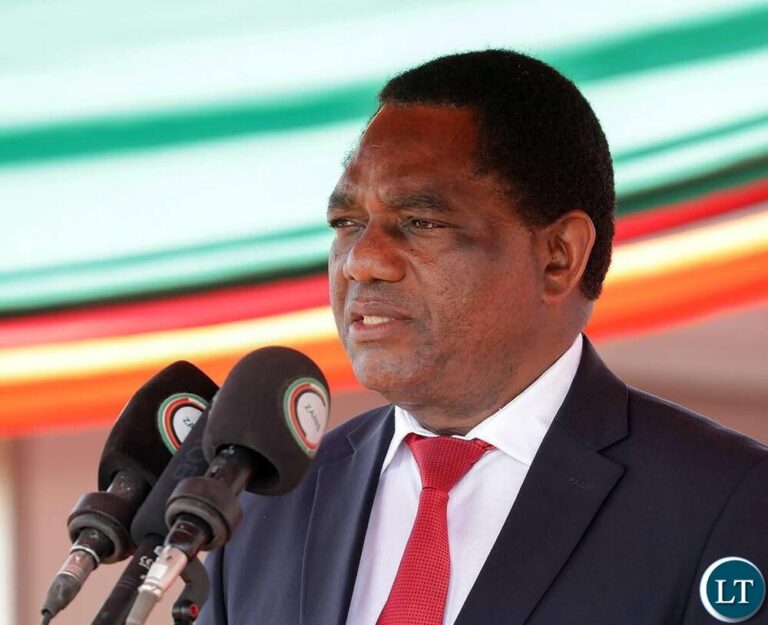
GEARS backs Hichilema meeting with retired military chiefs

GEARS Initiative Zambia has endorsed President Hakainde Hichilema’s recent engagement with retired commanders of the Zambia Defence Force, describing the meeting as a positive contribution to national security dialogue and institutional continuity.

In a statement issued on June 3, the governance and democracy organisation said the President’s decision to consult former Service Chiefs demonstrated leadership that values experience, institutional memory and inclusive engagement on matters affecting national stability.

The organisation said retired military leaders possess extensive operational and strategic knowledge that can continue benefiting the country long after active service. GEARS argued that consultation with former commanders should be viewed as prudent governance and a sign of confidence in national institutions.

The group further said the engagement promotes national unity and reinforces the constitutional principle of civilian oversight of the military. According to GEARS, the meeting showed that seeking advice from retired security leaders does not diminish civilian authority but strengthens informed decision-making.

Executive Director Patrick Kaumba said the organisation hopes similar engagements can continue in the future and suggested the creation of a formal advisory platform through which retired Service Chiefs could contribute institutional knowledge to successive administrations.

GEARS described the meeting as an example of constructive leadership and urged stakeholders to view the development as part of broader efforts to strengthen institutional stability and national cohesion. Below is the full Press Release

“Voice of Democracy & Electoral Integrity

GEARS SECRETARIAT: OFF Lilayi – Bamora Road Subdivision F 919/ Stand 12 B /8 PO BOX FW 251 LILAYI [ Lusaka South] LUSAKA.

Email: [email protected]; Mobile: +260979827370

FOR IMMEDIATE PRESS RELEASE

03rd June, 2026.

Statement by GEARS Initiative Zambia, in Support of President Hakainde Hichilema’s Engagement with Retired Service Chiefs

GEARS Initiative Zambia, wish to unequivocally commend and support His Excellency President Hakainde Hichilema for his deliberate and statesmanlike decision to meet with retired Service Chiefs of the Zambia Defence Force.

This move, far from being ceremonial, is a strategic masterstroke for national security, institutional memory, and democratic consolidation.

Firstly, it bridges the gap between civilian leadership and military expertise. Retired Service Chiefs possess decades of operational, strategic, and institutional knowledge. By consulting them, President Hichilema is not only respecting their service but also tapping into an invaluable reservoir of wisdom that border tapping into integrity, internal security, and regional stability. This is not interference; it is prudent governance.

Secondly, it fosters unity and heals old wounds. For too long, retired military leaders were viewed with suspicion by succeeding political administrations. This meeting breaks that toxic cycle. It sends a powerful message that Zambia’s security apparatus is non-partisan and that every patriot, regardless of when they served, has a role in building a peaceful, prosperous nation under the mantra “One Zambia, One Nation.”

Thirdly, it strengthens civilian oversight without intimidation. A president who can sit respectfully with retired generals, listen to their counsel, and yet maintain constitutional authority demonstrates mature leadership. This engagement reassures citizens that while the President values military input, ultimate command remains firmly in civilian hands as mandated by our Constitution.

GEARS Initiative Zambia has long advocated for inclusive dialogue on national security. We urge other political actors and civil society groups to see this for what it is: a progressive step toward institutional stability. We also encourage the President to institutionalize such engagements—perhaps through a formal advisory council of retired service chiefs—to ensure continuity.

President Hichilema has shown that leadership is not about surrounding oneself with “yes” people, but about seeking counsel from those who have stood guard for the nation. This is the hallmark of a true statesman.

Issued by:
Patrick Kaumba

Executive Director
GEARS Initiative Zambia

Pedestrian hospitalised after being hit by vehicle in Chipata

A 30-year- old pedestrian has been admitted to Chipata Central Hospital after he was hit by a motor vehicle near Mwami Boarder Post.

John Jere, 30, was rushed to the facility after sustaining suspected internal injuries.

Eastern Province Police Commanding Officer Robertson Mweemba confirmed the accident to the media, saying it occurred on yesterday, June 2, 2026 at around 07:00hrs.

Mr Mweemba said brief facts are that a Toyota Axio, registration number CAC 5502, was traveling from west to east along Mwami Boarder Road when the driver hit a pedestrian who was crossing the road, from right to left.

“The driver has been identified as Japhet Siwo, 46, of Magwero Road area, Chipata District. He escaped unhurt,” Mr. Mweemba said.

The vehicle in question, sustained a depressed bonnet and a damaged left headlamp.

Isoka launches second round of polio vaccination

0

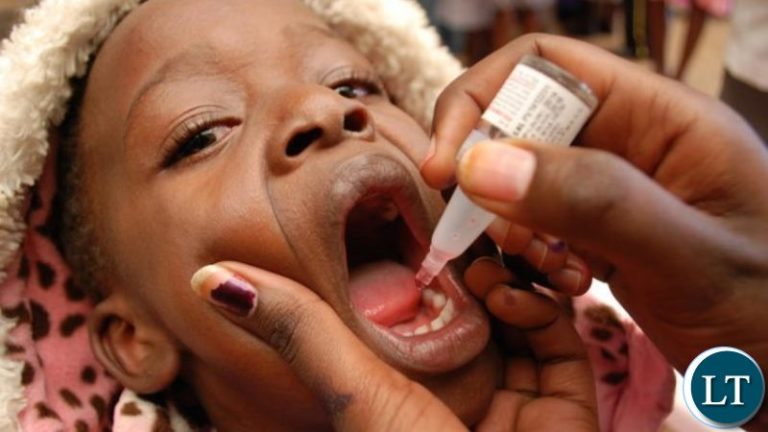
Government has launched the second round of the Novel Oral Polio Vaccine Type 2 (nOPV2) vaccination campaign in Isoka District aimed at protecting children under the age of five against the circulating variant poliovirus type 2 (cVDPV2).

Acting Isoka District Commissioner Kenneth Mwantalasha launched the campaign at Sansamwenje Market and called on parents and guardians to ensure that all eligible children receive the vaccine.

Mr Mwantalasha said the Ministry of Health has dedicated four days to provide polio vaccination services as part of efforts to support the health and optimal development of children under the age of five.

“The government, with support from cooperating partners, will this week focus on enhancing the provision of community-centred child survival interventions across the province without leaving any child behind,” he said.

Mr Mwantalasha said Muchinga Province recorded a successful first round of the vaccination campaign, reaching 265,178 households and vaccinating 262,150 children against a target of 242,460, representing 108 percent coverage.

He added that in Isoka District, health workers vaccinated 26,429 children out of a target of 28,125 and reached 32,419 households.

And Isoka District Health Director Mdaniso Mkandawire, who represented the Provincial Health Director, said Zambia detected the circulating variant poliovirus type 2 in the Lusaka sewer system on February 16, 2026, prompting the country to implement outbreak response measures.

Dr Mkandawire said the Government, in collaboration with cooperating partners, has planned three rounds of vaccination campaigns in six provinces bordering Malawi and Namibia.

“The country will conduct three rounds of Novel Oral Poliovirus Type 2 vaccination as agreed with the Regional Outbreak Response Preparedness Group for Polio Eradication,” he said.

He said Muchinga Province remains among the high-risk areas because it shares an extensive border with Malawi, where the virus has also been detected.

“Muchinga Province shares the biggest border with Malawi, making Isoka, Nakonde and Mafinga districts highly vulnerable,” Dr Mkandawire said.

He noted that polio is a debilitating disease with no cure and urged communities to take advantage of the vaccination exercise.

“Polio has no cure, but it is preventable through vaccination,” he said.

And World Health Organization(WHO) representative Peter Chipimo commended the Zambian Government for its response to the outbreak and urged health workers and volunteers to intensify community mobilisation.

“I would like to commend the government of Zambia through the Ministry of Health for the swift and decisive leadership they have shown during this time that we need to save our children,” he said.

Dr Chipimo commended health personnel for the job they are doing and encouraged vaccinators to reach every eligible child, including those living in hard-to-reach areas.

“To our gallant health workers and frontline volunteers, you are the backbone of this response. The main goal is to save our children. Those two drops that you give our children are basically what stands between a sick child and a healthy child,” he expressed.

The second round of the vaccination campaign is running from June 2 to 5, 2026 and targets children under the age of five across Muchinga Province.

SEAN TEMBO SHIFTS FOCUS TO ROMA PARLIAMENTARY RACE

People’s Empowerment Party (PeP) leader Sean Tembo has abandoned his bid to serve as a running mate in the 2026 General Election and has instead turned his attention to the Roma Constituency parliamentary seat.

Tembo’s move follows the failure of his party’s presidential candidate, Chanda Katotobwe, to successfully file nomination papers for the presidential race due to concerns surrounding the party’s status.

Speaking in an interview, Tembo said he decided to contest for Parliament because he still wanted an opportunity to serve the people of Zambia despite being unable to participate in the presidential contest.

“Many will question why parliamentary instead of presidential, but since we cannot be on the presidential ballot, I thought I should represent the people at parliamentary level because of the love I have for the people of Zambia,” Tembo said.

The PeP leader has since outlined a number of development plans for the newly created Roma Constituency, saying he intends to focus on addressing community needs on a ward-by-ward basis if elected.

Although the Registrar of Societies clarified that the People’s Empowerment Party remains a registered political party, Tembo has opted to seek election as an independent candidate.

The Electoral Commission of Zambia (ECZ) is yet to officially confirm whether Tembo’s nomination for the Roma parliamentary seat has been successfully accepted.

Tembo’s decision marks a significant shift in his political strategy as the country prepares for the August 13, 2026 General Election.

ConCourt Sets June 19 Hearing for Hichilema Eligibility Challenge

The Constitutional Court has set June 19, 2026, as the date to hear a petition challenging President Hakainde Hichilema’s eligibility to contest in the 2026 General Election.

The petition was filed by UPND founding member Charles Longwe, who argues that the ruling party did not hold a valid national convention before President Hichilema’s nomination as the party’s presidential candidate.

The hearing date was agreed upon during a scheduling conference held in chambers, attended by legal representatives for both parties.

Speaking to journalists in Lusaka after the conference, State Counsel Mulambo Haimbe, who is representing President Hichilema, confirmed that the Constitutional Court had scheduled the matter for hearing on June 19.

Another member of the President’s legal team, Michael Moono, said the court is expected to provide guidance on the judgment date after the hearing.

Meanwhile, Charles Longwe’s lawyer, Benjamin Mwelwa, also confirmed the hearing date, stating that the scheduling conference was conducted before Constitutional Court Judge Martin Musaluke.

The petition seeks to challenge the validity of President Hichilema’s candidature ahead of the August 13, 2026 General Election, with the court expected to determine whether the nomination process complied with the requirements of the UPND constitution and relevant electoral laws.

Police investigate alleged defilement case in Sinda District

The Zambia Police Service in Sinda district are investigating a case of alleged child sexual abuse involving a 15-year-old girl.

Eastern Province Police Commanding Officer, Robertson Mweemba has confirmed the incident, saying the matter was reported to Sinda Police Station on June 2, 2026, by the girl’s father, a resident of Kasinje Village in Chief Nyanje’s area.

According to information made available to the media by Mr Mweemba, the alleged incidents are said to have occurred at different times during the month of May this year.

Brief facts of the matter are that the victim had an affair with the suspect and this came to light when the victim was being interviewed by her parents and the wife of the suspect Catherine Sakala who raised alarm.

“The girl said male Keyala Tembo used to have carnal knowledge of her in the bush and this happened on four different occasions when she was returning home from School, “Mr Mweemba said.

The Eastern Province Police Chief said it is alleged that an adult male identified as Keyala Tembo of unknown age, residing in Chimtima 2 village in the same chiefdom had inappropriate relations with the juvenile on several occasions.

“The matter came to light after concerns were raised by family members, prompting further discussions with the girl, who is reported to have disclosed the alleged incidents, “he said.

Mr Mweemba said following the report, officers opened a docket and issued a medical report form to facilitate further investigations.

“No arrest has been made so far as the suspect is reported to be on the run.

Police have since instituted investigations and efforts are underway to trace the suspect, “he said.

Mr Mweemba has reiterated the importance of safeguarding children and encouraged members of the public to promptly report any suspected cases of abuse to law enforcement agencies.

He said that the case remains under investigation.

Democracy is in danger if independent candidates can’t run freely

3

By venus N Msyani

Zambia’s electoral laws are intentionally flexible: they allow candidates to run under a political party or stand as independents. This flexibility is meant to broaden participation and strengthen democracy.

However, it also creates internal tensions within political parties during an election year. When candidates lose primary elections, many choose to run as independents, which can weaken party unity and complicate campaign strategies.

For this reason, the United Party for National Development (UPND) leadership has repeatedly warned members that anyone who decides to stand as an independent after failing to secure party adoption will not be allowed to remain in the party. In April, the party went further, announcing that such individuals would automatically lose their membership.

Despite these warnings, several aspiring candidates who were not adopted have chosen to run independently. Their decisions have reportedly been met with intimidation, threats, and in some cases physical confrontations, according to videos and accounts circulating online.

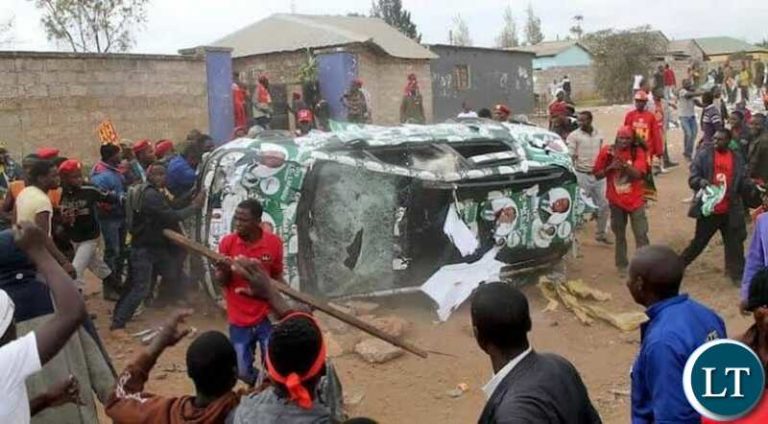
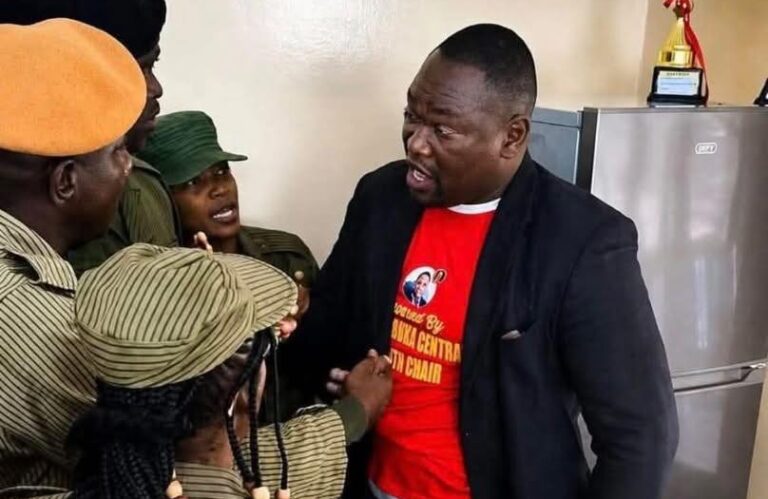
One of the most prominent incidents involves former Minister of Local Government Gary Nkombo. Footage shared on social media appears to show a group attempting to block him from filing his nomination papers at the Mazabuka nomination center.

Although he eventually succeeded, Nkombo later shared images of himself receiving medical treatment, alleging that he had been assaulted during the confrontation. The incident has drawn widespread attention, particularly because it reportedly occurred in the presence of police officers.

In Bweengwa Constituency, the home area of President Hichilema, independent candidate Clifford Mwiinga managed to file his nomination but later appeared in a video expressing fear for his safety.

He stated that he had gone into hiding immediately after filing to avoid potential harm from suspected cadres. His remarks highlight the climate of fear that some independent candidates say they are experiencing.

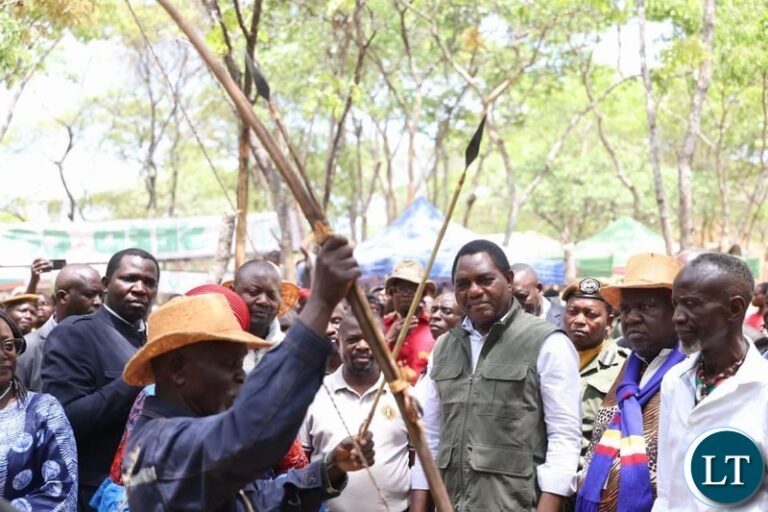
Another video circulating online appears to show an individual being harassed at a traditional ceremony in the province. According to descriptions accompanying the footage, the person is Magoye West independent aspiring MP Nsubula Hachipabeenda.

Reports indicate that Hachipabeenda won the primary election but was not adopted by the party, prompting him to run as an independent. He has alleged that some cadres have distanced themselves from him and that he has faced hostility since declaring his independent bid.

These incidents risk undermining one of the administration’s most celebrated achievements: the reduction of cadre violence. When President Hichilema assumed office in August 2021, he declared an end to cadreism, a move widely welcomed by the public.

While isolated reports of cadre activity have surfaced over the past four years, many observers still credit his administration with significantly reducing such incidents compared to the previous government. However, the allegations involving independent candidates threaten to overshadow that progress.

Meanwhile, UPND has secured several parliamentary and local government seats unopposed, with Southern Province leading. Among them are Choma South, Kalomo South, Zambezi West, Kazungula North, Sinazongwe, and Monze East.

Independent candidates for Keembe West Constituency in Central Province and for Liuwa Constituency in Kalabo District in Western Province have also withdrawn, according to reports. Both leave UPND candidates unopposed.

The list continues to grow, though some may still appear on the ballot. Critics claim the window for withdrawal has already expired. It is also being speculated that some candidates are being offered money to withdraw from the race.

Withdrawals may appear to be a political advantage for UPND, but they raise broader concerns about the health of the country’s democratic space. In a context where allegations of intimidation are circulating, some observers may question whether potential independent candidates chose not to run out of fear rather than lack of interest.

If the goal is to strengthen democracy, then political competition must be free, fair, and safe for all participants. The reports emerging from Southern Province suggest that more work may be needed to ensure that every candidate, whether party-aligned or independent, can participate without fear of violence or intimidation.

If independent candidates can’t run freely, democracy is at risk.

Kasempa Royal Establishment urges politicians not to politicise ceremony

The Kasempa Royal Establishment has urged political aspirants to keep politics out of this year’s Juba Ja Nsomo traditional ceremony, emphasising that the June 13 event is a cultural gathering meant to unite the community.

Kasempa Royal Establishment Secretary, Harriwell Lubinga cautioned political aspirants against using the event for campaign activities, stressing that the occasion should remain free from partisan politics.

Mr Lubinga said this in an interview with the the media in Kasempa District today.

“We are inviting all aspiring candidates to attend the Juba Ja Nsomo traditional ceremony. They should come and celebrate with us as our subjects because we want the ceremony to promote unity among our people,” He added.

Mr Lubinga noted that politics should not be allowed to divide residents of Kasempa, adding that elections were temporary while community development remained a shared responsibility.

“Politics is just a game. At the end of the day, only one person can become Member of Parliament, one person can become Council Chairperson and one person can occupy a particular position. Those who are not successful should support those who are elected so that development can continue,” he said.

Mr Lubinga said the royal establishment expected future leaders to prioritise development and effectively represent the interests of the people.

He said elected leaders, including councillors, should work towards addressing the needs of communities and ensuring that development resources were utilized for the benefit of the district.

Mr Lubinga expressed optimism that the increased Constituency Development Fund (CDF) allocations to both Kasempa and Mufwashi constituencies would accelerate development and improve service delivery.

“We are grateful to the government for creating two constituencies. More resources will now come into the area, and we hope that those who will be elected will ensure that development funds are put to good use for the benefit of the people,” He said.

Meanwhile, Mr Lubinga said preparations for this year’s Juba Ja Nsomo traditional ceremony and the commemoration of Senior Chief Kasempa’s 50 years on the throne are progressing smoothly.

He disclosed that 23 traditional leaders from within and outside North-Western Province, including some from the Democratic Republic of Congo, have been invited to the celebrations.

Mr Lubinga explained that activities will commence on June 12 with the arrival of chiefs and a dinner gathering before the main celebrations on June 13.

The Juba Ja Nsomo traditional ceremony, which this year coincides with the golden jubilee of Senior Chief Kasempa’s reign, is one of the District’s most significant cultural events and is expected to attract participants from across the country and beyond.

Nkombo says he was attacked. Police say arrest was justified

The decision to charge former minister and Mazabuka Central independent parliamentary candidate Gary Nkombo with assault has developed into one of the most closely watched legal and political disputes of Zambia’s election season. What began as a confrontation during nominations has evolved into a wider discussion about police conduct, political violence and public confidence in institutions as the country moves towards the August 13 general election.

Police insist the matter is straightforward. Southern Province Commissioner Namalongo Songe says officers acted after receiving a formal complaint from Bilden Shaloba and followed established investigative procedures before proceeding with the charge. According to police, the case should be assessed on the evidence gathered during investigations rather than through the prism of political competition or public sentiment.

Nkombo has consistently rejected that characterisation. The former Local Government and Rural Development Minister maintains that he was the victim of the violence that erupted at Mazabuka Civic Centre during nominations on May 20 and has repeatedly questioned why individuals he believes attacked him have not faced similar legal action. His position has remained unchanged since the incident first entered the national spotlight.

The confrontation occurred during one of the most sensitive stages of the electoral process as candidates filed nomination papers ahead of the general election. Images and video footage from the scene spread rapidly across social media platforms, turning what would ordinarily have remained a local political disturbance into a national story. The circulation of those images ensured that public opinion formed quickly and often before investigators had completed their work.

The matter has remained under intense scrutiny since then. Governance activist Brebner Changala has criticised the decision to prosecute Nkombo, arguing that many members of the public view the independent candidate as the person who suffered the attack. Similar concerns have been raised by opposition figures and some civil society voices who believe the handling of the matter carries implications that extend beyond the assault allegation itself.

Police have firmly defended their actions. Commissioner Songe says law enforcement agencies cannot ignore complaints simply because politicians are involved and that investigators have a duty to examine allegations brought before them regardless of the status of the individuals concerned. She maintains that decisions are guided by evidence collected during investigations and not by political affiliation, campaign considerations or public pressure.

The dispute is unfolding against the backdrop of a wider national conversation about election-related violence. Opposition parties and civic organisations have repeatedly expressed concern about intimidation, clashes and tensions surrounding the nomination process, particularly in constituencies where political competition is intense. Government officials continue to maintain that, despite isolated incidents, conditions across much of the country have remained generally peaceful.

Those competing interpretations have given the Mazabuka matter significance beyond the courtroom. For supporters of Nkombo, the case has become a test of whether all political actors receive equal treatment under the law. For police, it represents an opportunity to demonstrate impartiality and independence during a highly charged election period in which every decision is likely to attract political interpretation.

A criminal charge does not amount to a conviction, and the courts will ultimately determine what transpired during the confrontation and whether criminal responsibility exists. What is already clear, however, is that the case has become part of a larger national discussion about institutional credibility, political competition and public trust during election campaigns.

For now, police maintain they acted within the law. Nkombo maintains that he defended himself and was the victim of the confrontation. The courts will determine which account prevails.

Editor’s Note: “The closer an election draws, the greater the public scrutiny placed on institutions handling politically sensitive cases. Confidence in the process often becomes as important as the outcome itself.”

Growth strategy shapes battle for Zambia’s voters

Economic management, public services and job creation are expected to dominate Zambia’s election campaign, with political parties increasingly directing attention to their records and policy proposals as the country moves closer to the polls.

The governing United Party for National Development (UPND) has placed economic recovery and service delivery at the heart of its message, frequently pointing to programmes introduced since taking office in 2021. Opposition parties, meanwhile, have continued to focus on the cost of living, employment opportunities and the pace of economic improvement experienced by ordinary households.

Government officials have repeatedly highlighted growth targets in mining, agriculture, electricity generation and tourism, arguing that increased production remains central to efforts aimed at expanding the economy. Senior officials have maintained that higher output in those sectors would strengthen exports, attract investment and support job creation across the country.

The administration’s economic programme has also been accompanied by a series of social-sector interventions that have become prominent features of its record in office. Free education, the restoration of meal allowances for university students and expanded bursary support continue to feature prominently in government communication and public engagements.

Officials say the measures have increased access to education and eased pressure on families that previously struggled to keep children in school. The programmes have become some of the most visible policy initiatives undertaken during the current administration.

The expanded Constituency Development Fund has also become a major component of government spending at local level. Increased allocations to constituencies have supported community projects, skills training initiatives, school infrastructure, health facilities and other development programmes across the country.

In many districts, local projects funded through CDF have become among the most visible examples of public investment. Government representatives frequently cite the programme as evidence of efforts to move development resources closer to communities.

Concerns over implementation, efficiency and long-term funding continue to surface in discussions surrounding some government programmes. Questions relating to economic conditions, household incomes and employment opportunities have also remained part of public discourse as political activity gathers momentum.

Beyond domestic programmes, the administration has devoted significant attention to economic reforms and engagement with international financial institutions. Debt restructuring efforts, investment promotion and measures aimed at restoring macroeconomic stability have featured prominently in official statements over the past several years.

Government supporters say these efforts have helped restore confidence in the country’s economic direction. Opposition parties maintain that many citizens remain focused on everyday economic pressures and want to see stronger improvements in living standards.

The approaching election is expected to place greater scrutiny on competing policy proposals. While government leaders continue to defend their record in office, opposition parties are under pressure to persuade voters that their own programmes would deliver better outcomes in areas such as employment, economic growth and public services.

As campaign activities intensify, discussions around education, local development funding, production targets, investment, household incomes and job creation are expected to feature prominently in political engagements across the country.

Government officials continue to cite free education, expanded CDF allocations, debt restructuring efforts and production goals as evidence of progress. Opposition parties continue to argue that economic challenges facing households require alternative solutions. Those competing positions are likely to remain at the centre of campaign messaging in the months ahead.

Beyond Rhetoric: Why Zambia’s Opposition Continues to Struggle Against Hichilema

Beyond Rhetoric: Why Zambia’s Opposition Continues to Struggle Against Hichilema

By Farai Ruvanyathi

By any objective measure, Zambia’s political opposition faces a challenge far greater than merely defeating an incumbent president. Its real challenge is presenting a compelling alternative vision to a leader who has successfully framed the national conversation around economic recovery, production, and measurable outcomes.

As Zambia moves closer to another electoral contest, one reality has become increasingly difficult to ignore: President Hakainde Hichilema remains the dominant political figure in the country’s landscape not simply because he occupies State House, but because he has succeeded in setting the terms of national debate.

Whether one supports him or not, Hichilema has introduced a results-oriented approach to governance that bears the unmistakable imprint of his private-sector background. Unlike many African leaders who enter government from political activism, the civil service, or the military, Hichilema arrived with decades of experience in business, investment, and corporate management. That experience has shaped his strengths and has undoubtedly raised the bar for political leadership in Zambia.

At the heart of his administration is an obsession with targets. His now familiar “10-10-10-5-3-1” production matrix, 10 million tonnes of copper, 10 million tonnes of maize, 10 million megawatts of power generation, 5 million tourist arrivals, 3 million tonnes of soya beans and 1 million tonnes of wheat by 2030, provides a framework that citizens, investors and development partners can easily understand and measure.

Critics may question the feasibility of some of these ambitions, but they cannot accuse the President of lacking a roadmap.

This is where the opposition has struggled most visibly. Instead of producing competing economic blueprints, alternative growth targets, or rival development frameworks, much of its messaging has remained trapped in personality attacks, grievance politics, and increasingly divisive rhetoric. Too often, political discourse has descended into slander, humiliation, and fear-mongering, sometimes exploiting ethnic anxieties that Zambia has historically worked hard to avoid.

Such tactics may generate headlines, but they rarely inspire confidence among undecided voters.

The contrast becomes even more apparent when examining policy achievements. The reintroduction and expansion of free education, the restoration of meal allowances for university students, increased bursary support, and the significant enhancement of the Constituency Development Fund have become tangible markers of the administration’s agenda. The expanded CDF, in particular, has channelled unprecedented resources into local communities, enabling projects that many rural areas had never previously experienced at such scale.

Reasonable people can debate implementation challenges, efficiency, and sustainability. What is far more difficult to dispute is that these initiatives exist and have become visible parts of everyday life for millions of citizens.

Equally important is Hichilema’s governing style. Admirers view it as disciplined, focused and relentlessly performance-driven. Critics sometimes describe it as impatient. Both assessments contain elements of truth.

The President has frequently demonstrated a low tolerance for bureaucratic inertia, procedural rigidity, and administrative delays that slow implementation. To supporters, this reflects the mindset of a private-sector executive accustomed to efficiency, timelines and accountability. To detractors, it can appear demanding and exacting. Yet in a country where bureaucracy has often frustrated development efforts, many citizens see his impatience not as a flaw but as a necessary corrective.

Internationally, Hichilema has also cultivated a reputation that extends beyond Zambia’s borders. His administration’s engagement with international financial institutions, efforts to restore macroeconomic stability, progress on debt restructuring, and emphasis on investment-led growth have earned recognition from development partners and investors alike. At home, he continues to command considerable support among citizens who associate his leadership with stability, economic reform and a renewed sense of national purpose.

Perhaps the opposition’s greatest challenge is that it is contesting not merely a politician but a narrative, one centred on production, economic transformation, peace, dialogue and national unity.

For all the criticisms that can be levelled against the current administration, and every government inevitably attracts criticism, the opposition has yet to convincingly answer a fundamental question: what would it do differently?

Elections are not won solely by exposing the shortcomings of those in office. They are won by persuading citizens that a better alternative exists.

Until Zambia’s opposition develops a coherent policy platform, articulates measurable economic ambitions, and offers a message that rises above resentment and division, it will continue to struggle against a President whose greatest political advantage may not be his incumbency, but his ability to project both verve and panache while keeping the national conversation firmly focused on growth, production and delivery.

Two Parliamentary Candidates Withdraw From August 13 Election Race

Two parliamentary candidates have withdrawn from the August 13, 2026 General Election, citing different reasons for their decisions.

In Western Province, Senanga North Constituency independent aspiring candidate Sitibekiso Wamuyuwa has withdrawn from the parliamentary race, saying his decision is driven by loyalty to the ruling United Party for National Development (UPND) and support for President Hakainde Hichilema.

Speaking in Senanga, Mr. Wamuyuwa said he could not separate himself from the UPND and remained committed to the party’s vision and leadership.

He stated that President Hichilema deserves another term in office to continue implementing development initiatives such as the Constituency Development Fund (CDF), which he said has positively impacted communities across the country.

Meanwhile, Shindola Luhila, who had been aspiring to contest the Lukulu North parliamentary seat on the Socialist Party ticket, has also withdrawn from the race.

According to a letter addressed to the Electoral Commission of Zambia (ECZ) dated May 28, 2026, Mr. Luhila officially stepped down from the parliamentary contest ahead of the August 13 polls.

Mr. Luhila has also resigned from the Socialist Party.

The withdrawals come as the country prepares for the general elections, with political parties and independent candidates intensifying their campaigns across Zambia.

NCP endorses President Hichilema for August elections

National Congress Party (NCP) President, Peter Chanda has announced his party’s endorsement of President Hakainde Hichilema and the United Party for National Development (UPND) ahead of the August 13 general elections.

Speaking to journalists in Lusaka today, Mr Chanda said the decision followed extensive consultations with party members, supporters, well-wishers and ordinary citizens, as well as a period of reflection and prayer.

He explained that the NCP leadership had carefully assessed the political environment and reviewed all the manifestos of competing political parties before arriving at its decision.

“Some are good and promising, others are not and do not give hope,” Mr Chanda said.

Mr Chanda said his party had consistently called for opposition unity under the NCP banner but had instead observed growing mistrust, personal ambitions and divisions among opposition players.

He said the high number of presidential aspirants emerging from the same political grouping reflected the challenges facing opposition cooperation.

Mr Chanda further stated that UPND has made progress in several areas and has continued to implement policies that align with the NCP’s values.

He cited youth and women’s representation, decentralisation and empowerment programmes as areas of common ground between the two parties.

“Although they have not done 100 percent as expected, the UPND administration has implemented a lot of progressive programmes that have benefited the nation,” he said.

Mr Chanda said the NCP believed policy consistency was important for national development and had therefore resolved to support President Hichilema’s candidature.

He added that the party would continue fielding candidates in areas where it enjoys strong support and called for peaceful campaigns and a credible electoral process.

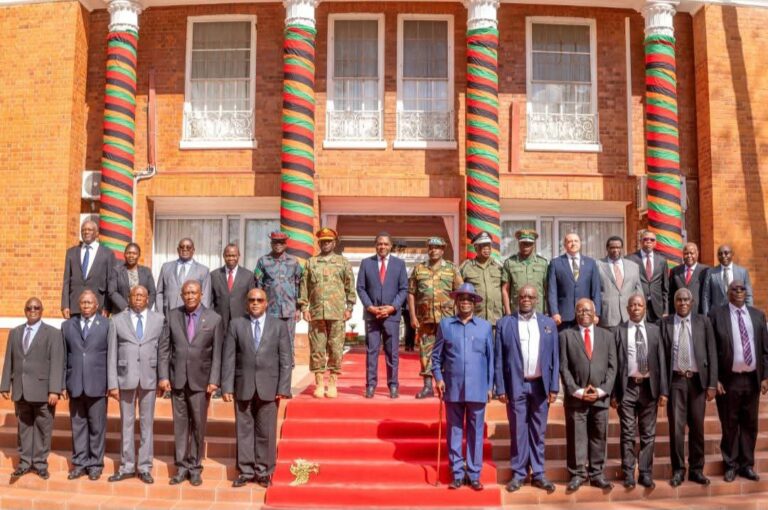
President Hichilema praises former defence and Security Chiefs

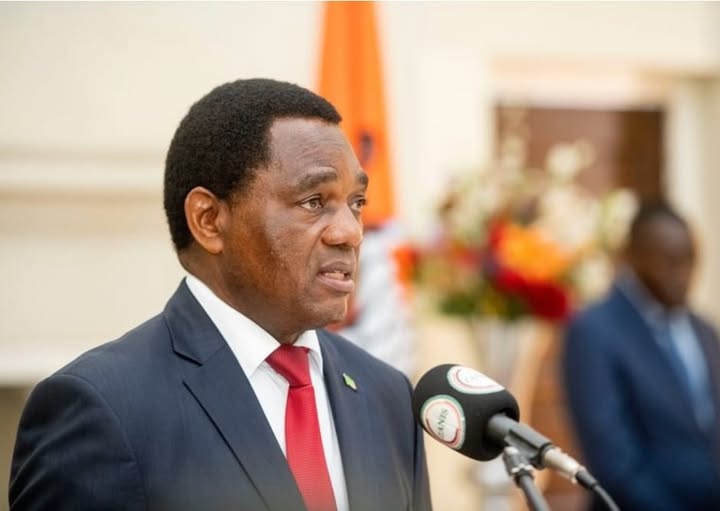
President Hakainde Hichilema has commended former Defence and Security Chiefs for their continued solidarity, patriotism and unwavering service to the country.

Speaking when he met former Defence and Security Chiefs at State House today, President Hichilema said the distinguished leaders are a priceless reservoir of wisdom, experience and institutional memory.

The Head of State said their contribution in safeguarding Zambia’s peace, security and democracy remains unmatched saying government will continue to draw on their counsel as it works to strengthen the country.

“Retirement is simply a change of station. Your love for Zambia remains as strong as ever,” President Hichilema said.

The President also reaffirmed commitment to improving the welfare of veterans, whose sacrifices helped build the Zambia being cherished today.

Govt. dismisses fake statement on funeral of late Mpezeni

Government has dismissed the statement circulating on social media regarding the observance of mourning and funeral protocols of late Paramount Chief Mpezeni IV.

Deputy Secretary to the Cabinet for Administration, Oliver Kalabo, has clarified that government has not issued any circular or official statement concerning the death of the revered Ngoni traditional leader.

Dr Kalabo said the statement circulating on social media dated 1st June, 2026 and allegedly attributed to Secretary to the Cabinet, Patrick Kangwa is false and should be disregarded by the public.

He emphasized that Government communication on matters of national importance is issued through established official channels and urged citizens to exercise caution when consuming and sharing information from unverified sources.

Dr Kalabo has appealed to members of the public to ignore the statement in question, stressing that no directive or guidance has been released by Government regarding mourning arrangements for the late Paramount Chief Mpezeni IV.