Thursday, June 4, 2026
13 C
Lusaka
Home Blog Page 7

Hichilema Will Win August Polls – Gary Nkombo

5

Mazabuka Central independent parliamentary candidate Gary Nkombo says President Hakainde Hichilema will win the August 13 general election, adding that he is ready to work closely with the Head of State once elected back into Parliament.

Nkombo, who served as Mazabuka UPND Member of Parliament from 2006 until this year, also served as Minister of Local Government and Rural Development from September 2021 until March 28, 2025, when he was relieved of his duties by President Hichilema.

Addressing supporters at Nakambala Market in Mazabuka today, Nkombo appealed to residents to vote for him so that he could return to Parliament.

“We have reached a crossroads. I’m asking that you vote for me to go back to Parliament. I’m not even ashamed to ask you to vote for me to go back to Parliament,” Nkombo said.

“When I go back to Parliament, I will, as usual, not engage in politics of insulting anybody. The President, Hakainde Hichilema, will win. Once I win, I will humbly go to the President and say, ‘I have been chosen by the people. Let’s work together,’” he added.

Nkombo further described President Hichilema as his friend despite recent political differences.

“The President is my friend and it doesn’t matter what happens; he is my friend. He can choose not to like me, that’s his issue. But I like him,” he said.

“No one should come and say ‘he is fighting the President.’ I like him and that’s why I was being arrested and roughed up in Livingstone because I like him. That love is enduring,” Nkombo stated.

Petitions target M’membe ticket and 101 independent candidates

Fresh constitutional petitions filed in Lusaka have injected new legal uncertainty into Zambia’s August 13 general elections after governance activist Isaac Mwanza and a consortium of civil society organisations moved to challenge both the Socialist Party presidential ticket and more than 100 parliamentary candidates contesting as independents.

The petitions were filed before expiry of the statutory nomination challenge period and invoke multiple constitutional provisions, including Articles 51(a), 52(4), 52(6), 100(1)(e), 110(2) and 266, alongside sections of the Electoral Process Act No. 35 of 2016.

At the centre of the first petition is Dolika Banda, the running mate to Socialist Party presidential candidate Dr Fred M’membe. Petitioners argue that a Cambridge OCR General Certificate of Secondary Education allegedly obtained by Banda in 1978 does not satisfy Zambia’s constitutional requirement for a Grade Twelve certificate or its equivalent for persons seeking the office of Vice-President.

The petition further argues that the presidential ticket is constitutionally joint and inseparable under Article 110. According to the filing, any disqualification affecting Banda would consequently invalidate the entire presidential ticket involving Dr M’membe under Article 52(6)(b). The Electoral Commission of Zambia and the Attorney General have both been cited as respondents.

Qualification disputes involving Grade Twelve requirements have increasingly become part of Zambia’s electoral litigation environment in recent years, particularly in cases involving foreign or legacy academic qualifications whose equivalency falls outside Zambia’s present education framework.

The second petition targets more than 100 parliamentary candidates contesting as independents across several constituencies nationwide. Petitioners argue that the affected candidates remained members of political parties at the time they filed their nominations as independents, contrary to Article 51(a) of the Constitution.

Among those named in the petition are Dr Chitalu Chilufya, Garry Nkombo, Miles Sampa and Alexious Mulemba, alongside several other parliamentary candidates whose independent bids have already attracted public attention during the nomination period.

The constituencies listed in the petition include Kabushi, Katuba, Chingola West, Solwezi East, Kaoma Central, Monze Central, Lukashya, Mazabuka Central, Kapiri Mposhi East and Mwandi, reflecting a dispute stretching across multiple provinces and political regions.

The petition also cites Batuke Imenda in his capacity as UPND Secretary General and Morgan Ng’ona as PF Secretary General, drawing both major political parties directly into the proceedings. The inclusion raises further scrutiny around how parties managed members who later filed nominations as independents.

So far, sections of the public, governance stakeholders and political actors have already described portions of the contested nominations as illegal and unconstitutional, arguing that candidates contesting as independents while allegedly retaining party membership undermine the constitutional distinction between party-sponsored and genuinely independent candidates.

Governance stakeholders say the growing number of independent candidacies emerging from failed adoption battles has exposed weaknesses within the vetting process during nominations and created legal grey areas likely to shape the election period.

The petitions arrive during one of the most politically sensitive phases of the electoral calendar.

A wave of former ministers, senior politicians and party officials have entered the election as independents after disputes surrounding party adoption processes, producing one of the largest independent candidate fields in recent electoral history.

Legal observers say the scale of the challenge now places additional pressure on the courts because ballot preparation timelines leave limited room for prolonged litigation before printing and final electoral preparations commence.

By Thursday evening, no public response had been issued by the Socialist Party, the Electoral Commission of Zambia or most of the candidates named in the petitions.

The High Court is now expected to determine whether the matters raise sufficient constitutional grounds to proceed to urgent hearing.

How quickly the courts move may prove politically significant.

The deeper the Electoral Commission moves into ballot preparation, the more complicated any future remedial orders could become.

Editor’s Note: “Election litigation filed during the narrow nomination challenge window often carries consequences extending far beyond the courtroom because delays in adjudication can directly affect ballot preparation and campaign stability.”


21 year old callboy stabbed to death

 A 21 year-old man of Mansa district has allegedly been stabbed to death by a colleague, following a dispute.

The incident occurred on Tuesday, May 26, around 10:00 hours at Namwandwe market layby, where the deceased identified as Collins Mambwe, worked as a call-boy directing passengers to vehicles undertaking journeys to various destinations.

Luapula Province Commissioner of Police, Stephen Palaata has confirmed the incident, saying the deceased was allegedly stabbed on the left side of the chest by Roderick Mandevu, 41.

Mr Palaata said preliminary investigations revealed that around 09:00 hours, Mr Mambwe was carrying out his usual duties at the layby when the suspect approached him and allegedly told him that he was not supposed to be operating from that place, ordering him to find another place to work from.

He said that, in the process, the suspect allegedly drew a knife from his pocket and stabbed the deceased on the left side of the chest.

“Members of the public immediately apprehended the suspect and took him to the office of the Community Crime Prevention Unit (CCPU), where he was detained. The victim was rushed to Mansa General Hospital but was later pronounced dead,” Mr Palaata said.

Police officers later visited the scene and recovered the knife allegedly used in the attack from the suspect, who was subsequently arrested and taken to Mansa Central Police Station, where he remains in custody.

Mr Palaata added that officers also visited Mansa General Hospital and found the body of the deceased lying lifeless.

He said a physical inspection of the body revealed a stab wound on the left side of the chest.

“A post-mortem examination will be conducted to ascertain the exact cause of death. The suspect will formally be charged and is expected to appear in court soon. ” he said.

ACC arrests three Ministry of fisheries officials for corruption

The Anti-Corruption Commission (ACC) has arrested and charged three officials from the Ministry of Fisheries and Livestock over alleged corruption involving more than K8.8 Million linked to the Sustainable Livestock Infrastructure Management Project (SLIMP).

The arrests have brought the total number of officers arrested in the SLIMP corruption saga to 12, as investigations intensify into the alleged misappropriation of part of the US10 Million project funds, meant for livestock infrastructure development.

In a statement issued to the media, Acting Head of Corporate Communications, Chilufya Chisanga, said the three suspects have been charged with various offences ranging from fraudulent false accounting, corrupt acquisition of public property and revenue, abuse of authority of office and possession of property reasonably suspected to be proceeds of crime.

Ms Chisanga said Principal Livestock Production Officer, Grace Lungu, 47, of Lusaka’s Lilayi area, has been charged with 16 counts of fraudulent false accounting involving false imprest retirements amounting to over K750, 000.

She explained that Ms Lungu allegedly claimed that funds obtained from the SLIMP account had been utilised for intended purposes when in fact not.

Ms Chisanga further disclosed that Ms Lungu has also been charged with two counts of possession of property reasonably suspected to be proceeds of crime involving a residential property in Chipata District valued at K800, 000 and a government bond worth K300, 000.

She added that Senior Livestock Production Officer, Trohyb Hanyimbo, 42, of Libala South in Lusaka, has been charged with one count of corrupt acquisition of public property and revenue involving over K1.9 Million allegedly diverted from Ministry of Fisheries and Livestock SLIMP accounts.

“Mr Hanyimbo allegedly fraudulently diverted funds from the Ministry’s SLIMP accounts for personal benefit,” Ms Chisanga said.

Ms Chisanga also indicated that Assistant Director, Kabemba Mwambilwa, 48, of Chongwe’s Palabana area, has been charged with corrupt acquisition of public property and revenue involving more than K3.8 Million allegedly diverted from various SLIMP accounts.

She added that Mr Mwambilwa has further been charged with two counts of possession of property reasonably suspected to be proceeds of crime involving a Hyundai Creta valued at K450, 000 and a Jaguar F-Pace valued at K650, 000.

Ms Chisanga noted that Mr Mwambilwa has additionally been charged with abuse of authority of office for allegedly facilitating the employment of Grace Chundama as SLIMP Monitoring and Evaluation Specialist without approval from the Ministry’s Controlling Officer.

“The three suspects have since been released on bond and are expected to appear in court soon,” Ms Chisanga stated.

Ms Chisanga added that investigations into the SLIMP project are still ongoing and more arrests are expected as the commission continues uncovering suspected illegally acquired assets.

She revealed that investigations have so far uncovered assets valued at over K124 Million comprising motor vehicles, houses, farms, livestock and government bonds.

ACC urged to probe candidate withdrawals ahead of August elections

A formal complaint lodged with the Anti-Corruption Commission has intensified scrutiny around a growing wave of parliamentary candidate withdrawals ahead of Zambia’s August 13 general elections, with questions emerging over whether some exits were politically negotiated before campaigns fully commenced.

Former ambassador Emmanuel Mwamba has asked the ACC to investigate what he describes as a suspicious pattern of withdrawals involving candidates who had already completed the demanding nomination process, including tax clearances, local authority documentation, academic verification and payment of nomination fees.

The complaint was submitted to ACC Director General Daphne Pauline Soko Chabu on May 28, 2026.

According to Mwamba, several candidates abandoned their races shortly after successfully meeting nomination requirements, with some constituencies subsequently left without opposition challengers against ruling party candidates.

He argues that the concentration and timing of those withdrawals warrant immediate public scrutiny.

“Elections are meant to encourage competition, not quietly eliminate it,” Mwamba stated while calling on investigators to establish whether any candidates received inducements or faced pressure to withdraw from the ballot.

Among the constituencies cited in the complaint is Liuwa, where Finance Minister Situmbeko Musokotwane now reportedly faces no challenger following the withdrawal of independent candidate Kememe Mooka.

In Keembe West, the withdrawal of Frezah Benkele reportedly left Princess Kasune Zulu unopposed.

Dundumwezi also entered the complaint after Michelo Haluyasa reportedly stepped aside, clearing the field for Edgar Sing’ombe.

Kalomo recorded one of the most striking developments after a sequence of withdrawals involving Socialist Party candidates, independents and others reportedly left Harry Komboni without a challenger.

The complaint places particular emphasis on recent constitutional amendments affecting electoral procedures.

Mwamba argues that changes made to Article 52(6), which removed provisions allowing for fresh nominations when races become uncontested or candidates are disqualified, have significantly altered the political consequences surrounding withdrawals.

Under the amended framework, uncontested races can proceed without reopening nominations.

That change, according to the complaint, increases the political value of candidate withdrawals before polling day.

The matter is already drawing attention among governance stakeholders and election observers, some of whom say unexplained withdrawals in multiple constituencies naturally invite public scrutiny during a highly competitive election season.

The complaint also raises concerns involving senior civil servants who resigned from government positions to seek political adoption, failed to secure adoption and later returned to public office.

Mwamba named Northern Province Deputy Permanent Secretary Beauty Undi Phiri, together with District Commissioners for Mbala and Lupososhi, as cases requiring official review.

He argues that such returns may contradict Cabinet Office Circular Number 10 of 2026 issued by Secretary to the Cabinet Patrick Kangwa, which directed public officers intending to participate in partisan politics to resign in order to preserve neutrality within the civil service.

The allegations arrive against the backdrop of rising political tensions surrounding nominations, constitutional amendments and campaign administration ahead of the August polls.

So far, the Anti-Corruption Commission has not issued a public response to the complaint, and no evidence has yet emerged directly linking any withdrawal to corrupt conduct or political inducement.

Still, the issue is unlikely to fade quickly. Candidate withdrawals now carry far greater electoral significance under the current constitutional framework, particularly in constituencies where uncontested races can proceed without reopening the nomination process.

That reality is placing growing political attention on who remains on the ballot — and why others suddenly disappeared from it.

Editor’s Note: “Electoral systems allowing uncontested races without reopening nominations place heightened public interest on unexplained candidate withdrawals, particularly when multiple exits benefit the same political side.”

Cabinet Secretary Warns Public Officers Against Political Involvement

Secretary to the Cabinet Patrick Kangwa has directed that appropriate disciplinary action be taken against public officers who participated in political activities without formally resigning from Government service before May 15, 2026.

Mr. Kangwa said affected officers violated provisions of the Public Service Code of Ethics, commonly known as the Red Book, and must comply with the earlier directive issued by Cabinet Office.

He explained that the circular was meant to safeguard the integrity, professionalism and impartiality of the Public Service before, during and after the general elections.

Mr. Kangwa made the remarks in Lusaka during the official opening of the fifth Senior Public Service Management Meeting.

He further urged Permanent Secretaries to remain neutral in the execution of their duties and ensure that all decisions and actions taken within Government institutions are properly documented.

Govt, ZNBS Launch “Bondi Yanga” Housing Finance Campaign

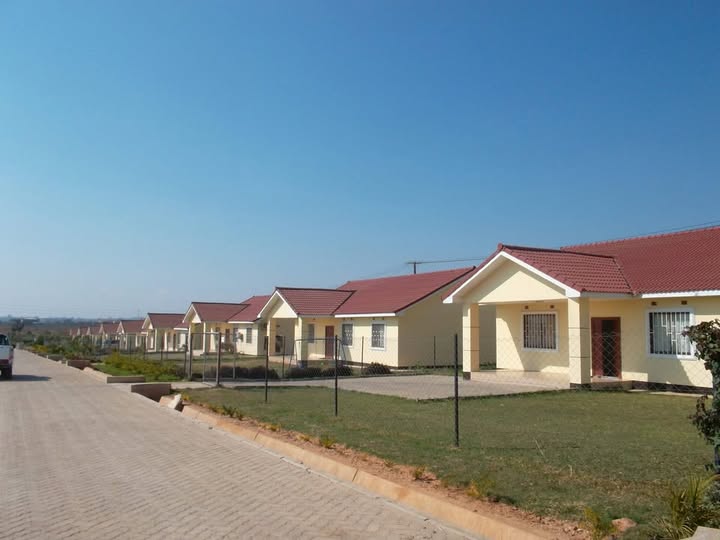
Government says it is strengthening partnerships with the private sector to help address Zambia’s housing deficit, currently estimated at more than 1.5 million housing units.

Infrastructure, Housing and Urban Development Permanent Secretary Professor Albert Malama said Government, in partnership with the Zambia National Building Society (ZNBS), has launched the “Bondi Yanga” campaign aimed at improving access to affordable housing finance.

Professor Malama explained that Government is working to increase access to decent and affordable housing through collaborations with financial institutions, contractors, developers and other stakeholders in the housing sector.

His remarks were delivered in a speech read on his behalf by Ministry Director of Planning Richard Banda during the launch of the Infrastructure Expo in Lusaka.

Meanwhile, Construction Expo Board Chairperson Lotti Lungu said the expo has brought together major players in the housing and construction industry, including financial institutions, contractors, architects and real estate developers.

Ms. Lungu encouraged members of the public to take advantage of financing opportunities being offered through both the Infrastructure Expo and the Bondi Yanga campaign in order to invest in housing projects and property development.

Chiengi cooperatives get K2.7 million CDF grants

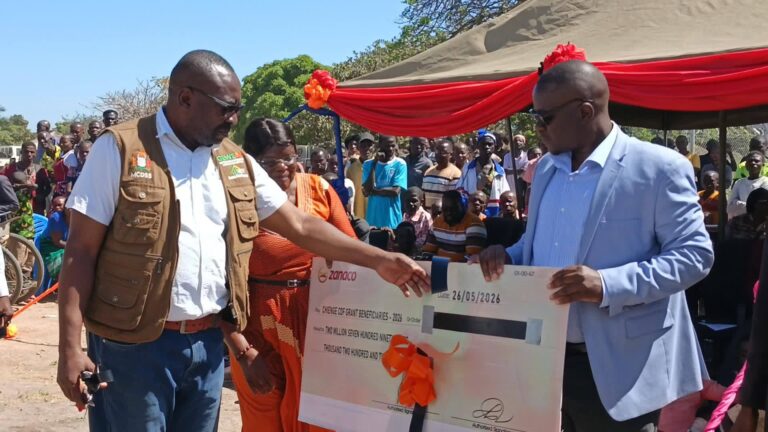
Government has handed over K2.79 million in Constituency Development Funds (CDF) grants to 85 cooperatives in Chienge District and commissioned five community  projects  worth over K5.5 million, aimed at improving livelihoods and expanding access to essential services, in the area.

‎Speaking during the handover ceremony, Luapula Province Deputy Permanent Secretary Evans Sikabbubba, said the projects reflect the government’s commitment to ensure that all citizens receive an equal amount of development.

‎Mr Sikabbubba said the increase in CDF allocation from K1.6 million to K40 million, has enabled districts such as Chienge, to implement transformational infrastructure and empowerment programmes.

‎”Among the projects being commissioned is the district’s first maternity annex at Lunchinda Clinic constructed at a cost of K1.56 million. Other completed projects include a classroom block and 75 desks at Kanwa Primary School, the Shemu Mukabe Water Scheme, a 40-kilowatt solar system at Chienge district Hospital and a classroom block at Mweru Community School”, he said

‎Mr Sikabbubba added that construction of more maternity annexes is underway in the district.

‎And Chienge District Commissioner Rosemary Chikonde said the projects demonstrate the government’s commitment to inclusive development and improved service delivery.

‎Ms Chikonde urged communities to safeguard the infrastructure and ensure that the facilities benefit all residents.

‎And speaking through a representative, Sub Chief Twaileta welcomed the projects and appealed to the government to construct staff houses to support the newly commissioned maternity annex.

‎”We promise to continue supporting the government so that they continue with the developmental agenda,” he said.

‎Lunchinda Health Facility In-Charge Jacqueline Kabwe thanked the government for the maternity infrastructure, saying it would improve maternal healthcare services and increase access to quality healthcare in the area.

Stakeholders advocate for more boy child support

Stakeholders have called for increased investment in programmes aimed at addressing challenges affecting the boy child.

 said the government has continued implementing interventions that support vulnerable boys through rehabilitation, counselling, skills training and behavioural support programmes.

 Ms Nachinga said children in conflict with the law are among those benefiting from probation and diversion programmes, while institutions such as Katombola and Katambala are helping reform young boys into responsible citizens.

She added that the Social Cash Transfer programme has also continued benefiting boy children at household level.

“ Government has not neglected boy children, we are doing everything possible to ensure that the boy child is not left out, we may not have a programme that specifically targets boy children only but we have programmes where both the girl and boy child benefits,” said Ms Nachinga.

Meanwhile, Basic Education Teachers Union of Zambia (BETUZ) Director for Public and International Relations Obby Chisala says there is need for deliberate programmes targeting the boy child, similar to the Keeping Girls in School initiative that has contributed to increased school enrolment and improved academic performance among girls.

Mr Chisala observed that many boys are falling behind due to lack of mentorship and support systems, hence the need for interventions that encourage them to remain in school and become productive members of society.

“I am appealing to the government, stakeholders, cooperating partners and non-governmental organisations to help address challenges affecting boys,” he said.

And life coach Whitehead Angina, founder of Insaka, an organisation that mentors boys, said many male children are silently going through emotional and social challenges that require urgent attention.

Mr Angina commended the government for enacting the Children’s Code Act, and stressed that more targeted programmes are needed to ensure the boy child also feels recognised and supported.

Kangwanda tipped for player of the season award

2

Red Arrows striker Albert Kangwanda has been tipped to get the 2025/26 Super League player of the season award despite missing out on the league title this term.

Kangwanda has been nominated for the prestigious award alongside Super League top scorer Moses Shumah of Power Dynamos and Kabwe Warriors keeper Mangani Banda.

The winner will be announced during the MTN Super League gala this weekend.

Kangwanda bagged the ABSA Cup with Arrows and Kenyan Shumah won the league title in his debut season with Power.

Shumah scored 21 league goals in the ended season.

Kangwanda scored 13 goals in the Super League to finish second to Shumah.

Respected football writer Wami Katanga said Kangwanda, Shumah and Banda had a decent season.

“I think all three nominees have had quite stellar campaigns and contributed immensely with any of their respective clubs’ successes in the past season,” Katanga said.

“While Shumah’s goals ensured Power went all the way to claim the title, I think Kangwanda proved to be of importance to Red Arrows not just with his goals but also as one of the most experienced and consistent players,” Katanga continued.

Katanga believes Kangwanda performed well beyond his scoring prowess.

“For that, Kangwanda takes the Player of the Year ahead of Shumah but it’ll be very close to call. Mangani was superb for Warriors, but I think he can settle for the goalkeeper of the year accolade,” he said from his base in Ndola.

Power’s Oswald Mukuka Mutapa, Chisi Mbewe of Red Arrows and Lameck Banda of Mufulira Wanderers are competing for the coach of the season award.

The nominees for the goalkeeper of the season are Mangani Banda of Kabwe Warriors, Power’s Willard Mwanza and Victor Chabu of Nchanga Rangers.

Kaoma ECZ re-emphasises peaceful campaigns

Kaoma District Electoral Officer, Lisa Mpasela has urged all political parties and independent players participating in this year’s general election to carry out peaceful campaigns free from intimidation and violence

Ms Mpasela also advised the political players in the district to avoid impersonation, bribery and vote buying, among others, as it is an offence and a violation against the electoral code of conduct.

She was speaking in a speech read on her behalf by Mangango constituency Returning Officer Aison Simwanda during the District Liaison committee meeting for independent candidates and political parties.

“Bribery and vote buying: offering money, goods or promises of employees to ensure a voter or official to support a specific candidate. Voter intimidation and violence, threatening voters or interfering with an opponent’s right to hold public meetings, which violets electoral codes”, she said.

 Ms Mpasela further implored political parties and independent candidates not to engage in financial and corporate offences, illegal political finances, abuse of state resources and abuse of public power among other offences.

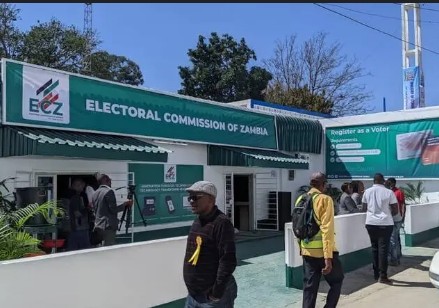
She noted that the Electoral Commission of Zambia (ECZ) has formed the liaison committee in order to provide a platform of dialogue among registered political parties and provide them with updates on the electoral process.

The District Electoral Officer, assured that the liaison committee being a forum for consultation and co-operation between the commission and registered political parties on all electoral matters provides an opportunity for political parties to air their concerns and helps in promoting confidence in the electoral process


Stakeholders applaud ZICTA

Mbala District Administrative Officer, Gilson Chanda has applauded the Zambia Information and Communications Technology Authority (ZICTA) for their initiative to assist stakeholders in the district, with issues surrounding information and communication technology.

Speaking during a stakeholders’ meeting, Mr Chanda said the stakeholders in the district are elated that through the information to be provided by ZICTA, consumers are helped and protected from abuse and misuse of online platforms.

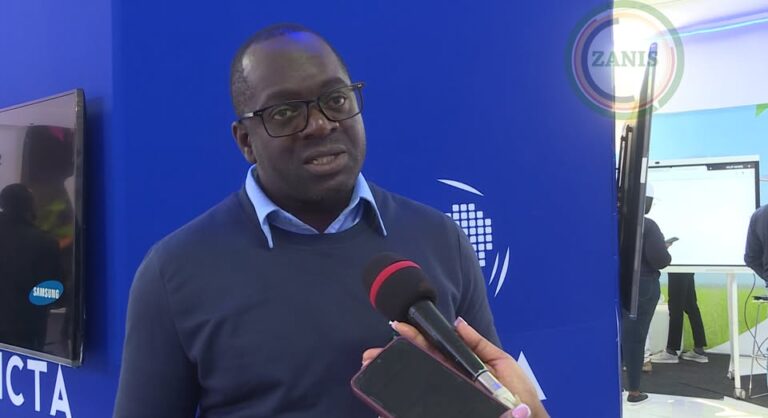
And Zambia Information Communication Technology Authority Team Leader and Acting Manager for Consumer Affairs, Kennedy Kapembwe says the institution has the mandate to regulate the information and communication technology sector under Act Number 15 of 2009.

Mr Kapembwe said ZICTA also operates under the Electronic Communications and Transactions Act Number 4 of 2021 and the Postal Services Act Number 22 of 2009.

He noted that many people are now using social networking platforms, adding that some criminals are taking advantage of unsuspecting users through online fraud and other cyber-related crimes.

Mr Kapembwe has since urged members of the public to be careful when using social media and other online platforms.

Meanwhile, James Malama a Teacher at Mbulu school has described the visit by ZICTA in Mbala district as timely, assuring that the information shared during the meeting will be put to good use and passed on to others.

He said many people in Mbala have been scammed, with some victims ending up committing suicide due to the effects of online fraud.

CEJ launches Justice Project

The Centre for Environment Justice (CEJ) has launched the Joint Unified Society through Inclusive Empowerment (Justice Project) in Kafue and Itezhi-Tezhi districts.

CEJ Executive Director Maggie Mwape says the project represents a shared commitment to strengthening justice, inclusion, accountability and empowerment particularly for women, youths and vulnerable groups in the two districts.

In a statement made available to ZANIS by the CEJ Communications office, Ms Mwape disclosed that the project is anchored on the broader People and Organisations Working for Equality and Rights (POWER) programme framework, which seeks to strengthen the civil society space, promote human rights and advance inclusive and gender-just development.

She stated that at the core of the project is a simple principle that empowered citizens result in stronger societies, where leaders are accountable and systems promote dignity, equality and participation for all.

“The Justice Project is designed to respond directly to real challenges faced in Kafue and Itezhi-Tezhi districts which require coordinated, inclusive and long-term community-driven solutions.

This vision also compliments government’s efforts, particularly in advancing governance reforms, social inclusion and the empowerment of women and young people”, she stated.

Ms Mwape further highlighted that among the challenges faced by women and youths in Kafue district are, poverty, limited livelihood opportunities, harmful social norms, gender-based violence, and exclusion from decision-making processes.

She explained that in Itezhi tezhi district, the project will address challenges such as climate variability, droughts and environmental shocks that undermine livelihoods, with women and youths being the most affected.

Ms Mwape reiterated that CEJ recognises that meaningful participation is closely linked to economic empowerment, hence the project supporting women and youths through savings groups, financial literacy training and climate-smart livelihood initiatives.

She added that economically empowered communities are better positioned to participate in governance processes and effectively demand for their rights.

Ms Mwape further explained that the Project is anchored on four key pillars, with the first aiming to strengthen and empower women and youths through access to information, leadership opportunities and livelihood support.

She said the second pillar aims to build common ground by fostering collaboration among communities, traditional leaders, government institutions, civil society and other developmental partners such as Diakonia.

Ms Mwape said the third objective is to transform harmful social norms through community dialogues, positive masculinity initiatives and awareness campaigns that promote dignity, respect and inclusion, while the fourth aspires to strengthen accountability and governance systems by working with duty-bearers to improve transparency, responsiveness and gender-sensitive service delivery.

She expressed gratitude to Diakonia for its financial and technical support and commitment to advancing justice, human rights and inclusive development in the country.

Enhanced voter education elates stakeholders

A representative for Persons with Disabilities in Chililabombwe district has expressed happiness over their inclusion in the Voter Education programme.

Steven Nkomeni said the inclusion of Persons with Disabilities is a clear indication that the government’s emphasis on inclusivity is being implemented.

Mr Nkomeni added that the inclusion has enabled the Persons with Disabilities to feel that they are part of the programme.

He said the initiative will help address challenges that Persons with Disabilities have been facing and ensure that everyone moves together as a nation in contributing to positive national development.

“It is an opportunity for us to be considered and included in these programmes,” he said.

And Chililabombwe District Electoral Officer Sheila Songolo said it is important for facilitators to understand their role in the electoral process.

Ms Songolo added that Voter Facilitators play a very important role as they are being equipped to educate the people of Chililabombwe on the importance of voting.

“There is need for residents to understand why voting is important,” she said.

She further said residents have the responsibility to choose leaders of their choice.

“We want to see full participation, no voter apathy and less or zero rejected votes,” she added.

Meanwhile, one of the Voter Education Facilitators, Christine Mutale, said they will ensure that voters receive the correct information in order to reduce voter apathy.

She assured members of the public of carrying out their civic duties responsibly so that residents understand the importance of voting.

“We will ensure that each voter is equipped with the right voting message,” she said.

And Boniface Mubanga, another Voter Education Facilitator, promised to follow laid-down procedures and work impartially and transparently.

U17 leaves for Congo amid Ebola fears

3

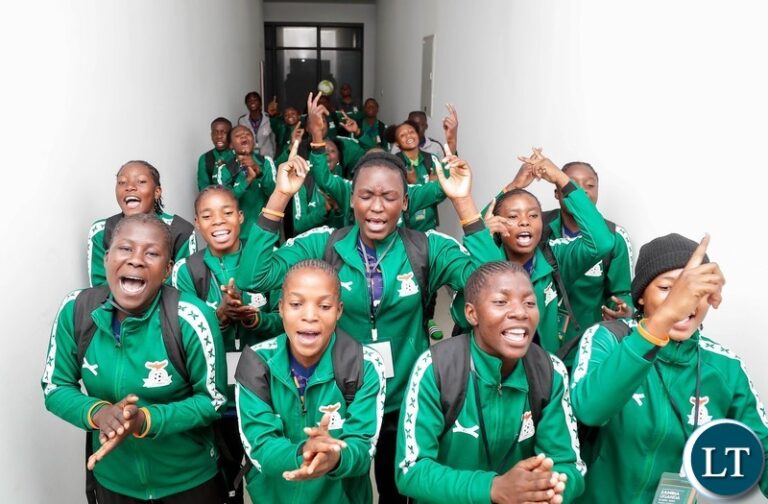
The Zambia squad has left for Lubumbashi ahead of this weekend’s FIFA Under-17 Women’s World Cup qualifier against DR Congo in Katanga Region.

Zambia and Congo will clash in the return match of the second round of the Morocco World Cup qualifying campaign at Frederic Kibassa Maliba Stadium in Lubumbashi.

Zambia have a 5-0 lead from the first leg match played last Saturday at the Levy Mwanawasa Stadium in Ndola.

The Carol Kanyemba coached team left for Congo on Thursday morning by road via the Kasumbalesa Border.

The winner of the second-round tie between Zambia and Congo over two legs will face either Burundi or Ethiopia in the next round of the FIFA Under-17 Women’s World Cup.

Meanwhile, the Football Association of Zambia (FAZ) says it is in constant communication with the Confederation of African Football (CAF) over the Ebola outbreak in the Democratic Republic of Congo (DRC) ahead of this match.

FAZ head of media and communications Nkweto Tembwe has told The Mast Newspaper’s Cecilia Nayame that the association was closely monitoring the situation through CAF.

“I would like to confirm that we are in touch with CAF [Confederation of African Football] who are working closely with the World Health Organisation [WHO] to receive daily updates on the Ebola outbreak in the Democratic Republic of Congo,” Tembwe said in an exclusive interview with Mast Sports in Lusaka.

He said FAZ would continue updating the nation on any developments surrounding the outbreak and the scheduled fixture.

“As things stand, we are assured by CAF that the situation is conducive for the return leg to be played in that country, but should there be anything new, we will definitely update the nation,” he said.