A growing dispute over the recruitment of more than 4,000 police officers is shifting from political criticism into legal and public pressure, with opposition figures, ruling party members, and citizens raising questions about how the process was conducted.
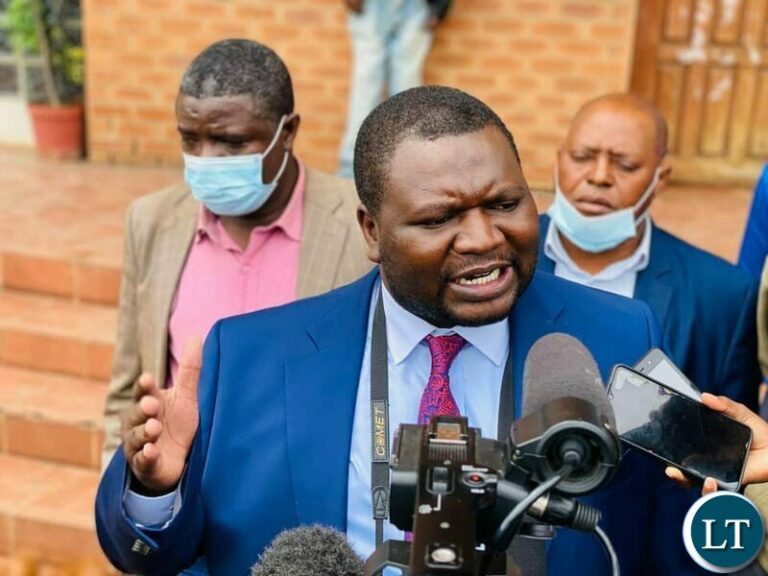
The Leadership Movement has announced plans to take the matter to court, arguing that the recruitment did not follow a transparent or publicly accessible process. Party president Richard Silumbe said the absence of a nationwide advertisement meant many eligible Zambians were not given an opportunity to apply.
Silumbe said the case would seek judicial review of the recruitment, focusing on whether the process met legal standards governing public service hiring. He argued that an exercise involving thousands of recruits must be open and verifiable.
“The concern is how such a large number was recruited without a public process,” Silumbe said, adding that the court action is intended to establish whether the principles of fairness and equal access were upheld.
The legal move follows a wave of criticism from political figures, including former home affairs minister Stephen Kampyongo, who has rejected the classification of the recruitment as an internal exercise. Kampyongo said past recruitment into security institutions has required public advertisement, particularly when intake numbers are high.
He said treating a process of this scale as internal raises questions about access and representation, adding that transparency is necessary to maintain public confidence in state institutions.
The issue has also drawn comment from Patriotic Front faction leader Brian Mundubile, who has linked the recruitment to broader concerns around governance and accountability. Mundubile’s remarks reflect a wider political argument that processes involving state institutions must be open to scrutiny.
What has given the issue additional weight is the reaction from within the ruling United Party for National Development itself.
Lusaka provincial official Matomola Likwanya questioned why the recruitment was not publicly advertised, noting that similar exercises since 2021 had followed an open format. He said the absence of public communication creates the impression that access to the process may have been limited.
Another party member, George Mtonga, said the scale of the intake raises administrative concerns. He said recruitment involving thousands of candidates should be treated as a national process, regardless of internal classification.
Mtonga said clarity is needed on how candidates were identified and selected, particularly given the size of the intake.
Away from formal political positions, the issue has triggered strong public reaction.
Comments from citizens reflect a mix of frustration, suspicion, and confusion about how such a large recruitment exercise was conducted without widespread awareness. Some have questioned whether the process was fair, while others have called for investigations or a commission of inquiry.
There are also voices urging caution, arguing that responsibility for the recruitment lies within the police command structure and that conclusions should be based on verified facts rather than assumptions.
Still, one question runs consistently through public reaction: how thousands of recruits could be selected without a visible, nationwide process.
Accounts attributed to officers within the police service suggest that awareness of the recruitment was limited before recruits began reporting for training. Some officers said they only became aware of the intake after recruits started arriving at facilities such as Lilayi Police College.
These accounts have added to calls for the police service to clarify how the process was conducted and what internal systems were used to identify eligible candidates.
It is within this growing pressure that the Zambia Police Service has defended its position.
Police spokesperson Godfrey Chilabi said the recruitment was an internal exercise aimed at filling vacancies created by retirements, resignations, and attrition. He said notices were issued within the service to eligible individuals, including civilian employees, to transition into the regular police establishment.
Chilabi maintained that the approach was intended to address staffing needs without initiating a nationwide recruitment campaign, and that the process was grounded in existing institutional systems.
That explanation, however, has not resolved the concerns being raised.
Critics argue that even where internal systems are used, a recruitment exercise of this scale requires broader transparency. They say the lack of public visibility makes it difficult to assess whether the process met standards of fairness and equal opportunity.
The absence of a direct statement from State House has left the issue anchored in responses from the police service and political actors. As a result, competing narratives have continued to develop, with each side presenting its interpretation of the process.
The dispute now sits at the intersection of legal challenge, political contest, and public perception.
On one side, the police service maintains that the recruitment is lawful, necessary, and based on internal systems. On the other, critics from across the political spectrum, alongside sections of the public, are demanding clarity on how the process was conducted and who had access to it.
The court action is expected to bring the matter into formal legal review, where procedures, documentation, and compliance with public service standards will be examined.
For many Zambians, the issue is not abstract. Police recruitment is widely seen as a key opportunity for employment, particularly among young people. Questions about access therefore carry real significance.
What began as an administrative exercise has evolved into a national issue, with its outcome likely to shape expectations around transparency and fairness in future recruitment processes.