Tuesday, June 16, 2026
17.7 C
Lusaka
Home Blog Page 8

Illegal medicines worth K10,000 seized in Mpika

1

Mpika Town Council has confiscated various medicines worth over K10,000 (Ten Thousand Kwacha) from illegal drug stores operating at Kanyelele Gold Mine in Mpika District in Muchinga Province.

Mpika Town Council Senior Health Inspector Francis Kapila disclosed the development to the media shortly after the operation, describing it as part of the local authority’s ongoing commitment to enforcing public health standards across the district.

Mr Kapila said the medicines were confiscated by a combined team of Mpika District health inspectors and Council police during a joint enforcement operation conducted at the mine premises.

He noted that the operation was carefully planned and executed to ensure that all drug stores on site were thoroughly inspected.

The Senior Health Inspector emphasised that conventional medicines play a critical role in the treatment and management of various diseases and health conditions affecting communities, making it more important that their distribution and sale is properly regulated.

He pointed out that it was against this backdrop that the Mpika Town Council resolved to conduct targeted inspections of several drug stores operating at the Kanyelele Gold Mine, with the specific aim of ensuring that medicines were being sold strictly in accordance with established health regulations and standards.

Mr Kapila confirmed that medicines with a combined value of more than ten thousand Kwacha were confiscated from the premises during the operation, adding that the items seized included a range of pharmaceutical products that were being sold without the requisite authorisation or proper storage conditions.

He further disclosed that the local authority would not limit its enforcement activities to the Kanyelele Gold Mine alone, but would continue conducting routine and situational inspections across the district to deter would-be offenders from engaging in the illegal sale of medicines.

“The inspectors will continue inspecting all pharmacies and drug stores at the mines and in other parts of the district,” Mr. Kapila said,

Mr Kapila adding that anyone found operating illegally would face the full consequences provided under the law.

Meanwhile, Mpika District Commissioner David Siame has issued a stern warning that the government will not tolerate the illegal sale of medicines anywhere in the district.

Mr Siame stressed that the dispensing and sale of medicines by untrained personnel poses a serious and direct risk to the health and safety of communities.

The District Commissioner emphasised that the government would work relentlessly to ensure that no drug store sells medicines illegally within the district.

He has since called on all stakeholders, including mine management, community leaders and residents to seriously support the enforcement effort.

“We are appealing to all people at the mines not to entertain illegal drug stores,” Mr Siame said,

And Mr Kapila has urged the residents to report any suspected illegal pharmaceutical operations to the relevant authorities.

The local authority has further pledged that the inspections will be conducted without fear or favour, making clear that there would be no sacred cows during the exercise regardless of the status or location of any establishment found to be operating outside the law.
Government launches Presidential Irrigation Initiative

1

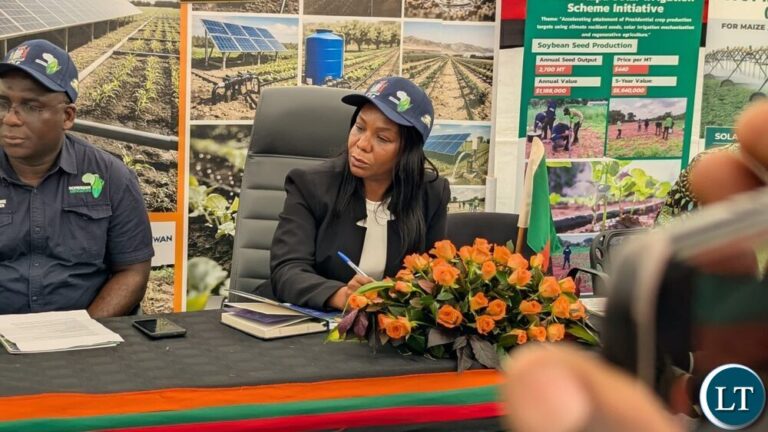
Government has launched the Presidential Irrigation Initiative (PII), stating it is not only a response to climate viability and drought but also a strategic measure aimed at guaranteeing food security.

Lusaka Province Permanent Secretary, Joe Kalusa said this during the launch at Thorn Park Primary School, in Lusaka today, indicating that 33 schools and colleges in the province have been selected to pioneer the programme, which aims to strengthen food security, through irrigation- based agriculture.

He cautioned that no school in Lusaka should fail, given the care taken in selecting schools for the programme, saying government has committed substantial funding, training and technical support to ensure the programme succeeds.

Mr Kalusa said the initiative is expected to transform schools into centres of production, innovation and practical learning, while equipping learners with skills in climate-smart agriculture, water management and food systems management.

He indicated that the performance of the first group of schools would determine the programme’s expansion, urging education authorities and communities to take ownership of the project.

“There should be no school that fails in Lusaka because government has taken care in selecting these institutions, training will be provided and significant resources will be allocated to each school,” he said.

And Provincial Education Officer, Terry Changwae said the Ministry of Education  was ready to contribute towards the province’s target of producing 350,000 metric tonnes of maize by 2031, through school production units.

“When there’s a directive from our President that by 2031 the province has to produce 350,000 metric tonnes of maize, then we are saying as education, we need to be part of that and we are ready through our production units,” Mr Changwae said.

Meanwhile, Provincial Agriculture Coordinator, James Mwale said despite the challenges posed by climate change, Lusaka Province had made a contribution to the country’s maize harvest and was optimistic that irrigation initiatives would further increase production.

“We have challenges which we have been facing, issues of climate which are affecting us as a nation. Through the Ministry of Agriculture, Lusaka Province has also contributed significantly by producing 140,000 tonnes of maize, which is a major contribution to this year’s harvest,” Mr Mwale said.

Kafue District Education Board Secretary, Levy Matongo expressed gratitude for government’s continued commitment to strengthening agriculture, saying the programme would help improve food security and enhance livelihoods.

HH Declines To Sign Public Gatherings Bill, Calls It “Against Public Interest”

HH Declines To Sign Public Gatherings Bill, Calls It “Against Public Interest”

President Hakainde Hichilema has refused to assent to the Public Gatherings Bill, describing the legislation as undemocratic and contrary to the public interest, a decision that has surprised legal observers who noted that the bill, in several respects, represented a more progressive framework for civic freedoms than the colonial-era law it was designed to replace.

The bill was among a number of pieces of legislation passed by the National Assembly during the final days of its last sitting. According to Parliamentary sources, President Hichilema returned it on May 29, citing reservations that prevented him from proceeding with his assent.

Introduced by Attorney-General M.D. Kabesha on April 23, 2026, the Public Gatherings Bill was crafted to repeal and replace the Public Order Act of 1955, a piece of colonial-era legislation that has long been a source of controversy for its wide grant of discretionary powers to the police to approve or block public assemblies. Rather than perpetuating a permit-based system, the bill proposed a notification framework, a shift that, in principle, tilted the default away from police discretion and towards the right of citizens to assemble.

Under the proposed law, organisers of any assembly, meeting, procession or demonstration involving three or more people in a public place would have been required to notify an authorised officer at least five days in advance, providing details of location, route, purpose, expected numbers and contact information. The officer would have been obligated to acknowledge the notice within 24 hours and issue a decision within three days. Critically, the bill included a deemed-approval provision: if the officer failed to acknowledge within the stipulated period, the notice would automatically be considered received, and if no formal approval followed, the organiser would be entitled to proceed with the gathering regardless. That clause alone represented a meaningful departure from the architecture of the Public Order Act, under which police inaction effectively amounted to a veto.

The bill further stipulated that police could restrict a gathering only on specified and limited grounds, including a clash with a prior notice, an unsuitable venue, the location falling within a protected area, or a reasonable belief of imminent public disorder or danger. Any restriction would have required written reasons to be issued at least three days in advance, with the organiser afforded an opportunity to address the concern. Where remedial measures were taken, the restriction would have been required to be lifted, and where the original date had already passed, an alternative date would have to be agreed.

The legislation also contained provisions of particular relevance to the political and electoral landscape. While a broad range of exemptions were provided, covering the President, Members of Parliament in their constituencies, funerals, weddings, traditional ceremonies, indoor party meetings and worship services, those exemptions for ministers, Members of Parliament, mayors and councillors were explicitly removed during election campaigns, active elections and periods following the dissolution of Parliament. That provision would have placed incumbents and opposition figures on equal footing during the most contested periods of the democratic cycle. Additionally, the bill granted the media an explicit right to monitor public gatherings, a right that all parties would have been legally bound to uphold.

Despite these provisions, the bill drew sharp and widespread criticism from civil society, legal commentators and the general public, who expressed alarm at the breadth of the definition of a public gathering and the continued role of the police in the notification process. Critics argued that even a notification-based system risked being applied in a manner that would chill the exercise of civil liberties, and that the penalties for holding an unauthorised gathering, while modest, introduced a criminal dimension that could be selectively enforced. Many went further, describing the bill as more dangerous than the very legislation it sought to repeal.

By declining to sign the bill, President Hichilema has aligned himself publicly with those concerns, characterising the legislation as incompatible with democratic values and the public interest. His decision effectively returns the bill to Parliament, where legislators will be required to reconsider its provisions.

For now, the Public Order Act of 1955, the colonial framework that the bill was intended to finally consign to history, remains the law of the land.

ZESCO Rules Out Return To Nationwide Load Shedding

LUSAKA: Zambia’s national power utility, ZESCO, has assured the country that nationwide load management is not expected to resume this year or in the foreseeable future, pointing to meaningful improvements in electricity generation and sustained investment across the power sector as the foundation of a more stable supply outlook.

ZESCO Managing Director Justin Loongo said the country’s electricity supply situation has stabilised following a series of targeted interventions aimed at strengthening generation capacity and improving the reliability of the national grid. He attributed the improved outlook to increased output from hydro, thermal and solar power sources, as well as deepened partnerships with Independent Power Producers and Independent Power Traders, which have collectively enhanced the resilience of Zambia’s electricity system relative to previous years.

Mr. Loongo said the combined effect of these measures would support a consistent and dependable power supply for households, businesses, mines, industries and other key sectors of the economy that depend on reliable electricity to function.

He did, however, caution that isolated outages may still occur in certain areas as a result of vandalism of critical electricity infrastructure or localised network faults, emphasising that such disruptions remain distinct from the structured, nationwide load management that characterised previous periods of power deficit. He urged the public to report unplanned outages, suspicious activities, vandalism and any damaged electrical infrastructure through ZESCO’s customer service platforms and offices across the country.

In a separate announcement, Mr. Loongo revealed that ZESCO will next week conduct a media tour of selected power generation facilities in Maamba, Livingstone and surrounding areas. The tour, he said, forms part of the utility’s broader effort to maintain transparency and keep the public informed about developments in the energy sector. It will include visits to ZESCO-owned generation plants as well as partner-operated thermal power stations, offering first-hand insight into the measures being undertaken to secure and sustain the country’s electricity supply.

Mr. Loongo reaffirmed ZESCO’s commitment to improving service delivery and maintaining open and regular communication with its customers and stakeholders as the utility continues to work towards a more reliable national power system.

Zambia Loses US$3.5 Billion To Illicit Financial Flows, FIC Reveals

Zambia haemorrhaged an estimated US$3.5 billion through illicit financial flows over a five-year period, the Financial Intelligence Centre (FIC) has revealed, warning that the continued haemorrhaging of national resources through illegal financial channels poses one of the gravest threats to Zambia’s long-term economic development, fiscal stability and capacity to deliver public services.

The figures, highlighted by the FIC and reported in Wednesday’s edition of the Daily Nation, paint a sobering picture of the scale of financial crime afflicting the Zambian economy. According to the report, the losses are attributable to a range of unlawful financial practices, among them tax evasion, trade mispricing, money laundering, corruption-linked transactions and the illicit movement of funds through unauthorised channels.

For a developing economy like Zambia, the implications are profound. The billions lost to these activities represent resources that could otherwise have been channelled into roads, schools, hospitals, water infrastructure and the broader social investments that underpin meaningful national development. Economists and financial crime specialists have long maintained that illicit financial flows represent one of the most corrosive forces acting against developing economies, silently draining capital that governments would otherwise deploy to reduce poverty, attract investment and expand opportunity.

The FIC’s findings acknowledge that Zambia has made measurable progress in strengthening its anti-money laundering frameworks and improving financial oversight in recent years. Nevertheless, the institution is candid that significant challenges remain. Financial crimes have grown increasingly sophisticated, frequently involving complex, multi-jurisdictional transactions deliberately structured to evade detection. Criminal networks, authorities note, continuously adapt their methods, placing an ever-greater burden on enforcement agencies and financial institutions to remain ahead of evolving threats.

The challenge is not Zambia’s alone. Across Africa, governments continue to grapple with the illegal movement of funds, particularly in sectors characterised by high-value international transactions, extractive industries, large-scale procurement, cross-border trade and international finance among them. Yet the scale of the figures reported for Zambia serves as a stark reminder of the urgency with which the country must address these vulnerabilities.

Beyond the immediate fiscal cost, illicit financial flows carry broader economic consequences. Financial crime erodes investor confidence, distorts markets and creates an environment in which legitimate businesses are disadvantaged relative to those exploiting opacity and weak enforcement. Transparent, predictable and well-regulated financial systems are widely regarded as foundational to attracting sustainable investment, and any perception that a country’s financial architecture is susceptible to abuse carries reputational costs that extend well beyond headline statistics.

The FIC has consistently stressed that combating financial crime demands coordinated effort across the full spectrum of institutions involved, including law enforcement agencies, financial regulators, commercial banks and international partners alike. Banks and other reporting entities occupy a particularly critical position as the first line of defence in identifying and flagging suspicious transactions. Equally important, however, is the effectiveness of prosecutions and the recovery of assets that have been stolen or illegally transferred. Where enforcement remains weak, criminal networks grow emboldened; where it is robust and consistent, the calculus shifts decisively in favour of compliance.

The latest figures are expected to reinforce calls for sustained investment in anti-corruption initiatives, financial intelligence infrastructure and institutional oversight mechanisms, all the more so given that Zambia is presently pursuing a broader programme of economic reforms aimed at restoring fiscal discipline, attracting private investment and cementing long-term growth. Protecting national resources is not incidental to that agenda; it is integral to it.

Public finance experts have long cautioned that economic growth, however impressive in aggregate, yields diminished returns for citizens if substantial portions of generated wealth continue to leave the country through unlawful channels. Every dollar recovered from illicit activity is a dollar reinvested in national development, reducing dependence on external borrowing, supporting public programmes and preserving the fiscal space governments need to respond to crises and capitalise on opportunities.

In that sense, the FIC’s report is at once a warning and a call to action. The institution’s work in detecting suspicious transactions and disrupting financial crime networks has produced genuine results. But with billions of dollars still at stake, the scale of the challenge demands an intensified, whole-of-system response, including tighter enforcement, stronger financial controls, deeper inter-agency cooperation and greater accountability across both public and private sectors.

For Zambia, the fight against illicit financial flows is ultimately not a narrow law enforcement matter. It is a development imperative. The resources lost through illegal financial activity are not abstract figures; they are schools unbuilt, hospitals under-equipped, infrastructure projects deferred and public services that fell short of the citizens they were meant to reach. Reclaiming those resources begins with confronting, honestly and urgently, the scale of what is being lost.

Kabeta highlights rise in copper production

Ministry of Mines and Minerals Development Permanent Secretary, Hapenga Kabeta, has disclosed that copper out production increased from 728,558 metric tonnes in 2023 to 824,425 metric tonnes in 2024, representing a 13.1 percent increase.

Dr Kabeta further revealed that copper production rose to 890,345.79 metric tonnes in 2025, an eight percent increase from 2024 levels, with projections indicating that production will exceed one million metric tonnes by the end of 2026.

Speaking during the launch of Inaugural Ministerial Statistical Bulletin covering the period 2020 to 2024, in Lusaka today, Dr Kabeta said Zambia’s mineral portfolio is becoming increasingly diversified, with nickel production rising significantly from 3,226 metric tonnes in 2020 to more than 21,000 metric tonnes in 2024.

He stated that cobalt, manganese and gold also recorded positive performance during the review period.

Dr Kabeta revealed that employment in the mining sector grew from 59,371 jobs in 2020 to 90,117 in 2024, representing a 51.8 percent increase.

He added that female participation in the sector also improved, with women accounting for 11.3 percent of the workforce in 2023 compared to 7.8 percent in 2020.

Dr Kabeta further said the bulletin also highlights strong investment performance, with committed investments amounting to 6.9 billion United States Dollars, while actual investments reached 10.38 billion dollars during the review period.

He said Zambia’s attractiveness as a mining investment destination has improved significantly, as reflected in the country’s rise to third position in the 2024 Fraser Institute Annual Survey of Mining Companies from 12th position previously.

Despite the positive developments, Dr Kebeta acknowledged that occupational health and safety remains a concern.

“Workplace accidents increased from 43 cases in 2022 to 98 in 2024, while fatalities rose from 19 to 31 during the same period,” he said.

He said illegal mining activities continue to pose challenges to safety, environmental protection and orderly sector development, underscoring the need for stronger enforcement and compliance measures.

Dr Kabeta said the bulletin provides an important evidence base for understanding the sector’s performance and guiding future policy decisions.

He reaffirmed the government’s commitment to strengthening sector governance, enhancing regulatory efficiency, deepening mining formalisation and ensuring that growth in the sector translates into inclusive and sustainable national development

Copper Queens on track for WAFCON – Nora

2

Zambia coach Nora Hauptle says the Copper Queens are on track ahead of next month’s Women Africa Cup of Nations (WAFCON) to be hosted by Morocco.

Zambia warmed up for the WAFCON with victory at the friendly Four Nations Tournament at Levy Mwanawasa Stadium in Ndola.

The Copper Queens beat Zimbabwe 3-0 in the final at Levy Mwanawasa Stadium on Tuesday night to win the Four Nations Tournament that featured Kenya and Lesotho as well.

In a post-match comment, Hauptle described Zambia’s performance against Zimbabwe as stable.

“Today we saw a stable performance from my team. All in all, that is a stable performance,” she said.

“We have adjustments to make in defence and on set pieces we were not on top. Congratulations to my team and we are on track towards WAFCON,” Hauptle said.

At the Four Nations Tournament Zambia missed the services of injured skipper Barbra Banda.

“It was good to have these two friendly games, especially the first game against Kenya, it was a high-level match in my opinion. It was also good that we could give exposure to more players in the match against Zimbabwe as we made eight substitutions,” she said.

Zambia started the Four Nations tournament with a 4-1 post-match penalty win over Kenya after a 1-1 draw.

Hauptle said Zambia needs another friendly match before heading to Morocco for the WAFCON.

If HH Stays Away, Would Lungu’s Burial Lose Its Dignity?

Broadcaster Paul Shingongo has posed a direct and searching question to the Zambian public, asking whether the burial of former President Edgar Chagwa Lungu can only be considered dignified if the sitting Head of State, President Hakainde Hichilema, is in attendance.

The question has taken on renewed relevance following President Hichilema’s own public declaration that it is Zambia’s duty to bury its sixth Republican President with full military honours. Speaking during a widely circulated social media discussion on Wednesday, which attracted more than 5,000 views, Shingongo challenged what he described as a national assumption that may have contributed to the prolonged failure to lay the late former President to rest, more than a year after his death in South Africa on June 5, 2025.

“Does it mean that ECL can only have a dignified burial when the President of this country is present?” he asked. “If the President of this country is not present, then no matter what happens, it’s not a dignified burial?”

The question carries particular weight because it comes barely a day after President Hichilema publicly expressed support for a dignified burial for Mr Lungu. Speaking on Tuesday during funeral proceedings for Paramount Chief Mpezeni IV at Ephendukeni Palace in Chipata, the President told thousands of mourners, including traditional leaders, church leaders and government officials, that the country had a duty to accord the late former Commander-in-Chief full military honours.

“It is our duty to bury him with the military protocols. He was commander-in-chief of our country,” President Hichilema said. “We must all work together to bury our Sixth President with dignity in a military style. Let us work together to do that.”

The remarks were among the clearest public statements the President has made on a matter that has remained unresolved for more than a year. They followed an appeal by Chipata Catholic Diocese Bishop George Lungu, who urged Government and the Lungu family to find common ground and facilitate a Christian burial. The bishop described the prolonged delay as a wound extending beyond those directly involved, saying it had prolonged grief for many Zambians.

Despite the President’s public commitment to a dignified burial, Shingongo’s discussion highlighted the reality that the impasse remains unresolved. His co-host, John Mark, suggested that some citizens may attach special importance to the President’s attendance because of what the office represents.

According to John Mark, the issue may not necessarily be about the individual occupying State House, but about the presidency itself, which many regard as symbolising the father of the nation. To illustrate the point, he recalled attending a wedding that started several hours late because the bride’s parents, who were expected to preside over the ceremony and offer their blessing, had not yet arrived. He suggested that some people may view the role of a sitting President at a state funeral in a similar manner.

Shingongo acknowledged the symbolism associated with the office but maintained that the Lungu family had publicly and repeatedly communicated their opposition to President Hichilema’s attendance at the burial. He further noted that the late former President was reported to have expressed the same wish.

“The wish has been communicated by the family,” he said. “This father is not wanted by the family.”

He also acknowledged an issue that emerged during related legal proceedings in South Africa, where a lawyer representing the Lungu family was reportedly unable to produce documentary proof of the former President’s alleged instructions concerning who should be excluded from his burial.

“If there’s no proof, it’s also difficult to ride on that,” Shingongo said.

Even so, he maintained that the absence of documentary evidence does not remove the central question facing the country.

“That, maybe the Zambians have forgotten, is a major reason why ECL has not been buried to date,” he said. “The family did not want ECL’s wish to be ignored. They wanted the wish of their departed to be respected.”

Shingongo said that if he were given an opportunity to address President Hichilema before the burial takes place, there is one question he would ask above all others.

“What is so hard with you stepping aside?” he asked. “What’s the worst that can happen, Mr President, if you step aside? Does that reduce the dignity of ECL’s burial?”

He went further, outlining what he believes would be a straightforward route towards resolving the deadlock.

“He can simply announce: I will not be present. Let’s proceed. Attorney General, drop the cases,” Shingongo said.

Referring to the legal proceedings that form part of the wider dispute, he added: “Drop the cases. I will not be present. And let’s see what the family will say. I am sure they will be happy to bury ECL even tomorrow.”

According to Shingongo, such a move would quickly reveal whether presidential attendance is indeed the principal obstacle or whether other unresolved issues remain beneath the surface.

The broadcaster acknowledged that the question of whether the Republican President should attend or voluntarily stay away is one aspect of the dispute that many people have been reluctant to confront directly.

“The presence of the Republican President is a bone of contention,” he said. “That’s a component many people don’t want to speak about.”

For now, the tension between the two positions remains unresolved. On one side is a President who has publicly declared his commitment to ensuring a dignified burial with full military honours. On the other is a family whose stated objections have centred on the President’s attendance.

No burial date was announced during the Chipata proceedings, and calls from church leaders and public figures for all parties to find common ground have yet to produce a breakthrough.

Shingongo concluded by returning to the question that has anchored his position throughout the discussion. If President Hichilema were to absent himself from the burial, would that in any way diminish the honour and dignity accorded to the interment of Zambia’s sixth Republican President?

For the broadcaster, that remains the central question. Until it is answered, he suggested, the country may remain no closer to resolving a matter that has now remained unsettled for more than a year.

Young people cautioned against selling voters cards

0

Solwezi-based Youth Activist, Asa Lukamata has called on young people to refrain from selling their voters’ cards, describing the practice as equivalent to selling their democratic rights to vote.

Mr Lukamata says voter cards should not be exchanged for money, as doing so compromises citizens’ ability to influence governance through the electoral process.

“Once youths or any citizen sell their voter cards, even if it is for five hundred thousand kwacha, the money will eventually finish. However, when they vote, their choice contributes to a governance system that will serve them for five years,” Mr Lukamata said.

“Young people and the citizens of Zambia should not be used as tools of political violence,” he said.

Mr Lukamata further said the destruction of political campaign materials and Electoral Commission of Zambia (ECZ) voter education materials constitutes electoral violence and should not be tolerated.

“It is saddening that some people have even resorted to destroying election education materials which are meant to educate citizens on how to vote,” he said.

Mr Lukamata urged all stakeholders to promote peaceful participation in the electoral process and respect voter education initiatives.

Police open investigations into a suspected defilement

0

Police in Northern Province have opened investigations into a suspected defilement case involving a 12-year-old girl of Mporokoso District.

Northern Province Police Commanding Officer Simunji Mulonda says the alleged defilement occurred on June 7, 2026 at about 19:00 hours in a village within Chief Mumporokoso’s Chiefdom, in Mporokoso District.

Mr Mulonda disclosed that the matter was reported to police on June 8, 2026 by a concerned teacher following the disclosure by the victim that she was defiled.

Mr Mulonda told the media that preliminary information indicates that the victim exhibited signs of distress while attending classes, therefore, prompting school authorities to engage her.

He added that after disclosing what happened, the matter was immediately reported to Mporokoso police for further action.

Mr Mulonda further added that during the incident the victim reportedly called for help hence causing the suspect to flee the scene.

He added that the victim was referred for medical examination and appropriate support services after which police opened a docket and launched investigations into the matter.

“No arrest has been made so far, and efforts to identify and apprehend the suspect are underway,” Mr Mulonda revealed.

He further expressed concern over the continued occurrence of sexual offences against children despite the existence of stringent legal sanctions.

 “I encourage members of the public to remain vigilant, promptly report suspected cases of abuse, and support efforts aimed at protecting children and ensuring offenders are brought to justice,” he said.

He has since called for a coordinated multi-sectoral approach involving families, communities, educational institutions, traditional leaders, faith-based organisations, civil society, and law enforcement agencies in strengthening child protection mechanisms and preventing such offences.

HH Backs Full Military Honours for Lungu, Calls for Dignified Burial

President Hakainde Hichilema has backed a dignified burial for former President Edgar Chagwa Lungu, saying Zambia has a duty to accord its sixth Republican President full military honours and urging all parties involved to work together to bring closure to a matter that has remained unresolved for a year.

The President made the remarks on Tuesday during funeral proceedings for Paramount Chief Mpezeni IV at Ephendukeni Palace in Chipata. Traditional leaders, church leaders, government officials and thousands of mourners had gathered to bid farewell to the late Ngoni monarch.

The comments followed an appeal by Chipata Catholic Diocese Bishop George Lungu, who urged Government and the family of the late former President to find common ground and facilitate a Christian burial.

Addressing mourners, President Hichilema said former presidents deserved to be honoured for their service to the nation and left little doubt about his position on the burial of Mr Lungu.

“And I want to say that this applies, Bishop Lungu, to our Sixth President, who we lost. It is our duty to bury him with the military protocols. He was commander-in-chief of our country,” President Hichilema said.

The Head of State said the responsibility to honour a former president transcends political differences and belongs to the nation as a whole.

“And I agree with you, we must all work together to bury our Sixth President with dignity in a military style. Let us work together to do that,” he said.

The remarks were among the clearest public statements made by the President on a matter that has remained unresolved since Mr Lungu died in South Africa on June 5, 2025.

The burial issue has continued to attract appeals from church leaders, family members, political figures and ordinary citizens calling for closure.

Earlier in the service, Bishop George Lungu described the prolonged absence of a burial as a source of continuing grief for many people.

“The continued absence of closure has prolonged grief for many and has left a wound that is felt far beyond those that are directly involved and close to him,” the bishop said.

The church leader appealed for understanding from all parties and expressed hope that circumstances would soon allow the late former President to be laid to rest.

President Hichilema thanked the bishop for raising the matter during the service.

The appeal came during a ceremony marked by reflections on service, unity, reconciliation and the inevitability of death. The funeral drew traditional and political leaders from Zambia and neighbouring countries, including Malawi, South Africa and Mozambique.

Several speakers reflected on the importance of honouring leaders in death regardless of differences that may have existed during their lifetimes.

President Hichilema also spoke about the obligation of the living to ensure that those who have served the nation are buried with dignity and respect.

No timetable for the burial of former President Lungu was announced during the proceedings.

However, the President’s public endorsement of a dignified burial with full military honours added fresh momentum to calls for a resolution of the matter.

The message from both church and political leaders in Chipata was consistent: all parties should work together to ensure that Zambia’s sixth Republican President is laid to rest with dignity and honour.

Pirates move delights Lungu

0

Zambia international striker Ghampani Lungu is thrilled to earn a big move to South African Premiership Champions Orlando Pirates.

Lungu, 27, has joined Pirates from another South African side Siwelele.

Both Pirates and Lungu confirmed the transfer on Tuesday without giving further details.

“Recently crowned Betway Premiership Champions Orlando Pirates are delighted to announce new arrivals to the Club,” Pirates announced on their official website.

“After weeks of speculation and countless headlines across the football social media landscape, Orlando Pirates Football Club can confirm the signings of Mthetheleli Mthiyane (Stellenbosch FC), Sbangani Zulu (Richards Bay), as well as Bohale Ngwato and Ghampani Lungu (both from Siwelele),” the club said.

Lungu last month netted a hat-trick against Mamelodi Sundowns in a record-breaking 11-goal thriller.

“Further details regarding these new signings will be shared in due course.”

Lungu trekked to South Africa in 2018 when switching from Power Dynamos to SuperSport United.

Confirming the move Lungu said:” I’m happy to confirm that I’ll be starting a new journey at the start of the new season. Thank you for the support and love you’ve shown me over the years.”

Lungu has joined a list of Zambians that have played for Pirates among them late striker Dennis Lota, midfielder Isaac Chansa, striker Collins Mbesuma, midfielder Perry Mutapa, striker Augustine Mulenga, winger Austin Muwowo, forward Mwape Musonda and striker Justin Shonga (deceased).

The right winger has 15 caps earned from 2018.

Youth urges peers to promote peaceful elections

0

A youth in Solwezi District of North-Western Province says youths have a critical role to play in shaping the future of the country.

Speaking in an interview with to the media in Solwezi today, Henry Banda said as Zambia prepares for the general elections there is need for youths to positively contribute to having peaceful elections.

Mr Banda stated that youths have the potential to influence positive change by promoting peace and unity and coexisting despite having different political affiliations.

He expressed concern that the country has already started recording cases of political violence and called on youths to stop being used as tools of violence.

Mr Banda stated that political violence is retrogressive to the country, and called for concerted effort in engaging in constructive criticism during campaigns.

He called on Zambians, especially youths to join hands and reject all forms of political violence before, during and after the elections.

Mr Banda further appealed to youths to be ambassadors of peace by promoting harmony as the country heads towards elections.

Nakonde health department targets zero maternal deaths

0

The Department of Health Services in Nakonde District has restated its commitment to eliminating all preventable maternal deaths across the district.

The renewed emphasis follows an incident at Nakonde Urban Clinic where a pregnant woman with severe hypertension and edema initially declined referral to the district hospital during a routine antenatal visit.

The patient was later counseled alongside her husband and subsequently agreed to transfer to the district hospital for specialised care.

Nakonde Urban Clinic In-Charge Bievenue Kalambote stressed the importance of adhering to medical advice given during pregnancy.

“When expectant mothers ignore professional guidance, they expose themselves and their unborn babies to serious complications that can be avoided,” Mr Kalambote said.

Mr Kalambote added that conditions such as high blood pressure and swelling were warning signs that required immediate clinical assessment and treatment.

“Dangers in pregnancy can escalate quickly if left unmanaged, and timely intervention saves lives,” Mr Kalambote said.

He reaffirmed that achieving zero maternal mortality remained the guiding objective for all maternal and neonatal health services in the district.

And Nakonde Urban Clinic Nursing Officer Emily Chokolo has called on male partners to expectant women to participate actively in maternal health decisions.

Ms Chokolo noted that male involvement improves adherence to treatment plans and reduces delays in seeking emergency care.

“Men must accompany their spouses to antenatal visits, understand the risks, and support medical recommendations without hesitation,” Ms Chokolo said.

ZACA welcomes mealie meal price reduction

1

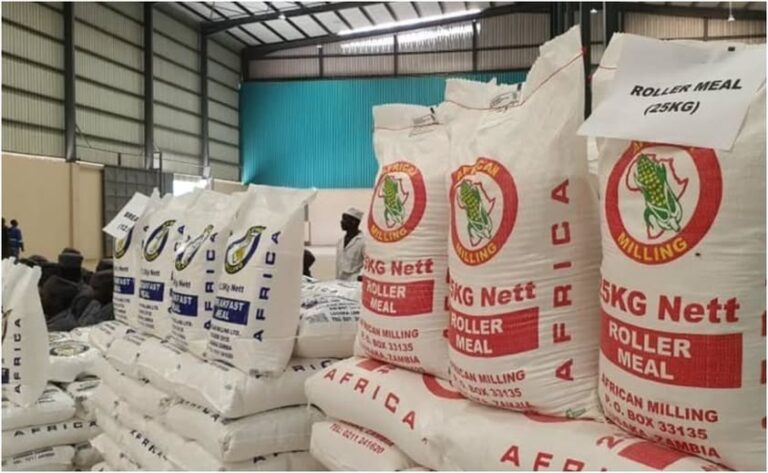
Zambia Consumers Association (ZACA) Executive Secretary, Juba Sakala has welcomed the reduction in the price of mealie meal, describing the move as a positive development for consumers.

Mr Sakala said maize meal remains a staple food for most Zambians and any reduction in its price, brings relief to households, especially in ensuring food security.

He however, expressed concern that the price reduction has not been uniformly implemented across all townships, urging that the development should benefit all consumers.

“The reduction of maize meal from K300 to about K220 in some areas is quite encouraging to most consumers. As we know maize meal is a staple food in Zambia, so if the staple food is affordable then we know that each and every Zambian at least will not go to bed hungry,” Mr Sakala said.

Mr Sakala urged that retail outlets in townships should also reflect the reduced prices to ensure that ordinary consumers directly benefit.

“So, we hope that this pronouncement will trickle down to the townships because these are the people who feel the pinch, they buy maize meal day in, day out. Whether in Pamela form, 1kg, so if the prices are just pronouncements, then that won’t help,” he said

He further called on millers and government to invest more in infrastructure that promotes value addition in the maize.

“Let’s see that we have outlets which are in the townships providing or selling those maize meals at that price that they have said, that will really help,” he said.

Mr Sakala said improving value addition in maize production could also encourage increased agricultural activity among farmers and reduce over-reliance on subsistence production.

He added that with proper infrastructure and deliberate policy support, more farmers could be encouraged to engage in maize production and related industries such as stock feed manufacturing.

“Besides that, we also want to urge millers and government let’s try at times to invest in infrastructure which will help us in value addition because most of the times maize is just not for feeding but we can also add value,” he said.